
Word Equations and Simple Types of Reactions SECTION
- Slides: 15
Word Equations and Simple Types of Reactions SECTION 3
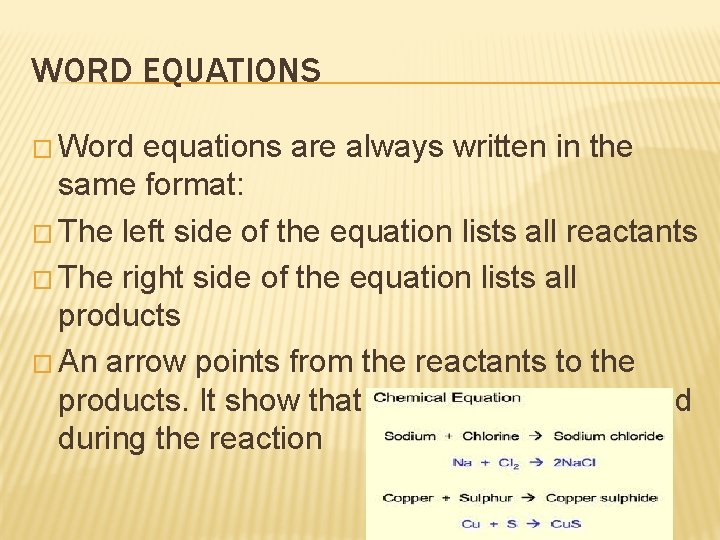
WORD EQUATIONS � Word equations are always written in the same format: � The left side of the equation lists all reactants � The right side of the equation lists all products � An arrow points from the reactants to the products. It show that something is produced during the reaction
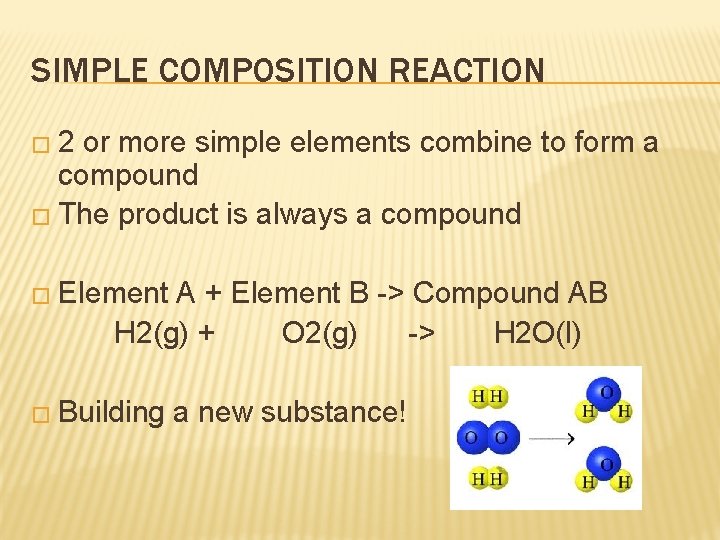
SIMPLE COMPOSITION REACTION � 2 or more simple elements combine to form a compound � The product is always a compound � Element A + Element B -> Compound AB H 2(g) + O 2(g) -> H 2 O(l) � Building a new substance!
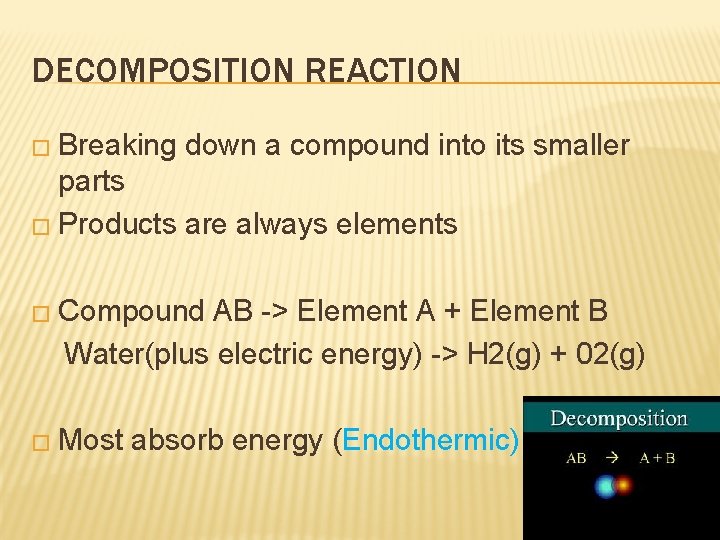
DECOMPOSITION REACTION � Breaking down a compound into its smaller parts � Products are always elements � Compound AB -> Element A + Element B Water(plus electric energy) -> H 2(g) + 02(g) � Most absorb energy (Endothermic)
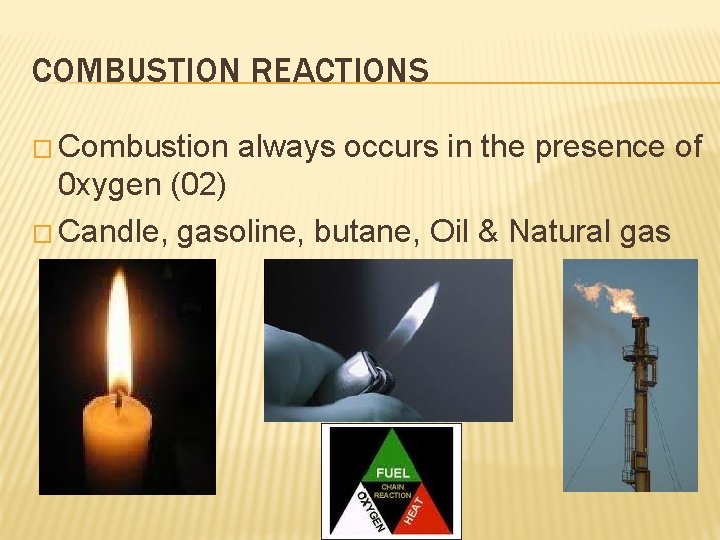
COMBUSTION REACTIONS � Combustion always occurs in the presence of 0 xygen (02) � Candle, gasoline, butane, Oil & Natural gas
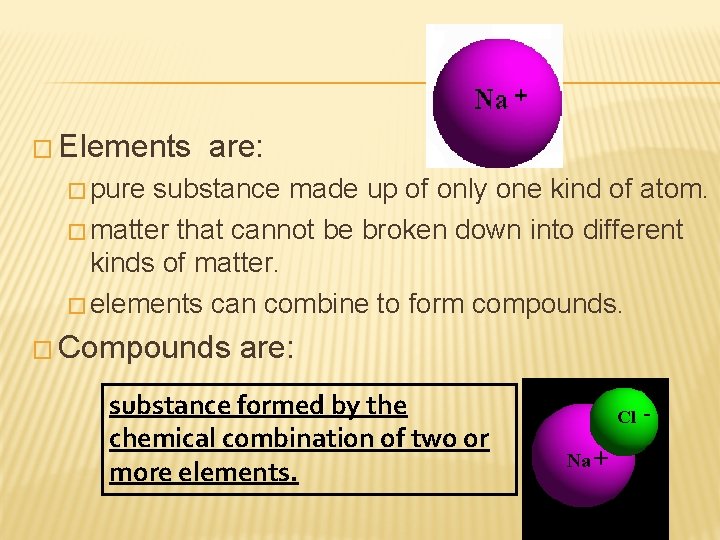
� Elements are: � pure substance made up of only one kind of atom. � matter that cannot be broken down into different kinds of matter. � elements can combine to form compounds. � Compounds are: substance formed by the chemical combination of two or more elements.
NAMING COMPOUNDS � Every compound has both a chemical name AND a chemical formula. � To prevent confusion, scientists use a universal language of symbols to create the formulas. � We use the symbol for each element from the periodic table. � Each formula shows �WHICH elements make it up �HOW many of each there are, and �the STATE.
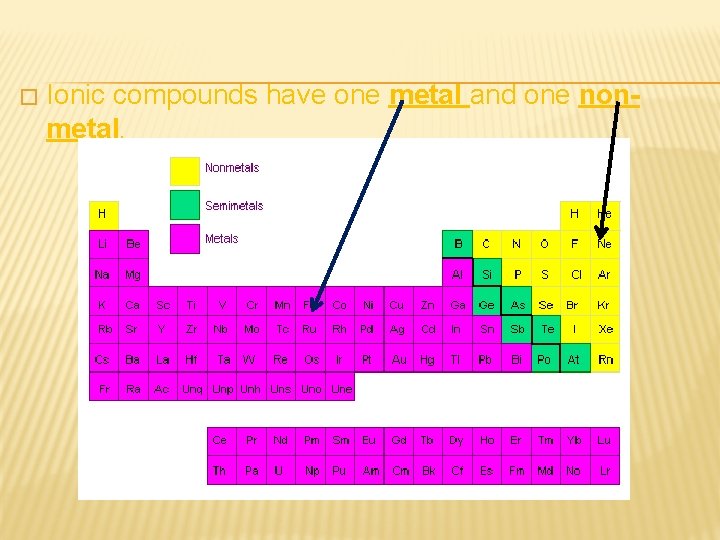
� Ionic compounds have one metal and one nonmetal.
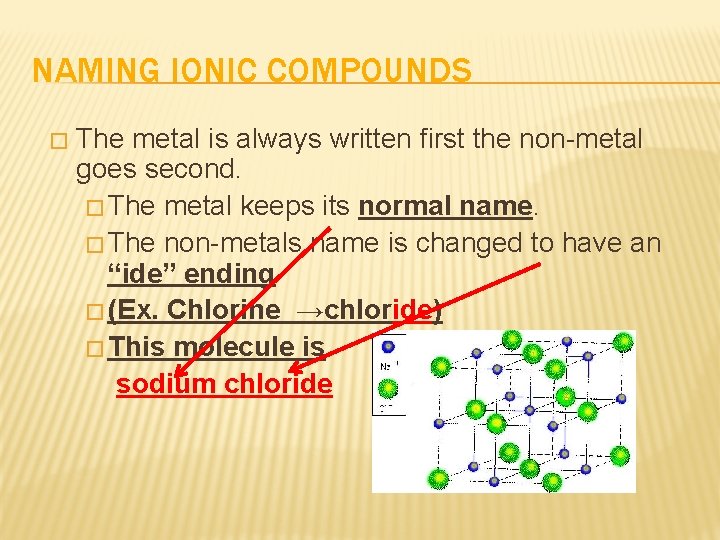
NAMING IONIC COMPOUNDS � The metal is always written first the non-metal goes second. � The metal keeps its normal name. � The non-metals name is changed to have an “ide” ending � (Ex. Chlorine →chloride) � This molecule is sodium chloride
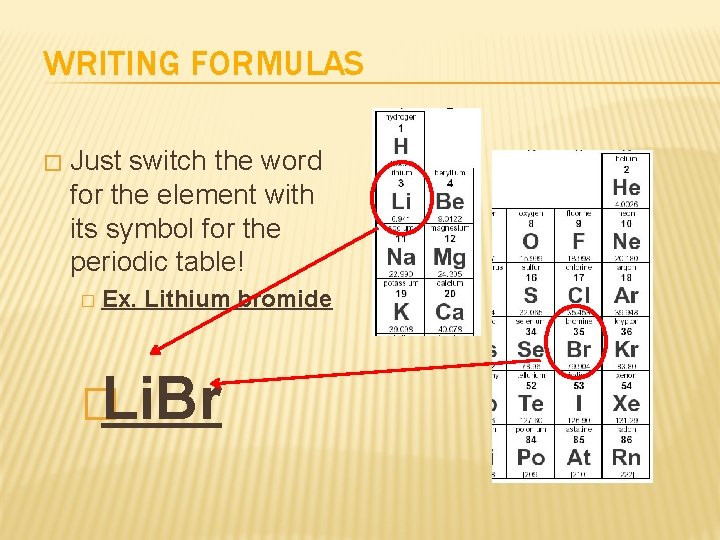
WRITING FORMULAS � Just switch the word for the element with its symbol for the periodic table! � Ex. Lithium bromide �Li. Br
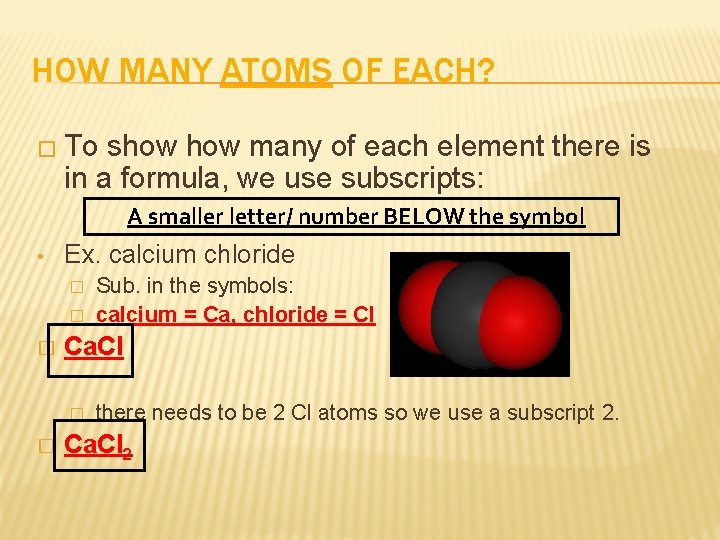
HOW MANY ATOMS OF EACH? � To show many of each element there is in a formula, we use subscripts: A smaller letter/ number BELOW the symbol • Ex. calcium chloride � � � Ca. Cl � � Sub. in the symbols: calcium = Ca, chloride = Cl there needs to be 2 Cl atoms so we use a subscript 2. Ca. Cl 2
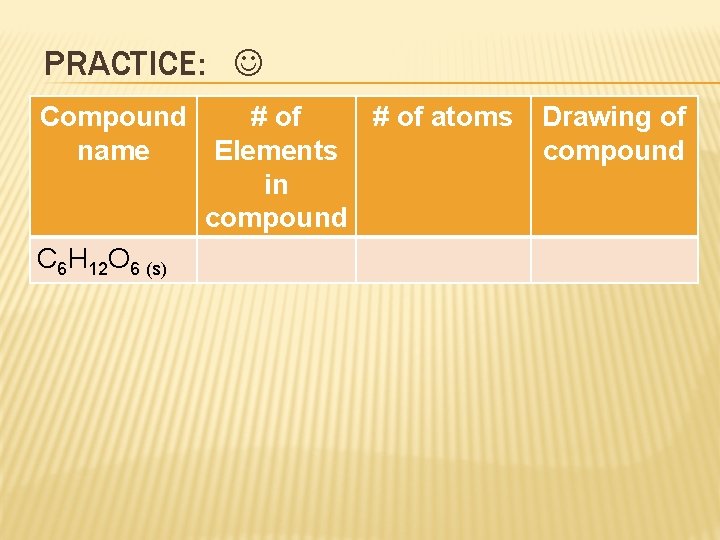
PRACTICE: Compound # of atoms name Elements in compound C 6 H 12 O 6 (s) Drawing of compound
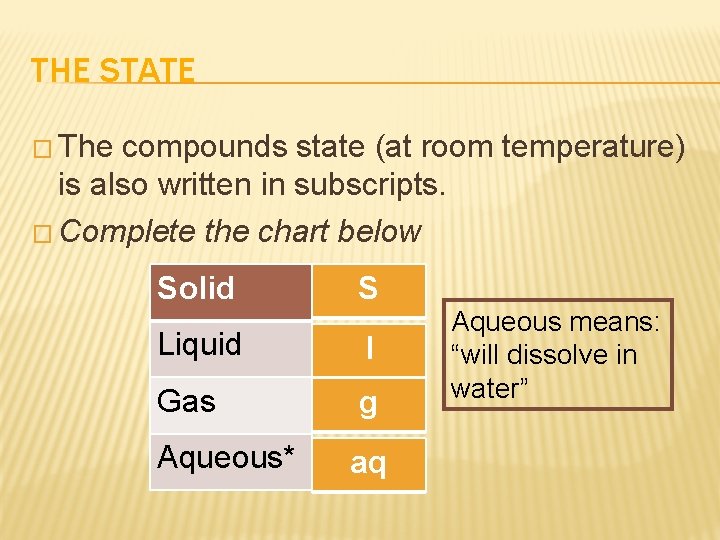
THE STATE � The compounds state (at room temperature) is also written in subscripts. � Complete the chart below Solid S Liquid l Gas g Aqueous* aq Aqueous means: “will dissolve in water”
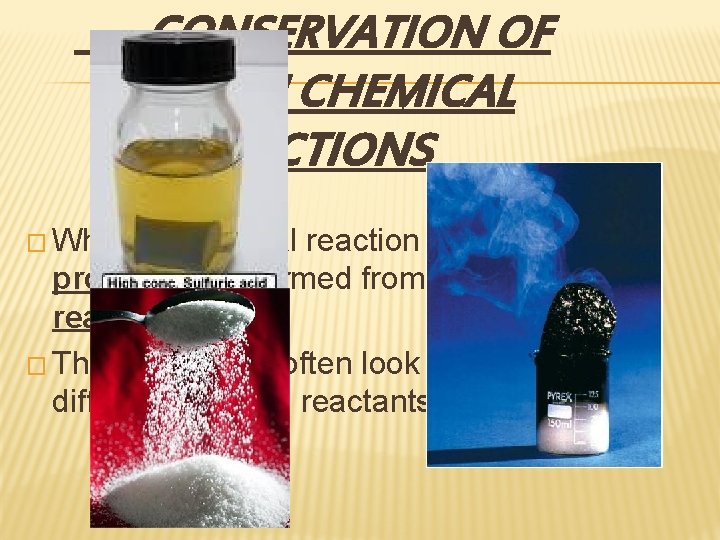
CONSERVATION OF MASS IN CHEMICAL REACTIONS � When a chemical reaction occurs, products are formed from the reactants. � These products often look very different than the reactants.
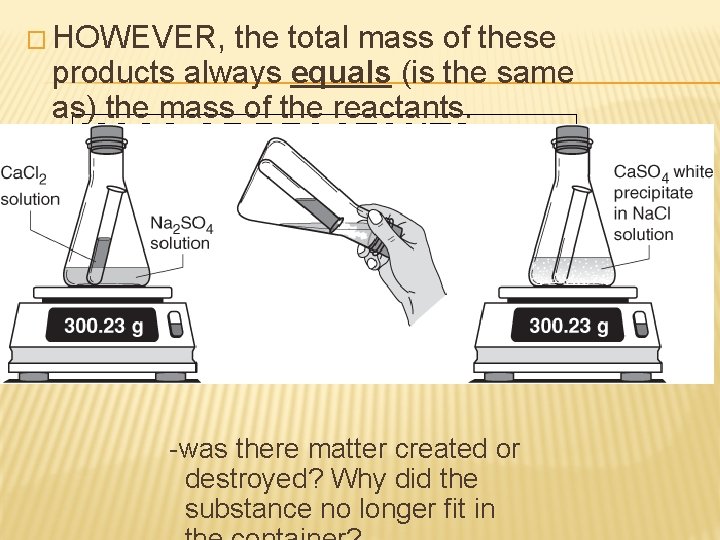
� HOWEVER, the total mass of these products always equals (is the same as) the mass of the reactants. MASS OF REACTANTS = MASS OF PRODUCTS � This is called the conservation of mass. � No matter is created or destroyed in chemical reactions. -was there matter created or destroyed? Why did the substance no longer fit in