
Word Choice Writing Well Wordiness n Using more
- Slides: 23
Word Choice Writing Well
Wordiness n Using more words than necessary n Often a sign of laziness n Readers resent the extra energy needed to read your writing
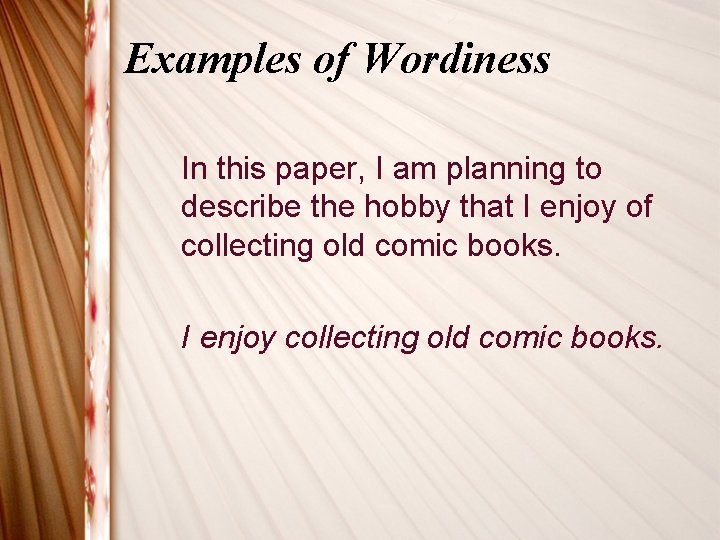
Examples of Wordiness In this paper, I am planning to describe the hobby that I enjoy of collecting old comic books. I enjoy collecting old comic books.
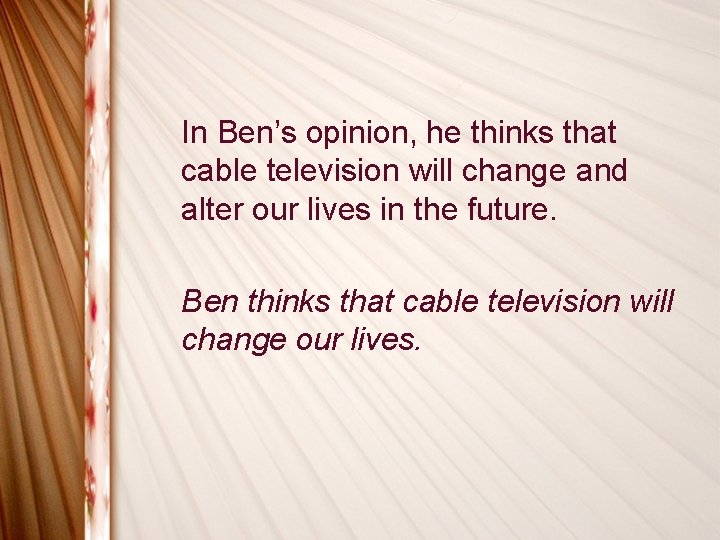
In Ben’s opinion, he thinks that cable television will change and alter our lives in the future. Ben thinks that cable television will change our lives.
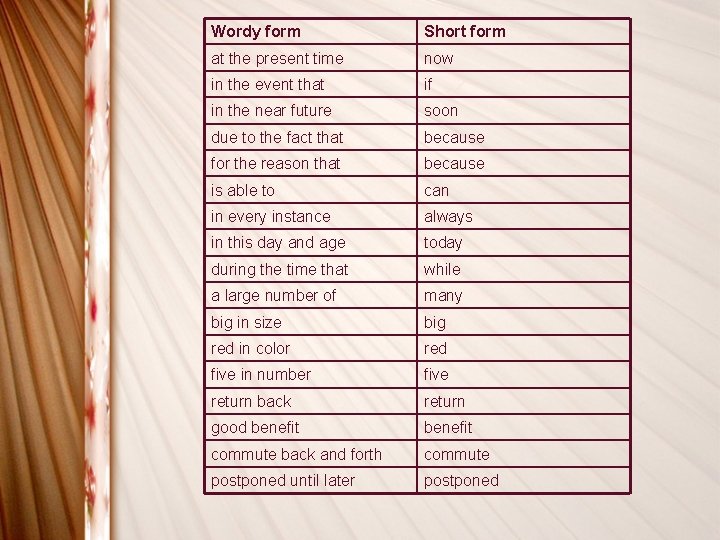
Wordy form Short form at the present time now in the event that if in the near future soon due to the fact that because for the reason that because is able to can in every instance always in this day and age today during the time that while a large number of many big in size big red in color red five in number five return back return good benefit commute back and forth commute postponed until later postponed
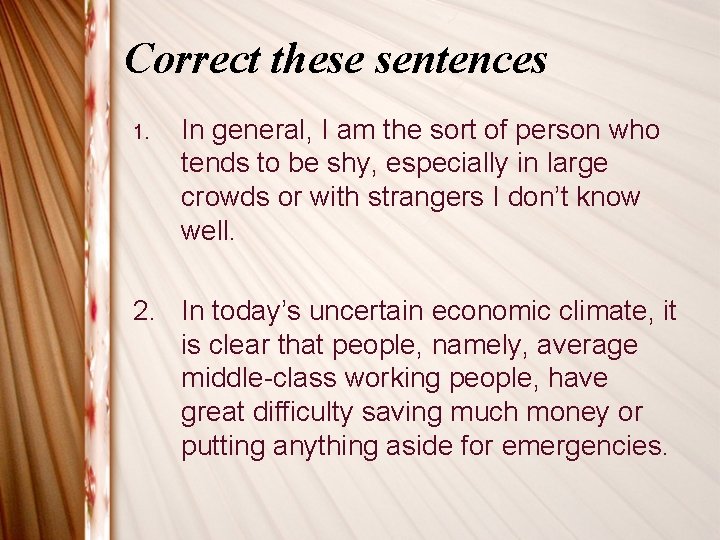
Correct these sentences 1. In general, I am the sort of person who tends to be shy, especially in large crowds or with strangers I don’t know well. 2. In today’s uncertain economic climate, it is clear that people, namely, average middle-class working people, have great difficulty saving much money or putting anything aside for emergencies.
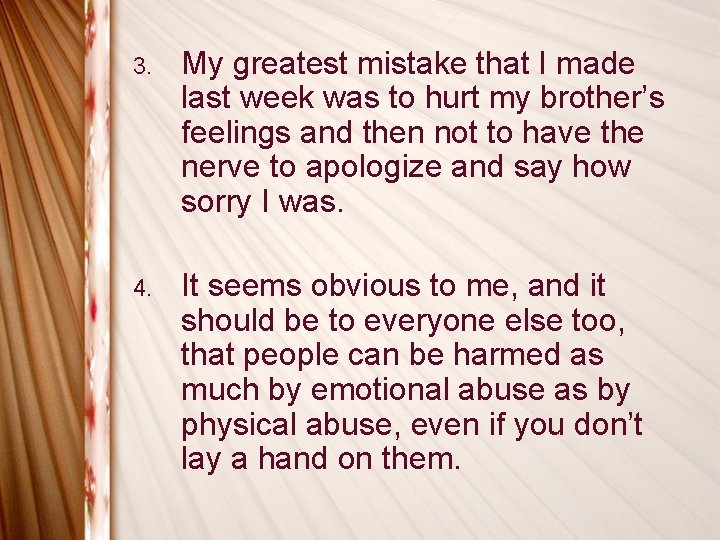
3. My greatest mistake that I made last week was to hurt my brother’s feelings and then not to have the nerve to apologize and say how sorry I was. 4. It seems obvious to me, and it should be to everyone else too, that people can be harmed as much by emotional abuse as by physical abuse, even if you don’t lay a hand on them.
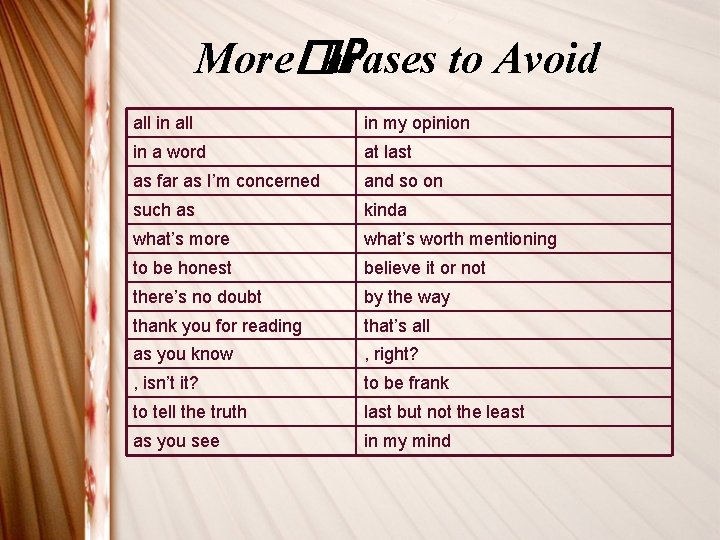
More�P hrases to Avoid all in my opinion in a word at last as far as I’m concerned and so on such as kinda what’s more what’s worth mentioning to be honest believe it or not there’s no doubt by the way thank you for reading that’s all as you know , right? , isn’t it? to be frank to tell the truth last but not the least as you see in my mind
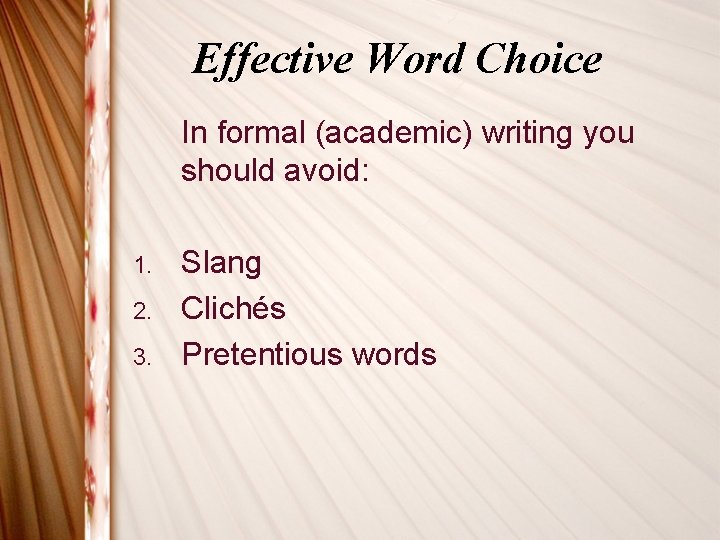
Effective Word Choice In formal (academic) writing you should avoid: 1. 2. 3. Slang Clichés Pretentious words
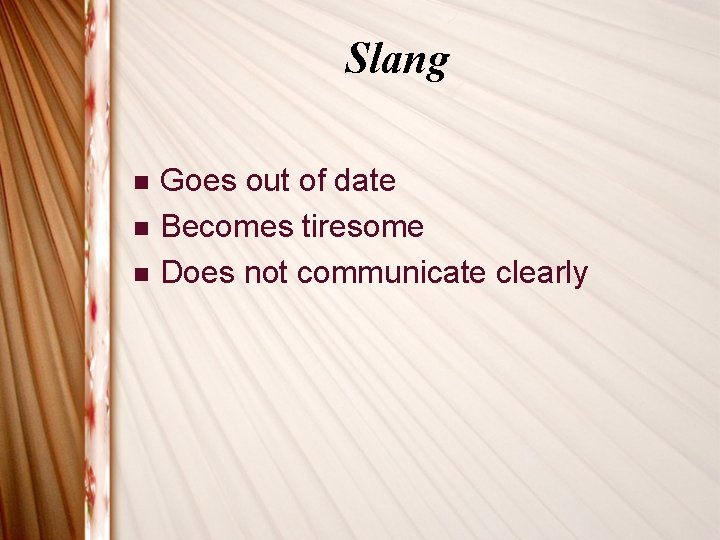
Slang n n n Goes out of date Becomes tiresome Does not communicate clearly
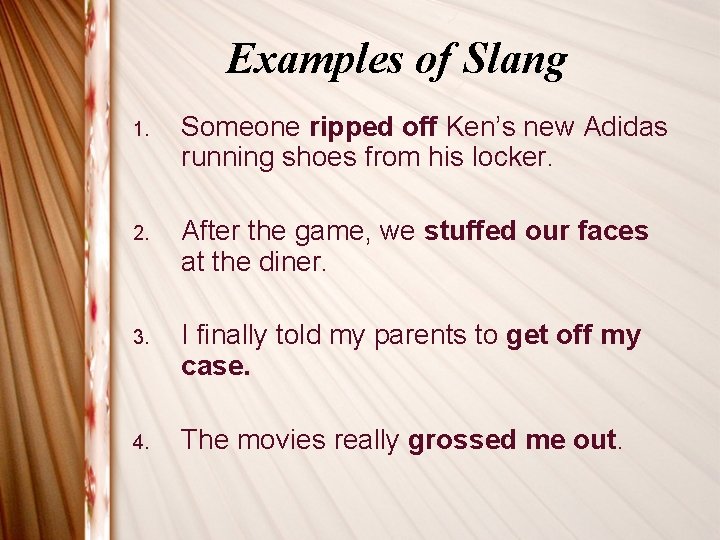
Examples of Slang 1. Someone ripped off Ken’s new Adidas running shoes from his locker. 2. After the game, we stuffed our faces at the diner. 3. I finally told my parents to get off my case. 4. The movies really grossed me out.
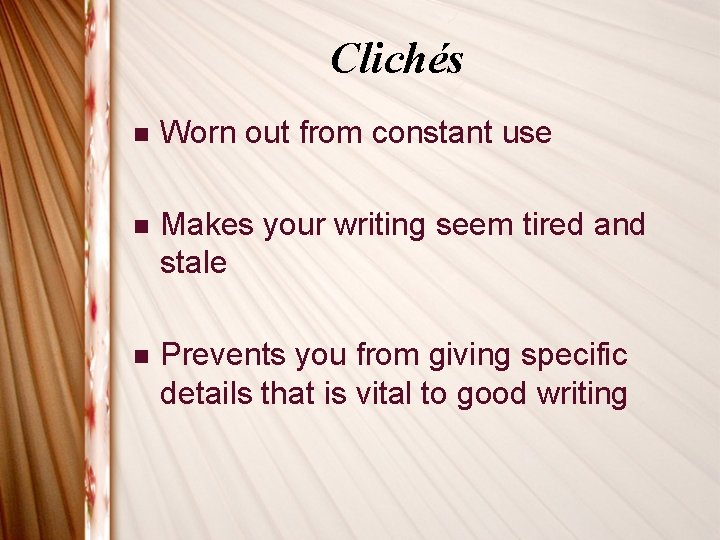
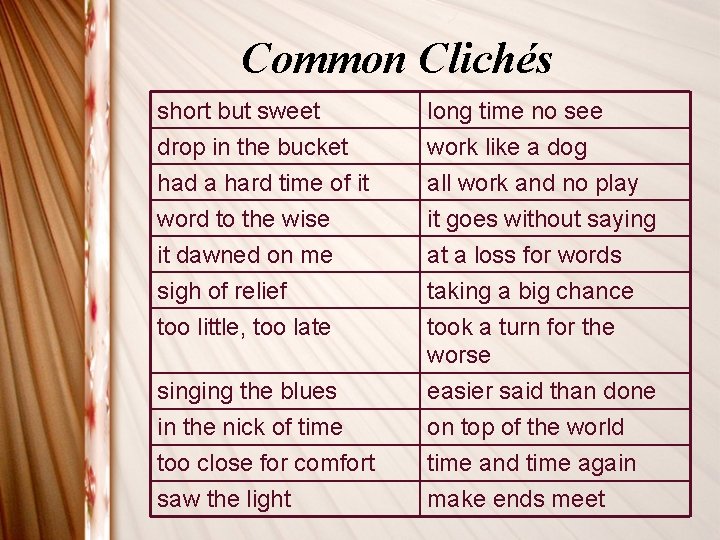
Clichés n Worn out from constant use n Makes your writing seem tired and stale n Prevents you from giving specific details that is vital to good writing
Common Clichés short but sweet drop in the bucket had a hard time of it word to the wise long time no see work like a dog all work and no play it goes without saying it dawned on me sigh of relief too little, too late at a loss for words taking a big chance took a turn for the worse easier said than done on top of the world time and time again make ends meet singing the blues in the nick of time too close for comfort saw the light
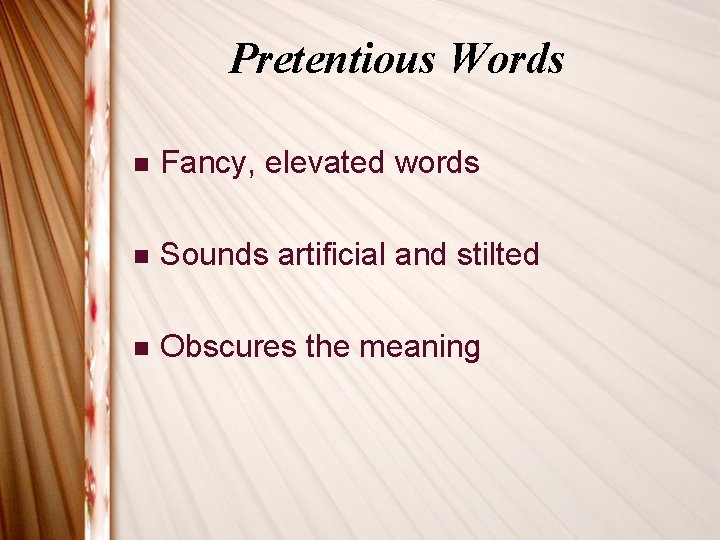
Pretentious Words n Fancy, elevated words n Sounds artificial and stilted n Obscures the meaning
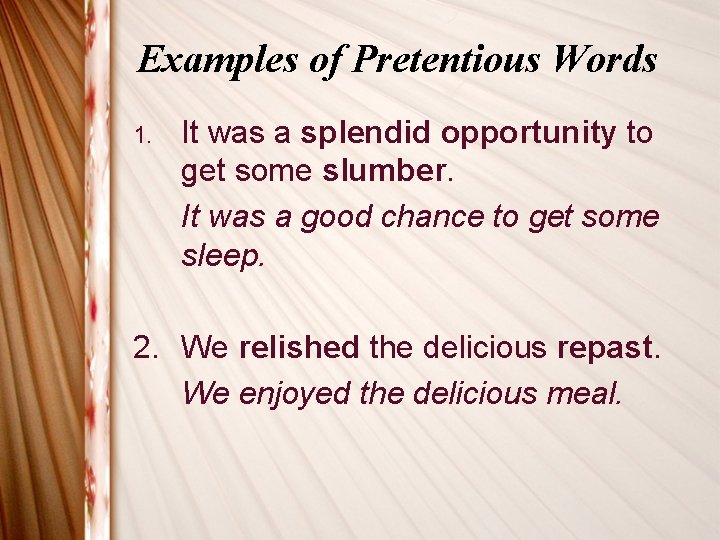
Examples of Pretentious Words 1. It was a splendid opportunity to get some slumber. It was a good chance to get some sleep. 2. We relished the delicious repast. We enjoyed the delicious meal.
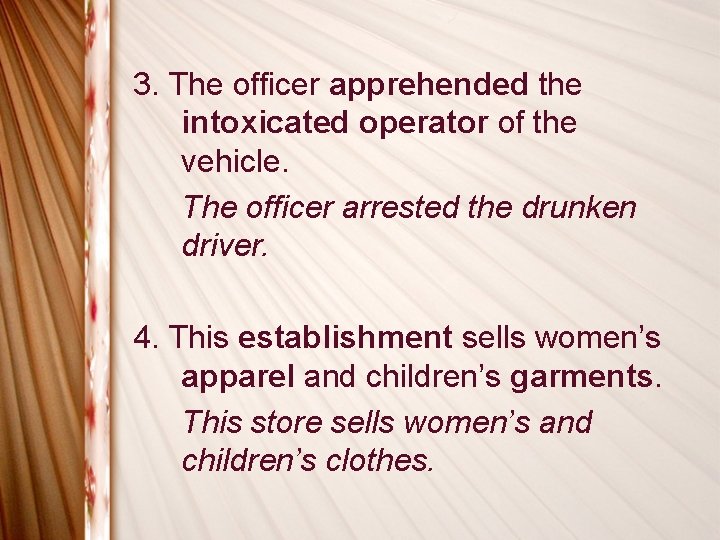
3. The officer apprehended the intoxicated operator of the vehicle. The officer arrested the drunken driver. 4. This establishment sells women’s apparel and children’s garments. This store sells women’s and children’s clothes.
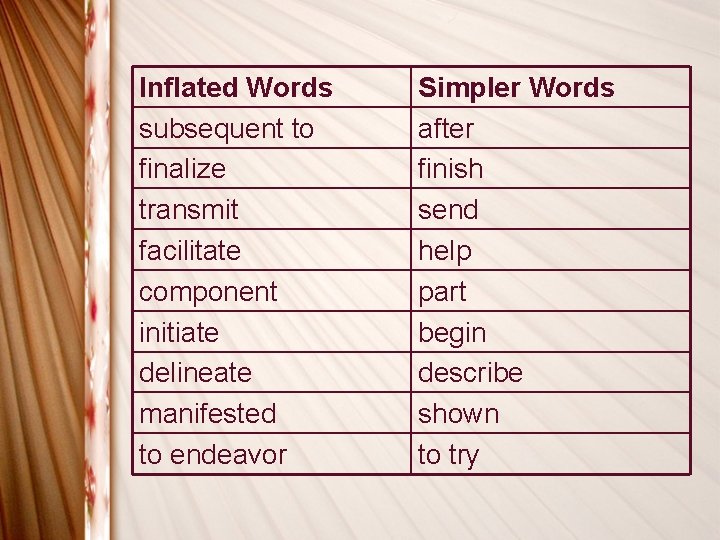
Inflated Words subsequent to finalize transmit facilitate component initiate delineate manifested to endeavor Simpler Words after finish send help part begin describe shown to try
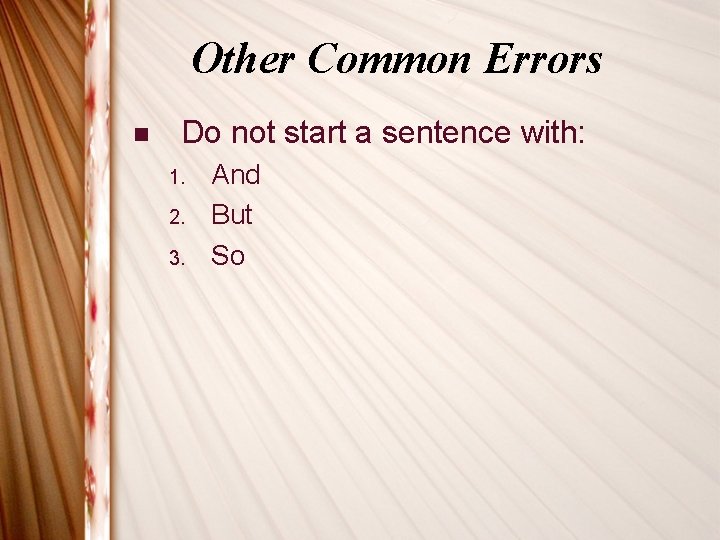
Other Common Errors n Do not start a sentence with: 1. 2. 3. And But So
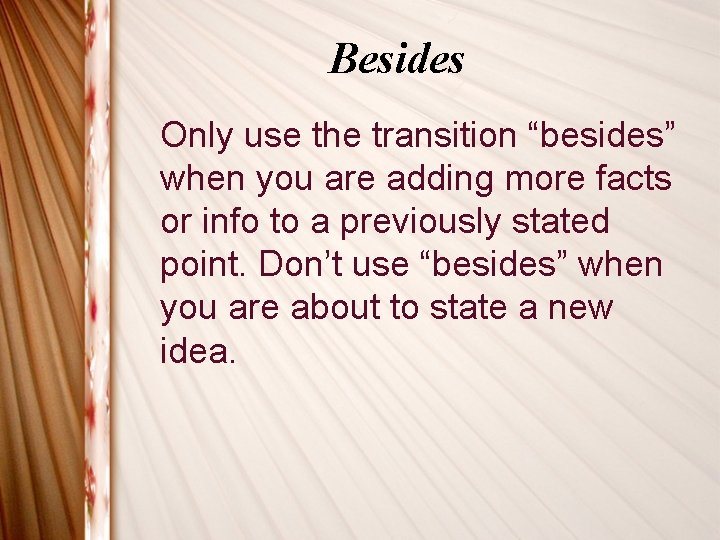
Besides Only use the transition “besides” when you are adding more facts or info to a previously stated point. Don’t use “besides” when you are about to state a new idea.
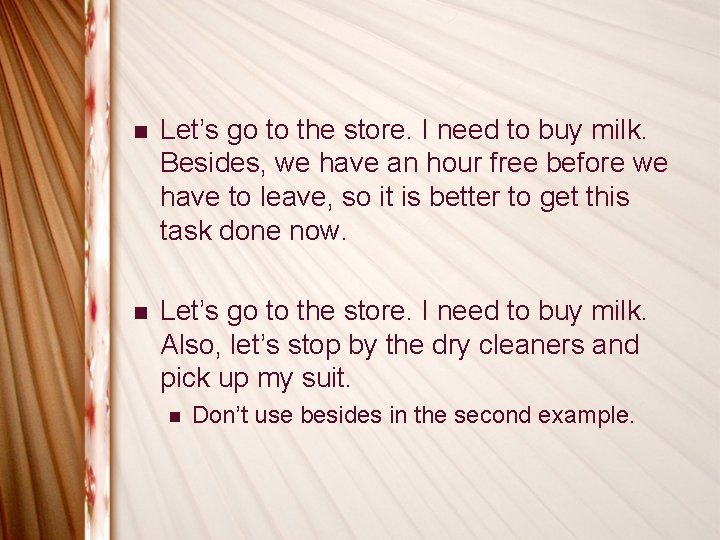
n Let’s go to the store. I need to buy milk. Besides, we have an hour free before we have to leave, so it is better to get this task done now. n Let’s go to the store. I need to buy milk. Also, let’s stop by the dry cleaners and pick up my suit. n Don’t use besides in the second example.
Let/Make n n Use let for something one allows another to do Use make for something one forces another to do I let him give me $5 n I made him give me $5 n He let me borrow $5 n He made me borrow $5 n
Basic Rules 1. 2. 3. 4. 5. 6. 7. Avoid alliteration. Always. Prepositions are not words to end sentences with. Avoid clichés like the plague. Employ the vernacular. Eschew ampersands & abbreviations, etc. Parenthetical remarks (however relevant) are unnecessary. Contractions aren’t necessary.
8. 9. 10. 11. 12. 13. 14. One should never generalize. Don’t be redundant; don’t needlessly use any more words than are actually necessary; it’s always very highly superfluous. Be more or less specific. Exaggeration is a billion times worse than understatement. One word sentences? Eliminate. The passive voice is to be avoided. Who needs rhetorical questions?