
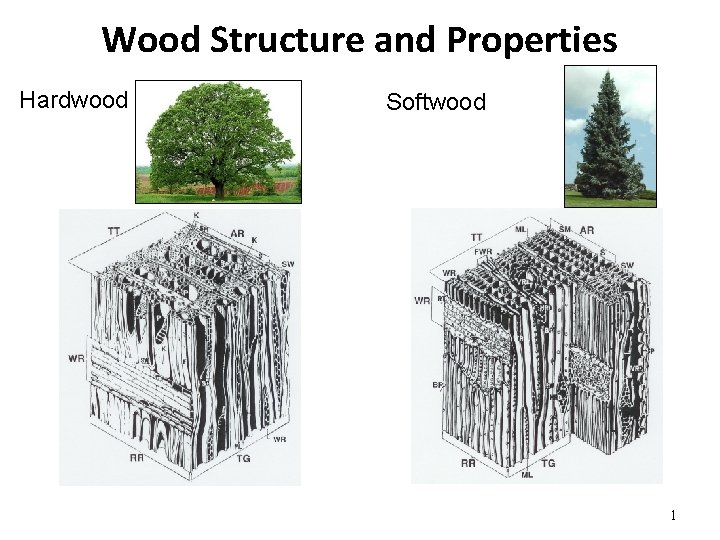
Wood Structure and Properties Hardwood Softwood 1 Functions
- Slides: 33
Wood Structure and Properties Hardwood Softwood 1
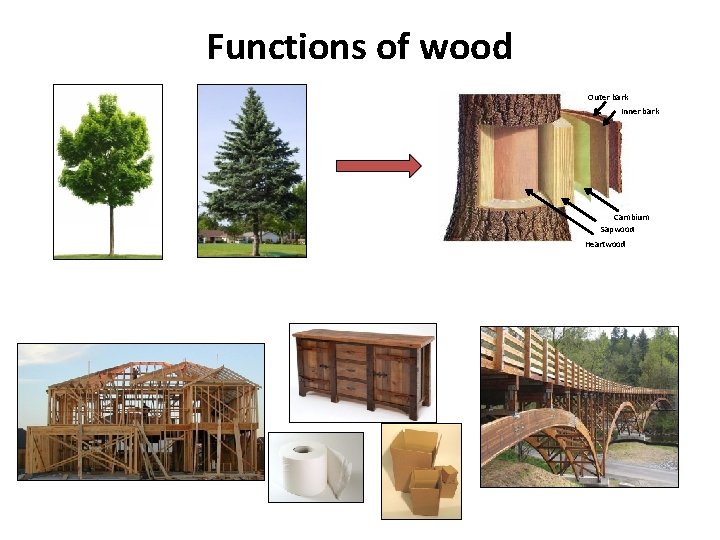
Functions of wood Outer bark Inner bark Cambium Sapwood Heartwood
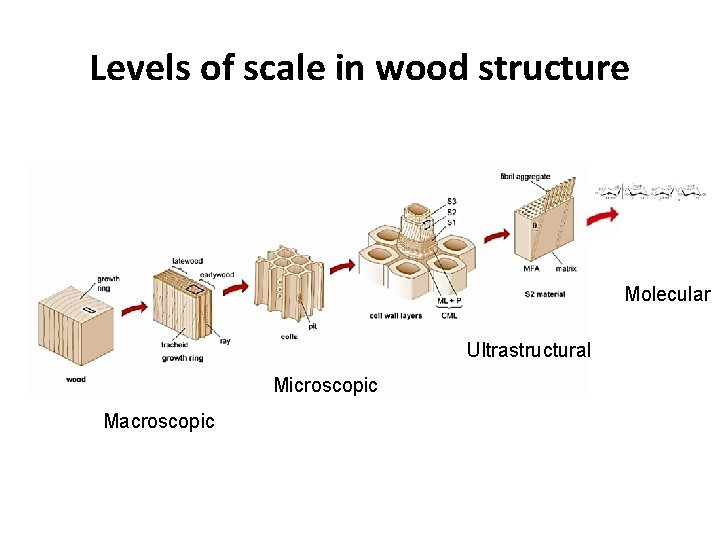
Levels of scale in wood structure Molecular Ultrastructural Microscopic Macroscopic
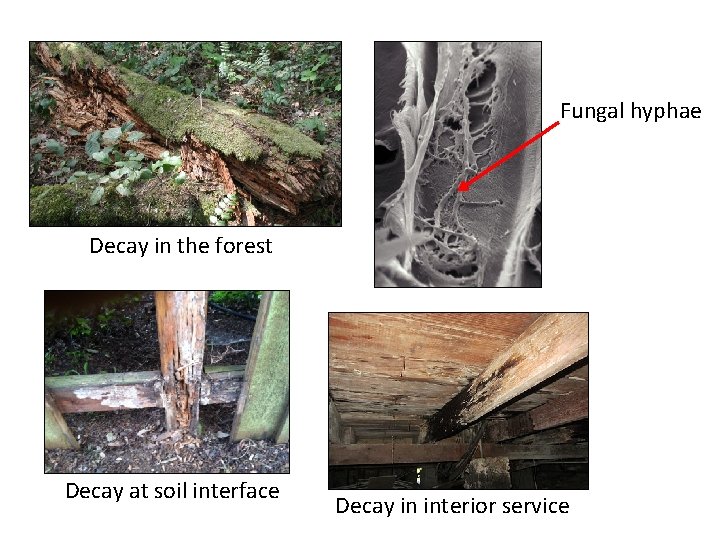
Biodegradability Conditions necessary for fungal decay of wood. • • Oxygen Water Temperature range Nutrition source
Fungal hyphae Decay in the forest Decay at soil interface Decay in interior service
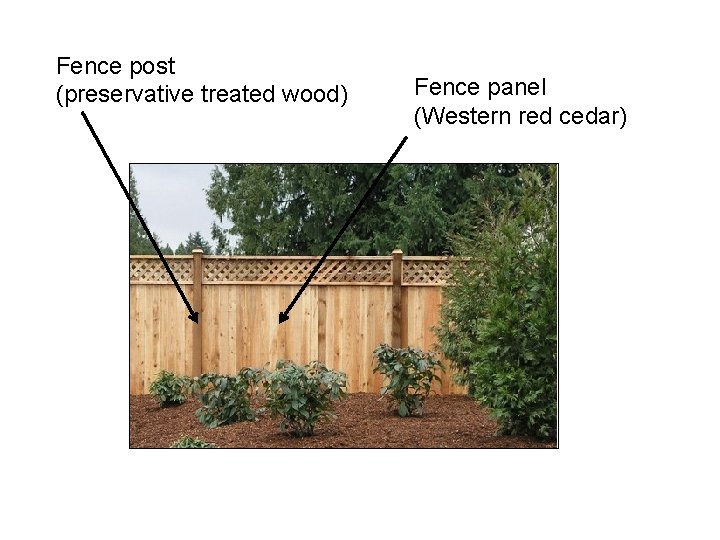
Fence post (preservative treated wood) • • Fence panel (Western red cedar) Oxygen Water Temperature range Nutrition source
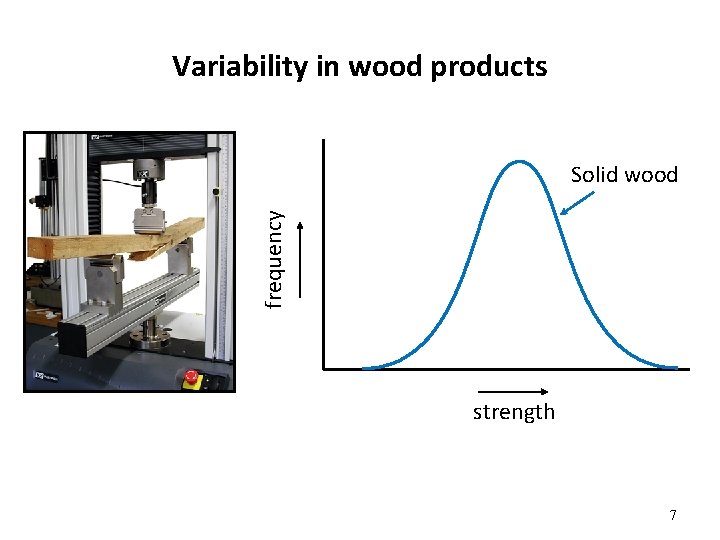
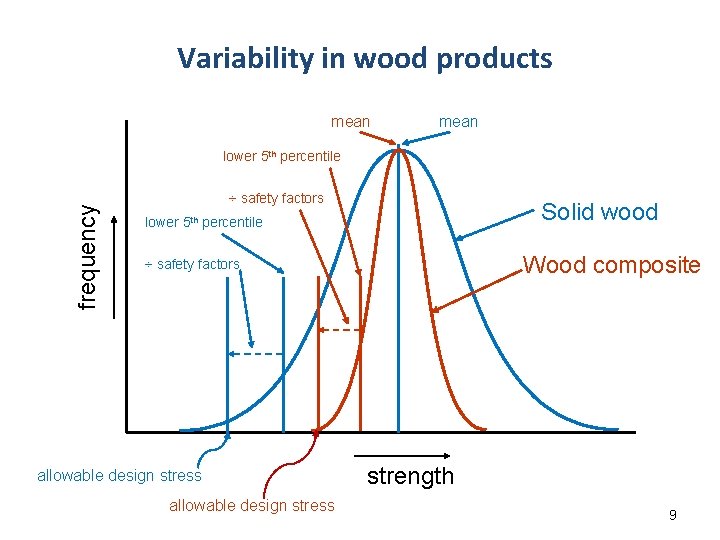
Variability in wood products frequency Solid wood strength 7
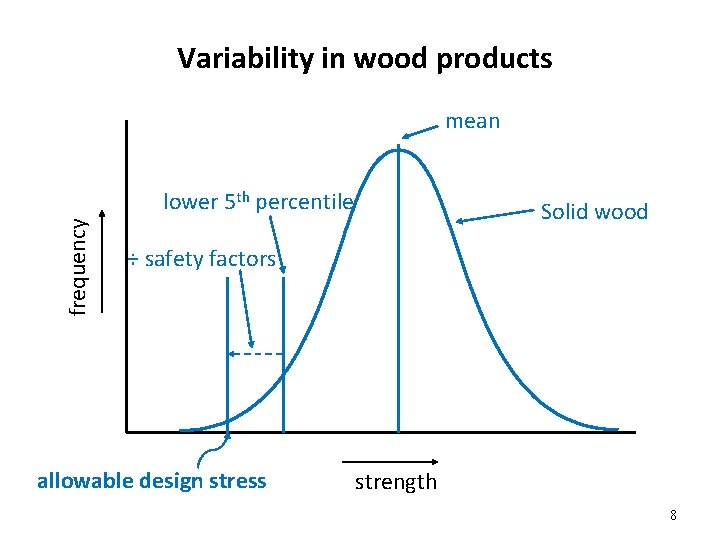
Variability in wood products mean frequency lower 5 th percentile Solid wood ÷ safety factors allowable design stress strength 8
Variability in wood products mean frequency lower 5 th percentile ÷ safety factors Solid wood lower 5 th percentile Wood composite ÷ safety factors allowable design stress strength 9
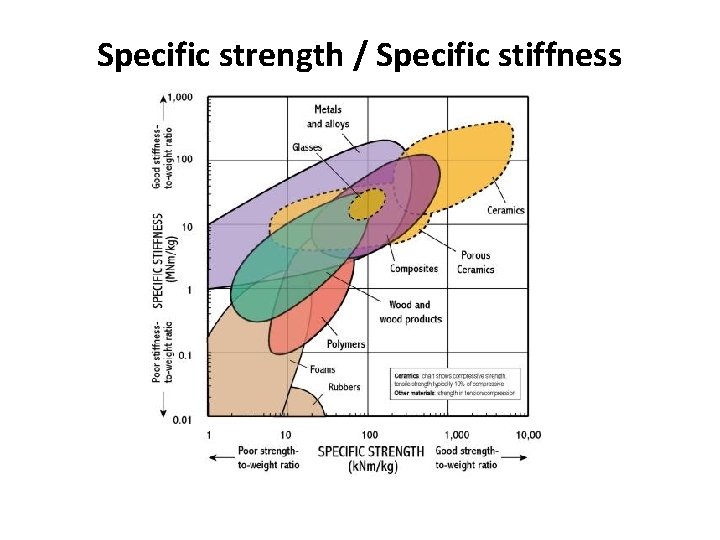
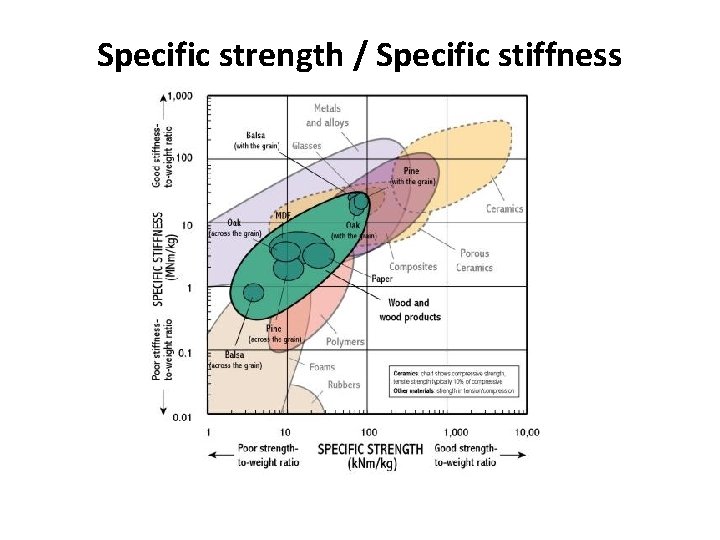
Specific strength / Specific stiffness
Specific strength / Specific stiffness
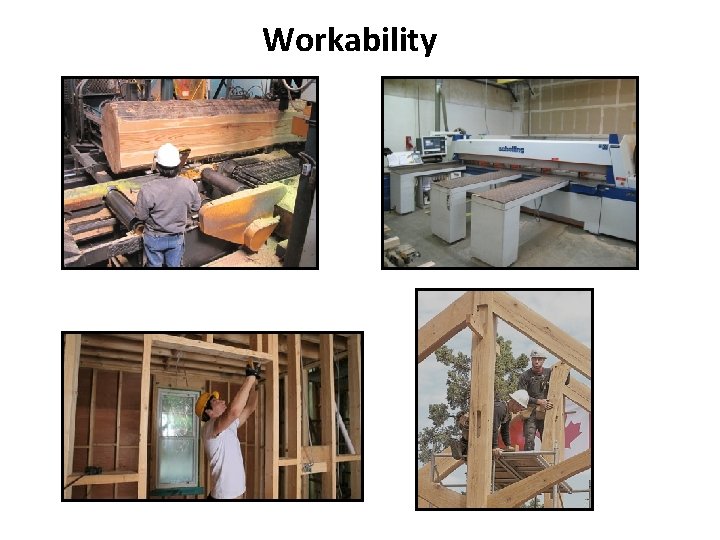
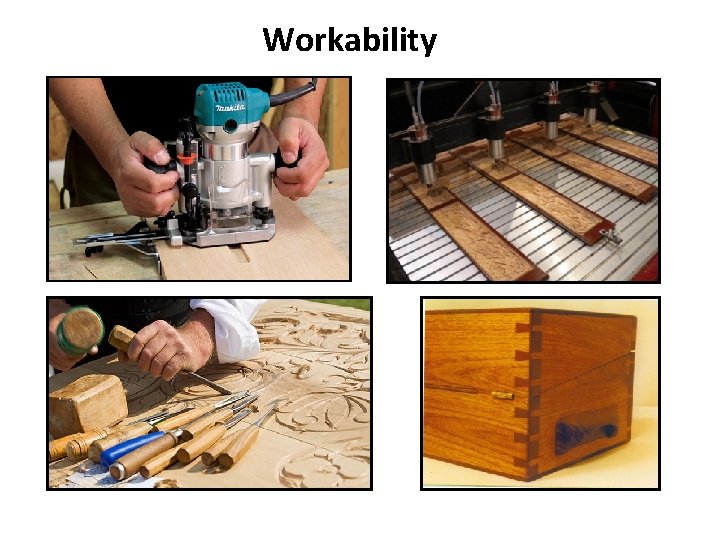
Workability
Workability
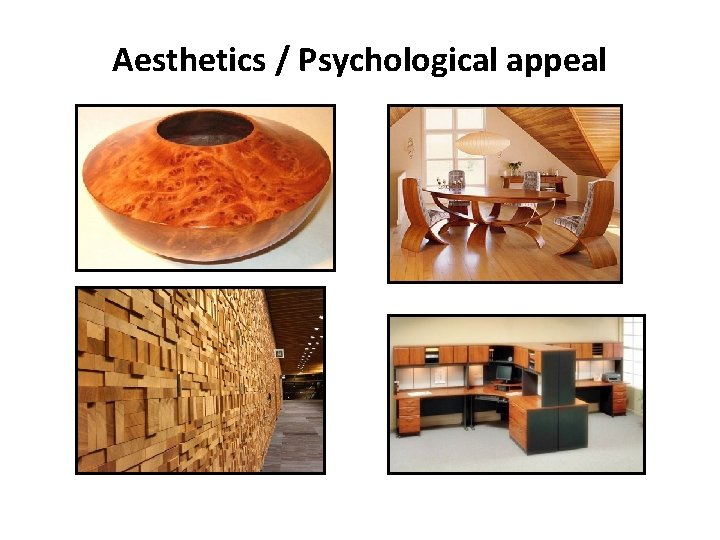
Aesthetics / Psychological appeal
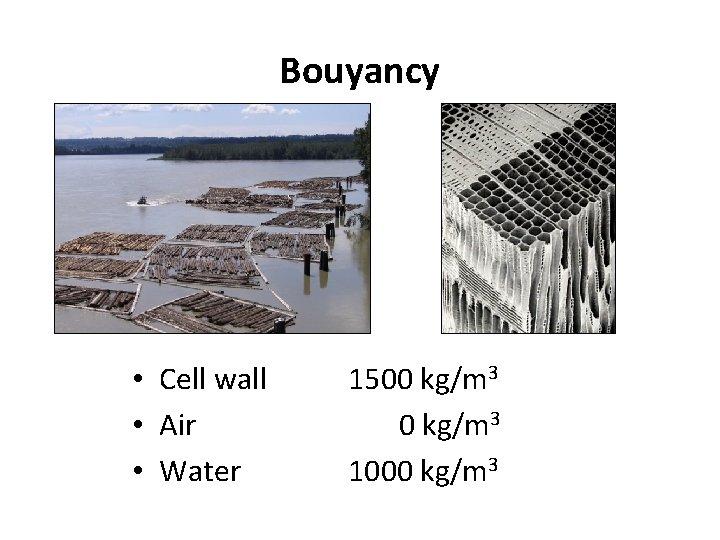
Bouyancy • Cell wall • Air • Water 1500 kg/m 3 1000 kg/m 3
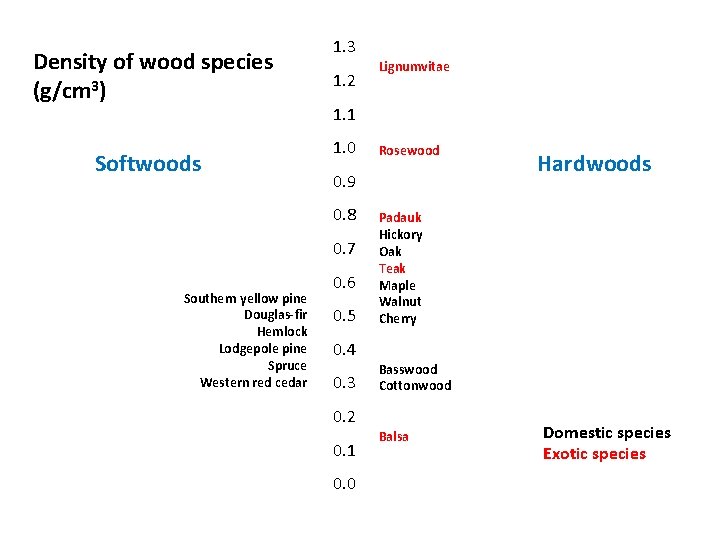
Density of wood species (g/cm 3) Softwoods 1. 3 1. 2 1. 1 1. 0 Rosewood 0. 9 0. 8 0. 7 Southern yellow pine Douglas-fir Hemlock Lodgepole pine Spruce Western red cedar Lignumvitae 0. 6 0. 5 Hardwoods Padauk Hickory Oak Teak Maple Walnut Cherry 0. 4 0. 3 Basswood Cottonwood 0. 2 0. 1 0. 0 Balsa Domestic species Exotic species
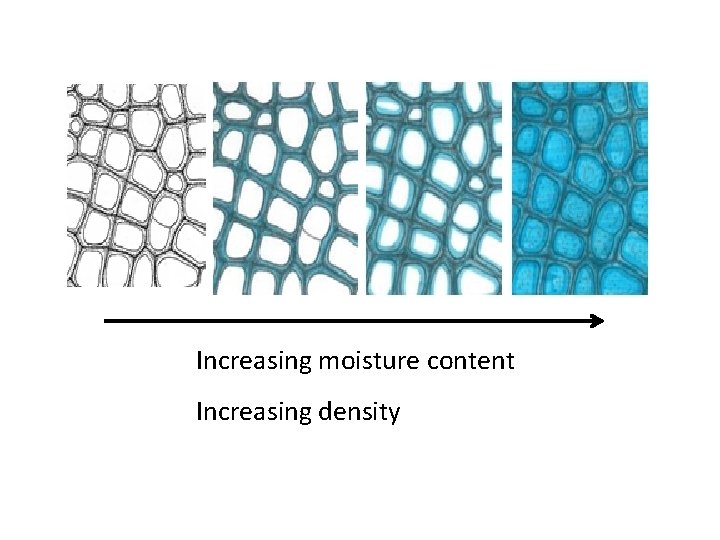
Increasing moisture content Increasing density
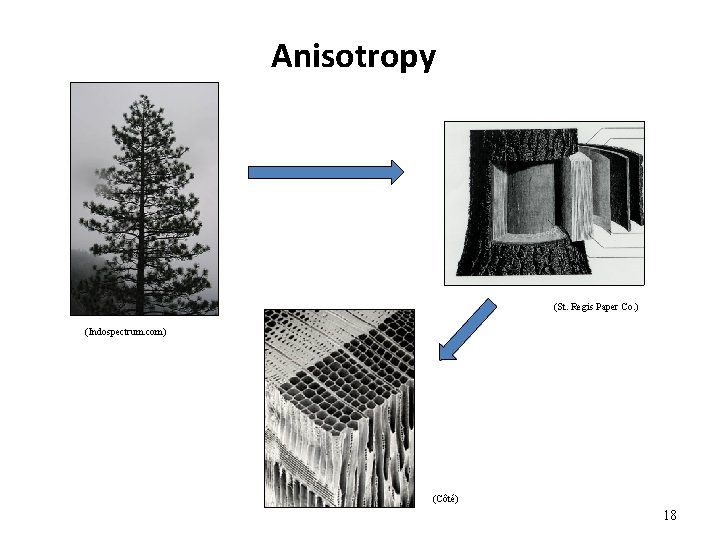
Anisotropy (St. Regis Paper Co. ) (Indospectrum. com) (Côté) 18
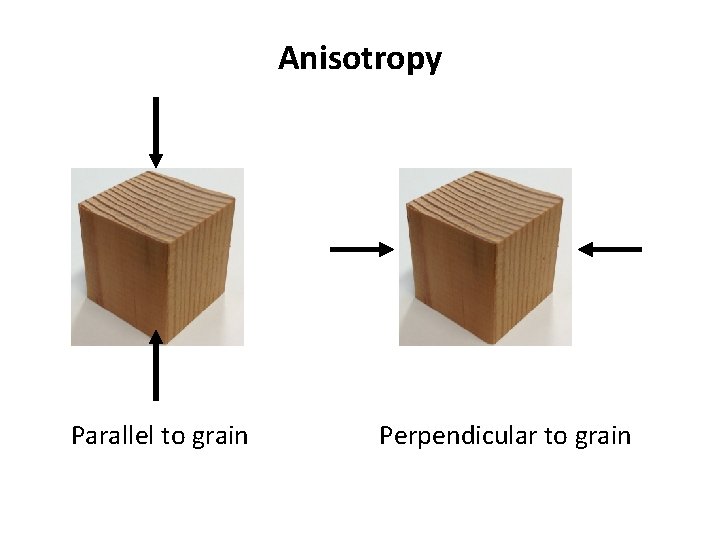
Anisotropy Parallel to grain Perpendicular to grain
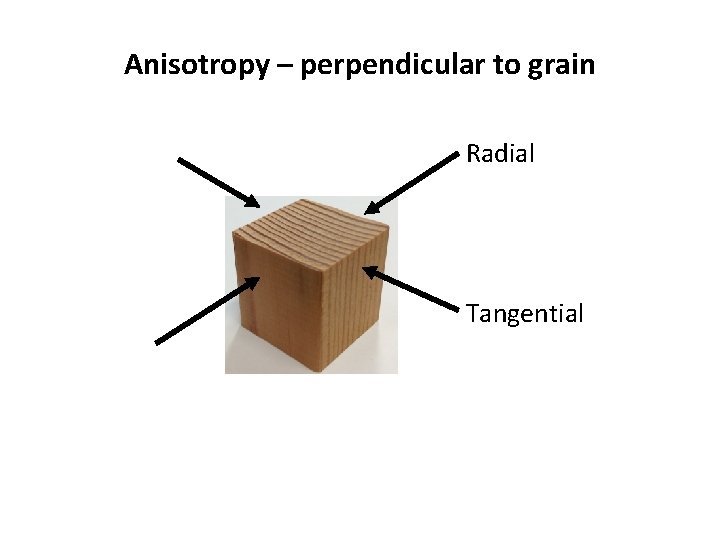
Anisotropy – perpendicular to grain Radial Tangential
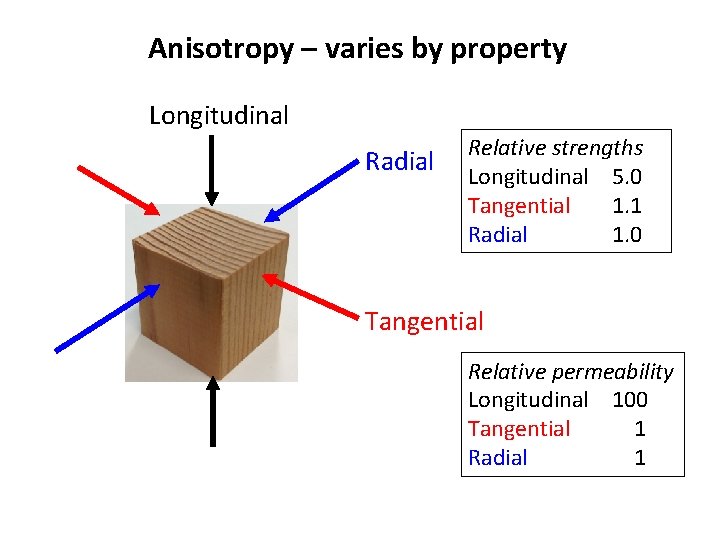
Anisotropy – varies by property Longitudinal Radial Relative strengths Longitudinal 5. 0 Tangential 1. 1 Radial 1. 0 Tangential Relative permeability Longitudinal 100 Tangential 1 Radial 1
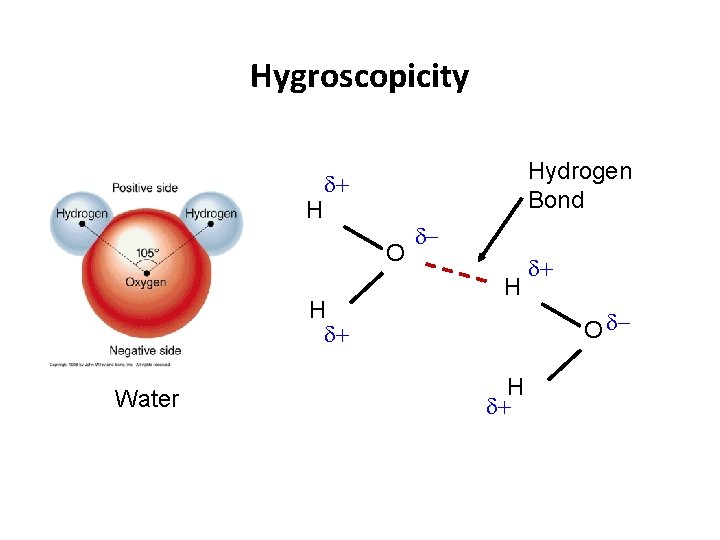
Hygroscopicity H Hydrogen Bond O H Water H O H
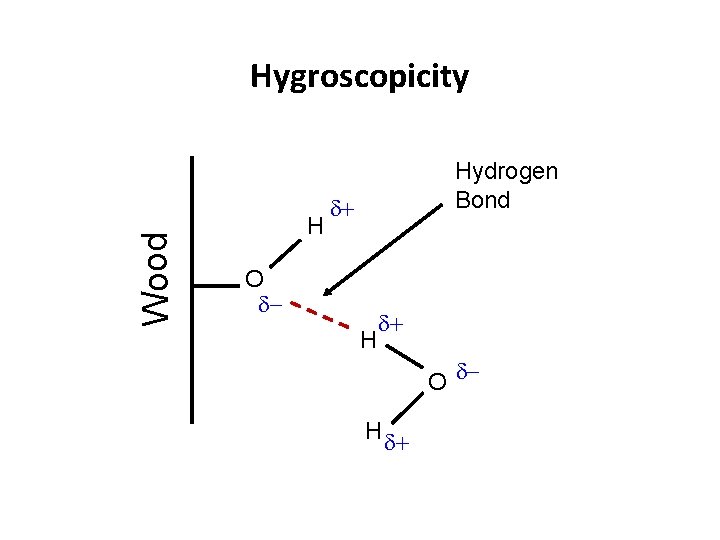
Wood Hygroscopicity H Hydrogen Bond O H O H
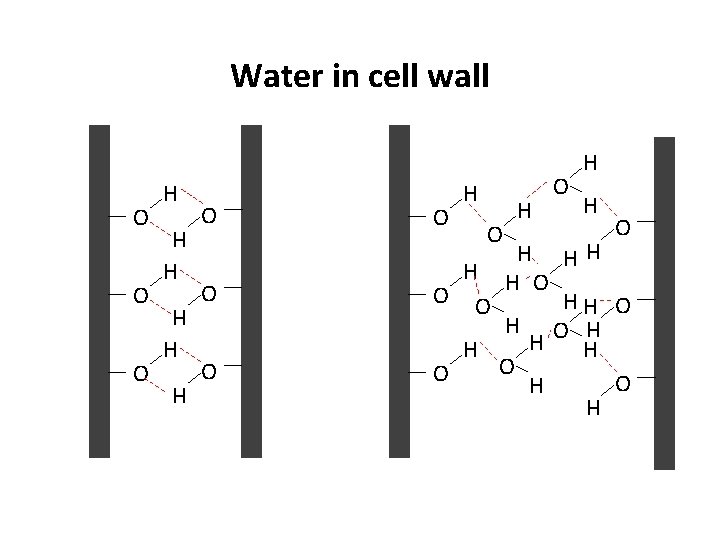
Water in cell wall H H O O O HH H O H H H O O H O H O H H H O H O O H H
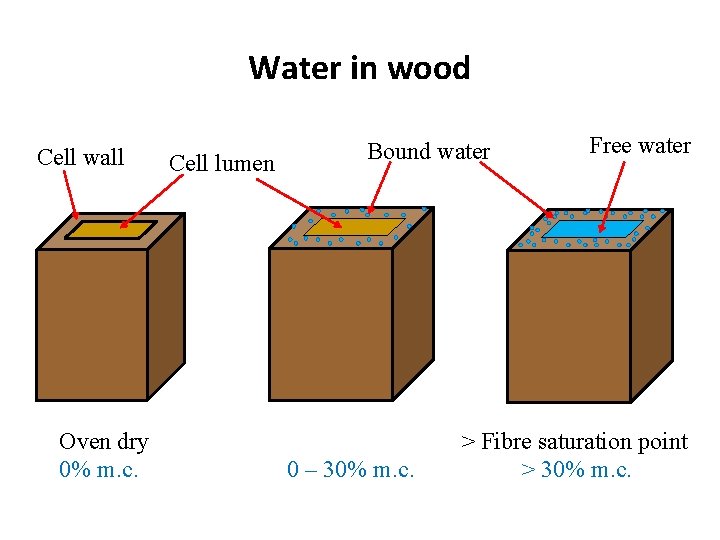
Water in wood Cell wall Oven dry 0% m. c. Cell lumen Bound water 0 – 30% m. c. Free water > Fibre saturation point > 30% m. c.
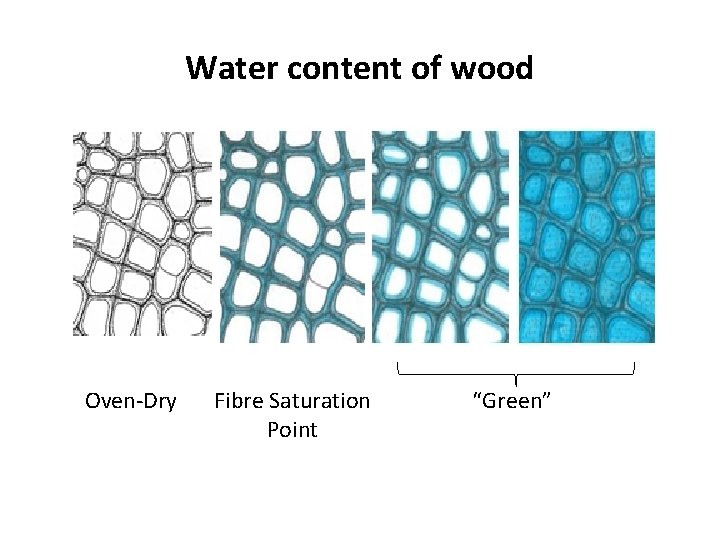
Water content of wood Oven-Dry Fibre Saturation Point “Green”
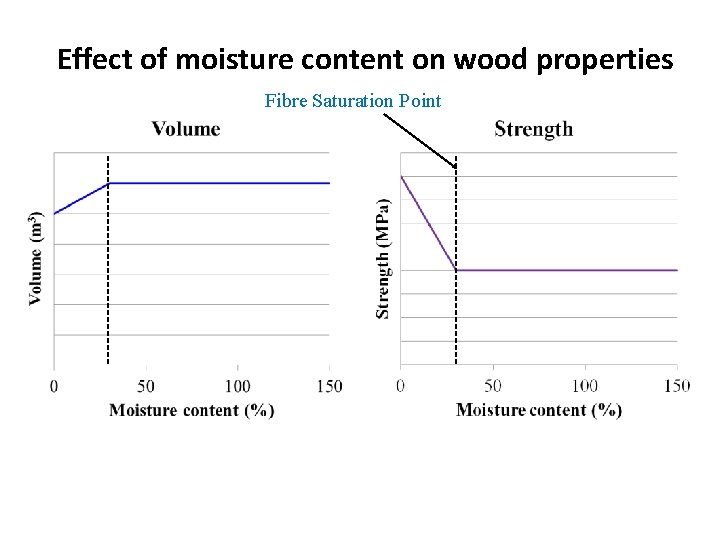
Effect of moisture content on wood properties Fibre Saturation Point
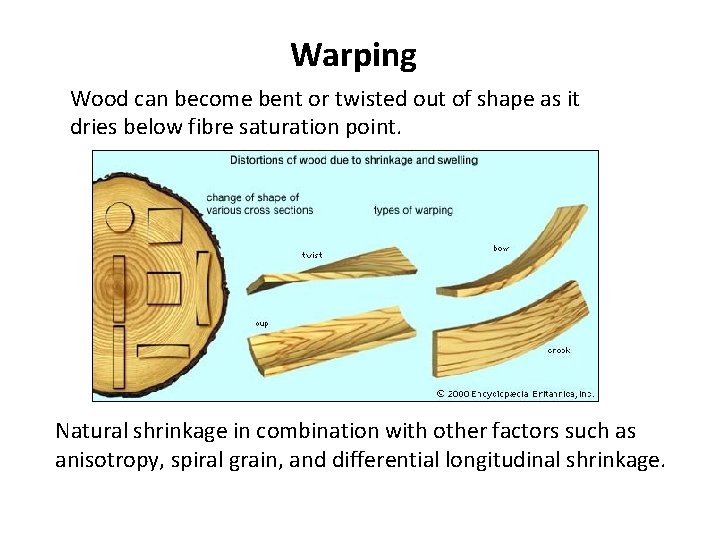
Warping Wood can become bent or twisted out of shape as it dries below fibre saturation point. Natural shrinkage in combination with other factors such as anisotropy, spiral grain, and differential longitudinal shrinkage.
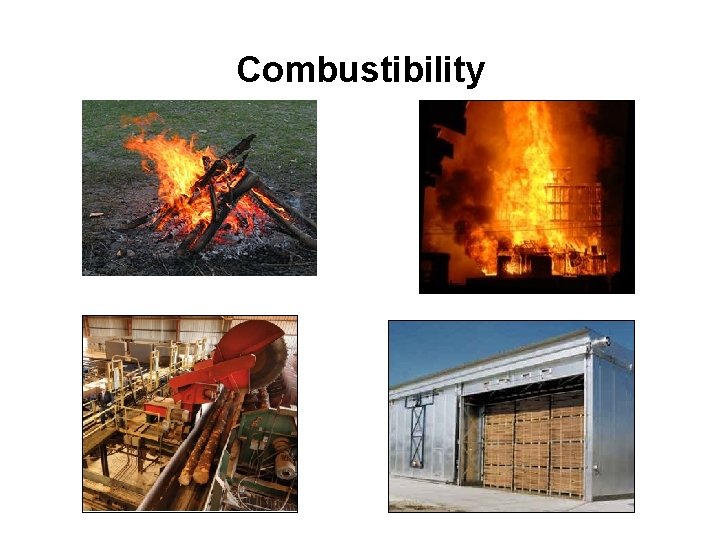
Combustibility
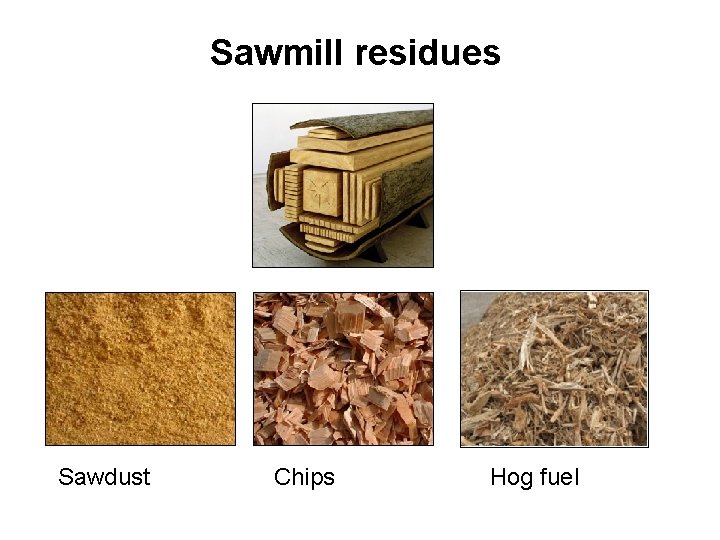
Sawmill residues Sawdust Chips Hog fuel
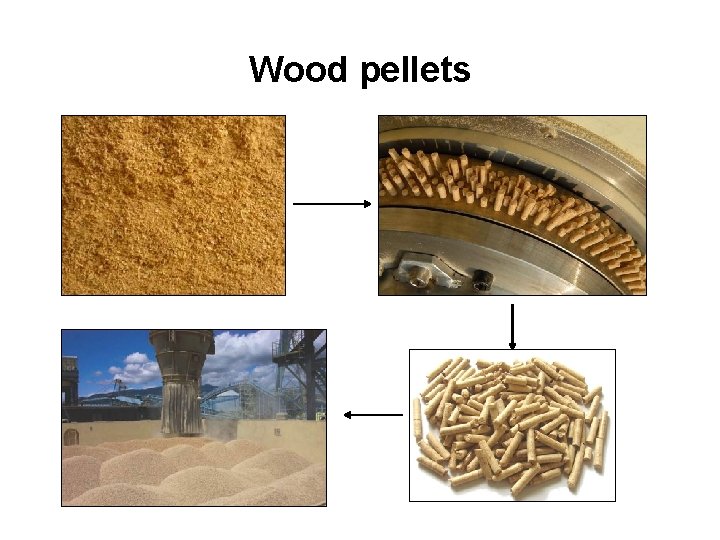
Wood pellets
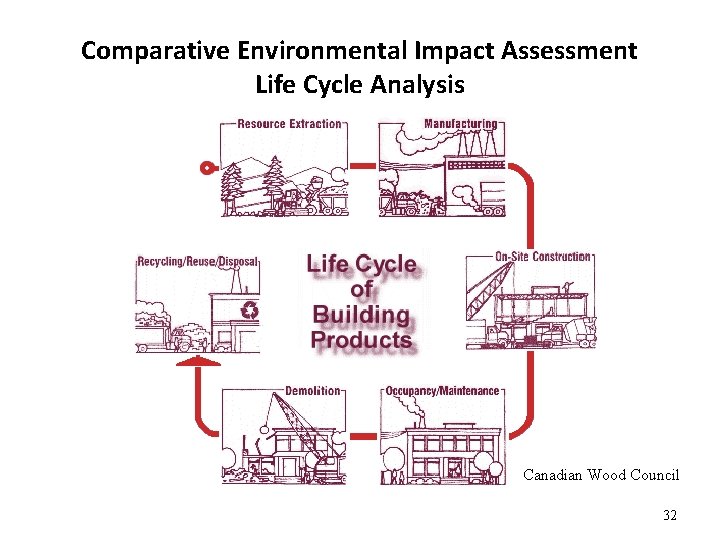
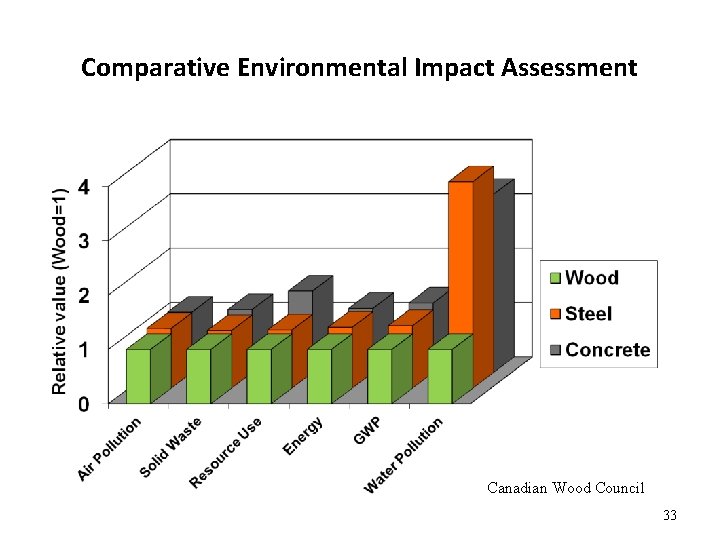
Comparative Environmental Impact Assessment Life Cycle Analysis Canadian Wood Council 32
Comparative Environmental Impact Assessment Canadian Wood Council 33