
Wood Frame Systems Common Components of a Traditional

- Slides: 16
Wood Frame Systems Common Components of a Traditional Wood Framed Building
Wood Framing Systems • Floor Joists • Subfloor • Walls • Top Plate • Window Opening • Roof Trusses • Insulation • Sheathing • Vapor Barrier • Siding • Underlayment • Asphalt Shingles
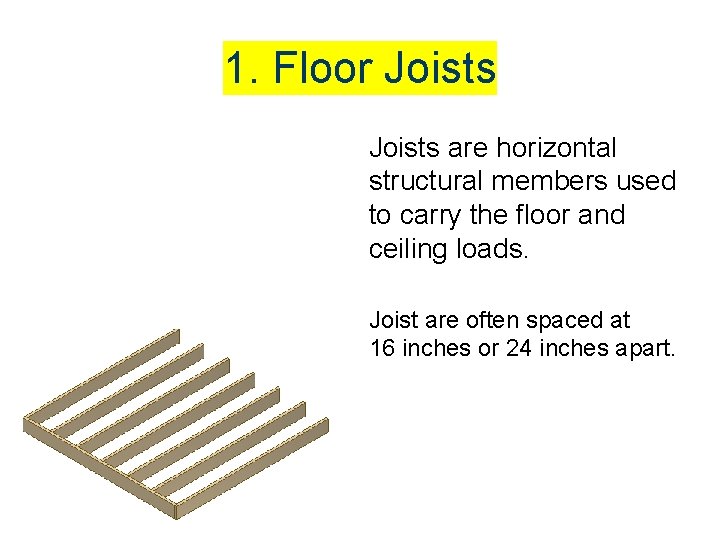
1. Floor Joists are horizontal structural members used to carry the floor and ceiling loads. Joist are often spaced at 16 inches or 24 inches apart.
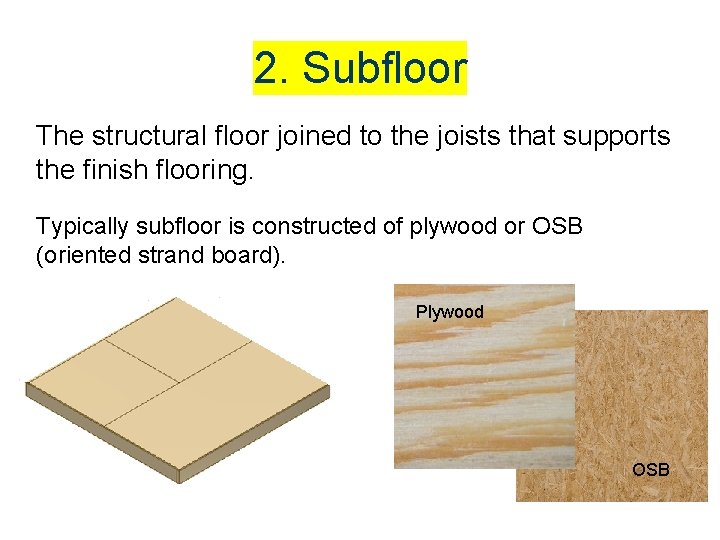
2. Subfloor The structural floor joined to the joists that supports the finish flooring. Typically subfloor is constructed of plywood or OSB (oriented strand board). Plywood OSB
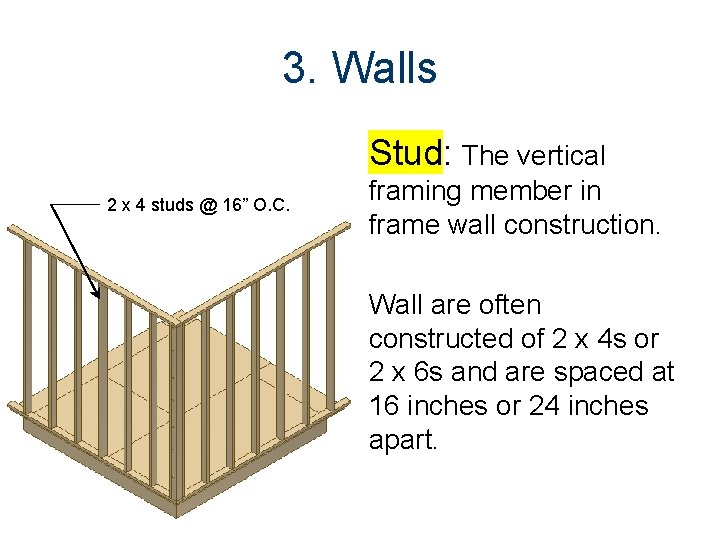
3. Walls Stud: The vertical 2 x 4 studs @ 16” O. C. framing member in frame wall construction. Wall are often constructed of 2 x 4 s or 2 x 6 s and are spaced at 16 inches or 24 inches apart.
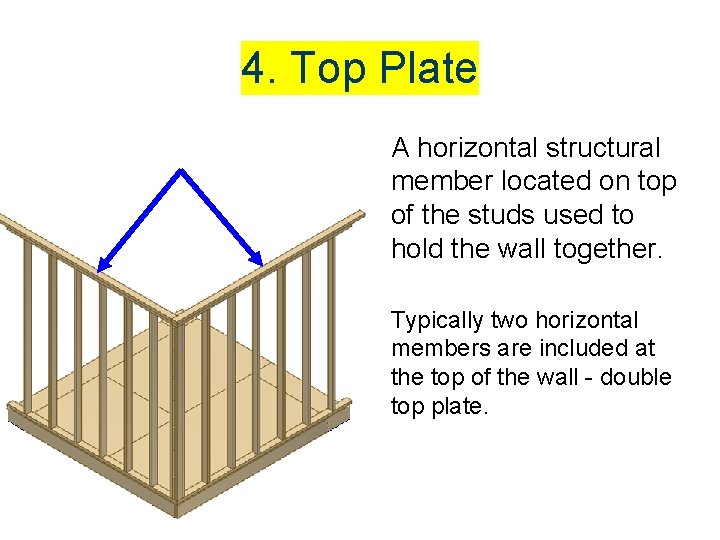
4. Top Plate A horizontal structural member located on top of the studs used to hold the wall together. Typically two horizontal members are included at the top of the wall - double top plate.
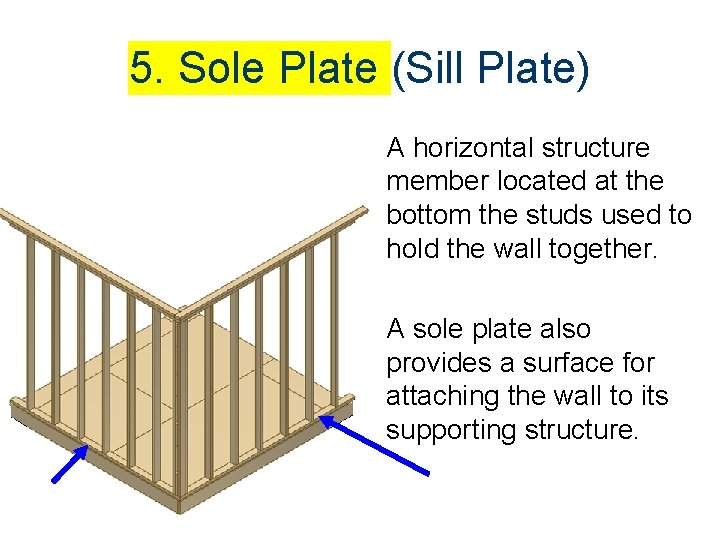
5. Sole Plate (Sill Plate) A horizontal structure member located at the bottom the studs used to hold the wall together. A sole plate also provides a surface for attaching the wall to its supporting structure.
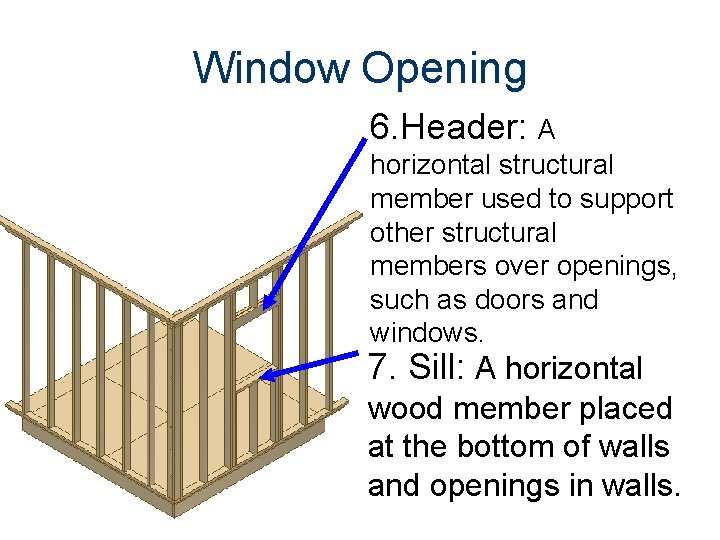
Window Opening 6. Header: A horizontal structural member used to support other structural members over openings, such as doors and windows. 7. Sill: A horizontal wood member placed at the bottom of walls and openings in walls.
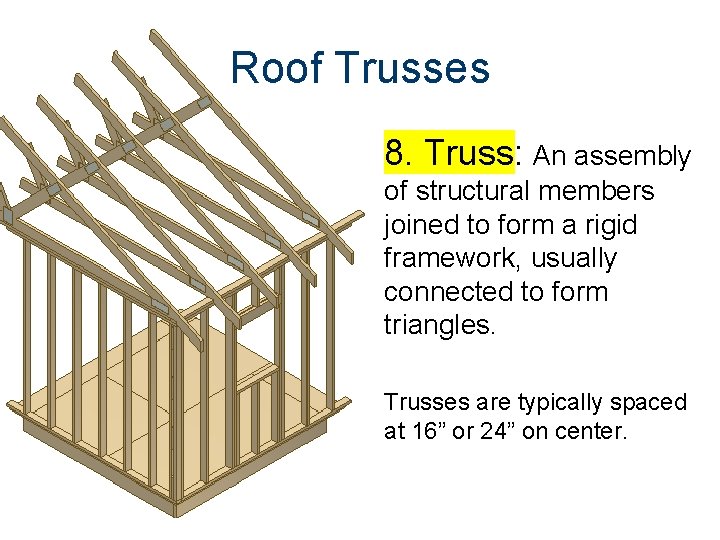
Roof Trusses 8. Truss: An assembly of structural members joined to form a rigid framework, usually connected to form triangles. Trusses are typically spaced at 16” or 24” on center.
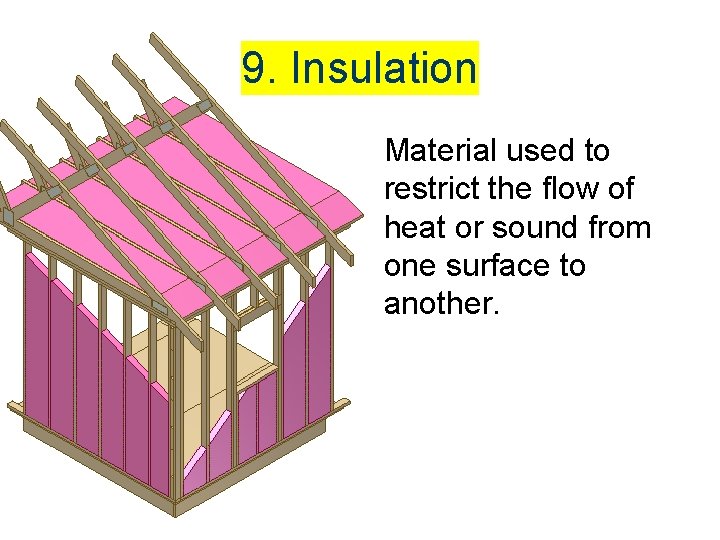
9. Insulation Material used to restrict the flow of heat or sound from one surface to another.
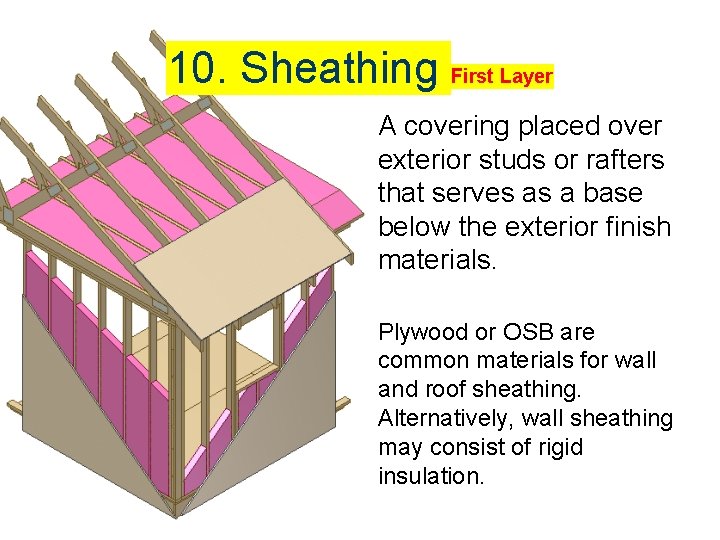
10. Sheathing First Layer A covering placed over exterior studs or rafters that serves as a base below the exterior finish materials. Plywood or OSB are common materials for wall and roof sheathing. Alternatively, wall sheathing may consist of rigid insulation.
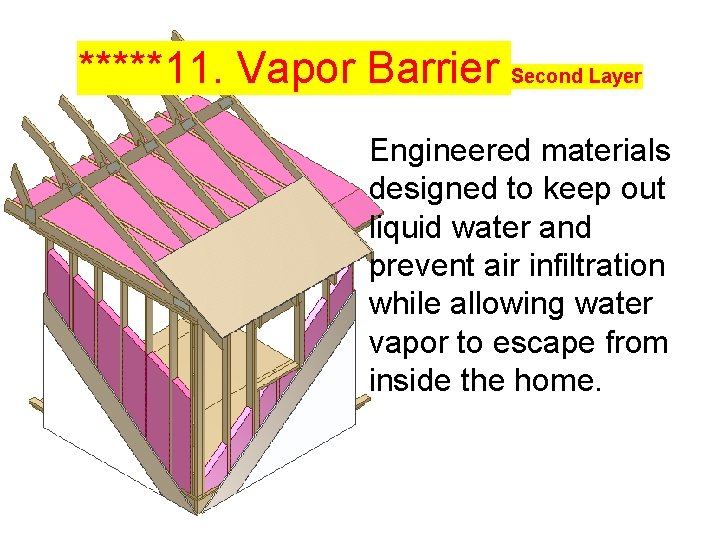
*****11. Vapor Barrier Second Layer Engineered materials designed to keep out liquid water and prevent air infiltration while allowing water vapor to escape from inside the home.
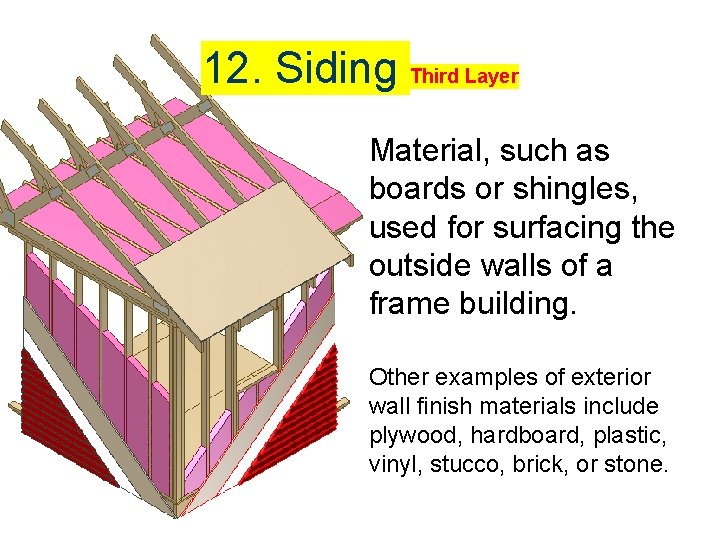
12. Siding Third Layer Material, such as boards or shingles, used for surfacing the outside walls of a frame building. Other examples of exterior wall finish materials include plywood, hardboard, plastic, vinyl, stucco, brick, or stone.
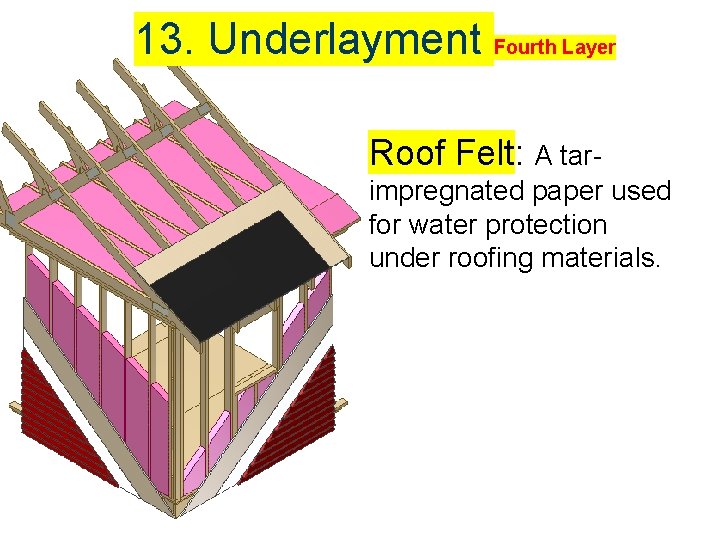
13. Underlayment Fourth Layer Roof Felt: A tarimpregnated paper used for water protection under roofing materials.
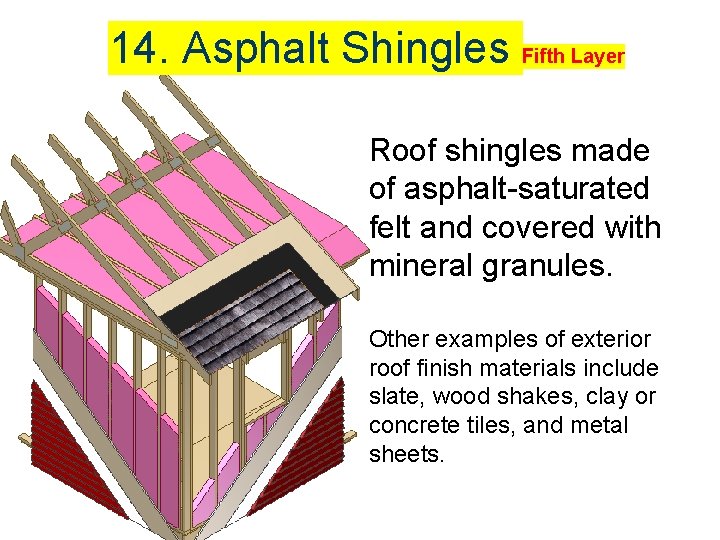
14. Asphalt Shingles Fifth Layer Roof shingles made of asphalt-saturated felt and covered with mineral granules. Other examples of exterior roof finish materials include slate, wood shakes, clay or concrete tiles, and metal sheets.
Wood Framing Systems • Floor Joists • Subfloor • Walls • Top Plate • Window Opening • Roof Trusses • Insulation • Sheathing • Vapor Barrier • Siding • Underlayment • Asphalt Shingles