
WOMENS RIGHTS HUMAN RIGHTS OVERVIEW Introduction Womens Rights

- Slides: 24
WOMEN’S RIGHTS = HUMAN RIGHTS
OVERVIEW ★ ★ ★ ★ Introduction Women’s Rights? Iran Egypt Tunisia Conclusion Comments and Questions
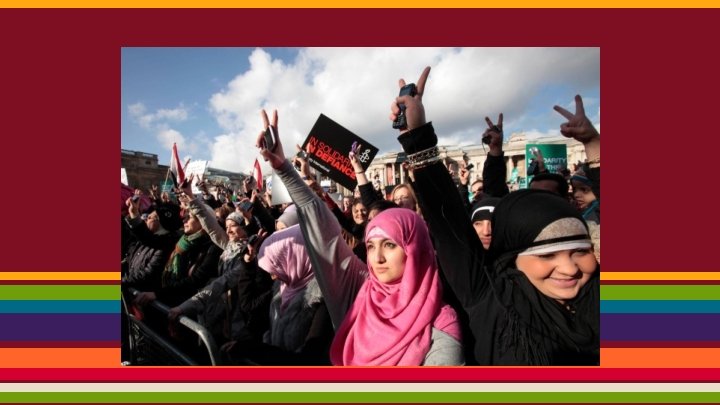
What are Women’s Rights? Women’s rights refer to the equality of entitlements regardless of gender, and often are used to indicate the protection women from violations of human rights that we have historically and continuously disproportionately and/or exclusively suffered.
Contextually: ★ ★ ★ ★ ★ Voting Rights (universal suffrage) Right to employment (& equal wages) Workplace rights Right to hold public office Right to education Right to own private property Right to be free from discrimination Right to be free from domestic violence, rape and sexual violence Reproductive Rights
EGYPT Egypt is reportedly the WORST Arab country for women’s rights(Thomson Reuters Foundation, from Skynews). It is said to be the worst country in the Arab world to be a woman. The survey quotes a UN report from April which said 99. 3% of women and girls are subjected to sexual harassment in Egypt. Freedom House research suggests that domestic violence, sexual harassment on the street and female genital mutilation is widely practiced, and that spousal rape is not illegal (2013).
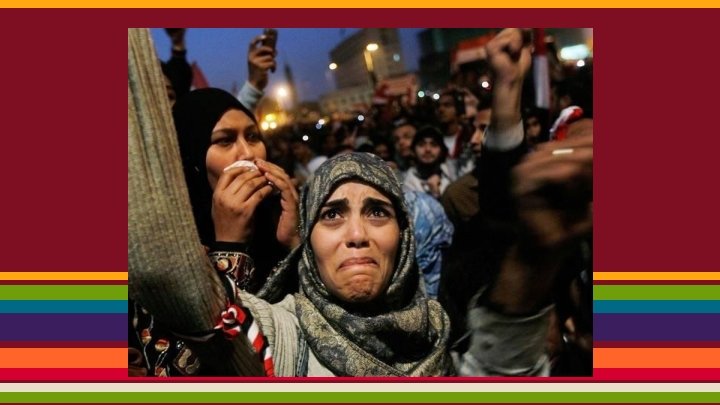
EGYPT Unicef says female genital mutilation is endemic with 91% of women and girls subject to cutting. Only Djibouti has a higher rate - 93%. In March 2011, soldiers subjected women arrested at the Tahrir Square protests to “virginity checks, ” in addition to beating them and photographing them after they were strip-searched. Cairo’s administrative court eventually banned the checks in a December ruling. In March 2012, a doctor accused of forcing female protesters to undergo these examinations in 2011 was acquitted. No other suspects were charged. In August, General Abdul Fattah al-Sisi, who had been criticized for defending the checks, was appointed defense minister and commander of Egypt’s armed forces
EGYPT This not only presents a threat to the lives of Egyptian women, it also creates physical, psychological and emotional obstacles to their emancipation and empowerment. This is because violence against women may reduce their ability to function as productive members of society.
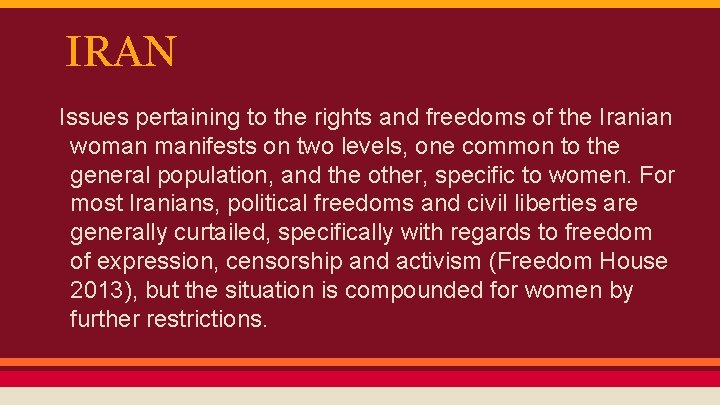
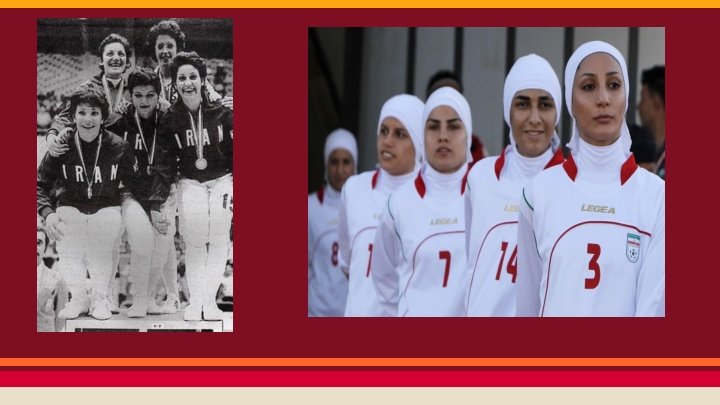
IRAN Issues pertaining to the rights and freedoms of the Iranian woman manifests on two levels, one common to the general population, and the other, specific to women. For most Iranians, political freedoms and civil liberties are generally curtailed, specifically with regards to freedom of expression, censorship and activism (Freedom House 2013), but the situation is compounded for women by further restrictions.
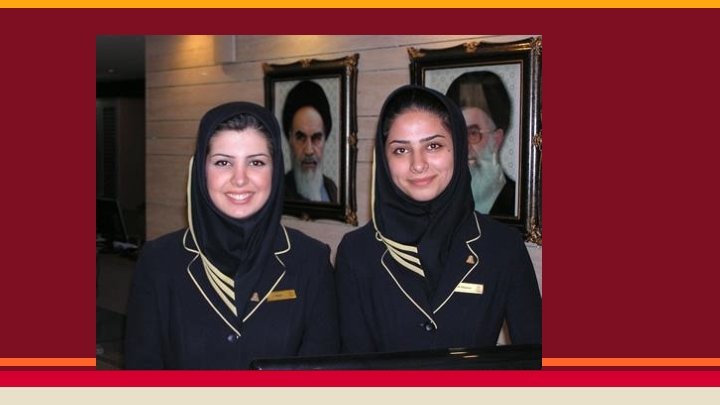
IRAN Politically, although a large percent of Iranian women are well educated, women currently hold just 3% of seats in parliament and are marginalized from higher offices (Freedom House 2013). This naturally translates to their not being able to contribute to the decision making process that regulates their lives, and they are effectively boycott from the mechanisms by which reforms might be brought about.
IRAN Islamic laws prohibit women from enjoying an equal legal status with men, especially in issues relating to divorce, inheritance, child custody, legal testimony and monetary compensation and certain laws subordinate women to the authority of their male relations, in the form of consent requirements (Freedom House 2013).
IRAN It is problematic for the average woman because the institutional discrimination permeates every aspect of her political, civil and social life. This makes independence difficult for Iranian women and relegates their lives to the discretion of their male relatives. For mothers and wives, the difficulty of obtaining a divorce and the subsequent custody of their children makes it difficult to break-free from unhappy or abusive marriages.
TUNISIA Relative to the rest of the countries in the Arab World, Tunisia arguably has had a progressive outlook on the rights of women. In terms of social policies, family law statutes grant women equal rights in divorce, and medical abortion was legalized as far back as 1973 (Freedom House 2013). In late 2008, the country ratified the Optional Protocol to the UN Elimination of all forms of Discrimination Against Women (UN 2008), which not only ensured equality under the law, but also established mechanisms by which the protection of the rights of women is ensured. These rights are critical because legal equality is the cornerstone for the progress of women as it represents the means by which they can oppose injustice and discrimination in the society.
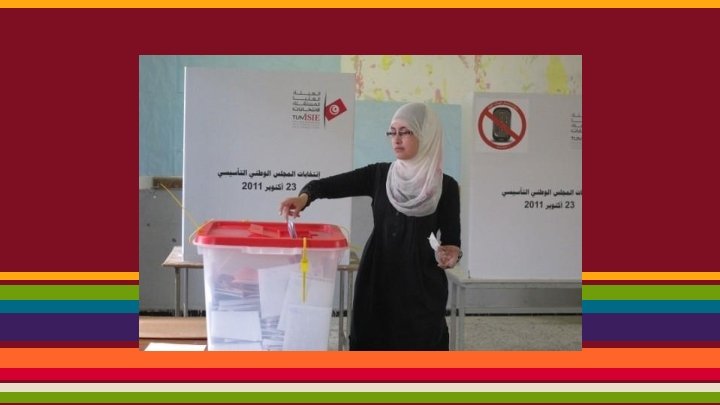
TUNISIA The fact that these laws and policies were incorporated into the Tunisian legal system years before the Arab Spring is a testament to its dedication to the rights of women and their empowerment. Politically, the percentage of women in the Tunisian Consituent Assembly represents the largest proportion of female representatives in the Arab world, according to Freedom House (2013). This leaves the possibilities of benefits endless, as women are able to table the issues that concern them and have their say in the processes by which the laws that govern them are made.
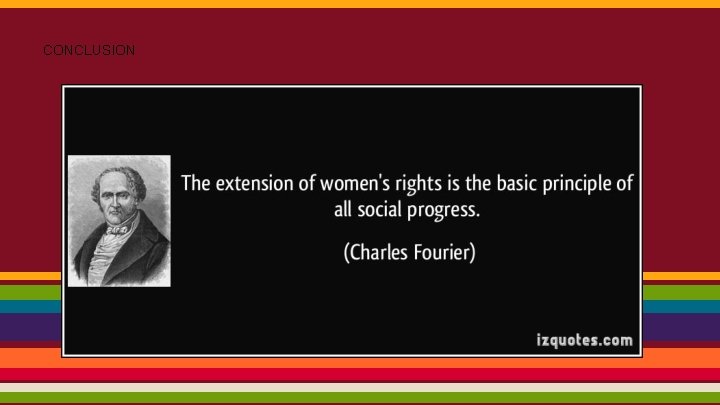
CONCLUSION It is my belief that the protection of the rights of women directly relates to social and economic progress as women are a critical part of the society, and their productivity is related to their well being and development.
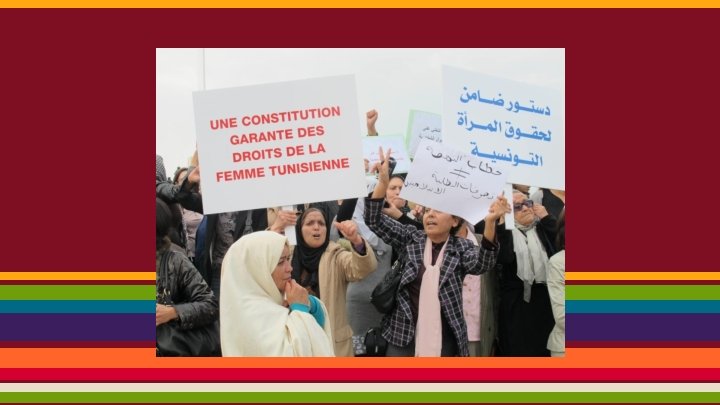
CONCLUSION As the case of Tunisia indicates, achieving greater equality and entitlements for women in the middle east is not impossible.
CONCLUSION
. . . I’ll be happy to take any questions or comments you may have : )