
Womens Mental Health Training THINKING WELL Living Well

- Slides: 16
Women’s Mental Health Training THINKING WELL, Living Well A Resource for Churches on Comprehensive Health Ministry
Understanding Mental Health Written by Elsie Staple
Mental Health Defined
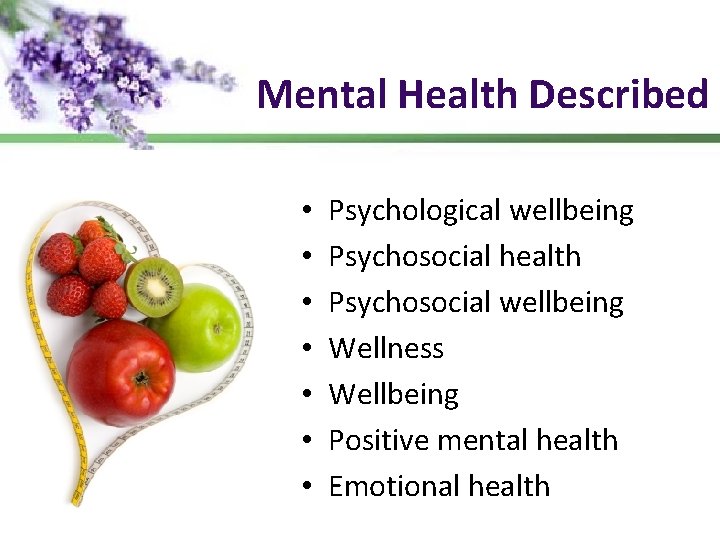
Mental Health Described • • Psychological wellbeing Psychosocial health Psychosocial wellbeing Wellness Wellbeing Positive mental health Emotional health
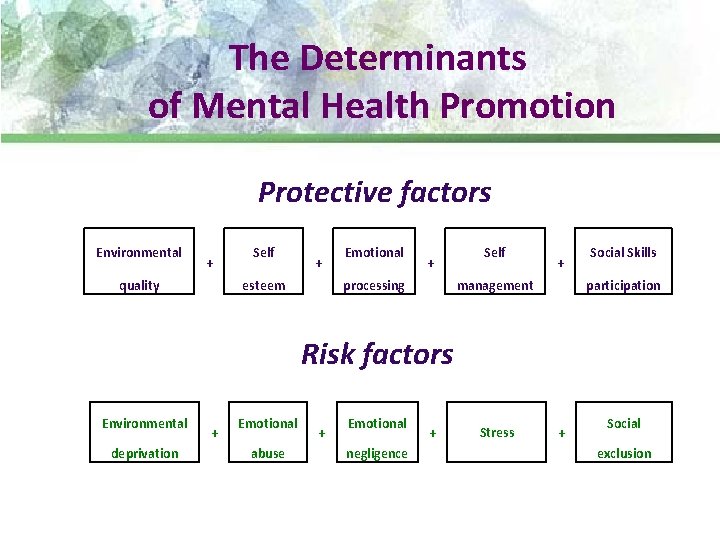
The Determinants of Mental Health Promotion Protective factors Environmental + quality Self + esteem Emotional + processing Self + management Social Skills participation Risk factors Environmental deprivation + Emotional abuse + Emotional negligence + Stress + Social exclusion
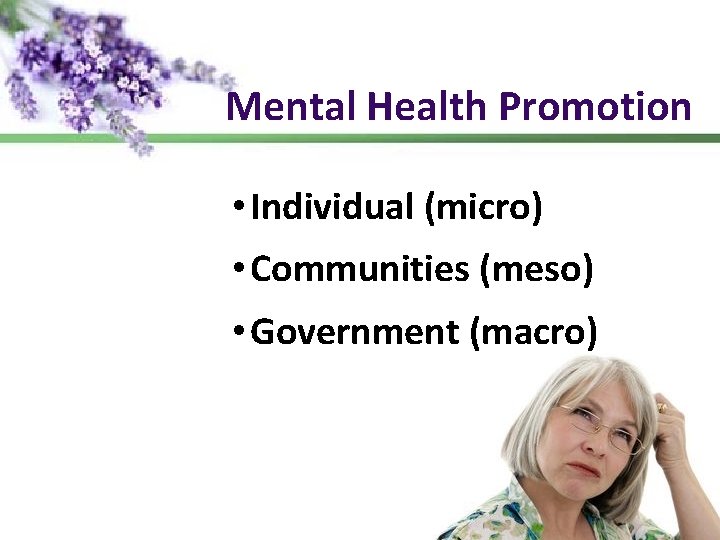
Mental Health Promotion • Individual (micro) • Communities (meso) • Government (macro)
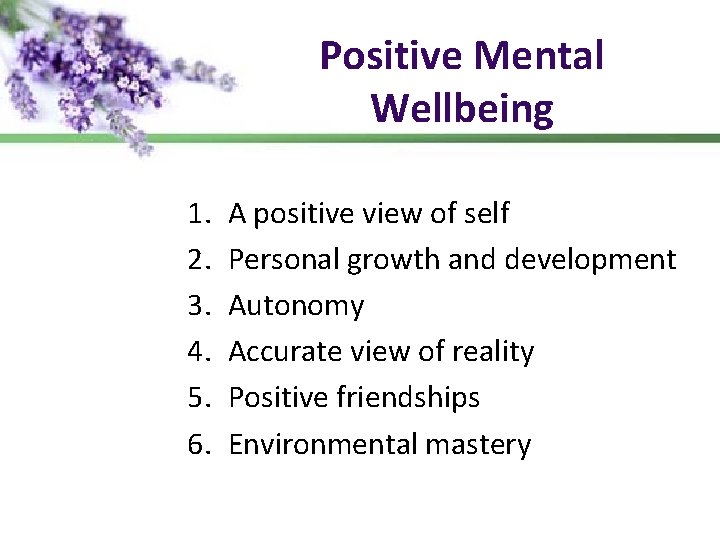
Positive Mental Wellbeing 1. 2. 3. 4. 5. 6. A positive view of self Personal growth and development Autonomy Accurate view of reality Positive friendships Environmental mastery
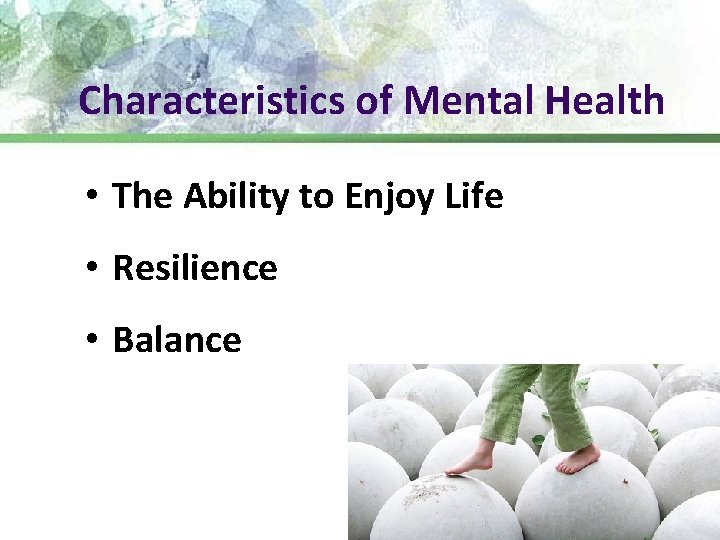
Characteristics of Mental Health • The Ability to Enjoy Life • Resilience • Balance
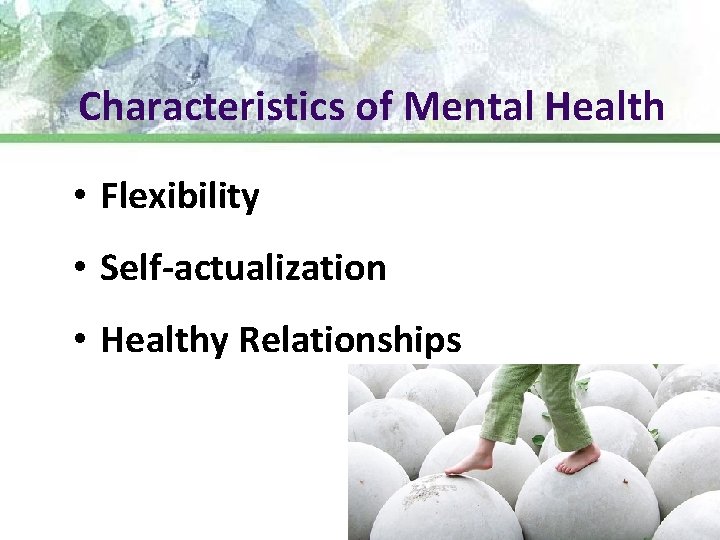
Characteristics of Mental Health • Flexibility • Self-actualization • Healthy Relationships
Preventative Tips for Positive Mental Health • making time to do the things we enjoy • taking moderate physical exercise • cutting down on coffee, alcohol, nicotine and other addictive substances • remembering and celebrating the things we like about ourselves • keeping things in perspective
Preventative Tips for Positive Mental Health • developing and sustaining friendships • listening to and respecting other people, even if we disagree with them • asking for help if we feel distressed or upset • listening to other people who say they feel distressed or upset • taking as much care of ourselves as we do the people we care for
The Self-System 1. Self-image, self-concept, self-perception 2. Self-confidence, self-efficacy 3. Self-acceptance, self-worth, self-respect, self-esteem
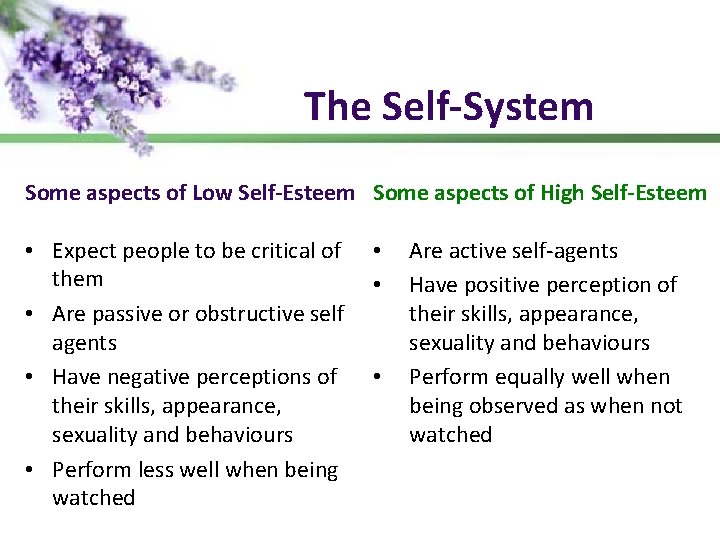
The Self-System Some aspects of Low Self-Esteem Some aspects of High Self-Esteem • Expect people to be critical of them • Are passive or obstructive self agents • Have negative perceptions of their skills, appearance, sexuality and behaviours • Perform less well when being watched • • • Are active self-agents Have positive perception of their skills, appearance, sexuality and behaviours Perform equally well when being observed as when not watched
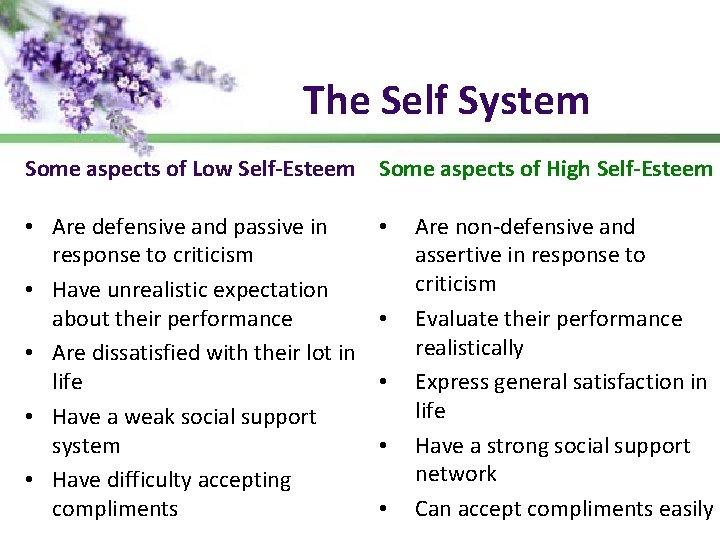
The Self System Some aspects of Low Self-Esteem Some aspects of High Self-Esteem • Are defensive and passive in response to criticism • Have unrealistic expectation about their performance • Are dissatisfied with their lot in life • Have a weak social support system • Have difficulty accepting compliments • • • Are non-defensive and assertive in response to criticism Evaluate their performance realistically Express general satisfaction in life Have a strong social support network Can accept compliments easily
God’s Word and Our True Selves For we are God’s handiwork, created in Christ Jesus to do good works, which God prepared in advance for us to do. Ephesians 2: 10 (NIV)
Prayer “Dear friend, I pray that you may enjoy good health and that all may go well with you, even as your soul is getting along well. ” 3 John 1: 2