
Womens List as a Tool for Empowerment Case
- Slides: 28
Women’s List as a Tool for Empowerment Case study from Iceland
A Women’s Political Party Why? How? What did we gain? What is still to be worked for? Was it worth trying? Would it work today? Would it work in other countries and within different cultures?
In 1980 Vigdís Finnbogadóttir was elected as a president of Iceland the first woman in the world to be democratically elected as a president This really inspired and encouraged Icelandic women. . .
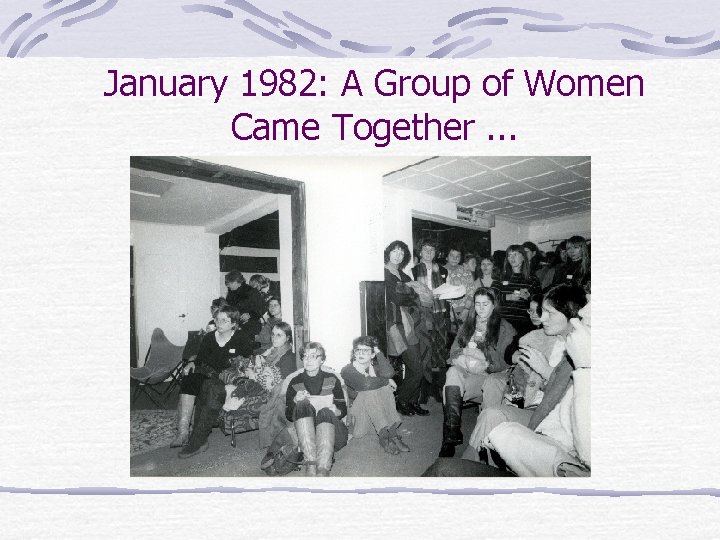
January 1982: A Group of Women Came Together. . .
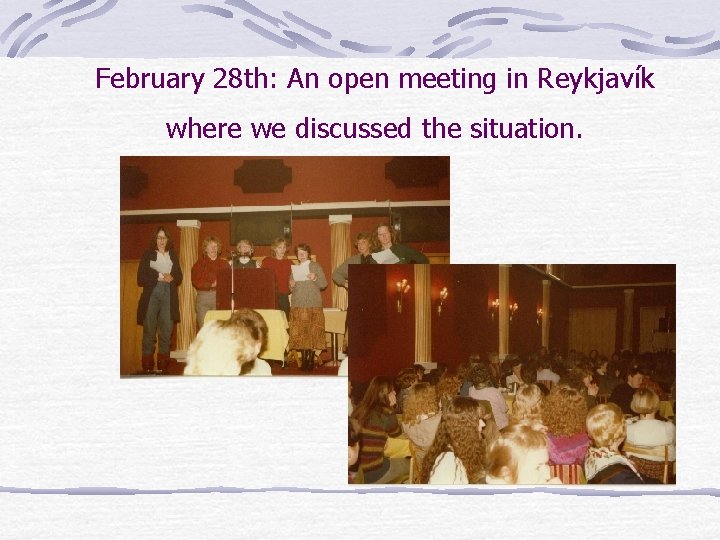
February 28 th: An open meeting in Reykjavík where we discussed the situation.
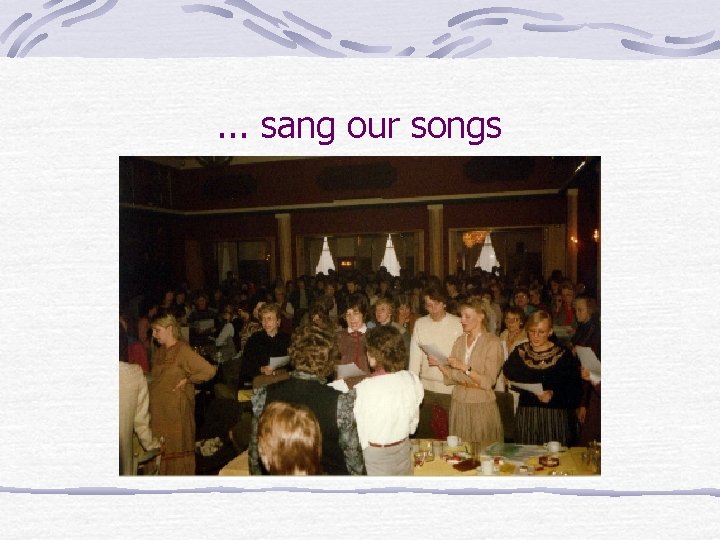
. . . sang our songs
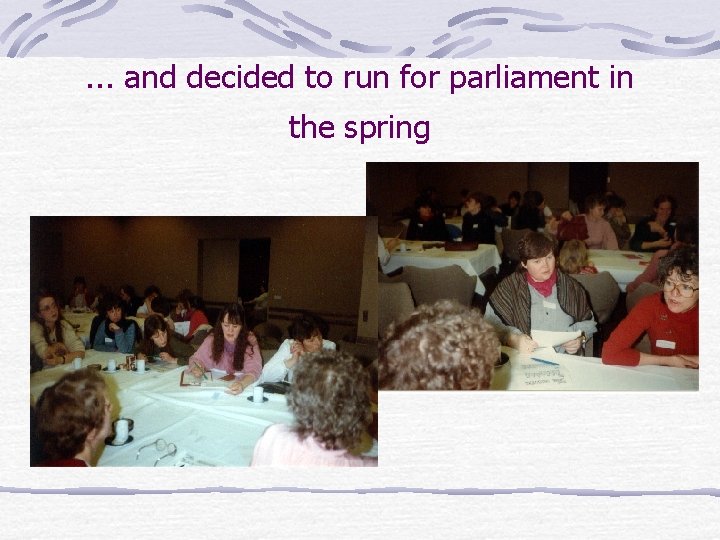
. . . and decided to run for parliament in the spring
Why? some “facts” of real life
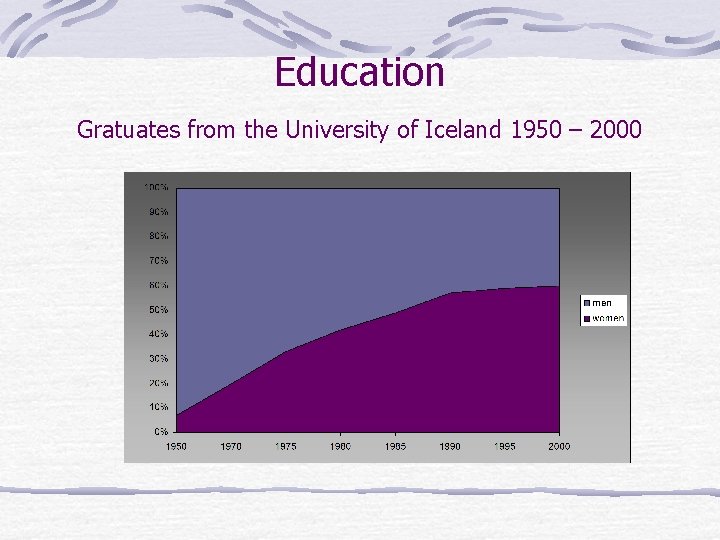
Education Gratuates from the University of Iceland 1950 – 2000
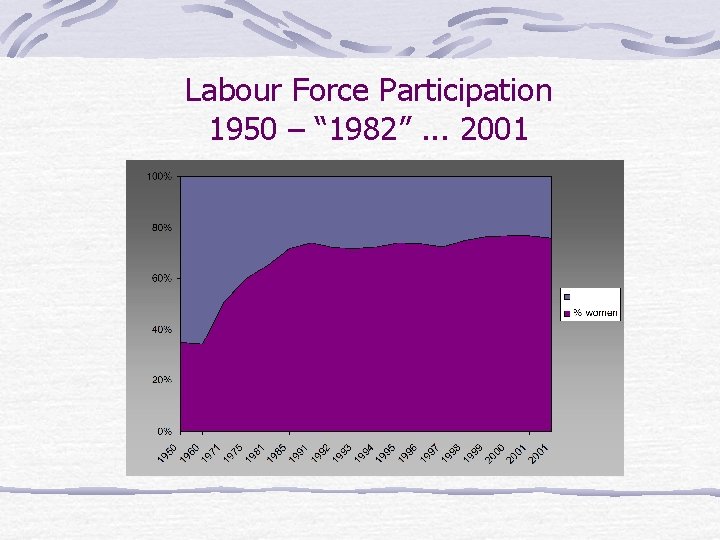
Labour Force Participation 1950 – “ 1982”. . . 2001
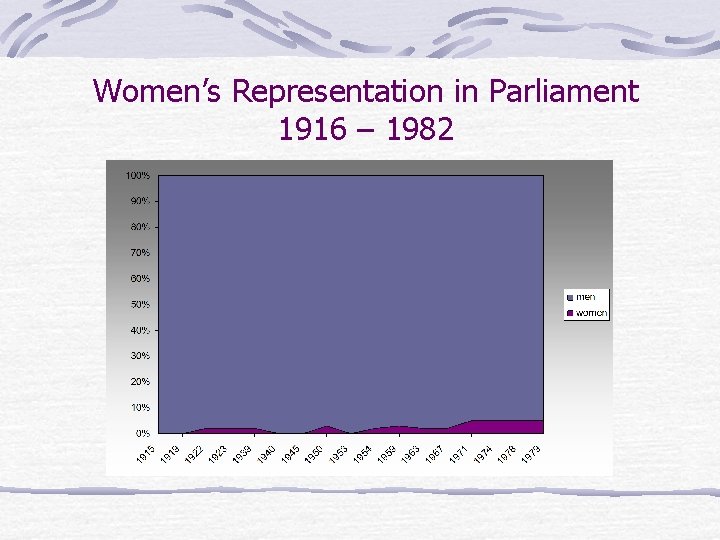
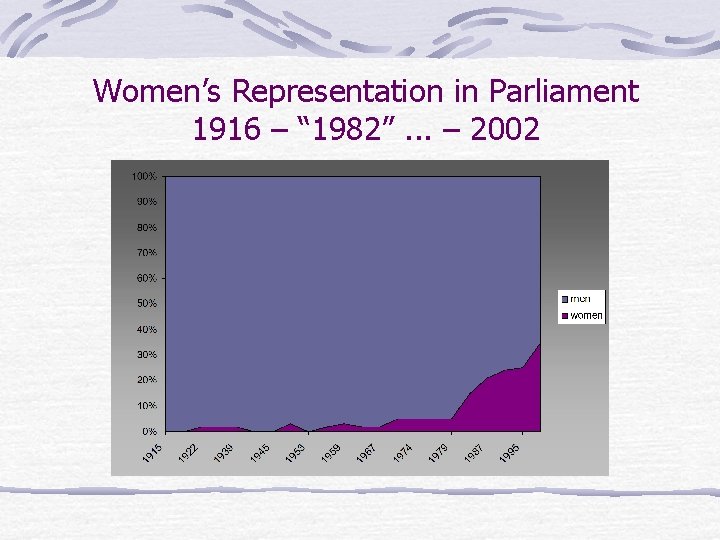
Women’s Representation in Parliament 1916 – 1982
How did we work?
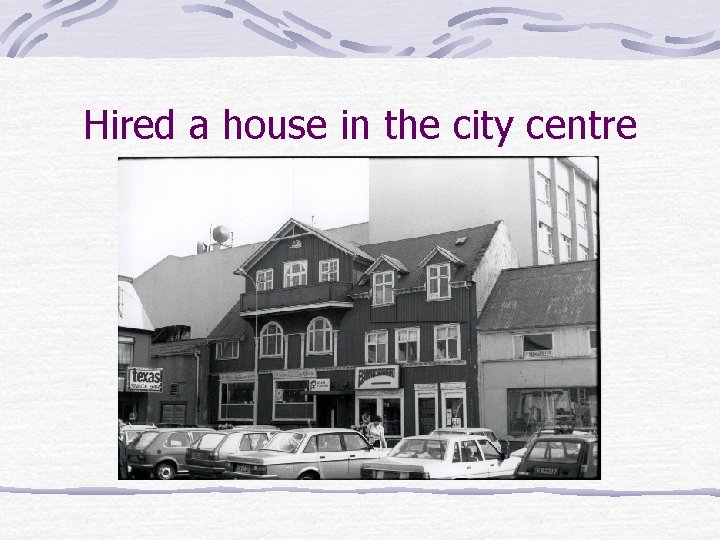
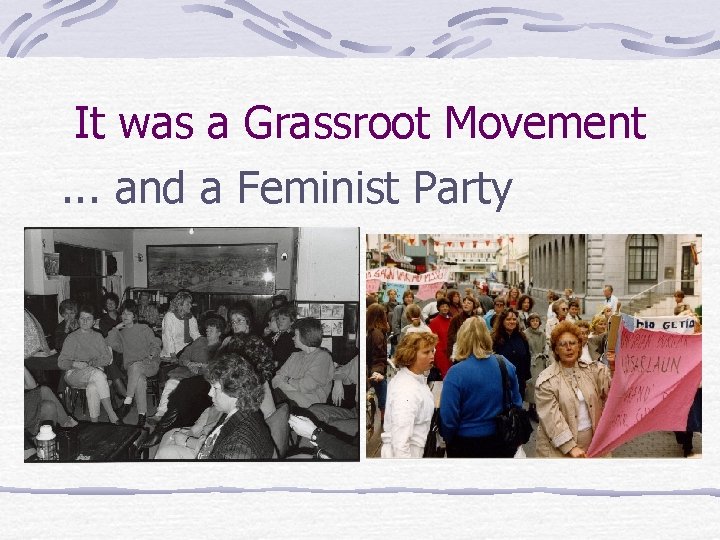
Hired a house in the city centre
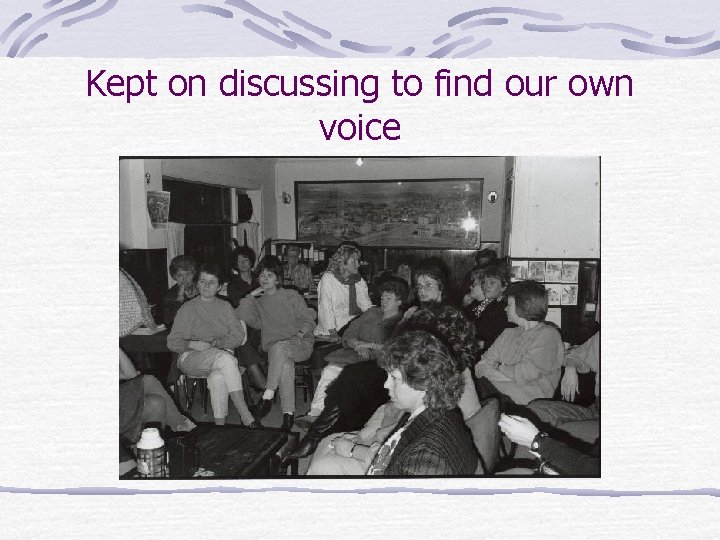
Kept on discussing to find our own voice
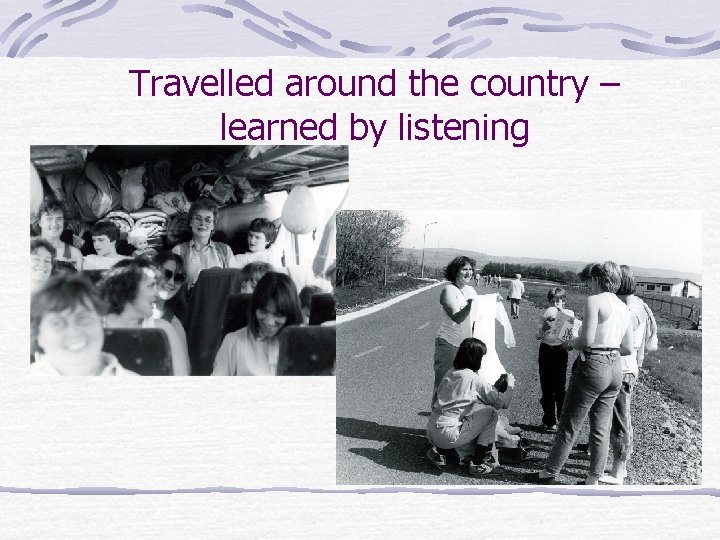
Travelled around the country – learned by listening
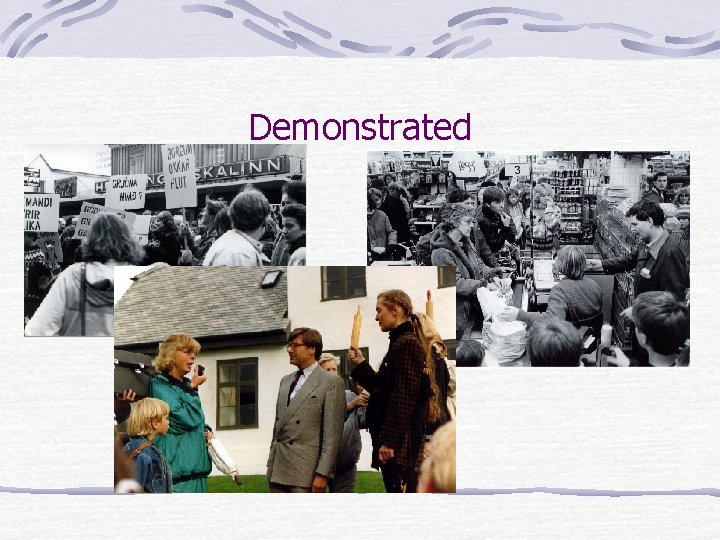
Demonstrated
It was a Grassroot Movement. . . and a Feminist Party
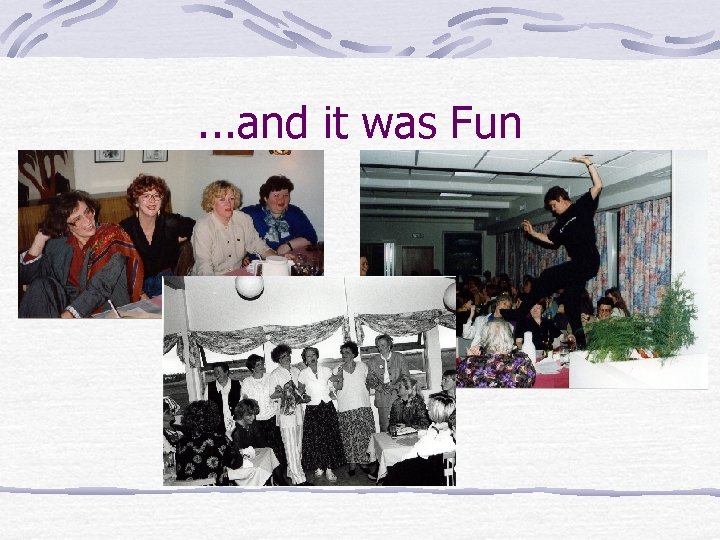
. . . and it was Fun
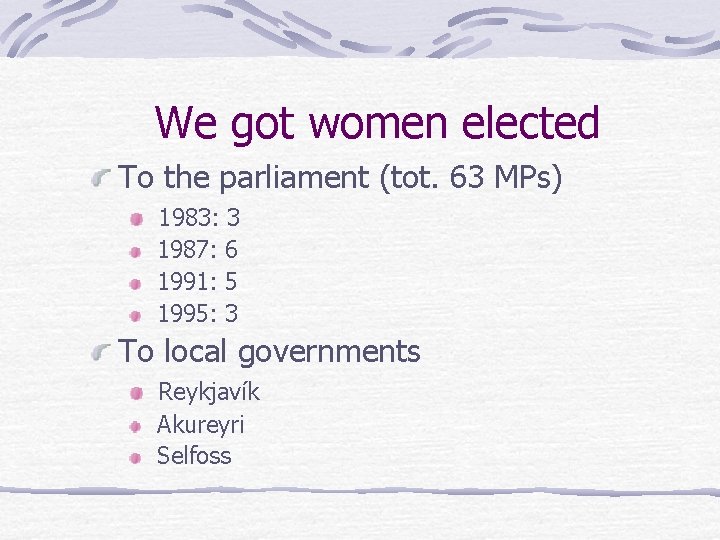
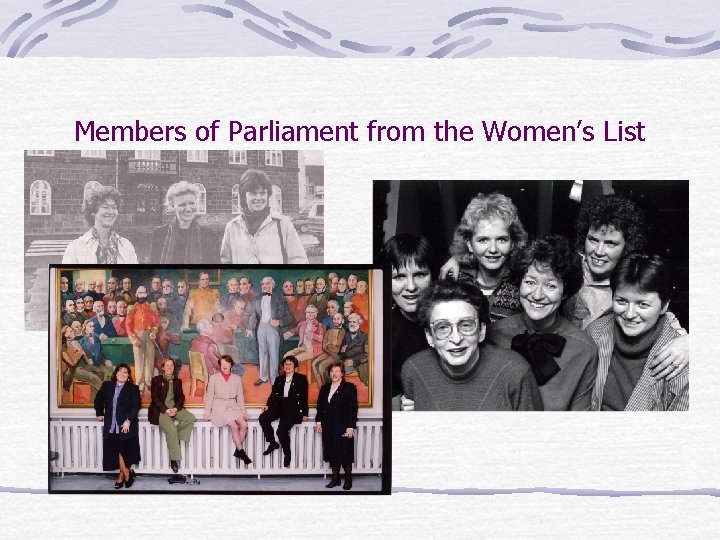
We got women elected To the parliament (tot. 63 MPs) 1983: 3 1987: 6 1991: 5 1995: 3 To local governments Reykjavík Akureyri Selfoss
Women’s Representation in Parliament 1916 – “ 1982”. . . – 2002
Members of Parliament from the Women’s List
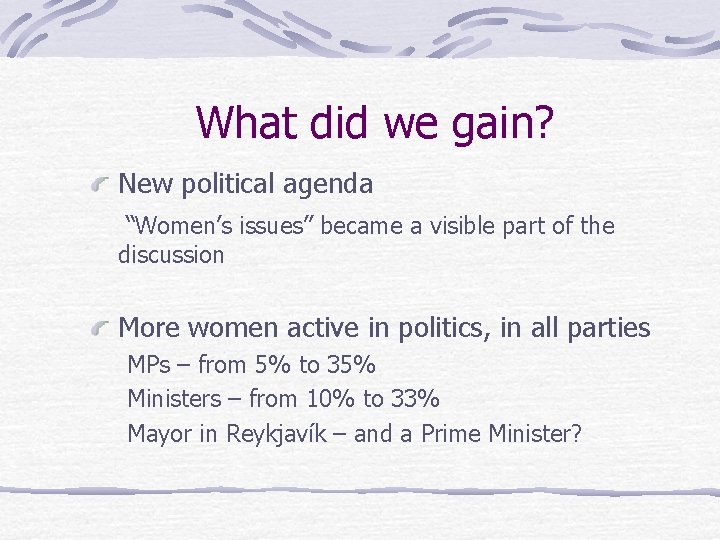
What did we gain? New political agenda “Women’s issues” became a visible part of the discussion More women active in politics, in all parties MPs – from 5% to 35% Ministers – from 10% to 33% Mayor in Reykjavík – and a Prime Minister?
What is still to be worked for? A lot! – and so it will always be, It is a never ending story, because. . .
The Society is human activities and interactions. Institutions Rules and legislations Social agreements Rights and obligations made by humans, still mostly by men and therefore unfortunatelly primarily to fit their needs
The society. . . The society is a dynamic phenomena, always in a making The society should fit us all, that was the main idea behind democracy Therefore it is always highly important that both women and men have an equal saying in the ongoing dialogue which structures and make the society
Would a Women’s Party work today? Would it work in other countries and within other cultures?
Would it work? Each country has its own special circumstances, culture, traditions etc. Women have to find their own way within the situation they find themselves. The electoral systems are different The presentation of women in Parliaments varies between countries There is no right way! But if. . .
If. . . If the electoral system makes it easy to build up new parties, with no or low thresholds of voters and If the representation of women in Parliament is low (5 -15%) A Women’s Political Party could be more than worth trying