
Womens Health Pregnancy Contraception Contraception Birth control allows
Women’s Health Pregnancy
Contraception
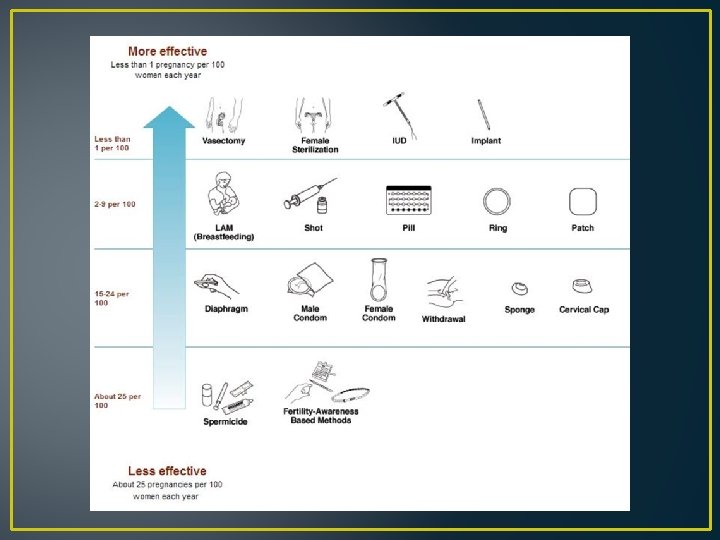
Contraception • Birth control allows us to prevent pregnancy and plan the timing of pregnancy • Natural Methods • Hormonal Methods • Barrier Methods • Permanent Methods
Natural Methods • Methods not involving hormones or surgery • Abstinence • Outercourse • Withdrawal Method • Breastfeeding • Fertility Awareness-Based Method
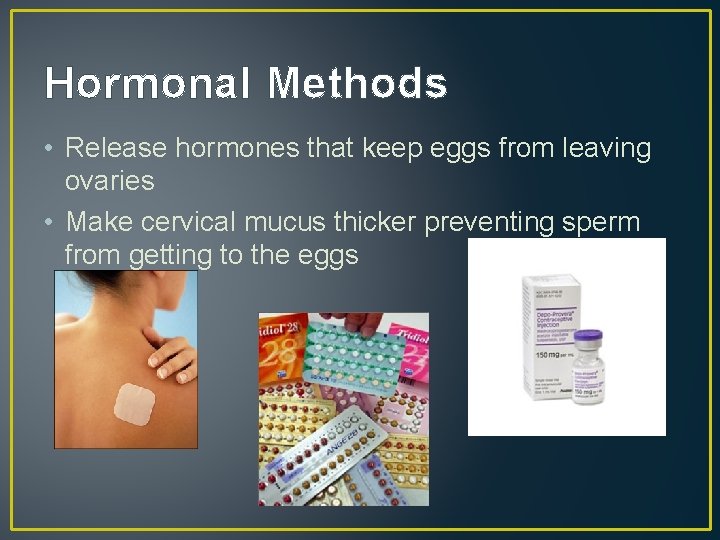
Hormonal Methods • Release hormones that keep eggs from leaving ovaries • Make cervical mucus thicker preventing sperm from getting to the eggs
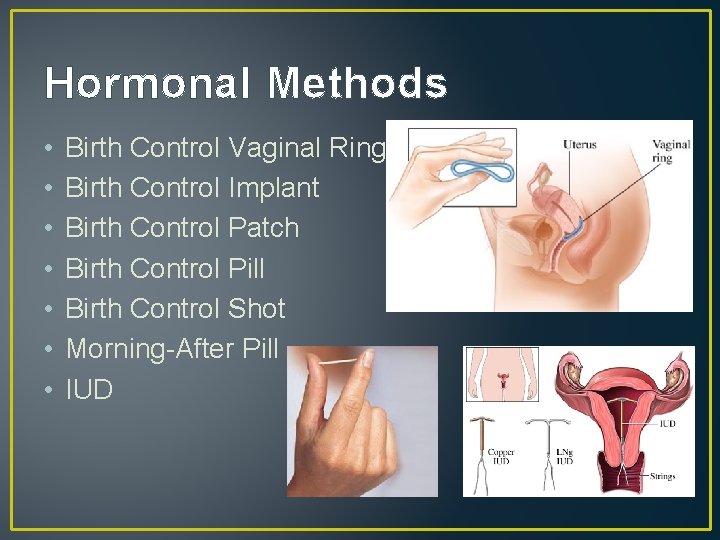
Hormonal Methods • • Birth Control Vaginal Ring Birth Control Implant Birth Control Patch Birth Control Pill Birth Control Shot Morning-After Pill IUD

Barrier Methods • Physically block sperm from fertilizing eggs • Male Condom • Female Condom • Birth Control Sponge • Diaphragm
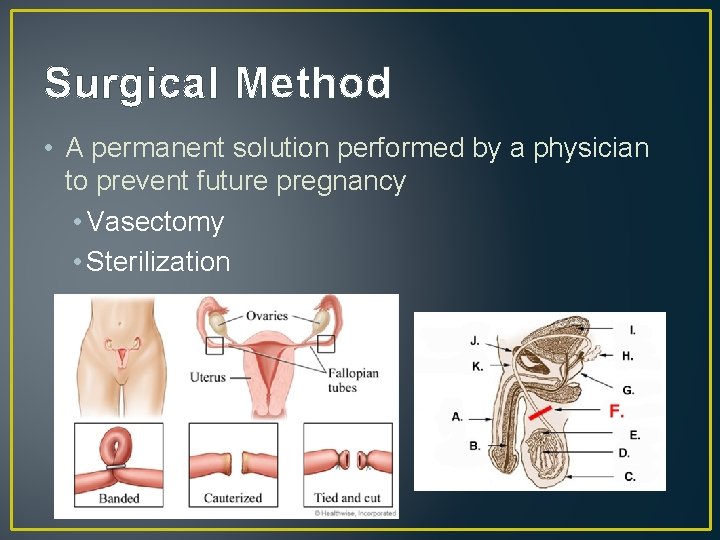
Surgical Method • A permanent solution performed by a physician to prevent future pregnancy • Vasectomy • Sterilization
Prenatal Care
What is prenatal care? • Extra care during pregnancy to ensure health and prevent complications • Appointments typically include: • A physical exam (including weight and blood pressure checks) • A pelvic exam • A urine sample • A blood test • Ultrasounds (routinely beginning ~20 wks. )
Why is prenatal care so important? • It reduces the risk of complications both during pregnancy and during labor • Can detect any issues that a woman may have early enough to address them • The healthier a woman is during pregnancy, the healthier the baby will be • Can provide a lot of information about what is and isn’t safe/healthy during pregnancy beyond the basics • Some supplements and medicines aren’t safe to take during pregnancy, and other supplements like folic acid are very important to take • Certain activities cease to be safe at certain points in pregnancy (ex. flying) • Exercise can be great to improve health during pregnancy, but only to a certain extent
How to get prenatal care? • It’s important to start receiving prenatal care by early in the second trimester • Can either see a primary care physician or an OB/GYN • Better to see an OB/GYN for a high risk pregnancy • Medicaid covers costs of prenatal care through pregnancy, labor, and delivery • Call Cincinnati Health Department for reduced cost prenatal care options
Complications of Pregnancy
Gestational Diabetes • Pregnant women who have never had a history of diabetes, who have high blood glucose levels during pregnancy • Sometimes can cause diabetes after pregnancy is over
Gestational Diabetes Maternal Risks: • Hydramnios (extra fluid surrounding the fetus) • Preeclampsia • Eclampsia • Increased susceptibility for infection Fetal and Neonatal Risks: • Prenatal mortality • Congenital abnormalities • Respiratory Distress Syndrome (RDS) • Intrauterine growth restriction (IUGR) • Hypocalcaemia • Hypoglycemia after birth
Gestational Diabetes Treatment • Diet therapy and exercise • Glucose monitoring • Insulin therapy
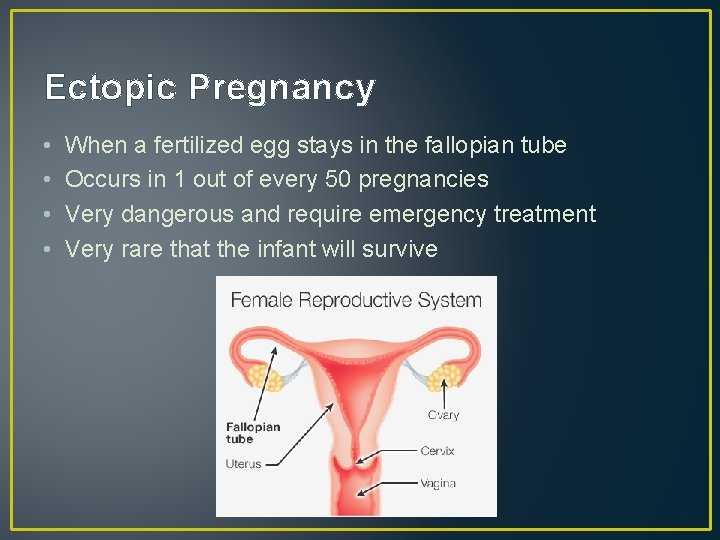
Ectopic Pregnancy • • When a fertilized egg stays in the fallopian tube Occurs in 1 out of every 50 pregnancies Very dangerous and require emergency treatment Very rare that the infant will survive
Ectopic Pregnancy Risks: • Tubal damage • Pervious pelvic, tubal surgery, previous ectopic • High levels of progesterone • Primary infertility • Smoking • Advanced maternal age
Preeclampsia • When a pregnant woman develops high blood pressure and proteins levels • Occurs in 5% of pregnancies • Usually starts about 20 weeks after pregnancy Preeclampsia can lead to a condition known as eclampsia in which seizures occur.
Preeclampsia Fetal risks: • Placental abruption • Poor growth • Too little amniotic fluid • Premature birth
- Slides: 21