
Womens Health Fibrocystic Breasts Endometriosis Polycystic Ovary Syndrome
Women’s Health Fibrocystic Breasts Endometriosis Polycystic Ovary Syndrome Vaginal Infections Uterine Tumors/Fibroids Gynecological Cancers Breast Cancer Pelvic Relaxation/Hysterectomy Female Circumcision
Fibrocystic Breasts n n n Thickening of breast tissue due to imbalance in estrogen and progesterone Cyst formation is a late change in breasts Most common benign breast disorder Ages 30 – 50 years May or may not increase risk of breast cancer – depends on type of cellular changes
Fibrocystic Breasts n n n Symptoms increase approaching menopause and decrease after menopause Pain, tenderness, swelling before menses, “lumpy” feel to breasts May have serosanguineous discharge
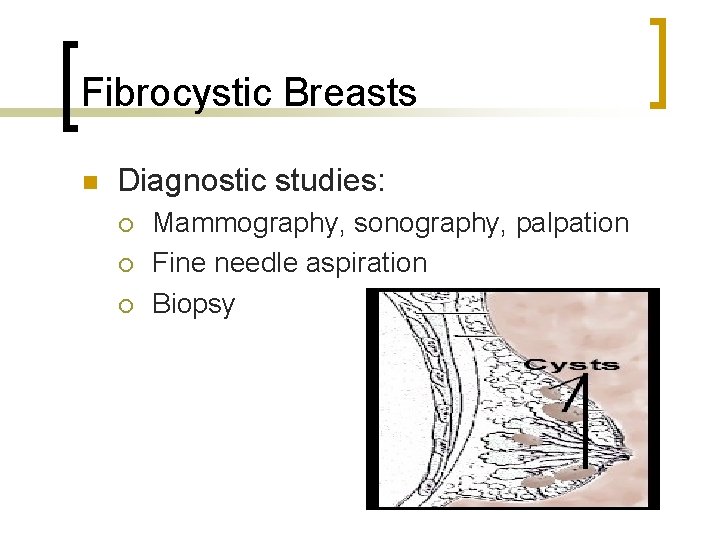
Fibrocystic Breasts n Diagnostic studies: ¡ ¡ ¡ Mammography, sonography, palpation Fine needle aspiration Biopsy
Fibrocystic Breasts n Treatment ¡ ¡ ¡ ¡ Restrict sodium intake Limit caffeine Mild diuretic Mild analgesic Hormone inhibitor – danazol Oral contraceptives Antiestrogen – tamoxifen Oil of evening primrose
Endometriosis n n Endometrial tissue outside the endometrial cavity Endometrial tissue bleeds cyclically like a menstrual period ¡ n Causes inflammation, scarring, adhesions Occurs between 20 and 45 years of age
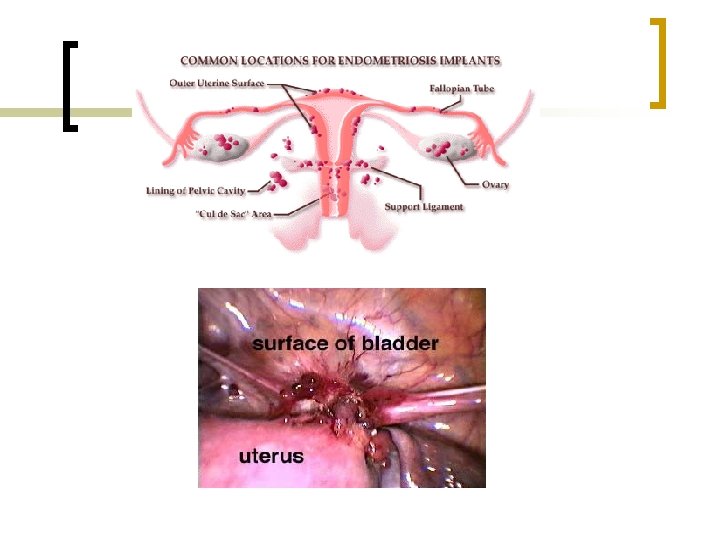
Endometriosis n n Pelvic pain - related to menstrual cycle Dyspareunia - painful intercourse Abnormal uterine bleeding Bimanual examination ¡ ¡ ¡ Fixed, tender, retroverted uterus Palpable nodules in cul-de-sac Diagnosis confirmed by laparoscopy
Endometriosis Treatment n Surgical removal of visible endometrial tissue ¡ ¡ n n n Excision, endocoagulation, electrocautery, or laser vaporization Surgery is effective in relieving pain Surgical removal of uterus, ovaries, tubes Hormonal therapy, OCs Women with minimal symptoms observation, analgesics, nonsteroidal antiinflammatory drugs
Polycystic Ovary Syndrome n Imbalance of hormones ¡ n n Higher levels of androgens Enlarged ovaries with many fluid-filled cysts Egg-containing cysts in ovaries grow but do not release the egg Not cancerous Runs in families
Polycystic Ovary Syndrome n n n Irregular, decreased or no periods Less frequent ovulation Excess growth of hair on face, chest, abdomen, back, pubic area Acne or oily skin Weight gain, esp. waist area Patches of thickened, dark colored skin
Polycystic Ovary Syndrome n Less common features: ¡ ¡ ¡ Male-pattern baldness Skin tags in armpits or neck High total cholesterol, low HDL chol. High blood pressure Diabetes
Polycystic Ovary Syndrome n Diagnosis ¡ n Pelvic ultrasound, hormone levels Treatment ¡ ¡ ¡ Oral contraceptives Exercise Low calorie diet Electrolysis, hair removal creams Medicate to cause ovulation in infertility
Vaginal Infections n Bacterial Vaginosis ¡ ¡ Alteration of vaginal p. H allowing bacteria to grow (Gardnerella, mycoplasmas) Not an STI Thin, watery white or gray discharge with “fishy” smell Treat with metronidazole (Flagyl)

Vaginal Infections n Candidiasis – monilial yeast infection ¡ ¡ Vaginal “cottage cheese” discharge, itching, dysuria, dyspareunia Treatment - Clotrimazole
Sexually Transmitted Infections (STIs) n Trichomoniasis ¡ ¡ Protozoal infection Toilet seats, wet bathing suits, wet towels Yellow-green frothy odorous discharge Treatment n n Metronidazole (Flagyl) Treat both partners
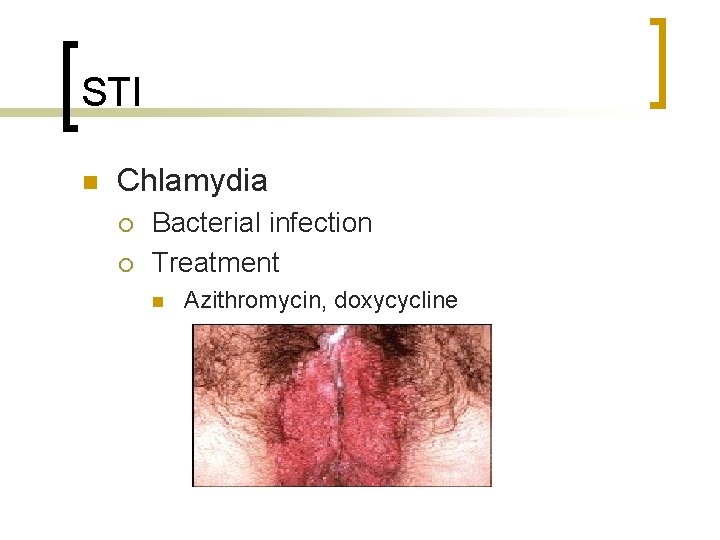
STI n Chlamydia ¡ ¡ Bacterial infection Treatment n Azithromycin, doxycycline
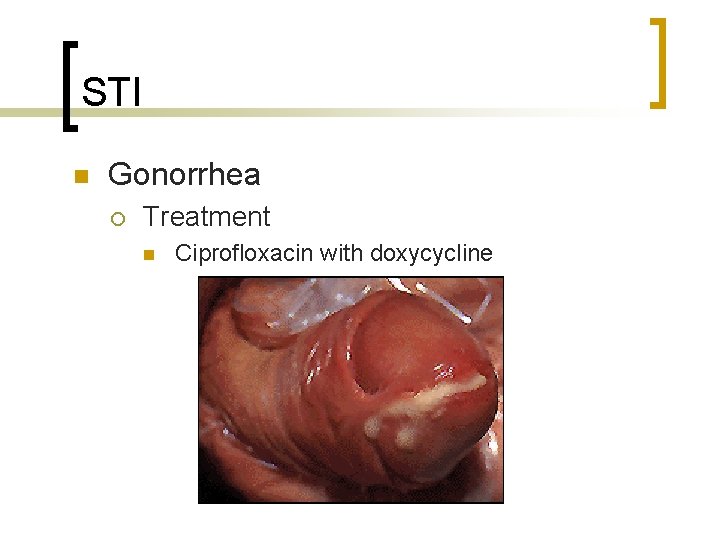
STI n Gonorrhea ¡ Treatment n Ciprofloxacin with doxycycline
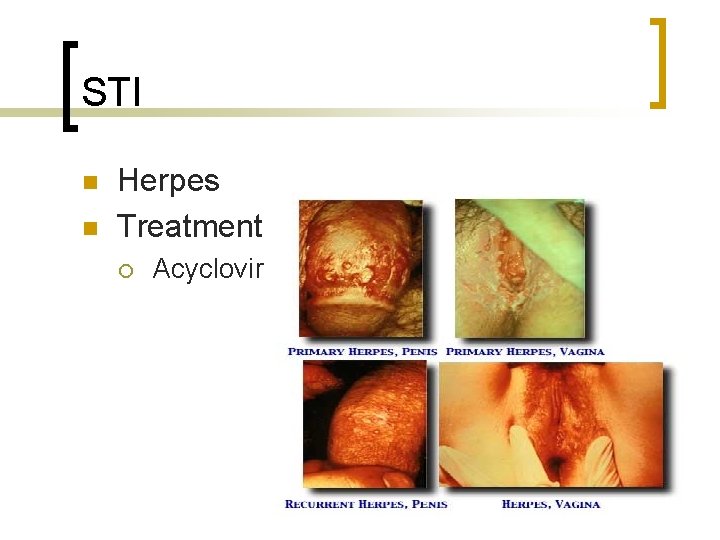
STI n n Herpes Treatment ¡ Acyclovir
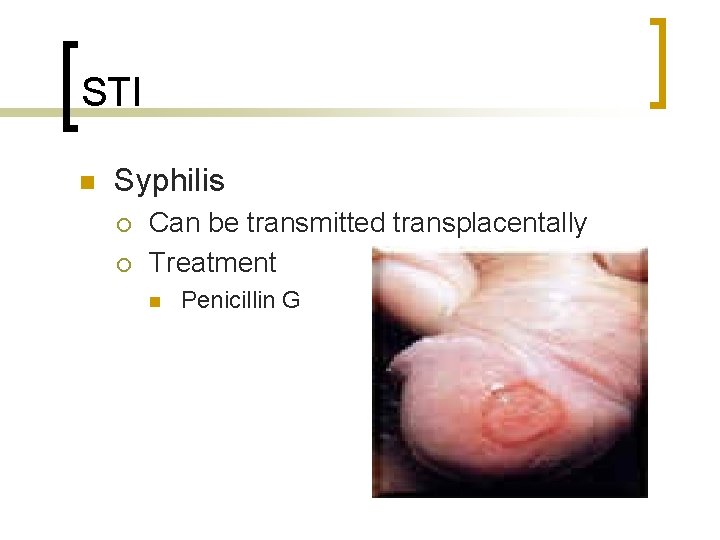
STI n Syphilis ¡ ¡ Can be transmitted transplacentally Treatment n Penicillin G
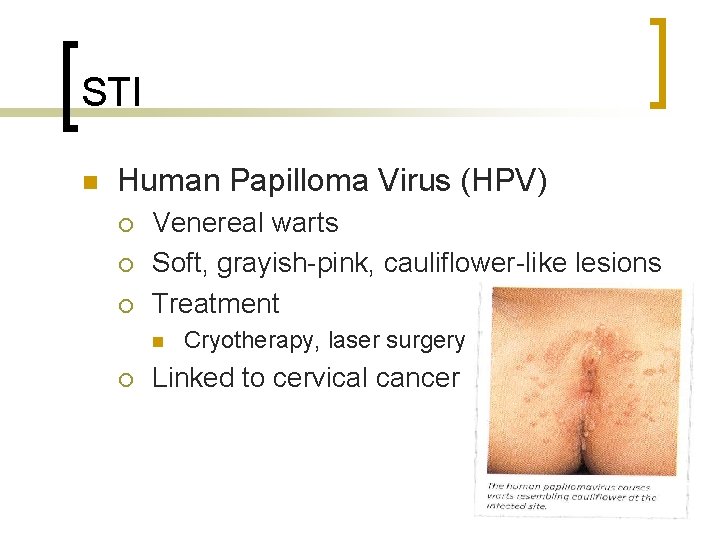
STI n Human Papilloma Virus (HPV) ¡ ¡ ¡ Venereal warts Soft, grayish-pink, cauliflower-like lesions Treatment n ¡ Cryotherapy, laser surgery Linked to cervical cancer
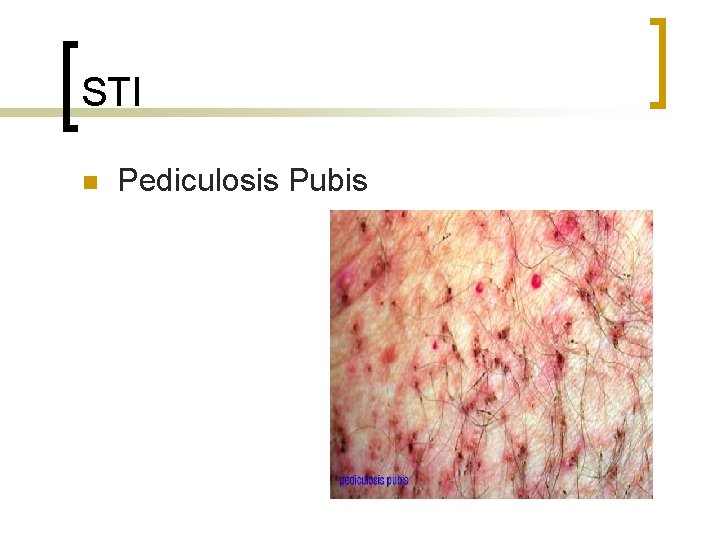
STI n Pediculosis Pubis
Abnormal Pap Smear Results n n Detects variety of abnormalities Greatest impact on detection of cervical cancer Bethesda system most widely used Pap Smear reporting system: Early detection allows changes to be treated before precancerous or cancerous cells develop Deliver results in a caring way
Ovarian Masses n n n May be palpated during a pelvic exam Between 70% and 80% of ovarian masses are benign More than 50% are functional cysts Occurs most commonly in women 20 to 40 years of age May be asymptomatic or symptomatic Symptoms: Cramping, dyspareunia, irregular bleeding, delayed menses
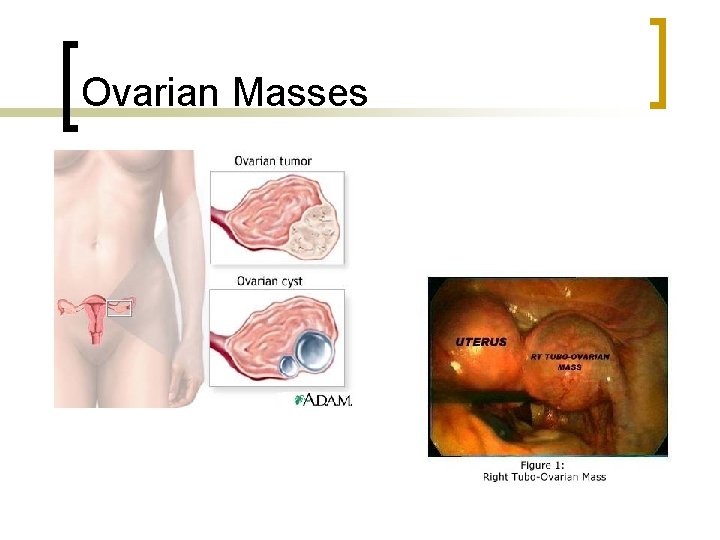
Ovarian Masses
Ovarian Masses (cont’d) n n n Treatment: Oral contraceptives, surgery considered for large masses Most ovarian cysts resolve on their own Ovarian cancer is the most fatal of all cancers in women Difficult to diagnose Often spread throughout the pelvis before it is detected
Uterine Masses n n n Fibroid tumors/leiomyomas Most common benign disease entities in women Most common reason for gynecologic surgery Between 20% and 50% of women develop leiomyomas by age 40 Common in women of African heritage
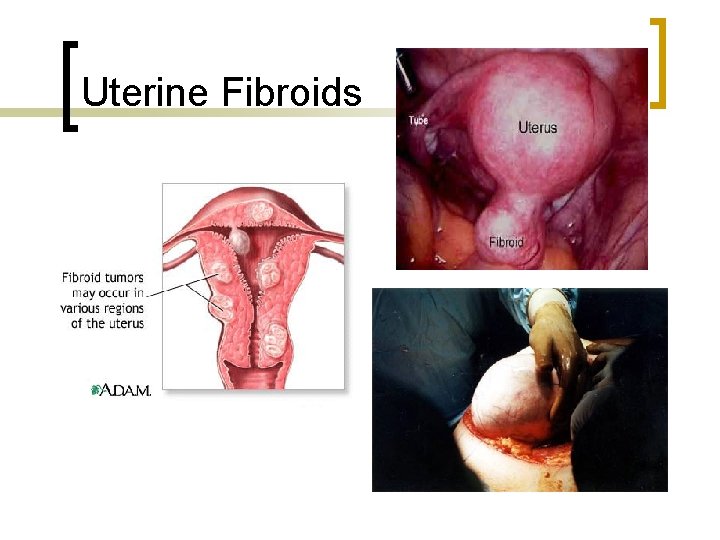
Uterine Fibroids
Uterine Masses (cont’d) n n n Frequently asymptomatic Symptoms include: Lower abdominal pain, fullness or pressure, menorrhagia, dysmenorrhea Diagnosis: Ultrasonography revealing masses or nodules Masses or nodules involving the uterus palpated on pelvic examination Treatment: None, embolization (plug artery supplying blood), U/S, or surgery
Endometrial Cancer n n Most common disease of postmenopausal women High rate of cure if detected early Hallmark sign is vaginal bleeding in postmenopausal women not treated with hormone replacement therapy Diagnosis: Endometrial biopsy, transvaginal ultrasound, posthysterectomy pathology of uterus
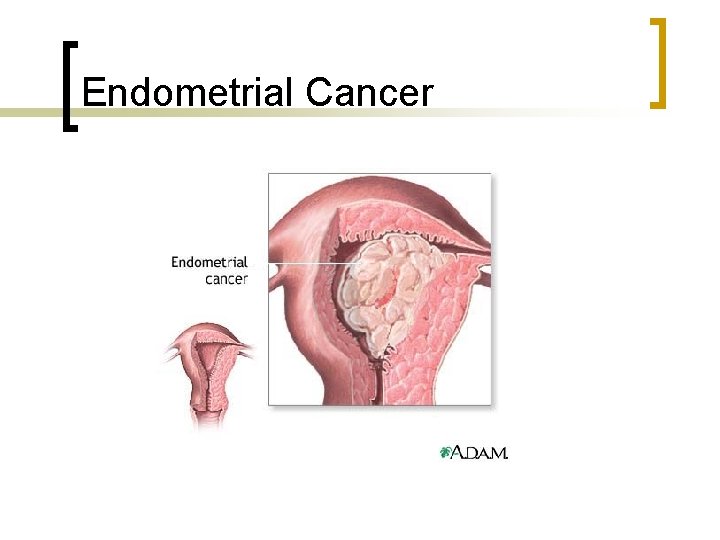
Endometrial Cancer
Endometrial Cancer (cont’d) n n n Treatment: Total abdominal hysterectomy (TAH) and bilateral salpingo-oophorectomy (BSO) Radiation therapy may also be indicated Nursing management ¡ ¡ ¡ Reinforce knowledge of etiology, symptoms, and treatment options Schedule follow-up appointments Provide emotional support and counseling
Breast Cancer n n n Unregulated growth of abnormal cells in breast tissue Most common cancer in women Second leading cause of death in women Can metastasize to bone, brain, lung, liver, skin, lymph nodes Staging 0, I, III, IV
Manifestations of Breast Cancer n n n n Breast mass or thickening Unusual lump in underarm or above the collarbone Persistent skin rash near the nipple area Flaking or eruption near the nipple Dimpling, pulling, or retraction in an area of the breast Nipple discharge Change in nipple position Burning, stinging, or pricking sensation
Diagnostic Tests for Breast Cancer n n n Breast examination Mammogram Needle biopsy Excisional biopsy Ductal lavage and nipple aspiration
Treatment for Breast Cancer n Mastectomy ¡ ¡ ¡ n n n Lumpectomy Simple Modified radical Radiation therapy Chemotherapy Breast Reconstruction
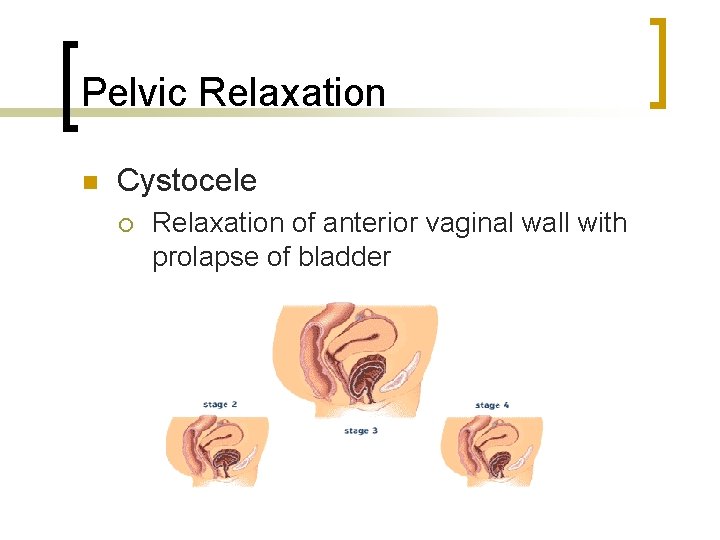
Pelvic Relaxation n Cystocele ¡ Relaxation of anterior vaginal wall with prolapse of bladder
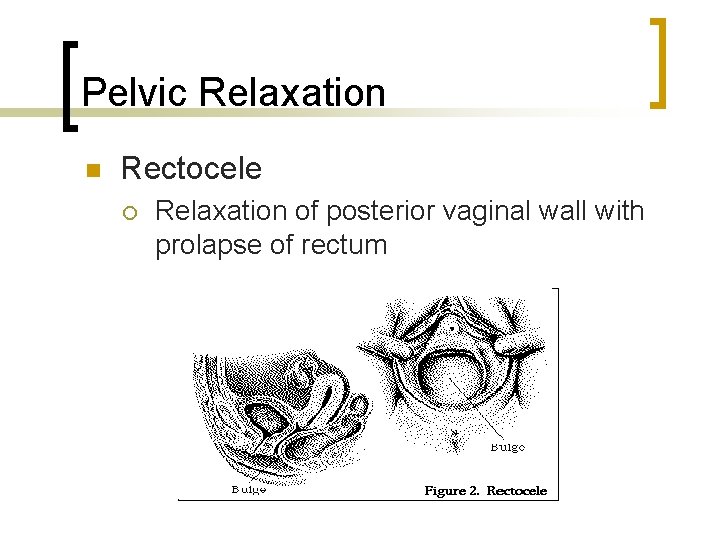
Pelvic Relaxation n Rectocele ¡ Relaxation of posterior vaginal wall with prolapse of rectum
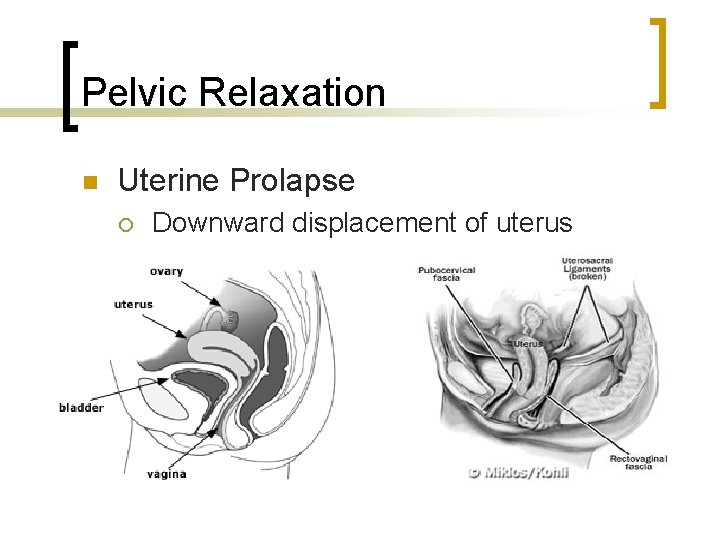
Pelvic Relaxation n Uterine Prolapse ¡ Downward displacement of uterus
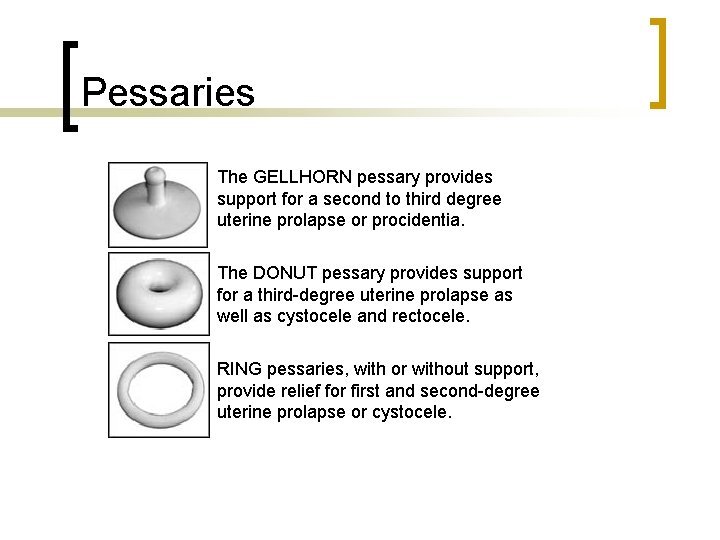
Pessaries The GELLHORN pessary provides support for a second to third degree uterine prolapse or procidentia. The DONUT pessary provides support for a third-degree uterine prolapse as well as cystocele and rectocele. RING pessaries, with or without support, provide relief for first and second-degree uterine prolapse or cystocele.
Hysterectomy n Surgical removal of uterus ¡ n n TAH or TVH w/ BSO TAH preferred for cancer, large fibroids, endometriosis TVH preferred for small fibroids, abnormal uterine bleeding
Female Circumcision n n Female genital mutilation performed on 2 million girls/year in African and Asia countries Cultural practice of womanhood Sunna – excision of clitoris Excision – removal of entire clitoris and part or all of labia Infibulation – excision of clitoris, labia minora and scraping out labia majora
Female Circumcision n n Provide privacy Create environment of trust where patient can talk openly Use warmed pediatric speculum for exams Provide health education about reproductive care and pregnancy care Develop birth plan to meet cultural needs
NCLEX Question The nurse is planning to teach couples factors that influence fertility. What should not be included in the teaching plan? A. Sexual intercourse should occur 4 times a week. B. Wait one hour to urinate after intercourse. C. Do not douch. D. Use stress reduction techniques.
NCLEX Question A menopausal woman tells the nurse that she experiences discomfort from vaginal dryness during sexual intercourse, and asks, “What should I use as a lubricant? ” What should the nurse recommend? A. B. C. D. Petroleum jelly Water-soluble lubricant Body cream or lotion Less-frequent intercourse
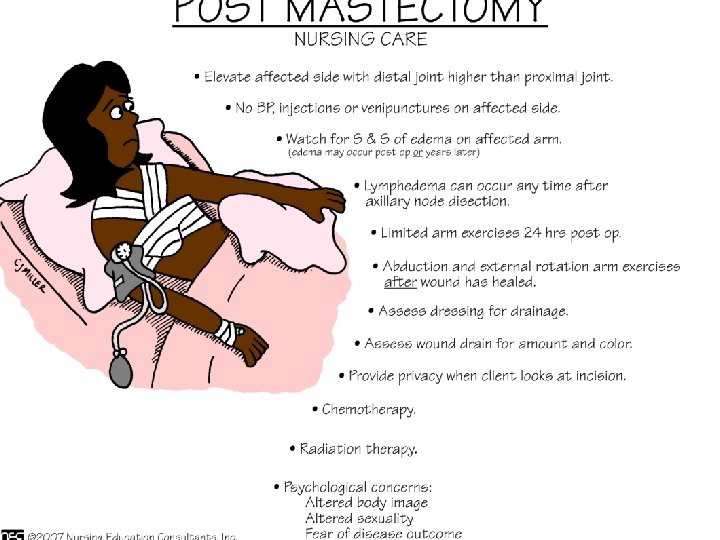
NCLEX Question n A. B. C. D. A nursing tech is assisting with nursing care of a postmastectomy client. What information does the nurse reinforce with the nursing tech? Maintain strict Intake and Output No BP on the mastectomy side Begin arm exercises immediately Elevate proximal joint higher than distal joint
NICU Nurse’s Prayer Help me to remember to care for the littlest of children with tenderness and compassion. Keep me ever mindful that babies can’t tell me of their needs, so I must use every one of my senses in taking care of them. Walk with me in every task of my day so that I will stay alert to any changes that need my attention.
NICU Nurse’s Prayer Let me encourage the parents as they learn how to care for their babies. Give me the grace to teach them with patience and show them unconditional love. Help us to care for each other when the shift is long and the work is stressful. Remind us to be thankful and to celebrate this healing ministry.
- Slides: 50