
Womens Changing Roles How did womens roles change


![Persons Case Edwards v. Canada [1930] - also known as the Persons Case –](https://slidetodoc.com/presentation_image_h2/16b41d2f128c9d2b827fd1f5573c7d22/image-15.jpg "Persons Case Edwards v. Canada [1930] - also known as the Persons Case –")
- Slides: 20
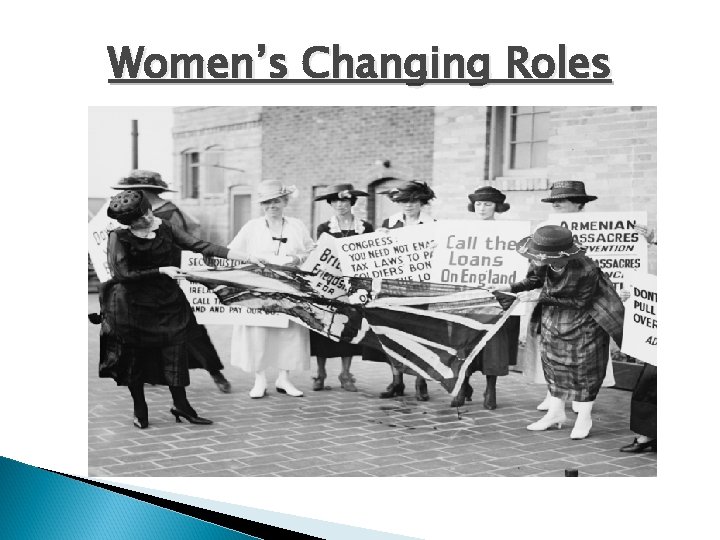
Women’s Changing Roles
How did women's roles change in Canada during World War One?
When did women get the right to vote in South Korea?
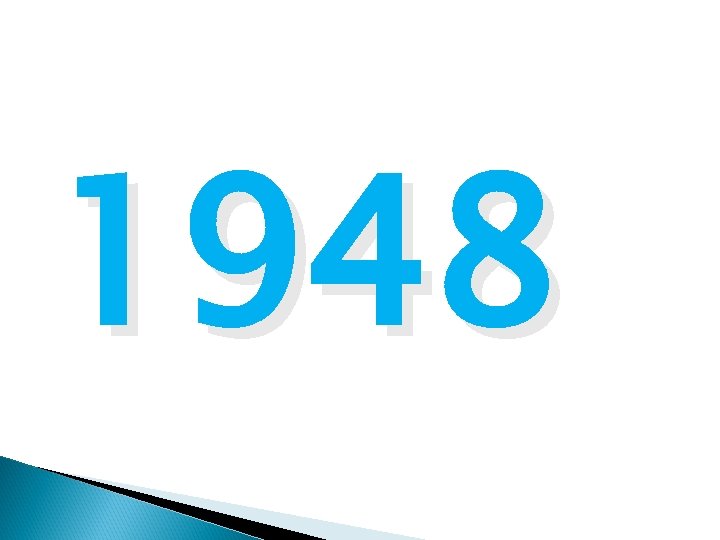
1948
When did women get the right to vote in China? * suffrage means the right for women to vote.
1949
When did “all” women get the right to vote in Canada?
Canada gave all women the right to vote in 1950, and all women could run for office in 1960.
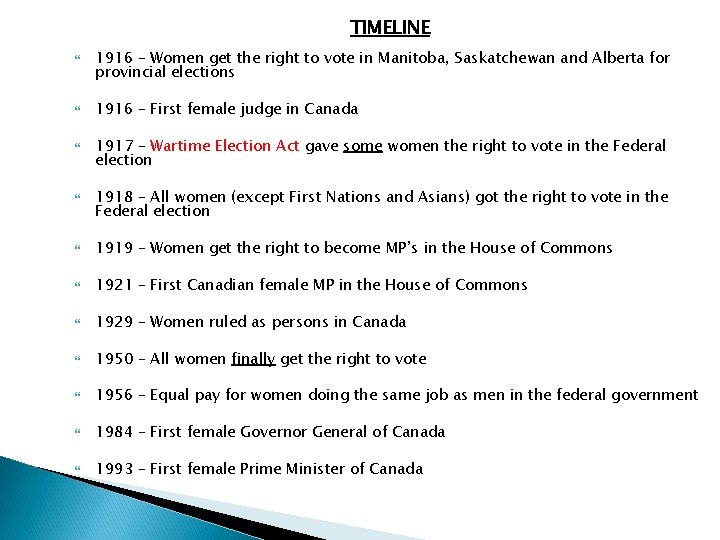
TIMELINE 1916 – Women get the right to vote in Manitoba, Saskatchewan and Alberta for provincial elections 1916 – First female judge in Canada 1917 – Wartime Election Act gave some women the right to vote in the Federal election 1918 – All women (except First Nations and Asians) got the right to vote in the Federal election 1919 – Women get the right to become MP’s in the House of Commons 1921 – First Canadian female MP in the House of Commons 1929 – Women ruled as persons in Canada 1950 – All women finally get the right to vote 1956 – Equal pay for women doing the same job as men in the federal government 1984 – First female Governor General of Canada 1993 – First female Prime Minister of Canada
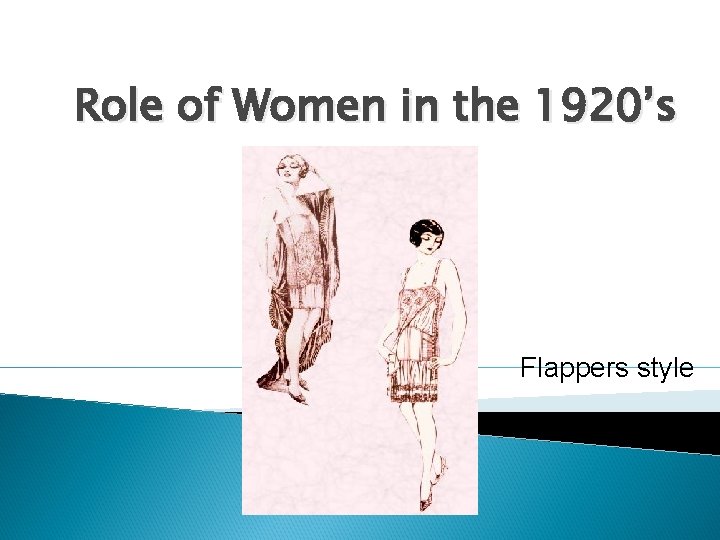
Role of Women in the 1920’s Flappers style
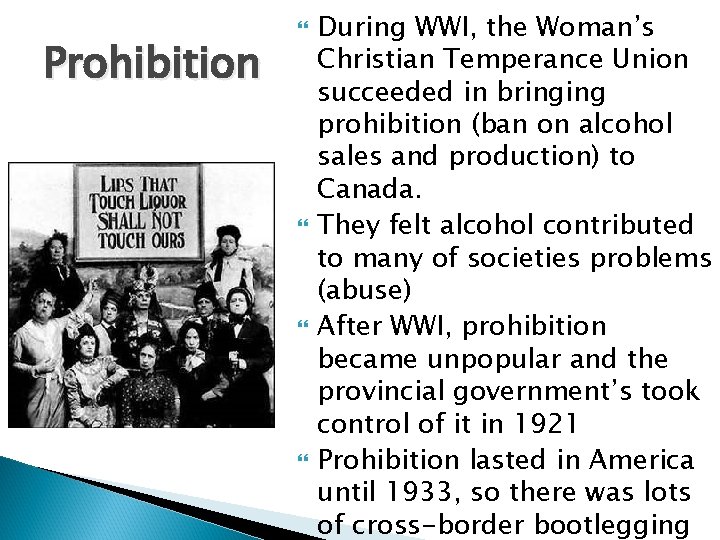
Prohibition During WWI, the Woman’s Christian Temperance Union succeeded in bringing prohibition (ban on alcohol sales and production) to Canada. They felt alcohol contributed to many of societies problems (abuse) After WWI, prohibition became unpopular and the provincial government’s took control of it in 1921 Prohibition lasted in America until 1933, so there was lots of cross-border bootlegging
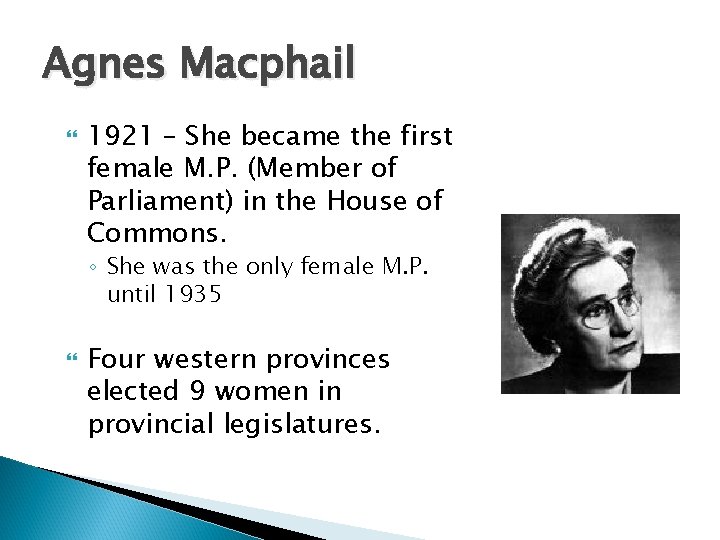
Agnes Macphail 1921 – She became the first female M. P. (Member of Parliament) in the House of Commons. ◦ She was the only female M. P. until 1935 Four western provinces elected 9 women in provincial legislatures.
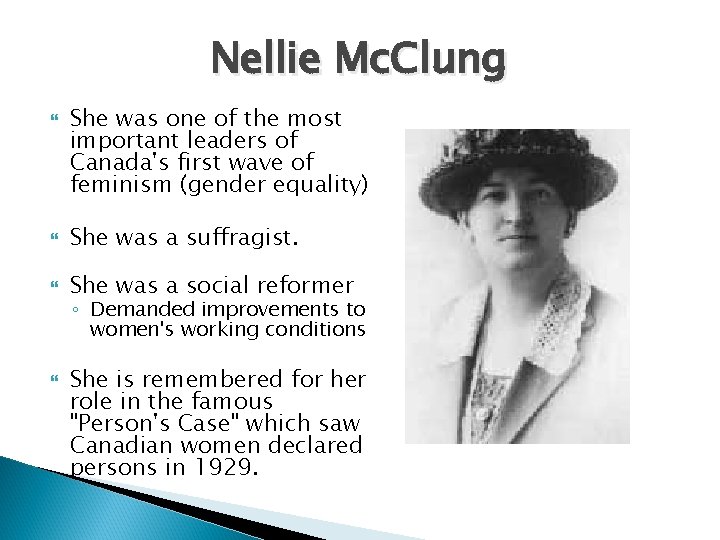
Nellie Mc. Clung She was one of the most important leaders of Canada's first wave of feminism (gender equality) She was a suffragist. She was a social reformer ◦ Demanded improvements to women's working conditions She is remembered for her role in the famous "Person's Case" which saw Canadian women declared persons in 1929.
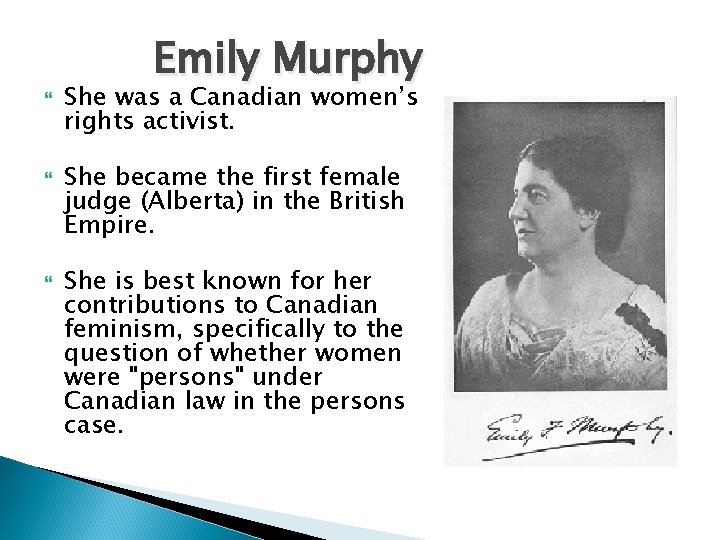
Emily Murphy She was a Canadian women’s rights activist. She became the first female judge (Alberta) in the British Empire. She is best known for her contributions to Canadian feminism, specifically to the question of whether women were "persons" under Canadian law in the persons case.
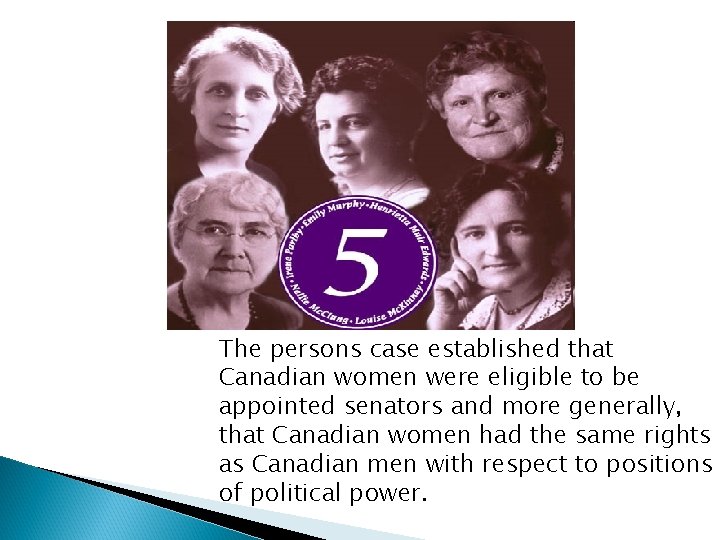
Persons Case Edwards v. Canada [1930] - also known as the Persons Case – is a famous Canadian and British constitutional case where it was first decided that women were eligible to sit in the Canadian Senate In 1927, Murphy and four other women: Henrietta Muir Edwards, Nellie Mc. Clung, Louise Mc. Kinney and Irene Parlby, came to be known as “The Famous Five” for challenging the Canadian government on whether or not women could become Senators in Canada The case went all the way to the highest court, the Imperial Privy Council in England, where it finally ruled that women were legal persons in Canada
The persons case established that Canadian women were eligible to be appointed senators and more generally, that Canadian women had the same rights as Canadian men with respect to positions of political power.
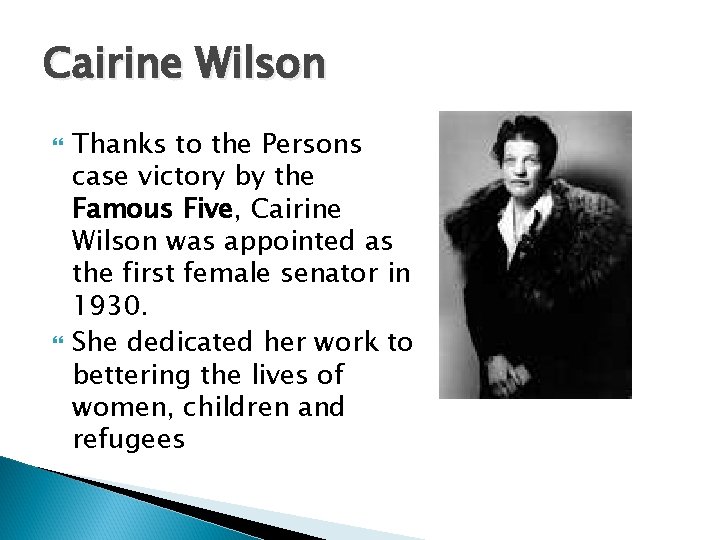
Cairine Wilson Thanks to the Persons case victory by the Famous Five, Cairine Wilson was appointed as the first female senator in 1930. She dedicated her work to bettering the lives of women, children and refugees
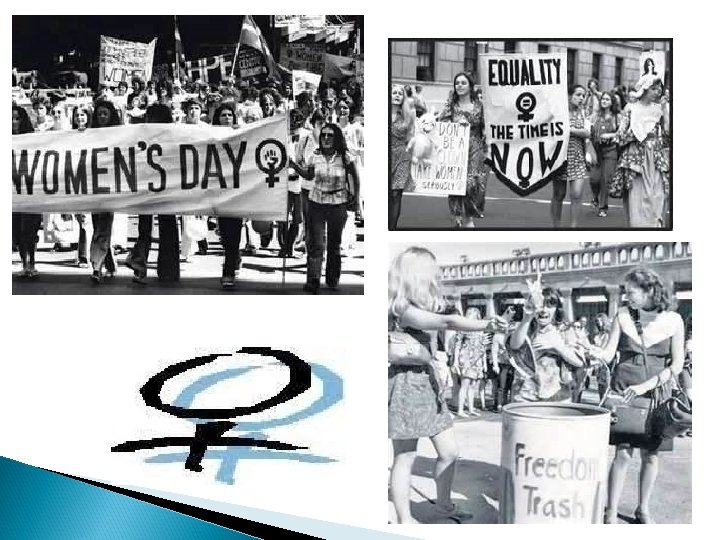
1960’s Women’s Feminist Movement Women felt trapped in their traditional roles after World War Two Most women who were working had low paying jobs, such as secretaries, waitresses, hairdressers, and retail sales In 1967, the Federal Government set up the Royal Commission on the Status of Women to examine women’s place in Canadian society The National Action Committee on the Status of Women (NAC) was formed as a pressure group in 1971 to lobby the government on women's issues * By the 1980’s, there were many women doctors, engineers, lawyers, and company presidents
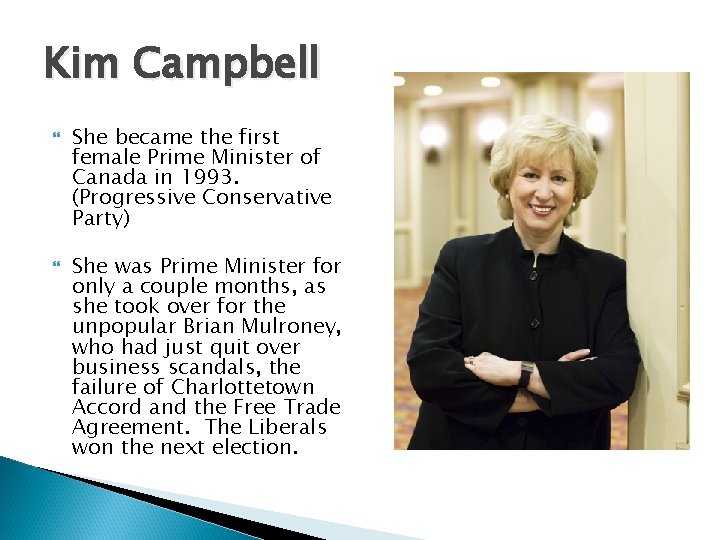
Kim Campbell She became the first female Prime Minister of Canada in 1993. (Progressive Conservative Party) She was Prime Minister for only a couple months, as she took over for the unpopular Brian Mulroney, who had just quit over business scandals, the failure of Charlottetown Accord and the Free Trade Agreement. The Liberals won the next election.