
Women Leaders in Development Professor Asha Kanwar President

- Slides: 63
Women Leaders in Development Professor Asha Kanwar President & CEO, Commonwealth of Learning Pan-Commonwealth Training Program on Women and Leadership in ODL | 26 -28 April 2019 | Penang, Malaysia
Commonwealth Heads of Government Meeting Vancouver, 1987
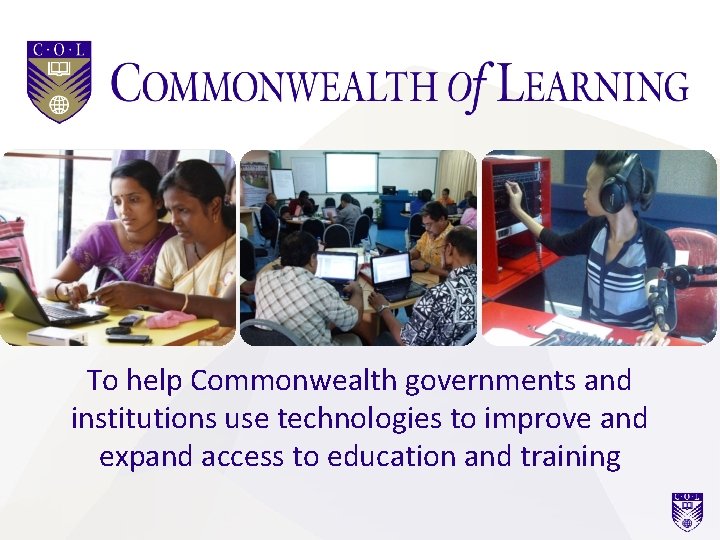
To help Commonwealth governments and institutions use technologies to improve and expand access to education and training
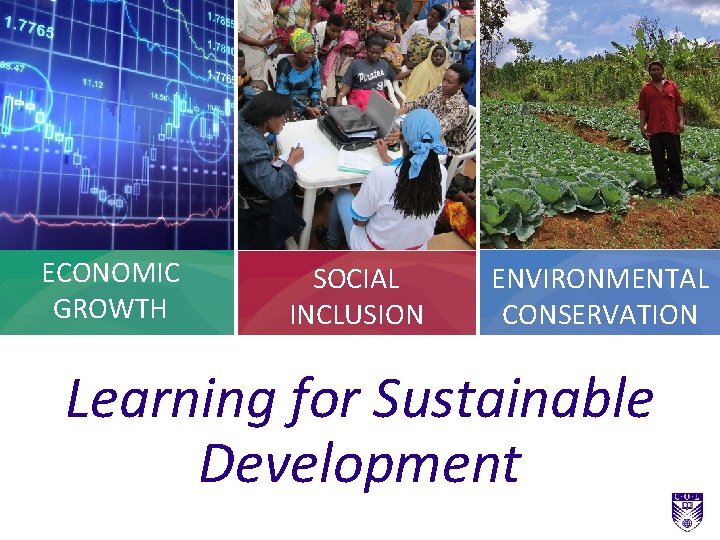
ECONOMIC GROWTH SOCIAL INCLUSION ENVIRONMENTAL CONSERVATION Learning for Sustainable Development
Outline • Context • Reflecting on Women’s Leadership • Two Faces of Transformational Leadership • Towards transformation & empowerment
Context
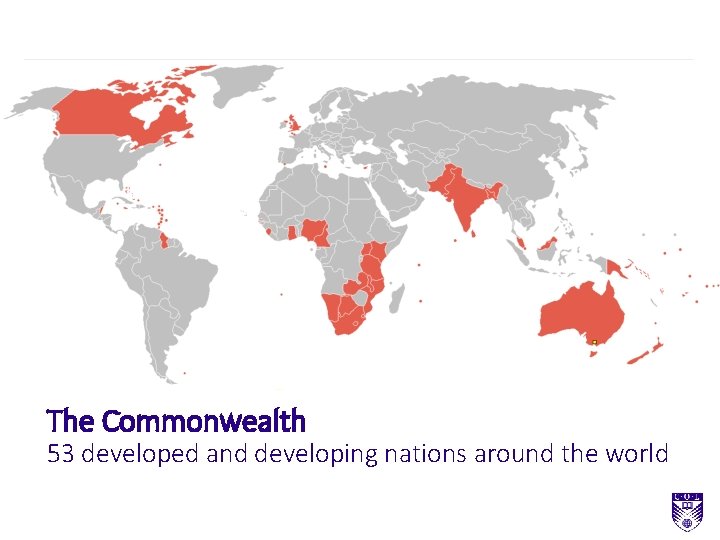
The Commonwealth 53 developed and developing nations around the world
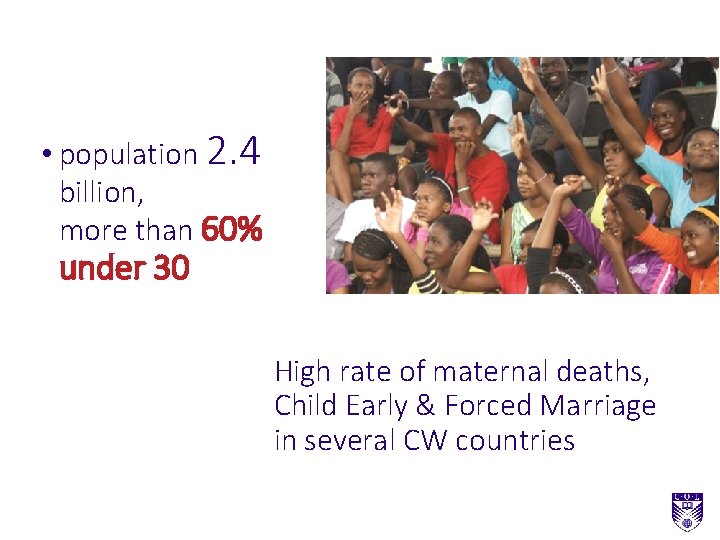
• population 2. 4 billion, more than 60% under 30 High rate of maternal deaths, Child Early & Forced Marriage in several CW countries
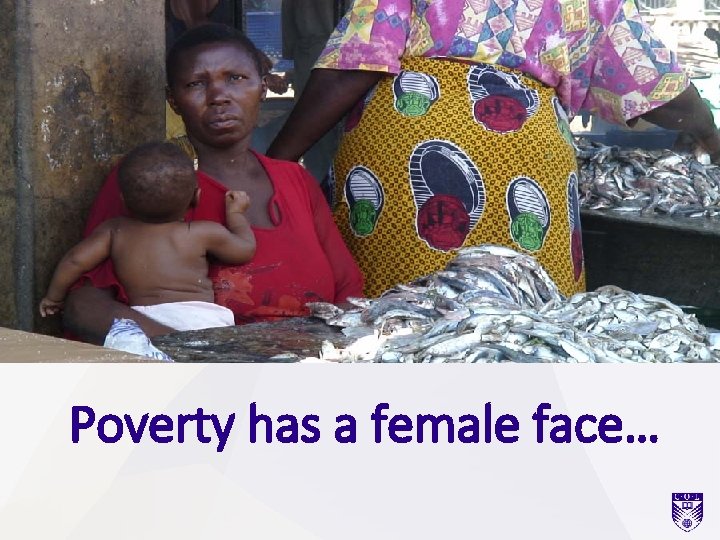
Poverty has a female face…
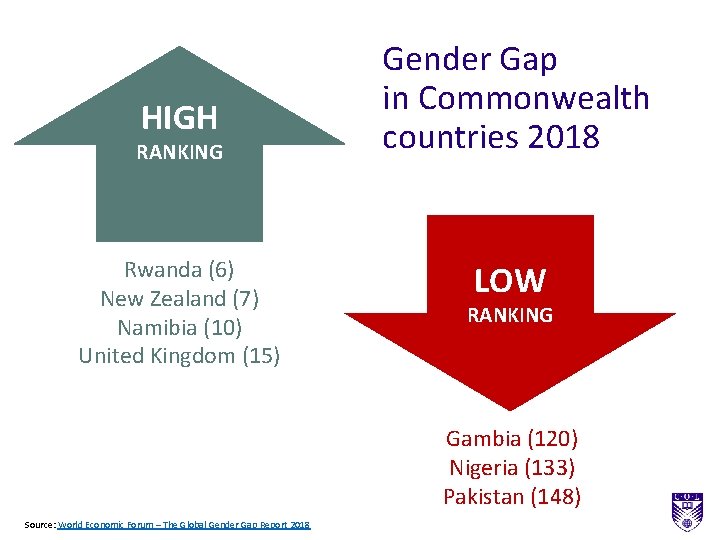
HIGH RANKING Rwanda (6) New Zealand (7) Namibia (10) United Kingdom (15) Gender Gap in Commonwealth countries 2018 LOW RANKING Gambia (120) Nigeria (133) Pakistan (148) Source: World Economic Forum – The Global Gender Gap Report 2018
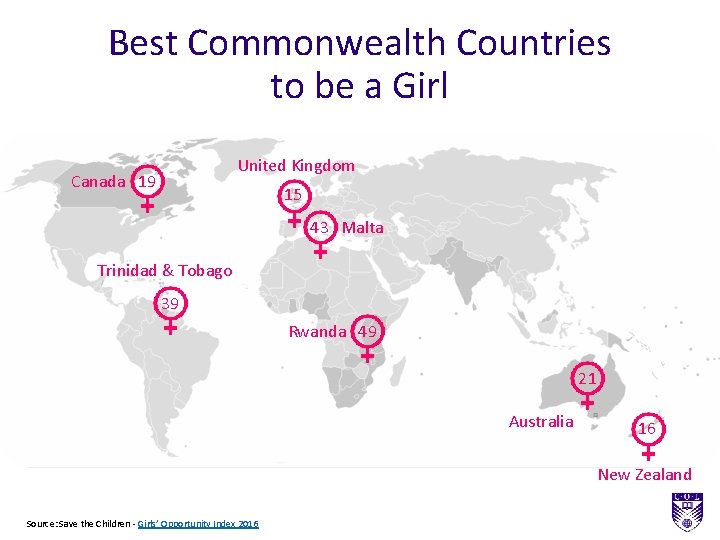
Best Commonwealth Countries to be a Girl United Kingdom Canada 19 15 43 Malta Trinidad & Tobago 39 Rwanda 49 21 Australia 16 New Zealand Source: Save the Children - Girls’ Opportunity Index 2016
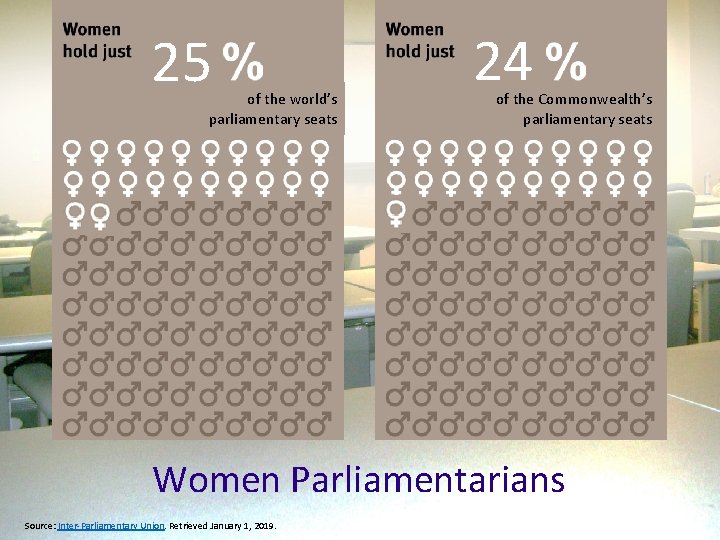
25 of the world’s parliamentary seats 24 of the Commonwealth’s parliamentary seats Women Parliamentarians Source: Inter-Parliamentary Union. Retrieved January 1, 2019.
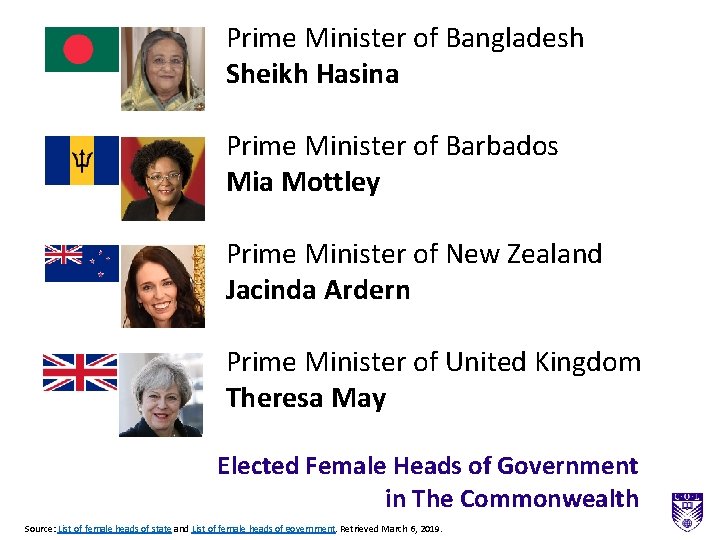
Prime Minister of Bangladesh Sheikh Hasina Prime Minister of Barbados Mia Mottley Prime Minister of New Zealand Jacinda Ardern Prime Minister of United Kingdom Theresa May Elected Female Heads of Government in The Commonwealth Source: List of female heads of state and List of female heads of government. Retrieved March 6, 2019.
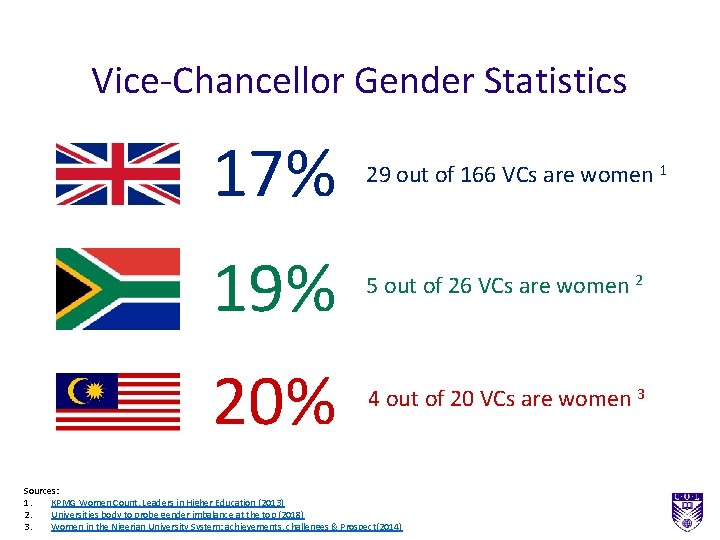
Vice-Chancellor Gender Statistics 17% 29 out of 166 VCs are women 1 19% 5 out of 26 VCs are women 2 20% 4 out of 20 VCs are women 3 Sources: 1. KPMG Women Count, Leaders in Higher Education (2013) 2. Universities body to probe gender imbalance at the top (2018) 3. Women in the Nigerian University System: achievements, challenges & Prospect(2014)
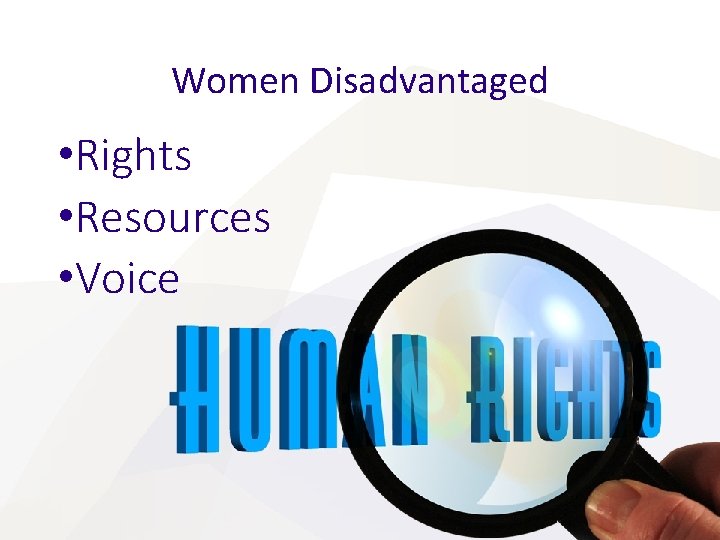
Women Disadvantaged • Rights • Resources • Voice
Women Leadership
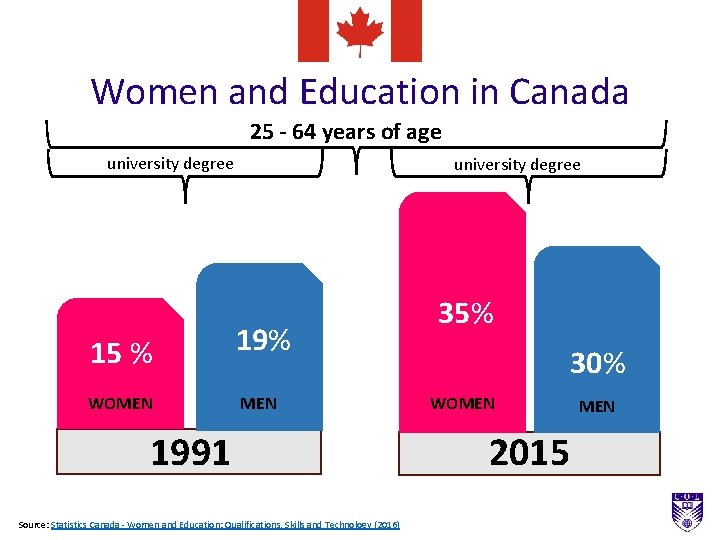
Women and Education in Canada 25 - 64 years of age university degree 15 % WOMEN university degree 19% MEN 1991 Source: Statistics Canada - Women and Education: Qualifications, Skills and Technology (2016) 35% 30% WOMEN 2015 MEN
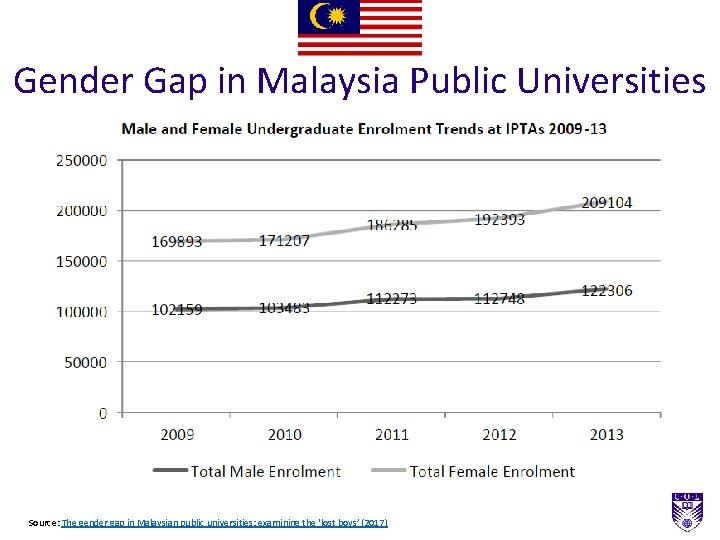
Gender Gap in Malaysia Public Universities Source: The gender gap in Malaysian public universities: examining the ‘lost boys’ (2017)
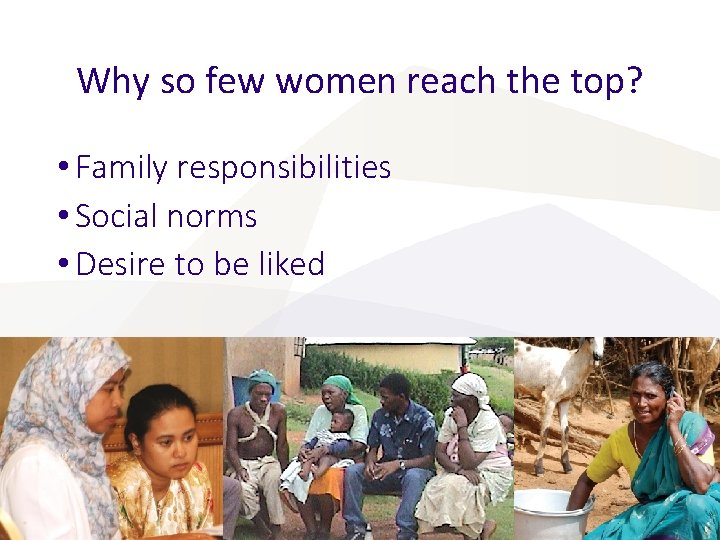
Why so few women reach the top? • Family responsibilities • Social norms • Desire to be liked
Women’s Double Roles Productive: • Work that generates payment in cash or in kind Reproductive: • Work in and around the household, such as childbearing/rearing responsibilities and tasks carried out to maintain society’s human resources (mostly unpaid)
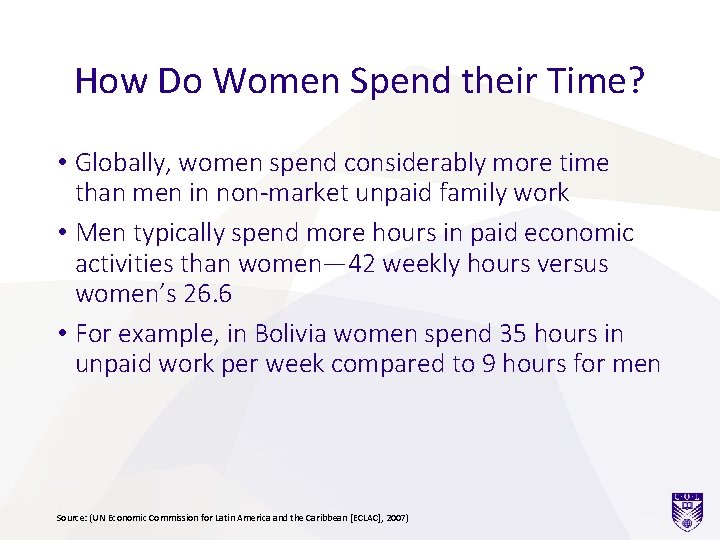
How Do Women Spend their Time? • Globally, women spend considerably more time than men in non-market unpaid family work • Men typically spend more hours in paid economic activities than women— 42 weekly hours versus women’s 26. 6 • For example, in Bolivia women spend 35 hours in unpaid work per week compared to 9 hours for men Source: (UN Economic Commission for Latin America and the Caribbean [ECLAC], 2007)
How Do Canadian Women Spend their Time? In 2010, women spent an average of 50. 1 hours per week on taking care of children in the household, more than double the average time (24. 4 hours) spent by men (Statistics Canada, 2010)
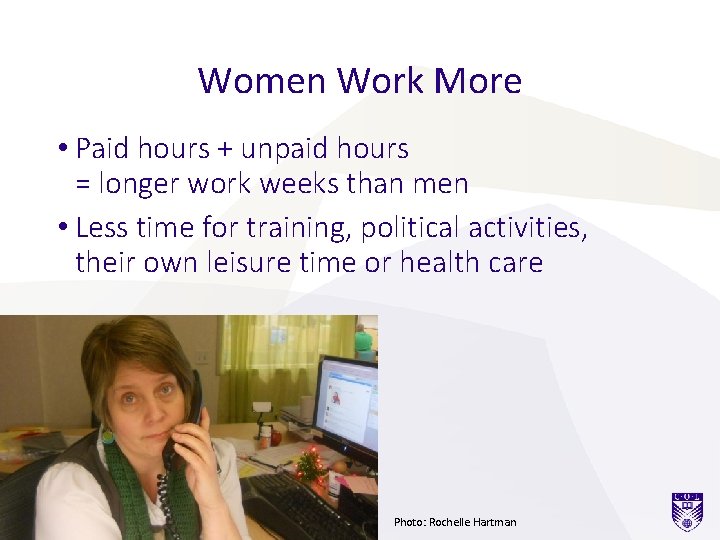
Women Work More • Paid hours + unpaid hours = longer work weeks than men • Less time for training, political activities, their own leisure time or health care Photo: Rochelle Hartman
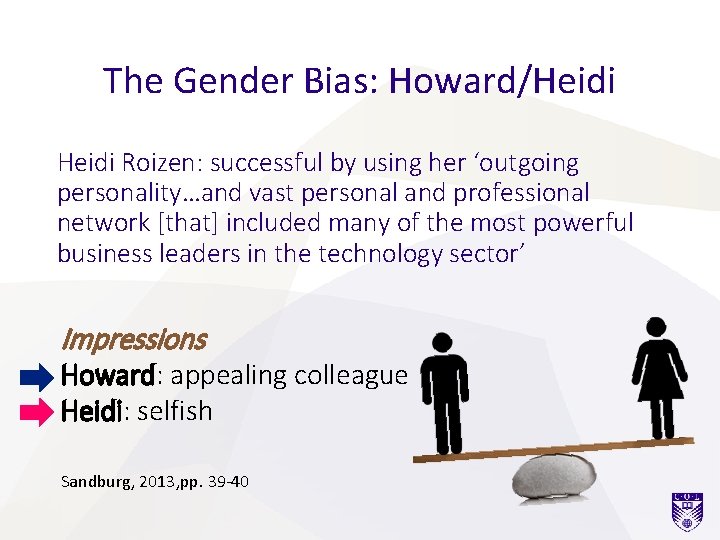
The Gender Bias: Howard/Heidi Roizen: successful by using her ‘outgoing personality…and vast personal and professional network [that] included many of the most powerful business leaders in the technology sector’ Impressions Howard: appealing colleague Heidi: selfish Sandburg, 2013, pp. 39 -40
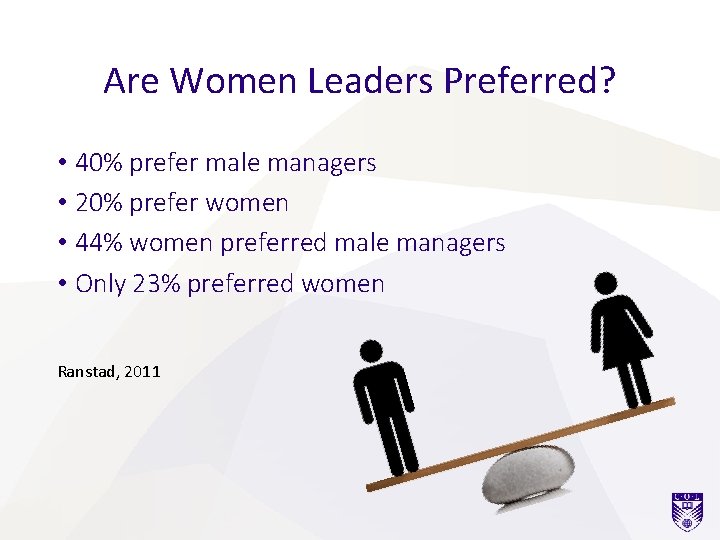
Are Women Leaders Preferred? • 40% prefer male managers • 20% prefer women • 44% women preferred male managers • Only 23% preferred women Ranstad, 2011
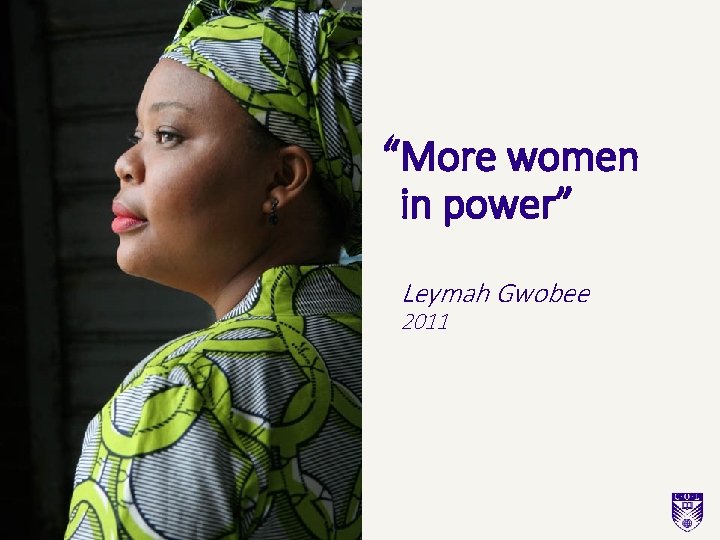
“More women in power” Leymah Gwobee 2011
Transformational Leadership
Transformative Leadership enables the disempowered to get empowered
Transformative Leadership “…occurs when one or more persons engage with others in such a way that leaders and followers raise one another to higher levels of motivation…” Spreckley Partners in http: //www. onrec. com/news-archive/the-role-of-gender-in-transformational-leadership
Transformational Leadership “Transformational leaders have the ability to identify their own values, and those of others… to guide their actions, thus developing a shared, conscious way of behaving and doing. Power is distributed because these leaders do not see power as limited but expansive. Transformational leaders are concerned with substance and truly empower others”. Spreckley Partners in http: //www. onrec. com/news-archive/the-role-of-gender-in-transformational-leadership
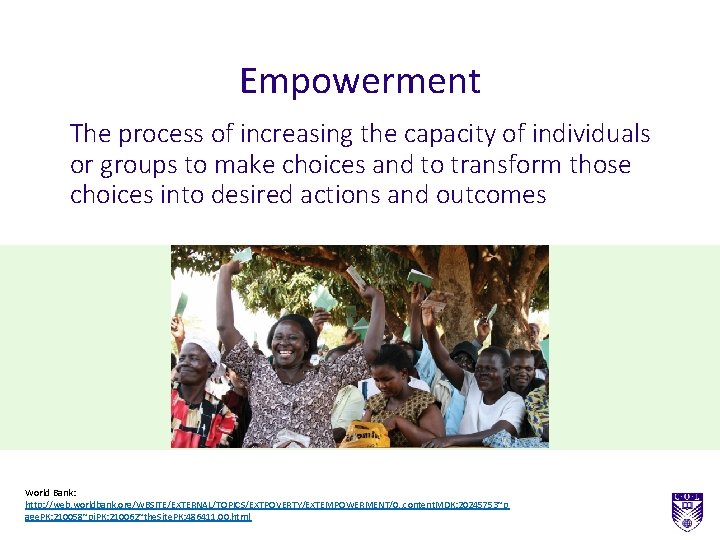
Empowerment The process of increasing the capacity of individuals or groups to make choices and to transform those choices into desired actions and outcomes World Bank: http: //web. worldbank. org/WBSITE/EXTERNAL/TOPICS/EXTPOVERTY/EXTEMPOWERMENT/0, , content. MDK: 20245753~p age. PK: 210058~pi. PK: 210062~the. Site. PK: 486411, 00. html
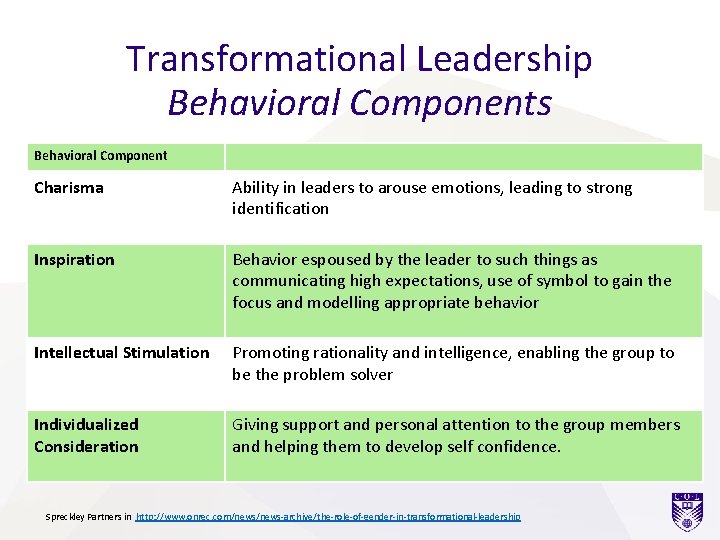
Transformational Leadership Behavioral Components Behavioral Component Charisma Ability in leaders to arouse emotions, leading to strong identification Inspiration Behavior espoused by the leader to such things as communicating high expectations, use of symbol to gain the focus and modelling appropriate behavior Intellectual Stimulation Promoting rationality and intelligence, enabling the group to be the problem solver Individualized Consideration Giving support and personal attention to the group members and helping them to develop self confidence. Spreckley Partners in http: //www. onrec. com/news-archive/the-role-of-gender-in-transformational-leadership
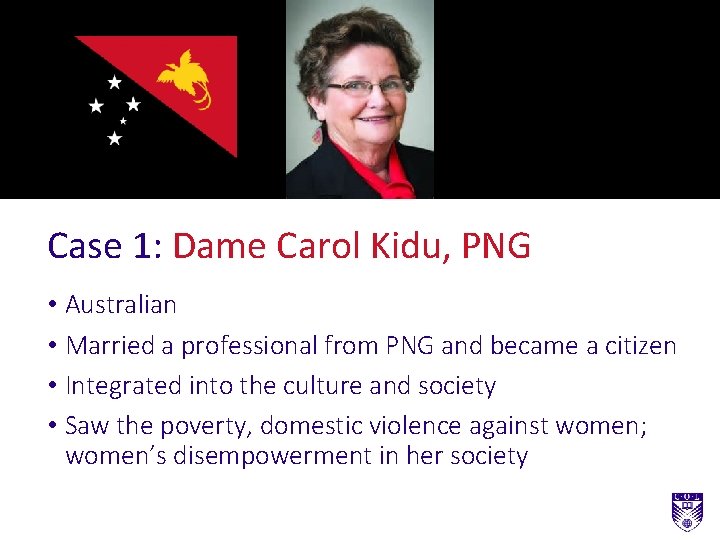
Case 1: Dame Carol Kidu, PNG • Australian • Married a professional from PNG and became a citizen • Integrated into the culture and society • Saw the poverty, domestic violence against women; women’s disempowerment in her society
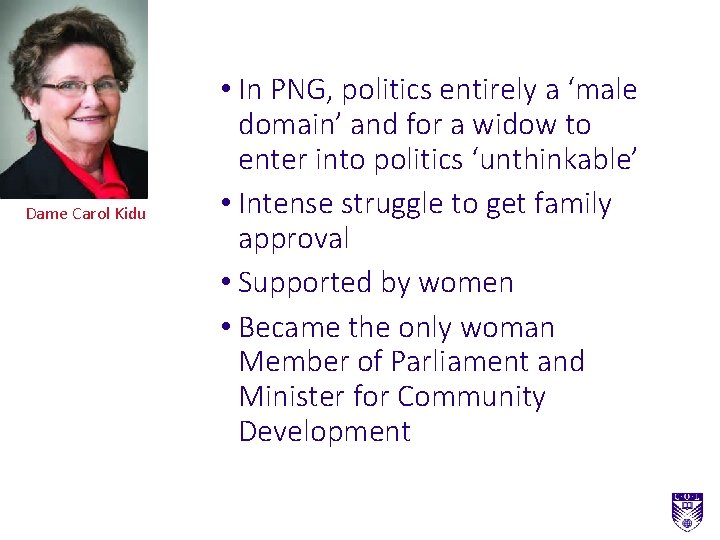
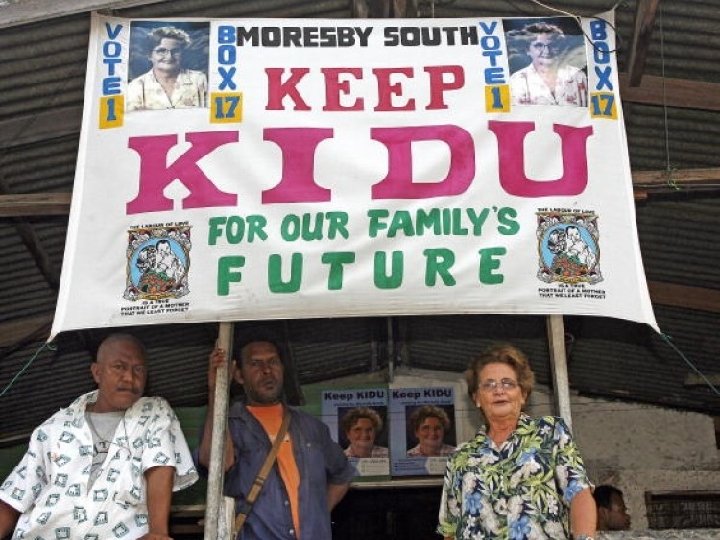
Dame Carol Kidu • In PNG, politics entirely a ‘male domain’ and for a widow to enter into politics ‘unthinkable’ • Intense struggle to get family approval • Supported by women • Became the only woman Member of Parliament and Minister for Community Development
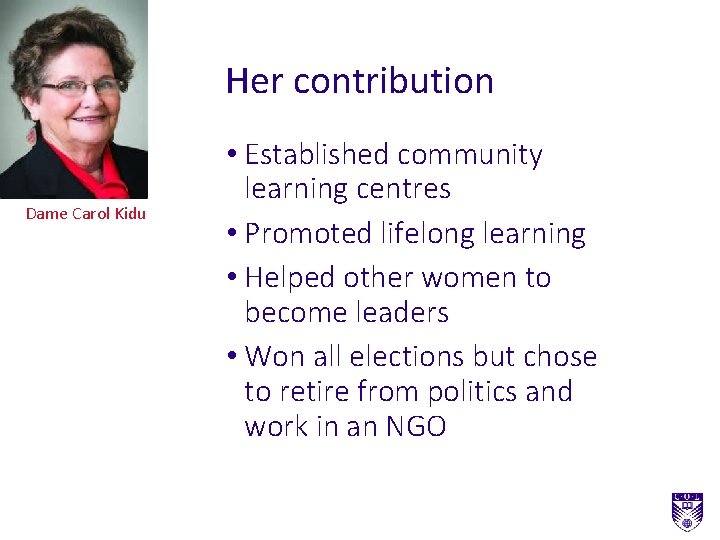
Her contribution Dame Carol Kidu • Established community learning centres • Promoted lifelong learning • Helped other women to become leaders • Won all elections but chose to retire from politics and work in an NGO
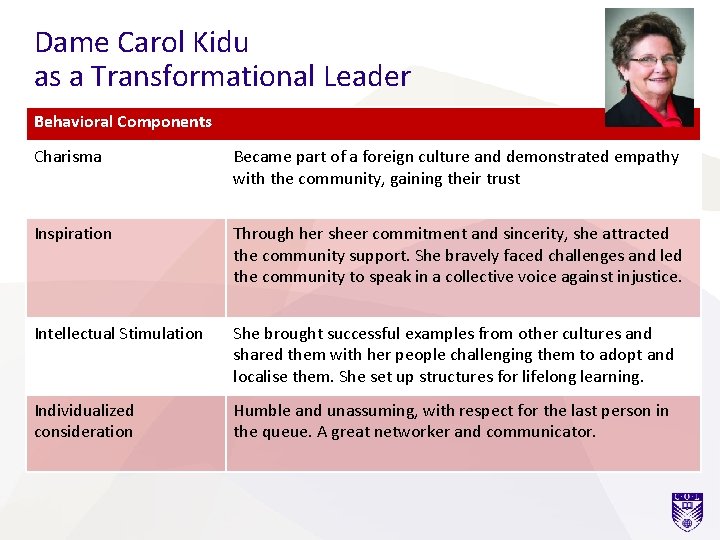
Dame Carol Kidu as a Transformational Leader Behavioral Components Charisma Became part of a foreign culture and demonstrated empathy with the community, gaining their trust Inspiration Through her sheer commitment and sincerity, she attracted the community support. She bravely faced challenges and led the community to speak in a collective voice against injustice. Intellectual Stimulation She brought successful examples from other cultures and shared them with her people challenging them to adopt and localise them. She set up structures for lifelong learning. Individualized consideration Humble and unassuming, with respect for the last person in the queue. A great networker and communicator.
Women Leaders… …walk with people, they talk with people, they learn from people and they lead by example. ‘Setting an example is not the main means of influencing others, it is the only means. ”
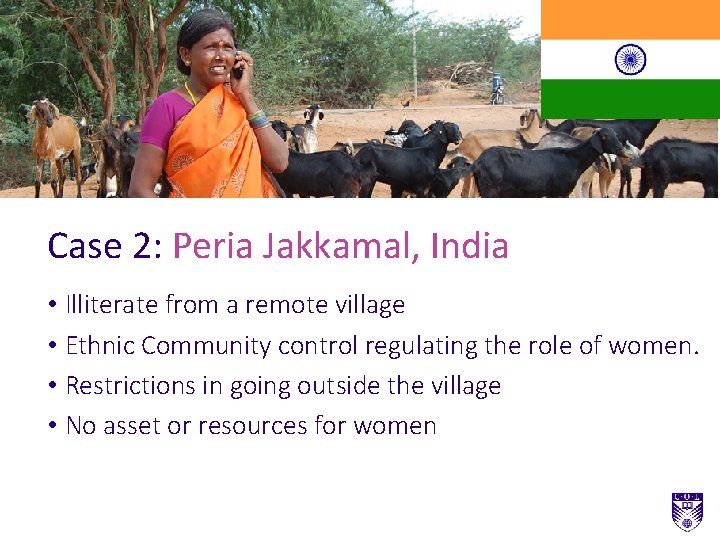
Case 2: Peria Jakkamal, India • Illiterate from a remote village • Ethnic Community control regulating the role of women. • Restrictions in going outside the village • No asset or resources for women
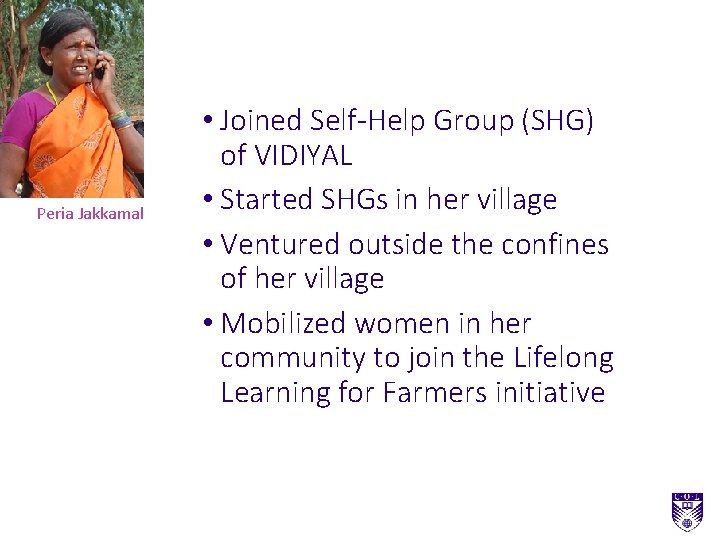
Peria Jakkamal • Joined Self-Help Group (SHG) of VIDIYAL • Started SHGs in her village • Ventured outside the confines of her village • Mobilized women in her community to join the Lifelong Learning for Farmers initiative
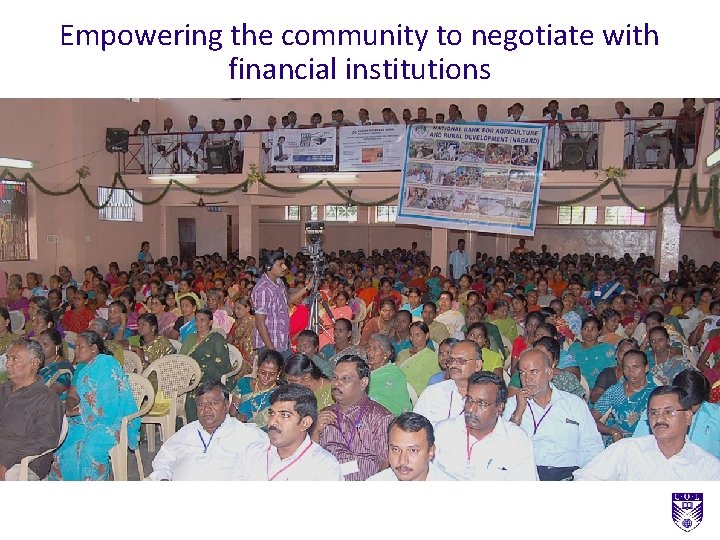
Empowering the community to negotiate with financial institutions
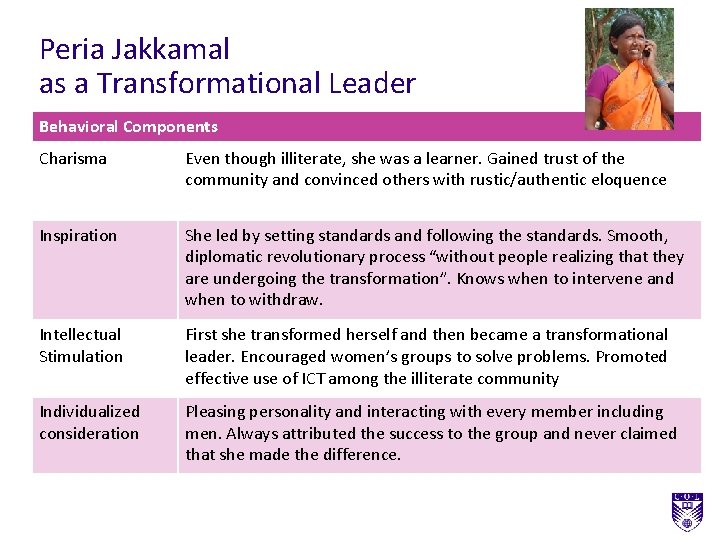
Peria Jakkamal as a Transformational Leader Behavioral Components Charisma Even though illiterate, she was a learner. Gained trust of the community and convinced others with rustic/authentic eloquence Inspiration She led by setting standards and following the standards. Smooth, diplomatic revolutionary process “without people realizing that they are undergoing the transformation”. Knows when to intervene and when to withdraw. Intellectual Stimulation First she transformed herself and then became a transformational leader. Encouraged women’s groups to solve problems. Promoted effective use of ICT among the illiterate community Individualized consideration Pleasing personality and interacting with every member including men. Always attributed the success to the group and never claimed that she made the difference.
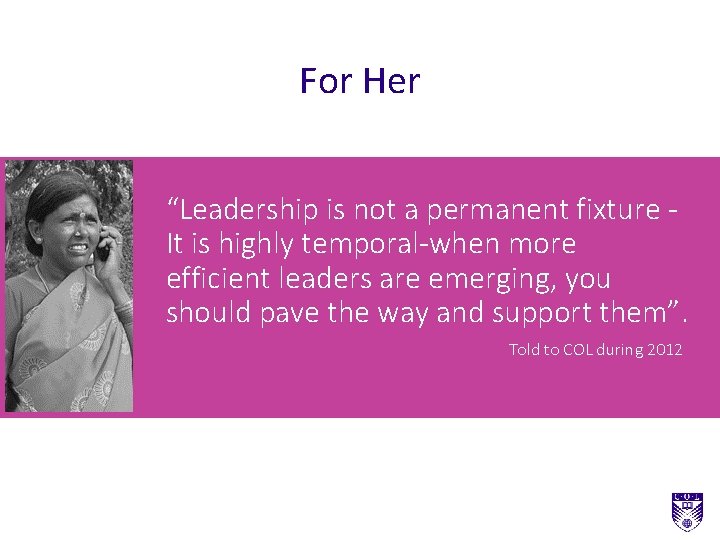
For Her “Leadership is not a permanent fixture It is highly temporal-when more efficient leaders are emerging, you should pave the way and support them”. Told to COL during 2012
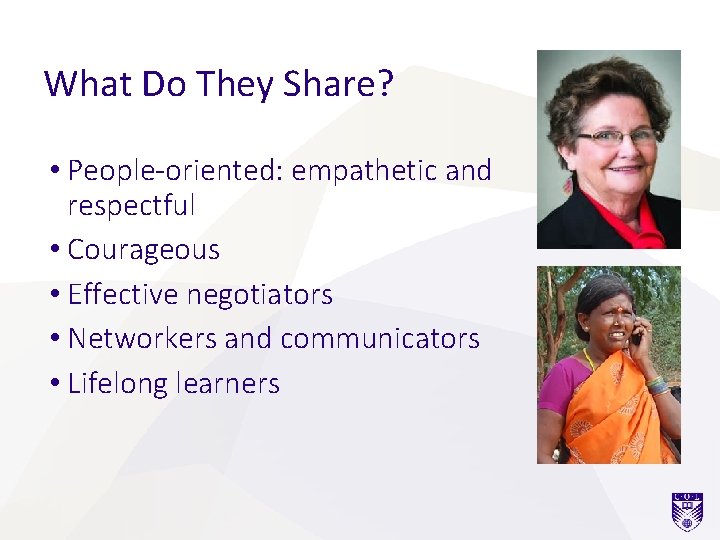
What Do They Share? • People-oriented: empathetic and respectful • Courageous • Effective negotiators • Networkers and communicators • Lifelong learners
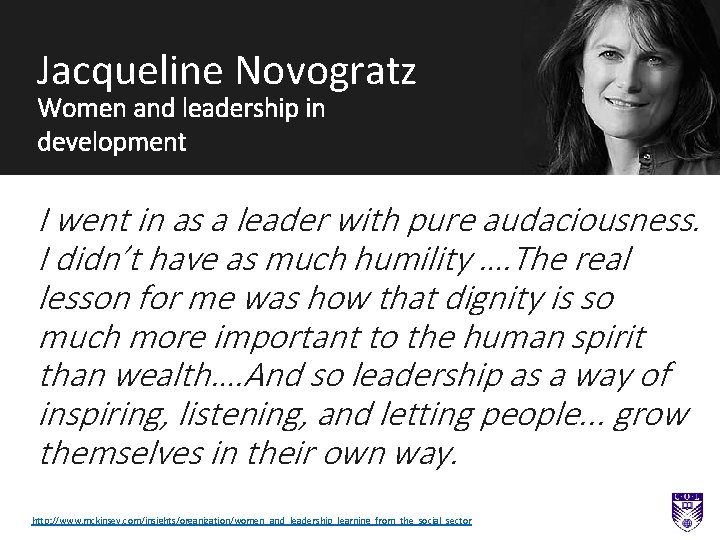
Jacqueline Novogratz Women and leadership in development I went in as a leader with pure audaciousness. I didn’t have as much humility …. The real lesson for me was how that dignity is so much more important to the human spirit than wealth…. And so leadership as a way of inspiring, listening, and letting people. . . grow themselves in their own way. http: //www. mckinsey. com/insights/organization/women_and_leadership_learning_from_the_social_sector
Towards Transformation and Empowerment
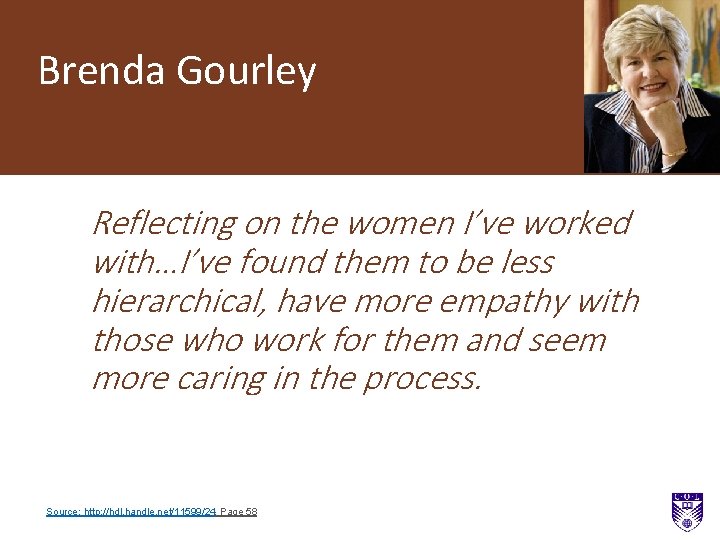
Brenda Gourley Reflecting on the women I’ve worked with…I’ve found them to be less hierarchical, have more empathy with those who work for them and seem more caring in the process. Source: http: //hdl. handle. net/11599/24, Page 58
C 21 Skills • Intelligence • Ability to sit still and focus • Communicate openly • Listen to people • Operate in a diverse workplace Hanna Rosin, TED Talk 2010
Women Leaders • Leadership evolves through non-formal and informal processes • No structured roadmap for the evolution of leadership • Leadership is issue-based and not (necessarily) institution-based
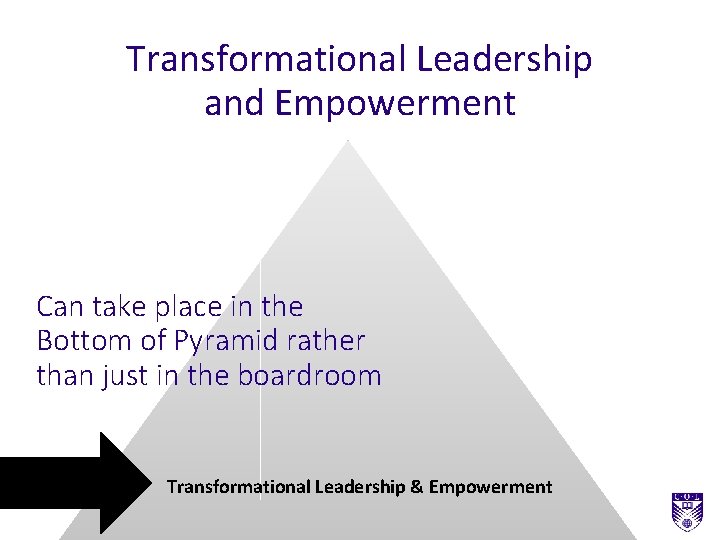
Transformational Leadership and Empowerment Can take place in the Bottom of Pyramid rather than just in the boardroom Transformational Leadership & Empowerment
Challenges in Transformational Leadership • Faces problems in the context of organized institutions, rules and procedures and “routinizing authority” ? How to sustain transformational leadership in a non-formal to formal transition? Naila Kabeer and Lopita Huq, The Power of Relationship in the book Feminism, Empowerment and development: Changing Women’s Lives, edited by Andrea Cornwall and Jenny Edwards, London: Zed Books, 2014
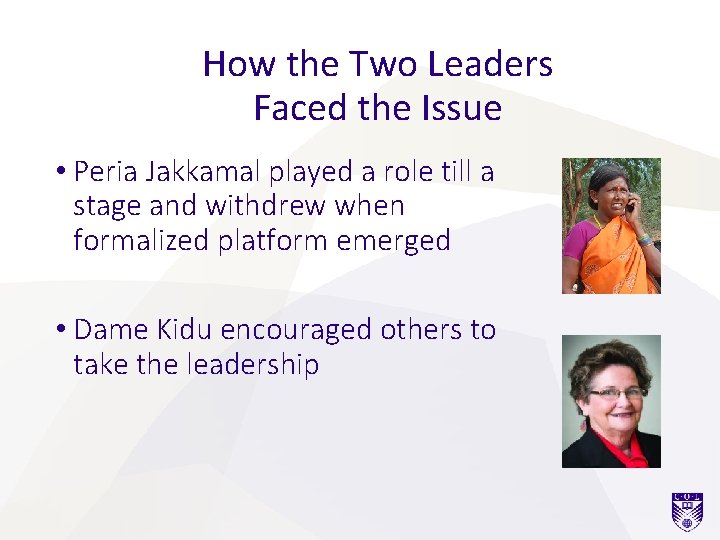
How the Two Leaders Faced the Issue • Peria Jakkamal played a role till a stage and withdrew when formalized platform emerged • Dame Kidu encouraged others to take the leadership
Need to Focus on Transformational Leadership • While leadership is studied mostly from corporate and political level, transformational leadership at the Bottom of the Pyramid needs to be looked into. • The role of learning, education and extension in evolving transformational leadership needs understanding.
Thinking like a Woman? A personal view • The pressure to prove yourself • Cautious risk-taking • Collaborative approach
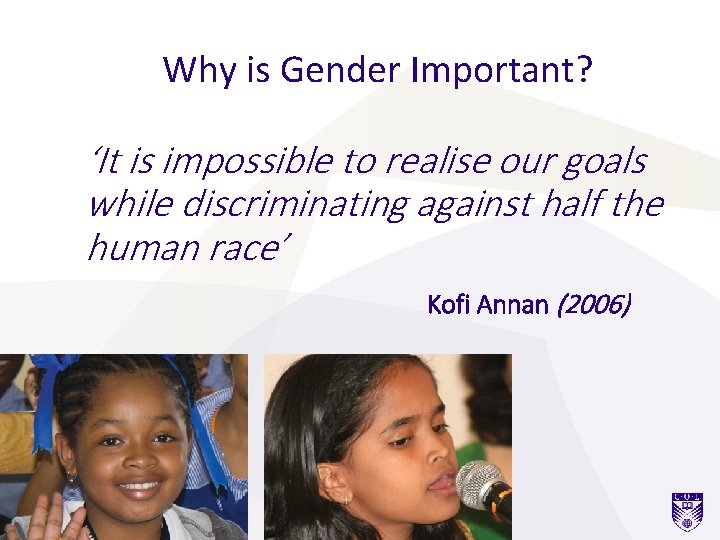
Why is Gender Important? ‘It is impossible to realise our goals while discriminating against half the human race’ Kofi Annan (2006)
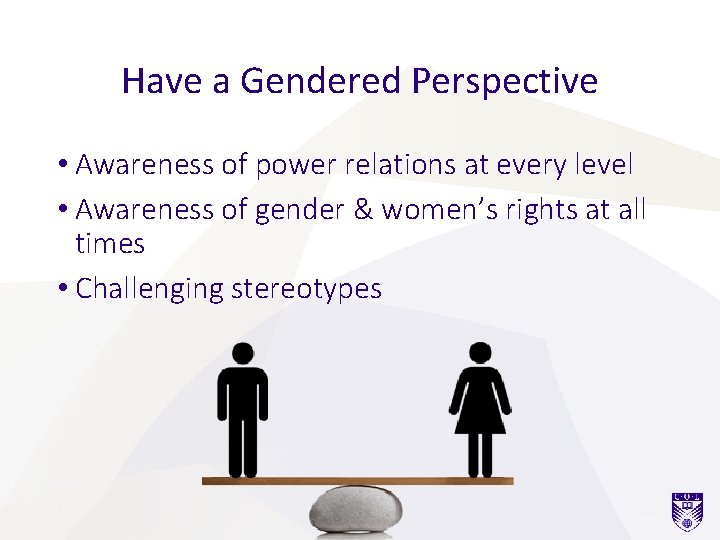
Have a Gendered Perspective • Awareness of power relations at every level • Awareness of gender & women’s rights at all times • Challenging stereotypes
Some Questions ? • Is women’s transformational leadership different from men’s? How? • What motivates women to manage the two roles and still take up leadership roles? • A woman may be a transformational leader at the community level but what of the home?
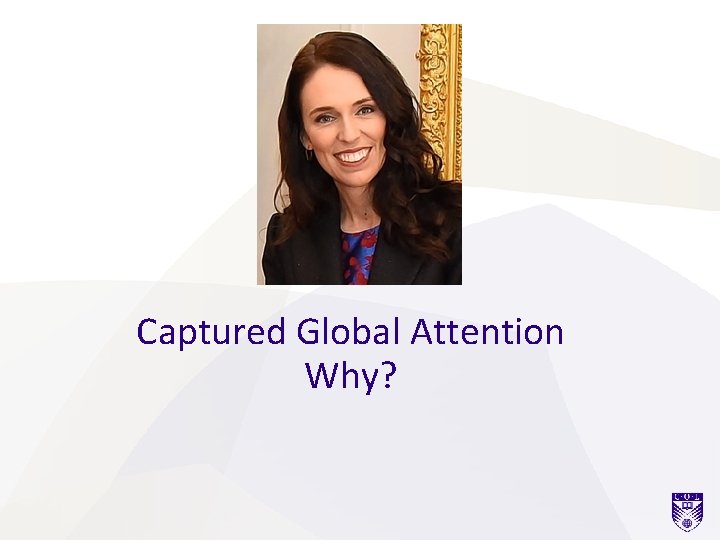
Captured Global Attention Why?
Thank you www. col. org
www. pcf 9. org Innovations for Quality Education & Lifelong Learning
www. mooc 4 dev. org/blockchains Course Description Blockchains, you can’t seem to avoid them. They have been proposed for everything from dating apps to Government records. What are they and how do they do this? This short course will de-mystify the blockchain universe. We introduce blockchain technologies and explain how they work. We will some use cases and discuss how and where to use blockchains. The course is meant for decision makers who make the first call on the use of blockchains.