
Wolfes midterm Study guide Metric System key words
- Slides: 18
Wolfe’s midterm Study guide
Metric System -key words; gram, liter, meter, scale, balance, cubic centimeter, graduated cylinder, Newtons, degrees Celsius, displacement all prefixes Conversions between units
Key Terms Gram- basic unit of MASS Liter- a basic unit, measurement of VOLUME Meter- a basic unit, measurement of DISTANCE or LENGTH Scale- measures weight by force of gravity Cubic centimeter- cm 3 Lx. Wx. H=cubic area ie. 3 cm x 4 cm x 5 cm = 60 cm 3 Newtons- The SI unit of force. 1 Newton = 1 Kg-m/sec 2 Degrees Celsius- Measurement of TEMPERATURE
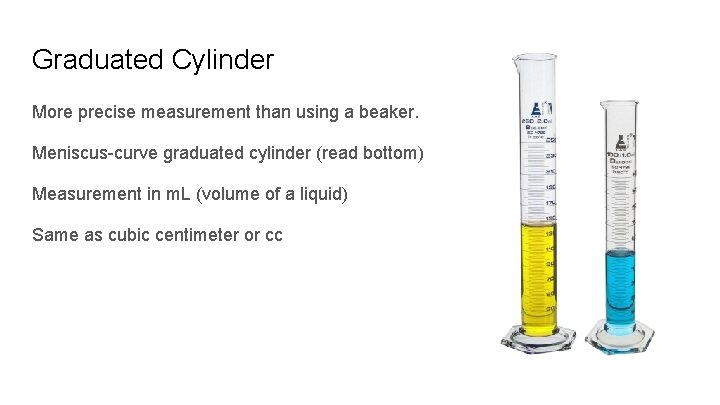
Graduated Cylinder More precise measurement than using a beaker. Meniscus-curve graduated cylinder (read bottom) Measurement in m. L (volume of a liquid) Same as cubic centimeter or cc
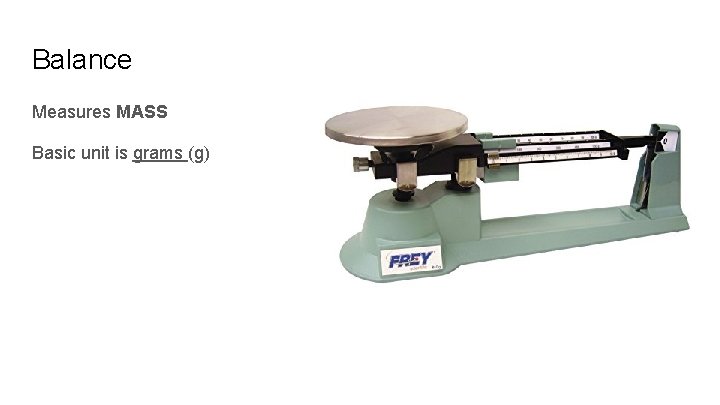
Balance Measures MASS Basic unit is grams (g)
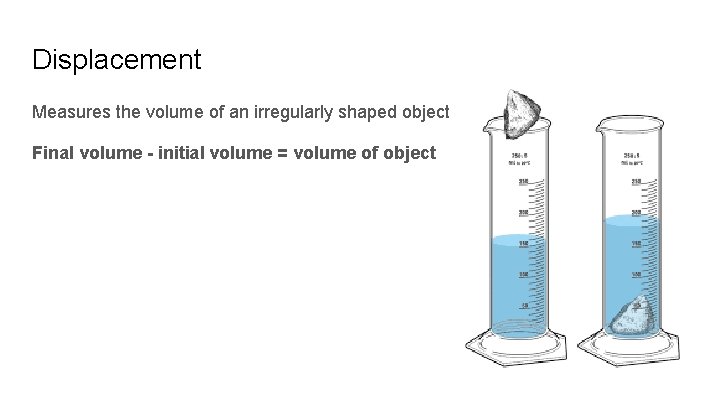
Displacement Measures the volume of an irregularly shaped object Final volume - initial volume = volume of object
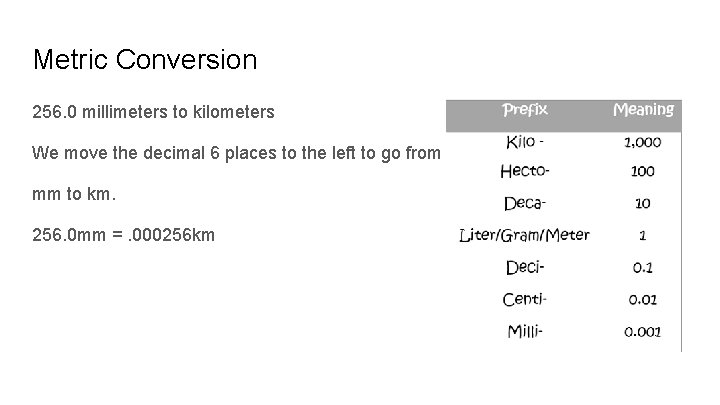
Metric Conversion 256. 0 millimeters to kilometers We move the decimal 6 places to the left to go from mm to km. 256. 0 mm =. 000256 km
Density = mass / volume Example of density label- 56 g/m. L The density of water is 1. Anything with a density of MORE THAN 1 will SINK. Anything with a density of LESS THAN 1 will FLOAT. Cement could float on water IF it can displace a greater volume of water than the volume of the cement. The density of the cement becomes lower than the density of the water.
Forces Mass vs Weight Mass- The measure of the amount of matter in an object. Weight- A measurement of the force of gravity on an object.
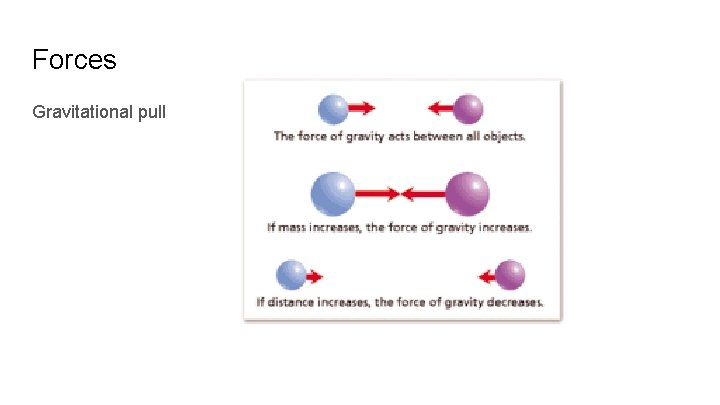
Forces Gravitational pull
Forces Friction How is friction helpful? How is it harmful? How can you reduce or increase friction?
Forces Air Pressure- The higher you go (think Mt. Everest) the lower the air pressure. The lower you go, air pressure increases. This concepts applies to water too. If a submarine is down 1, 000 meters in the ocean, the water pressure is high. If it went up towards the surface, the pressure decreases.
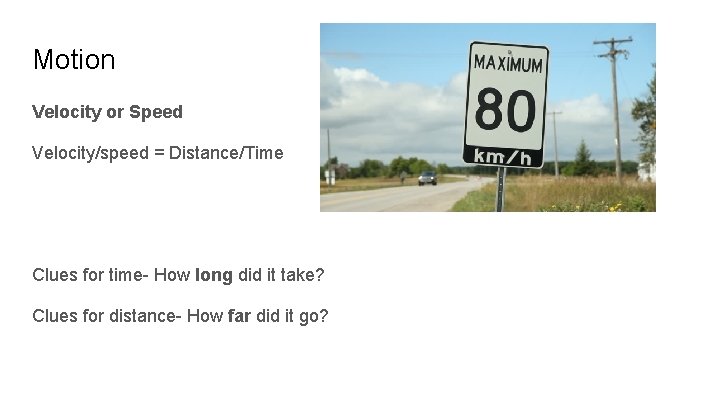
Motion Velocity or Speed Velocity/speed = Distance/Time Clues for time- How long did it take? Clues for distance- How far did it go?
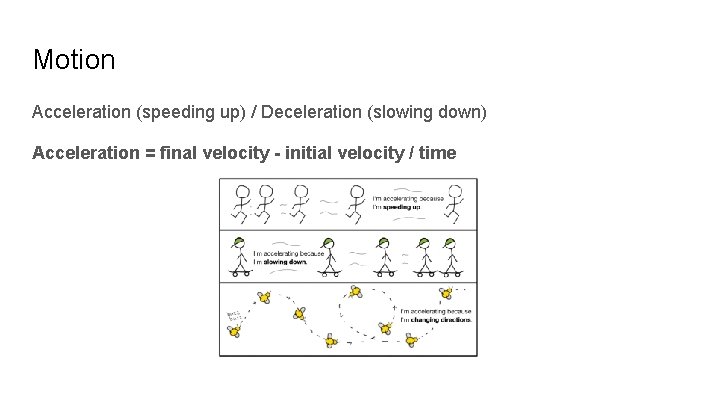
Motion Acceleration (speeding up) / Deceleration (slowing down) Acceleration = final velocity - initial velocity / time
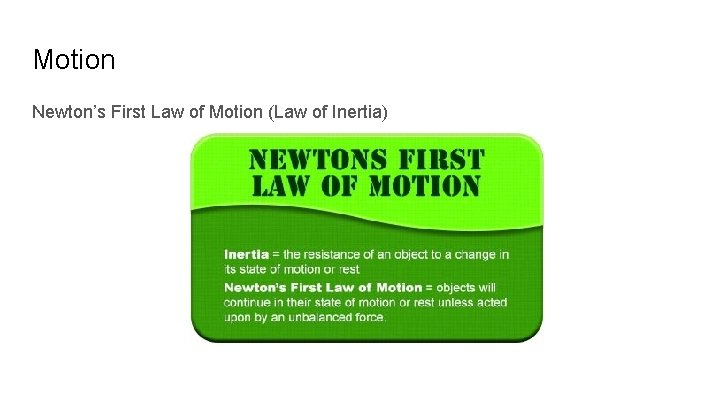
Motion Newton’s First Law of Motion (Law of Inertia)
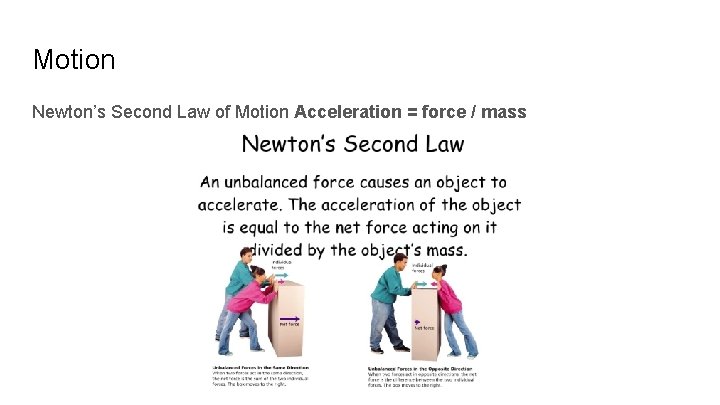
Motion Newton’s Second Law of Motion Acceleration = force / mass
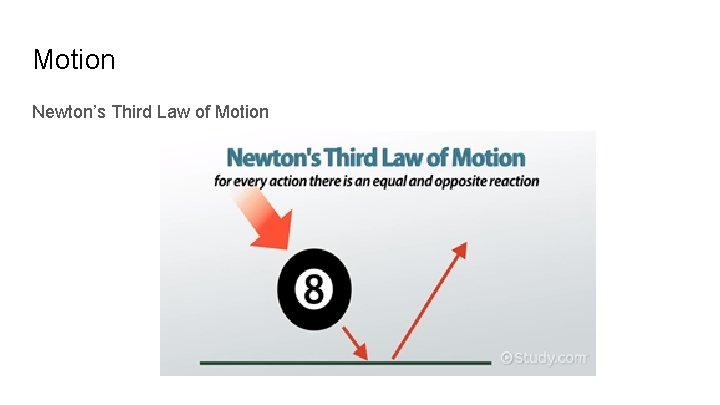
Motion Newton’s Third Law of Motion
Motion Momentum = Mass x Velocity Remember Mr. Wolfe’s story about throwing the ping pong ball vs a golf ball. Both are similar in size but different in mass. Which one would have more momentum based on this information if the velocity were the same?