
WMOST Webinar Training Series Session 3 Stormwater and

WMOST Webinar Training Series Session 3: Stormwater and Alternative BMPs Module Watershed Management Optimization Support Tool (WMOST): Cost-effective integrated water management Loucks and van Beek 2005 Naomi Detenbeck 1, and Ryan Sullivan 2 1 U. S. EPA Office of Research and Development 2 ORISE participant at U. S. EPA Office of Research and Development National Health and Environmental Effects Research Laboratory/Atlantic Ecology Division 8/8/2019
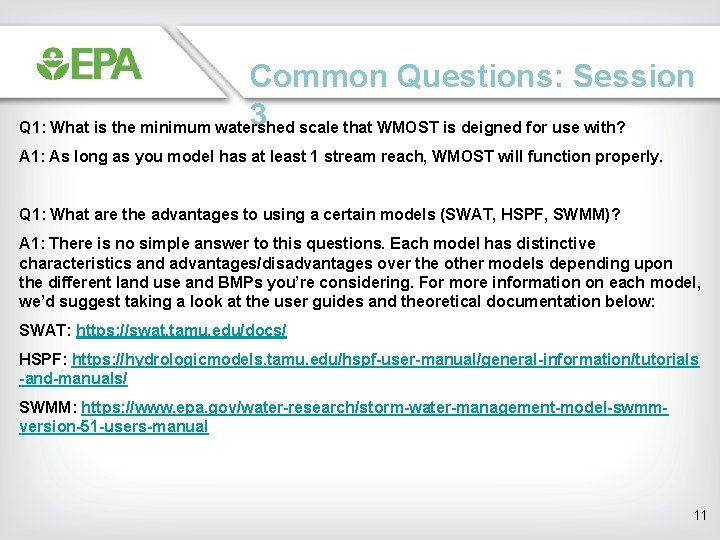
Common Questions: Session 3 scale that WMOST is deigned for use with? Q 1: What is the minimum watershed A 1: As long as you model has at least 1 stream reach, WMOST will function properly. Q 1: What are the advantages to using a certain models (SWAT, HSPF, SWMM)? A 1: There is no simple answer to this questions. Each model has distinctive characteristics and advantages/disadvantages over the other models depending upon the different land use and BMPs you’re considering. For more information on each model, we’d suggest taking a look at the user guides and theoretical documentation below: SWAT: https: //swat. tamu. edu/docs/ HSPF: https: //hydrologicmodels. tamu. edu/hspf-user-manual/general-information/tutorials -and-manuals/ SWMM: https: //www. epa. gov/water-research/storm-water-management-model-swmmversion-51 -users-manual 11
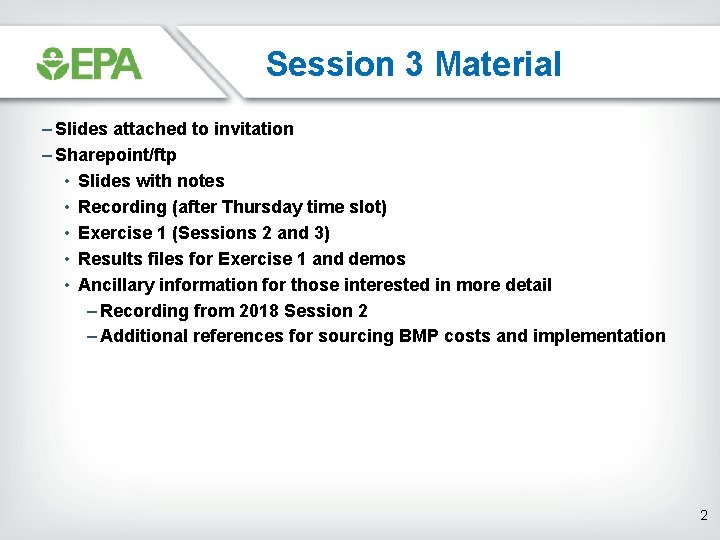
Session 3 Material – Slides attached to invitation – Sharepoint/ftp • Slides with notes • Recording (after Thursday time slot) • Exercise 1 (Sessions 2 and 3) • Results files for Exercise 1 and demos • Ancillary information for those interested in more detail – Recording from 2018 Session 2 – Additional references for sourcing BMP costs and implementation 2
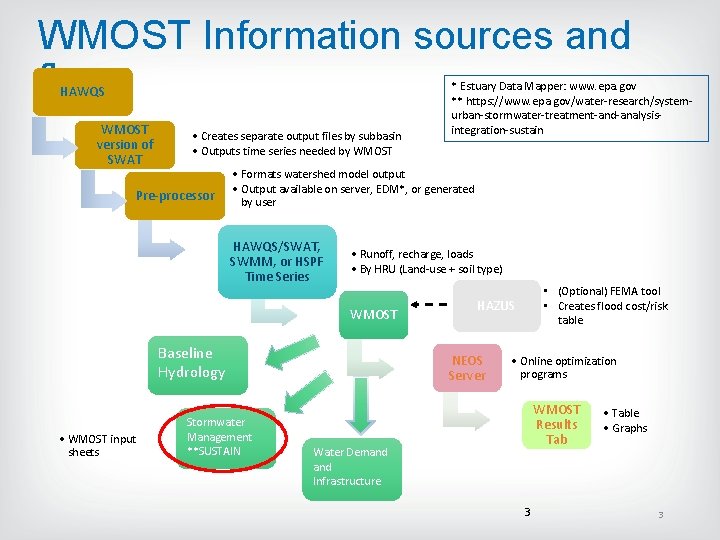
WMOST Information sources and flows HAWQS WMOST version of SWAT • Creates separate output files by subbasin • Outputs time series needed by WMOST Pre-processor • Formats watershed model output • Output available on server, EDM*, or generated by user HAWQS/SWAT, SWMM, or HSPF Time Series • Runoff, recharge, loads • By HRU (Land-use + soil type) WMOST Baseline Hydrology • WMOST input sheets * Estuary Data Mapper: www. epa. gov ** https: //www. epa. gov/water-research/systemurban-stormwater-treatment-and-analysisintegration-sustain Stormwater Management **SUSTAIN • (Optional) FEMA tool • Creates flood cost/risk table HAZUS NEOS Server • Online optimization programs WMOST Results Tab Water Demand Infrastructure 3 • Table • Graphs 3
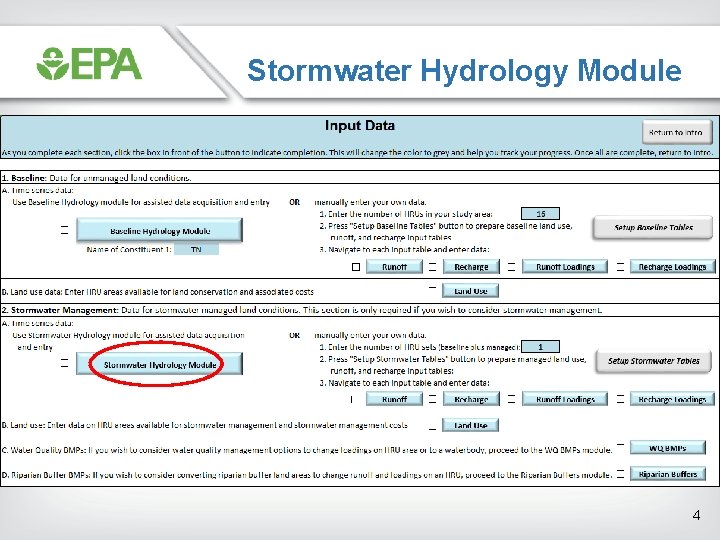
Stormwater Hydrology Module 4
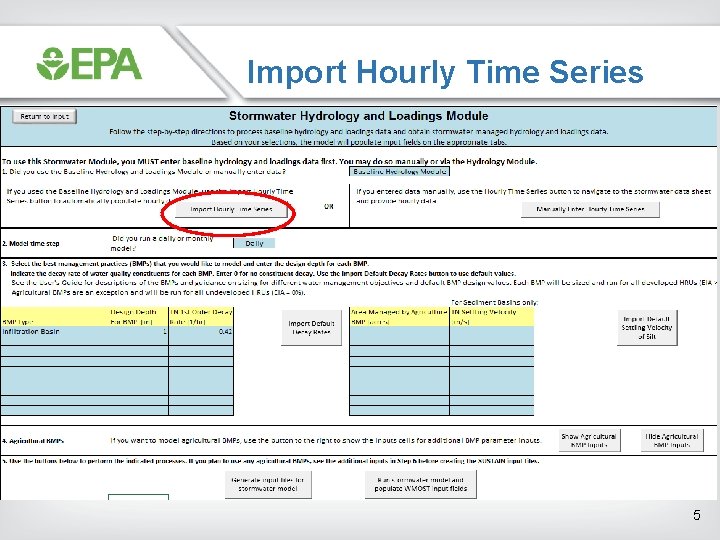
Import Hourly Time Series 5

Structural BMPs • See WMOST Theoretical Documentation for detailed BMP descriptions 6
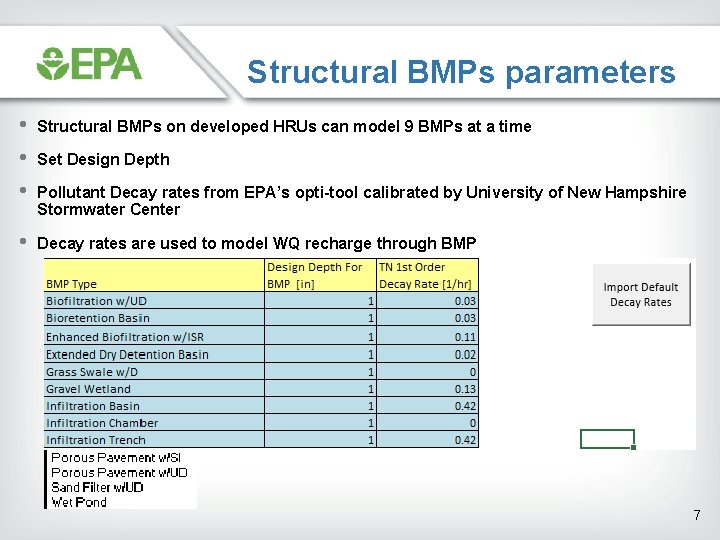
Structural BMPs parameters • • • Structural BMPs on developed HRUs can model 9 BMPs at a time • Decay rates are used to model WQ recharge through BMP Set Design Depth Pollutant Decay rates from EPA’s opti-tool calibrated by University of New Hampshire Stormwater Center 7
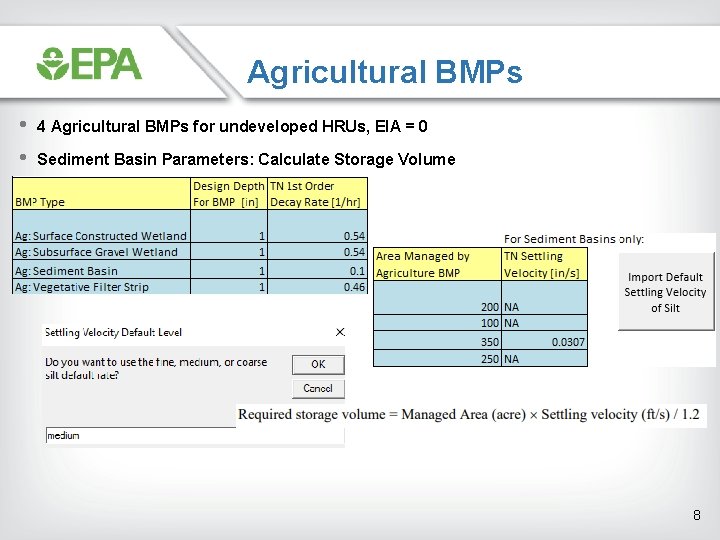
Agricultural BMPs • • 4 Agricultural BMPs for undeveloped HRUs, EIA = 0 Sediment Basin Parameters: Calculate Storage Volume 8
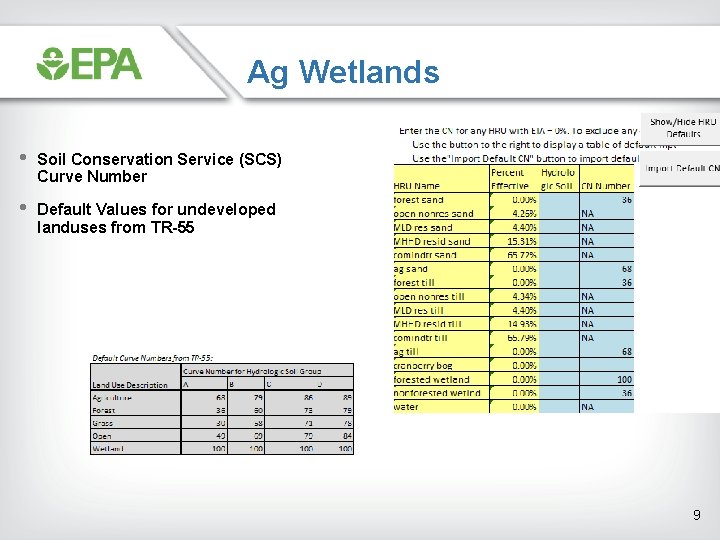
Ag Wetlands • Soil Conservation Service (SCS) Curve Number • Default Values for undeveloped landuses from TR-55 9
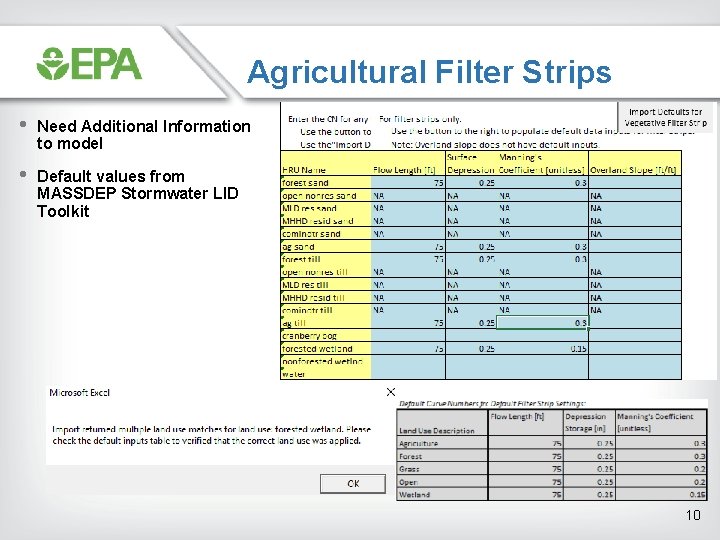
Agricultural Filter Strips • Need Additional Information to model • Default values from MASSDEP Stormwater LID Toolkit 10
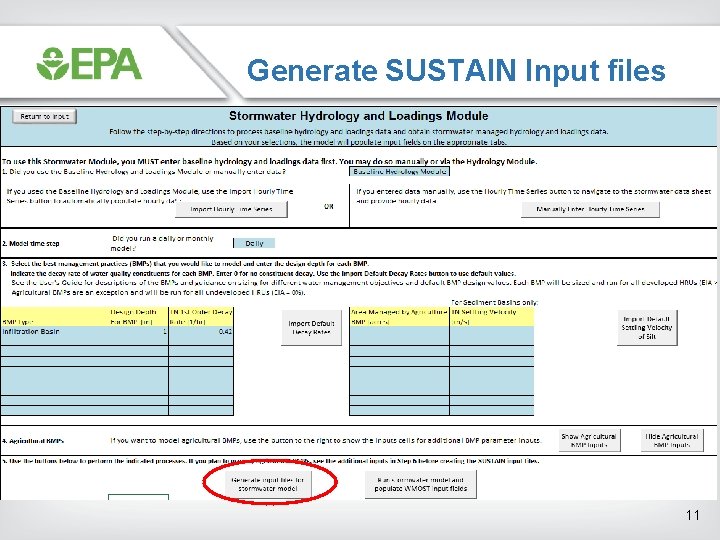
Generate SUSTAIN Input files 11
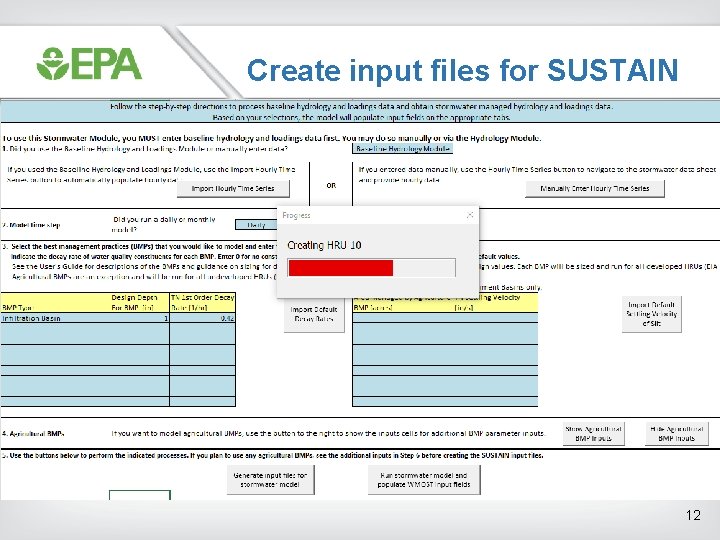
Create input files for SUSTAIN 12
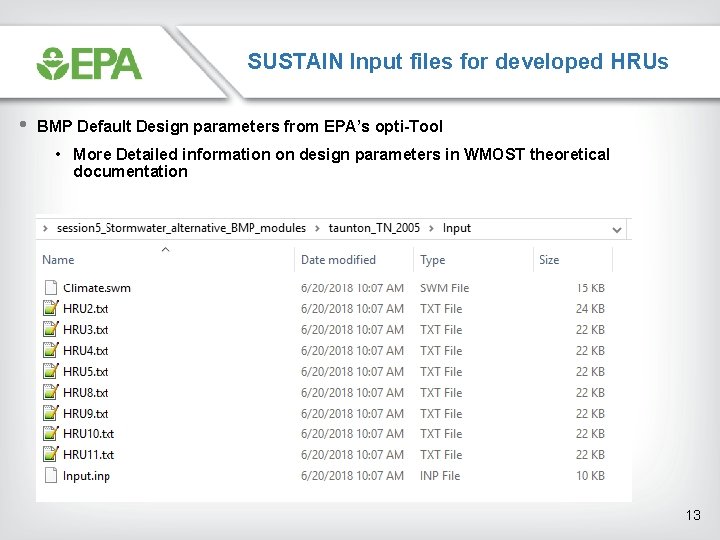
SUSTAIN Input files for developed HRUs • BMP Default Design parameters from EPA’s opti-Tool • More Detailed information on design parameters in WMOST theoretical documentation 13
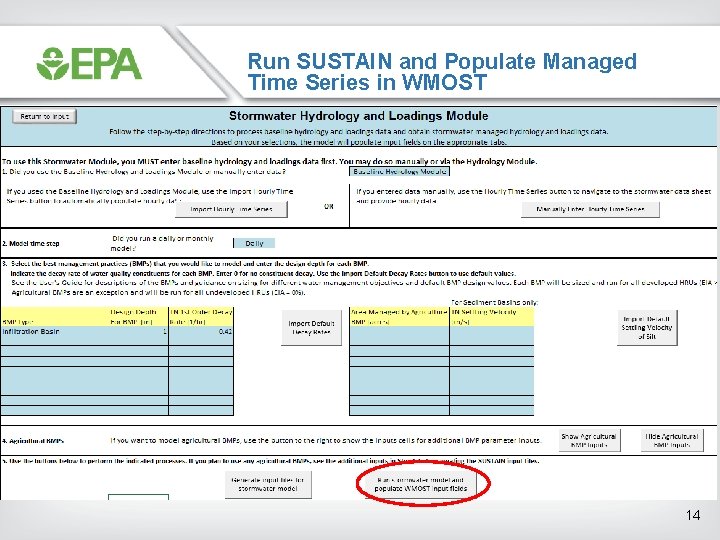
Run SUSTAIN and Populate Managed Time Series in WMOST 14
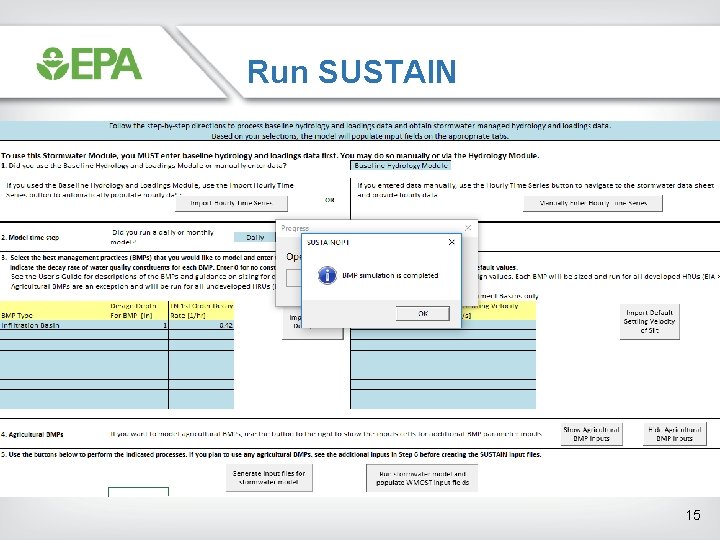
Run SUSTAIN 15
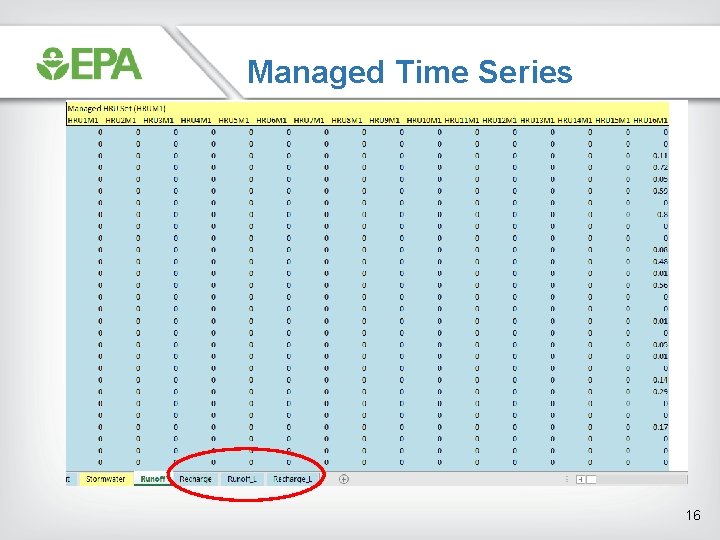
Managed Time Series 16
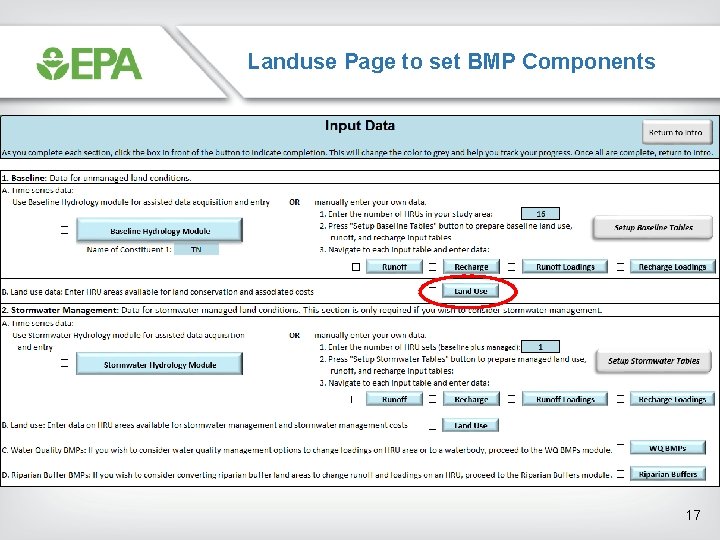
Landuse Page to set BMP Components 17
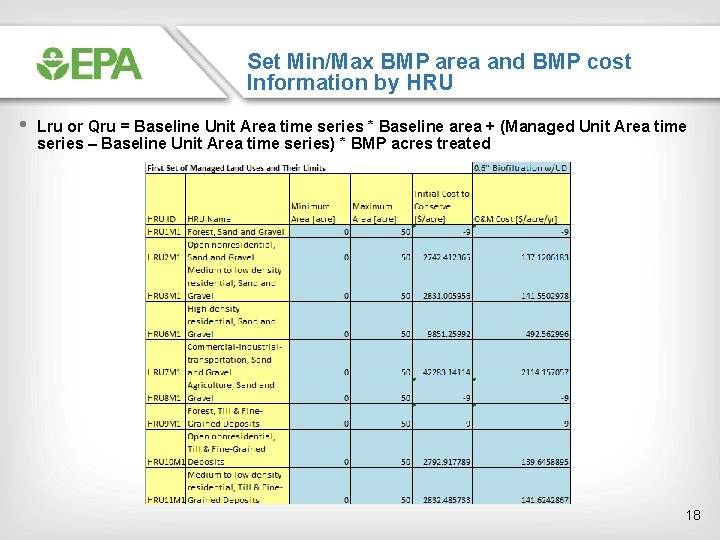
Set Min/Max BMP area and BMP cost Information by HRU • Lru or Qru = Baseline Unit Area time series * Baseline area + (Managed Unit Area time series – Baseline Unit Area time series) * BMP acres treated 18
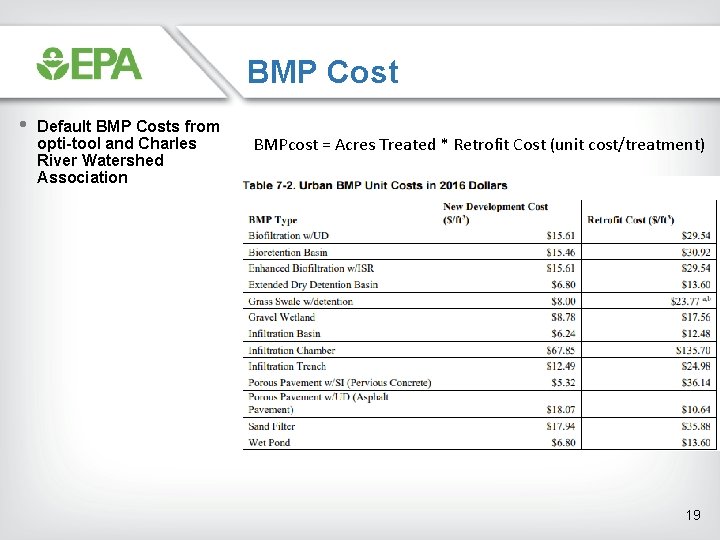
BMP Cost • Default BMP Costs from opti-tool and Charles River Watershed Association BMPcost = Acres Treated * Retrofit Cost (unit cost/treatment) 19
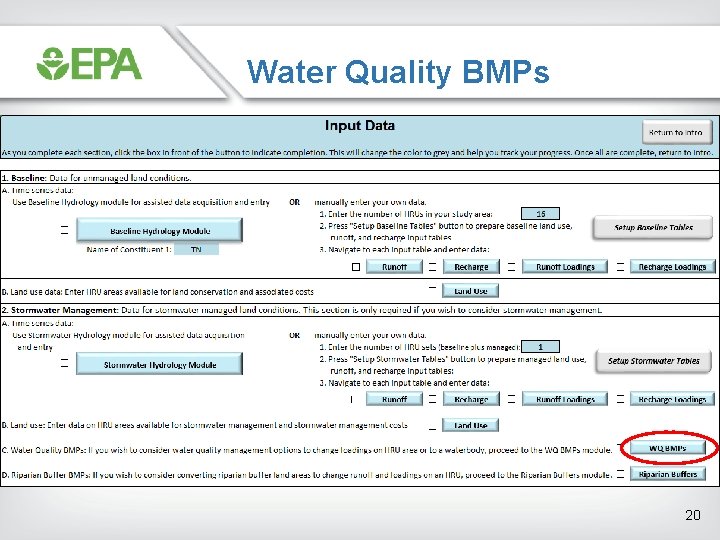
Water Quality BMPs 20
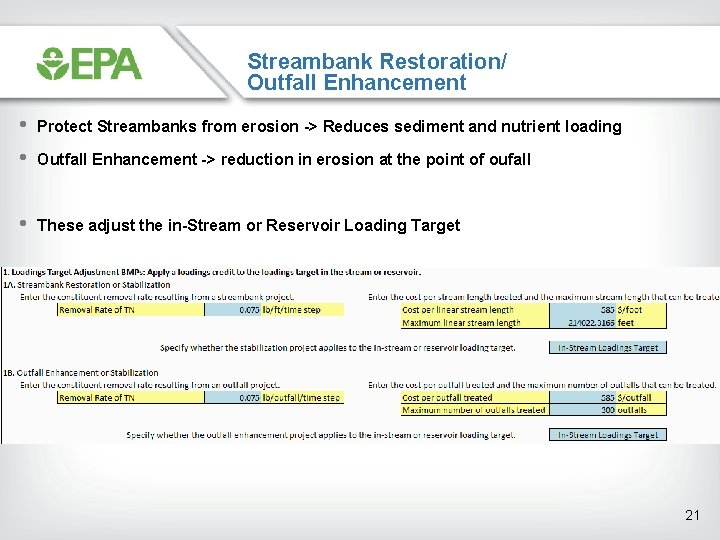
Streambank Restoration/ Outfall Enhancement • • Protect Streambanks from erosion -> Reduces sediment and nutrient loading • These adjust the in-Stream or Reservoir Loading Target Outfall Enhancement -> reduction in erosion at the point of oufall 21
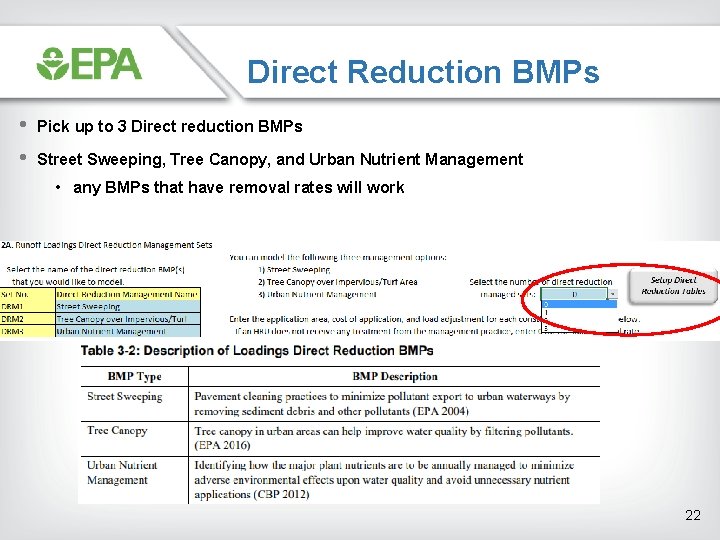
Direct Reduction BMPs • • Pick up to 3 Direct reduction BMPs Street Sweeping, Tree Canopy, and Urban Nutrient Management • any BMPs that have removal rates will work 22
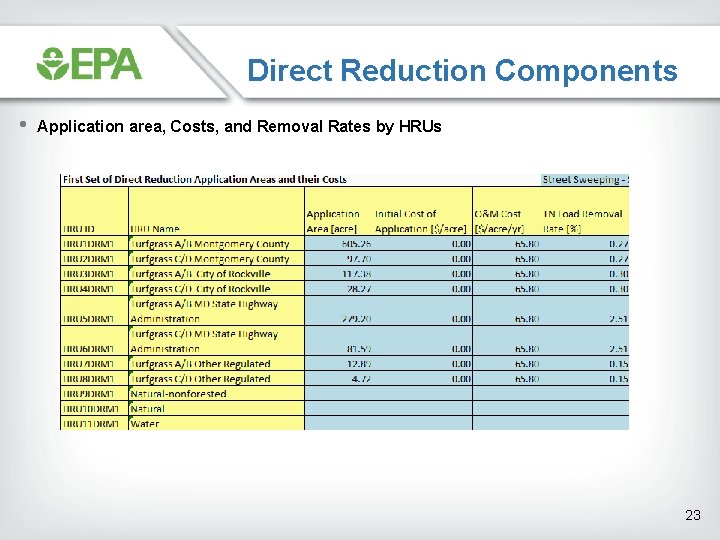
Direct Reduction Components • Application area, Costs, and Removal Rates by HRUs 23
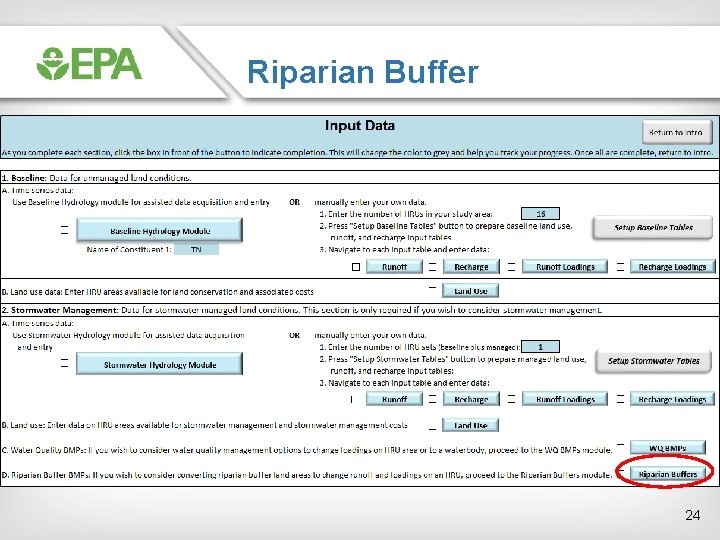
Riparian Buffer 24
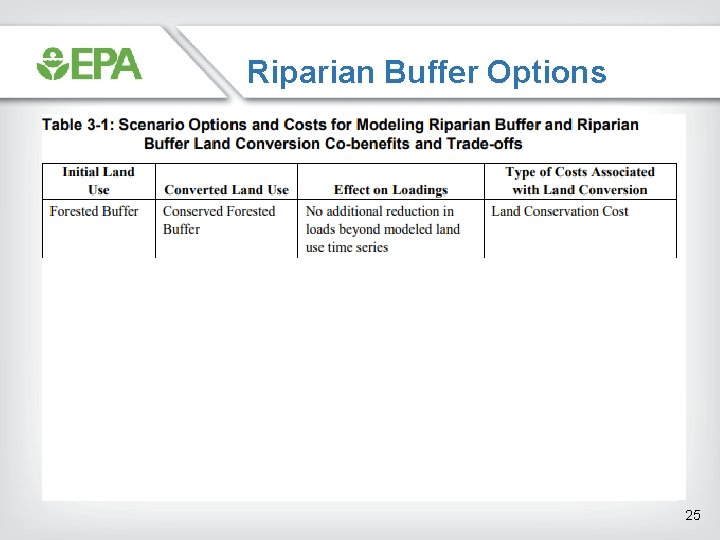
Riparian Buffer Options 25
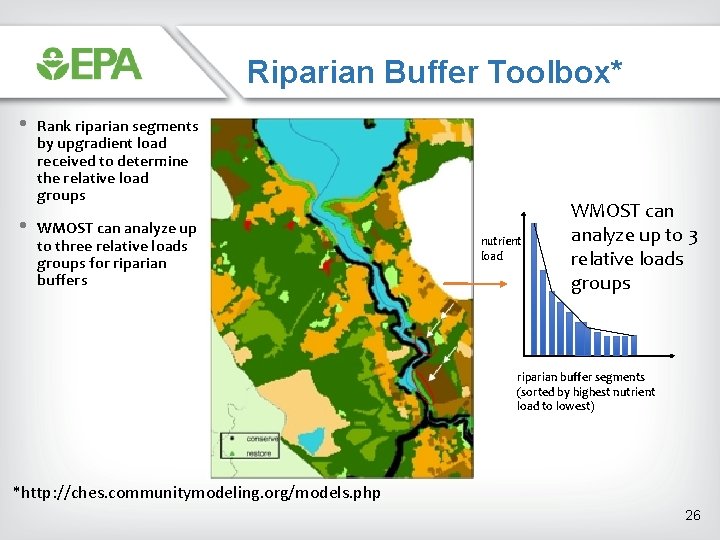
Riparian Buffer Toolbox* • • Rank riparian segments by upgradient load received to determine the relative load groups WMOST can analyze up to three relative loads groups for riparian buffers nutrient load WMOST can analyze up to 3 relative loads groups riparian buffer segments (sorted by highest nutrient load to lowest) *http: //ches. communitymodeling. org/models. php 26
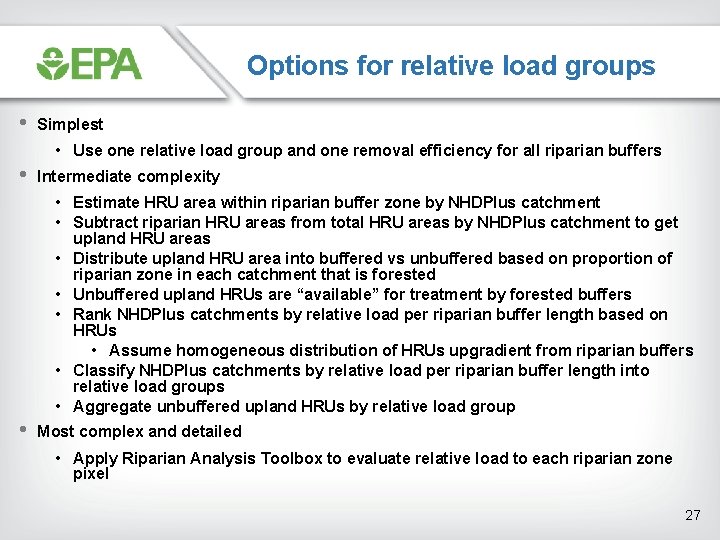
Options for relative load groups • • • Simplest • Use one relative load group and one removal efficiency for all riparian buffers Intermediate complexity • Estimate HRU area within riparian buffer zone by NHDPlus catchment • Subtract riparian HRU areas from total HRU areas by NHDPlus catchment to get upland HRU areas • Distribute upland HRU area into buffered vs unbuffered based on proportion of riparian zone in each catchment that is forested • Unbuffered upland HRUs are “available” for treatment by forested buffers • Rank NHDPlus catchments by relative load per riparian buffer length based on HRUs • Assume homogeneous distribution of HRUs upgradient from riparian buffers • Classify NHDPlus catchments by relative load per riparian buffer length into relative load groups • Aggregate unbuffered upland HRUs by relative load group Most complex and detailed • Apply Riparian Analysis Toolbox to evaluate relative load to each riparian zone pixel 27
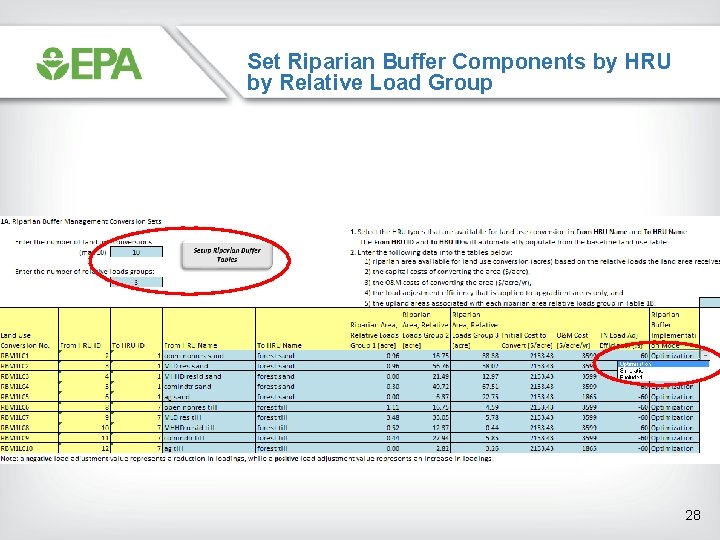
Set Riparian Buffer Components by HRU by Relative Load Group 28
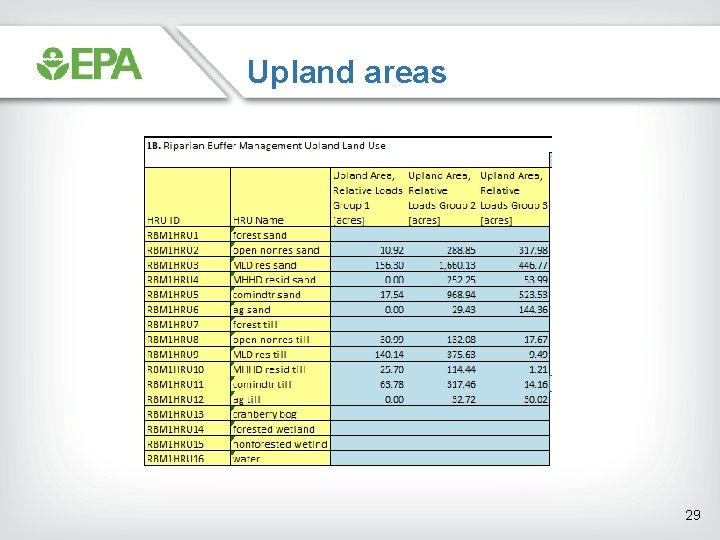
Upland areas 29
Additional references • Review of street sweeping costs ($2005): • http: //citeseerx. ist. psu. edu/viewdoc/download? doi=10. 1. 1. 102. 6838&rep=rep 1&type=pdf • Test of street sweeping effectiveness by type: • https: //pubs. usgs. gov/sir/2007/5156/#a • https: //pubs. usgs. gov/sir/2012/5292/ • https: //ascelibrary. org/doi/abs/10. 1061/JSWBAY. 0000860 • https: //www. chesapeakebay. net/documents/FINAL_APPROVED_Street_and_Storm_Drain_Cleaning_Expert_Panel_Report_--_Complete 2. pdf • Riparian buffer effectiveness • https: //www. chesapeakebay. net/channel_files/21207/2014 riparian_buffer_effectiveness__in_the_cbwm. pdf • Riparian buffer installation and maintenance costs • Check out local extension service and/or NRCS technical notes • State payment schedules for various management practices: • https: //www. nrcs. usda. gov/wps/portal/nrcs/detail/national/programs/financial/? cid=nrcseprd 1328426 • Example of local guidance • https: //www. nrem. iastate. edu/bmpcosttools/files/page/files/2016%20 Cost%20 Sheet%20 for%20 Riparian%20 Buffer%20 or%20 Filter%20 Strip. p df 30
Class Exercise 2/Demo 31
Review • Stormwater Hydrology and Loading Module (Running SUSTAIN) • 13 Structural BMPs available (Developed HRUs, EIA > 0) • 4 Agricultural BMPs available (Undeveloped HRUs, EIA = 0) • WQ BMPs • Streambank Restoration • Outfall Enhancement • Direct Reduction BMPS • Riparian Buffer 32

Questions? 33
- Slides: 34