
WMO World Meteorological Organization Working together in weather

- Slides: 24
WMO World Meteorological Organization Working together in weather, climate and water Global Integrated Polar Prediction System (GIPPS) Side Event on Strengthening WMO Polar Activities “Observing the Cryosphere with 2020 Vision” Geneva, 23 May 2011 Peter Lemke (on behalf of EC-PORS)
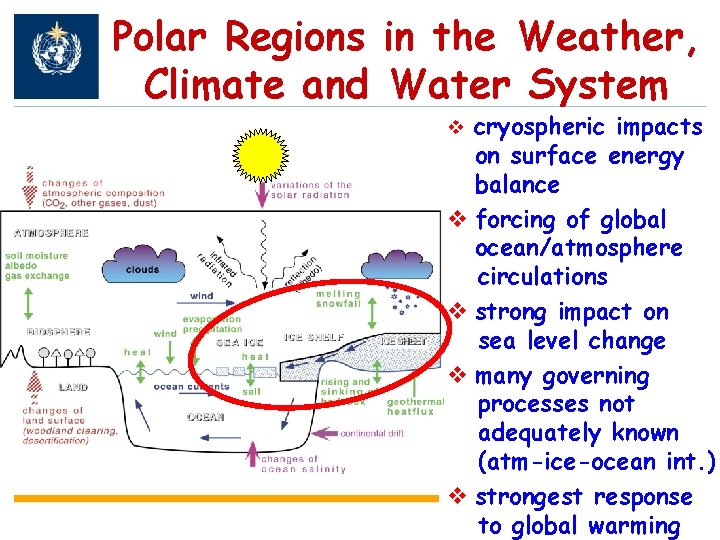
Polar Regions in the Weather, Climate and Water System v cryospheric impacts on surface energy balance v forcing of global ocean/atmosphere circulations v strong impact on sea level change v many governing processes not adequately known (atm-ice-ocean int. ) v strongest response to global warming
Global Integrated Polar Prediction System (GIPPS) Values 1. Improved services: transportation, logistics and planning, biological and energy resources management, water resources, tourism, marine and aviation activities, disaster risk reduction 2. Improved understanding of key physical processes that drive the polar weather and climate system 3. Providing input to global models to ensure improved representation of polar processes
Global Integrated Polar Prediction System (GIPPS) Time-scales 1. Short-term prediction (hours to seasons) 2. Medium-term predictability (years to decades) 3. Long-term projection of ice mass balance and sea level (centuries) For all time-scales (except a few hours) the full coupled system (atm/land/ice/ocean) has to be addressed.
Global Integrated Polar Prediction System (GIPPS) Focus on predicting 1. Typical synoptic variables 2. Sea ice concentration, thickness, motion, internal forces 3. Seasonally frozen ground, active layer 4. Snow cover 5. Ice sheet mass balance, dynamics 6. etc.
Global Integrated Polar Prediction System (GIPPS) Key Gaps 1. Understanding key processes and interactions in Polar Regions: stable boundary layers, polar clouds and precipitation, sea ice/ocean dynamics, hydrology, permafrost, ice sheet dynamics 2. Sustaining in-situ and satellite observations in Polar Regions, including reference observations 3. Products and services for Polar Regions
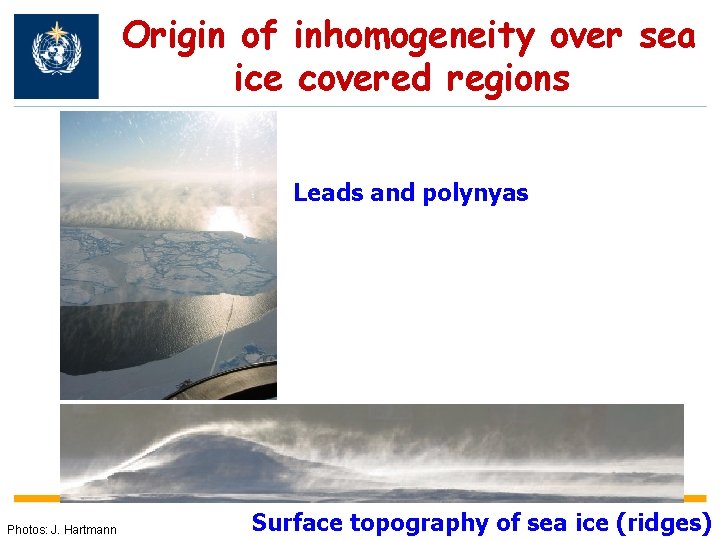
Origin of inhomogeneity over sea ice covered regions: Leads and polynyas Photos: J. Hartmann Surface topography of sea ice (ridges)
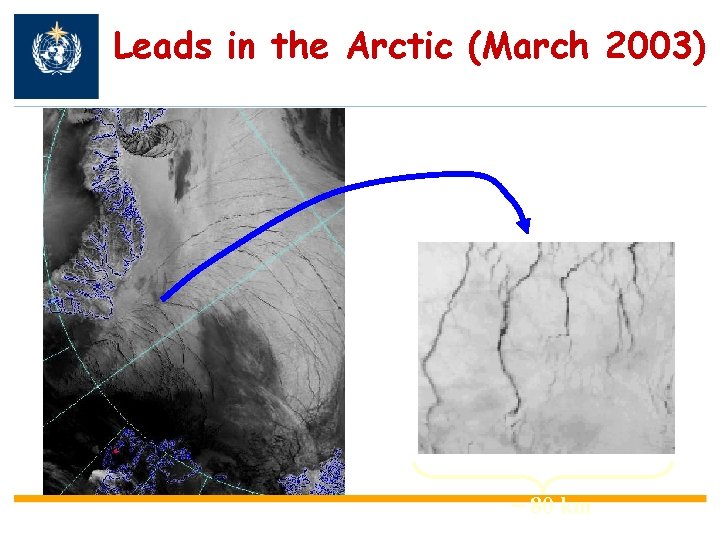
Leads in the Arctic (March 2003) ~ 80 km
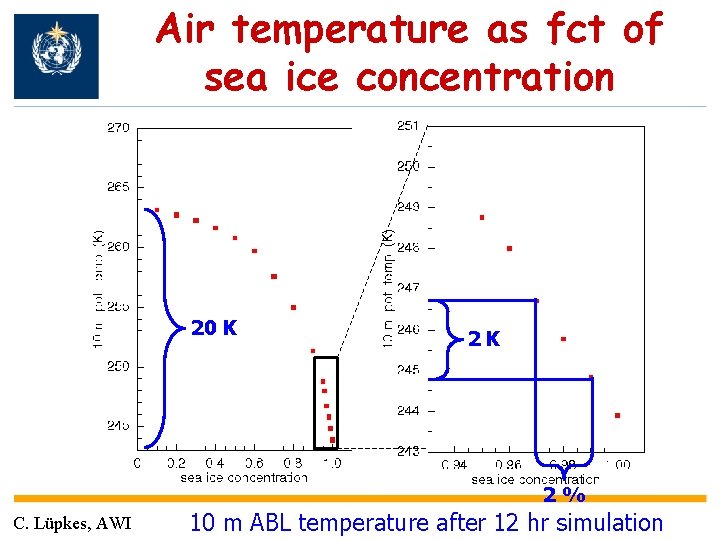
Air temperature as fct of sea ice concentration 20 K 2 K 2% C. Lüpkes, AWI 10 m ABL temperature after 12 hr simulation
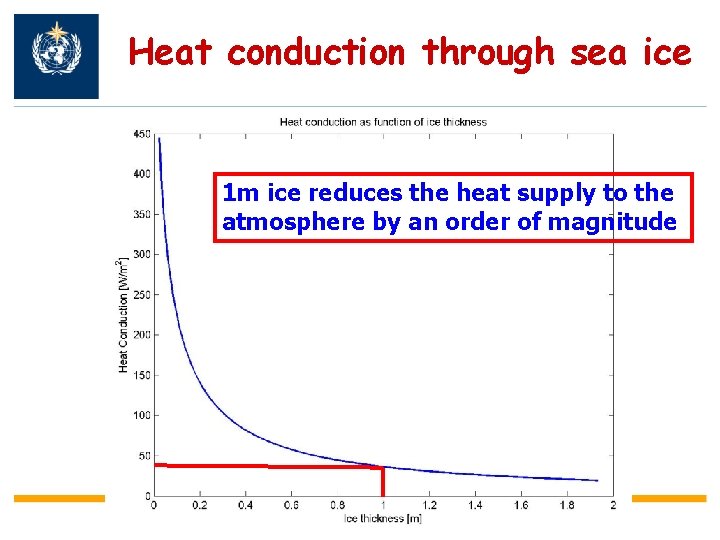
Heat conduction through sea ice 1 m ice reduces the heat supply to the atmosphere by an order of magnitude
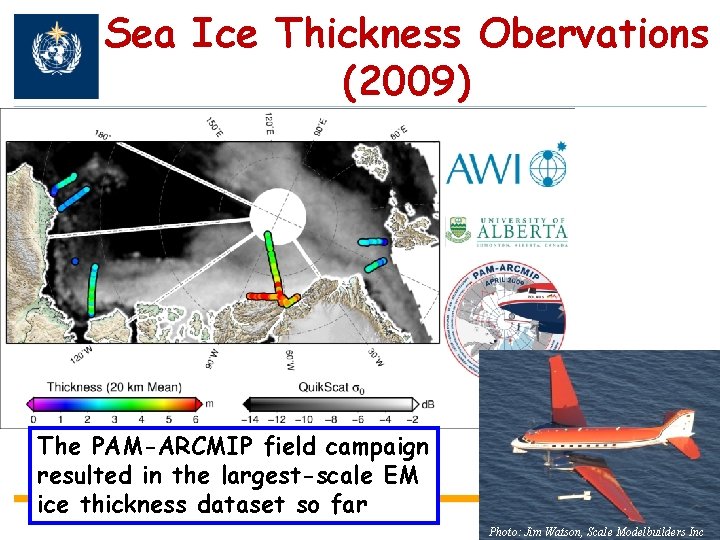
Sea Ice Thickness Obervations (2009) The PAM-ARCMIP field campaign resulted in the largest-scale EM ice thickness dataset so far Photo: Jim Watson, Scale Modelbuilders Inc
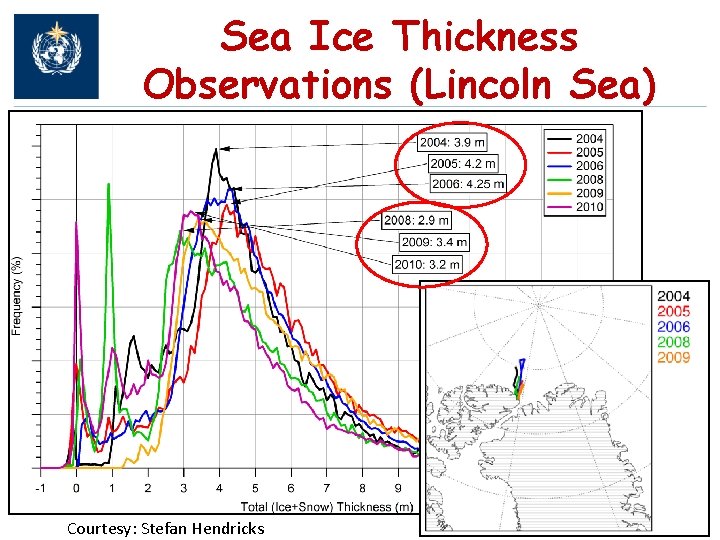
Sea Ice Thickness Observations (Lincoln Sea) Courtesy: Stefan Hendricks
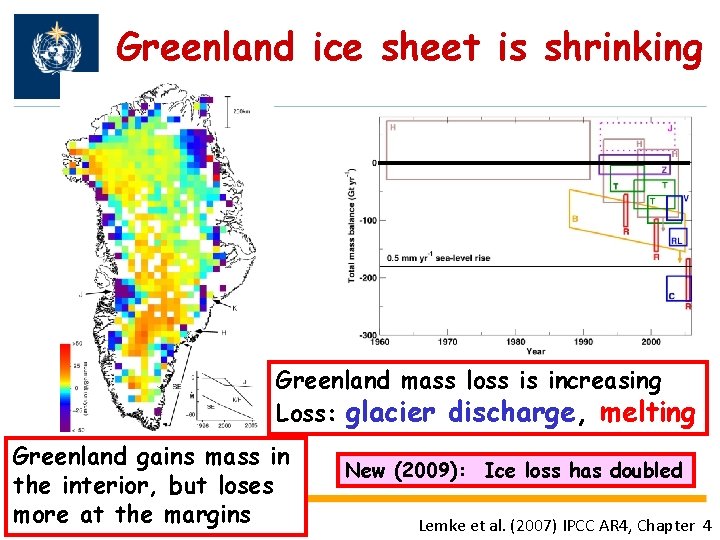
Greenland ice sheet is shrinking Greenland mass loss is increasing Loss: glacier discharge, melting Greenland gains mass in the interior, but loses more at the margins New (2009): Ice loss has doubled Lemke et al. (2007) IPCC AR 4, Chapter 4
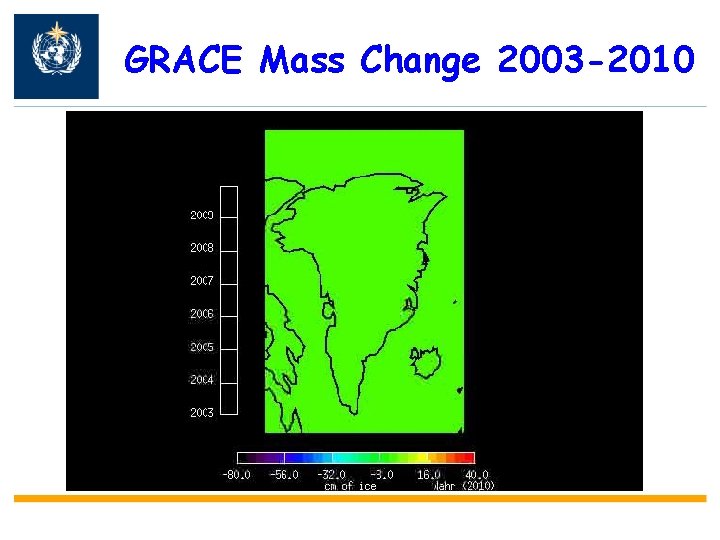
GRACE Mass Change 2003 -2010
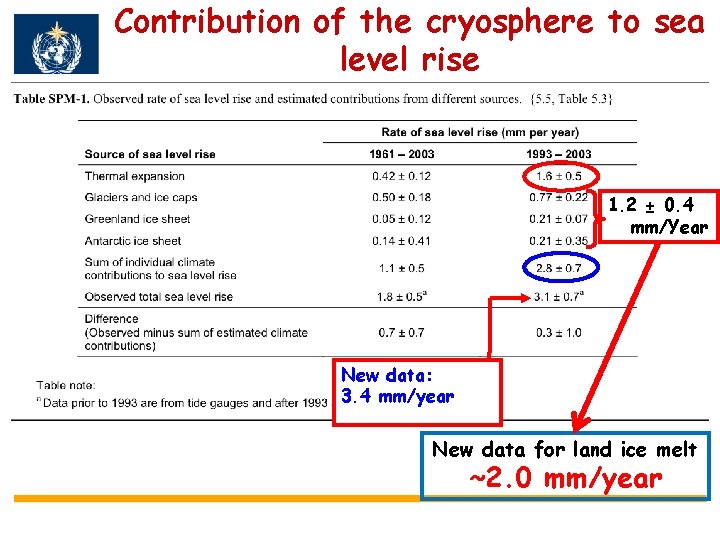
Contribution of the cryosphere to sea level rise 1. 2 ± 0. 4 mm/Year New data: 3. 4 mm/year New data for land ice melt ~2. 0 mm/year
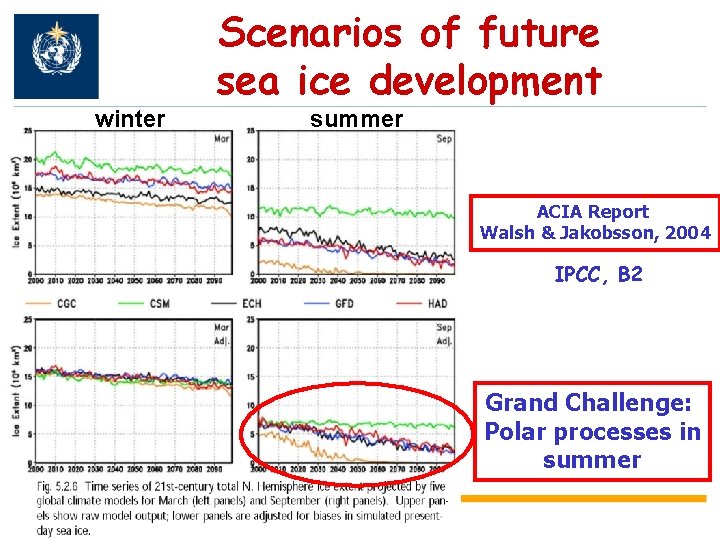
winter Scenarios of future sea ice development summer ACIA Report Walsh & Jakobsson, 2004 IPCC, B 2 Grand Challenge: Polar processes in summer
Global Integrated Polar Prediction System (GIPPS) Key Gaps 1. Understanding key processes and interactions in Polar Regions: stable boundary layers, polar clouds and precipitation, sea ice/ocean dynamics, hydrology, permafrost, ice sheet dynamics 2. Sustaining in-situ and satellite observations in Polar Regions, including reference observations 3. Products and services for Polar Regions
Global Integrated Polar Prediction System (GIPPS) Next steps 1. Embark on a decadal endeavour towards a Global Integrated Polar Prediction System as an IPY Legacy 2. Requirements: v optimized observing systems v improved model components v improved assimilation techniques
Global Integrated Polar Prediction System (GIPPS) GIPPS will need to be an end-toend operational prediction system Partners (Science and Operations) 1. WWRP/THORPEX, WCRP (Cli. C, SPARC, . . . ), . . . 2. Alfred Wegener Institute, British Antarctic Survey, Byrd Polar Institute, Bjerknes Centre, . . . 3. ECMWF, NCEP, various national NWP centres
Thanks for your attention
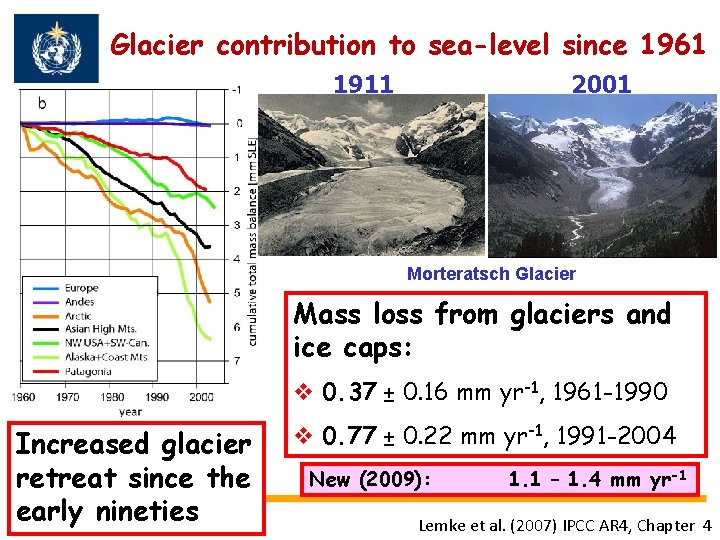
Glacier contribution to sea-level since 1961 1911 2001 Morteratsch Glacier Mass loss from glaciers and ice caps: v 0. 37 ± 0. 16 mm yr-1, 1961 -1990 Increased glacier retreat since the early nineties v 0. 77 ± 0. 22 mm yr-1, 1991 -2004 New (2009): 1. 1 – 1. 4 mm yr-1 Lemke et al. (2007) IPCC AR 4, Chapter 4
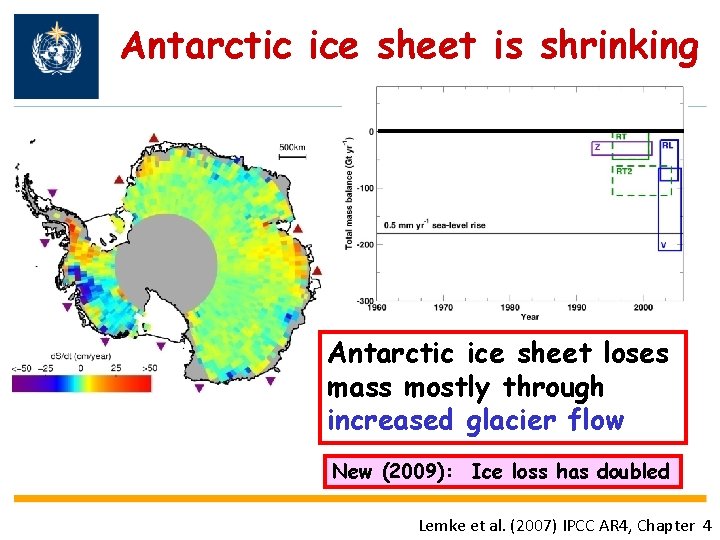
Antarctic ice sheet is shrinking Antarctic ice sheet loses mass mostly through increased glacier flow New (2009): Ice loss has doubled Lemke et al. (2007) IPCC AR 4, Chapter 4
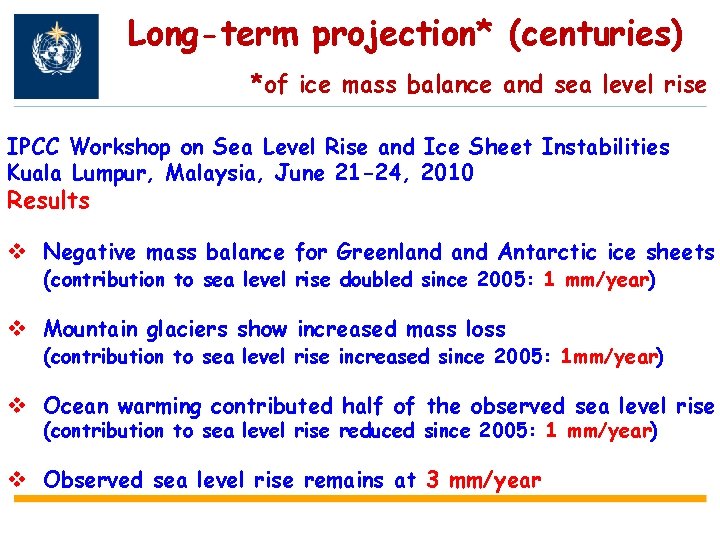
Long-term projection* (centuries) *of ice mass balance and sea level rise IPCC Workshop on Sea Level Rise and Ice Sheet Instabilities Kuala Lumpur, Malaysia, June 21 -24, 2010 Results v Negative mass balance for Greenland Antarctic ice sheets (contribution to sea level rise doubled since 2005: 1 mm/year) v Mountain glaciers show increased mass loss (contribution to sea level rise increased since 2005: 1 mm/year) v Ocean warming contributed half of the observed sea level rise (contribution to sea level rise reduced since 2005: 1 mm/year) v Observed sea level rise remains at 3 mm/year
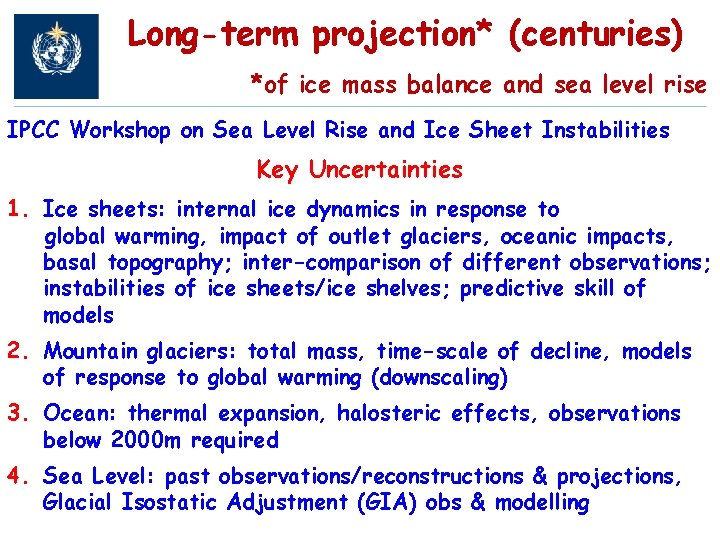
Long-term projection* (centuries) *of ice mass balance and sea level rise IPCC Workshop on Sea Level Rise and Ice Sheet Instabilities Key Uncertainties 1. Ice sheets: internal ice dynamics in response to global warming, impact of outlet glaciers, oceanic impacts, basal topography; inter-comparison of different observations; instabilities of ice sheets/ice shelves; predictive skill of models 2. Mountain glaciers: total mass, time-scale of decline, models of response to global warming (downscaling) 3. Ocean: thermal expansion, halosteric effects, observations below 2000 m required 4. Sea Level: past observations/reconstructions & projections, Glacial Isostatic Adjustment (GIA) obs & modelling