
WMO Integrated Global Observing System WIGOS 4 th
WMO Integrated Global Observing System (WIGOS) 4 th WCRP Observations and Assimilation Panel (WOAP) Meeting Barbara J. Ryan Director, WMO Space Programme 29 March 2010 Hamburg
Overview • Recognition of the Need • Congressional Guidance • Principal Documents • WIGOS Projects

Recognition of the Need • Different and diverse WMO observing systems to meet weather, water and climate requirements • Wanted a more holistic approach • Better leverage limited resources
WMO Congress and Executive Council • Towards enhanced integration among the WMO observing systems – GOS, GAW, WHy. COS • Intended to be a comprehensive, coordinated system for observing systems based on the requirements of all WMO Programmes • Monitor development and implementation of WIGOS (and WIS) through a “RRR” process
A Diverse System
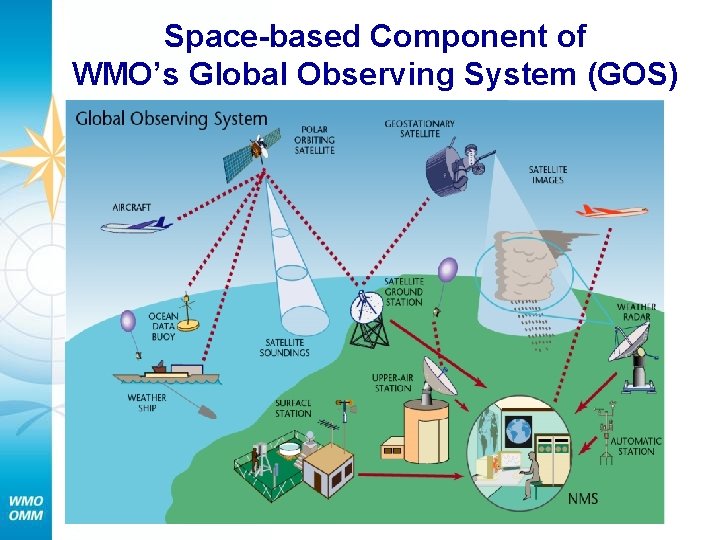
Space-based Component of WMO’s Global Observing System (GOS)
Rolling Review of Requirements – Database of user requirements per application area – Database of observing capabilities (space + surface) – Critical Review of how requirements are satisfied by current/planned capabilities for each application area
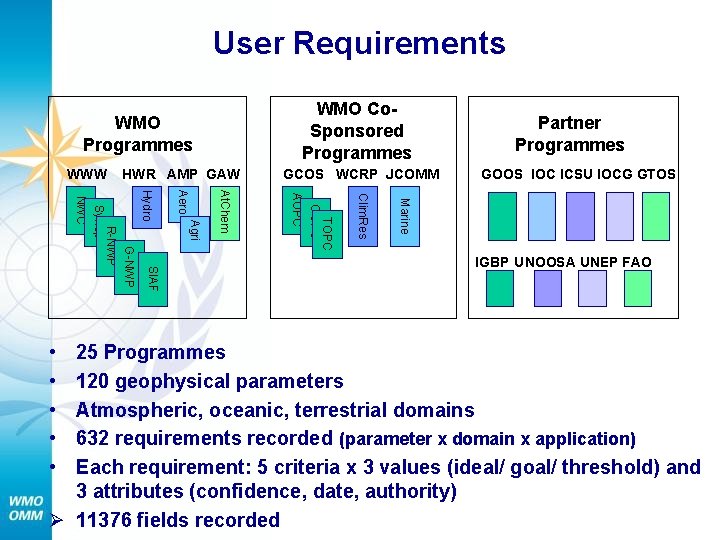
User Requirements WMO Co. Sponsored Programmes WMO Programmes WWW GCOS WCRP JCOMM GOOS IOC ICSU IOCG GTOS Marine Clim. Res TOPC OOPC Agri At. Chem Aero Hydro SIAF G-NWP R-NWP Synop NWC • • • HWR AMP GAW Partner Programmes IGBP UNOOSA UNEP FAO 25 Programmes 120 geophysical parameters Atmospheric, oceanic, terrestrial domains 632 requirements recorded (parameter x domain x application) Each requirement: 5 criteria x 3 values (ideal/ goal/ threshold) and 3 attributes (confidence, date, authority) Ø 11376 fields recorded
WIGOS Framework • To facilitate standardization and interoperability • To ensure: § availability of, and real and near-realtime access to good quality data/products and associated metadata § data quality standards are documented, met and sustained
Standardization – 3 Key Areas • Measurements and observations -homogeneity, interoperability, compatibility of all observations • Data exchange, discovery, access and retrieval (DAR) -standardized set of data representation and exchange requirements for all WMO Programmes & DAR services • End-product quality management -QMS
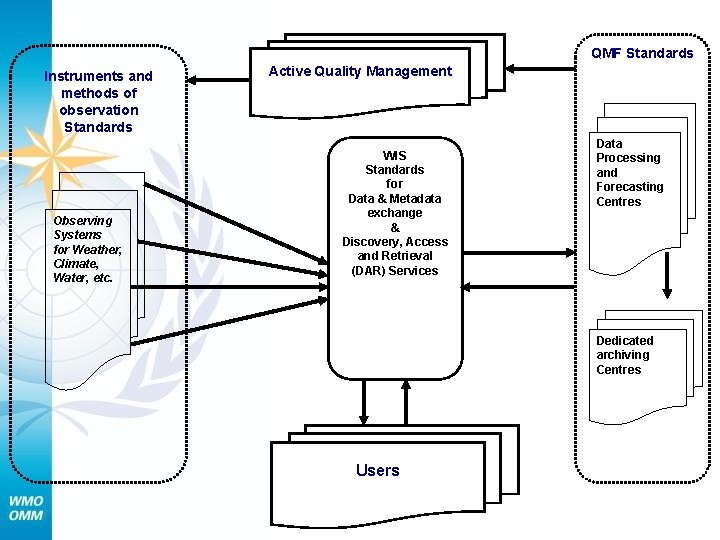
QMF Standards Instruments and methods of observation Standards Observing Systems for Weather, Climate, Water, etc. Active Quality Management WIS Standards for Data & Metadata exchange & Discovery, Access and Retrieval (DAR) Services Data Processing and Forecasting Centres Dedicated archiving Centres Users
WIGOS Pilot Projects Designed to: • Test WIGOS concepts • Identify problem areas • Help in elaborating Implementation Plan
WIGOS Pilot Projects I: Improvement of Dissemination of Ozone and Aerosol observations through WIS (IDOA) II: Hydrological Applications Runoff Network (HARON) III: Integration of AMDAR into WIGOS IV: Elaboration of the underpinning/crosscutting role and responsibilities of the Instruments and Methods of Observation Programme V: Integration of Marine Meteorological and other appropriate Oceanographic Observations into WIGOS
Demonstration Projects at NMHSs • Test how to implement WIGOS with WIS components running at the required levels of performance • Feedback and lessons learned for WIGOS/WIS concept implementation • Include national observing networks that provide data and information for basic operations of NMHSs
WIGOS Demonstration Projects Ø RA I: Kenya, Morocco and Namibia Ø RA II: Republic of Korea Ø RA III: Brazil Ø RA IV: USA Ø RA V: Australia Ø RA VI: the Russian Federation
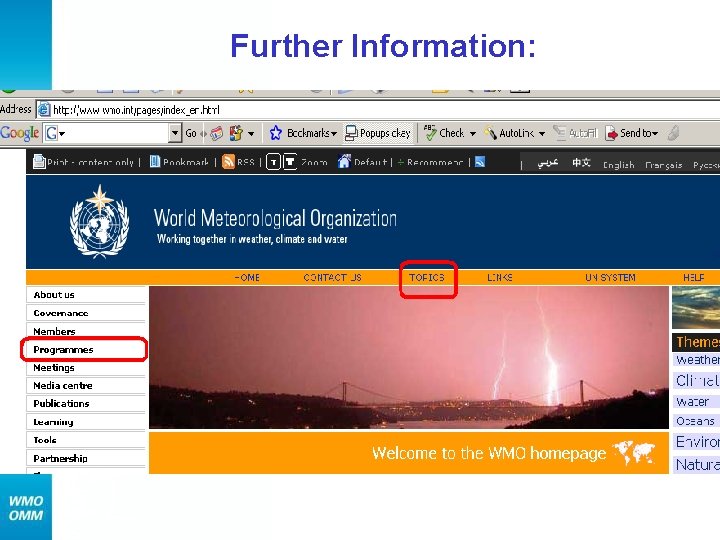
Further Information:
- Slides: 16