
WMO AMDAR The aircraft data source Impact Benefits

WMO AMDAR – The aircraft data source Impact, Benefits & Future

WMO Data Envirnoment in Aviation: OPMET Data, WAFS Use of ICAO – approved systems (AFTN, AFS, CIDIN, SADIS, WIFS) Move to XML/GML Based Weather Exchange Models System Wide Information System Cooperation CAe. M-CBS in TT Aviation XML
WMO DATA CURRENT TARGET Accuracy Regions Where? Why? Quality Control Contributions Costs Management Growth Benefits
WMO DATA CURRENT TARGET Accuracy Regions Where? Why? Quality Control Contributions Costs Management Growth Benefits
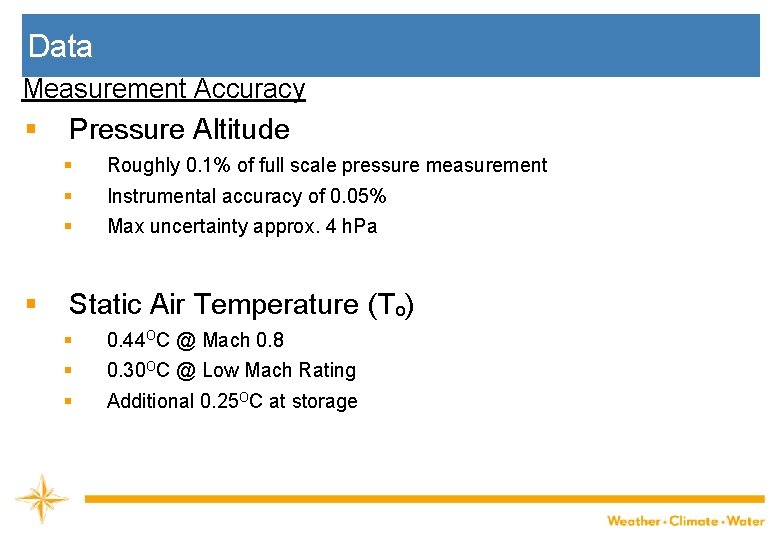
Data Measurement Accuracy § Pressure Altitude § § Roughly 0. 1% of full scale pressure measurement Instrumental accuracy of 0. 05% Max uncertainty approx. 4 h. Pa Static Air Temperature (To) § § § 0. 44 OC @ Mach 0. 8 0. 30 OC @ Low Mach Rating Additional 0. 25 OC at storage
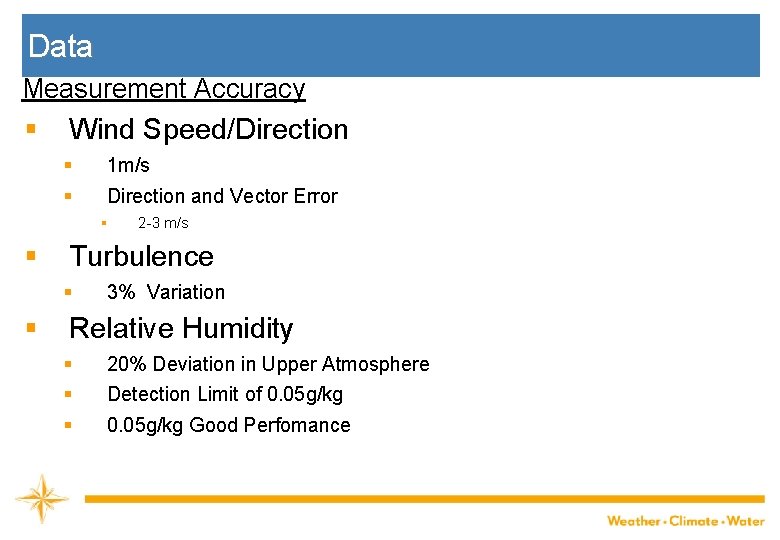
Data Measurement Accuracy § Wind Speed/Direction § § 1 m/s Direction and Vector Error § § Turbulence § § 2 -3 m/s 3% Variation Relative Humidity § § § 20% Deviation in Upper Atmosphere Detection Limit of 0. 05 g/kg Good Perfomance

Data Quality Control § Measurement Stage § § Code Conversion Stage § § Done at time measurements are taken on board aircraft Point at which measurements obtained are converted to GTS Data Assimilation § § Happens in non-real time ID long term drift Measurement bias Consistent poor quality transmissions
Data Management (AMDAR-DM) § Viewed in context of WMO World Weather Watch § Optimize the integration of GOS, GTS and Data-processing System 1. Specifications for data representation (codes, exchange formats, database design, storage of observational data) 2. Designing proper procedures in the area of data processing and telecommunications, allowing members appropriate sets of data. 3. Monitoring AMDAR operations and the quality of basic data and output products
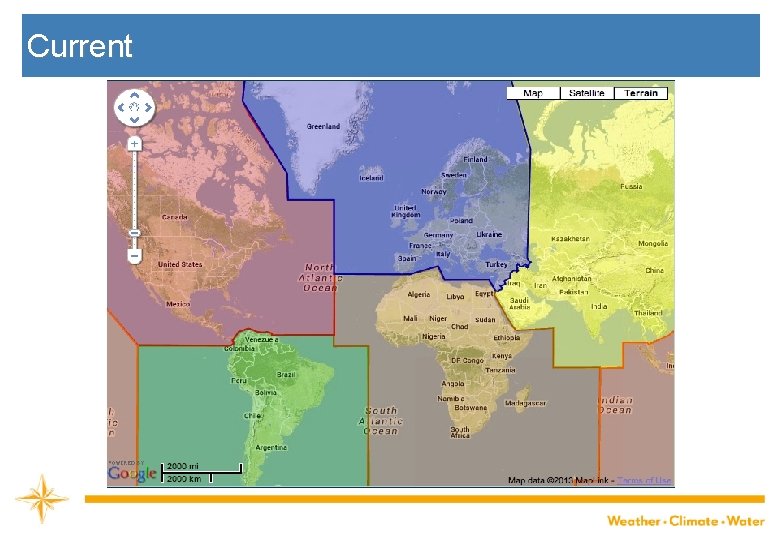
Current Regions § 6 Regions § § § § I Africa II Asia III South America IV N. America, Caribbean V South-West Pacific VI Europe 38 Participating airlines 10 national & regional AMDAR Programmes
Current
Current
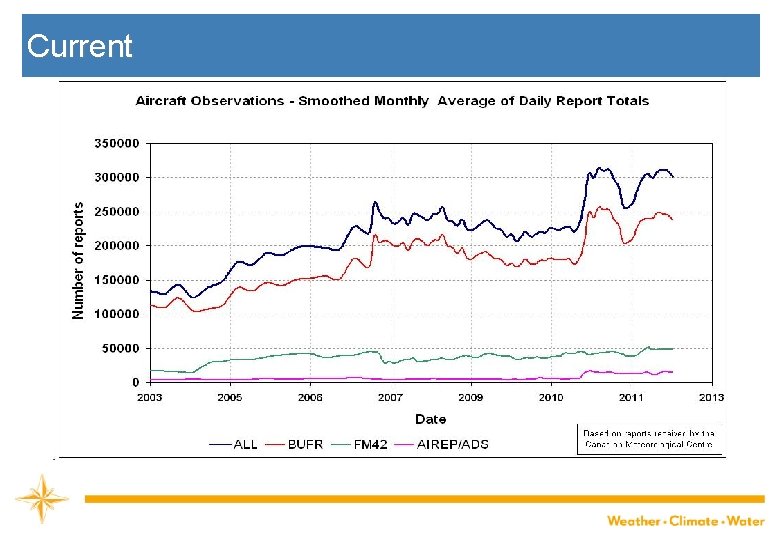
Current
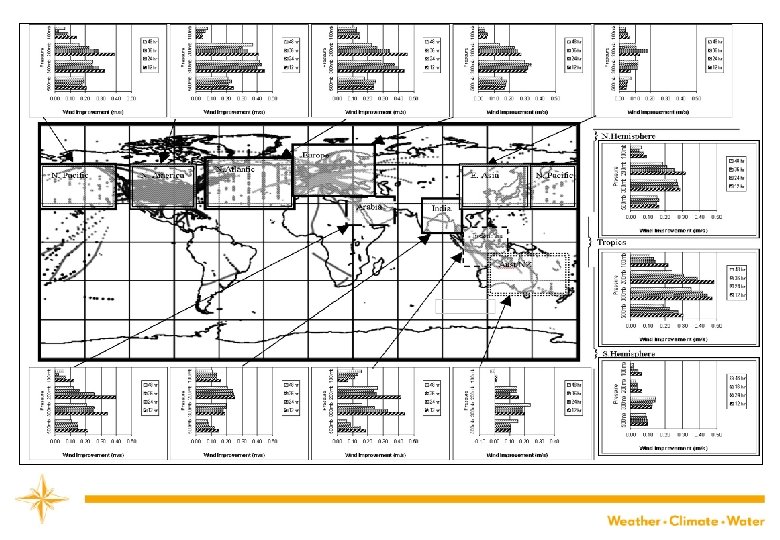
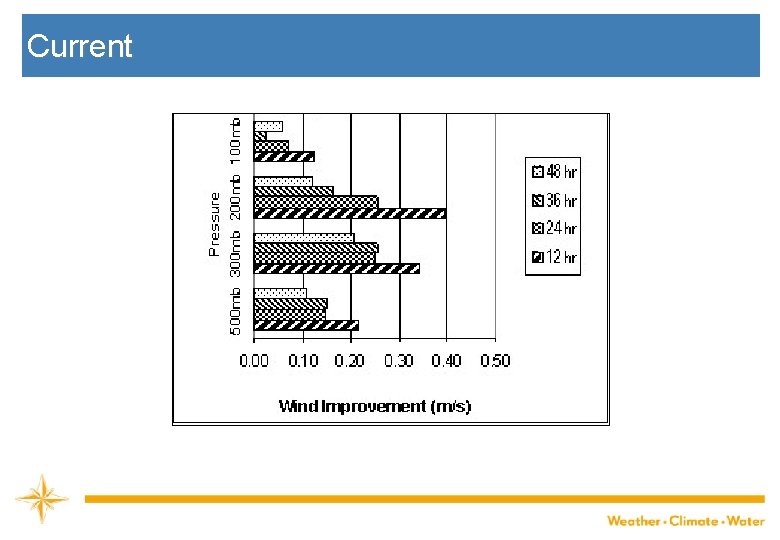
Current
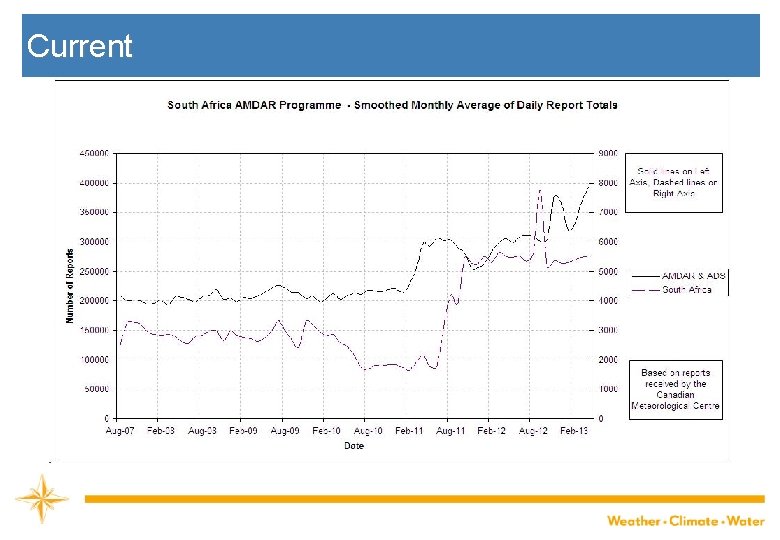
Current
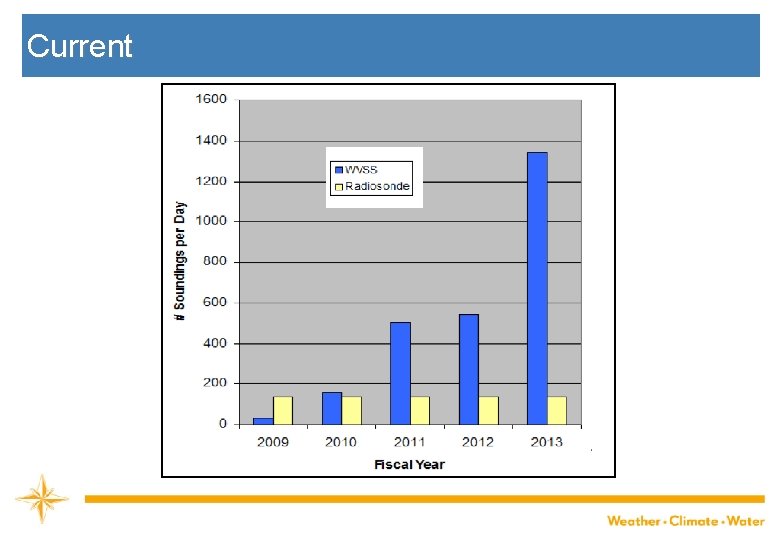
Current
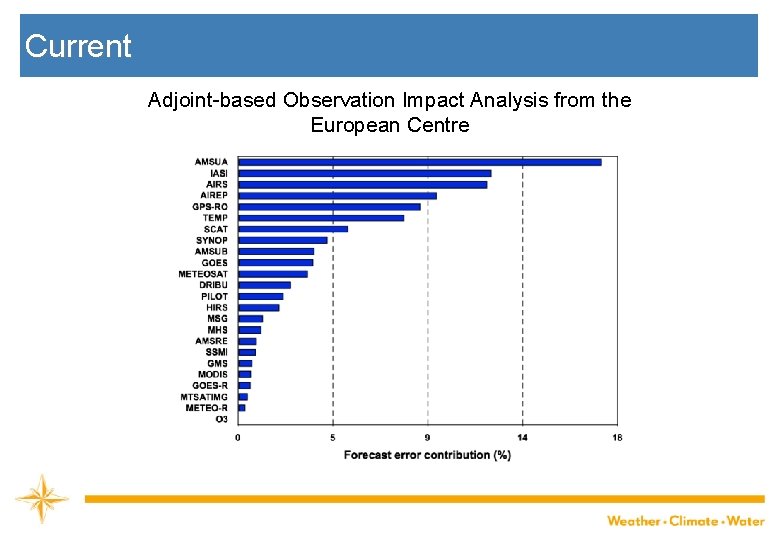
Current Adjoint-based Observation Impact Analysis from the European Centre
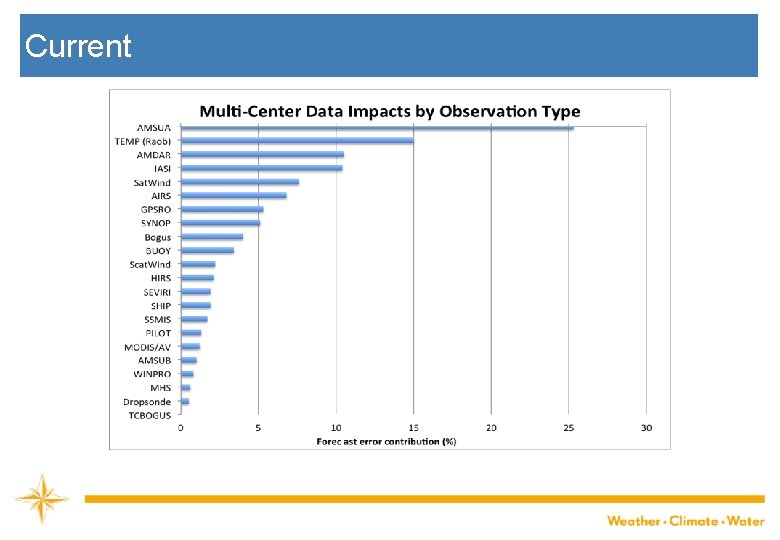
Current
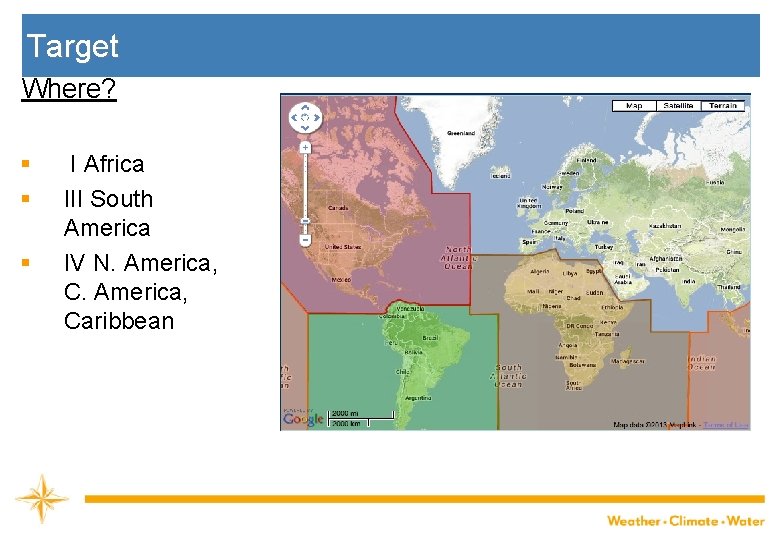
Target Where? § § § I Africa III South America IV N. America, Caribbean
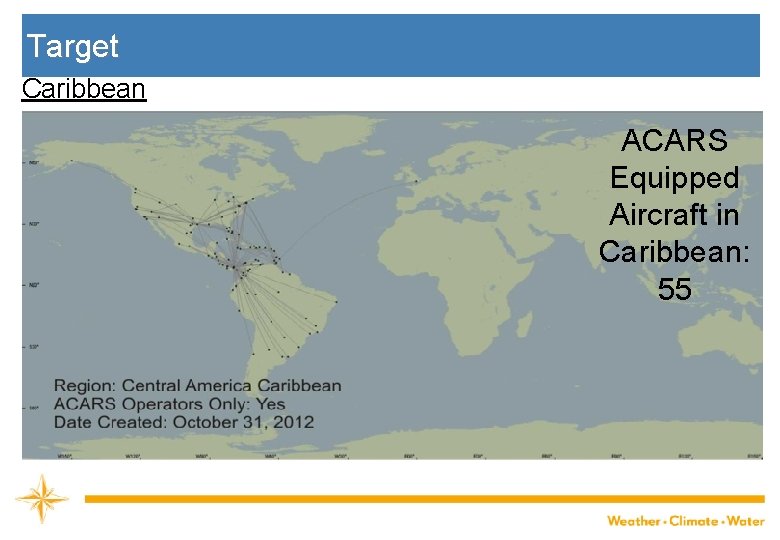
Target Caribbean ACARS Equipped Aircraft in Caribbean: 55
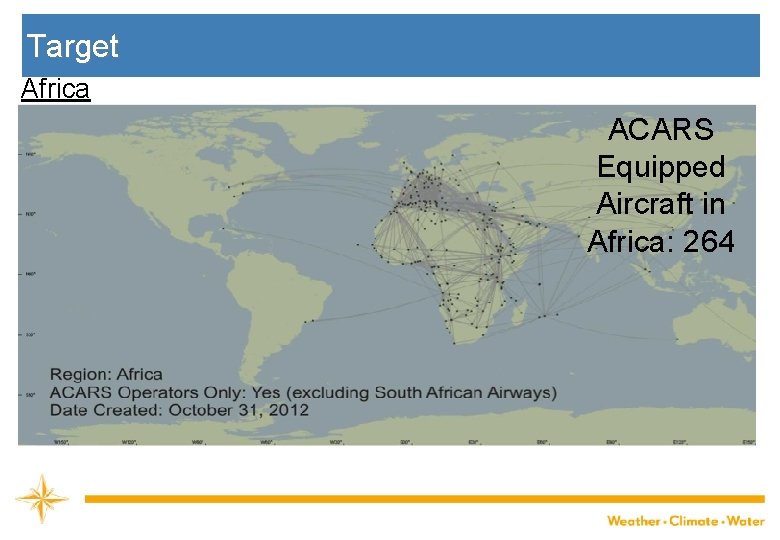
Target Africa ACARS Equipped Aircraft in Africa: 264
TARGET Why? § § § § Easterly Wave Deep Convection Tropical Cyclones Wind Shear Global Circulation Moisture Budget Atmospheric Stability
TARGET Why? § Forecasting § § Improve available data for National and Regional NWP projects (SWFDP) Sustainability of AMDAR data Contribute on a global scale Climate Monitoring § § Closely monitor climate variability and change Improved analysis of high-impact weather phenomena § Linkage observations - HI Weather § Triggers of significant events § Typical onset conditions of severe weather
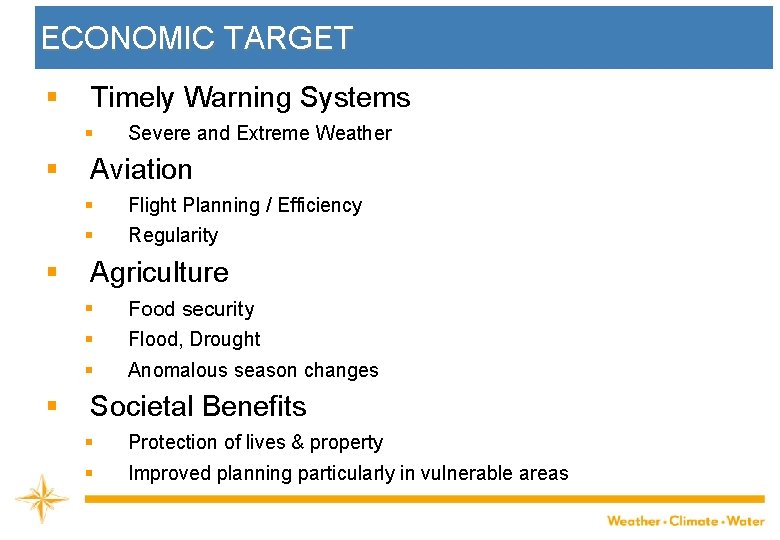
ECONOMIC TARGET § Timely Warning Systems § § Aviation § § § Flight Planning / Efficiency Regularity Agriculture § § Severe and Extreme Weather Food security Flood, Drought Anomalous season changes Societal Benefits § § Protection of lives & property Improved planning particularly in vulnerable areas

Moving Forward. . . § Proposed Industry Partners § § Proposed Organization Partners § § Airbus, Boeing, Embraer, Bombardier, Air. Dat LLC, SITA, ARINC, Teldyne Systems, Honeywell, Spectra. Sensor Incorporated NOAA, EUMETNET, FAA, EUROCONTROL Proposed Funding Partners § World Banks, African Development Bank, Green Fund, UNDP, UNEP, IDB (Brazil)
Moving Forward. . . (Possibly add something here about getting all the involved parties to work together and advance the project as we had mentioned in your office)

AMDAR Impact, Benefit & Future www. wmo. int
- Slides: 27