
Wireless Sensor Networks Localization Professor Jack Stankovic Department

- Slides: 57
Wireless Sensor Networks Localization Professor Jack Stankovic Department of Computer Science University of Virginia
Localization • One of the most fundamental problems • One of the most difficult • One of the most researched • Function of many parameters and requirements • Easy to solve under certain conditions
OUTLINE • Define/Taxonomy • 6 Solutions – – – GPS APIT Centroid Amorphous Walking GPS Spotlight • Summary
Localization • Node Localization • Target Localization (Chapter 2 in text) • Location Directory Services – Where is • • • A Particular Node Person Data Equipment Resource Services
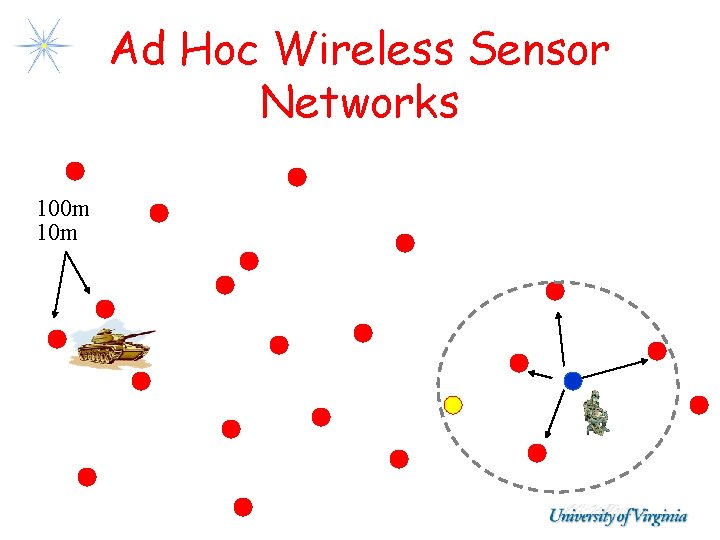
Ad Hoc Wireless Sensor Networks 100 m 10 m
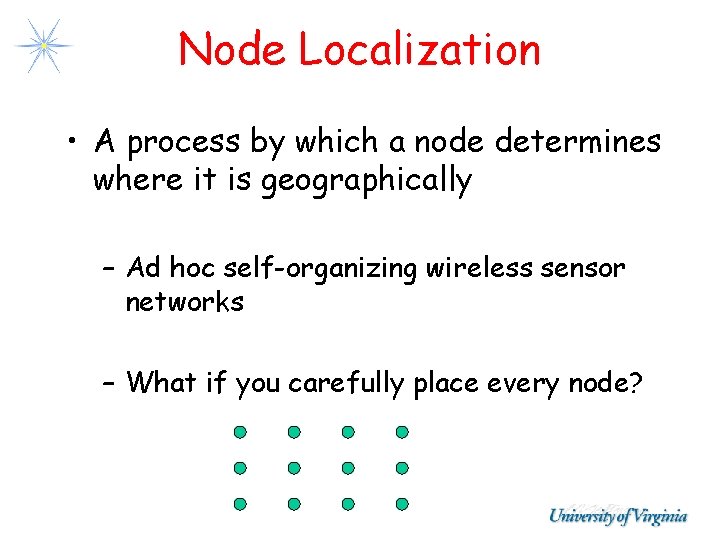
Node Localization • A process by which a node determines where it is geographically – Ad hoc self-organizing wireless sensor networks – What if you carefully place every node?
Node Localization - Issues • F(Many Parameters) – Cost (extra HW) – Beacons/Anchors (of different types - power levels) – Degree of accuracy needed – – – – – • Average error or worst case error Indoors/outdoors Line of sight or not 2 D-3 D Efficiency (Energy budget) (Number of messages) How long it takes to localize Clock synchronization accuracy Hostile/Friendly area Error Assumptions Security attacks
Using Localization • Location of sensor readings to identify where event/target is – Accuracy • Communication protocols route to area/location – Impact on GF? • To determine sensing coverage • Location directory service (where is person A? )
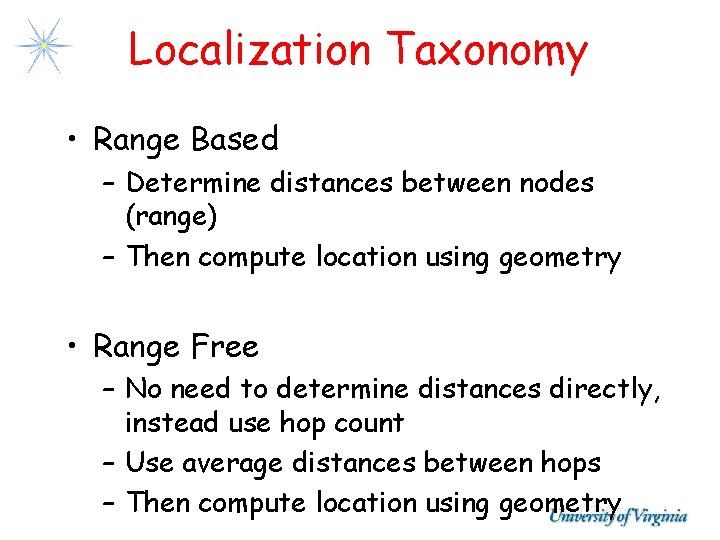
Localization Taxonomy • Range Based – Determine distances between nodes (range) – Then compute location using geometry • Range Free – No need to determine distances directly, instead use hop count – Use average distances between hops – Then compute location using geometry
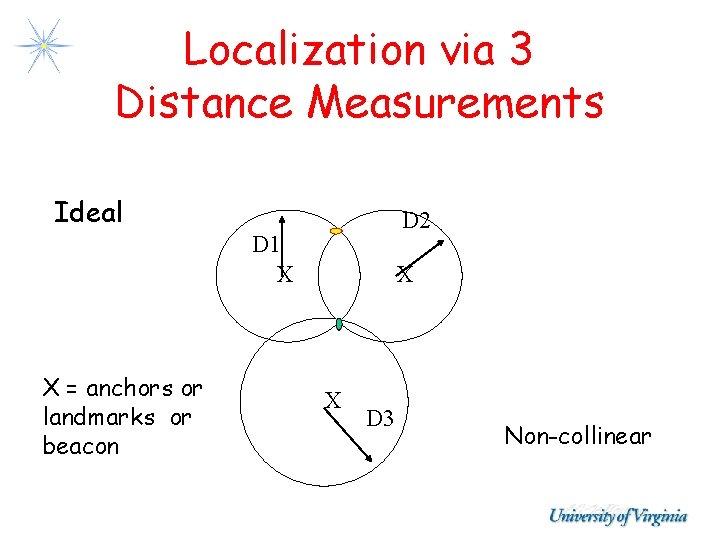
Localization via 3 Distance Measurements Ideal D 2 D 1 X X = anchors or landmarks or beacon X X D 3 Non-collinear
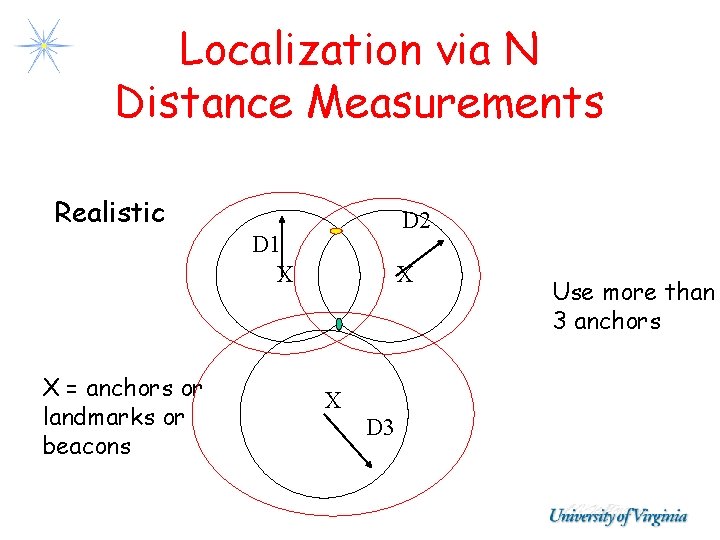
Localization via N Distance Measurements Realistic D 2 D 1 X X = anchors or landmarks or beacons X X D 3 Use more than 3 anchors
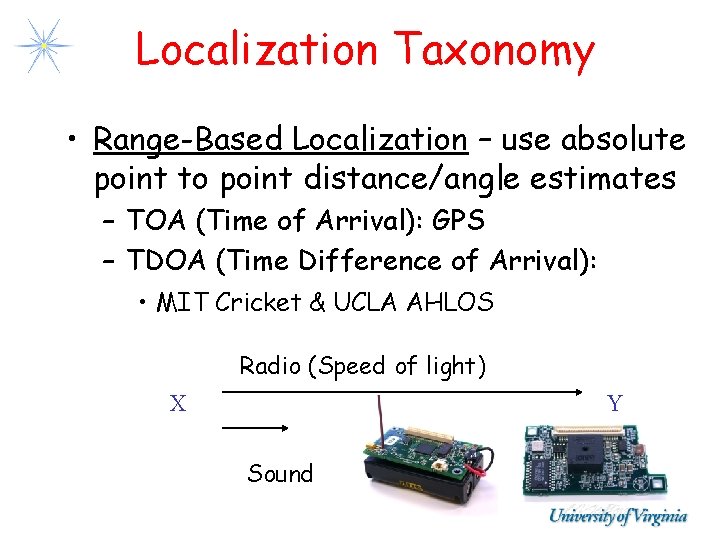
Localization Taxonomy • Range-Based Localization – use absolute point to point distance/angle estimates – TOA (Time of Arrival): GPS – TDOA (Time Difference of Arrival): • MIT Cricket & UCLA AHLOS Radio (Speed of light) X Y Sound
Range-Based (cont. ) – AOA (Angle of Arrival): • Aviation System and Rutgers APS – Signal Strength • Microsoft RADAR and UW Spot. On • Assume signal strength is proportional to distance – RSSI (received signal strength indicator)
Localization Taxonomy • Range-Free Localization – cost is more appropriate for many sensor nodes – – USC/ISI Centroid localization Rutgers DV-Hop Localization MIT Amorphous Localization UVA APIT • Localization that does not rely on information derived from signals. Only Hear/Not. Hear Distinction (hop count)
TOA - GPS • Constellation of 27 satellites – 24 active and 3 redundant – Clocks must be synchronized (use signal and clock to compute distance) – Requires line of sight – Billions of dollars of infrastructure – Each node with GPS is expensive for sensor nodes – May also be a problem with form factor – makes node too large
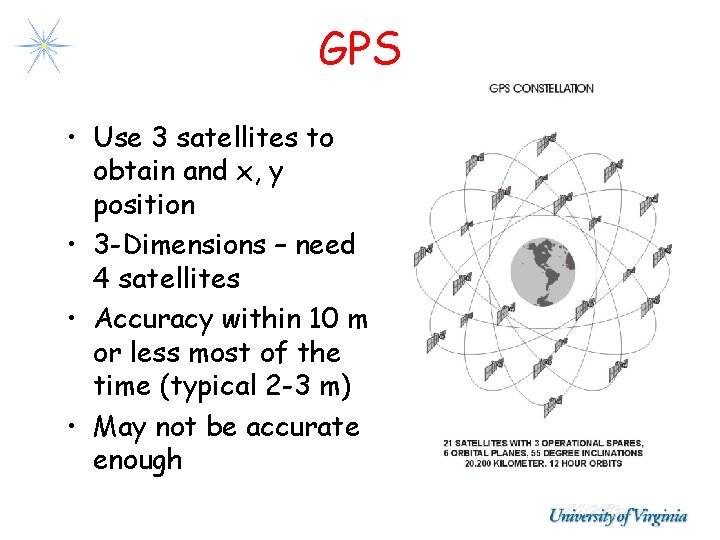
GPS • Use 3 satellites to obtain and x, y position • 3 -Dimensions – need 4 satellites • Accuracy within 10 m or less most of the time (typical 2 -3 m) • May not be accurate enough
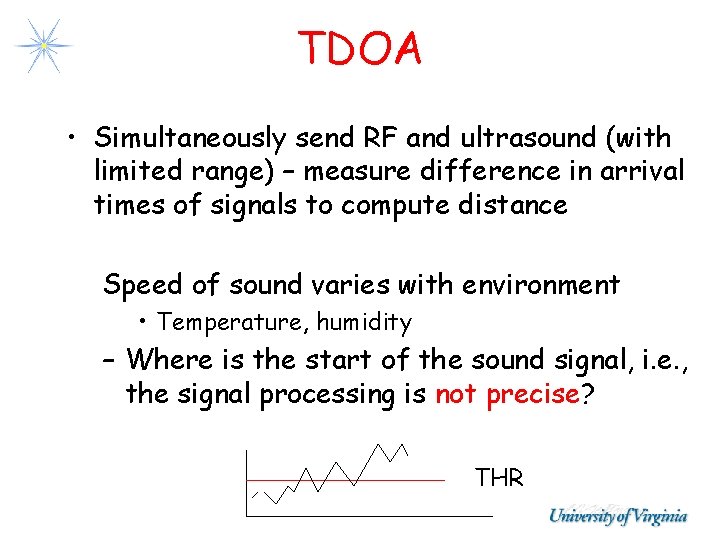
TDOA • Simultaneously send RF and ultrasound (with limited range) – measure difference in arrival times of signals to compute distance Speed of sound varies with environment • Temperature, humidity – Where is the start of the sound signal, i. e. , the signal processing is not precise? THR
Received Signal Strength Indicator (RSSI) • Translate signal strength into distance – Use model/formula to do the conversion – E. g. , signal strength drops as inverse square of distance • Multi-path fading, background interference, irregular signal propagation render this technique largely unsuitable
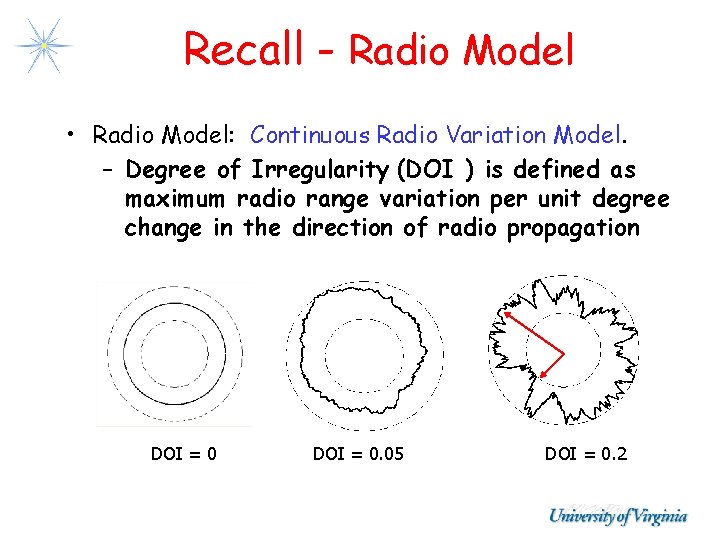
Recall - Radio Model • Radio Model: Continuous Radio Variation Model. – Degree of Irregularity (DOI ) is defined as maximum radio range variation per unit degree change in the direction of radio propagation DOI = 0. 05 DOI = 0. 2
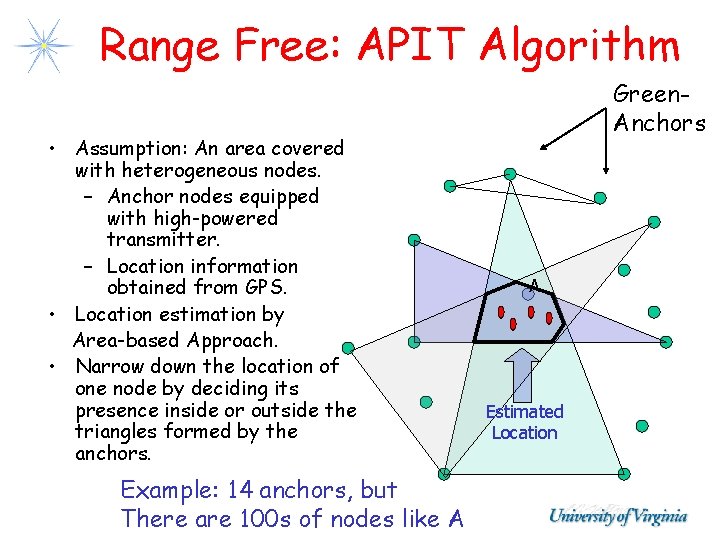
Range Free: APIT Algorithm • Assumption: An area covered with heterogeneous nodes. – Anchor nodes equipped with high-powered transmitter. – Location information obtained from GPS. • Location estimation by Area-based Approach. • Narrow down the location of one node by deciding its presence inside or outside the triangles formed by the anchors. Example: 14 anchors, but There are 100 s of nodes like A Green. Anchors A Estimated Location
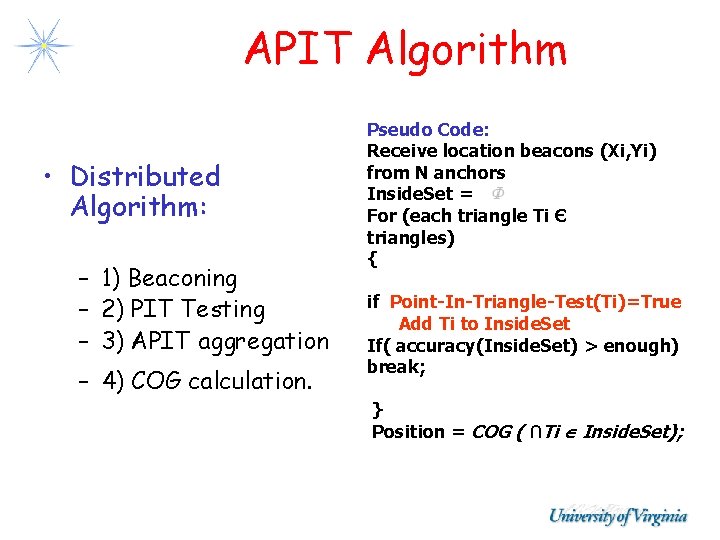
APIT Algorithm • Distributed Algorithm: – 1) Beaconing – 2) PIT Testing – 3) APIT aggregation – 4) COG calculation. Pseudo Code: Receive location beacons (Xi, Yi) from N anchors Inside. Set = For (each triangle Ti Є triangles) { if Point-In-Triangle-Test(Ti)=True Add Ti to Inside. Set If( accuracy(Inside. Set) > enough) break; } Position = COG ( ∩Ti Inside. Set);
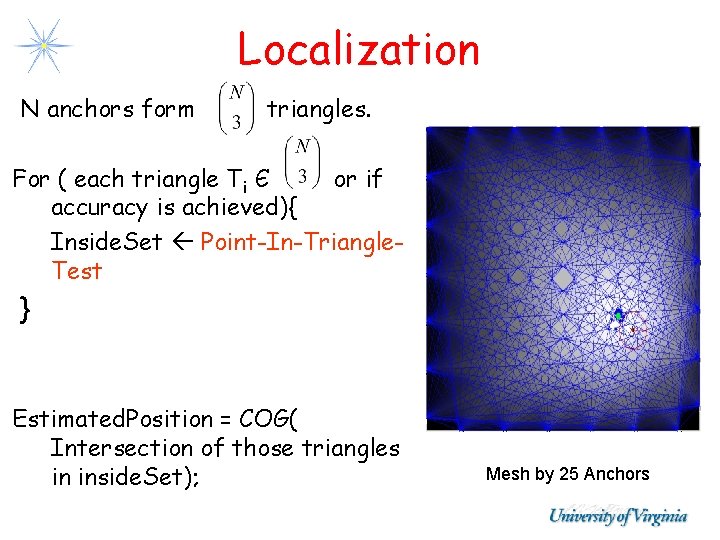
Localization N anchors form triangles. For ( each triangle Ti Є or if accuracy is achieved){ Inside. Set Point-In-Triangle. Test } Estimated. Position = COG( Intersection of those triangles in inside. Set); Mesh by 25 Anchors
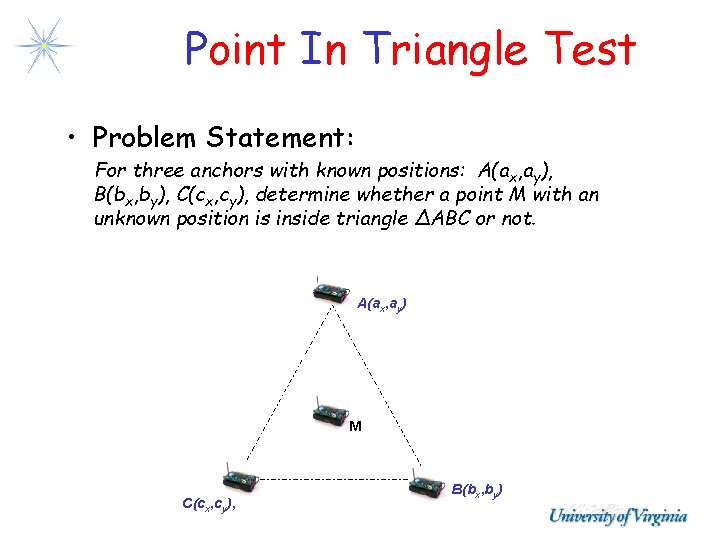
Point In Triangle Test • Problem Statement: For three anchors with known positions: A(ax, ay), B(bx, by), C(cx, cy), determine whether a point M with an unknown position is inside triangle ∆ABC or not. A(ax, ay) M C(cx, cy), B(bx, by)
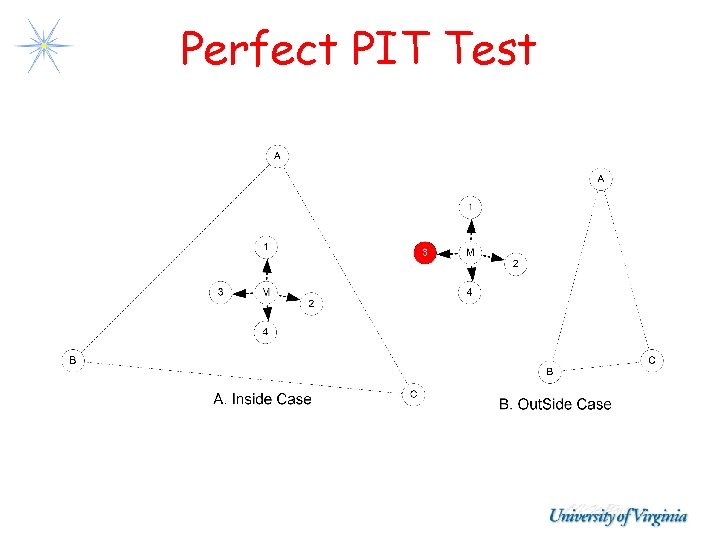
Perfect PIT Test • Perfect P. I. T Test Theory: • If there exists a direction such that a point adjacent to M is further/closer to points A, B, and C simultaneously, then M is outside of ∆ABC. Otherwise, M is inside ∆ABC. A M B B C This is an IDEAL Test! Require approximation for practical use Nodes can’t move, how to recognize direction of departure? C
Perfect PIT Test
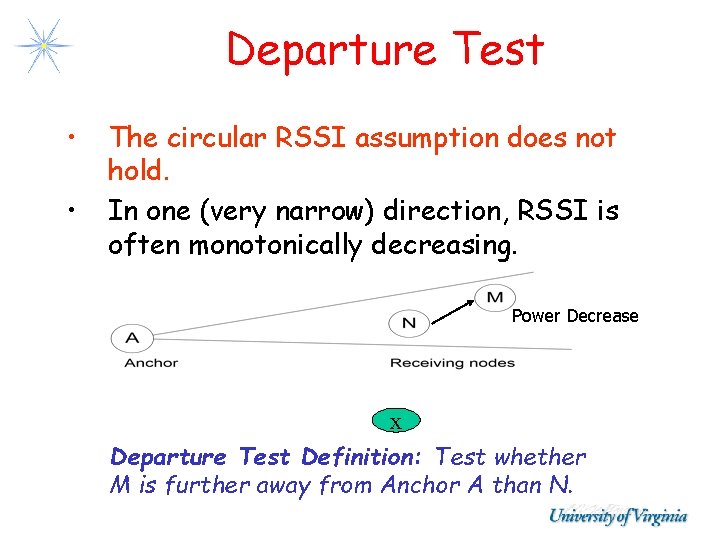
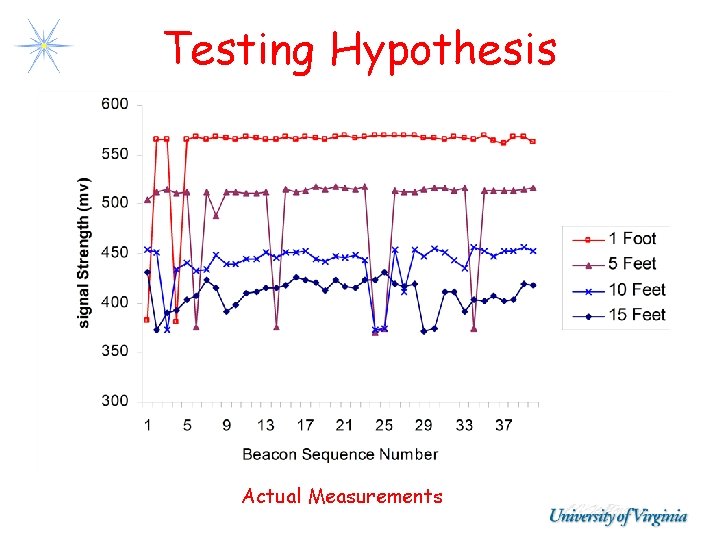
Departure Test • • The circular RSSI assumption does not hold. In one (very narrow) direction, RSSI is often monotonically decreasing. Power Decrease x Departure Test Definition: Test whether M is further away from Anchor A than N.
Testing Hypothesis Actual Measurements
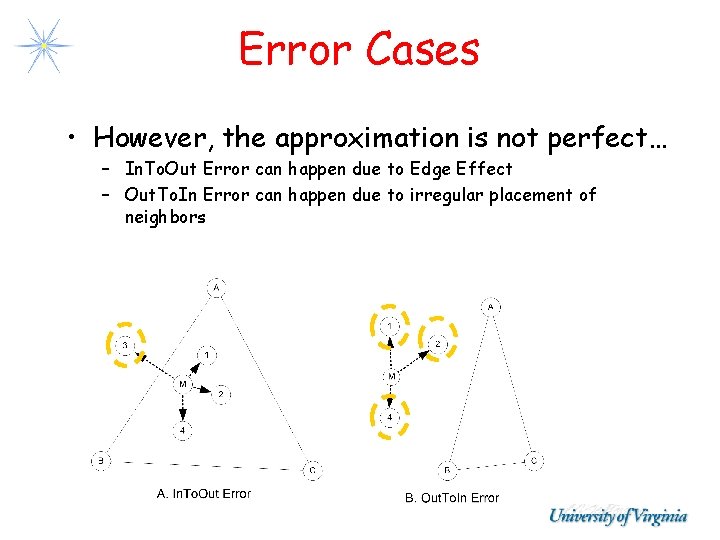
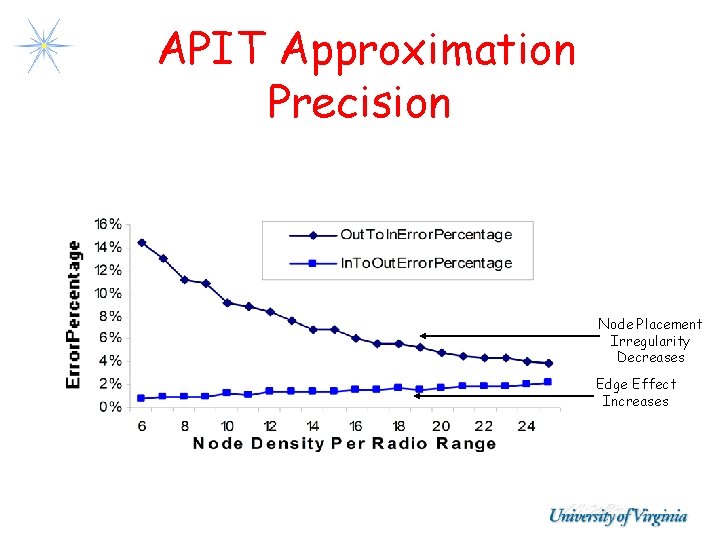
Error Cases • However, the approximation is not perfect… – In. To. Out Error can happen due to Edge Effect – Out. To. In Error can happen due to irregular placement of neighbors
APIT Approximation Precision Node Placement Irregularity Decreases Edge Effect Increases
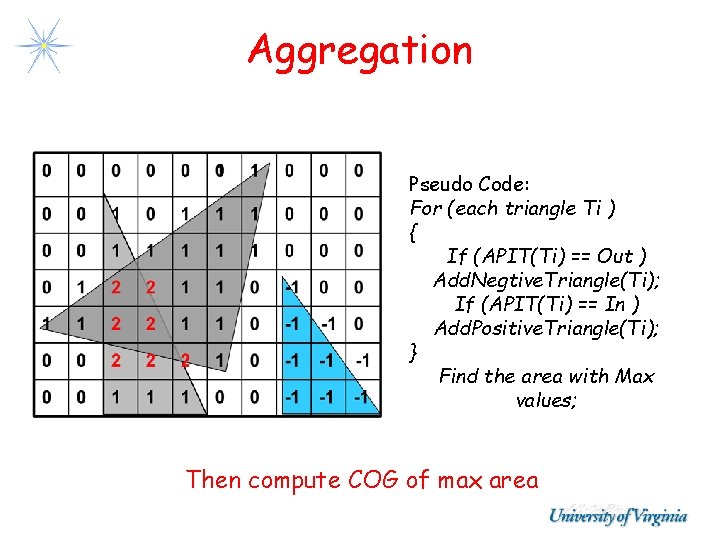
Aggregation Pseudo Code: For (each triangle Ti ) { If (APIT(Ti) == Out ) Add. Negtive. Triangle(Ti); If (APIT(Ti) == In ) Add. Positive. Triangle(Ti); } Find the area with Max values; Then compute COG of max area
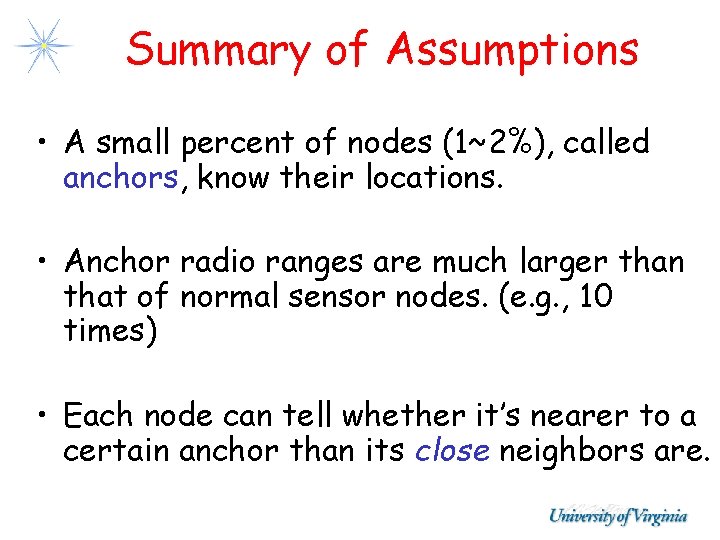
Summary of Assumptions • A small percent of nodes (1~2%), called anchors, know their locations. • Anchor radio ranges are much larger than that of normal sensor nodes. (e. g. , 10 times) • Each node can tell whether it’s nearer to a certain anchor than its close neighbors are.
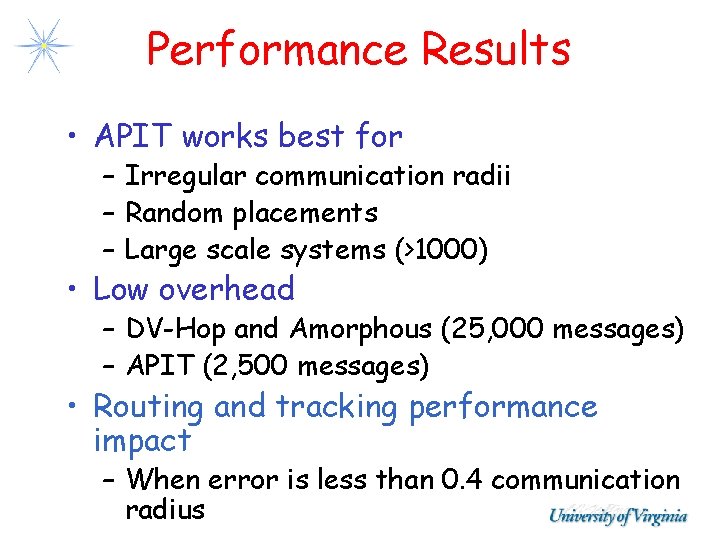
Performance Results • APIT works best for – Irregular communication radii – Random placements – Large scale systems (>1000) • Low overhead – DV-Hop and Amorphous (25, 000 messages) – APIT (2, 500 messages) • Routing and tracking performance impact – When error is less than 0. 4 communication radius
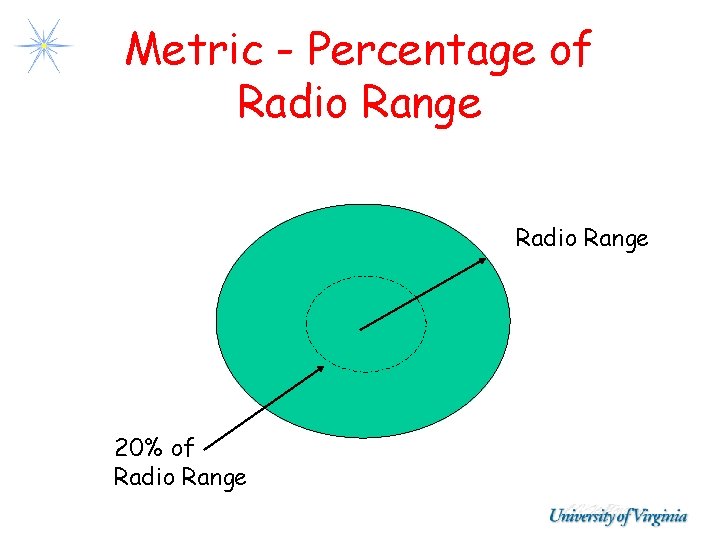
Metric - Percentage of Radio Range 20% of Radio Range
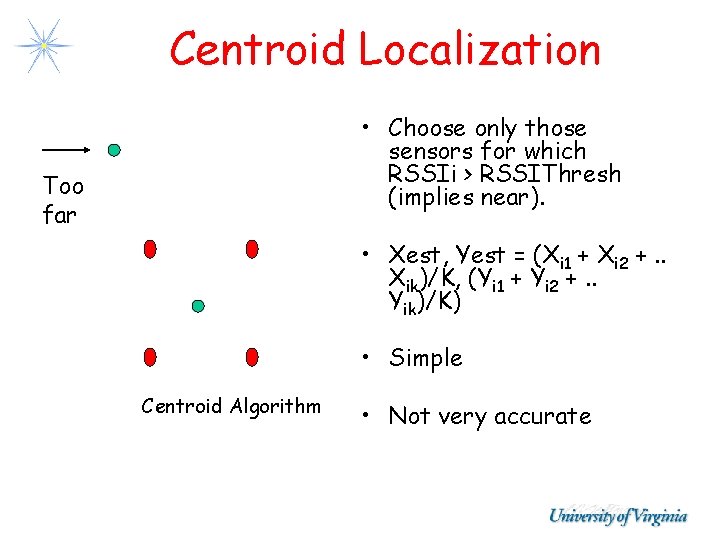
Centroid Localization • Choose only those sensors for which RSSIi > RSSIThresh (implies near). Too far • Xest, Yest = (Xi 1 + Xi 2 +. . Xik)/K, (Yi 1 + Yi 2 +. . Yik)/K) • Simple Centroid Algorithm • Not very accurate
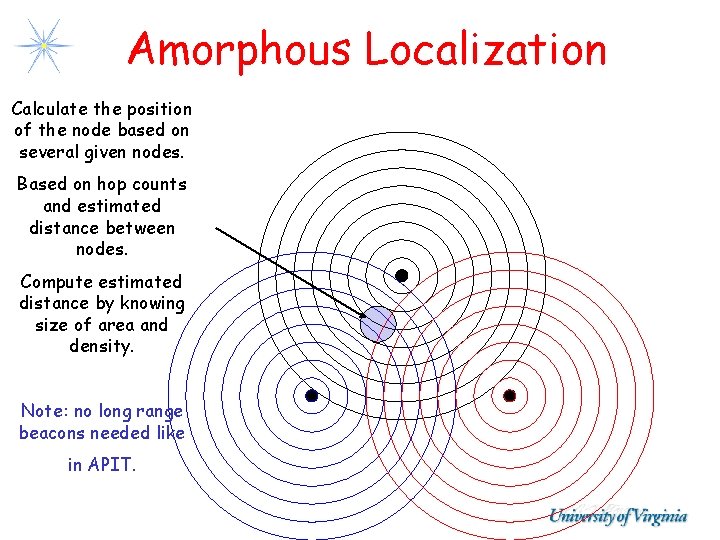
Amorphous Localization Calculate the position of the node based on several given nodes. Based on hop counts and estimated distance between nodes. Compute estimated distance by knowing size of area and density. Note: no long range beacons needed like in APIT.
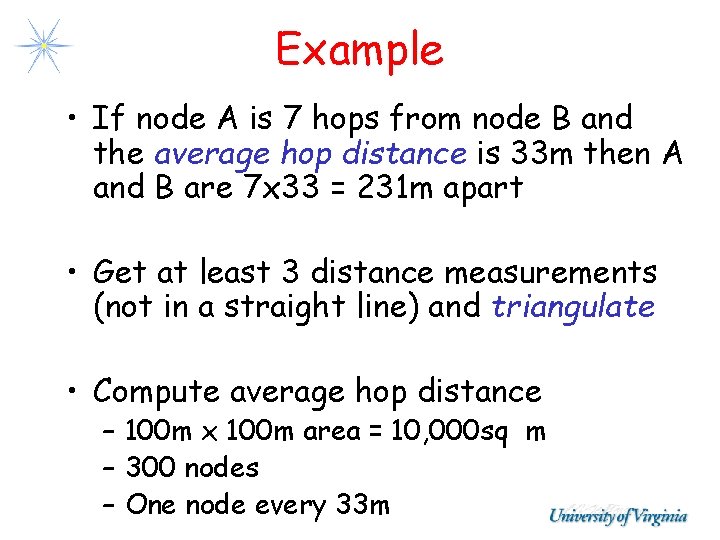
Example • If node A is 7 hops from node B and the average hop distance is 33 m then A and B are 7 x 33 = 231 m apart • Get at least 3 distance measurements (not in a straight line) and triangulate • Compute average hop distance – 100 m x 100 m area = 10, 000 sq m – 300 nodes – One node every 33 m
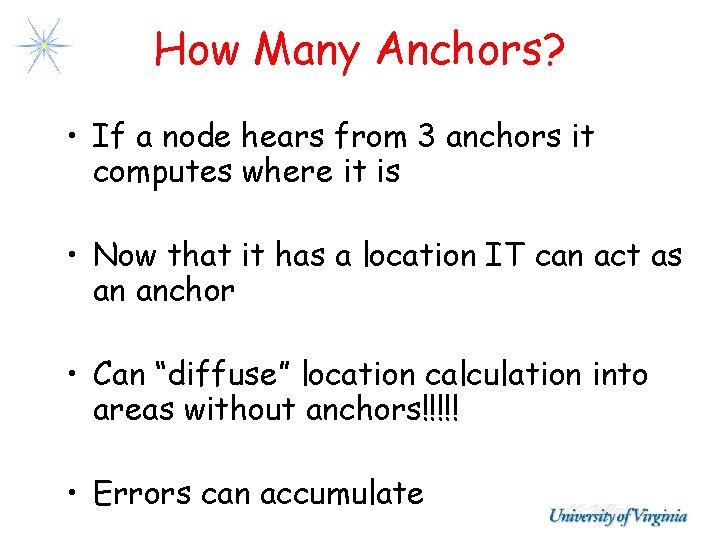
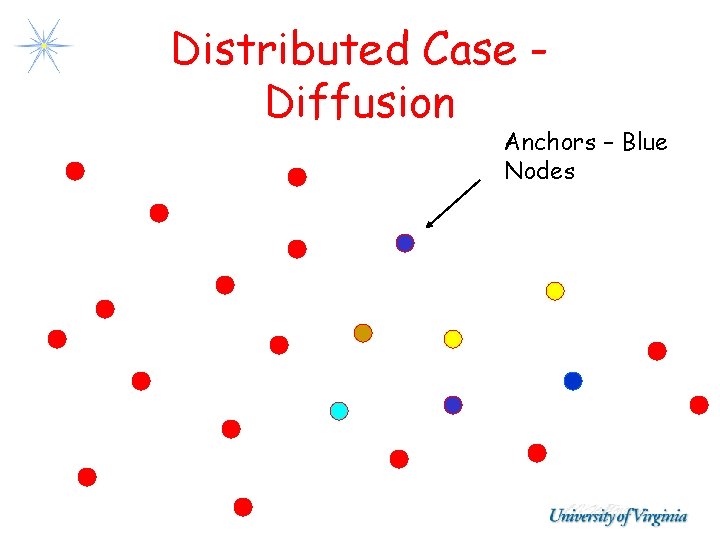
How Many Anchors? • If a node hears from 3 anchors it computes where it is • Now that it has a location IT can act as an anchor • Can “diffuse” location calculation into areas without anchors!!!!! • Errors can accumulate
Distributed Case Diffusion Anchors – Blue Nodes
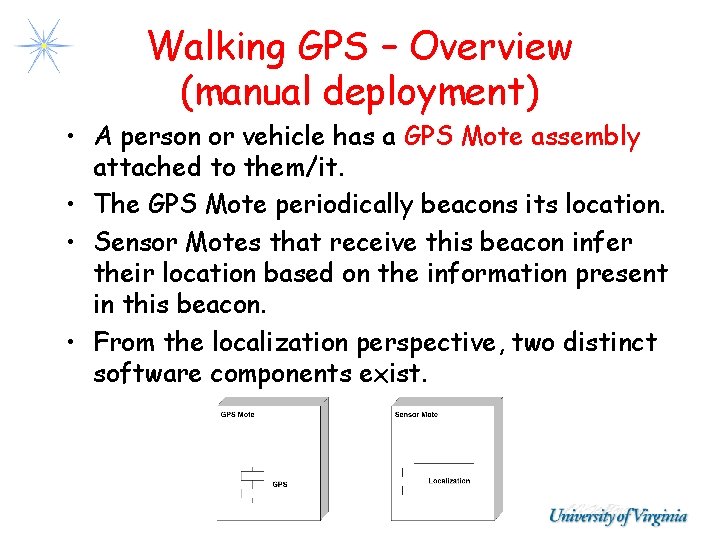
Walking GPS – Overview (manual deployment) • A person or vehicle has a GPS Mote assembly attached to them/it. • The GPS Mote periodically beacons its location. • Sensor Motes that receive this beacon infer their location based on the information present in this beacon. • From the localization perspective, two distinct software components exist.
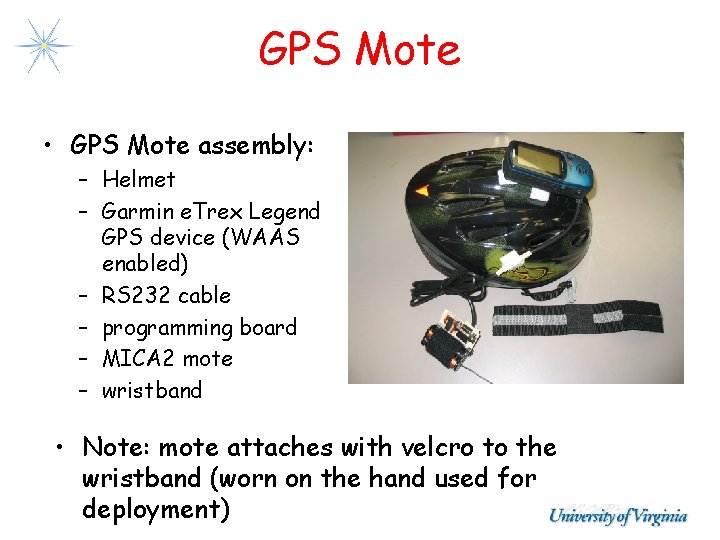
GPS Mote • GPS Mote assembly: – Helmet – Garmin e. Trex Legend GPS device (WAAS enabled) – RS 232 cable – programming board – MICA 2 mote – wristband • Note: mote attaches with velcro to the wristband (worn on the hand used for deployment)
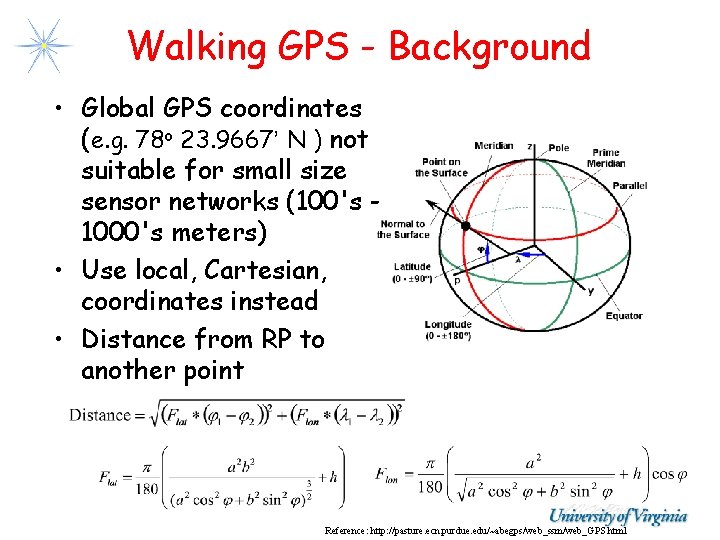
Walking GPS - Background • Global GPS coordinates (e. g. 78 o 23. 9667’ N ) not suitable for small size sensor networks (100's 1000's meters) • Use local, Cartesian, coordinates instead • Distance from RP to another point Reference: http: //pasture. ecn. purdue. edu/~abegps/web_ssm/web_GPS. html
Sensor Mote • Two deployment types: – mote powered on at deployment • first INIT_LOCALIZATION packet gives the location – mote powered on all the time • INIT_LOCALIZATION stored in circular buffer, if RSSI > Threshold • location = go back two entries in the circular buffer (location will be stored in flash) • Two stages for Localization: – at deployment time: Walking GPS – during system initialization: HELP_REQUEST/REPLY, if no location information present (for robustness)
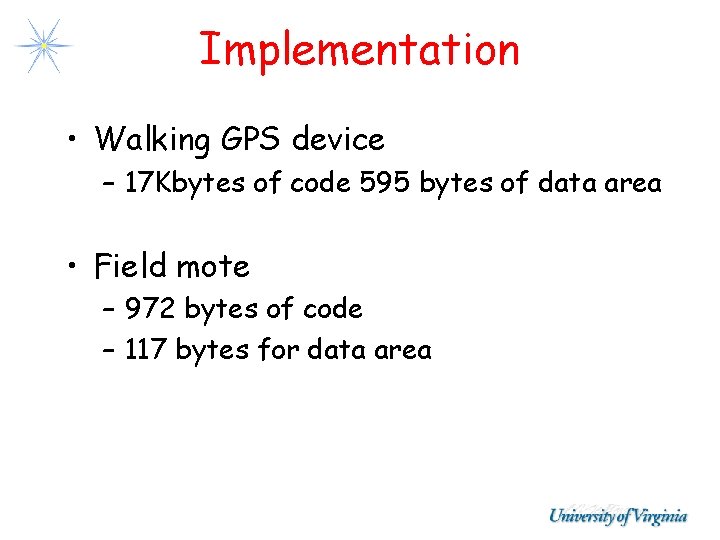
Implementation • Walking GPS device – 17 Kbytes of code 595 bytes of data area • Field mote – 972 bytes of code – 117 bytes for data area
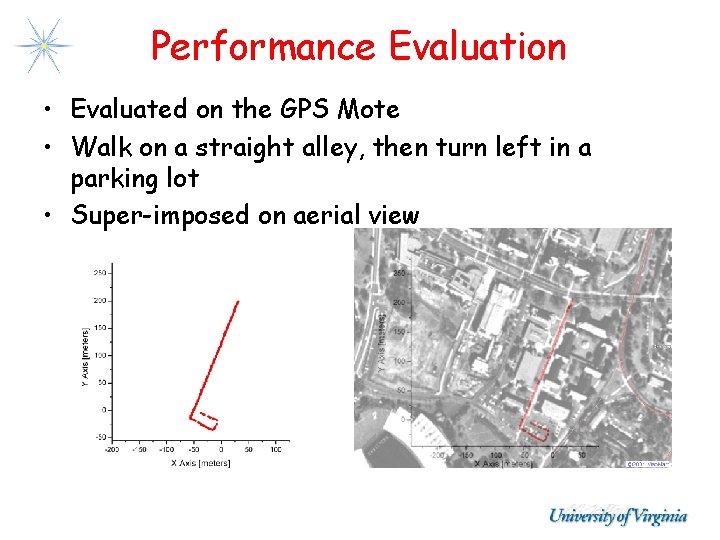
Performance Evaluation • Evaluated on the GPS Mote • Walk on a straight alley, then turn left in a parking lot • Super-imposed on aerial view
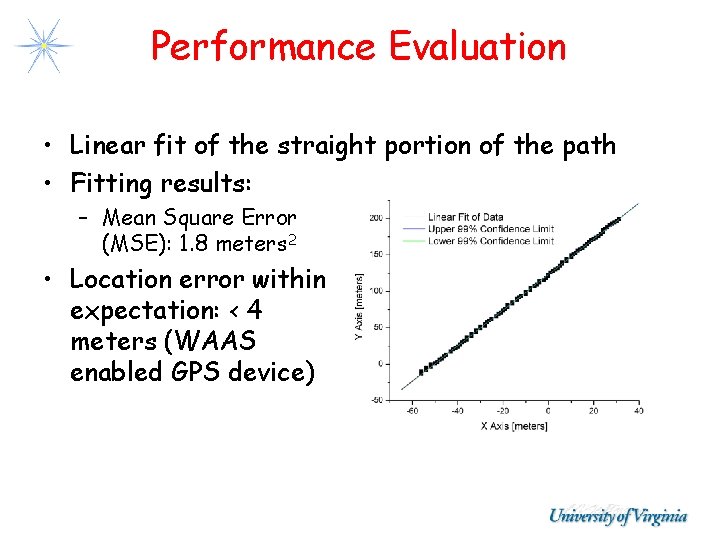
Performance Evaluation • Linear fit of the straight portion of the path • Fitting results: – Mean Square Error (MSE): 1. 8 meters 2 • Location error within expectation: < 4 meters (WAAS enabled GPS device)
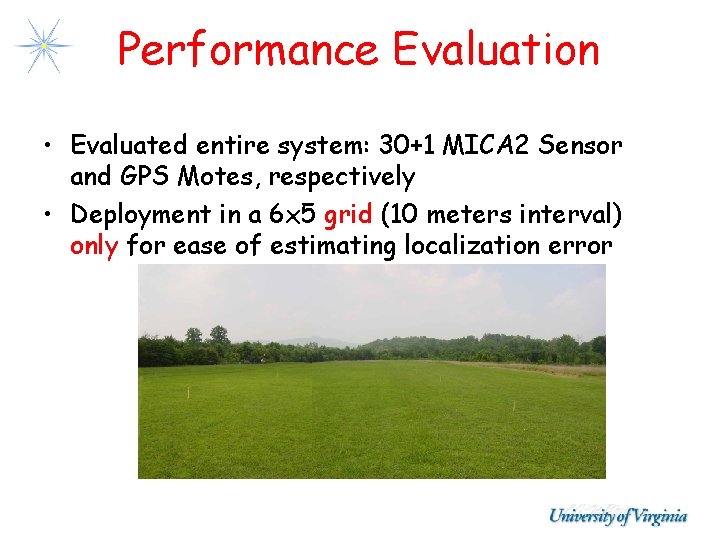
Performance Evaluation • Evaluated entire system: 30+1 MICA 2 Sensor and GPS Motes, respectively • Deployment in a 6 x 5 grid (10 meters interval) only for ease of estimating localization error
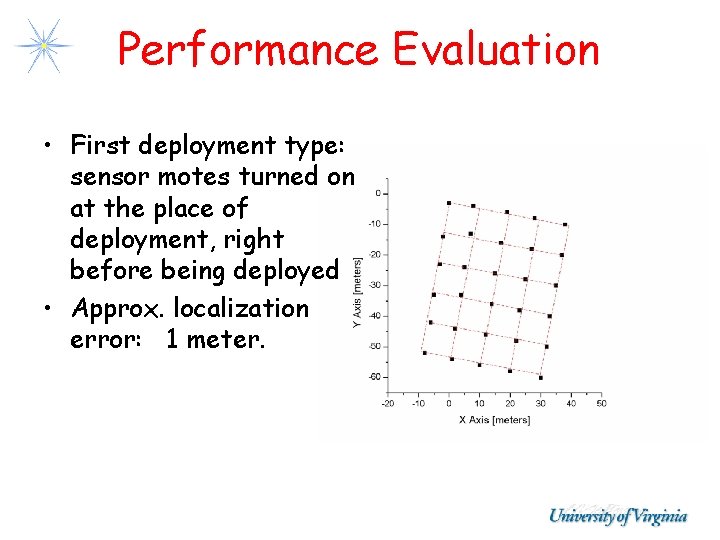
Performance Evaluation • First deployment type: sensor motes turned on at the place of deployment, right before being deployed • Approx. localization error: 1 meter.
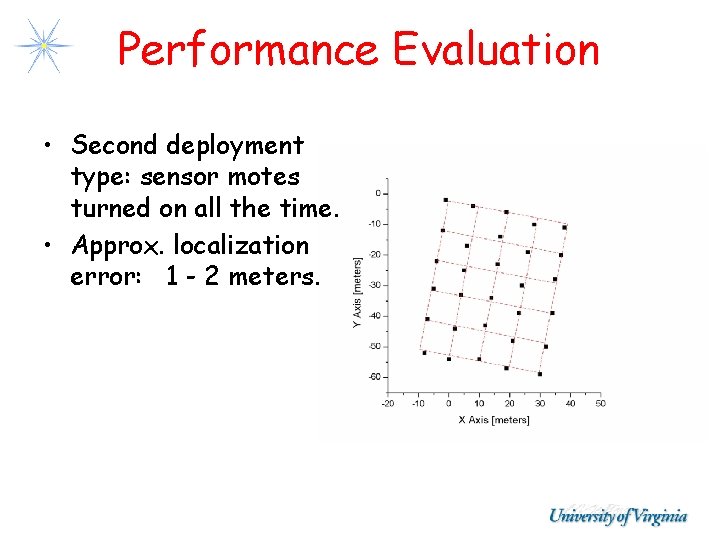
Performance Evaluation • Second deployment type: sensor motes turned on all the time. • Approx. localization error: 1 - 2 meters.
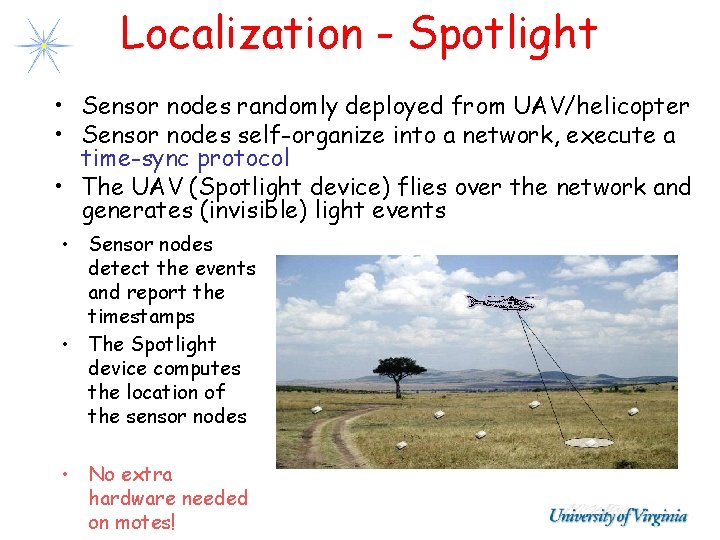
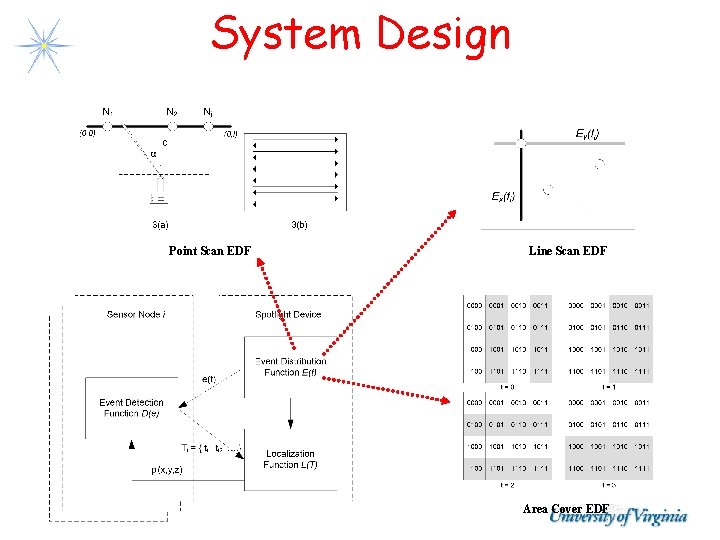
Localization - Spotlight • Sensor nodes randomly deployed from UAV/helicopter • Sensor nodes self-organize into a network, execute a time-sync protocol • The UAV (Spotlight device) flies over the network and generates (invisible) light events • Sensor nodes detect the events and report the timestamps • The Spotlight device computes the location of the sensor nodes • No extra hardware needed on motes!
System Design Point Scan EDF Line Scan EDF Area Cover EDF
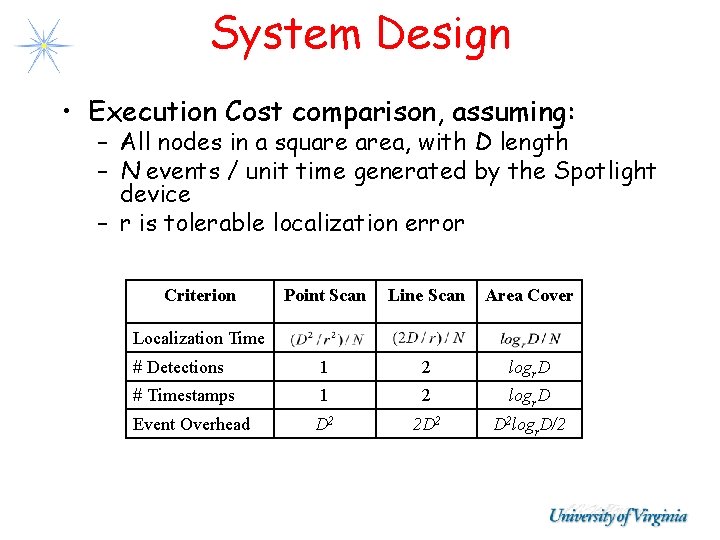
System Design • Execution Cost comparison, assuming: – All nodes in a square area, with D length – N events / unit time generated by the Spotlight device – r is tolerable localization error Criterion Point Scan Line Scan Area Cover # Detections 1 2 logr. D # Timestamps 1 2 logr. D Event Overhead D 2 2 D 2 D 2 logr. D/2 Localization Time
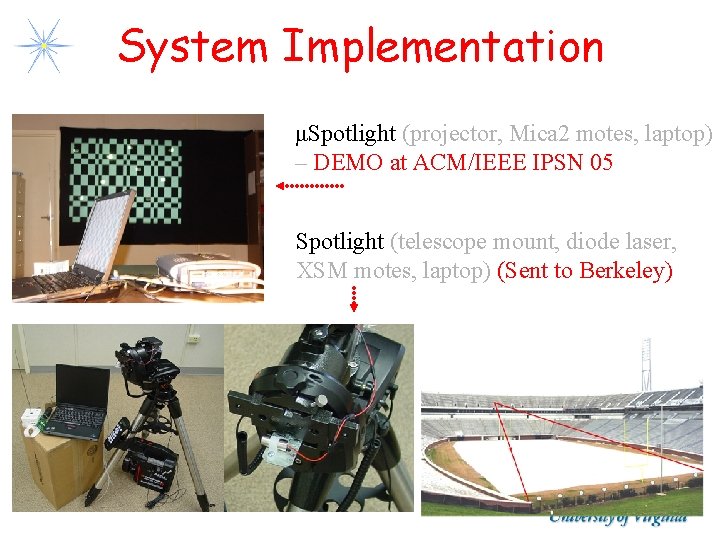
System Implementation μSpotlight (projector, Mica 2 motes, laptop) – DEMO at ACM/IEEE IPSN 05 Spotlight (telescope mount, diode laser, XSM motes, laptop) (Sent to Berkeley)
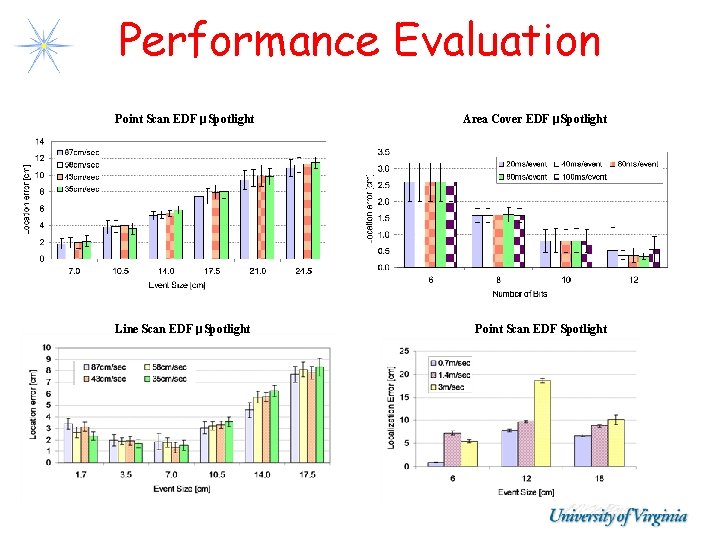
Performance Evaluation Point Scan EDF μSpotlight Line Scan EDF μSpotlight Area Cover EDF μSpotlight Point Scan EDF Spotlight
Localization - Questions • Stealthy – No manual deployment – Minimize packets • Minimum cost, time, energy • Handling errors and outliers • Node, Target and Location Directory Services • Security
Summary • Critical issue for WSN – Accurate, Robust and Secure – Impacts MAC, Routing, , • If fixed infrastructure – many solutions work • Normally executed once at system init time – What if mobile system – What if nodes get moved
Summary • Range Based – Expensive for large systems • Range-free – Too many based on general signal strength – Variations in assumptions about types of beacons, etc. – APIT improvement over Centroid, Amorphous, DV-Hop – Walking GPS – practical
Summary • Fn(Many Parameters) – HW, beacons of different types, degree of accuracy needed, indoors/outdoors, 2 D 3 D, energy budget, how well clocks can be synchronized, …) • More work to be done – Exploit deployment information (e. g. , you know that you are trying to deploy the nodes in a grid) – Robust and Secure (worst case error not average; attack resistant)