
Wireless Power How it works Disclaimer The purpose


- Slides: 16
Wireless Power How it works Disclaimer: The purpose of this information is to explain the wireless power technology – It can differ in some aspects from the specification.
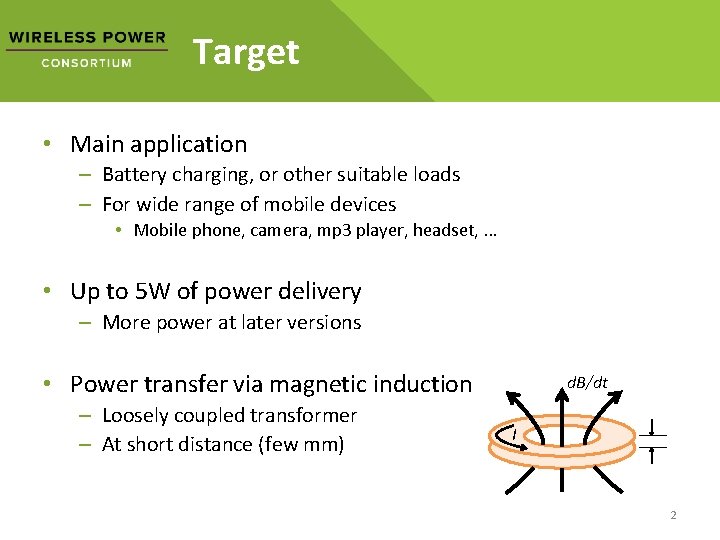
Target • Main application – Battery charging, or other suitable loads – For wide range of mobile devices • Mobile phone, camera, mp 3 player, headset, … • Up to 5 W of power delivery – More power at later versions • Power transfer via magnetic induction – Loosely coupled transformer – At short distance (few mm) d. B/dt I 2
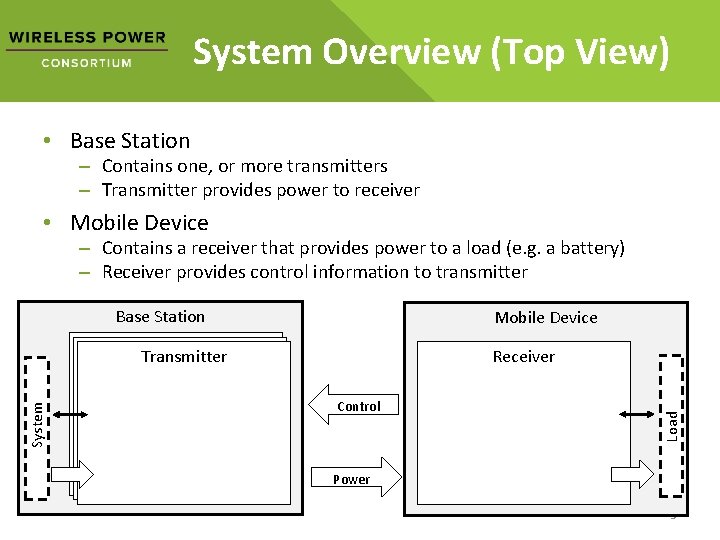
System Overview (Top View) • Base Station – Contains one, or more transmitters – Transmitter provides power to receiver • Mobile Device – Contains a receiver that provides power to a load (e. g. a battery) – Receiver provides control information to transmitter Base Station Mobile Device Receiver Control Load System Transmitter Power 3
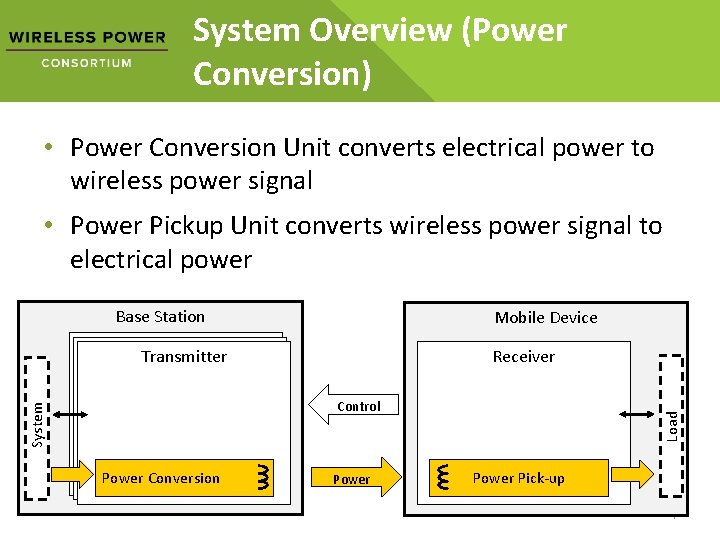
System Overview (Power Conversion) • Power Conversion Unit converts electrical power to wireless power signal • Power Pickup Unit converts wireless power signal to electrical power Base Station Mobile Device Transmitter Receiver Power Conversion Power Load System Control Power Pick-up 4
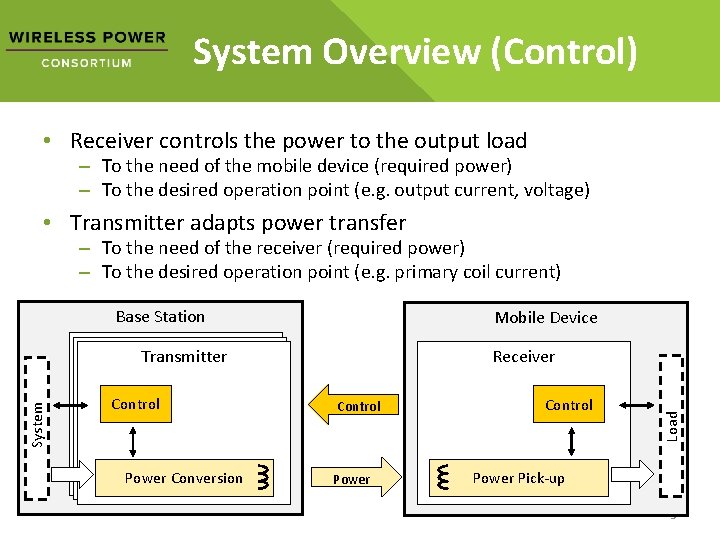
System Overview (Control) • Receiver controls the power to the output load – To the need of the mobile device (required power) – To the desired operation point (e. g. output current, voltage) • Transmitter adapts power transfer – To the need of the receiver (required power) – To the desired operation point (e. g. primary coil current) Base Station Mobile Device Control Power Conversion Receiver Control Power Control Load System Transmitter Power Pick-up 5
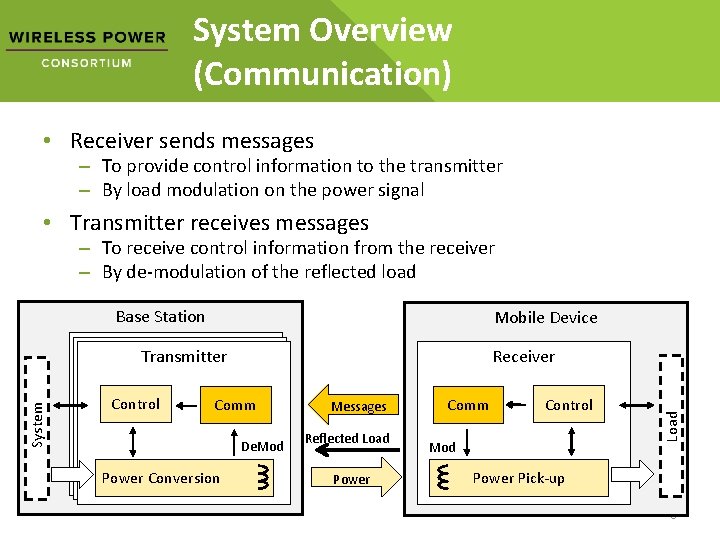
System Overview (Communication) • Receiver sends messages – To provide control information to the transmitter – By load modulation on the power signal • Transmitter receives messages – To receive control information from the receiver – By de-modulation of the reflected load Base Station Mobile Device Control Receiver Comm De. Mod Power Conversion Messages Reflected Load Power Comm Control Mod Load System Transmitter Power Pick-up 6
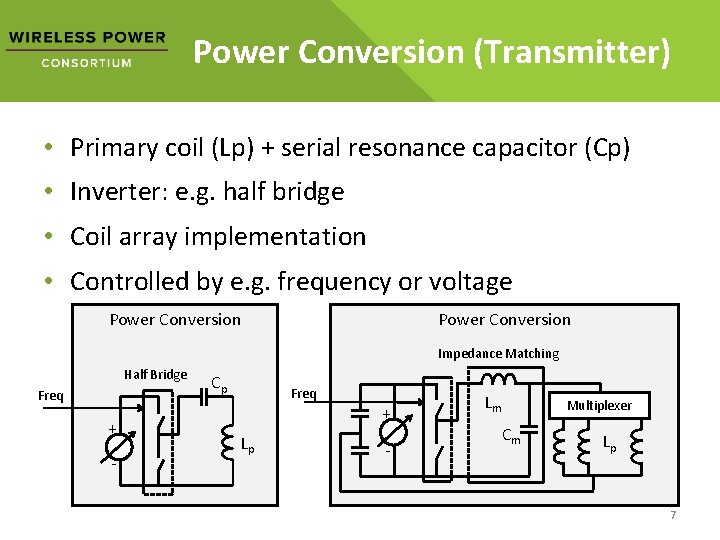
Power Conversion (Transmitter) • Primary coil (Lp) + serial resonance capacitor (Cp) • Inverter: e. g. half bridge • Coil array implementation • Controlled by e. g. frequency or voltage Power Conversion Impedance Matching Half Bridge Freq + - Cp Freq + Lp - Lm Multiplexer Cm Lp 7
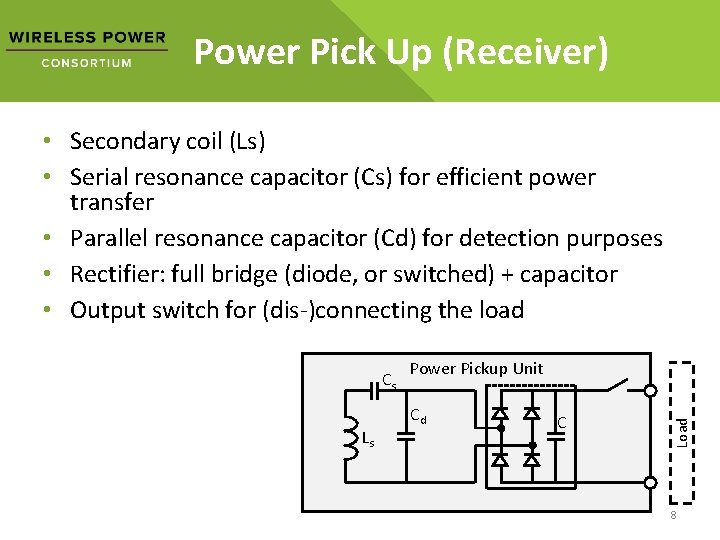
Power Pick Up (Receiver) • Secondary coil (Ls) • Serial resonance capacitor (Cs) for efficient power transfer • Parallel resonance capacitor (Cd) for detection purposes • Rectifier: full bridge (diode, or switched) + capacitor • Output switch for (dis-)connecting the load Ls Power Pickup Unit Cd C Load Cs 8
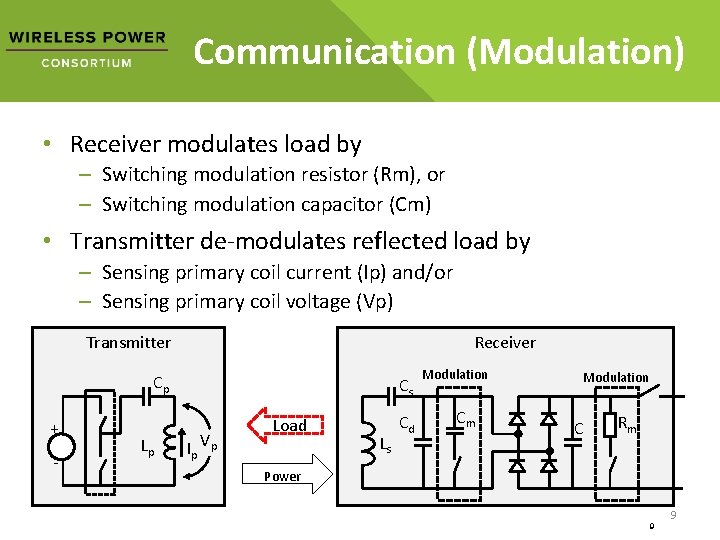
Communication (Modulation) • Receiver modulates load by – Switching modulation resistor (Rm), or – Switching modulation capacitor (Cm) • Transmitter de-modulates reflected load by – Sensing primary coil current (Ip) and/or – Sensing primary coil voltage (Vp) Transmitter Receiver Cp + - Lp Cs I p Vp Load Ls Cd Modulation Cm Modulation C Rm Power 9 9
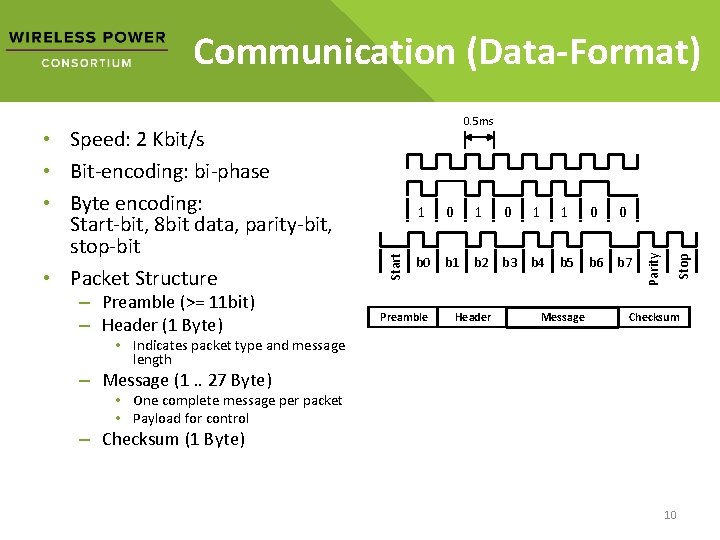
Communication (Data-Format) – Preamble (>= 11 bit) – Header (1 Byte) 0 1 1 0 0 b 1 b 2 b 3 b 4 b 5 b 6 b 7 Preamble Header Message Stop 1 Parity Start • Speed: 2 Kbit/s • Bit-encoding: bi-phase • Byte encoding: Start-bit, 8 bit data, parity-bit, stop-bit • Packet Structure 0. 5 ms Checksum • Indicates packet type and message length – Message (1. . 27 Byte) • One complete message per packet • Payload for control – Checksum (1 Byte) 10
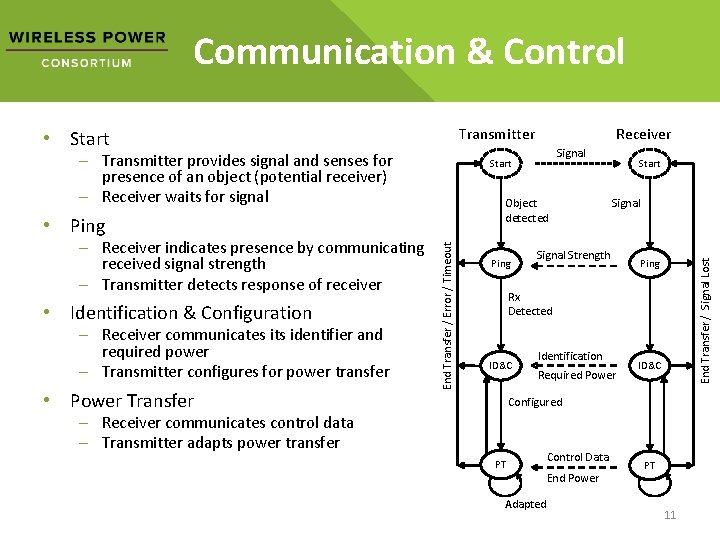
Communication & Control Transmitter – Transmitter provides signal and senses for presence of an object (potential receiver) – Receiver waits for signal Object detected – Receiver communicates its identifier and required power – Transmitter configures for power transfer • Power Transfer End Transfer / Error / Timeout • Identification & Configuration Signal Start • Ping – Receiver indicates presence by communicating received signal strength – Transmitter detects response of receiver Receiver Ping Start Signal Strength Ping End Transfer / Signal Lost • Start Rx Detected ID&C Identification Required Power ID&C Configured – Receiver communicates control data – Transmitter adapts power transfer PT Control Data End Power Adapted PT 11
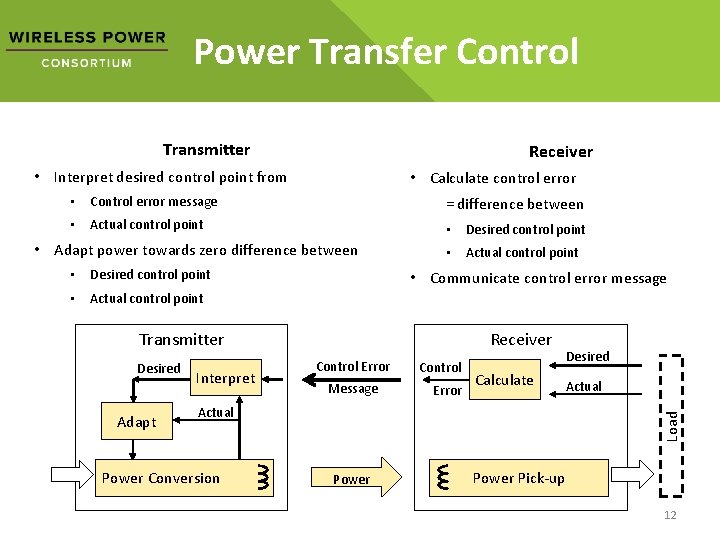
Power Transfer Control Transmitter Receiver • Interpret desired control point from • Calculate control error • Control error message = difference between • Actual control point • Desired control point • Actual control point • Adapt power towards zero difference between • Desired control point • Actual control point • Communicate control error message Receiver Transmitter Adapt Interpret Control Error Message Control Error Calculate Actual Power Conversion Desired Actual Load Desired Power Pick-up 12
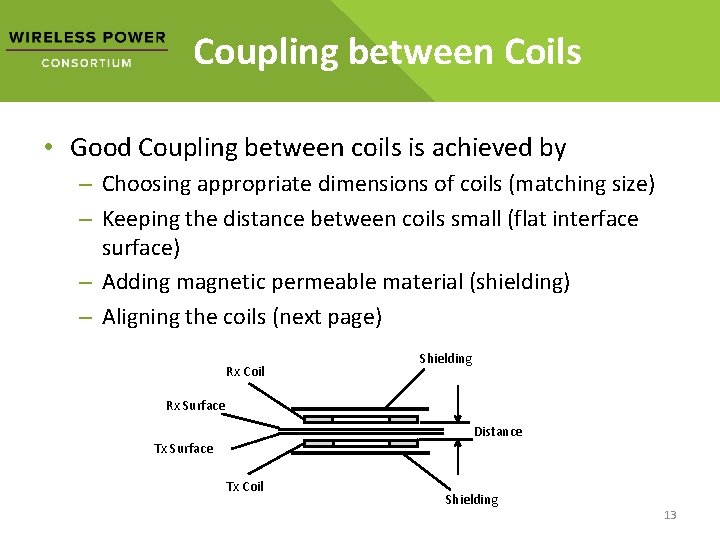
Coupling between Coils • Good Coupling between coils is achieved by – Choosing appropriate dimensions of coils (matching size) – Keeping the distance between coils small (flat interface surface) – Adding magnetic permeable material (shielding) – Aligning the coils (next page) Rx Coil Shielding Rx Surface Distance Tx Surface Tx Coil Shielding 13
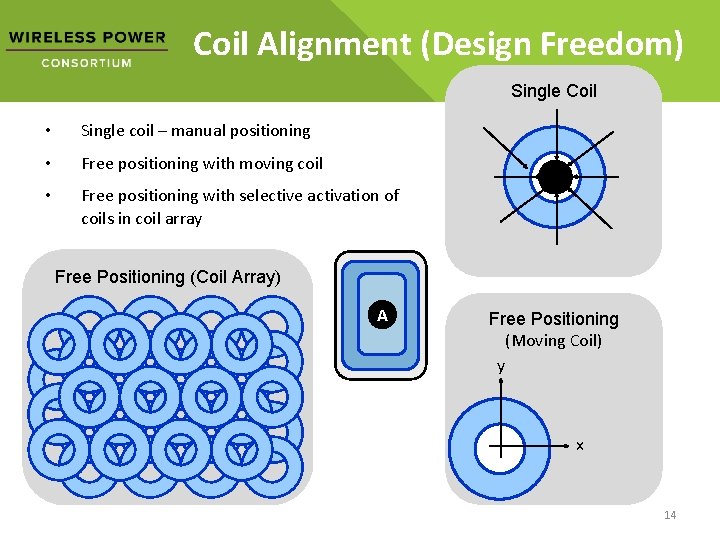
Coil Alignment (Design Freedom) Single Coil • Single coil – manual positioning • Free positioning with moving coil • Free positioning with selective activation of coils in coil array Free Positioning (Coil Array) A Free Positioning (Moving Coil) y x 14
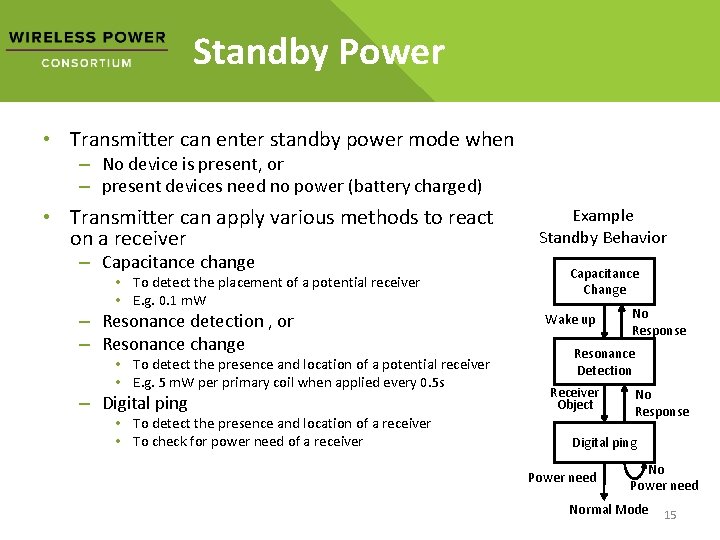
Standby Power • Transmitter can enter standby power mode when – No device is present, or – present devices need no power (battery charged) • Transmitter can apply various methods to react on a receiver – Capacitance change • To detect the placement of a potential receiver • E. g. 0. 1 m. W – Resonance detection , or – Resonance change • To detect the presence and location of a potential receiver • E. g. 5 m. W per primary coil when applied every 0. 5 s – Digital ping • To detect the presence and location of a receiver • To check for power need of a receiver Example Standby Behavior Capacitance Change Wake up No Response Resonance Detection Change Receiver Object No Response Digital ping Power need Normal Mode 15