
Wireless Personal Communications Systems 1 HsiaoKuang Wu NCU
- Slides: 52
無線網路概論 Wireless Personal Communications Systems 吳曉光教授 無線多媒體實驗室 國立中央大學 1 Hsiao-Kuang Wu, NCU Computer Science
Course Contents • Wireless Personal Communications Systems • Paper Reading 2 Hsiao-Kuang Wu, NCU Computer Science
Expectation of the Class • • • 3 Basic Understanding of PCS world Being able to do the wireless research Developing the capability to invent the key wireless applications Hsiao-Kuang Wu, NCU Computer Science
Course Process • Technology Introductions • Paper reading and your presentations 4 Hsiao-Kuang Wu, NCU Computer Science
Outline • • • 5 Introduction Issues Protocol Approaches Discussions Applications Hsiao-Kuang Wu, NCU Computer Science
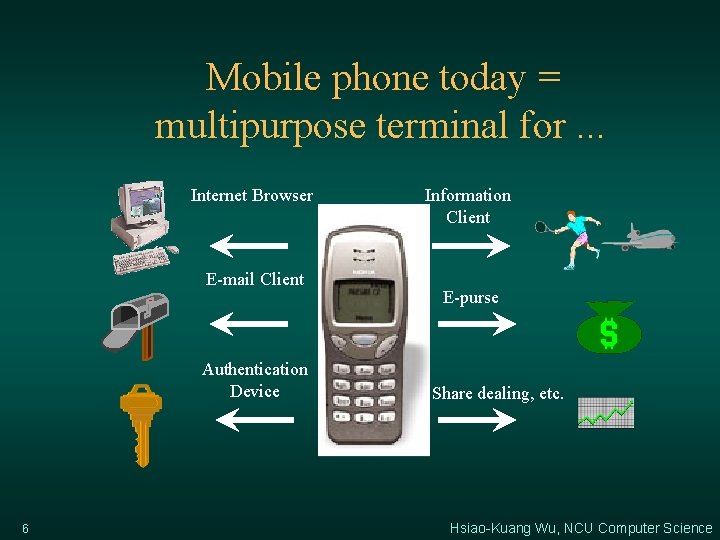
Mobile phone today = multipurpose terminal for. . . Internet Browser E-mail Client Authentication Device 6 Information Client E-purse Share dealing, etc. Hsiao-Kuang Wu, NCU Computer Science
Mobile Computing • information processing in general – not just communication or just computing, but both • Any medium or combination of medium – process not just telephone voice or just data, but multimedia • Mobility – components of the systems may be • moving, tether-less (wireless), portable – uses of the system may be moving 7 Hsiao-Kuang Wu, NCU Computer Science
Why should we care ? • Reason # 1 : $$$ & jobs • Explosive growth of wireless voice, paging, and data services – 35 -60 percent annual growth in the past decade – mobile phones in US will be 42 % of fixed line phones by 2000 • Big demand for portable communicators and computers – 2 M portable computer in 1988 to 74. 1 M units in 1998 8 Hsiao-Kuang Wu, NCU Computer Science
Is there a more “academic” reason ? 9 • Reason # 2: a next step in the evolution of information system • Evolution from personal computing to networked computing to mobile computing • Evolution from wired telephony to cordless telephony to mobile cellular telephony • At the same time, unification of Hsiao-Kuang Wu, NCU Computer Science computing and communication
Mobile Multimedia Systems • Ubiquitous information access (everybody else) – e. g. wireless computing, mobile computing, nomadic computing – information distributed everywhere by “the net” – users carry (wireless) terminals to access the information services – terminal is the universal service access device – terminals adapt to location and services 10 Hsiao-Kuang Wu, NCU Computer Science
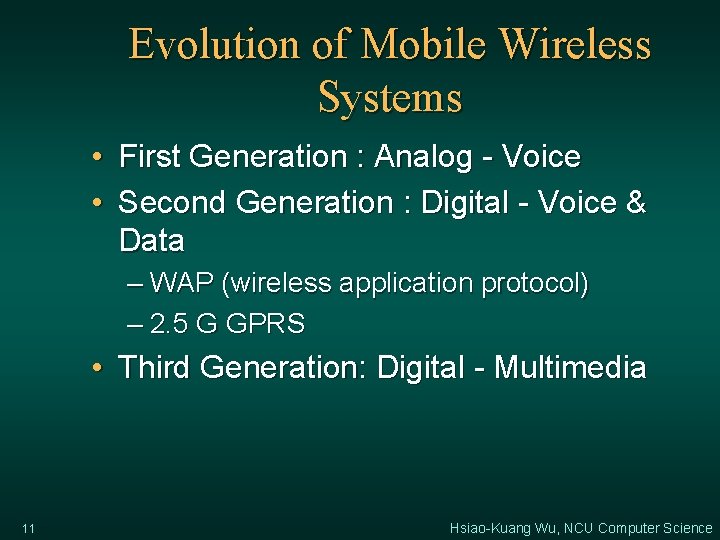
Evolution of Mobile Wireless Systems • First Generation : Analog - Voice • Second Generation : Digital - Voice & Data – WAP (wireless application protocol) – 2. 5 G GPRS • Third Generation: Digital - Multimedia 11 Hsiao-Kuang Wu, NCU Computer Science
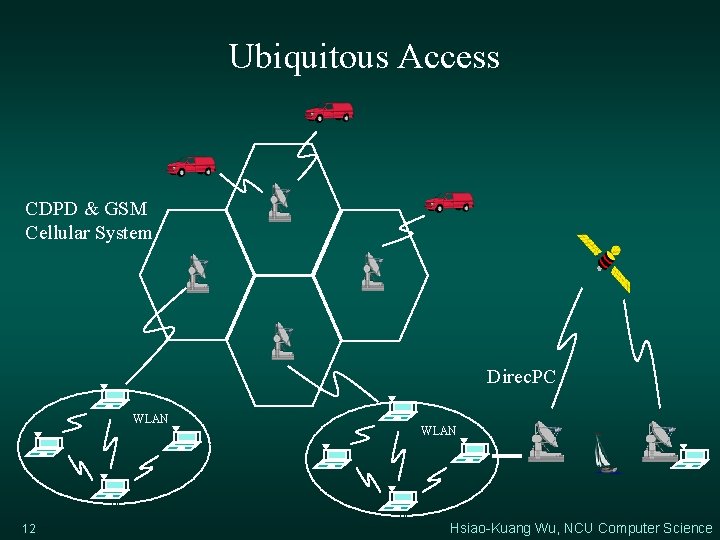
Ubiquitous Access CDPD & GSM Cellular System Direc. PC WLAN 12 WLAN Hsiao-Kuang Wu, NCU Computer Science
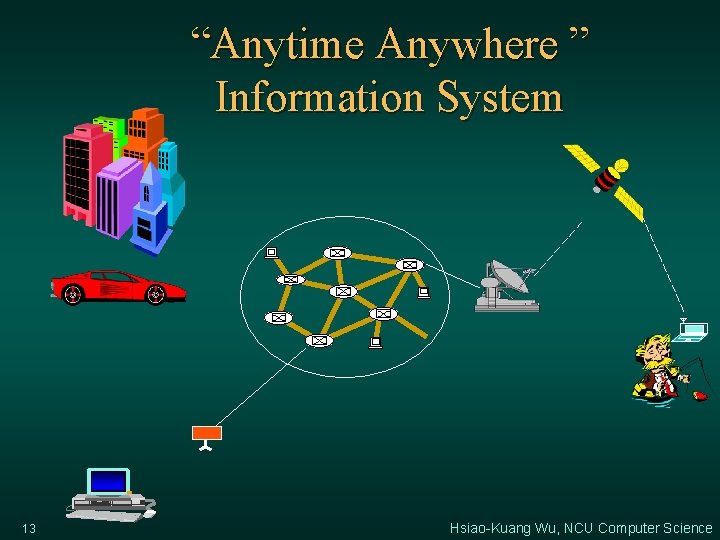
“Anytime Anywhere ” Information System 13 Hsiao-Kuang Wu, NCU Computer Science
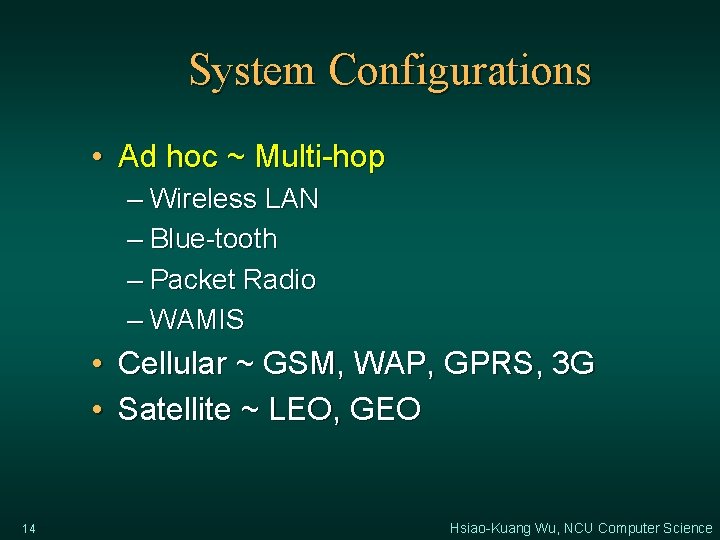
System Configurations • Ad hoc ~ Multi-hop – Wireless LAN – Blue-tooth – Packet Radio – WAMIS • Cellular ~ GSM, WAP, GPRS, 3 G • Satellite ~ LEO, GEO 14 Hsiao-Kuang Wu, NCU Computer Science
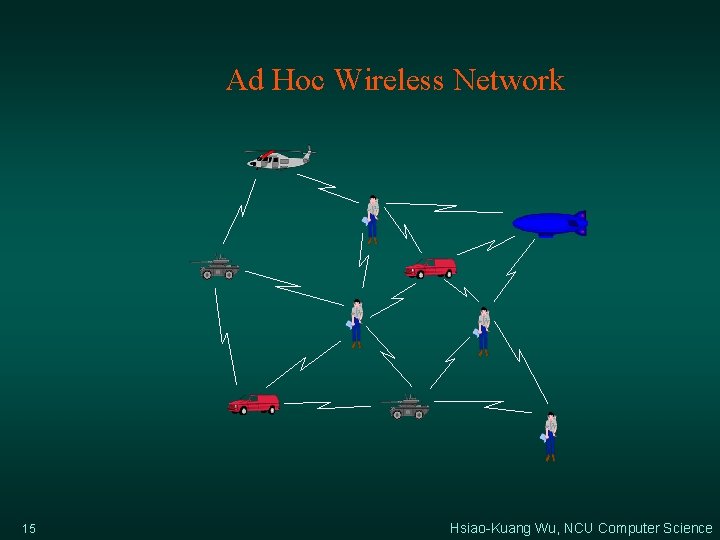
Ad Hoc Wireless Network 15 Hsiao-Kuang Wu, NCU Computer Science
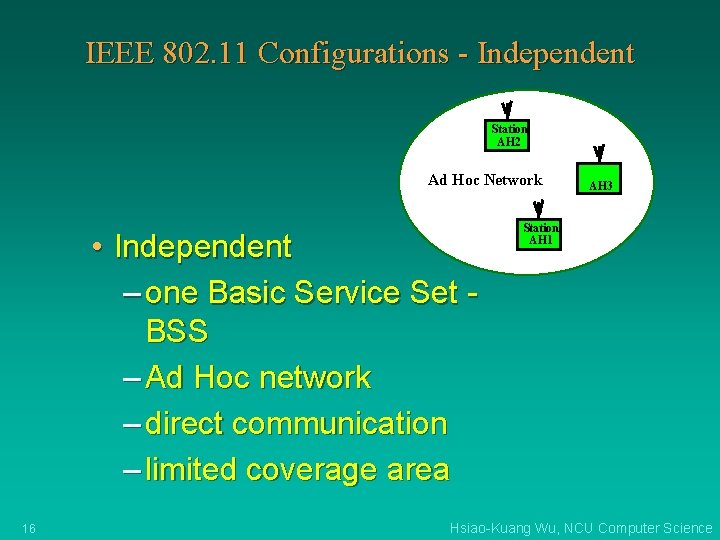
IEEE 802. 11 Configurations - Independent Station AH 2 Ad Hoc Network • Independent – one Basic Service Set BSS – Ad Hoc network – direct communication – limited coverage area 16 AH 3 Station AH 1 Hsiao-Kuang Wu, NCU Computer Science
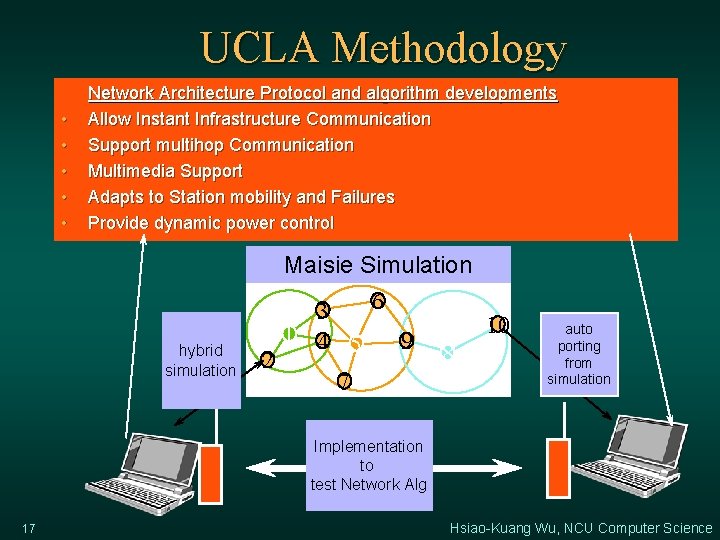
UCLA Methodology • • • Network Architecture Protocol and algorithm developments Allow Instant Infrastructure Communication Support multihop Communication Multimedia Support Adapts to Station mobility and Failures Provide dynamic power control Maisie Simulation hybrid simulation 2 6 3 1 4 5 9 7 10 8 auto porting from simulation Implementation to test Network Alg 17 Hsiao-Kuang Wu, NCU Computer Science
System Configurations • Ad hoc ~ Multi-hop – Wireless LAN – Blue-tooth – Packet Radio – WAMIS • Cellular ~ GSM, WAP, GPRS, 3 G • Satellite ~ LEO, GEO 18 Hsiao-Kuang Wu, NCU Computer Science
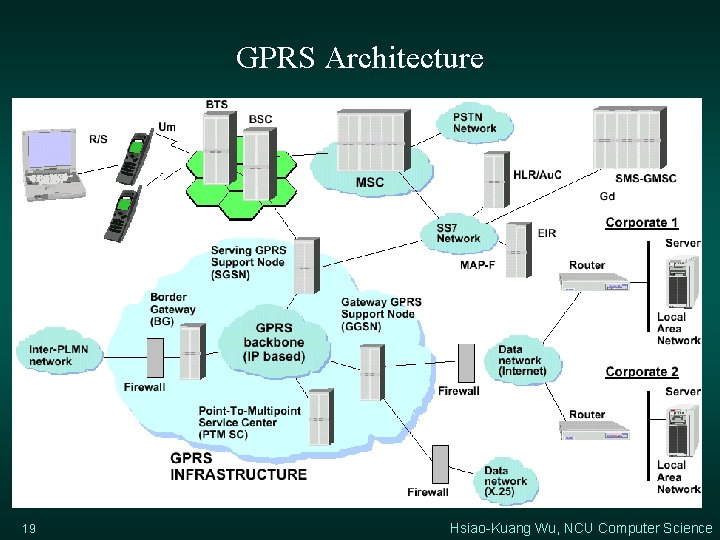
GPRS Architecture 19 Hsiao-Kuang Wu, NCU Computer Science
System Configurations • Ad hoc ~ Multi-hop – Wireless LAN – Blue-tooth – Packet Radio – WAMIS • Cellular ~ GSM, WAP, GPRS, 3 G • Satellite ~ LEO, GEO 20 Hsiao-Kuang Wu, NCU Computer Science
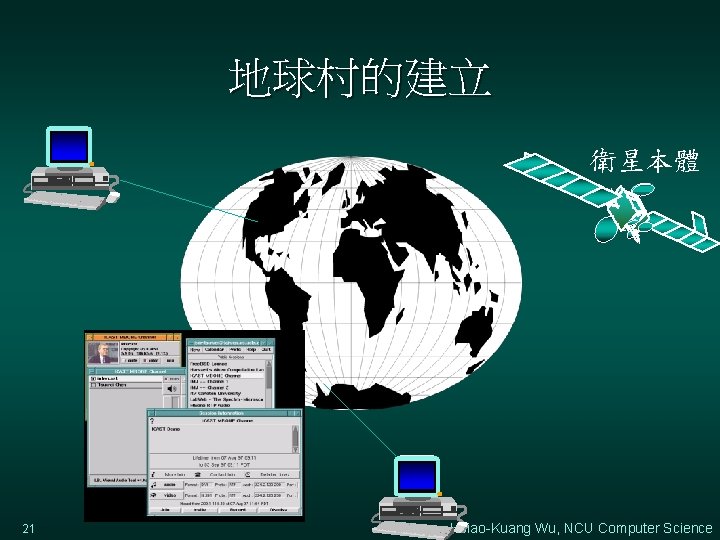
地球村的建立 衛星本體 21 Hsiao-Kuang Wu, NCU Computer Science
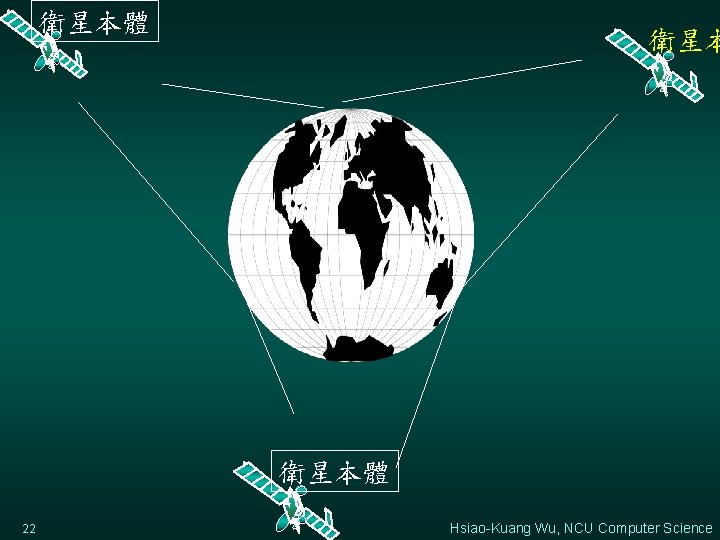
衛星本體 22 Hsiao-Kuang Wu, NCU Computer Science
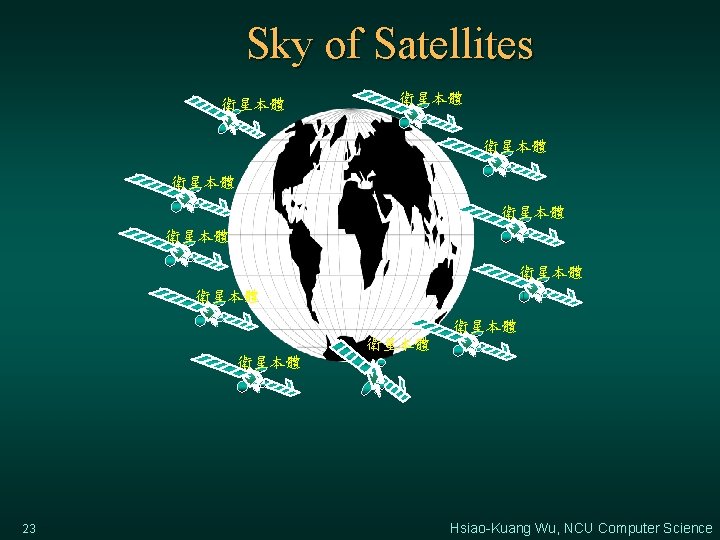
Sky of Satellites 衛星本體 衛星本體 衛星本體 23 Hsiao-Kuang Wu, NCU Computer Science
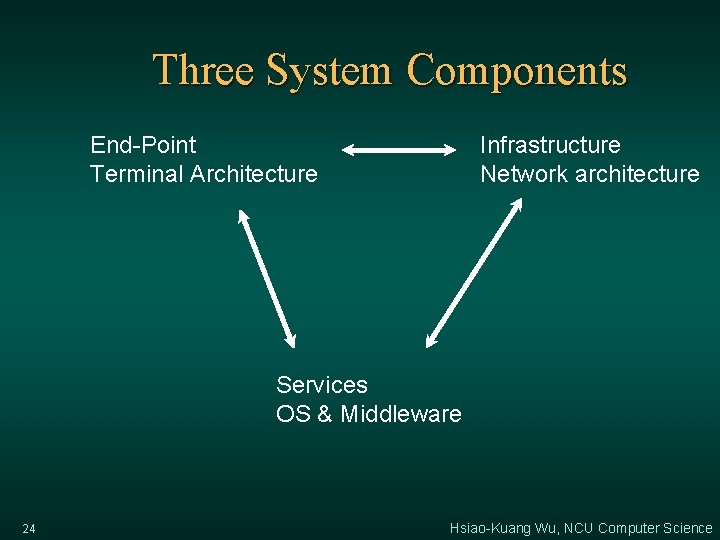
Three System Components End-Point Terminal Architecture Infrastructure Network architecture Services OS & Middleware 24 Hsiao-Kuang Wu, NCU Computer Science
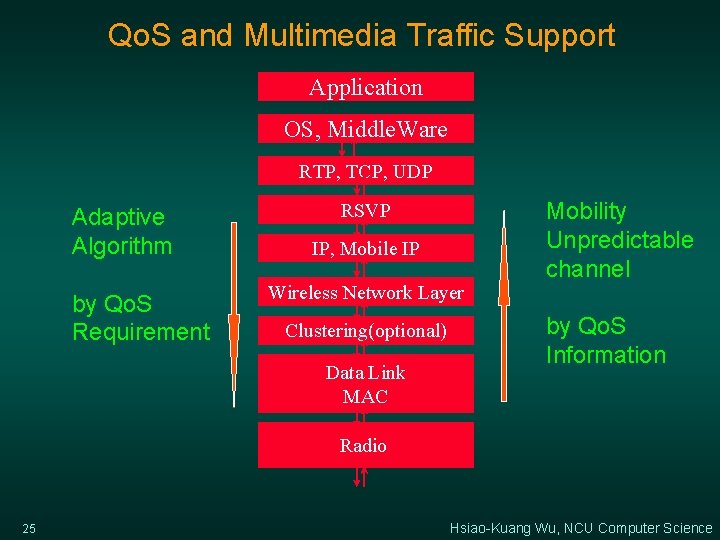
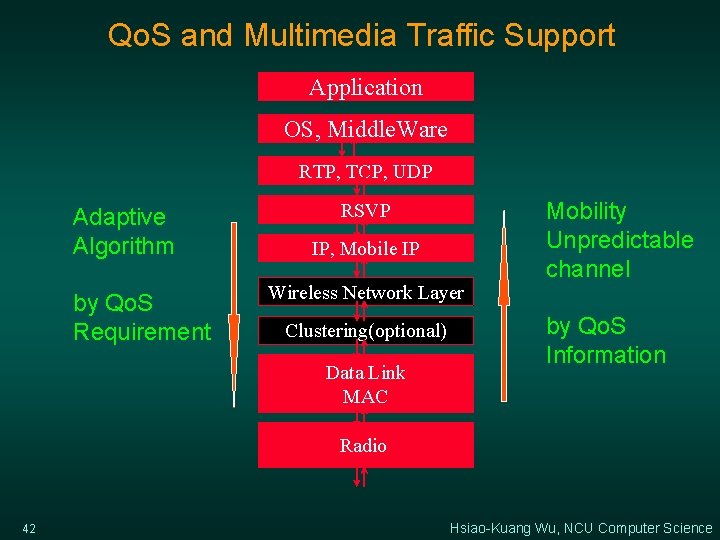
Qo. S and Multimedia Traffic Support Application OS, Middle. Ware RTP, TCP, UDP Adaptive Algorithm by Qo. S Requirement RSVP IP, Mobile IP Wireless Network Layer Clustering(optional) Data Link MAC Mobility Unpredictable channel by Qo. S Information Radio 25 Hsiao-Kuang Wu, NCU Computer Science
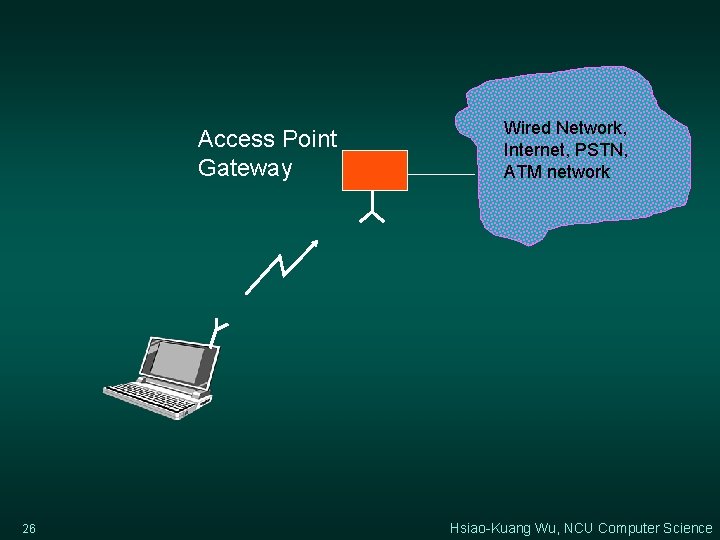
Access Point Gateway 26 Wired Network, Internet, PSTN, ATM network Hsiao-Kuang Wu, NCU Computer Science
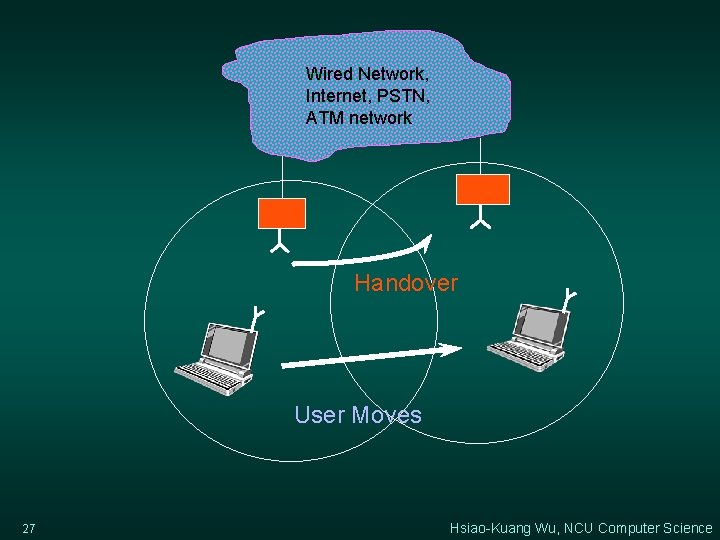
Wired Network, Internet, PSTN, ATM network Handover User Moves 27 Hsiao-Kuang Wu, NCU Computer Science
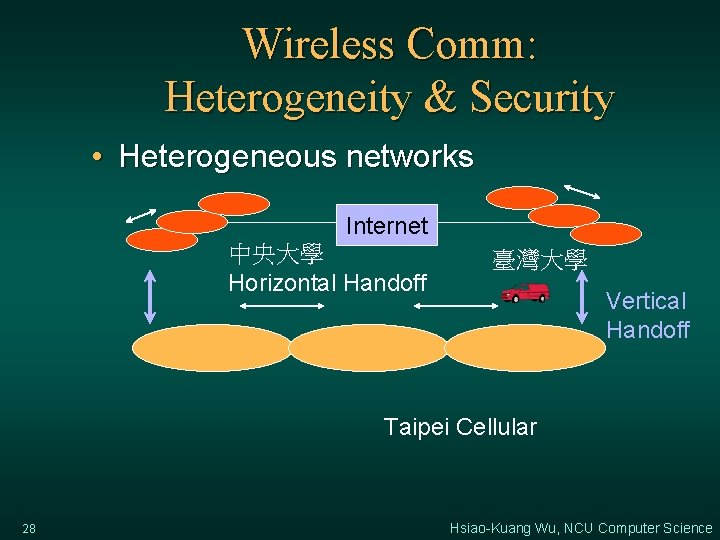
Wireless Comm: Heterogeneity & Security • Heterogeneous networks Internet 中央大學 Horizontal Handoff 臺灣大學 Vertical Handoff Taipei Cellular 28 Hsiao-Kuang Wu, NCU Computer Science
Limited & Variable Bandwidth • • • 29 Low bandwidth compared to wired Highly variable bandwidth High latency Hsiao-Kuang Wu, NCU Computer Science
Wireless Communication • More difficult than wired communication • Dis-connections 30 Hsiao-Kuang Wu, NCU Computer Science
Mobility • • • 31 Address migration Location-dependent information Migration locality Hsiao-Kuang Wu, NCU Computer Science
Portability • • 32 Light weight power Risks to data Small user interface Small storage capacity Hsiao-Kuang Wu, NCU Computer Science
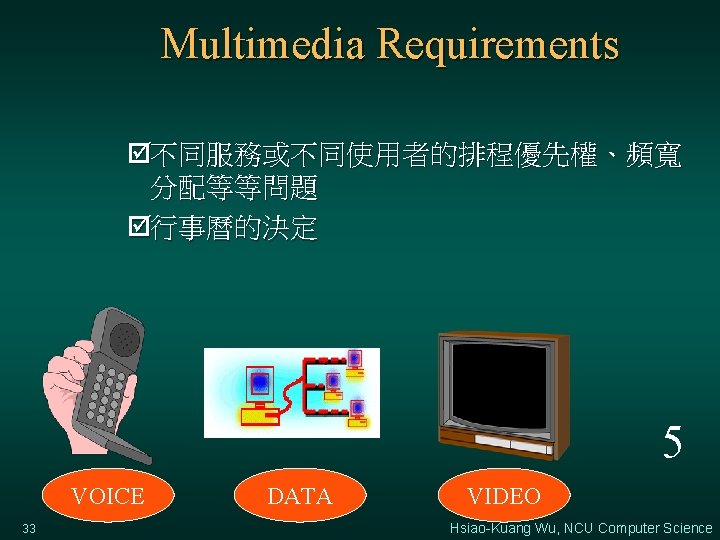
Multimedia Requirements þ不同服務或不同使用者的排程優先權、頻寬 分配等等問題 þ行事曆的決定 5 VOICE 33 DATA VIDEO Hsiao-Kuang Wu, NCU Computer Science
Challenges in Mobile Multimedia Infor-System • • • Portable end-points End-to-end Quality of Services Seamless operation under context (location) changes • Context-aware operation • Secure operation 34 Hsiao-Kuang Wu, NCU Computer Science
Present Wireless Networks • Low data rates (hundreds of kbps-2 Mbps) • Voice or data • LAN or WAN • Same applications used on wired networks 35 Hsiao-Kuang Wu, NCU Computer Science
Future Wireless Networks • High data rates ( ~ 25 Mbps - serveral Gps) • Multimedia traffic , possibly wireless ATM • Seamless mobility within a LAN, and smooth LAN/WAN transition • Mobility-enhanced applications and services 36 Hsiao-Kuang Wu, NCU Computer Science
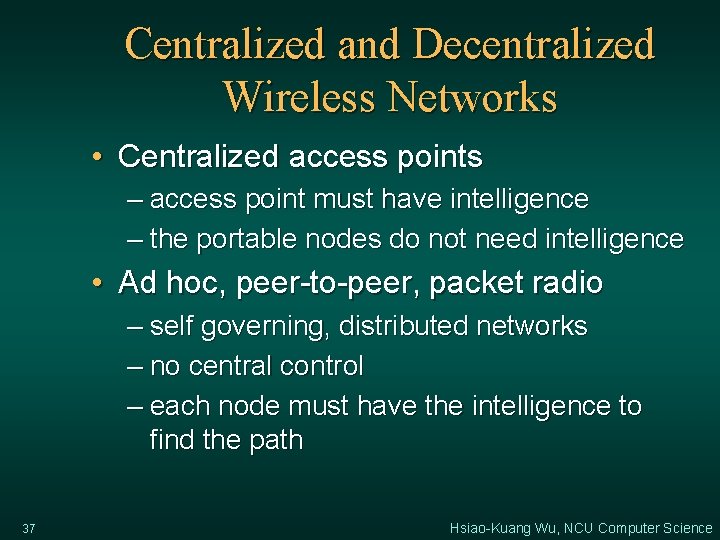
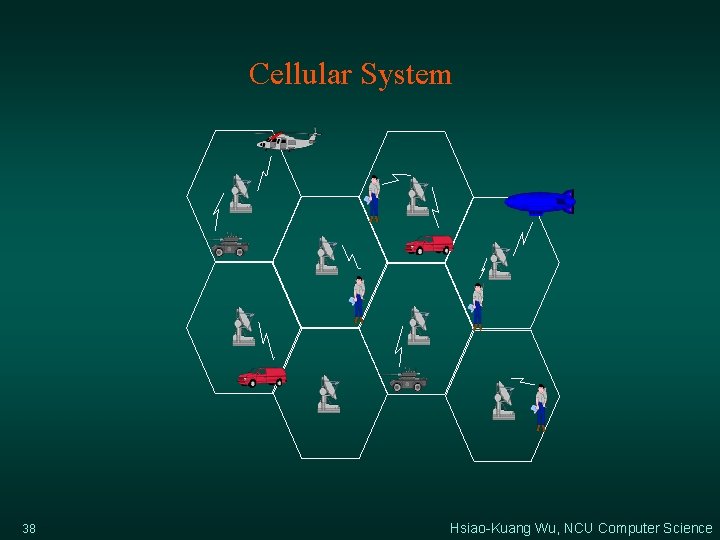
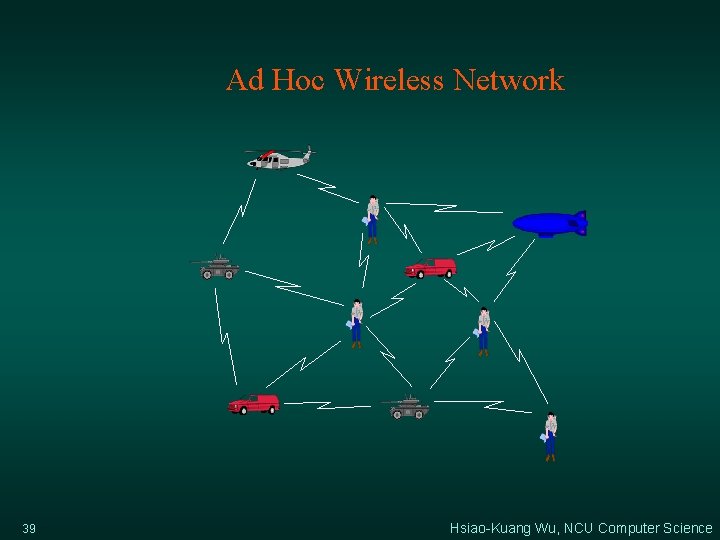
Centralized and Decentralized Wireless Networks • Centralized access points – access point must have intelligence – the portable nodes do not need intelligence • Ad hoc, peer-to-peer, packet radio – self governing, distributed networks – no central control – each node must have the intelligence to find the path 37 Hsiao-Kuang Wu, NCU Computer Science
Cellular System 38 Hsiao-Kuang Wu, NCU Computer Science
Ad Hoc Wireless Network 39 Hsiao-Kuang Wu, NCU Computer Science
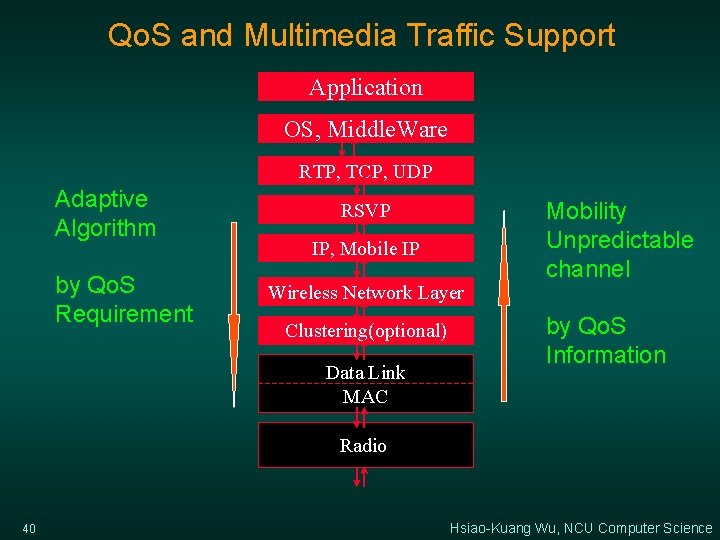
Qo. S and Multimedia Traffic Support Application OS, Middle. Ware RTP, TCP, UDP Adaptive Algorithm by Qo. S Requirement RSVP IP, Mobile IP Wireless Network Layer Clustering(optional) Data Link MAC Mobility Unpredictable channel by Qo. S Information Radio 40 Hsiao-Kuang Wu, NCU Computer Science
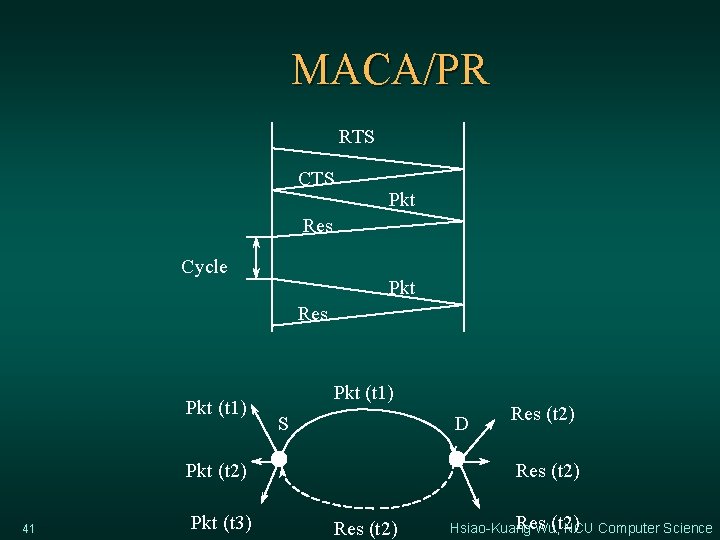
MACA/PR RTS CTS Pkt Res Cycle Pkt Res Pkt (t 1) S D Pkt (t 2) 41 Pkt (t 3) Res (t 2) Hsiao-Kuang Wu, NCU Computer Science
Qo. S and Multimedia Traffic Support Application OS, Middle. Ware RTP, TCP, UDP Adaptive Algorithm by Qo. S Requirement RSVP IP, Mobile IP Wireless Network Layer Clustering(optional) Data Link MAC Mobility Unpredictable channel by Qo. S Information Radio 42 Hsiao-Kuang Wu, NCU Computer Science
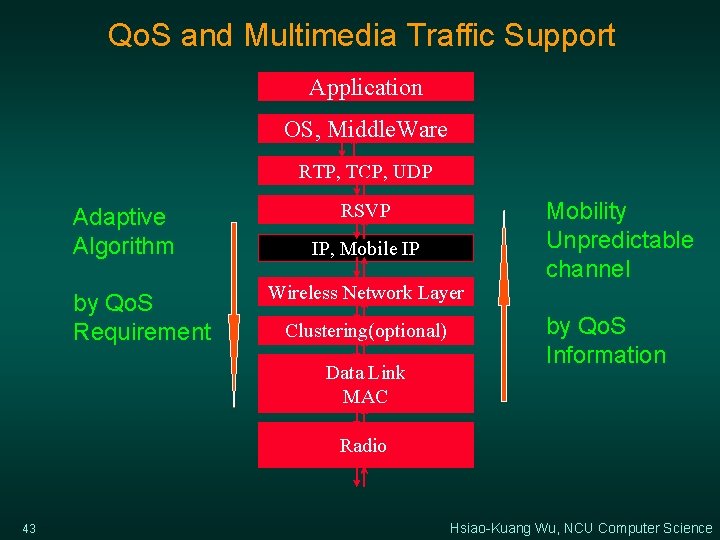
Qo. S and Multimedia Traffic Support Application OS, Middle. Ware RTP, TCP, UDP Adaptive Algorithm by Qo. S Requirement RSVP IP, Mobile IP Wireless Network Layer Clustering(optional) Data Link MAC Mobility Unpredictable channel by Qo. S Information Radio 43 Hsiao-Kuang Wu, NCU Computer Science
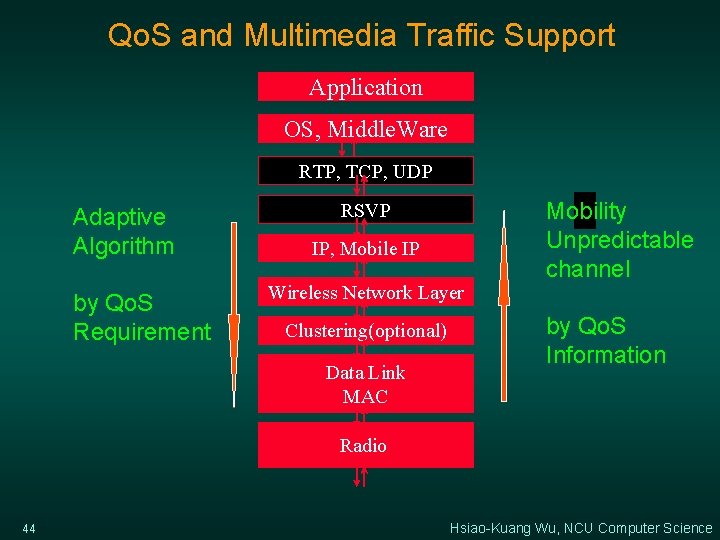
Qo. S and Multimedia Traffic Support Application OS, Middle. Ware RTP, TCP, UDP Adaptive Algorithm by Qo. S Requirement RSVP IP, Mobile IP Wireless Network Layer Clustering(optional) Data Link MAC Mobility Unpredictable channel by Qo. S Information Radio 44 Hsiao-Kuang Wu, NCU Computer Science
PCS Application (Personal Communication System) 45 Hsiao-Kuang Wu, NCU Computer Science
What is P • Personal? – Personal Information Machine (PIM) – Personal Address – Personal Profile – All Locations – Mobile Subscribers – Multiple Information Formats 46 Hsiao-Kuang Wu, NCU Computer Science
What is S? • System? – Systems? – Spectrum? – Sets? – Subscribers? – Services? – Standards? 47 Hsiao-Kuang Wu, NCU Computer Science
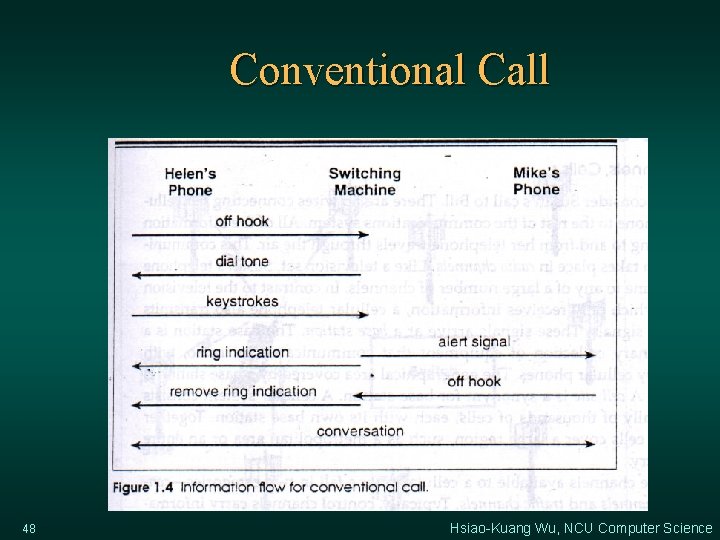
Conventional Call 48 Hsiao-Kuang Wu, NCU Computer Science
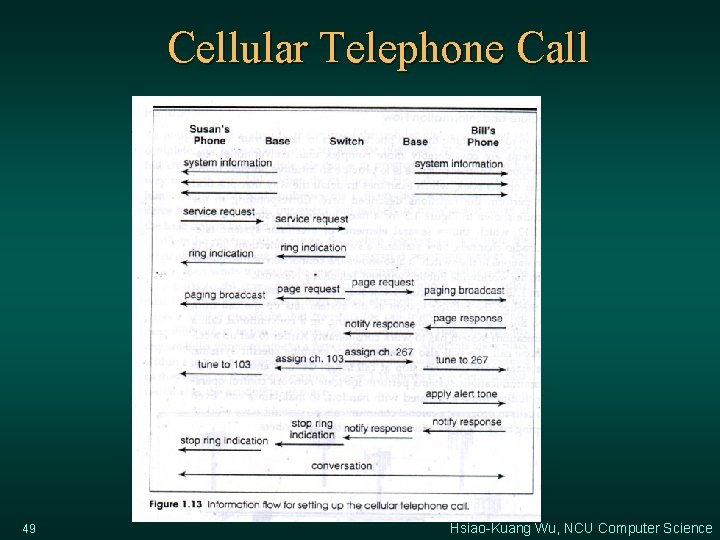
Cellular Telephone Call 49 Hsiao-Kuang Wu, NCU Computer Science
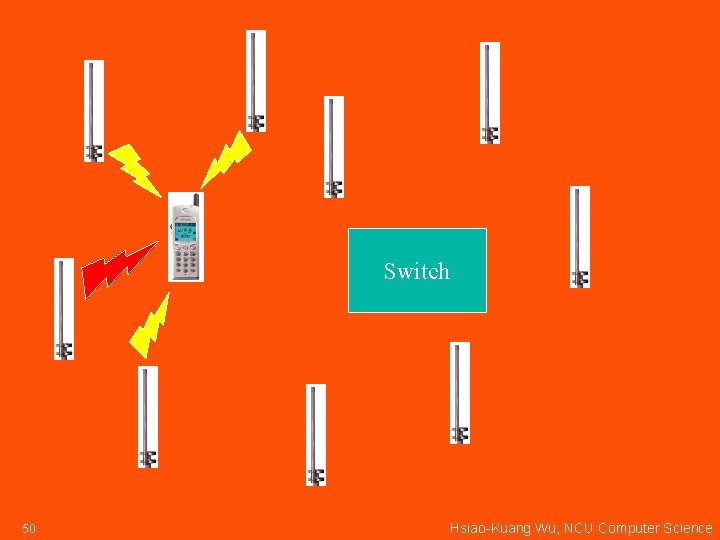
Switch 50 Hsiao-Kuang Wu, NCU Computer Science
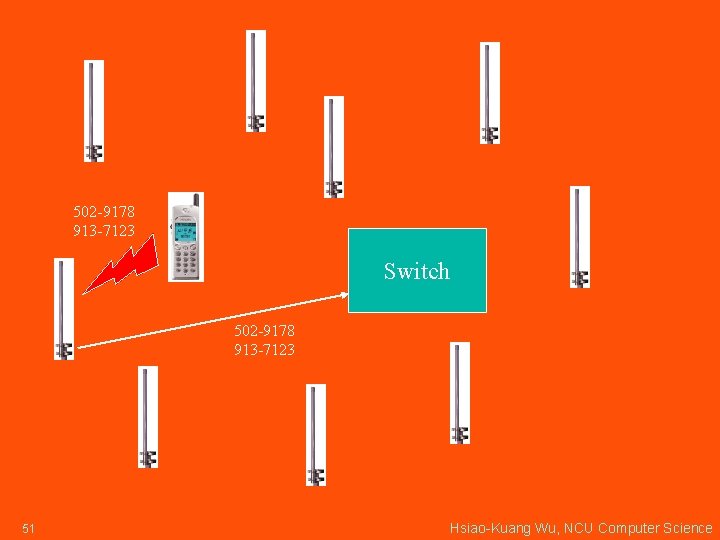
502 -9178 913 -7123 Switch 502 -9178 913 -7123 51 Hsiao-Kuang Wu, NCU Computer Science
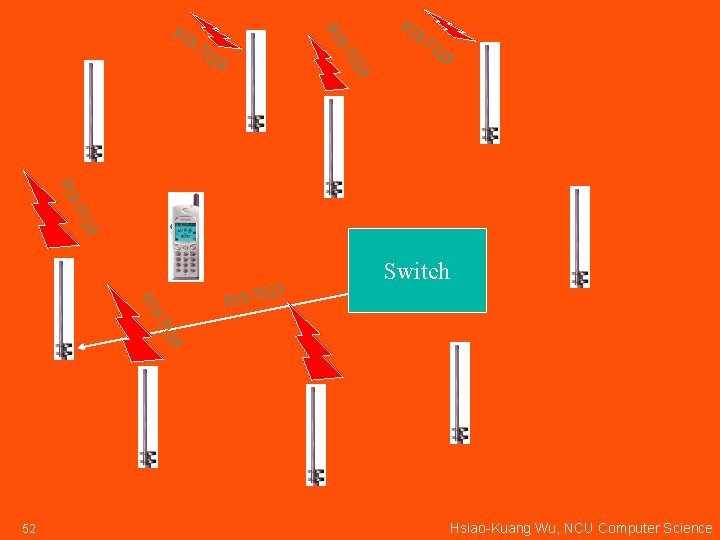
3 91 91 3 -7 3 - 71 23 23 -71 12 3 91 3 712 913 3 12 3 -7 91 23 913 -71 Switch 52 Hsiao-Kuang Wu, NCU Computer Science