
Wireless BOB BRENNAN INTEGRATED MANUFACTURING SYSTEMS INC Agenda
Wireless BOB BRENNAN INTEGRATED MANUFACTURING SYSTEMS, INC.
Agenda Wireless History Physics Take Away Q&A
Access Points Wireless device that provides a bridge between the wired and wireless environments Single Threaded - Half Duplex. Only one device talking at a time Only sending or receiving data at a time Sort of like an old school HUB
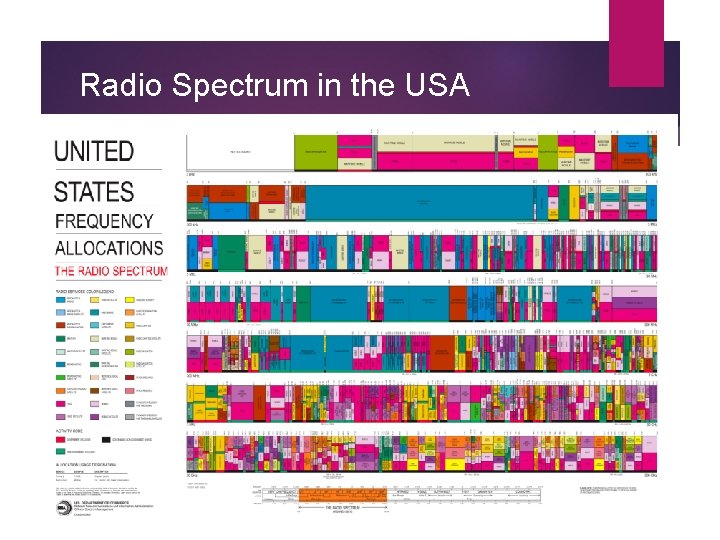
Radio Spectrum in the USA
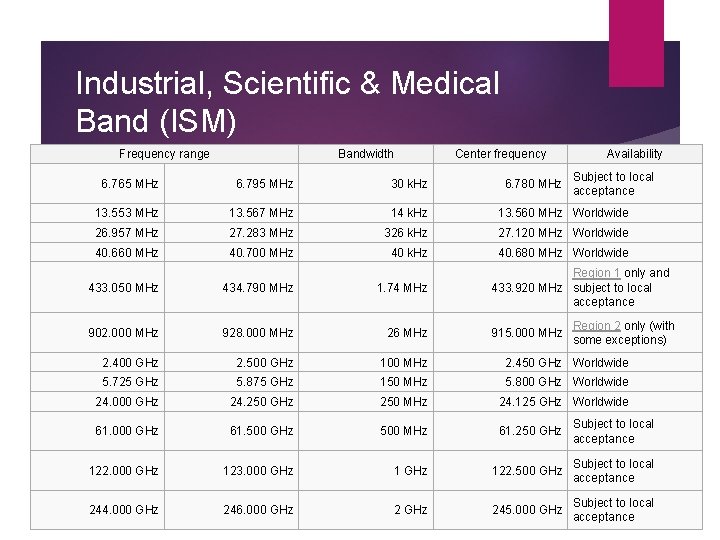
Industrial, Scientific & Medical Band (ISM) Frequency range Bandwidth Center frequency 6. 780 MHz Availability Subject to local acceptance 6. 765 MHz 6. 795 MHz 30 k. Hz 13. 553 MHz 13. 567 MHz 14 k. Hz 13. 560 MHz Worldwide 26. 957 MHz 27. 283 MHz 326 k. Hz 27. 120 MHz Worldwide 40. 660 MHz 40. 700 MHz 40 k. Hz 40. 680 MHz Worldwide 433. 050 MHz 434. 790 MHz 1. 74 MHz 902. 000 MHz 928. 000 MHz 26 MHz 2. 400 GHz 2. 500 GHz 100 MHz 2. 450 GHz Worldwide 5. 725 GHz 5. 875 GHz 150 MHz 5. 800 GHz Worldwide 24. 000 GHz 24. 250 GHz 250 MHz 24. 125 GHz Worldwide 61. 000 GHz 61. 500 GHz 500 MHz 61. 250 GHz Subject to local acceptance 122. 000 GHz 123. 000 GHz 122. 500 GHz Subject to local acceptance 244. 000 GHz 246. 000 GHz 245. 000 GHz Subject to local acceptance Region 1 only and 433. 920 MHz subject to local acceptance 915. 000 MHz Region 2 only (with some exceptions)
Agenda Wireless History Physics Take Away Q&A
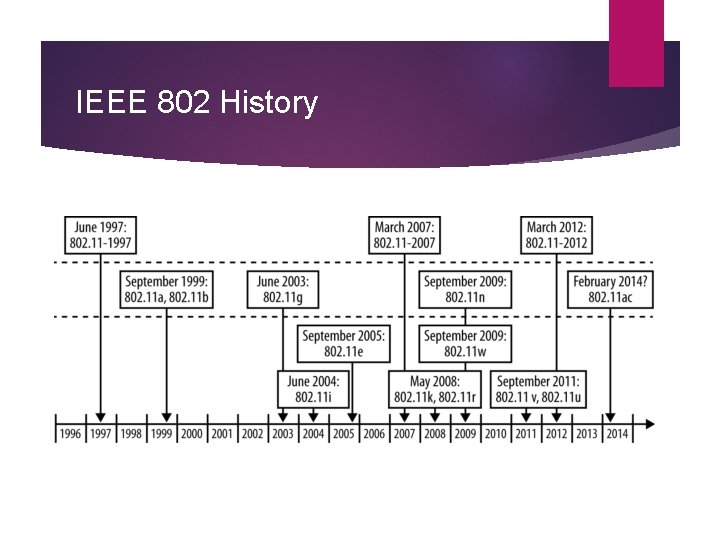
IEEE 802 History
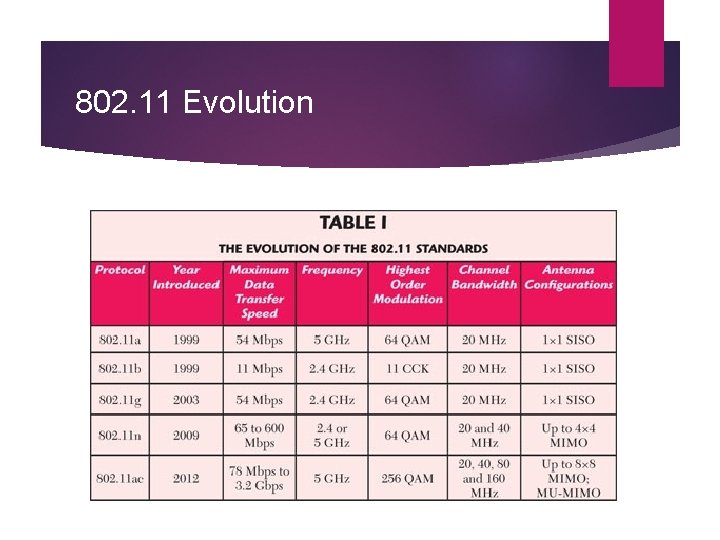
802. 11 Evolution
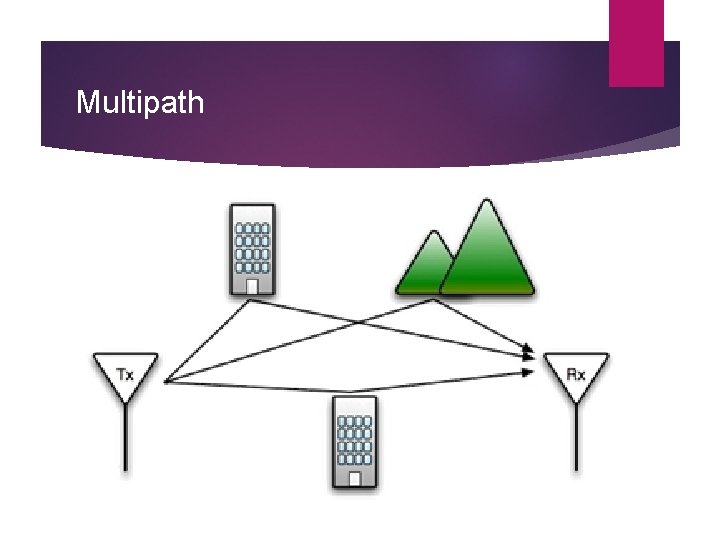
Multipath
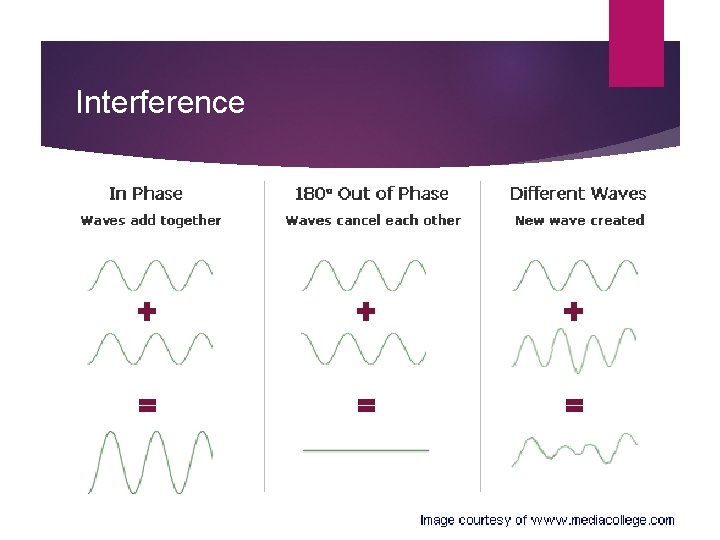
Interference
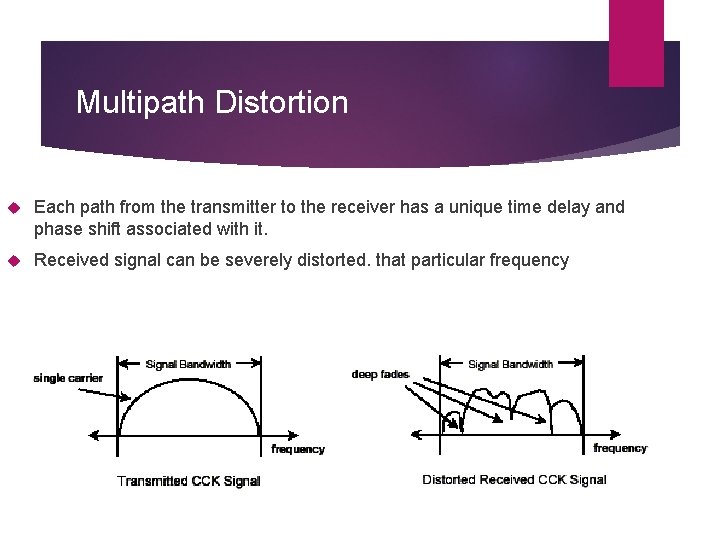
Multipath Distortion Each path from the transmitter to the receiver has a unique time delay and phase shift associated with it. Received signal can be severely distorted. that particular frequency
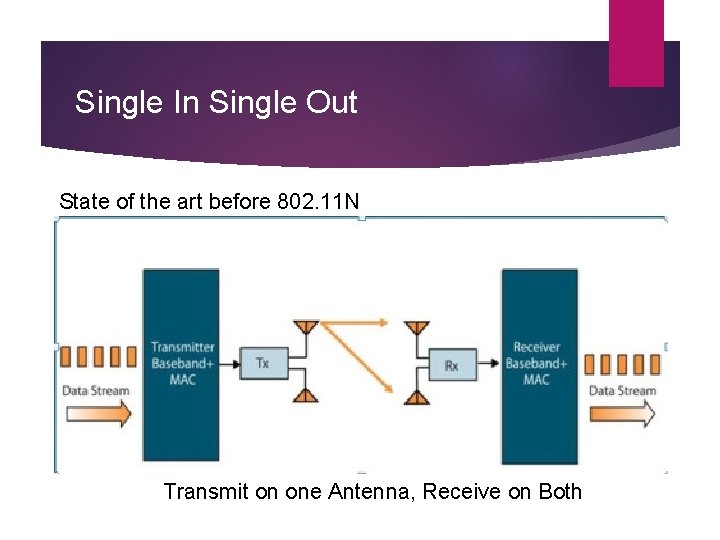
Single In Single Out State of the art before 802. 11 N Transmit on one Antenna, Receive on Both
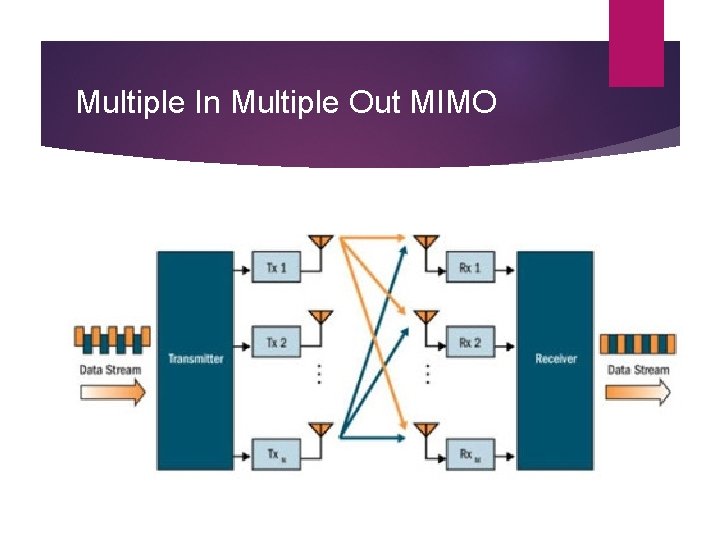
Multiple In Multiple Out MIMO
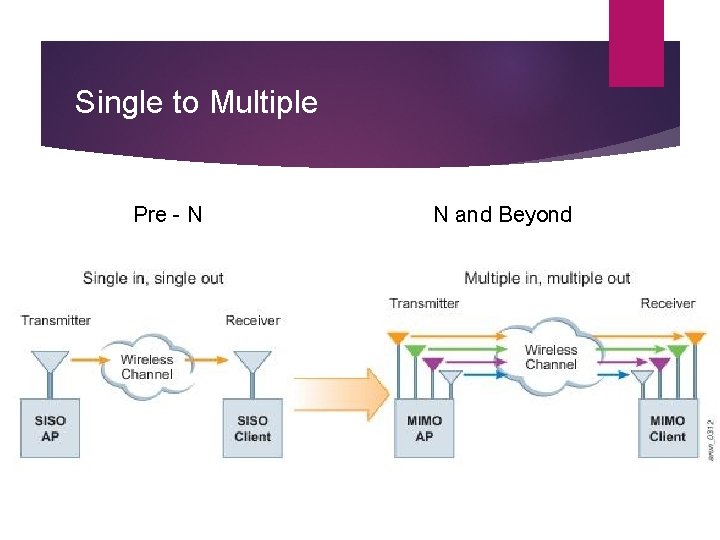
Single to Multiple Pre - N N and Beyond
802. 11 B 802. 11 b has a maximum raw data rate of 11 Mbit/s and uses the same media access method defined in the original (prior) standard. Spread Spectrum & Frequency Hopping Successor The dramatic increase in throughput of 802. 11 b (compared to the original standard) along with simultaneous substantial price reductions led to the rapid acceptance of 802. 11 b as the definitive wireless LAN technology. 1 Radio using 2. 4 Ghz
802. 11 A Supports a maximum theoretical bandwidth of 54 Megabits, a noticeable advantage over 802. 11 b Speed on par with 802. 11 g performance. Limited deployments due to higher hardware equipment costs and limited radio availability Orthogonal frequency-division multiplexing (OFDM) is a method of encoding digital data on multiple carrier frequencies. 1 Radio using 5 GHz
802. 11 G Supports a maximum theoretical bandwidth of 54 Megabits, a noticeable advantage over 802. 11 b Speed on par with 802. 11 a performance. Limited deployments due to higher hardware equipment costs and limited radio availability ODFM 1 Radio using 2. 4 GHz
802. 11 N Multiple-input multiple-output antennas (MIMO). Up to 4 Radios and 8 Antenna Operates on both the 2. 4 GHz and 5 GHz bands. Support for 5 GHz bands is optional. It operates at a maximum net data rate from 54 Mbit/s to 600 Mbit/s. 20 MHz Channel Width at 2. 4 GHz 20 or 40 MHz Channel Width at 5 GHz ODFM Power Over Ethernet Issues
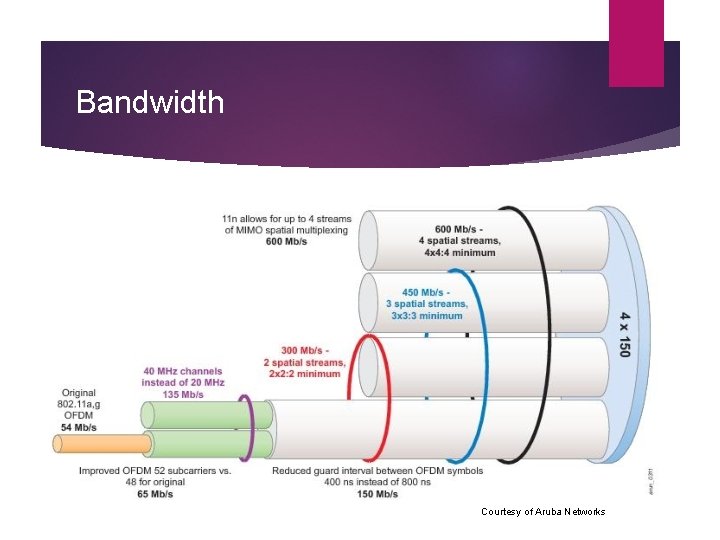
Bandwidth Courtesy of Aruba Networks
802. 11 ac Newest Standard MIMO Up to 8 Streams (Radios) with 2 x antennas Only 5 GHz Channel Widths 20, 40, 80, 160 MHz * Up to 866 Megabits per second Power over Ethernet issues Very Limited range for High Speed ~10 Meters Green Field Opportunities Only
802. 11 AD The “Next Big Thing” Uses 60 GHz but packaged in Tri-Band to maintain backward compatibility Wi. Gig is the marketing name Up to 7 gigabits per second in first draft Builds on MIMO techniques Very efficient use of power Wire-like latencies Lots of head room for improvement
Agenda Wireless History Physics Take Away Q&A
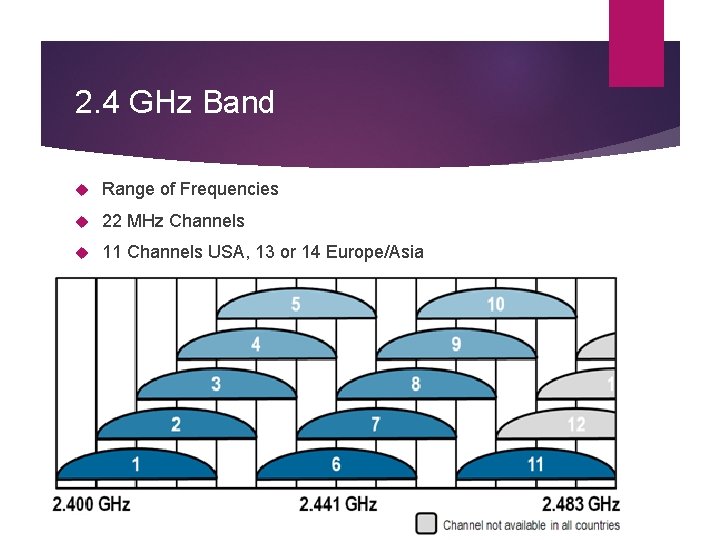
2. 4 GHz Band Range of Frequencies 22 MHz Channels 11 Channels USA, 13 or 14 Europe/Asia
2. 4 and We Are Not Alone Wi-Fi Wireless Bluetooth Zigbee/Industrial Device Connections Microwave Ovens Cordless Phones Baby Monitors Wireless Video Projectors (Data PA)
2. 4 GHz vs 5 GHz Energy being the same, 5 GHz has about half the reach About Twice as many Access Points Required for the same coverage. 2. 4 is crowded (~0. 125 m or 4. 9”wavelength ) 5 GHz more susceptible to attenuation (~. 06 m or 2. 36”)
Channel Conflict Let’s Just Take a Sniff
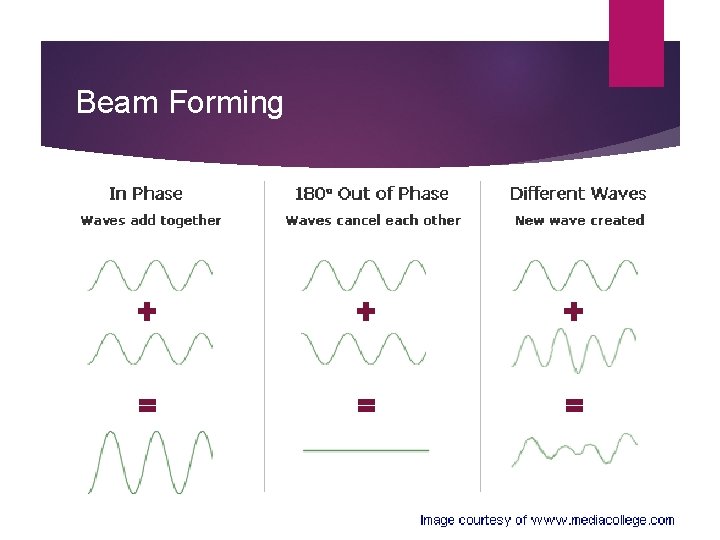
Beam Forming
Spatial Streams Each Radio has a pair of antenna Each Radio transmits a stream of data on a Channel Each Channel is broken down into Multiple subcarriers based on the channel width Same Data on Multiple Channels N AP talking to NON-N Client
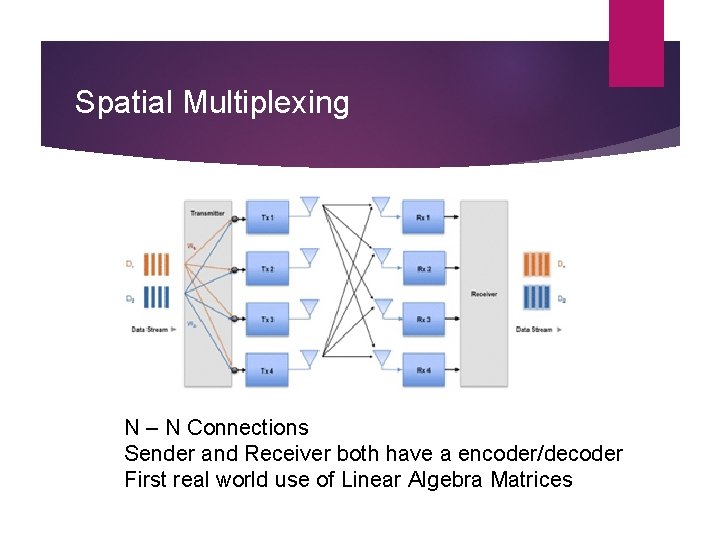
Spatial Multiplexing N – N Connections Sender and Receiver both have a encoder/decoder First real world use of Linear Algebra Matrices
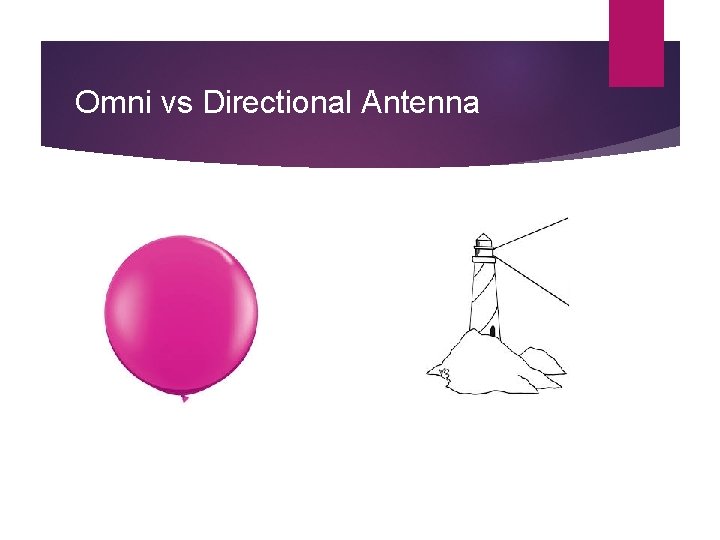
Omni vs Directional Antenna
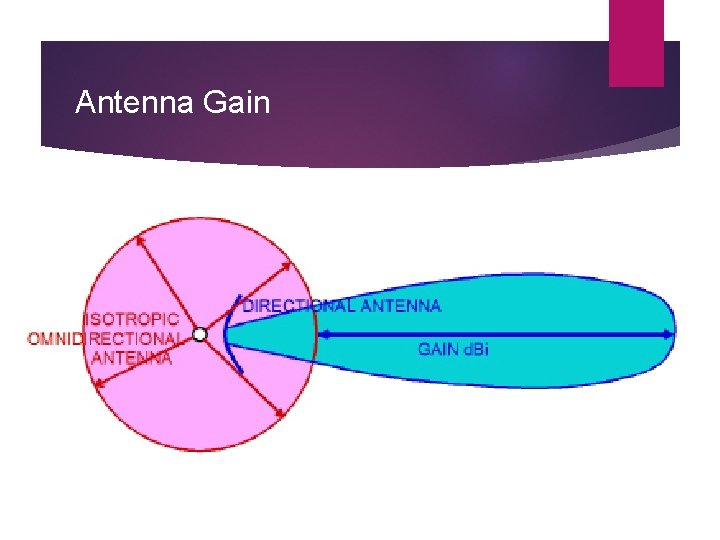
Antenna Gain
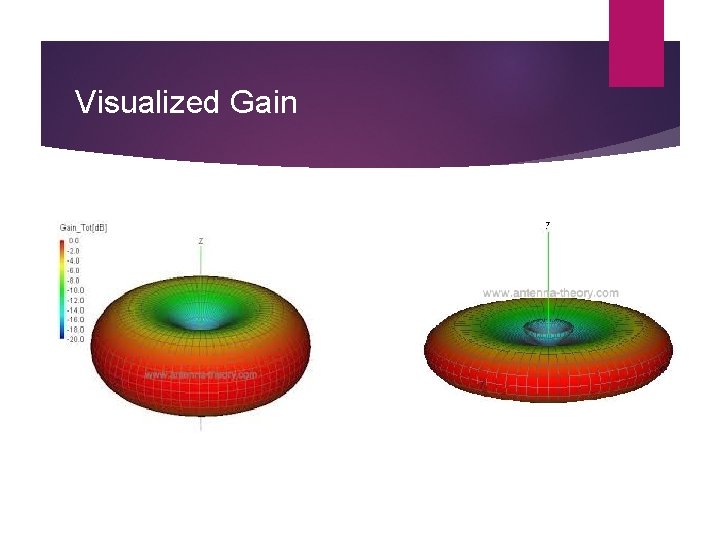
Visualized Gain
Agenda Wireless History Physics Take Away Q&A
Mobility as a Developer What can you count on for coverage and speed Remember when coding for memory and disk was important? Design Patterns for disconnected and ultra slow connections Cell Radio vs Gigabit (10/1000) Lowest Common Denominator Design
What you can control Great Design for Low/No Bandwidth applications Security Networking – if it is your facility. Network Transitions: WAN-LAN design Foreshadowing
What you can’t control Perhaps the infrastructure Interference is everywhere Perhaps Power Consumption Perhaps Data Consumption
Random Thoughts Apple no longer includes hard wired NIC Remember Diskettes? Remember CD and DVD Media Security Concerns Interference is beyond your control Bridging the LAN to the WAN
802. 11 u Back Haul Phone companies need to get data off of the cell network Hot. Spot 2. 0 – Single sign-on via MAC Address and registry Great idea with a lot of implementation issues

Bob Brennan Integrated Manufacturing Systems, Inc. (603) 424 -0109
- Slides: 39