
Wire Scanner Instrumentation Overview Existing Wire Scanner Algorithm
- Slides: 14
Wire Scanner Instrumentation Overview Existing Wire Scanner Algorithm A New Algorithm Who’s Involved Current Status October 26, 2005 Wire Scanner Control Doug Murray drm@slac. stanford. edu
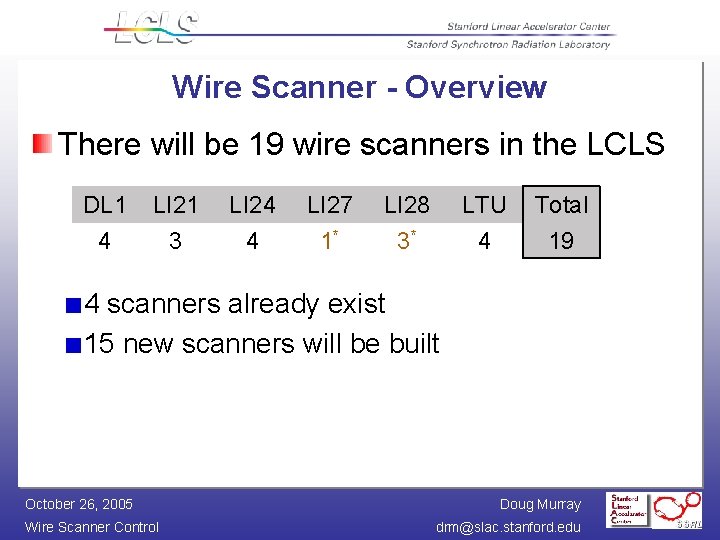
Wire Scanner - Overview There will be 19 wire scanners in the LCLS DL 1 4 LI 21 3 LI 24 4 LI 27 1* LI 28 3* LTU 4 Total 19 4 scanners already exist 15 new scanners will be built October 26, 2005 Wire Scanner Control Doug Murray drm@slac. stanford. edu
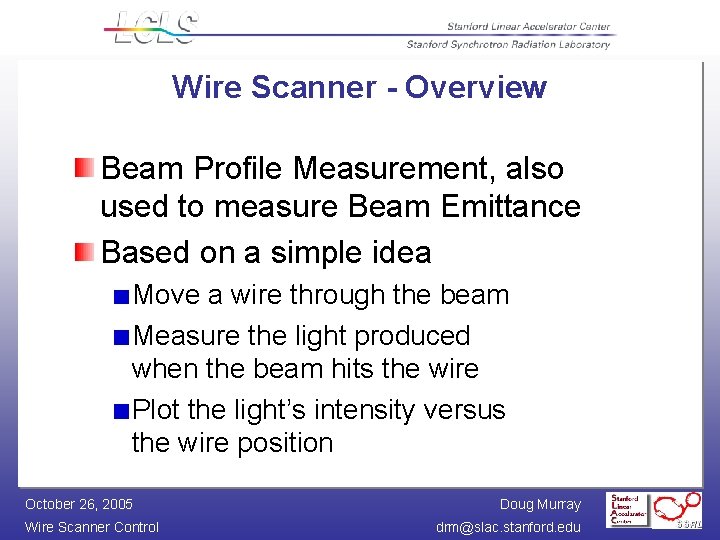
Wire Scanner - Overview Beam Profile Measurement, also used to measure Beam Emittance Based on a simple idea Move a wire through the beam Measure the light produced when the beam hits the wire Plot the light’s intensity versus the wire position October 26, 2005 Wire Scanner Control Doug Murray drm@slac. stanford. edu
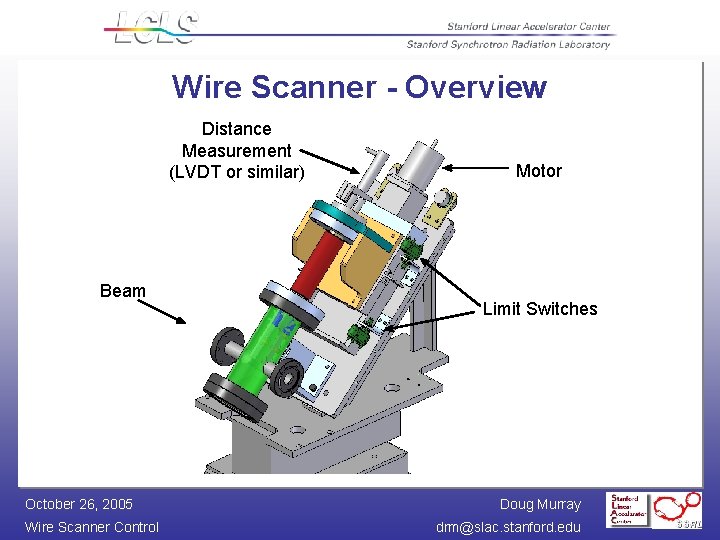
Wire Scanner - Overview Distance Measurement (LVDT or similar) Beam October 26, 2005 Wire Scanner Control Motor Limit Switches Doug Murray drm@slac. stanford. edu
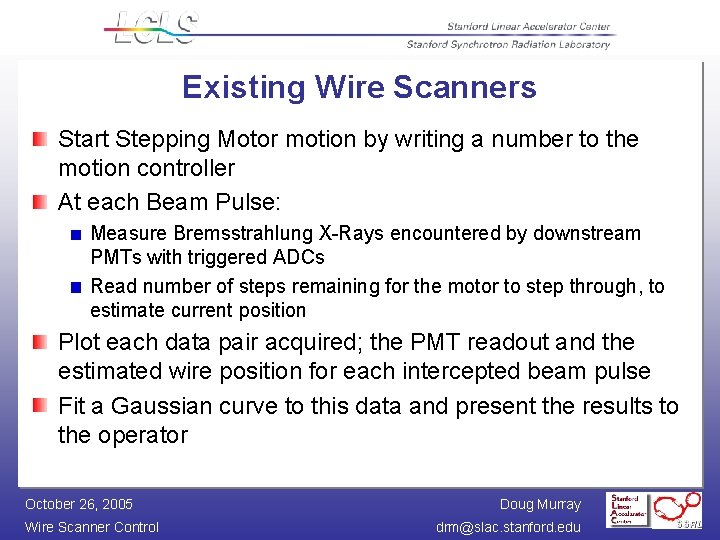
Existing Wire Scanners Start Stepping Motor motion by writing a number to the motion controller At each Beam Pulse: Measure Bremsstrahlung X-Rays encountered by downstream PMTs with triggered ADCs Read number of steps remaining for the motor to step through, to estimate current position Plot each data pair acquired; the PMT readout and the estimated wire position for each intercepted beam pulse Fit a Gaussian curve to this data and present the results to the operator October 26, 2005 Wire Scanner Control Doug Murray drm@slac. stanford. edu
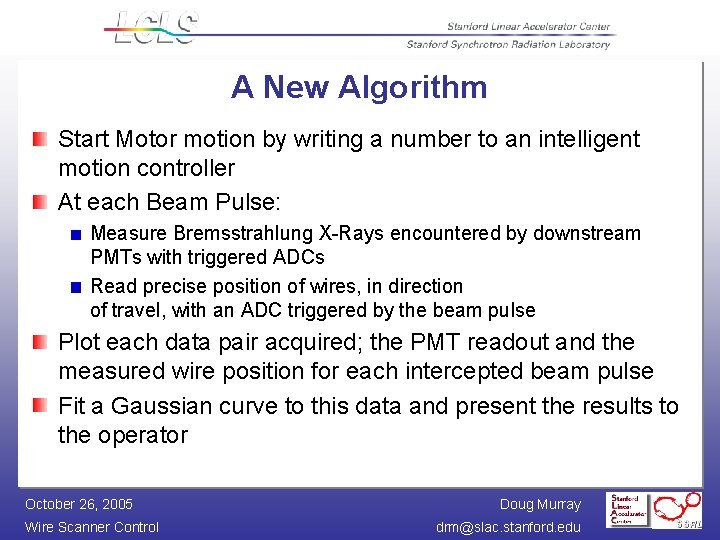
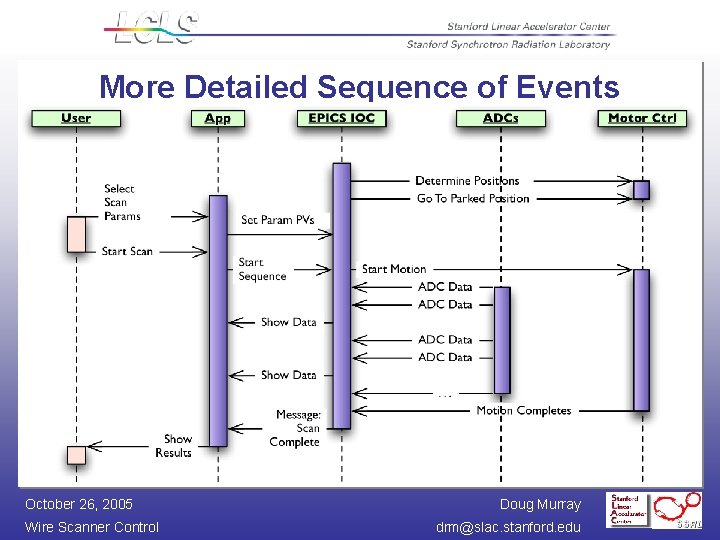
A New Algorithm Start Motor motion by writing a number to an intelligent motion controller At each Beam Pulse: Measure Bremsstrahlung X-Rays encountered by downstream PMTs with triggered ADCs Read precise position of wires, in direction of travel, with an ADC triggered by the beam pulse Plot each data pair acquired; the PMT readout and the measured wire position for each intercepted beam pulse Fit a Gaussian curve to this data and present the results to the operator October 26, 2005 Wire Scanner Control Doug Murray drm@slac. stanford. edu
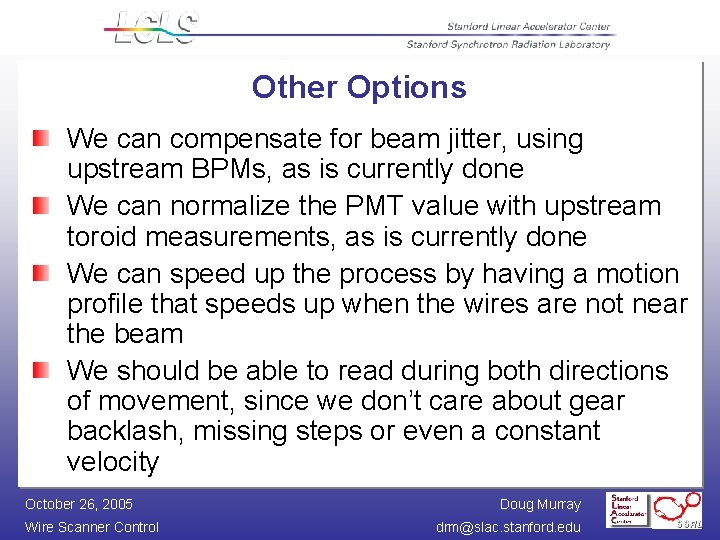
Other Options We can compensate for beam jitter, using upstream BPMs, as is currently done We can normalize the PMT value with upstream toroid measurements, as is currently done We can speed up the process by having a motion profile that speeds up when the wires are not near the beam We should be able to read during both directions of movement, since we don’t care about gear backlash, missing steps or even a constant velocity October 26, 2005 Wire Scanner Control Doug Murray drm@slac. stanford. edu
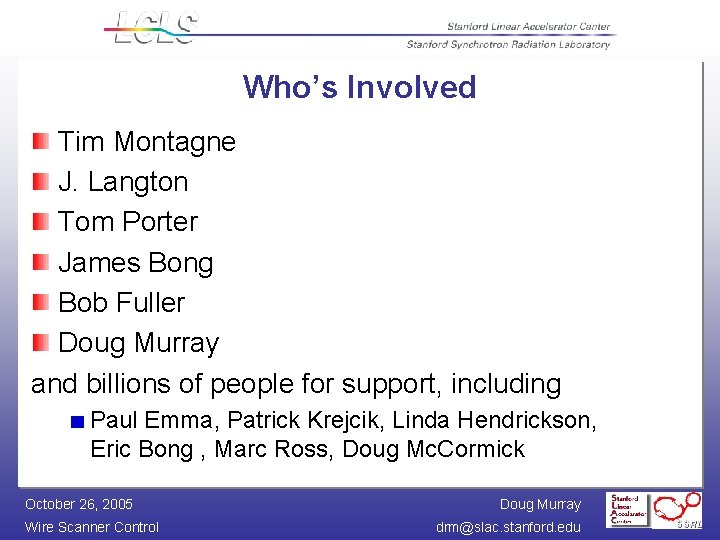
Who’s Involved Tim Montagne J. Langton Tom Porter James Bong Bob Fuller Doug Murray and billions of people for support, including Paul Emma, Patrick Krejcik, Linda Hendrickson, Eric Bong , Marc Ross, Doug Mc. Cormick October 26, 2005 Wire Scanner Control Doug Murray drm@slac. stanford. edu
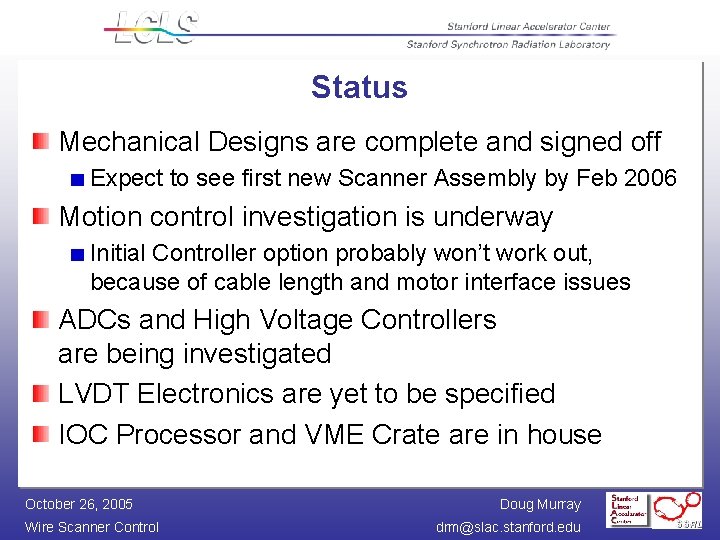
Status Mechanical Designs are complete and signed off Expect to see first new Scanner Assembly by Feb 2006 Motion control investigation is underway Initial Controller option probably won’t work out, because of cable length and motor interface issues ADCs and High Voltage Controllers are being investigated LVDT Electronics are yet to be specified IOC Processor and VME Crate are in house October 26, 2005 Wire Scanner Control Doug Murray drm@slac. stanford. edu
Other Fun Stuff that we didn’t have time to discuss… October 26, 2005 Wire Scanner Control Doug Murray drm@slac. stanford. edu
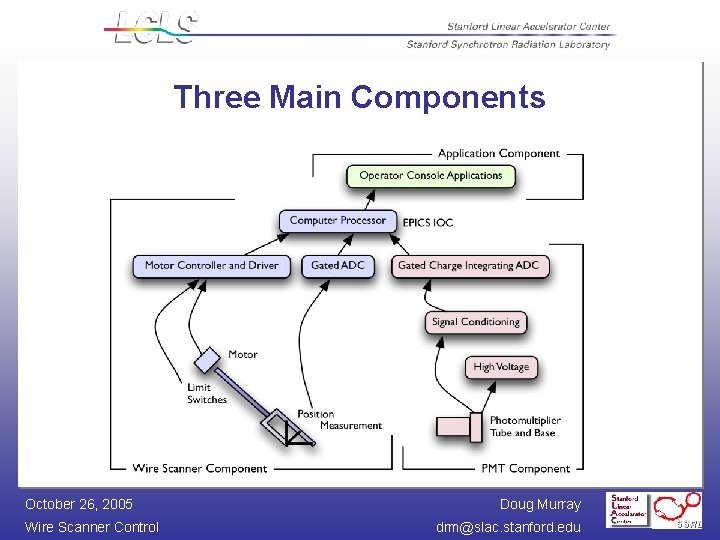
Three Main Components October 26, 2005 Wire Scanner Control Doug Murray drm@slac. stanford. edu
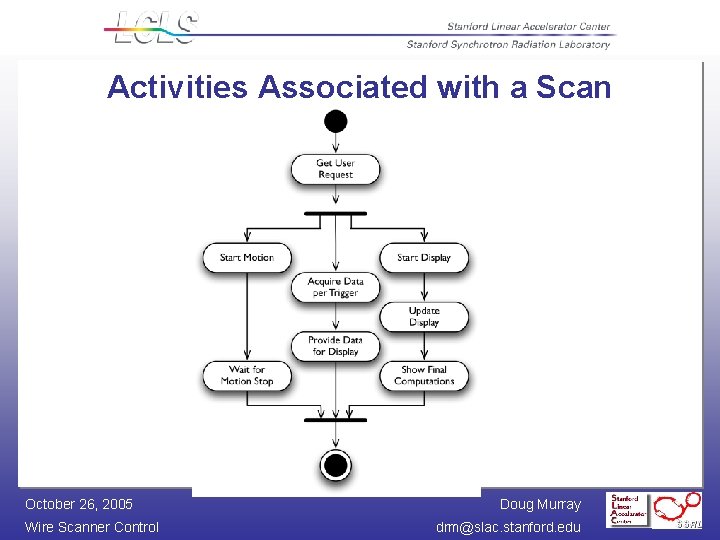
Activities Associated with a Scan October 26, 2005 Wire Scanner Control Doug Murray drm@slac. stanford. edu
More Detailed Sequence of Events October 26, 2005 Wire Scanner Control Doug Murray drm@slac. stanford. edu
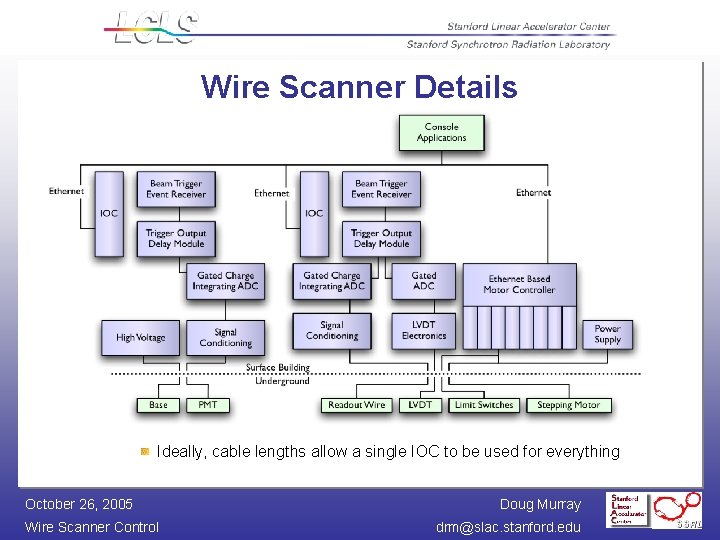
Wire Scanner Details Ideally, cable lengths allow a single IOC to be used for everything October 26, 2005 Wire Scanner Control Doug Murray drm@slac. stanford. edu