
Winter School on Structural Cell Biology Protein crystallization
Winter School on Structural Cell Biology Protein crystallization Josef Houser
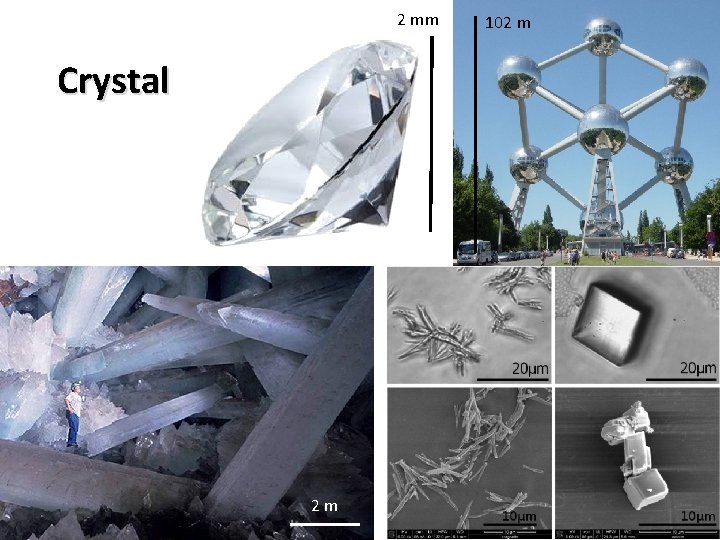
2 mm Crystal 2 m 102 m

7 Crystal lattices

14 Bravais lattices

Symmetry – Space groups 2 D symmetry 3 D symmetry Proteins are chiral – no mirror symmetry Screw axis Combination of Bravais lattices and symmetry operations leads to 230 possible space groups (not all for proteins).
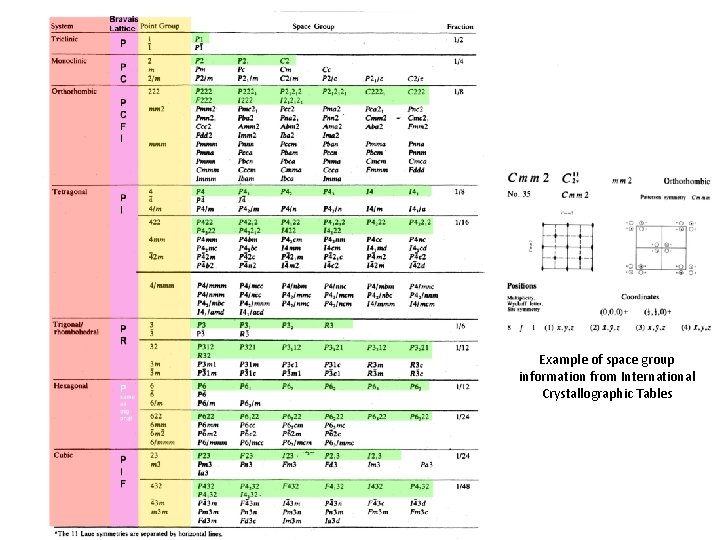
Example of space group information from International Crystallographic Tables
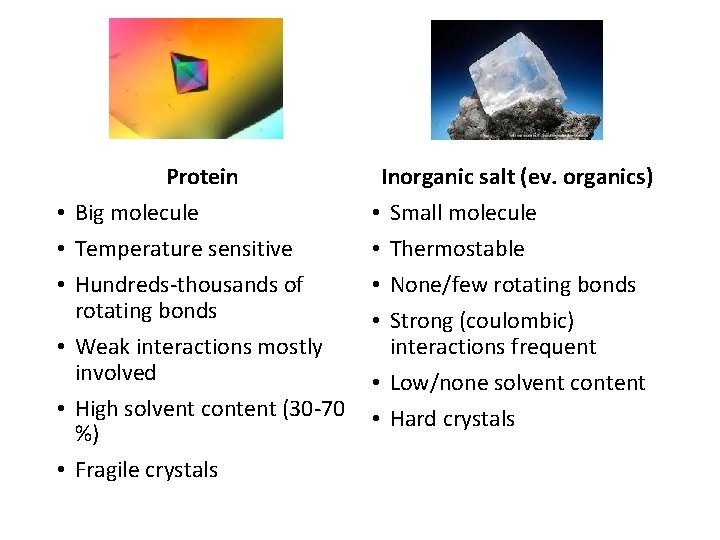
• • • Protein Big molecule Temperature sensitive Hundreds-thousands of rotating bonds Weak interactions mostly involved High solvent content (30 -70 %) Fragile crystals Inorganic salt (ev. organics) • Small molecule • Thermostable • None/few rotating bonds • Strong (coulombic) interactions frequent • Low/none solvent content • Hard crystals

Phase diagram
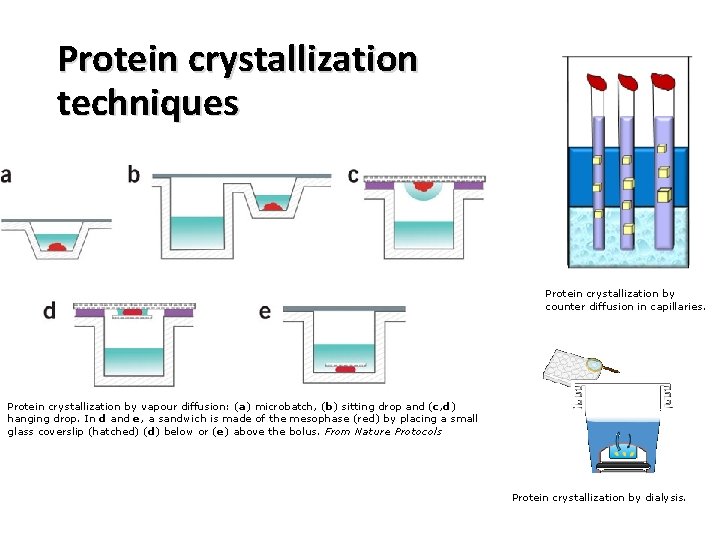
Protein crystallization techniques Protein crystallization by counter diffusion in capillaries. Protein crystallization by vapour diffusion: (a) microbatch, (b) sitting drop and (c, d) hanging drop. In d and e, a sandwich is made of the mesophase (red) by placing a small glass coverslip (hatched) (d) below or (e) above the bolus. From Nature Protocols Protein crystallization by dialysis.
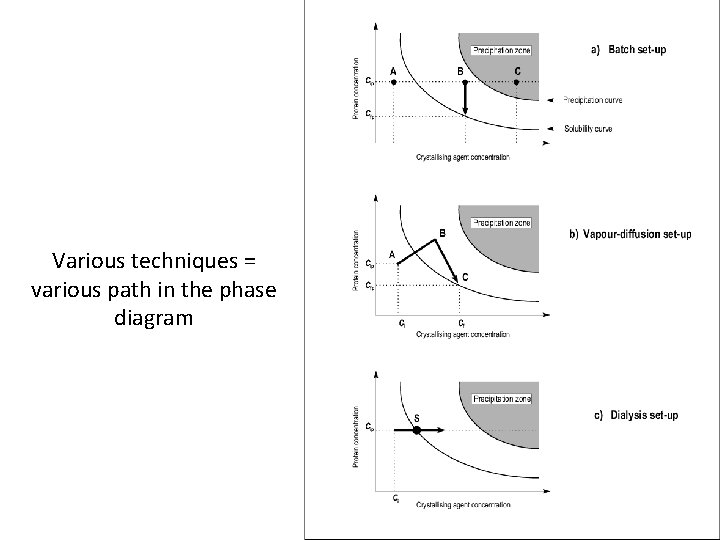
Various techniques = various path in the phase diagram
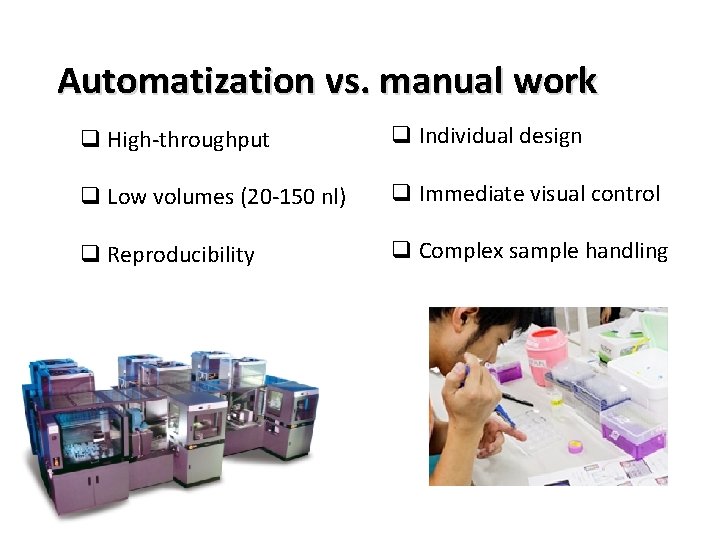
Automatization vs. manual work q High-throughput q Individual design q Low volumes (20 -150 nl) q Immediate visual control q Reproducibility q Complex sample handling

Further reading • http: //journals. iucr. org/ • Naomi E. Chayen: Protein Crystallization Strategies for Structural Genomics, 2007 • Terese M. Bergfors: Protein Crystallization, 2009 • Alexander Mc. Pherson: Introduction to Macromolecular Crystallography, 2011 • etc.
- Slides: 12