
Winds Wind is caused by differences in air
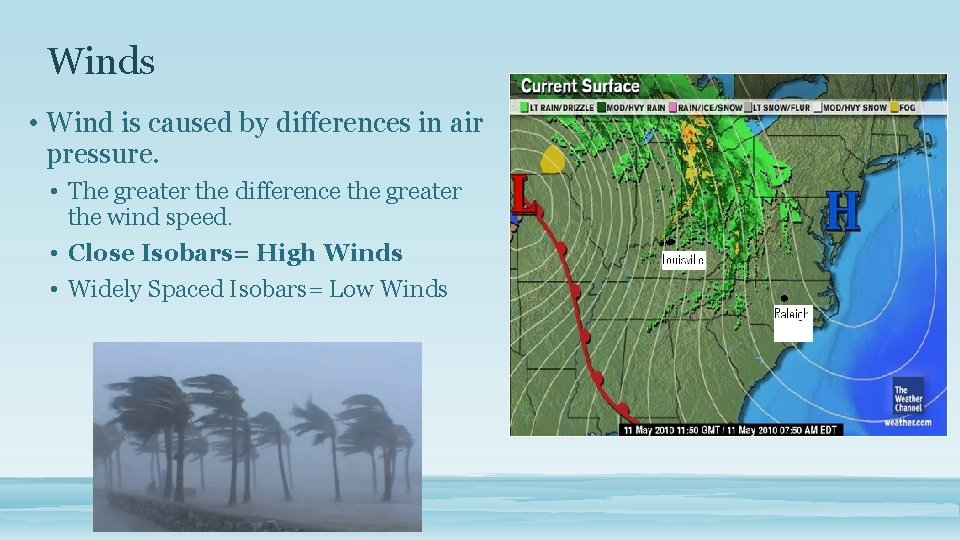
Winds • Wind is caused by differences in air pressure. • The greater the difference the greater the wind speed. • Close Isobars= High Winds • Widely Spaced Isobars= Low Winds
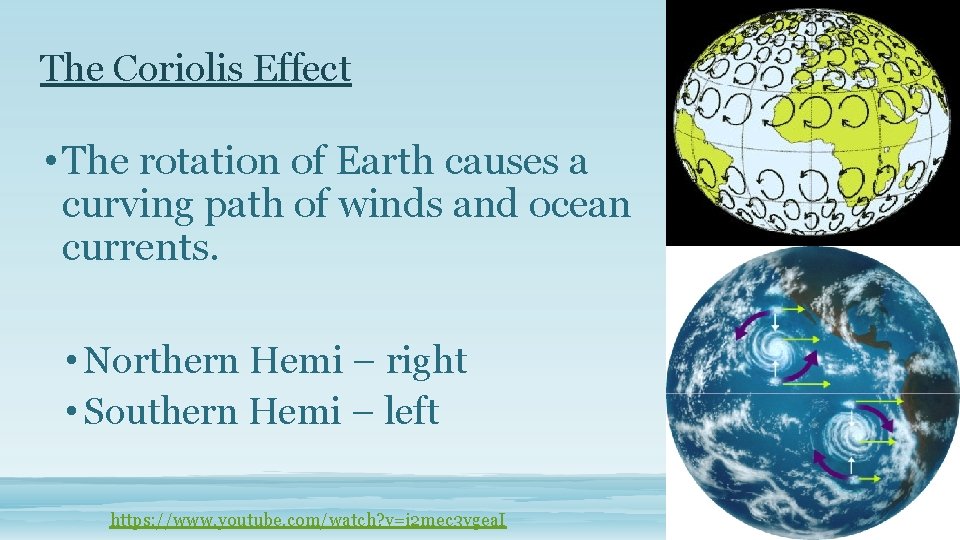
The Coriolis Effect • The rotation of Earth causes a curving path of winds and ocean currents. • Northern Hemi – right • Southern Hemi – left https: //www. youtube. com/watch? v=i 2 mec 3 vgea. I

Global Winds • Winds caused by uneven heating of Earth’s atmosphere. • Equator gets more sunlight… • This air expands, rises and flows toward poles • Polar air is denser so it flows toward the equator • Non-rotating Earth, 2 cells(North & South) ->
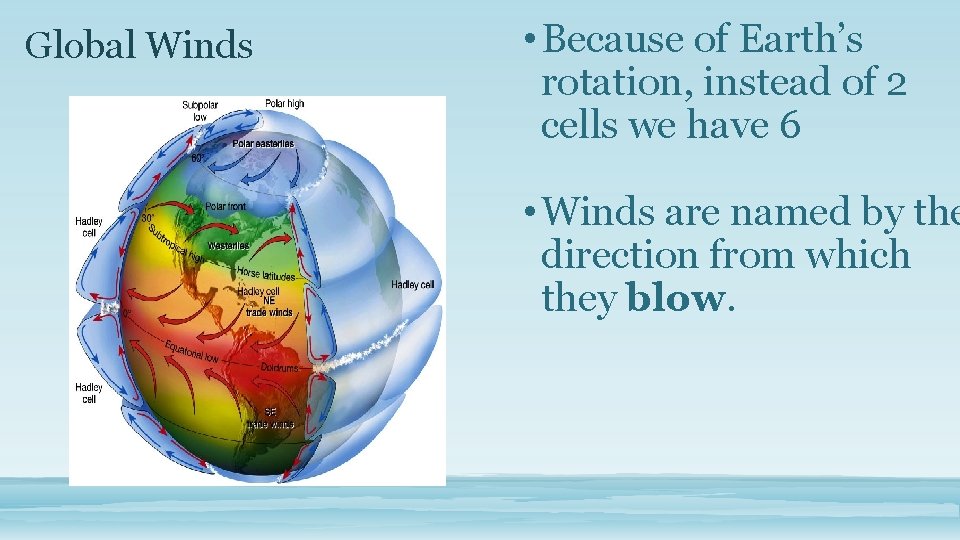
Global Winds • Because of Earth’s rotation, instead of 2 cells we have 6 • Winds are named by the direction from which they blow.

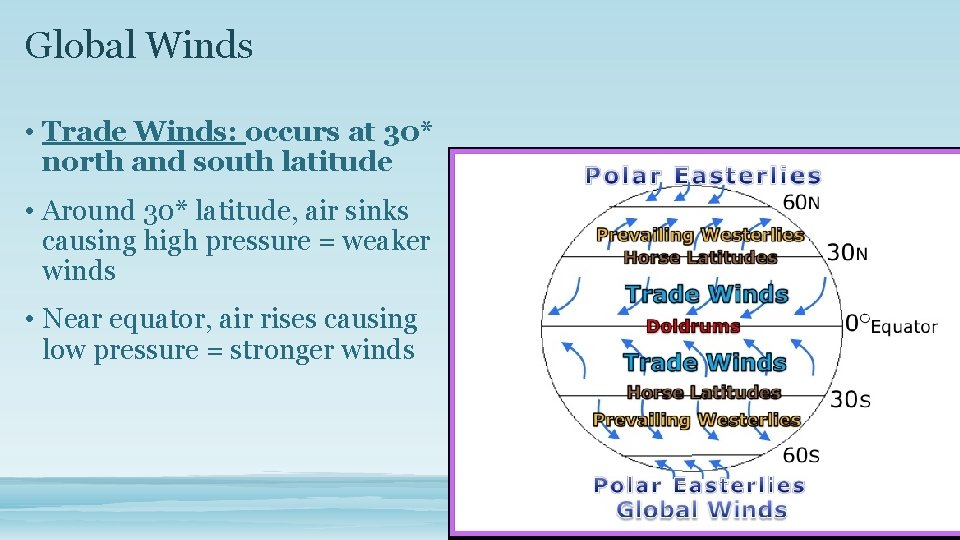
Global Winds • Trade Winds: occurs at 30* north and south latitude • Around 30* latitude, air sinks causing high pressure = weaker winds • Near equator, air rises causing low pressure = stronger winds

Global Winds • Prevailing Westerlies: flows between 30* and 60* north and south latitude in a circulation pattern opposite that of the trade winds • Wind blows from the west to the east • Responsible for movement of weather across US
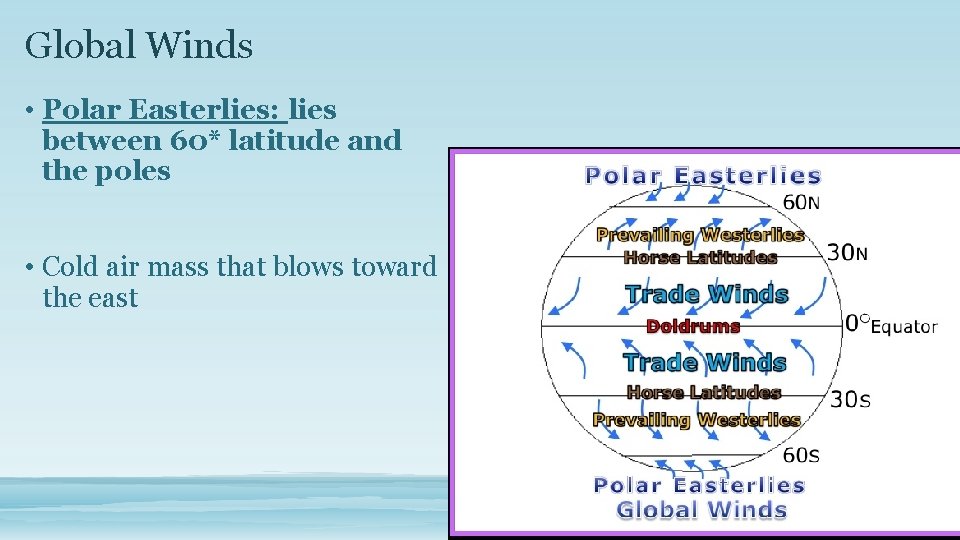
Global Winds • Polar Easterlies: lies between 60* latitude and the poles • Cold air mass that blows toward the east
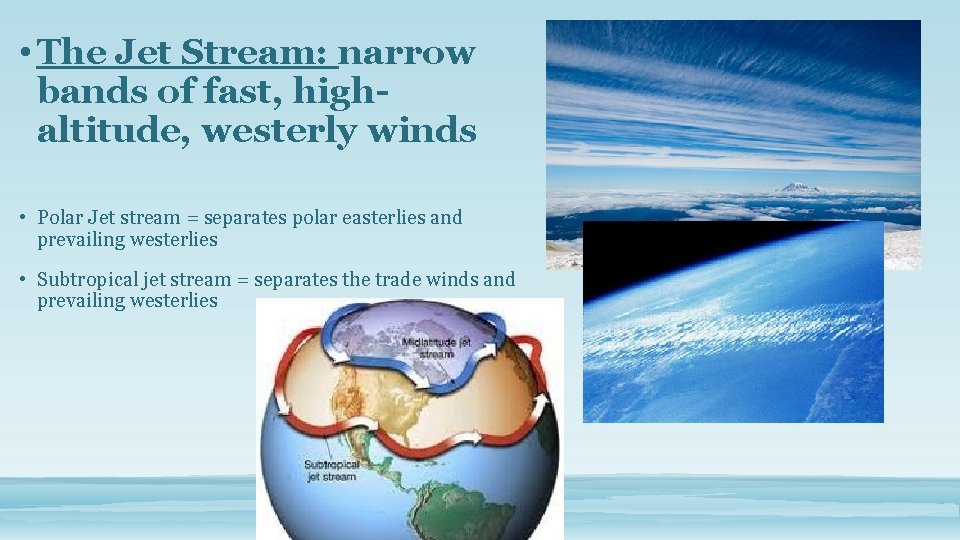
• The Jet Stream: narrow bands of fast, highaltitude, westerly winds • Polar Jet stream = separates polar easterlies and prevailing westerlies • Subtropical jet stream = separates the trade winds and prevailing westerlies
Front Symbol Air Mass Diagram Weather Notes. The more the better!
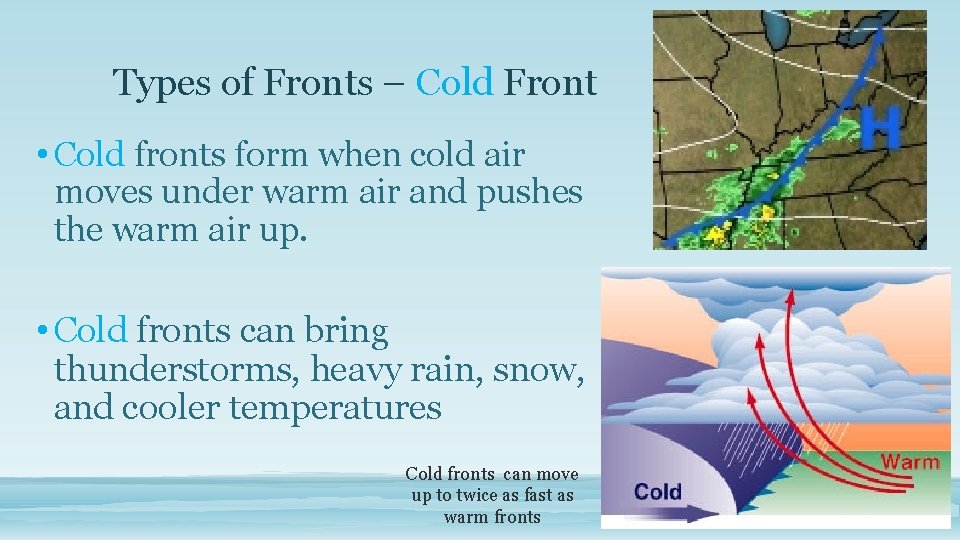
Types of Fronts – Cold Front • Cold fronts form when cold air moves under warm air and pushes the warm air up. • Cold fronts can bring thunderstorms, heavy rain, snow, and cooler temperatures Cold fronts can move up to twice as fast as warm fronts
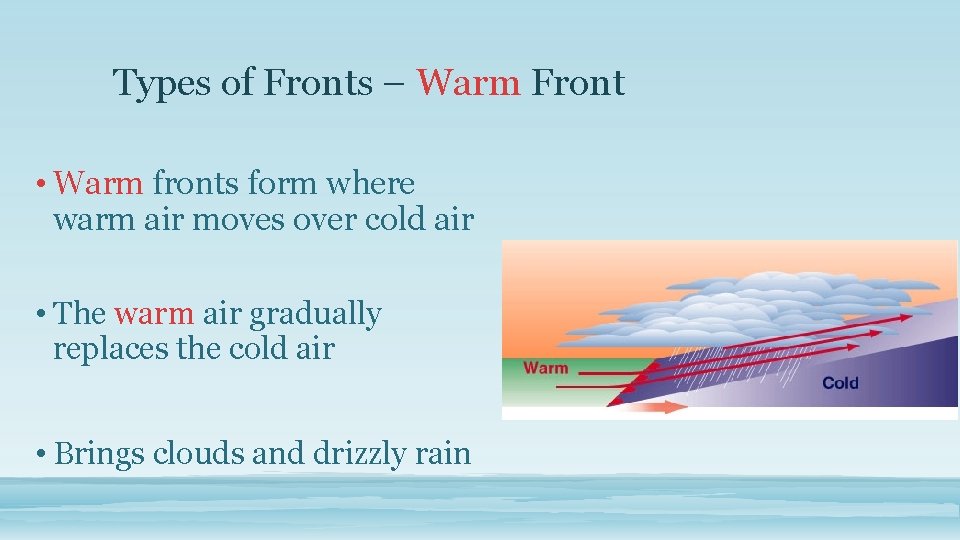
Types of Fronts – Warm Front • Warm fronts form where warm air moves over cold air • The warm air gradually replaces the cold air • Brings clouds and drizzly rain
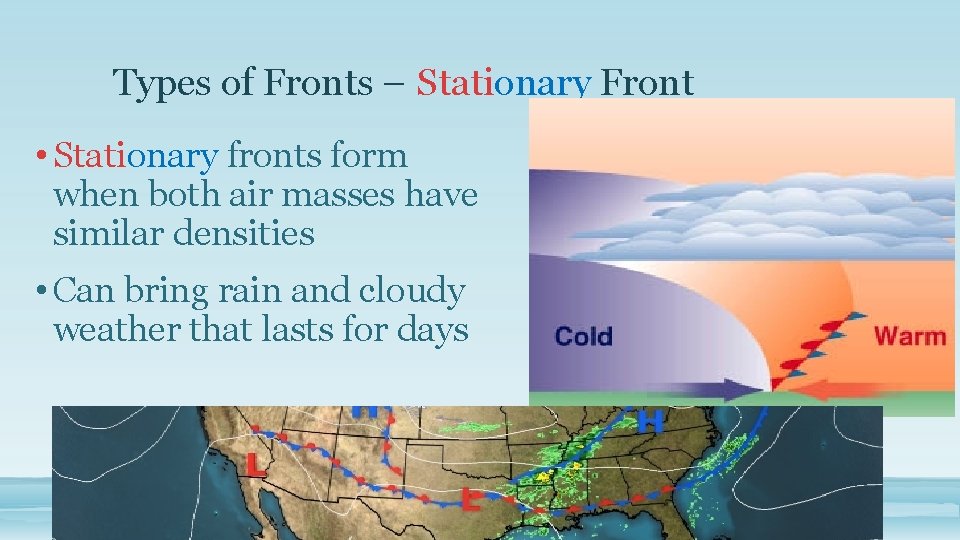
Types of Fronts – Stationary Front • Stationary fronts form when both air masses have similar densities • Can bring rain and cloudy weather that lasts for days
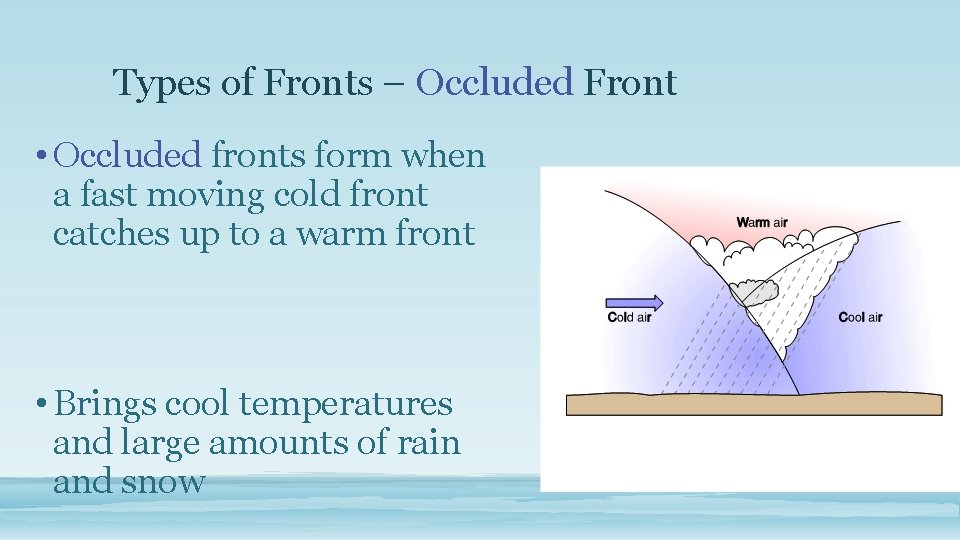
Types of Fronts – Occluded Front • Occluded fronts form when a fast moving cold front catches up to a warm front • Brings cool temperatures and large amounts of rain and snow
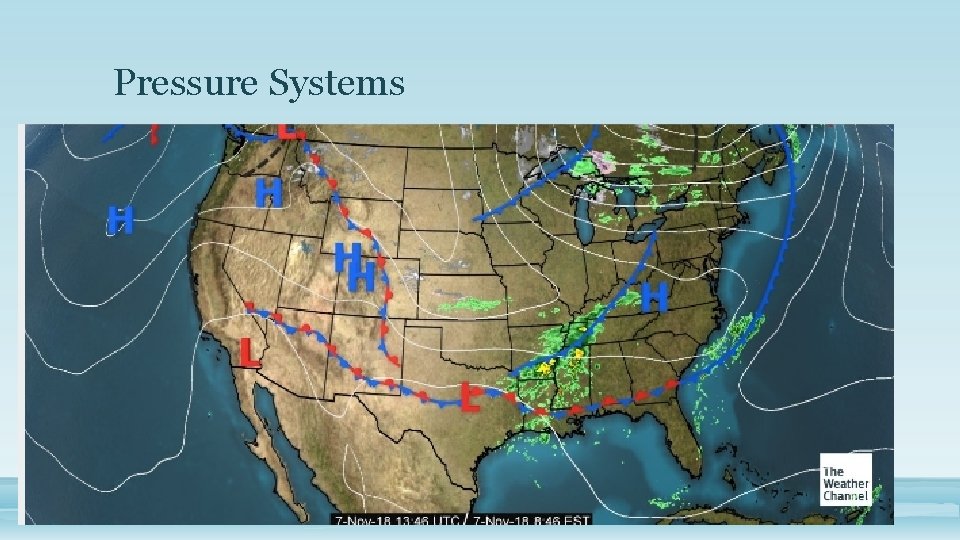
Pressure Systems
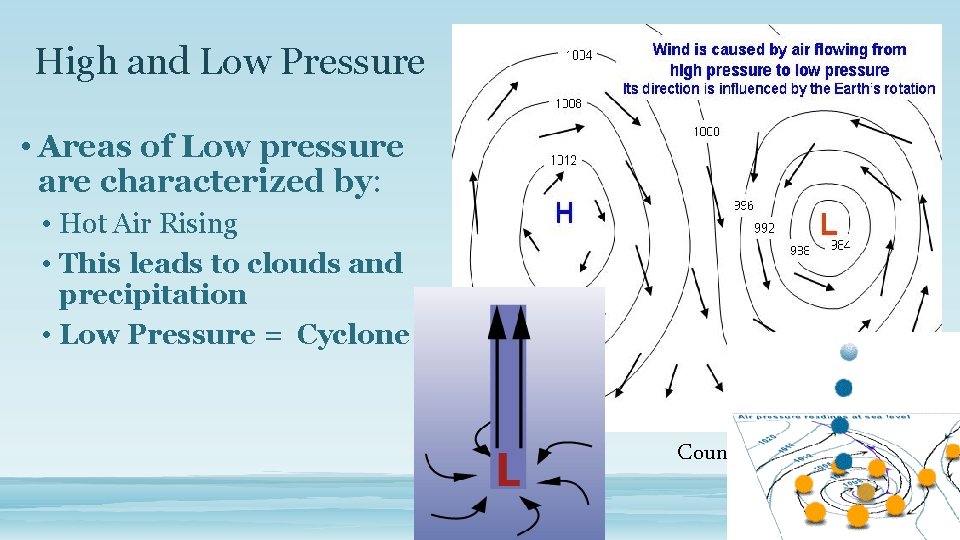
High and Low Pressure • Areas of Low pressure are characterized by: • Hot Air Rising • This leads to clouds and precipitation • Low Pressure = Cyclone Counter-Clockwise spin
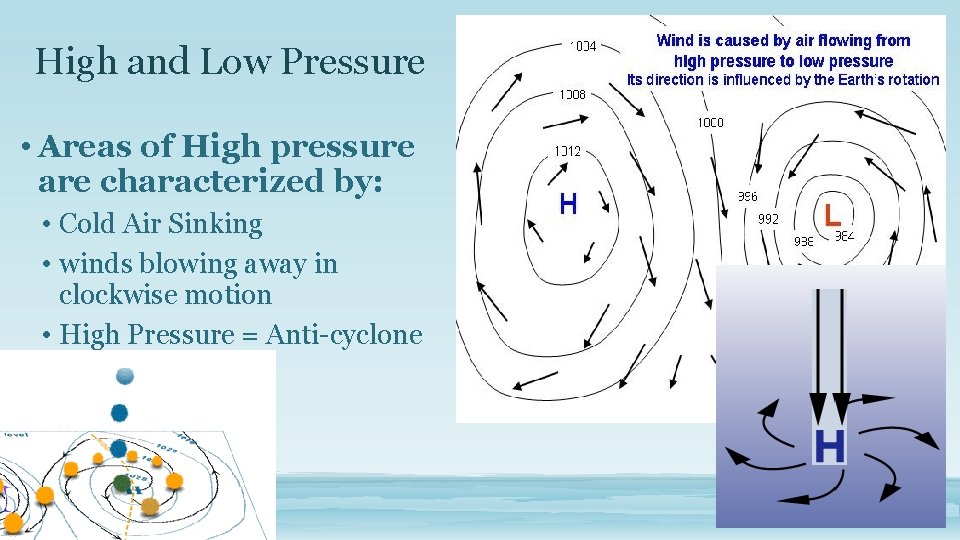
High and Low Pressure • Areas of High pressure are characterized by: • Cold Air Sinking • winds blowing away in clockwise motion • High Pressure = Anti-cyclone
- Slides: 17