
Winds 7 6 Wind Notes Chapter 7 6
- Slides: 39
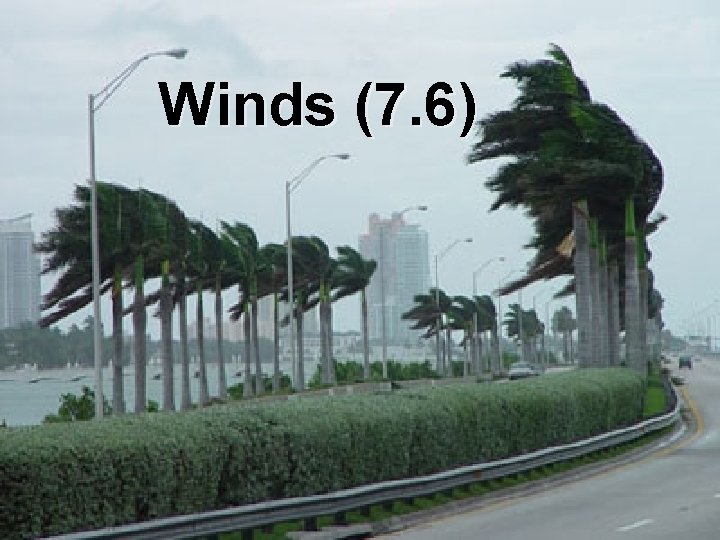
Winds (7. 6)
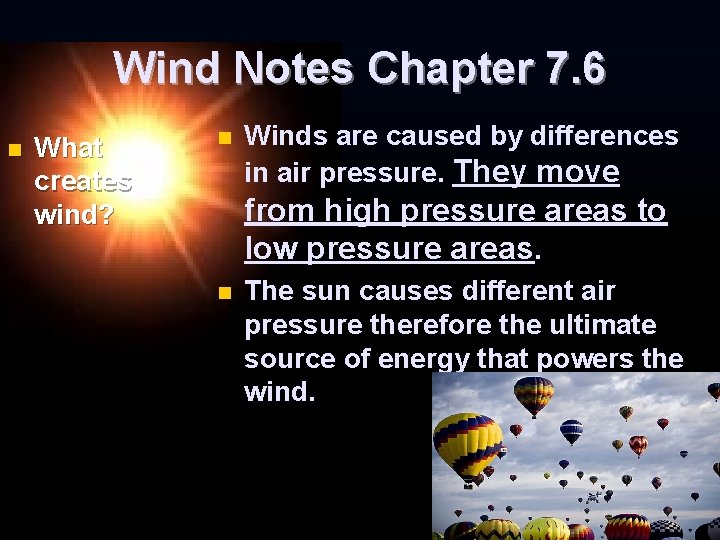
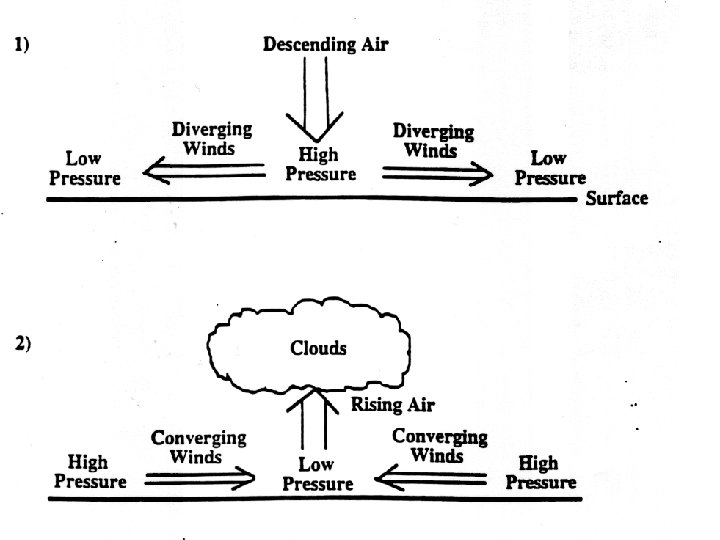
Wind Notes Chapter 7. 6 n What creates wind? n Winds are caused by differences in air pressure. They move from high pressure areas to low pressure areas. n The sun causes different air pressure therefore the ultimate source of energy that powers the wind.
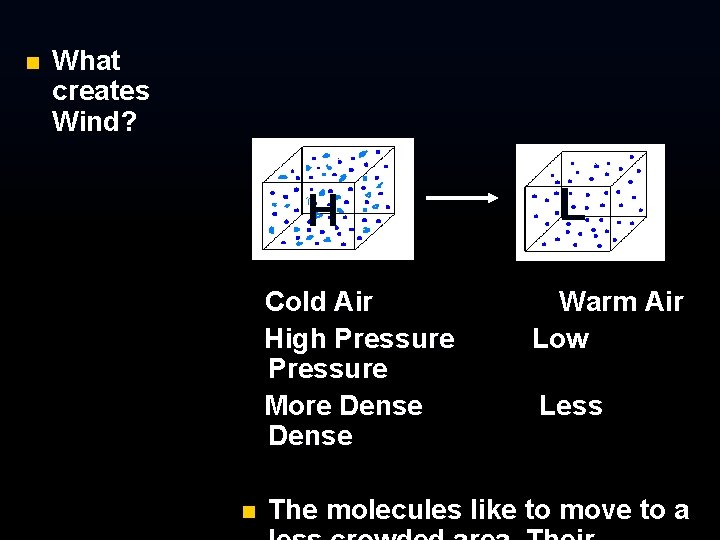
n What creates Wind? H Cold Air High Pressure More Dense n L Warm Air Low Less The molecules like to move to a
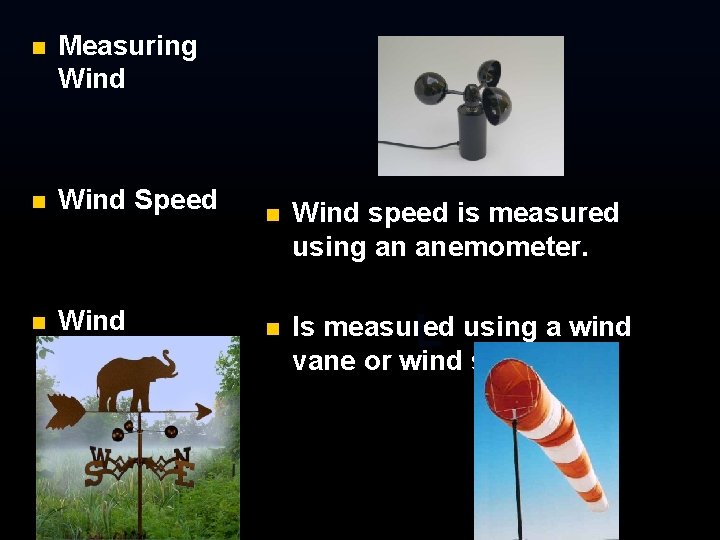
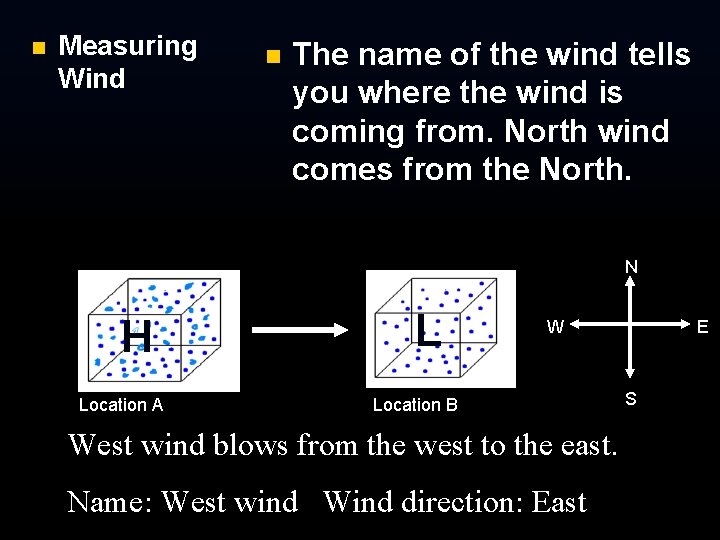
n Measuring Wind n Wind Speed n Wind Direction n n Wind speed is measured using an anemometer. Is measured L using a wind vane or wind sock.
n Measuring Wind n The name of the wind tells you where the wind is coming from. North wind comes from the North. N H Location A L W Location B West wind blows from the west to the east. Name: West wind Wind direction: East E S
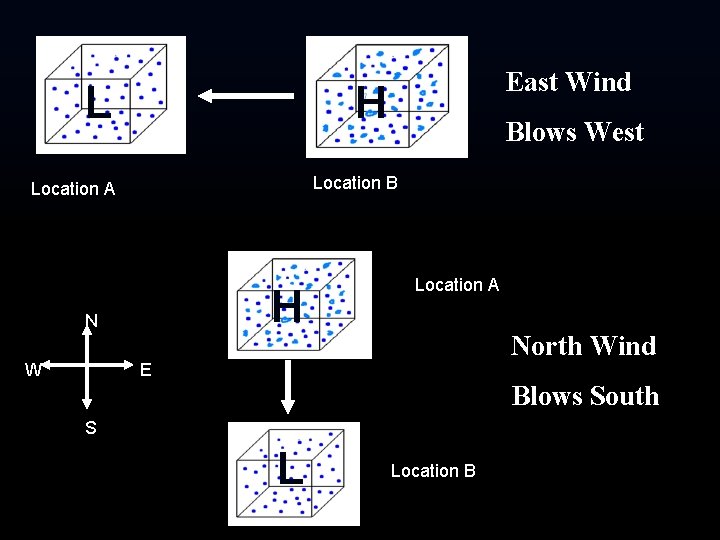
L H Blows West Location B Location A H N W East Wind Location A North Wind E Blows South S L Location B
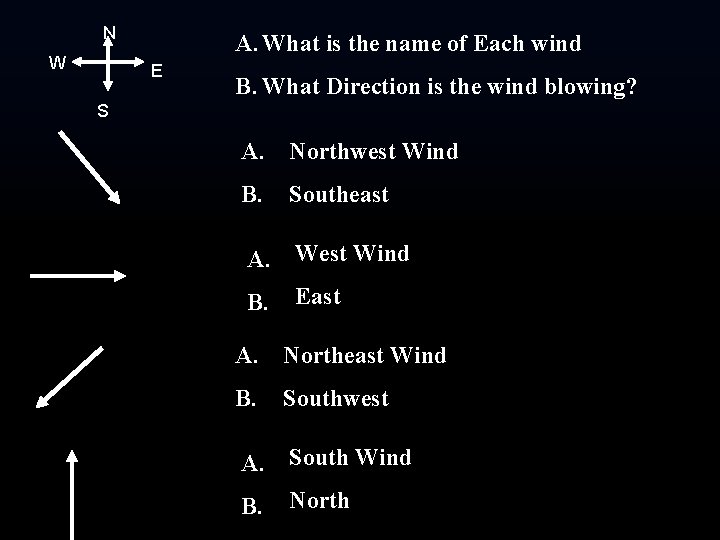
N W A. What is the name of Each wind E B. What Direction is the wind blowing? S A. Northwest Wind B. Southeast A. West Wind B. East A. Northeast Wind B. Southwest A. South Wind B. North
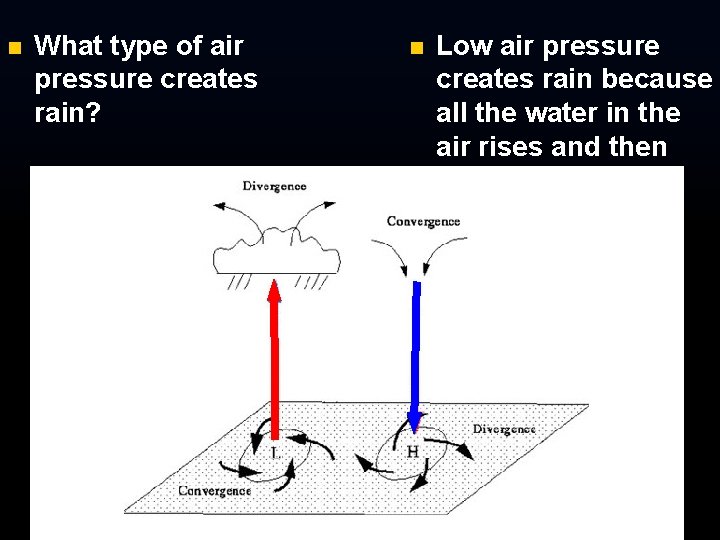
n What type of air pressure creates rain? n Low air pressure creates rain because all the water in the air rises and then cools creating rain clouds.
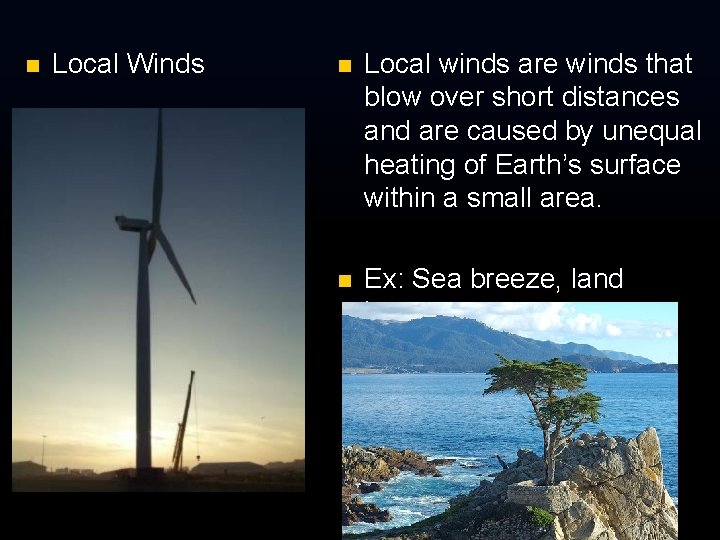
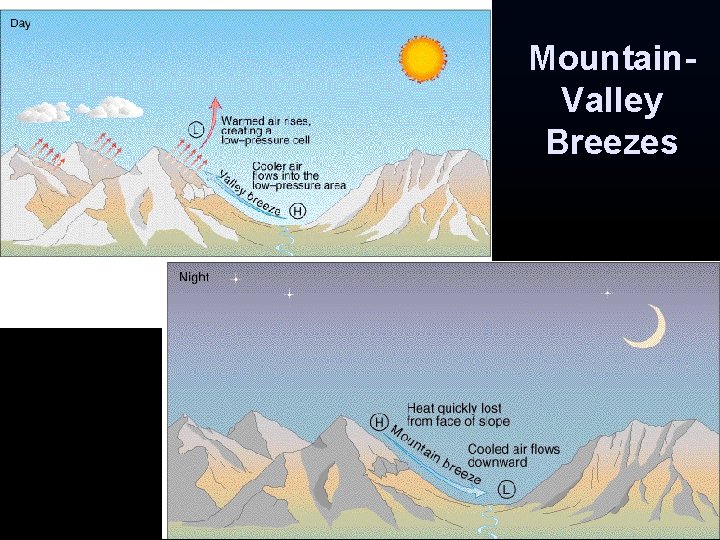
n Local Winds n Local winds are winds that blow over short distances and are caused by unequal heating of Earth’s surface within a small area. n Ex: Sea breeze, land breeze,
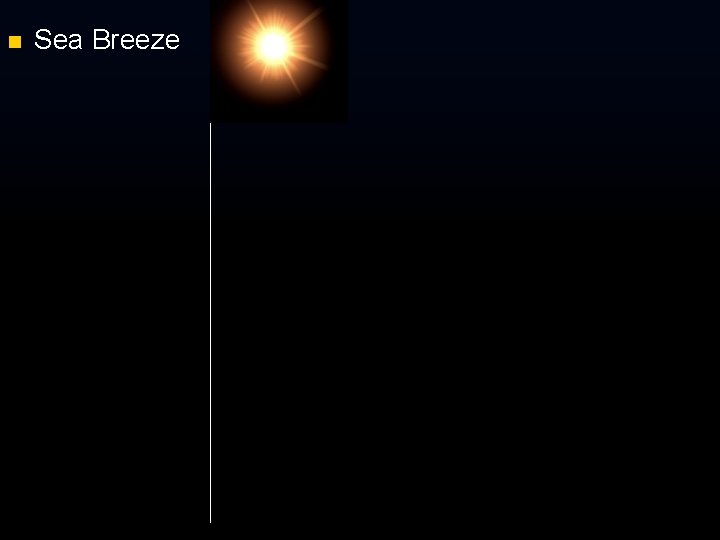
n Sea Breeze
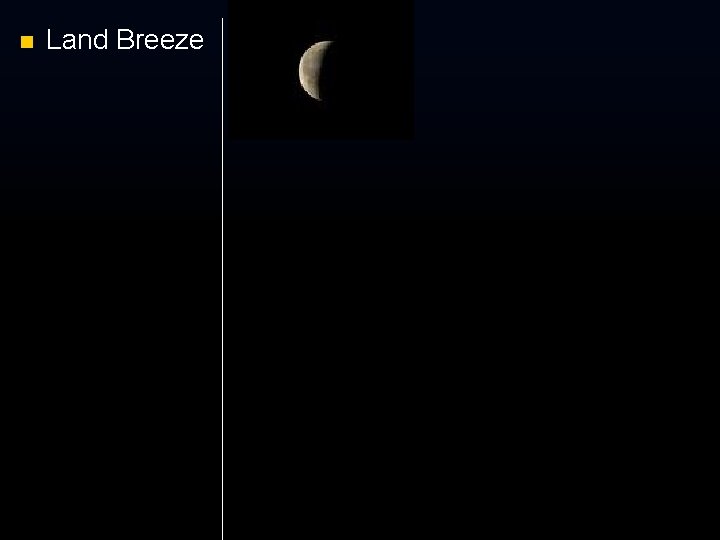
n Land Breeze
Mountain. Valley Breezes
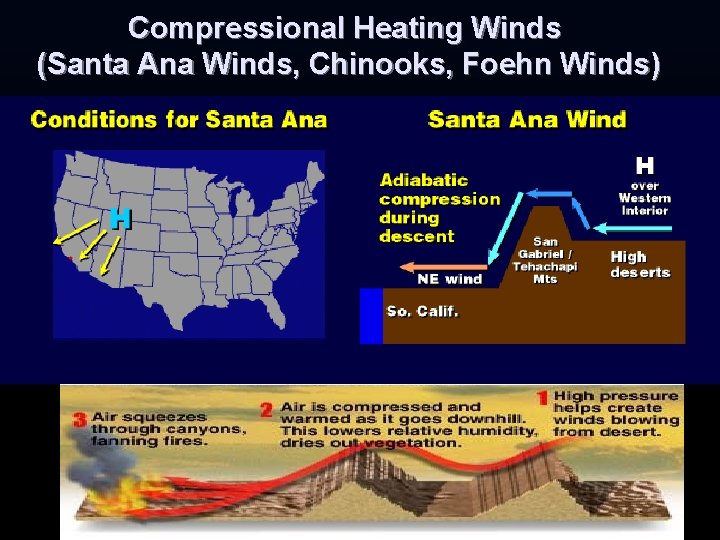
Compressional Heating Winds (Santa Ana Winds, Chinooks, Foehn Winds)
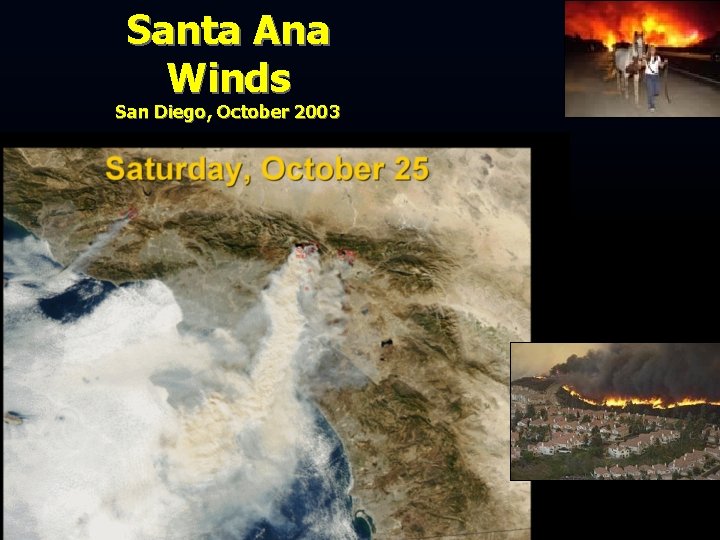
Santa Ana Winds San Diego, October 2003
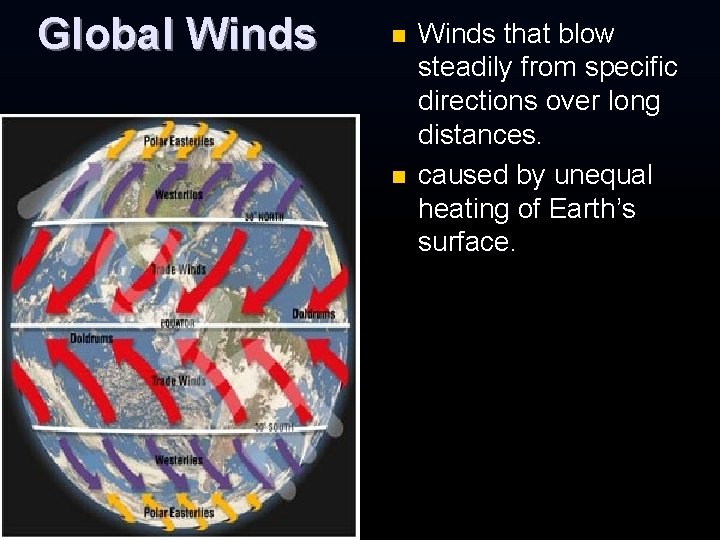
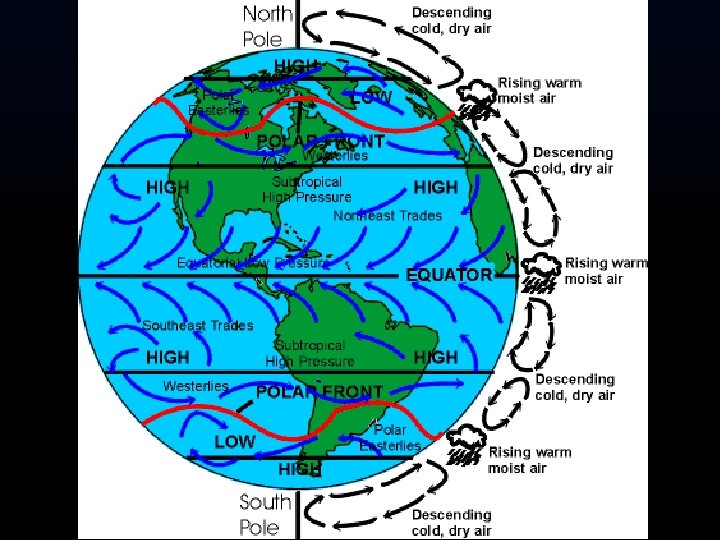
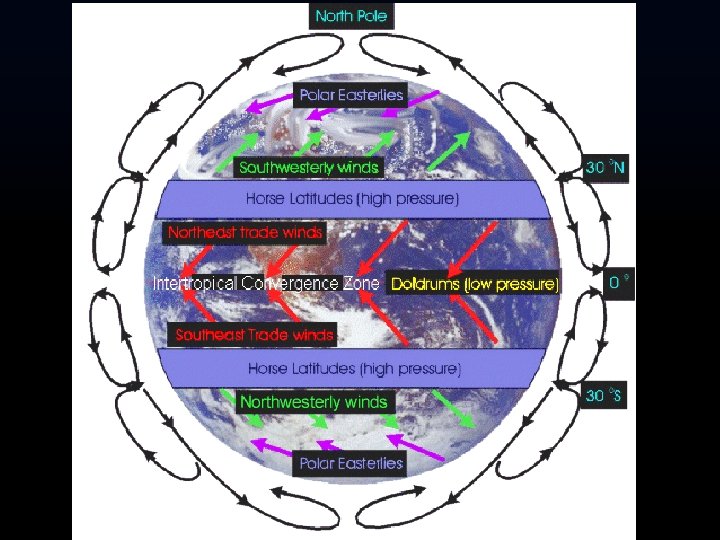
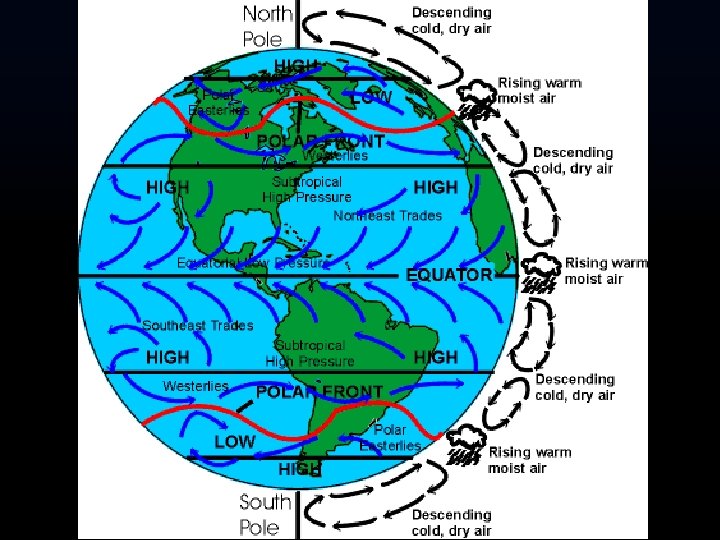
Global Winds n n Winds that blow steadily from specific directions over long distances. caused by unequal heating of Earth’s surface.
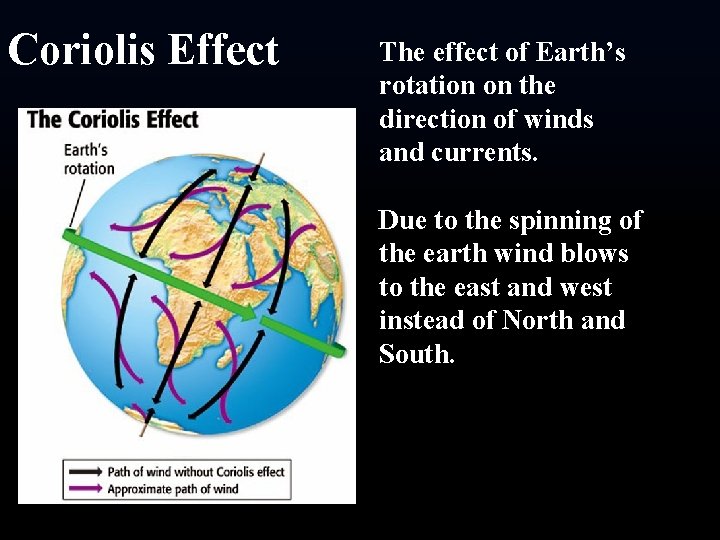
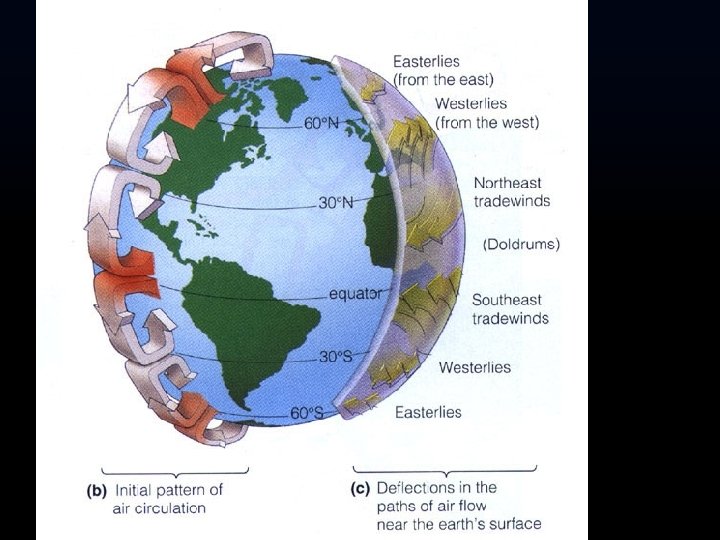
Coriolis Effect The effect of Earth’s rotation on the direction of winds and currents. Due to the spinning of the earth wind blows to the east and west instead of North and South.
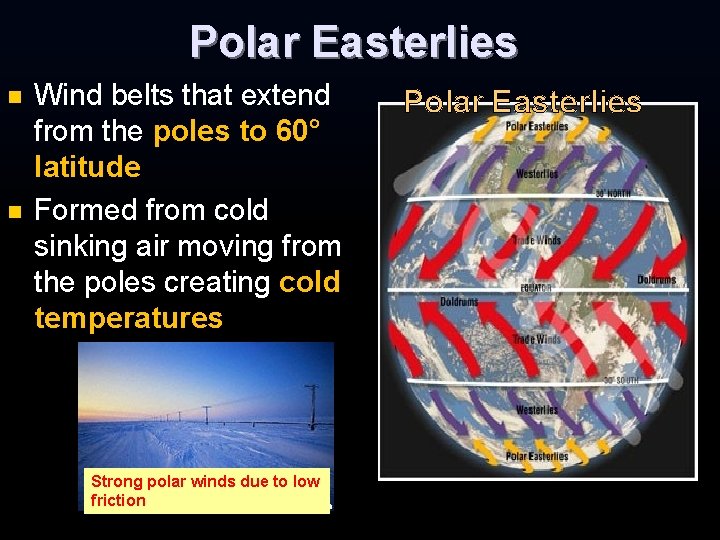
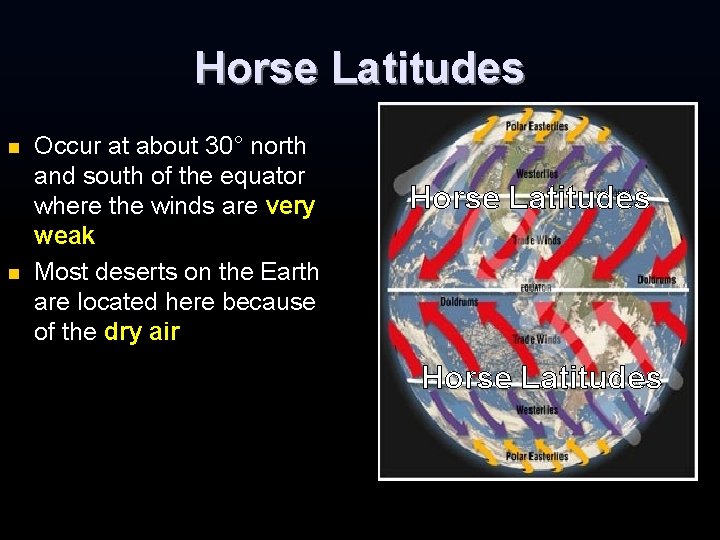
Polar Easterlies n n Wind belts that extend from the poles to 60° latitude Formed from cold sinking air moving from the poles creating cold temperatures Strong polar winds due to low friction Polar Easterlies
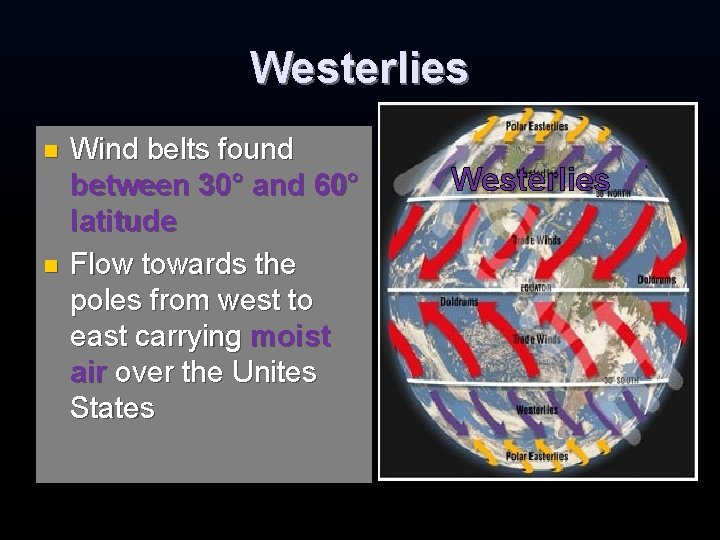
Westerlies n n Wind belts found between 30° and 60° latitude Flow towards the poles from west to east carrying moist air over the Unites States Westerlies
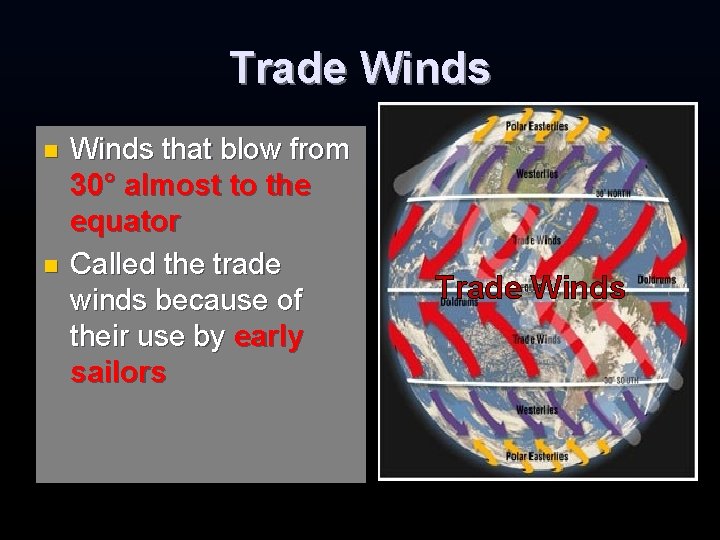
Trade Winds n n Winds that blow from 30° almost to the equator Called the trade winds because of their use by early sailors Trade Winds
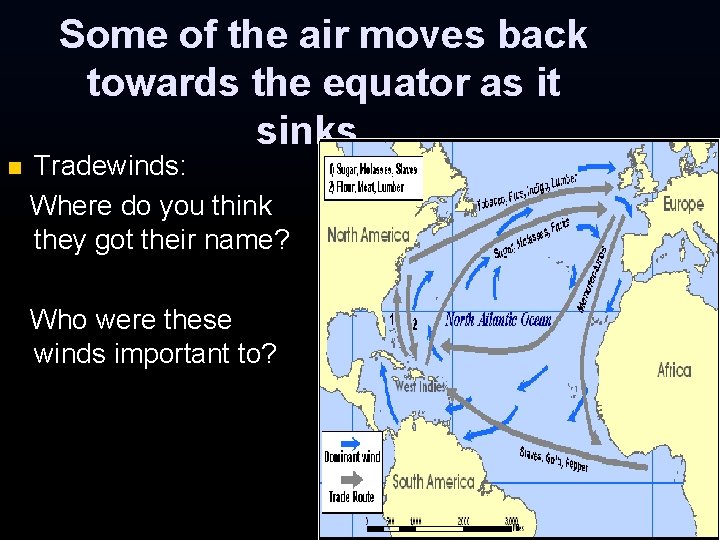
Some of the air moves back towards the equator as it sinks. . . n Tradewinds: Where do you think they got their name? Who were these winds important to?
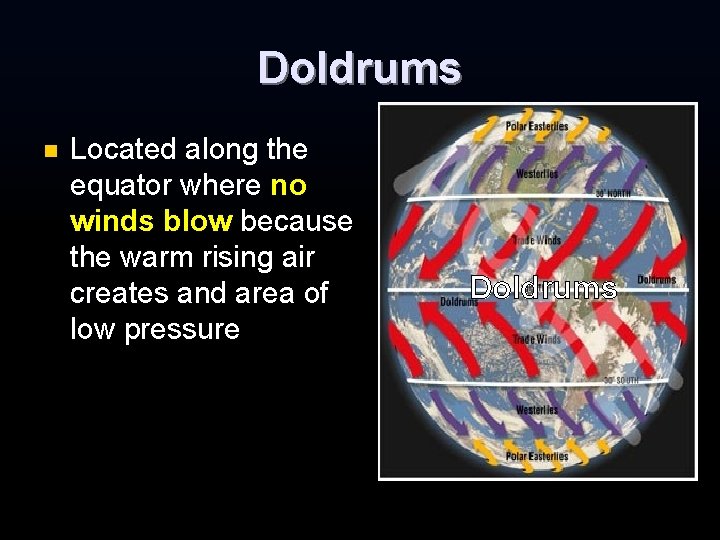
Doldrums n Located along the equator where no winds blow because the warm rising air creates and area of low pressure Doldrums
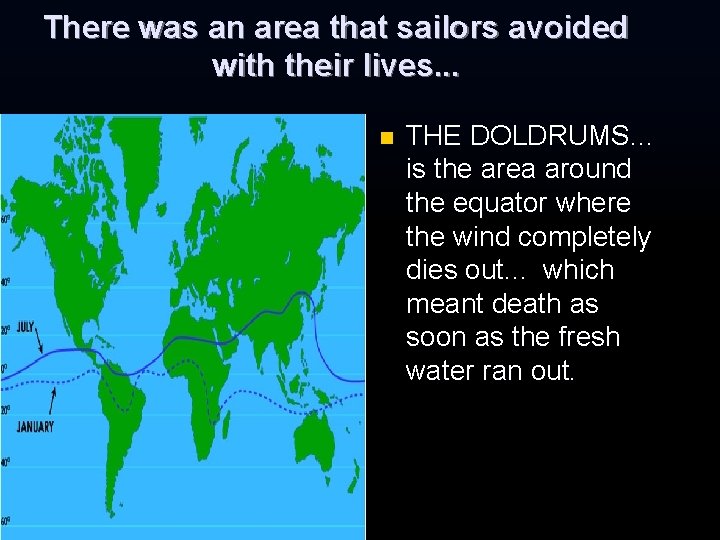
There was an area that sailors avoided with their lives. . . n THE DOLDRUMS. . . is the area around the equator where the wind completely dies out. . . which meant death as soon as the fresh water ran out.
Horse Latitudes n n Occur at about 30° north and south of the equator where the winds are very weak Most deserts on the Earth are located here because of the dry air Horse Latitudes
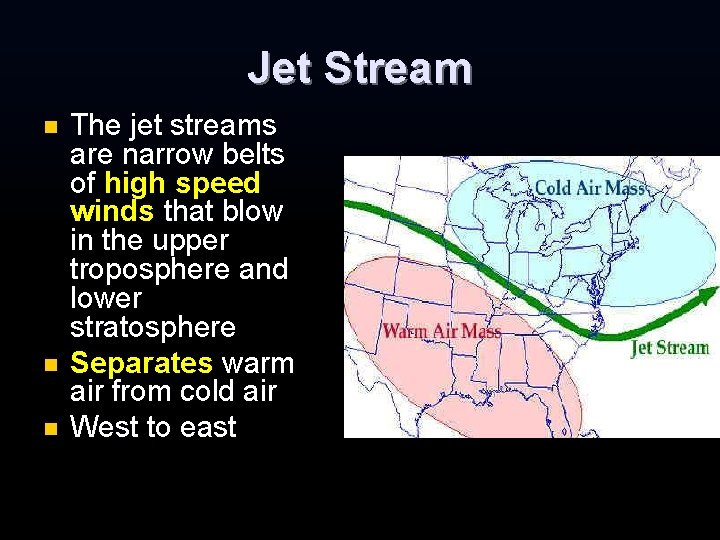
Jet Stream n n n The jet streams are narrow belts of high speed winds that blow in the upper troposphere and lower stratosphere Separates warm air from cold air West to east
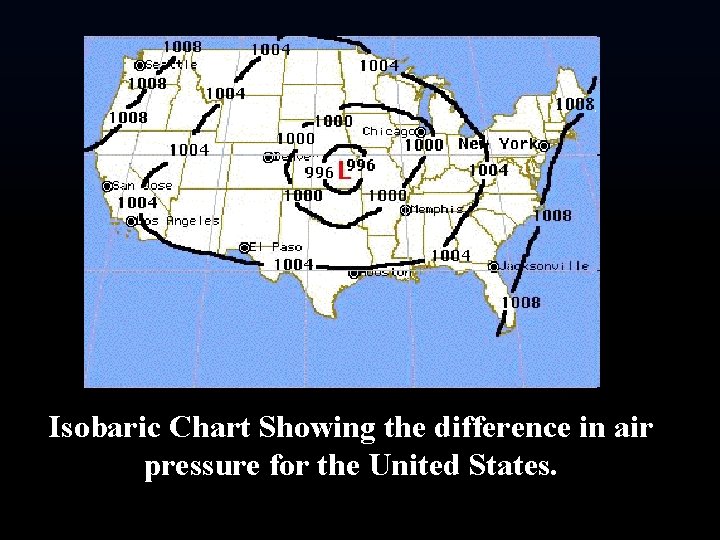
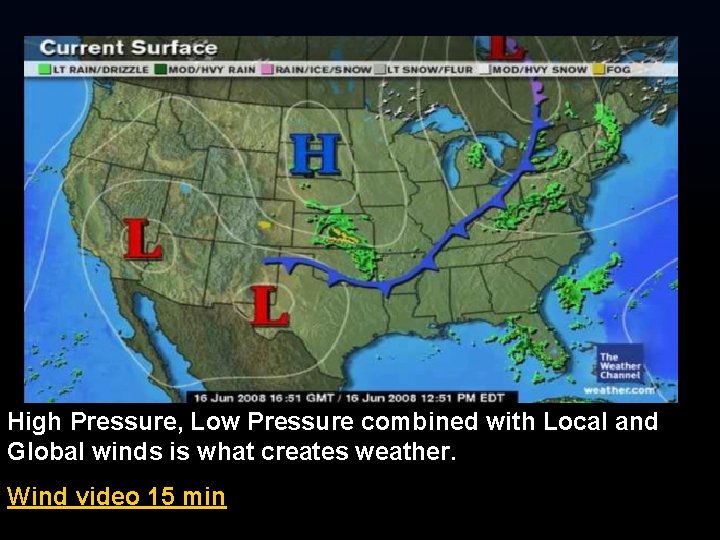
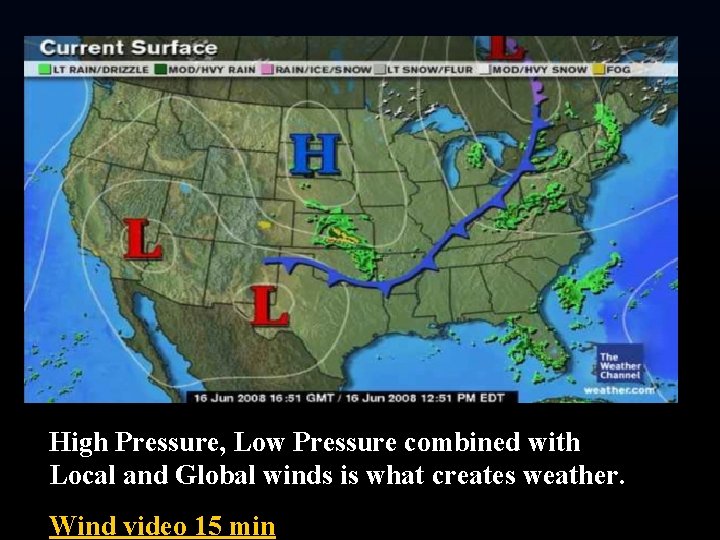
Isobaric Chart Showing the difference in air pressure for the United States.
High Pressure, Low Pressure combined with Local and Global winds is what creates weather. Wind video 15 min
Question 1 n. What causes winds?
Answer n. Winds are caused by the uneven heating of Earth’s surface, which causes pressure differences
Question 2 n. What are three types of global winds?
Answer n. Polar Easterlies n. Westerlies n. Trade Winds
Question 3 n. What is the difference between a land breeze and a sea breeze?
Answer n Sea breezes occur during the day when the land is warmer than water and a land breeze occurs at night when the water is warmer than land
High Pressure, Low Pressure combined with Local and Global winds is what creates weather. Wind video 15 min