
WIND What is WIND The movement of air
- Slides: 25
WIND
What is WIND? • The movement of air molecules in the atmosphere • Air moves from regions of HIGH PRESSURE to regions of LOW PRESSURE
Types of WIND 1. GLOBAL- wind that moves across our entire planet; cover large areas, blow in the same direction and at the same speed, may not be felt on the ground 2. LOCAL- wind that moves over small areas, they change direction and speed very often, they blow in the atmosphere; can be felt on the ground
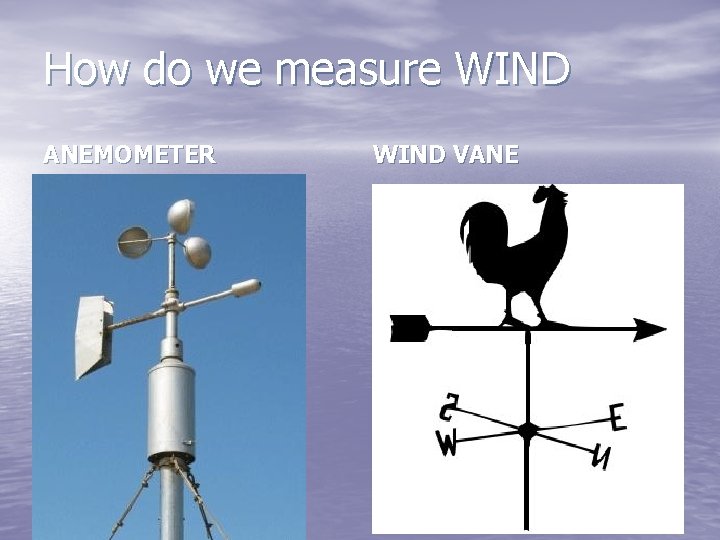
How do we measure WIND ANEMOMETER WIND VANE
How are WINDS named ? • For the direction they come FROM
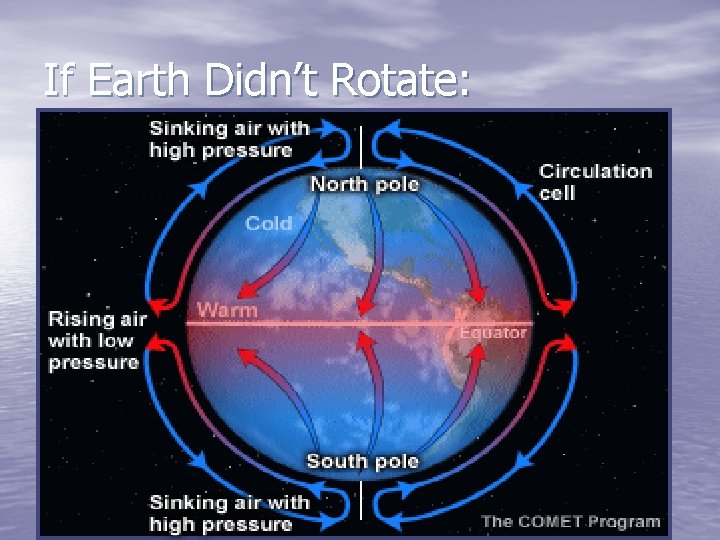
If Earth Didn’t Rotate:
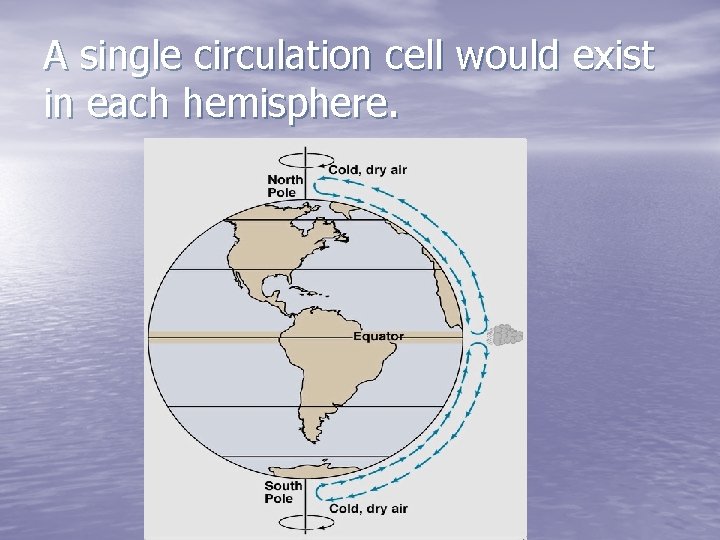
A single circulation cell would exist in each hemisphere.
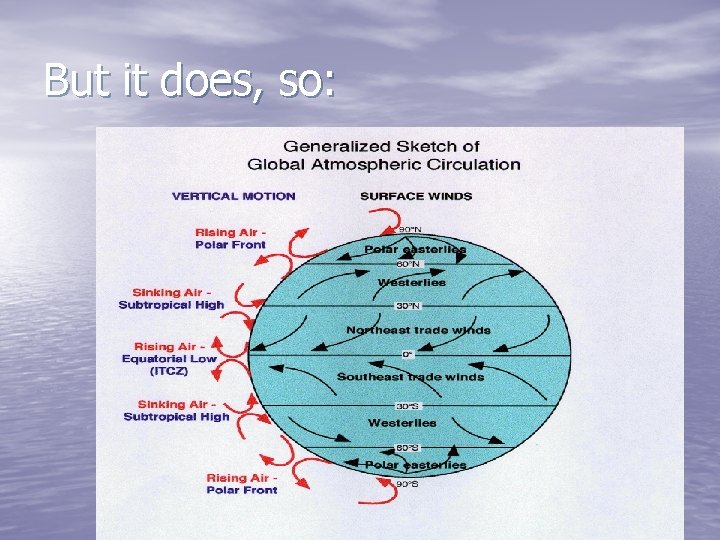
But it does, so:
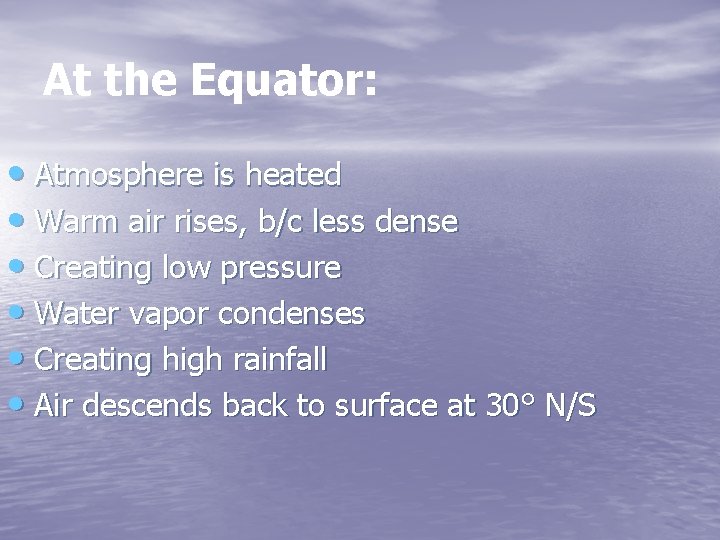
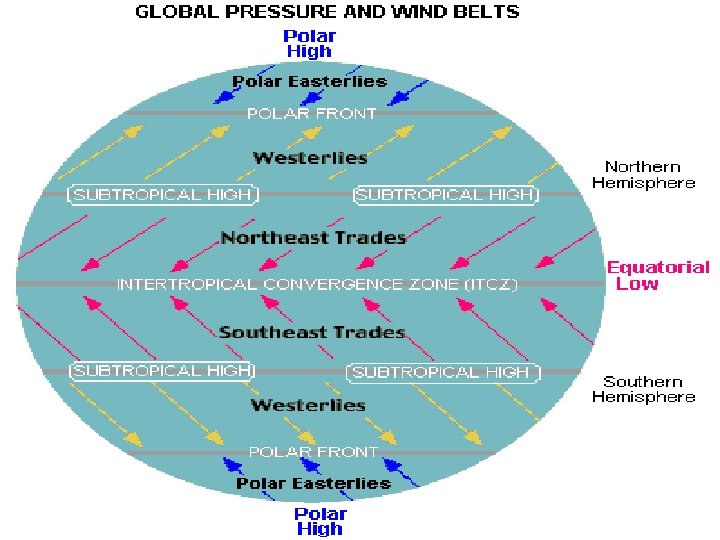
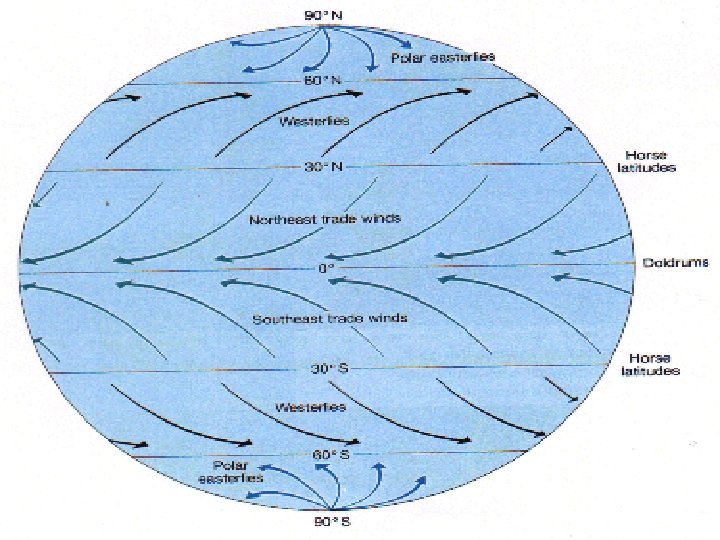
At the Equator: • Atmosphere is heated • Warm air rises, b/c less dense • Creating low pressure • Water vapor condenses • Creating high rainfall • Air descends back to surface at 30° N/S
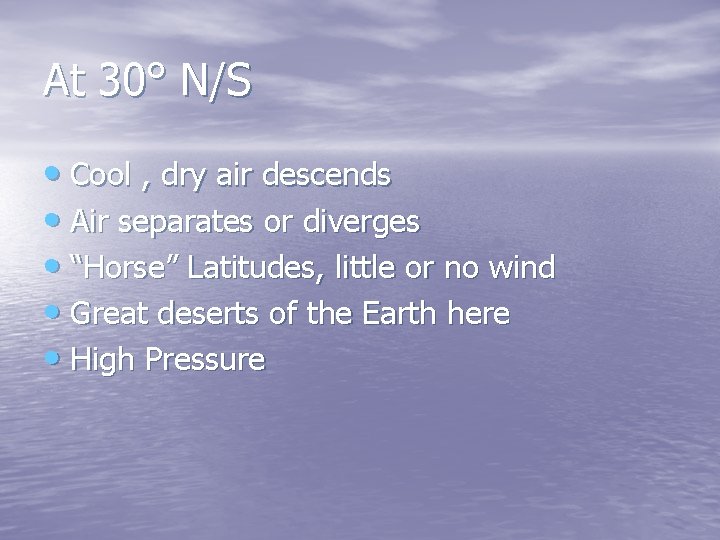
At 30° N/S • Cool , dry air descends • Air separates or diverges • “Horse” Latitudes, little or no wind • Great deserts of the Earth here • High Pressure
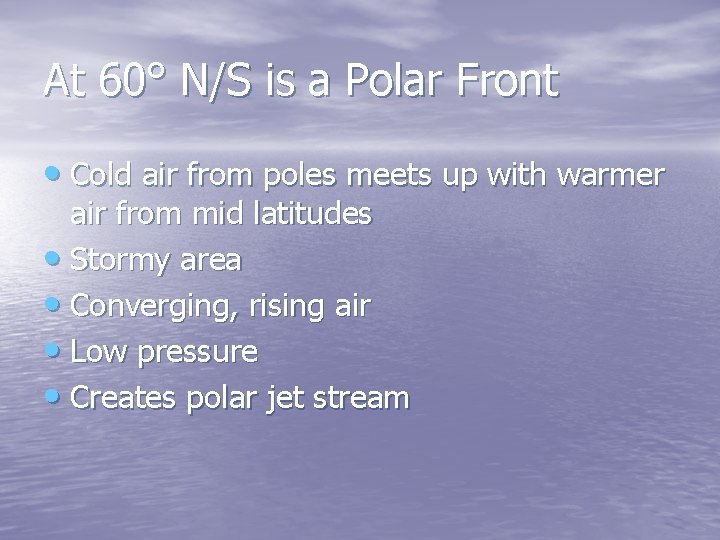
At 60° N/S is a Polar Front • Cold air from poles meets up with warmer air from mid latitudes • Stormy area • Converging, rising air • Low pressure • Creates polar jet stream
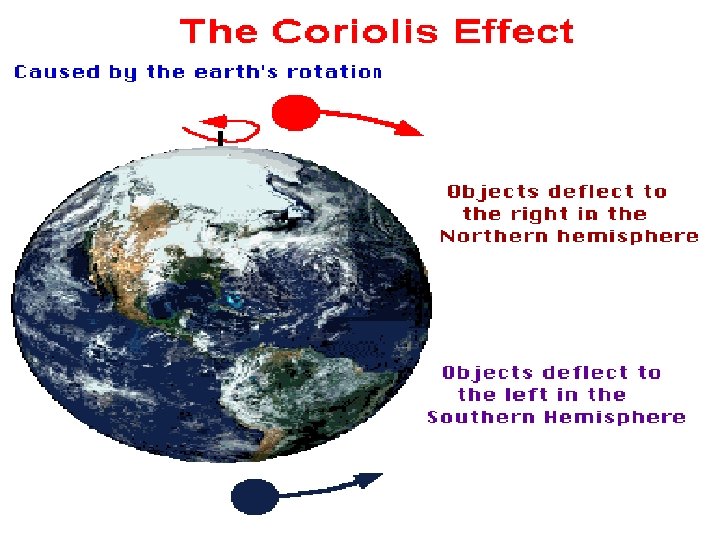
The Corilois Effect • Turns wind to ITS right in North • Turns wind to ITS left in South
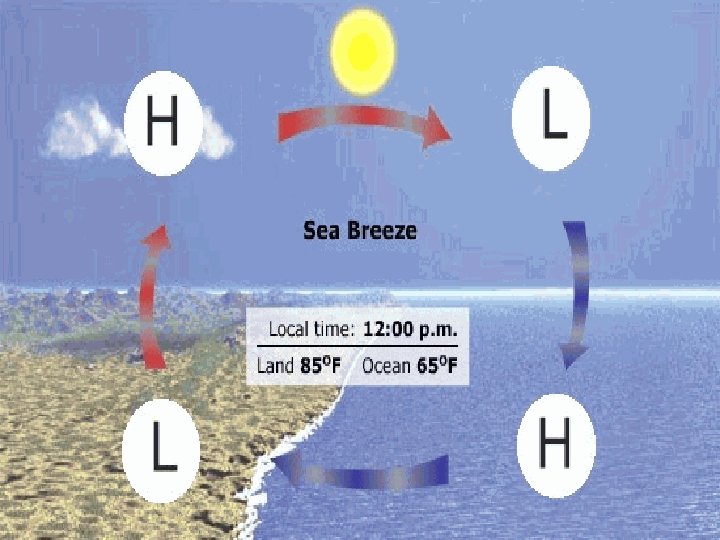
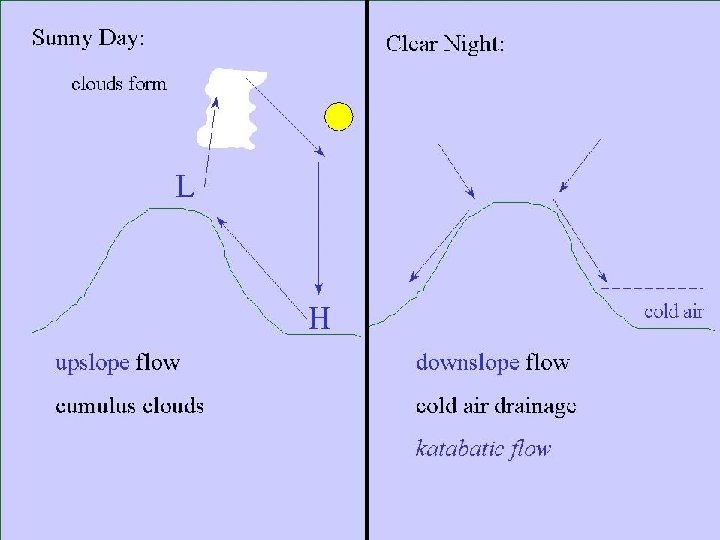
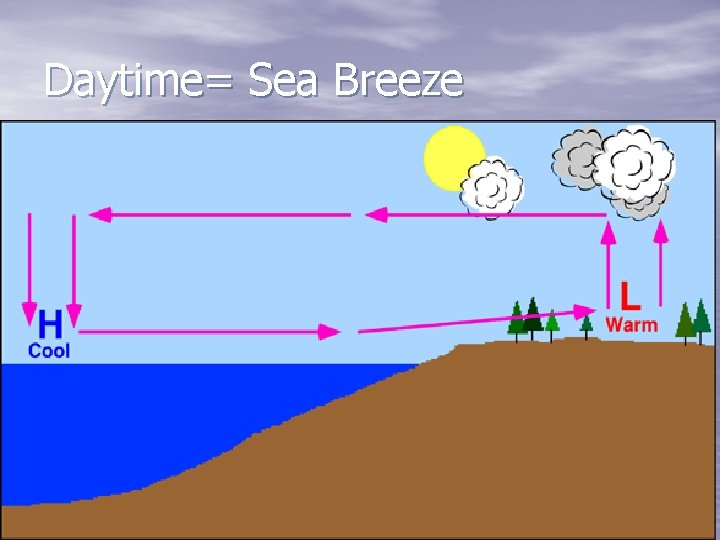
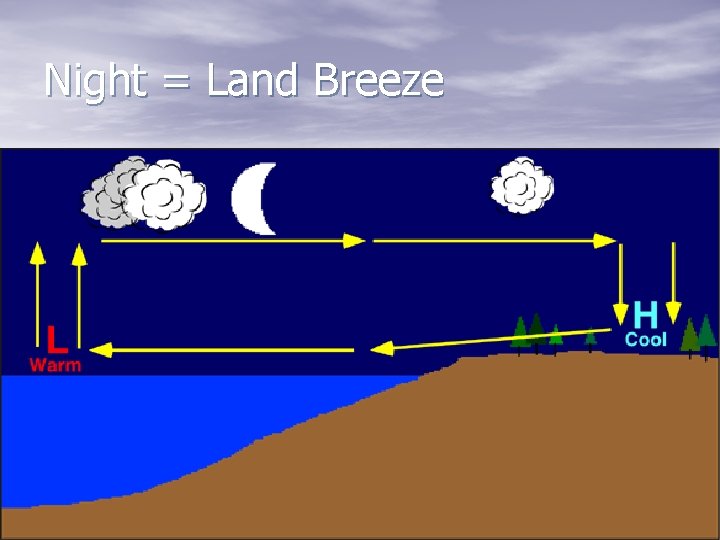
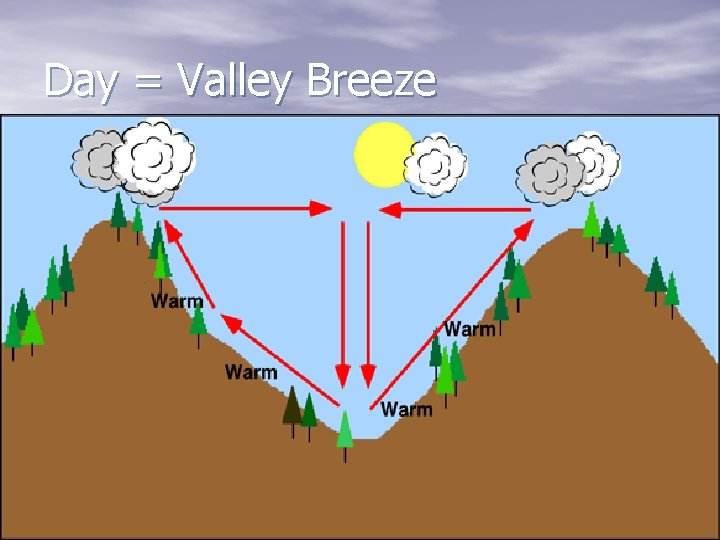
Local Winds • Caused by presence of large body of water • Caused by changes in elevation • These create local differences in AIR PRESSURE
Daytime= Sea Breeze
Night = Land Breeze
Ocean Grove Streets
Day = Valley Breeze
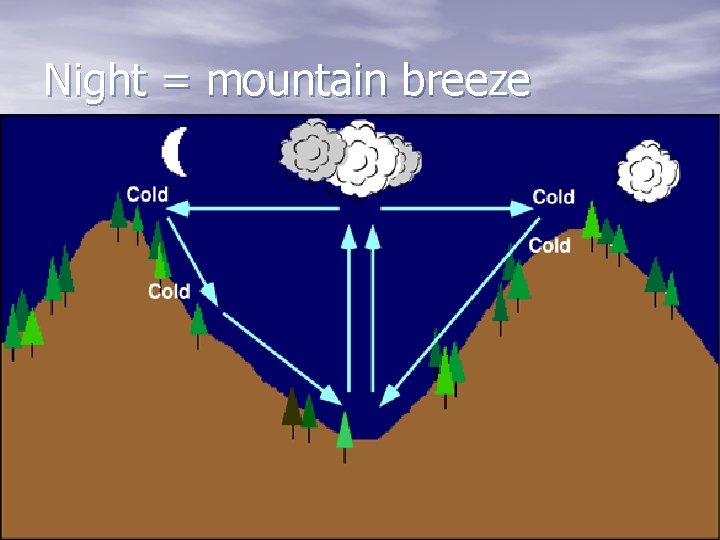
Night = mountain breeze