
WIND What causes wind All winds are caused
- Slides: 23
WIND
What causes wind? § All winds are caused by differences in air pressure. § Wind is the horizontal movement of air from an area of high pressure to an area of low pressure. § Differences in air pressure is caused by unequal heating of the atmosphere.
How do you measure wind? § South winds blow from the south toward the north. North winds blow from the north toward the south. § An anemometer measures wind speed. § An example of wind chill factor is if it is 20 F and the wind speed is 30 mph the wind chill factor makes it feel like -18 F.
What are local winds? § They blow over a short distance. § They are caused by unequal heating of Earth’s surface within a small area. § They form only when no winds are blowing from far away.
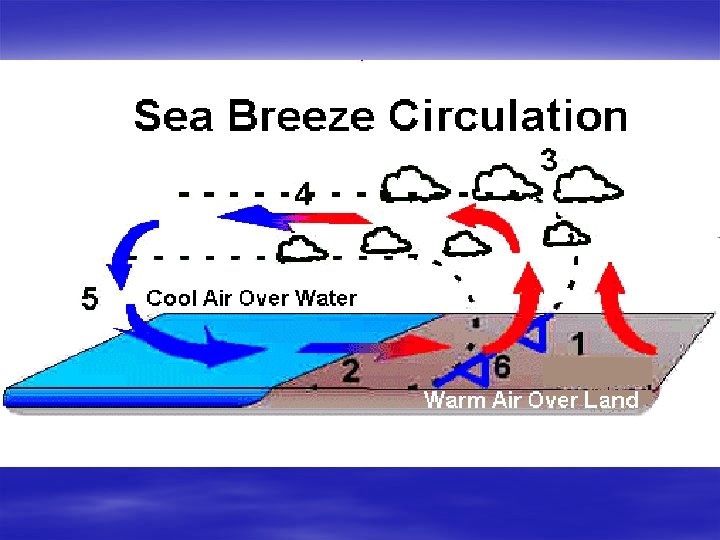
Sea Breezes § Occur during the day. § The land will heat up faster during the day than the water. § The cool air blows inland from the water pushing up the warm air. § The wind that blows from the water is known as sea breezes.
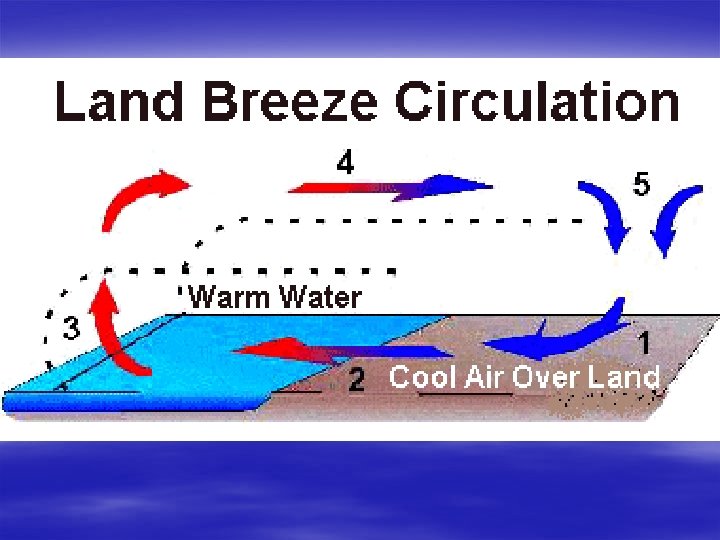
Land Breezes § § § Occur during the night. The land cools off more quickly than the water. Therefore the cool air moves over the water causing the warmer air to rise.
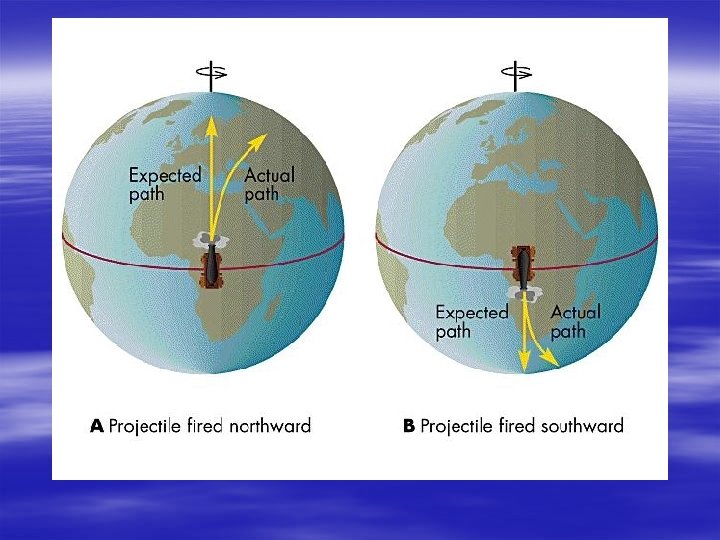
Global Winds § They are long distance winds that blow steadily from specific directions. § The movement of air between the equator and the poles produces global winds. § The Coriolis effect is wind curvature due to Earth’s rotation. § If the Earth didn’t rotate, the wind would blow in a straight line from the poles toward the equator.
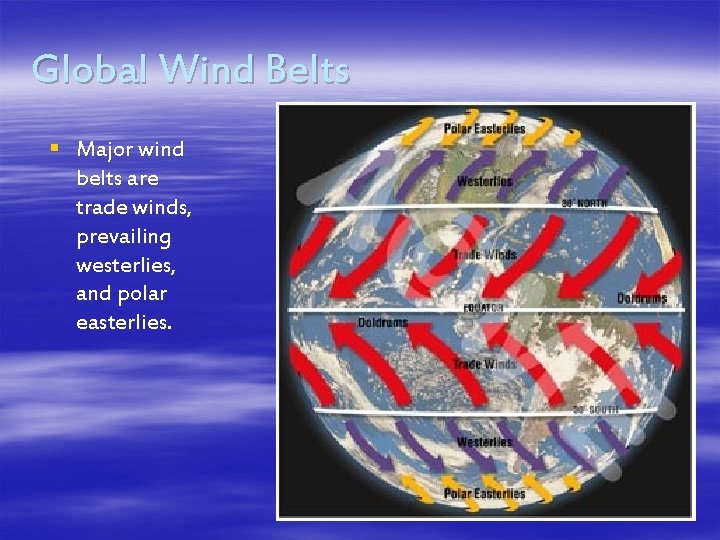
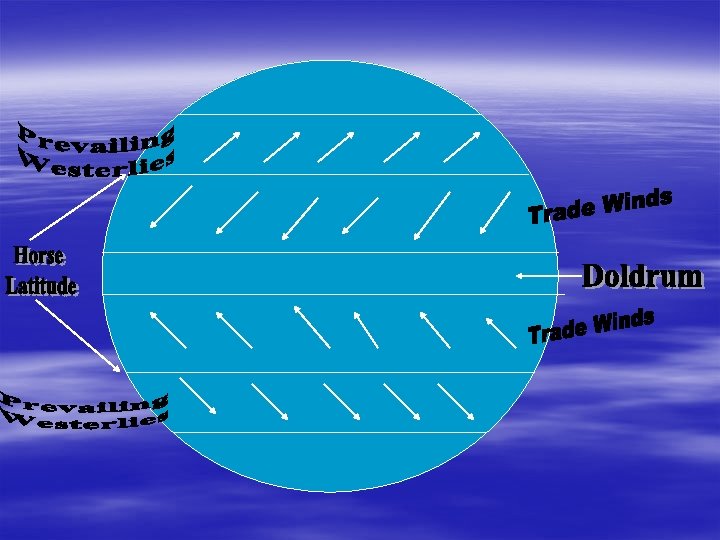
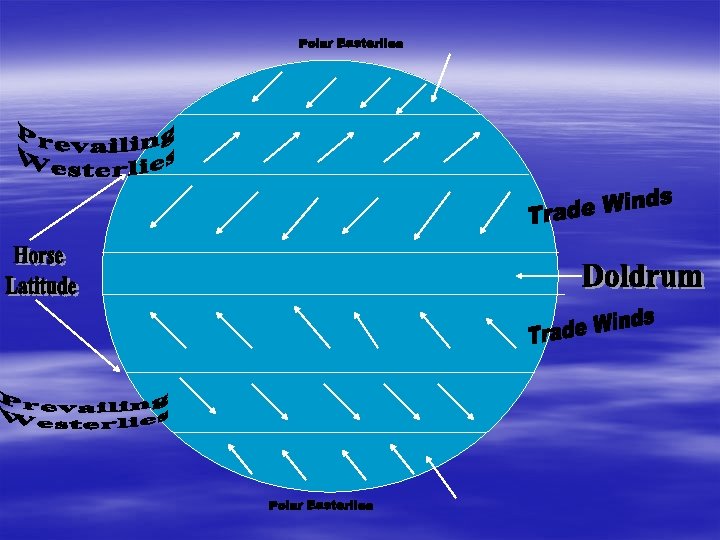
Global Wind Belts § Major wind belts are trade winds, prevailing westerlies, and polar easterlies.
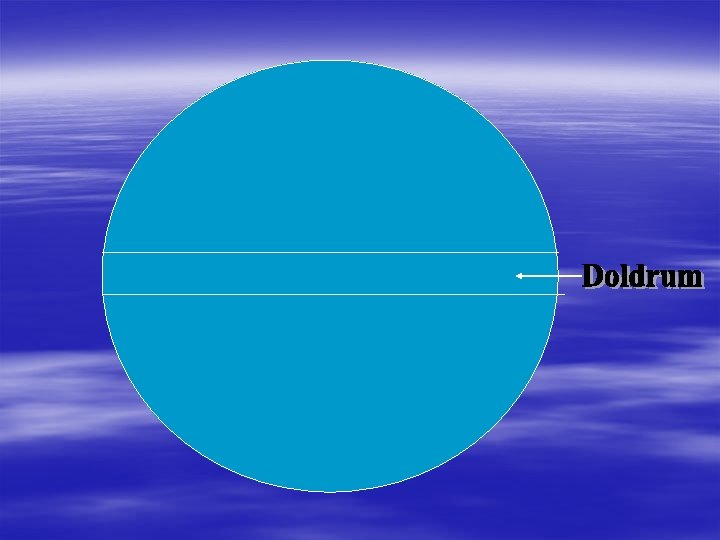
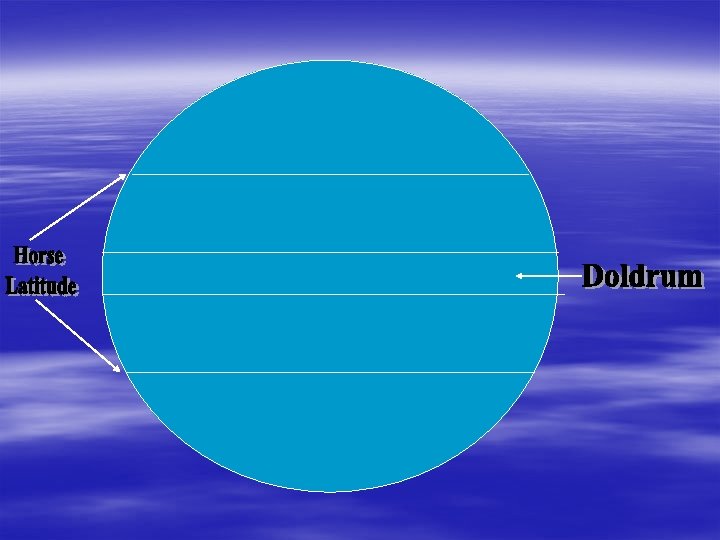
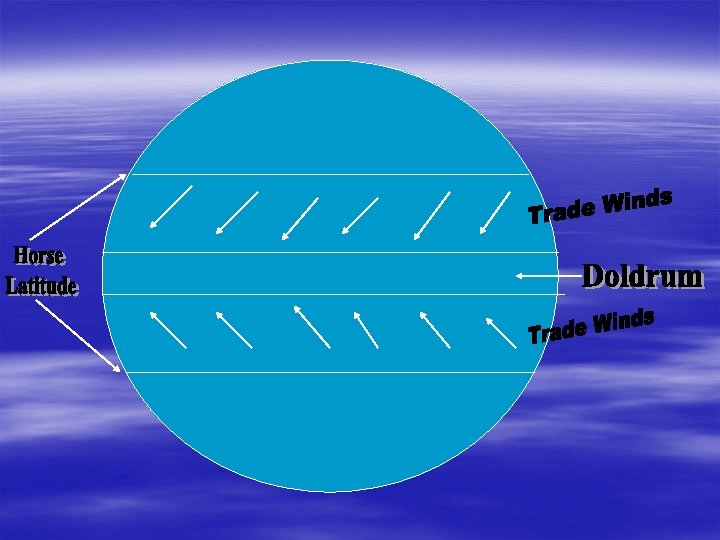
Doldrums § Very little horizontal movement. § Region near equator with little or no wind.
Horse Latitude § 30 degrees N latitude § 30 degrees S latitude
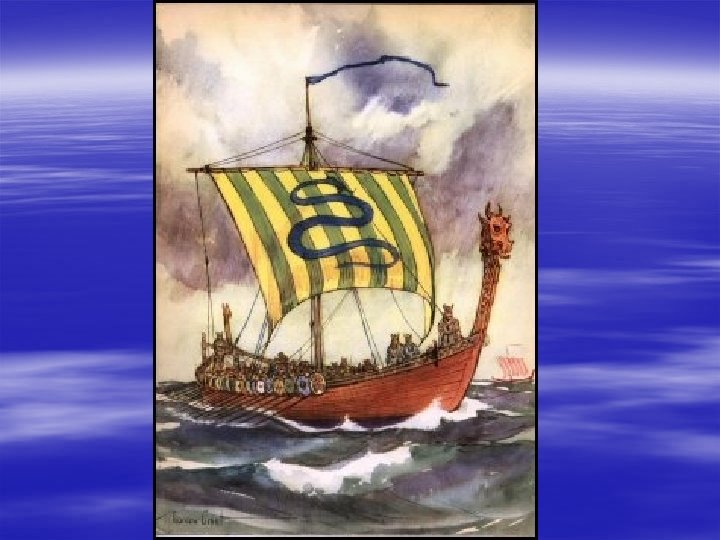
Trade Winds § Winds in the Northern hemisphere between 30 degrees N latitude and the equator blow generally from the northeast. § Winds in the southern hemisphere between 30 degrees S latitude and the equator blow generally from the southeast. § Hundreds of years ago, sailors relied on the trade winds to carry cargo from Europe to the West Indies and South America.
Prevailing Westerlies § They blow generally from the Southwest between 30 degrees N and 60 degrees N latitude. § They blow from the northwest between 30 degrees S and 60 degrees S latitude. § They play an important role in the weather of the United States.
Polar Easterlies § The coriolis effect shifts polar winds to the west. § They meet the prevailing westerlies at about 60 degrees N and 60 degrees S latitude.
Jet Streams § 10 km above the earth’s surface are bands of high -speed winds. § They blow from the west to the east at speeds of 200 -400 km/h. § Airplanes are aided by the jet stream when traveling east. § Airplanes flying at jet stream altitudes are slowed down when traveling west against the jet stream winds.