
Wind Tunnel Lab 4 What would you use
Wind Tunnel: Lab 4 What would you use a wind tunnel for?

Wind Tunnel Experiments
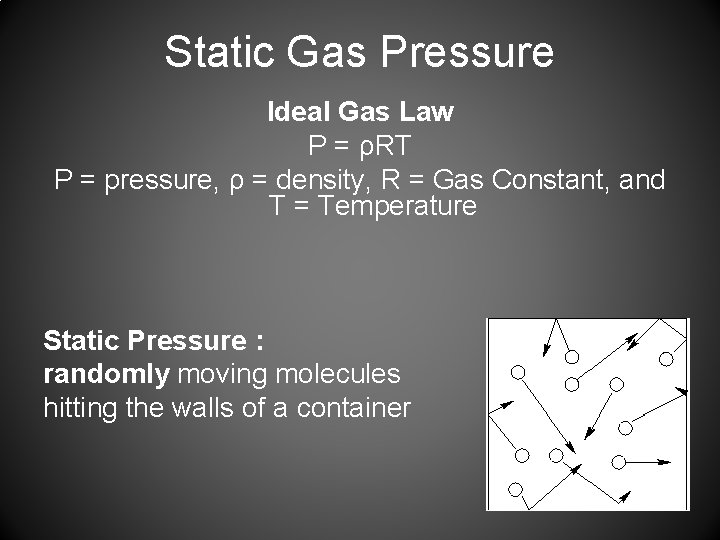
Static Gas Pressure Ideal Gas Law P = ρRT P = pressure, ρ = density, R = Gas Constant, and T = Temperature Static Pressure : randomly moving molecules hitting the walls of a container
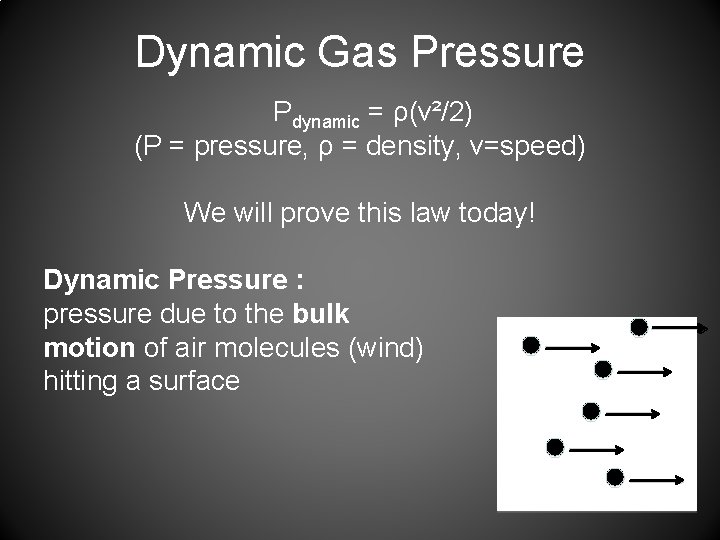
Dynamic Gas Pressure Pdynamic = ρ(v²/2) (P = pressure, ρ = density, v=speed) We will prove this law today! Dynamic Pressure : pressure due to the bulk motion of air molecules (wind) hitting a surface
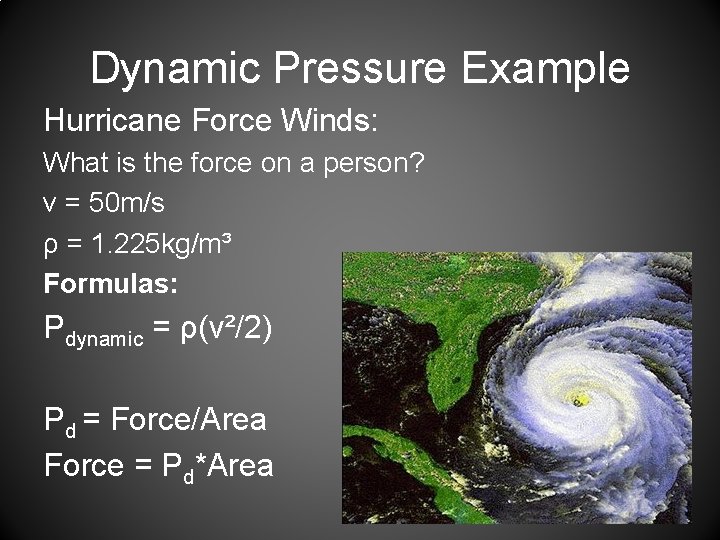
Dynamic Pressure Example Hurricane Force Winds: What is the force on a person? v = 50 m/s ρ = 1. 225 kg/m³ Formulas: Pdynamic = ρ(v²/2) Pd = Force/Area Force = Pd*Area
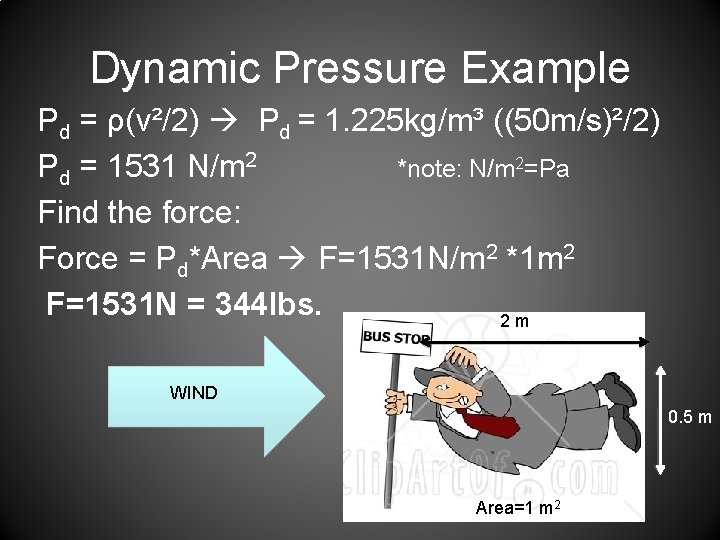
Dynamic Pressure Example Pd = ρ(v²/2) Pd = 1. 225 kg/m³ ((50 m/s)²/2) Pd = 1531 N/m 2 *note: N/m 2=Pa Find the force: Force = Pd*Area F=1531 N/m 2 *1 m 2 F=1531 N = 344 lbs. 2 m WIND 0. 5 m Area=1 m 2
5 pts: 30 second group question • What would happen if we double the wind speed?
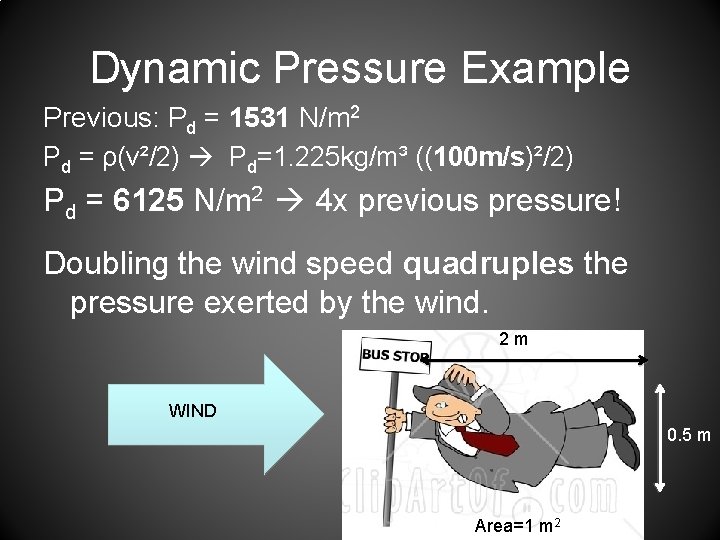
Dynamic Pressure Example Previous: Pd = 1531 N/m 2 Pd = ρ(v²/2) Pd=1. 225 kg/m³ ((100 m/s)²/2) Pd = 6125 N/m 2 4 x previous pressure! Doubling the wind speed quadruples the pressure exerted by the wind. 2 m WIND 0. 5 m Area=1 m 2
Strong Wind Speed Movie https: //www. youtube. com/wa tch? v=ez. Iq. Fyj. AUP 4
Part I – Prove Equation • Verify Dynamic Pressure Equation • Equipment: pitot tube, turbometer, and manometer. • You MUST level the manometer BEFORE you begin this experiment, and DON’T MOVE IT once you’ve leveled it. • Adjust the wind speed with the Variac.
Turbometer • Which direction is the turbometer held to record the wind speed?
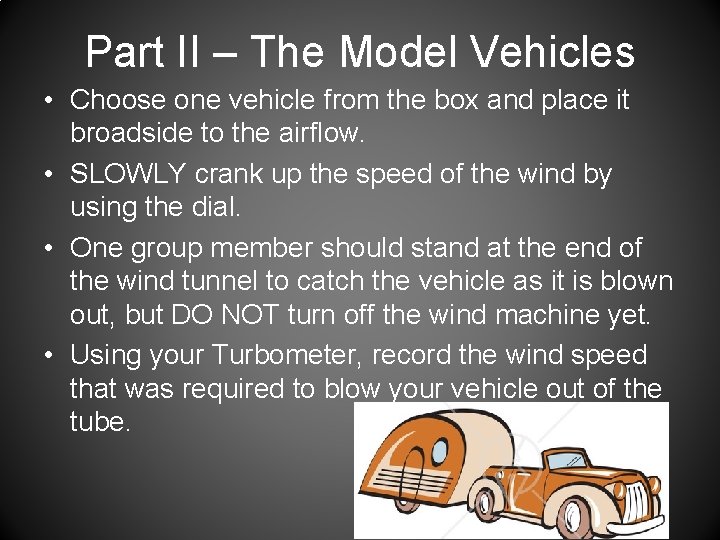
Part II – The Model Vehicles • Choose one vehicle from the box and place it broadside to the airflow. • SLOWLY crank up the speed of the wind by using the dial. • One group member should stand at the end of the wind tunnel to catch the vehicle as it is blown out, but DO NOT turn off the wind machine yet. • Using your Turbometer, record the wind speed that was required to blow your vehicle out of the tube.

High profiles vehicles don’t do well in crosswinds!
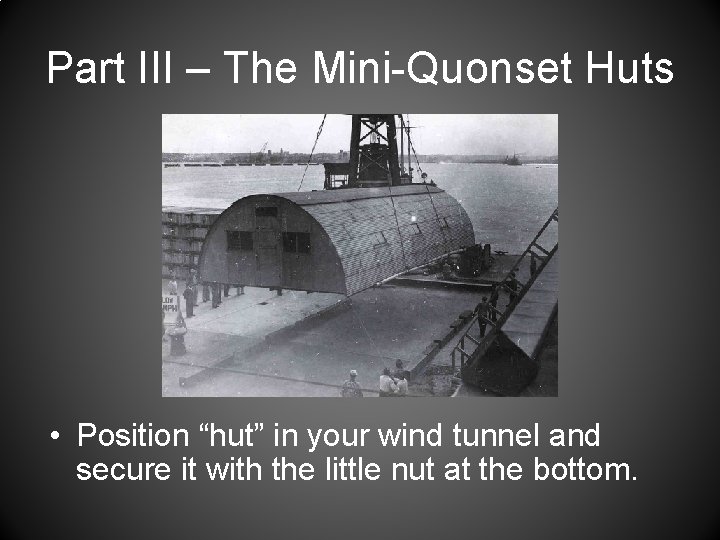
Part III – The Mini-Quonset Huts • Position “hut” in your wind tunnel and secure it with the little nut at the bottom.
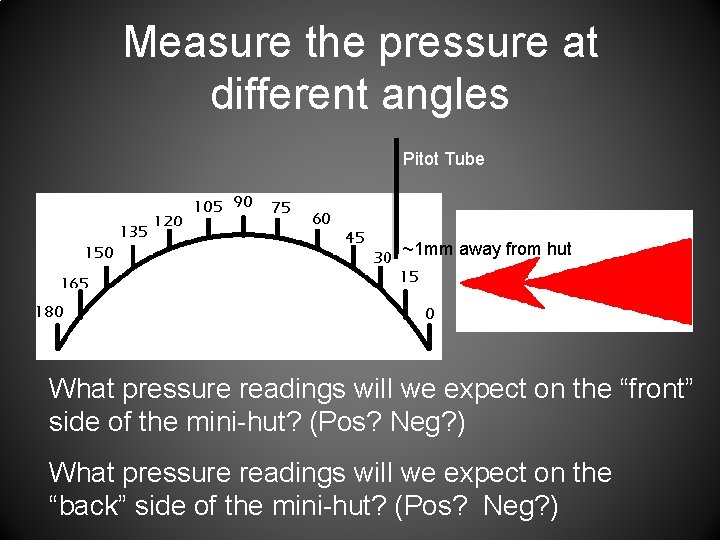
Measure the pressure at different angles Pitot Tube ~1 mm away from hut Wind What pressure readings will we expect on the “front” side of the mini-hut? (Pos? Neg? ) What pressure readings will we expect on the “back” side of the mini-hut? (Pos? Neg? )
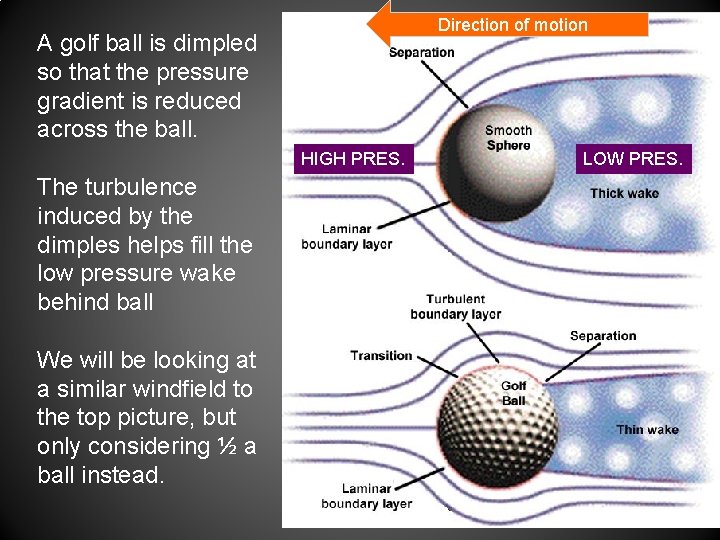
Direction of motion A golf ball is dimpled so that the pressure gradient is reduced across the ball. HIGH PRES. The turbulence induced by the dimples helps fill the low pressure wake behind ball We will be looking at a similar windfield to the top picture, but only considering ½ a ball instead. LOW PRES.

• What values should you enter into the Excel worksheet when the pressure is negative?
High Winds vs. Roofs https: //youtu. be/a. Bpsfdv_2 FY? t=112 https: //youtu. be/bcn. R 4 Y 2 u. DDs? t=271
Lab Report • Objectives • Activity: Completed Excel Worksheet – Typed responses with units • 4 Questions – Show your units with calculations! • General Conclusion

Get Started! (it will be loud in here)
- Slides: 20