
Wind Tunnel Experiments Investigating the Aerodynamics of Sports





- Slides: 30
Wind Tunnel Experiments Investigating the Aerodynamics of Sports Balls Team Members: Colin Jemmott Sheldon Logan Alexis Utvich Advisor: Prof. Jenn Rossmann
Overview l Motivation/Background l Flow Visualization l Calibration – Pitot tube – Hot wire anemometer l Wiffle ball instrumentation/experiments l Baseball instrumentation/experiments
Motivation l Previous studies have not produced a complete understanding of the flowfield around a spinning baseball l A comprehensive Wiffle ball study has not been documented before
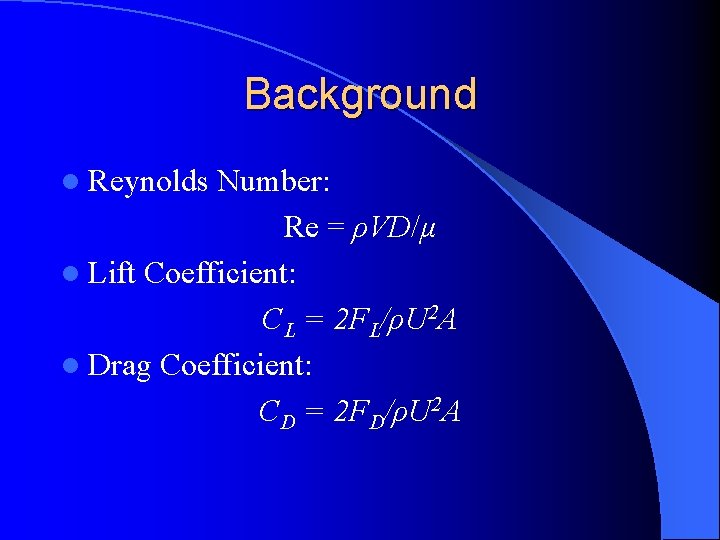
Background l Reynolds Number: Re = ρVD/μ l Lift Coefficient: CL = 2 FL/ρU 2 A l Drag Coefficient: CD = 2 FD/ρU 2 A
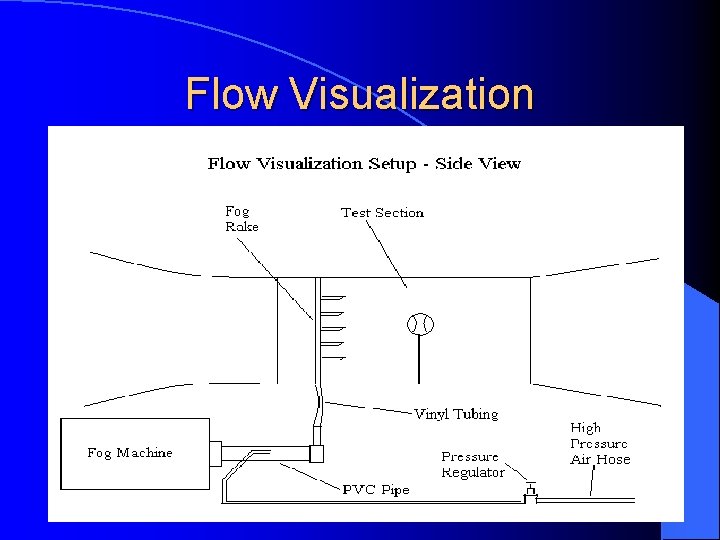
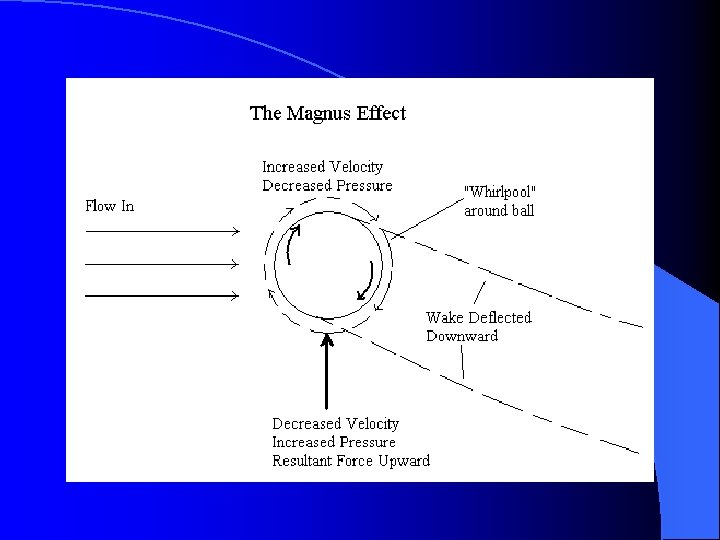
Flow Visualization
Calibration: Velocity Profiles l Measurements were taken to characterize flow in the test section l Pitot tube measurements were conducted at heights of 1, 2, 4, 6, 8, 10, and 11 in. and fan settings of 10, 30, and 50 Hz – Velocity profiles were constructed from these measurements
Calibration: Velocity Profiles
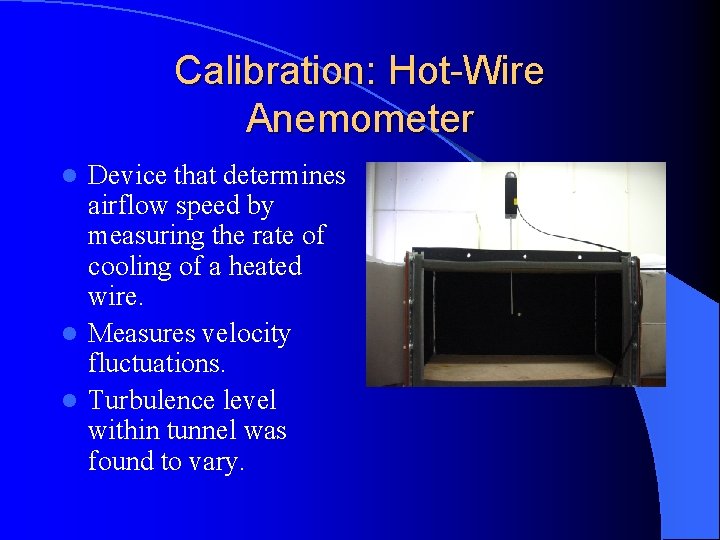
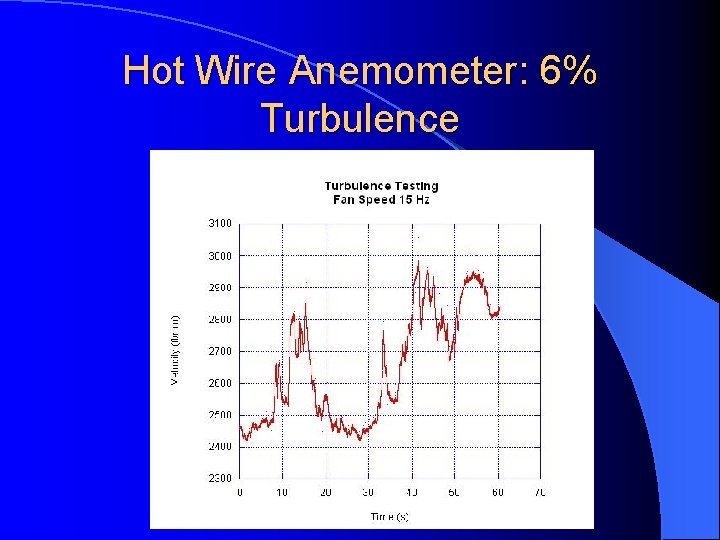
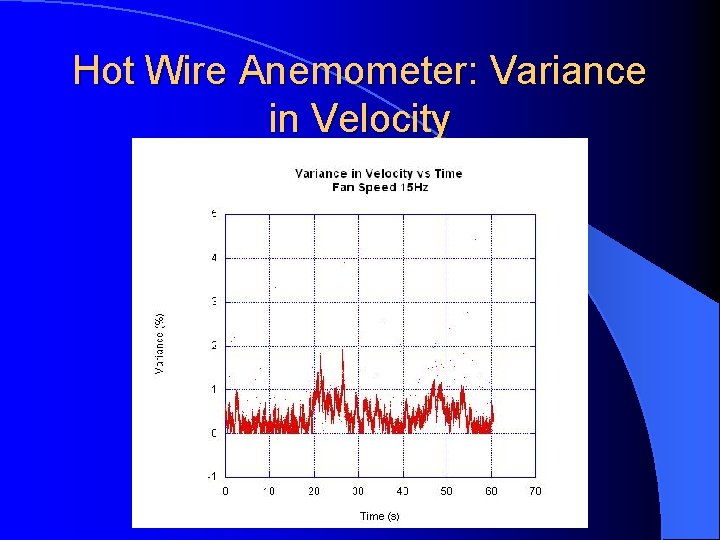
Calibration: Hot-Wire Anemometer Device that determines airflow speed by measuring the rate of cooling of a heated wire. l Measures velocity fluctuations. l Turbulence level within tunnel was found to vary. l
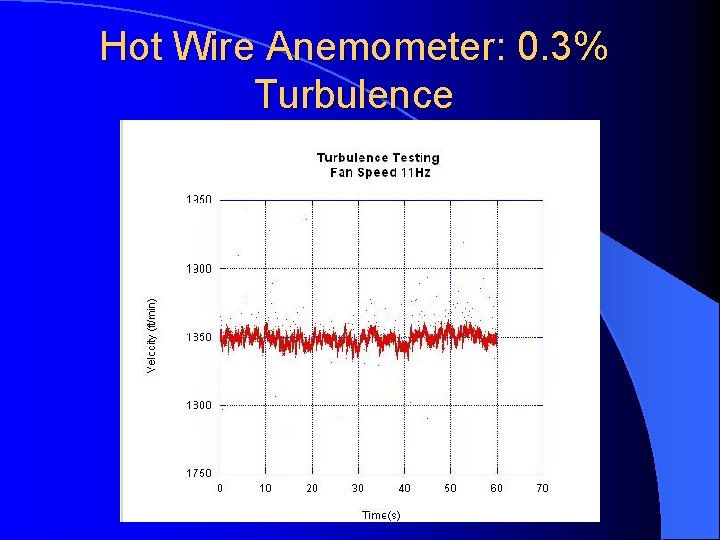
Hot Wire Anemometer: 0. 3% Turbulence
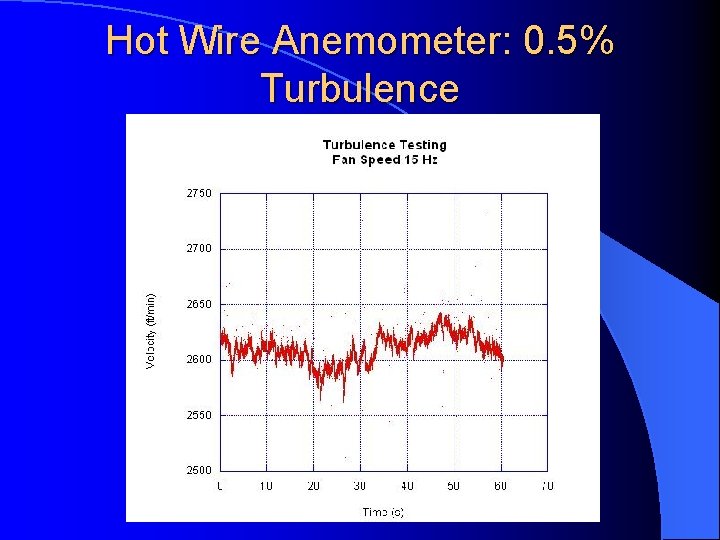
Hot Wire Anemometer: 0. 5% Turbulence
Hot Wire Anemometer: 6% Turbulence
Hot Wire Anemometer: Variance in Velocity
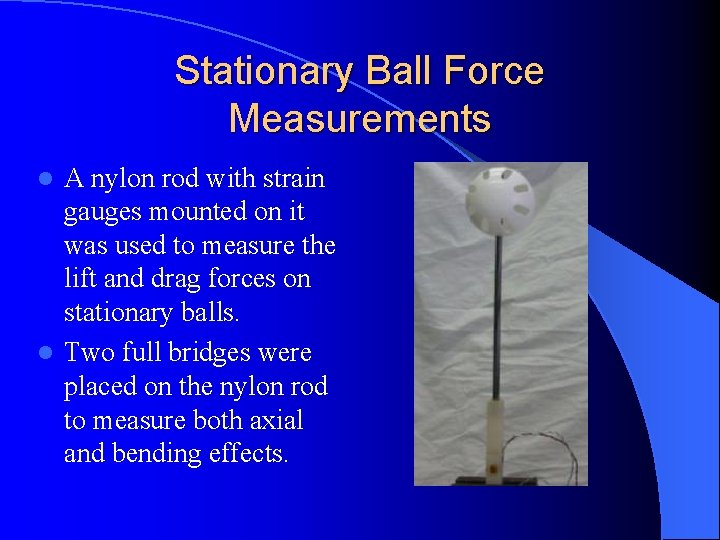
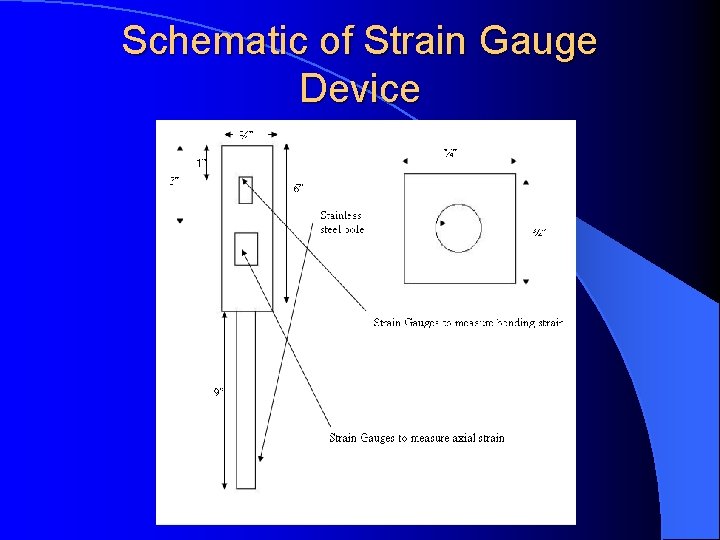
Stationary Ball Force Measurements A nylon rod with strain gauges mounted on it was used to measure the lift and drag forces on stationary balls. l Two full bridges were placed on the nylon rod to measure both axial and bending effects. l
Schematic of Strain Gauge Device
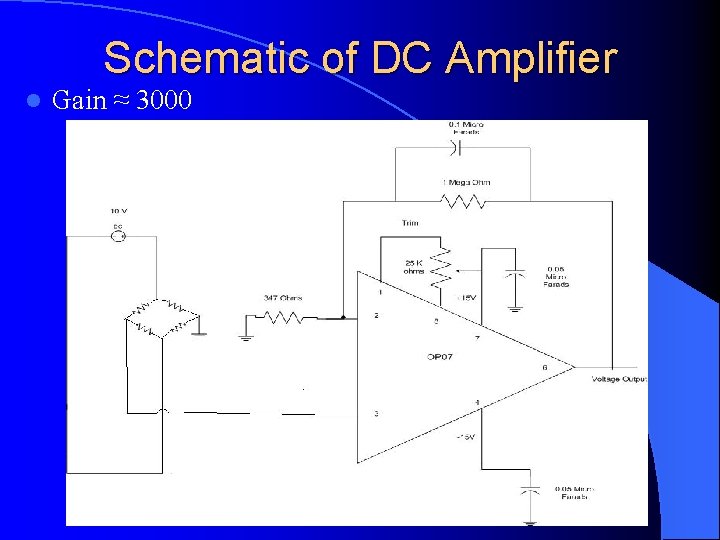
Schematic of DC Amplifier l Gain ≈ 3000
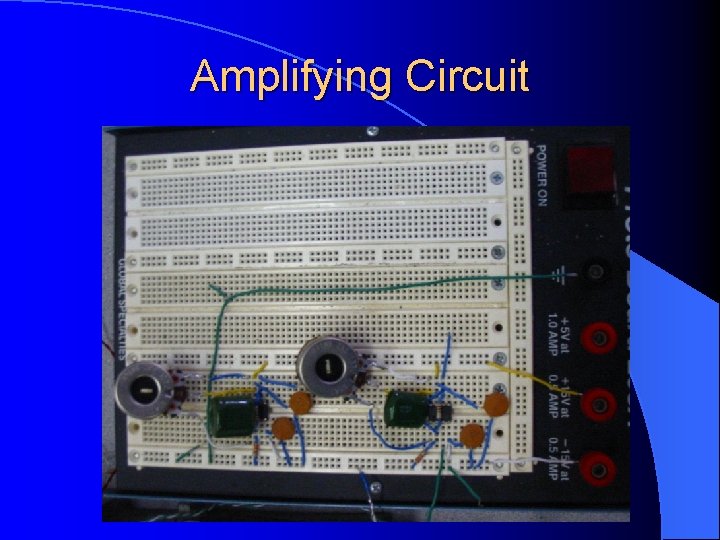
Amplifying Circuit
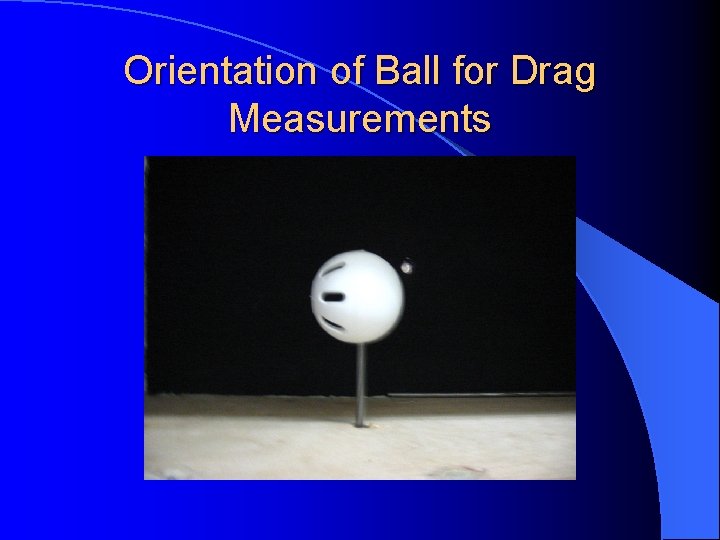
Orientation of Ball for Drag Measurements
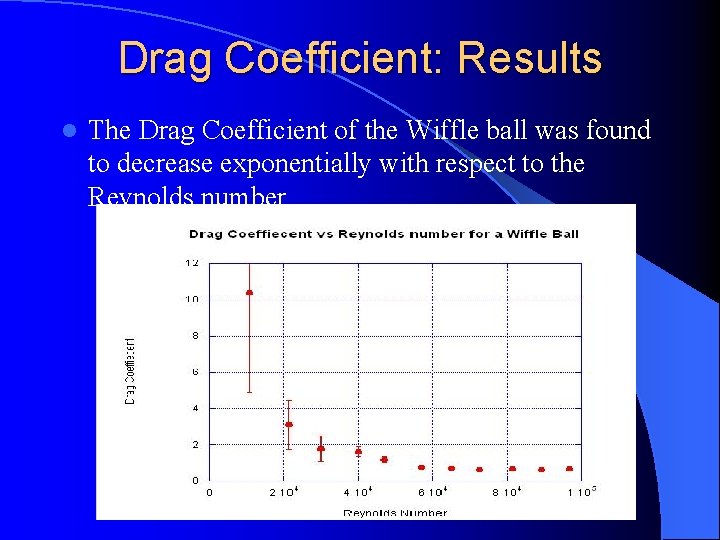
Drag Coefficient: Results l The Drag Coefficient of the Wiffle ball was found to decrease exponentially with respect to the Reynolds number.
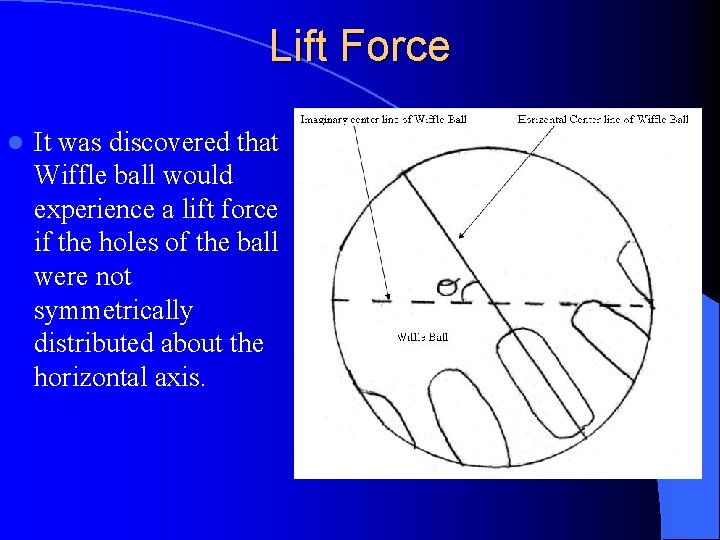
Lift Force l It was discovered that Wiffle ball would experience a lift force if the holes of the ball were not symmetrically distributed about the horizontal axis.
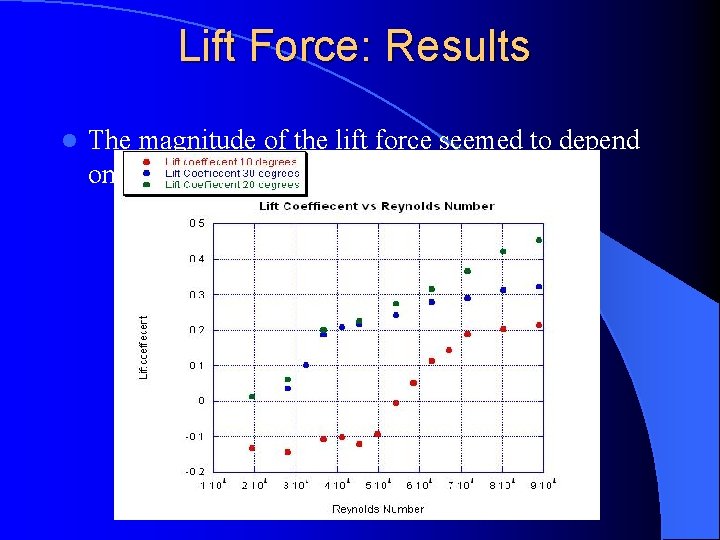
Lift Force: Results l The magnitude of the lift force seemed to depend on the angle at which the ball was tilted.
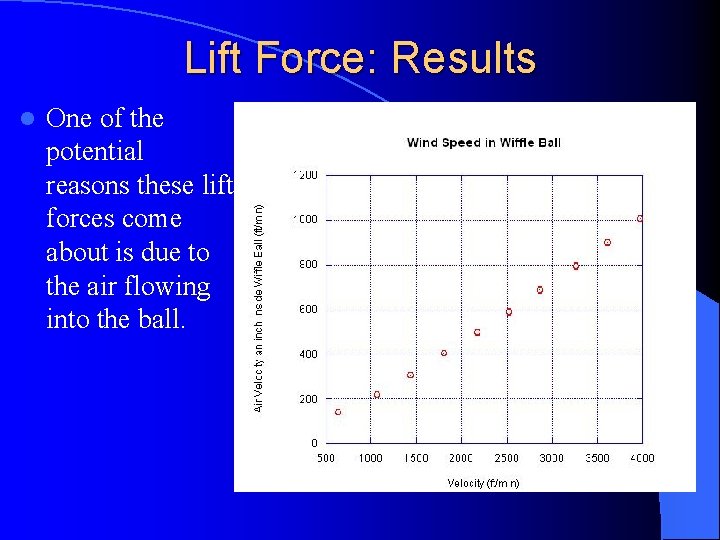
Lift Force: Results l One of the potential reasons these lift forces come about is due to the air flowing into the ball.
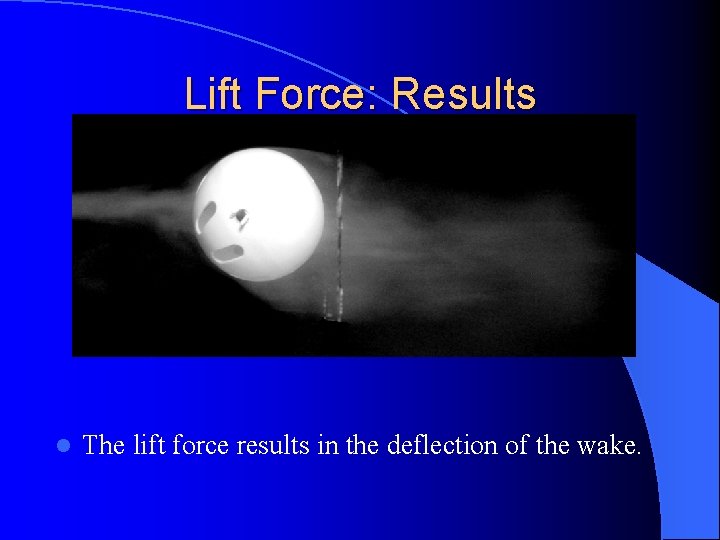
Lift Force: Results l The lift force results in the deflection of the wake.
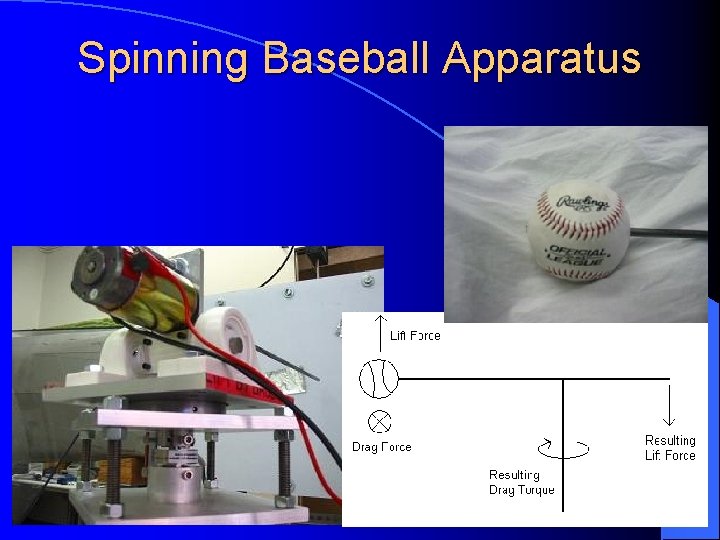
Spinning Baseball Apparatus
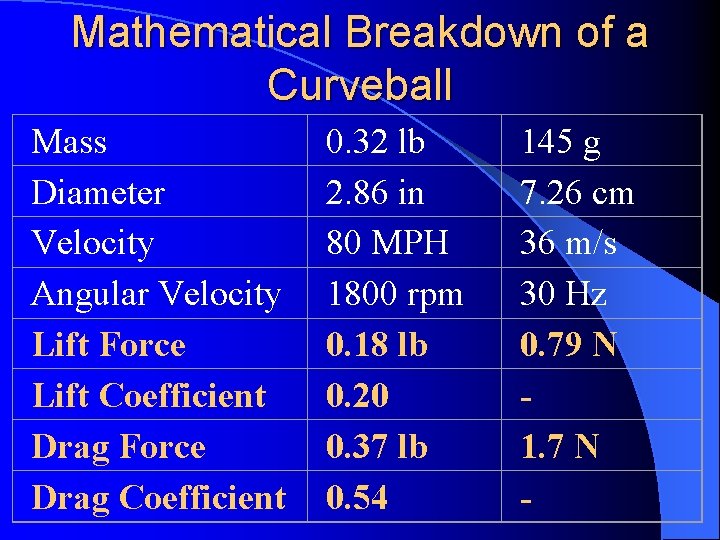
Mathematical Breakdown of a Curveball Mass Diameter Velocity Angular Velocity Lift Force Lift Coefficient Drag Force Drag Coefficient 0. 32 lb 2. 86 in 80 MPH 1800 rpm 0. 18 lb 0. 20 0. 37 lb 0. 54 145 g 7. 26 cm 36 m/s 30 Hz 0. 79 N 1. 7 N -
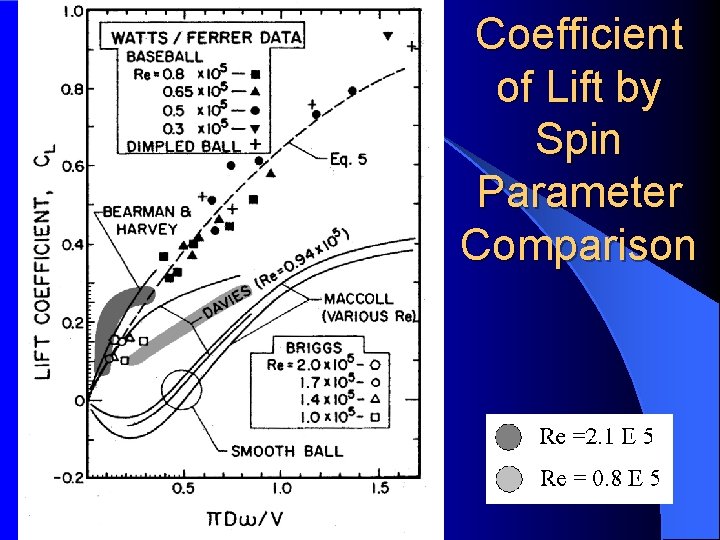
Coefficient of Lift by Spin Parameter Comparison
Conclusion l Turbulence levels in the wind tunnel are satisfactorily low. l Lift force on a Wiffle ball is dependent on its orientation. l Lift coefficient for a spinning baseball was found to have stronger dependence on Reynolds number than previously reported.
Acknowledgements l Sam Abdelmuati l Mike Wheeler l Prof. Carl Baumgaertner l Profs Bright, Cha, and Duron l Prof. Joe King l Prof. Toby Rossmann l Prof. Jenn Rossmann