
Wind Erosion Weakest of 5 agents Wind is

- Slides: 17
Wind Erosion Weakest of 5 agents
Wind is the weakest of the 5 agents of erosion, having the least effect on land – except in some areas such as deserts where there are few plants. Recall the Dust Bowl of the 1930 s. Wind moves sediment in a process called DEFLATION, and changes the shape of earth surface by forming new land features where the sediment leaves (erodes) and where it is deposited (piled up). Wind has little effect on solid rock, and moves mostly sediment that has already weathered.
Abrasion Wind weathers and erodes mostly through abrasion as wind picks up particles of sand. As the wind hits rock and other surfaces, they are scratched and sanded away, and the sediment is carried away by the wind.
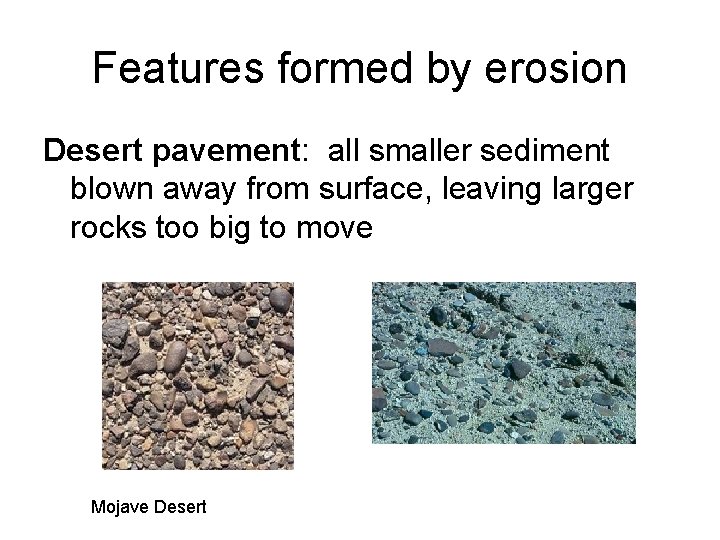
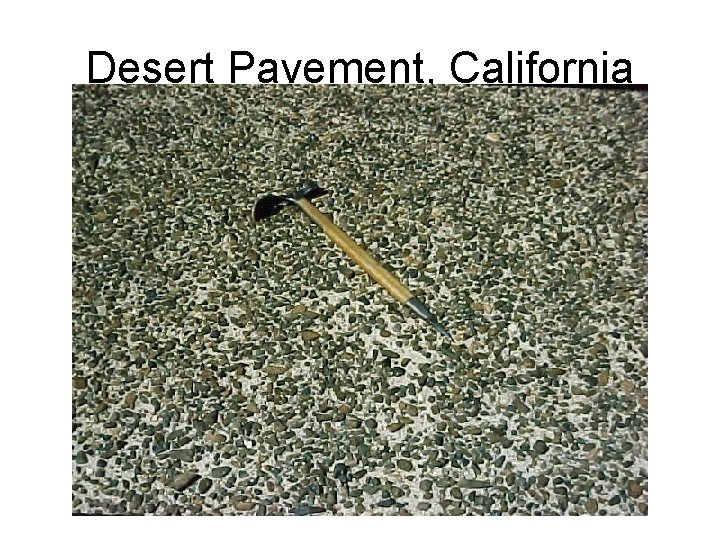
Features formed by erosion Desert pavement: all smaller sediment blown away from surface, leaving larger rocks too big to move Mojave Desert
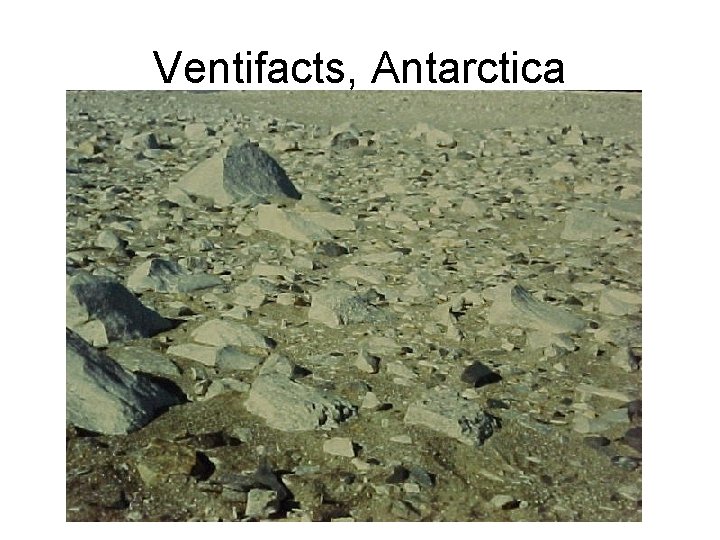
Ventifacts, Antarctica
Desert Pavement, California
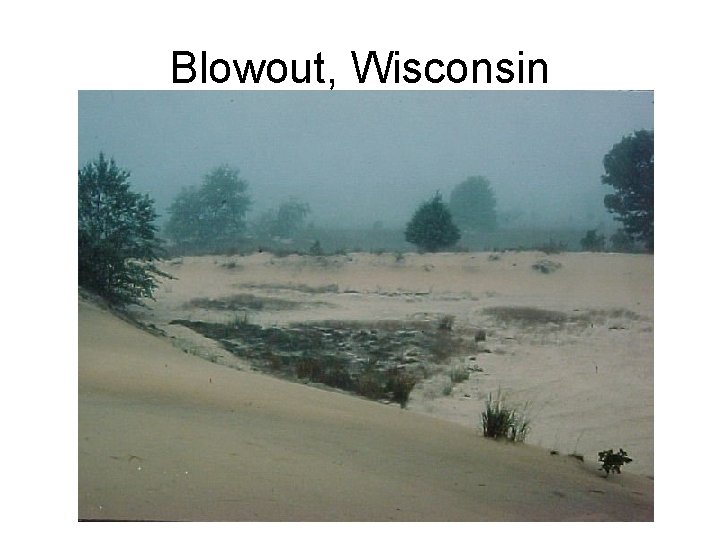
A BLOWOUT is a hollow where sand blown away, leaving a depression in the ground. This can be a small hole to a huge depression.
Blowout, Wisconsin
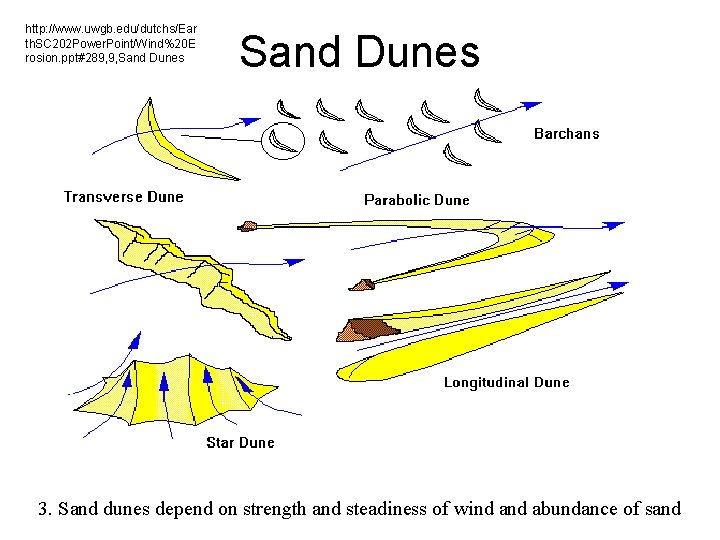
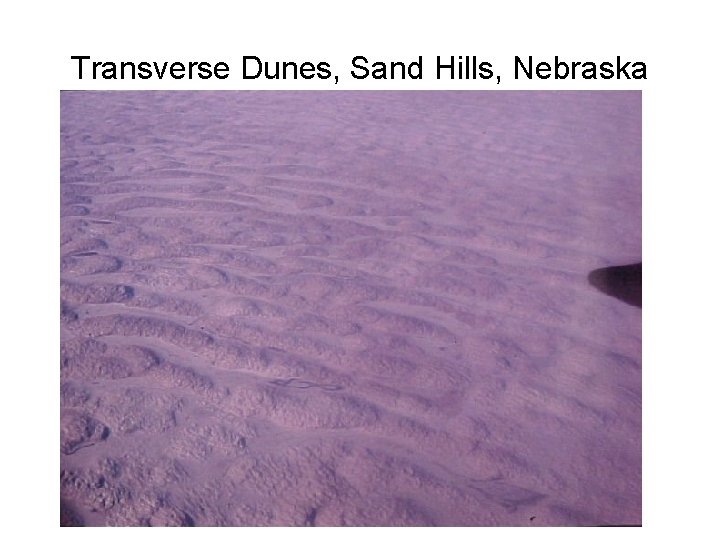
Features formed by deposition Sand Dunes – piles of sand dropped by the wind when it slows or stops, or when wind hits an obstacle. The large grains of sand pile up and make dunes. Dunes can take many different shapes depending on the direction of the wind and the landscape.
http: //www. uwgb. edu/dutchs/Ear th. SC 202 Power. Point/Wind%20 E rosion. ppt#289, 9, Sand Dunes 3. Sand dunes depend on strength and steadiness of wind abundance of sand
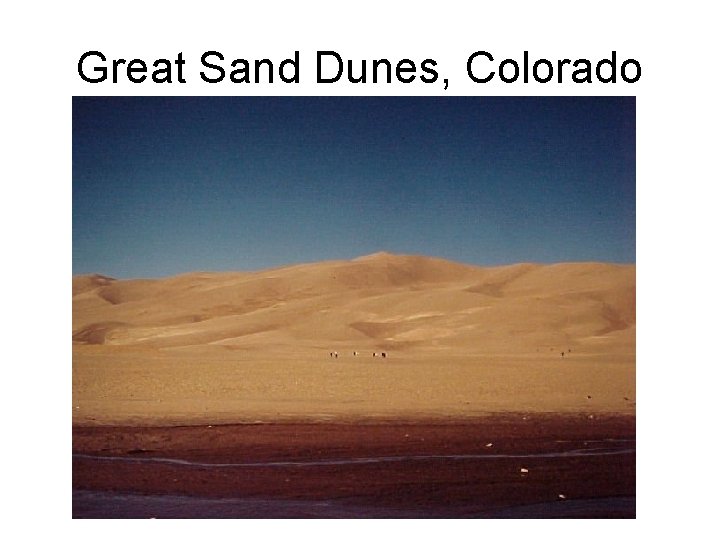
Great Sand Dunes, Colorado
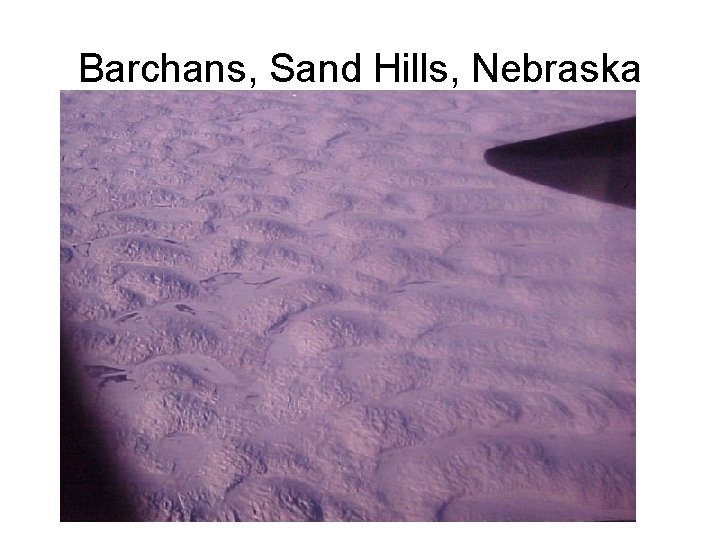
Barchans, Sand Hills, Nebraska
Transverse Dunes, Sand Hills, Nebraska
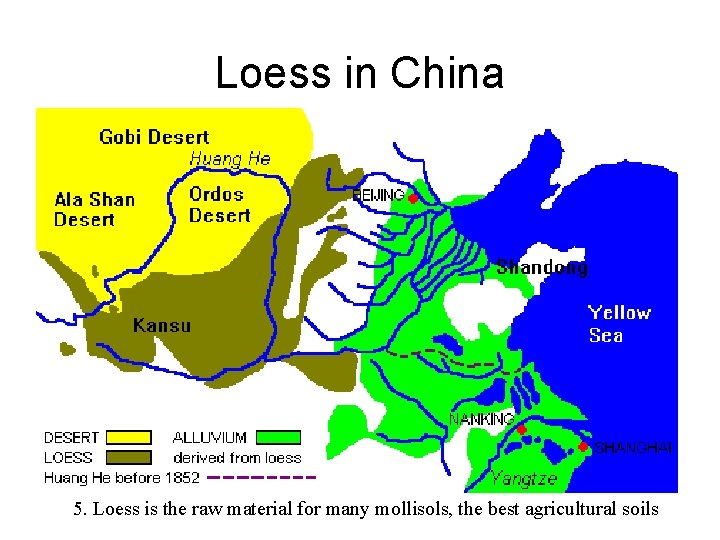
Loess deposits Loess is fine sediment (silt, clay) particles carried long distances by the wind. When it is deposited dropped, spreads over large areas in layers; helps fertilize soil.
Loess in China 5. Loess is the raw material for many mollisols, the best agricultural soils
Loess in the U. S. Loess is the raw material for many mollisols, the best agricultural soils
How does wind move the sediment? Fine particles: carried through the air (silt, clay, sand only in stronger gusts) Medium-sized particles: skip, bounce (sand) Larger particles: slide or roll (rocks & pebbles)