
Wind Energy Jacquie Teigan and Eden What is

- Slides: 21
Wind Energy Jacquie, Teigan, and Eden
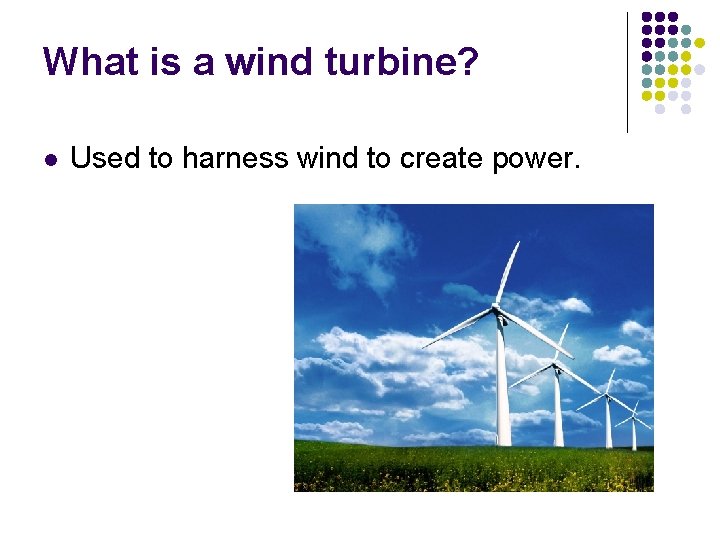
What is a wind turbine? l Used to harness wind to create power.
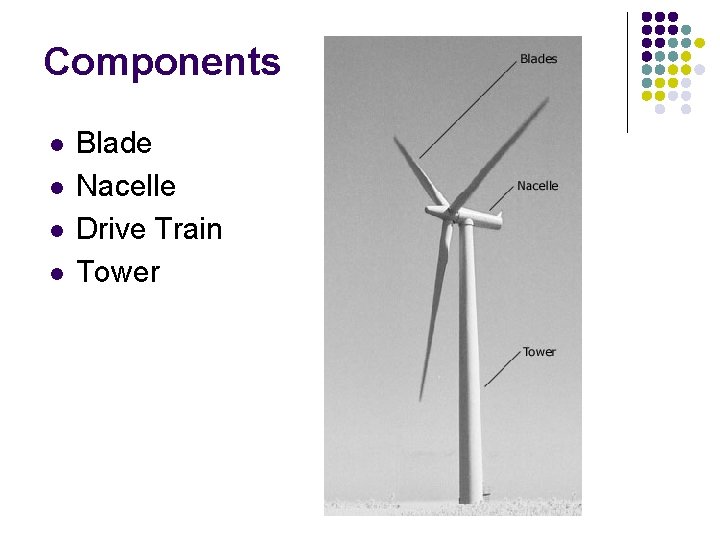
Components l l Blade Nacelle Drive Train Tower
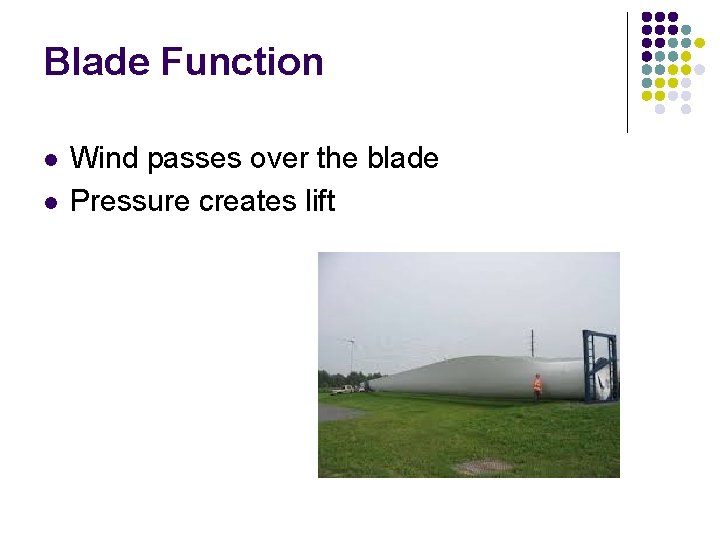
Blade Function l l Wind passes over the blade Pressure creates lift
Nacelle Function l l Sits atop the tower Contains main technical components
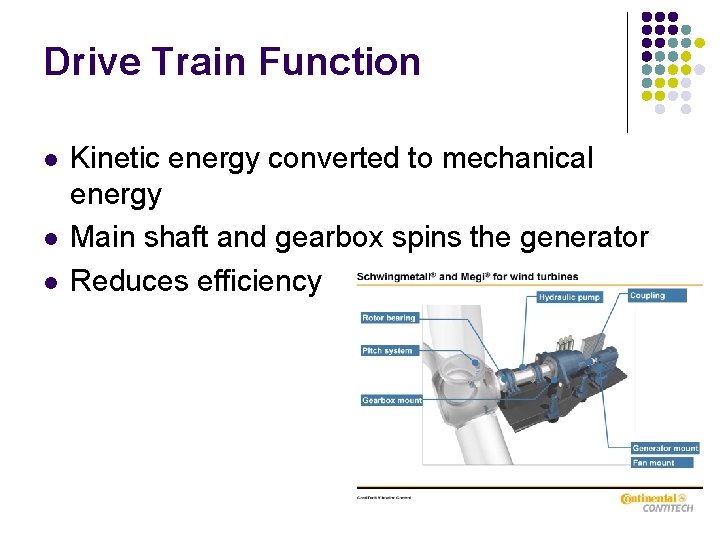
Drive Train Function l l l Kinetic energy converted to mechanical energy Main shaft and gearbox spins the generator Reduces efficiency
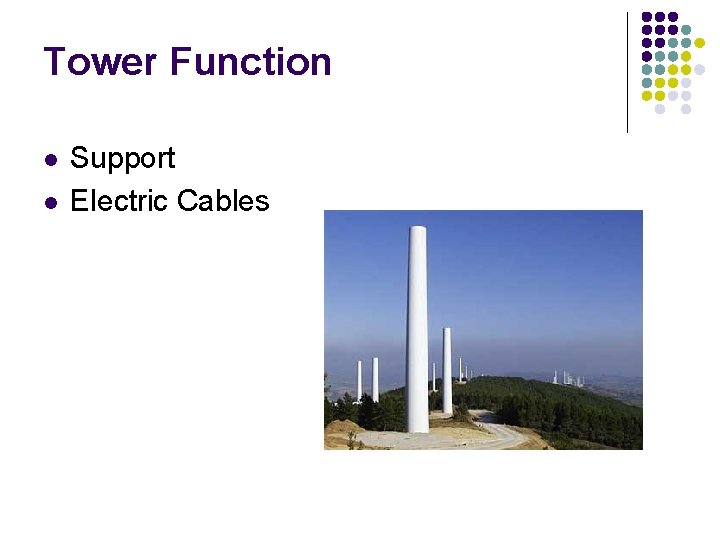
Tower Function l l Support Electric Cables
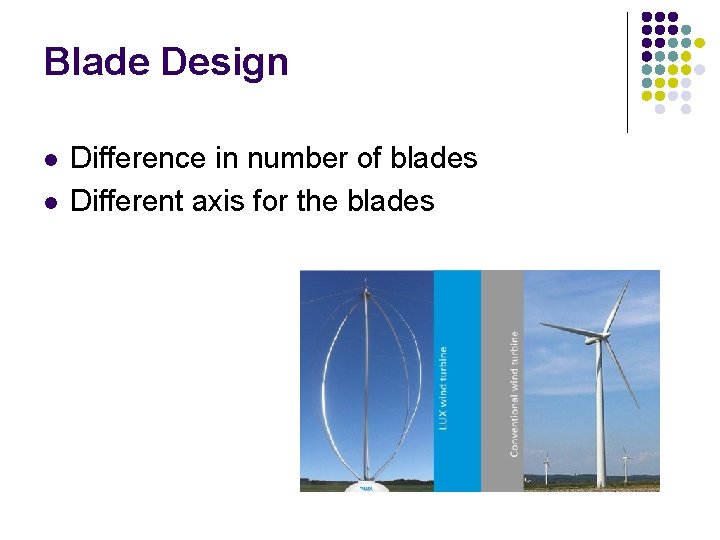
Blade Design l l Difference in number of blades Different axis for the blades
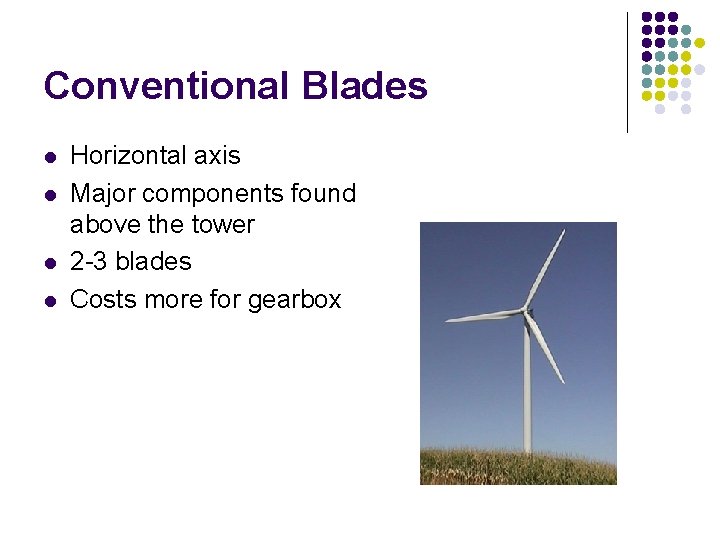
Conventional Blades l l Horizontal axis Major components found above the tower 2 -3 blades Costs more for gearbox
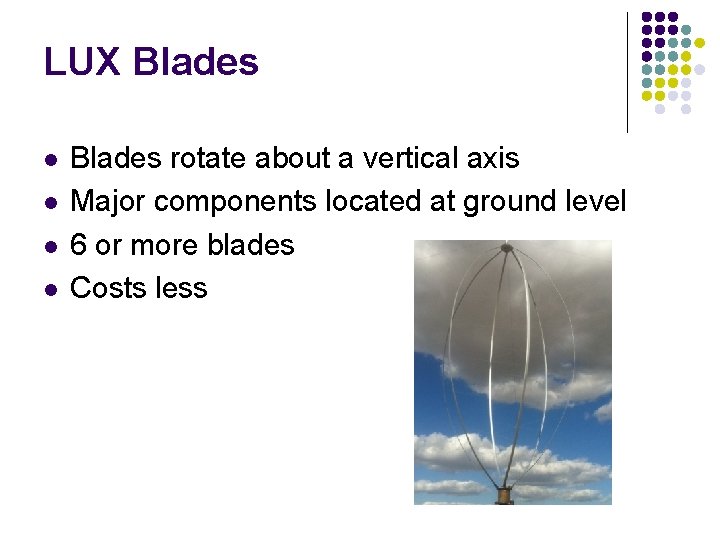
LUX Blades l l Blades rotate about a vertical axis Major components located at ground level 6 or more blades Costs less
Pros l l l Renewable Large energy potential Produces 80 times more energy than it takes to create
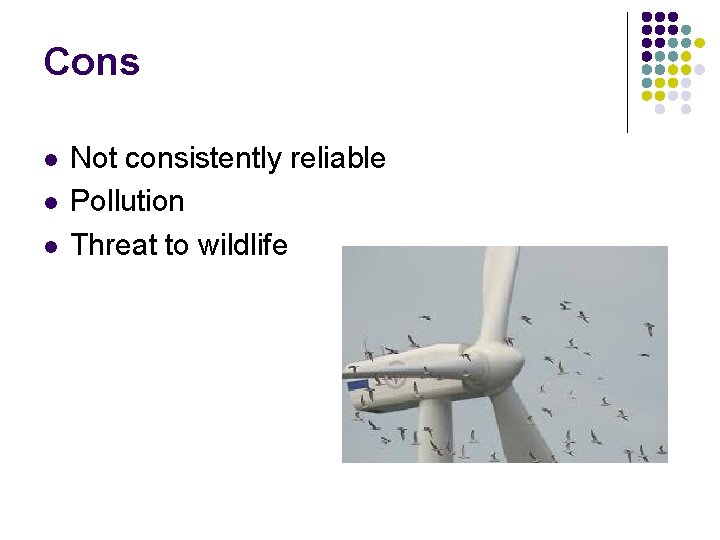
Cons l l l Not consistently reliable Pollution Threat to wildlife
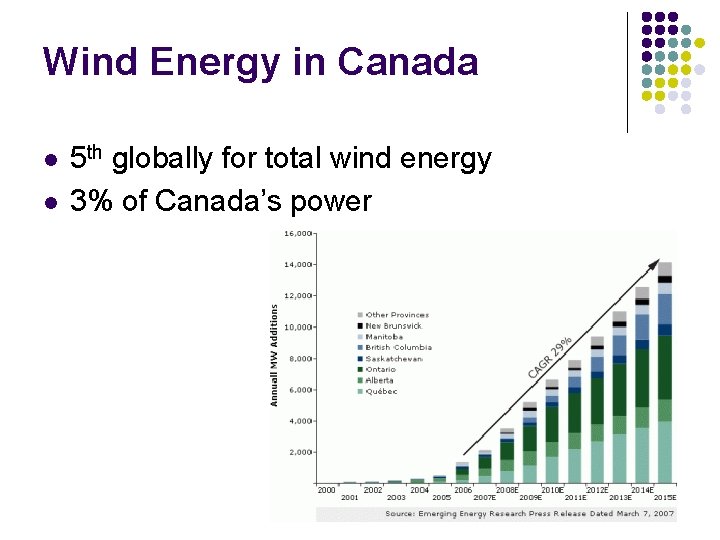
Wind Energy in Canada l l 5 th globally for total wind energy 3% of Canada’s power
Cost l l Small turbine: $4000 -9000 11. 5¢ for k. W/h in Ontario l Better than nuclear
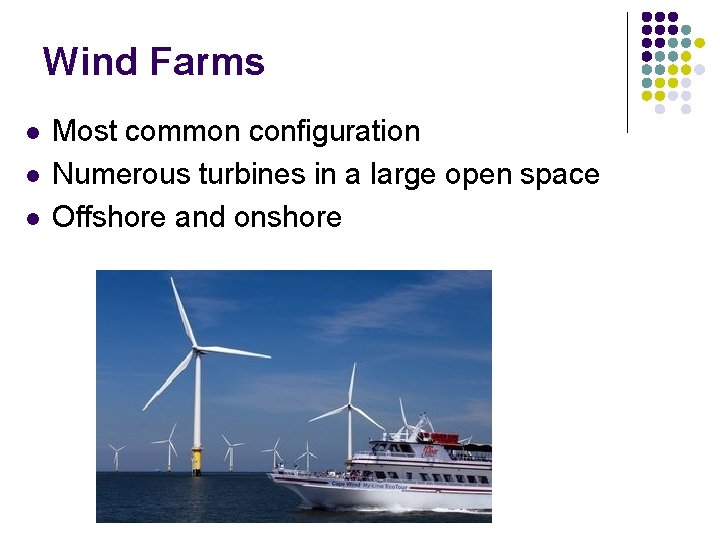
Wind Farms l l l Most common configuration Numerous turbines in a large open space Offshore and onshore
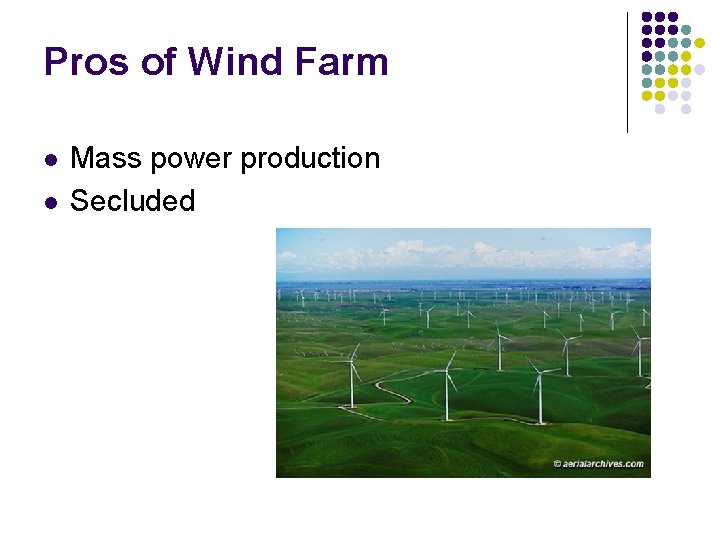
Pros of Wind Farm l l Mass power production Secluded
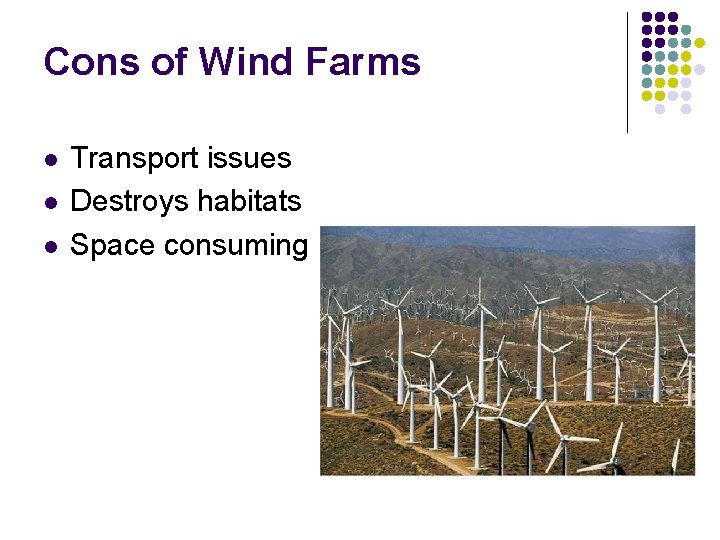
Cons of Wind Farms l l l Transport issues Destroys habitats Space consuming
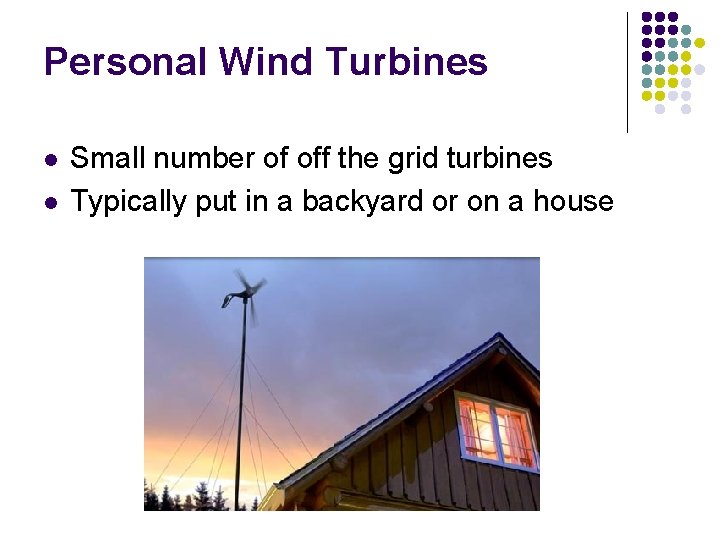
Personal Wind Turbines l l Small number of off the grid turbines Typically put in a backyard or on a house
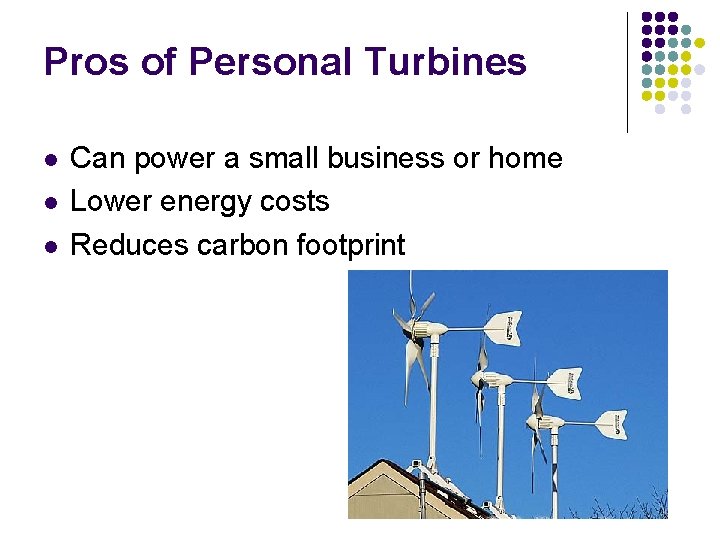
Pros of Personal Turbines l l l Can power a small business or home Lower energy costs Reduces carbon footprint
Cons of Personal Turbines l l l Noise pollution Installation and maintenance Wind is not reliable
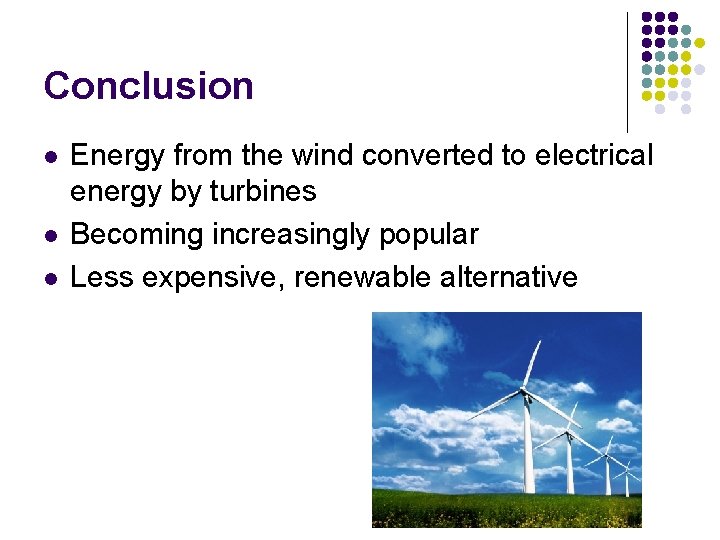
Conclusion l l l Energy from the wind converted to electrical energy by turbines Becoming increasingly popular Less expensive, renewable alternative