
Wilsons Vision for World Peace Fourteen Points Eliminate
- Slides: 13
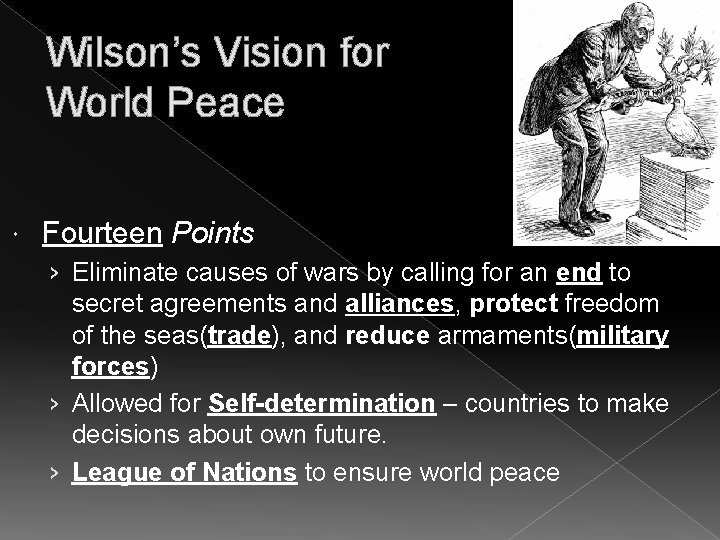
Wilson’s Vision for World Peace Fourteen Points › Eliminate causes of wars by calling for an end to secret agreements and alliances, protect freedom of the seas(trade), and reduce armaments(military forces) › Allowed for Self-determination – countries to make decisions about own future. › League of Nations to ensure world peace
Wilson’s Unusual Decisions Wilson broke tradition and traveled to Paris to lead the peace talks. He supported Democrats but Republicans controlled Congress Made matters worse when by choosing all Democrats and only one Republican to serve as the other delegates to the peace conference.
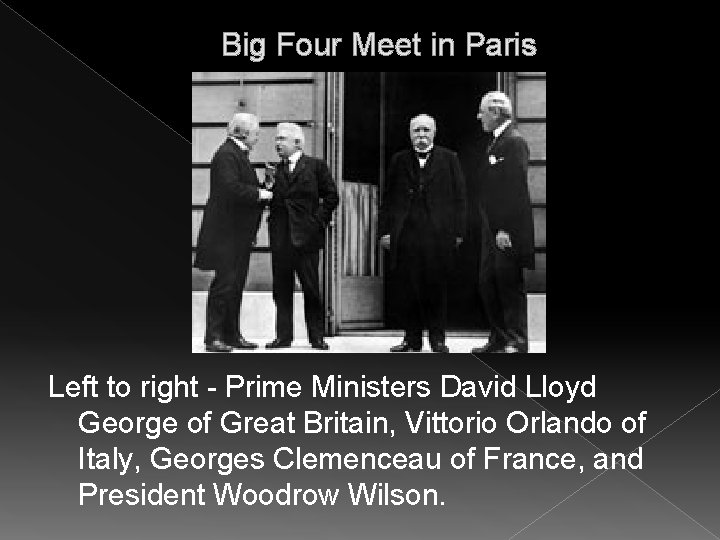
Big Four Meet in Paris Left to right - Prime Ministers David Lloyd George of Great Britain, Vittorio Orlando of Italy, Georges Clemenceau of France, and President Woodrow Wilson.
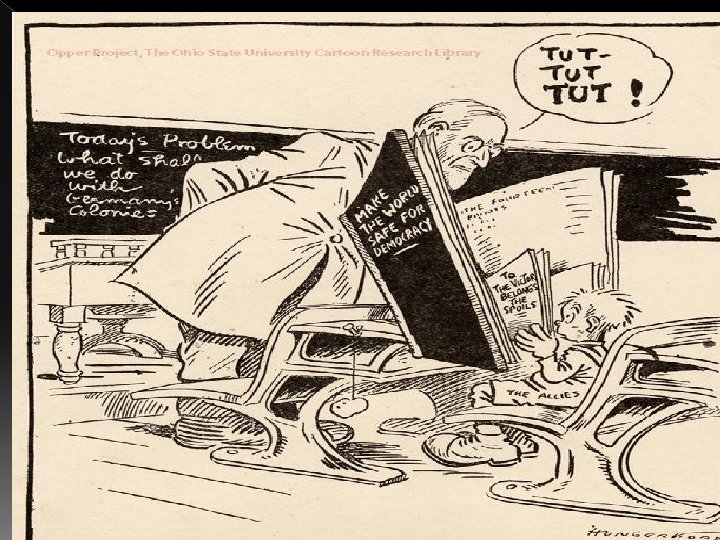
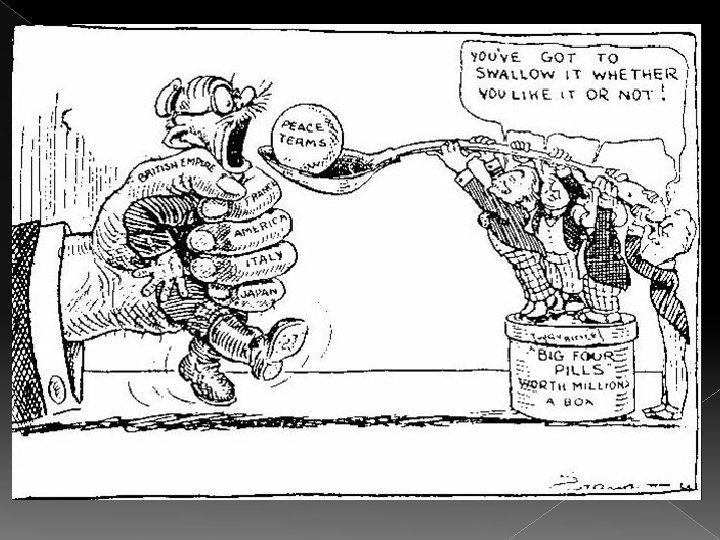
Ideals v. Self Interest Wilson’ s view of peace was different than other Big Four leaders. France’s Georges Clemenceau was concerned only about French Security David Lloyd George wanted Germany to accept full responsibility for war and pay reparations. Wilson tried to restrain from punishing Germany but ultimately agreed to gain support of League of Nations.
Treaty of Versailles Wilson agrees to treaty because he hoped that the League of Nations would be able to correct its many flaws. War-Guilt Clause › Germany accepts responsibility for the war › Germany must pay reparations › Germany looses territory and must reduce its military The Big Four (US, Italy, France, Britain) signed the Treaty of Versailles on June 18, 1919.
Ratification of Treaty Most concerned about League of Nations charter which required member nations to work together – even supply troops – to keep the peace. Reservationist wanted changes .
Rejection of the Treaty vs Support for the Treaty › Support for the Treaty Internationalists supported the Treaty of Versailles because they believe greater cooperation among nations could work to benefit all (mostly democrats)
REJECTION OF TREATY Irreconcilables were completely against the treaty and wanted no part of the League of Nations because they FEARED was it would draw US into a new war. Senator HENRY CABOT LODGE was the leader of the irreconcilables and refused to support the treaty
Divided Senate decides Vote 1 – treaty was defeated Vote 2 – treaty was defeated Vote 3 (4 months later ) treaty was defeated
1920 ELECTIONS Becomes a Referendum on the Treaty American were more concerned with inflation and unemployment. Republican Harding wins election OCT 21, 1921 the United States signed separate peace agreement with Germany and did NOT become a member of the League of Nations.
Debate arguments A - INTERNATIONALSIT (support) B - IRRECONCILABLE (against treaty) Using your notes create 2 arguments for your side that you could use to debate your opinion of the treaty in the Senate. Write your arguments on note card provided.