
William Stallings Computer Organization and Architecture 8 th
![Amdahl’s Law • Gene Amdahl [AMDA 67] • Potential speed up of program using](https://slidetodoc.com/presentation_image_h2/5a156642defa74b16443f06171eeb1e7/image-49.jpg "Amdahl’s Law • Gene Amdahl [AMDA 67] • Potential speed up of program using")
- Slides: 52
William Stallings Computer Organization and Architecture 8 th Edition Chapter 2 Computer Evolution and Performance
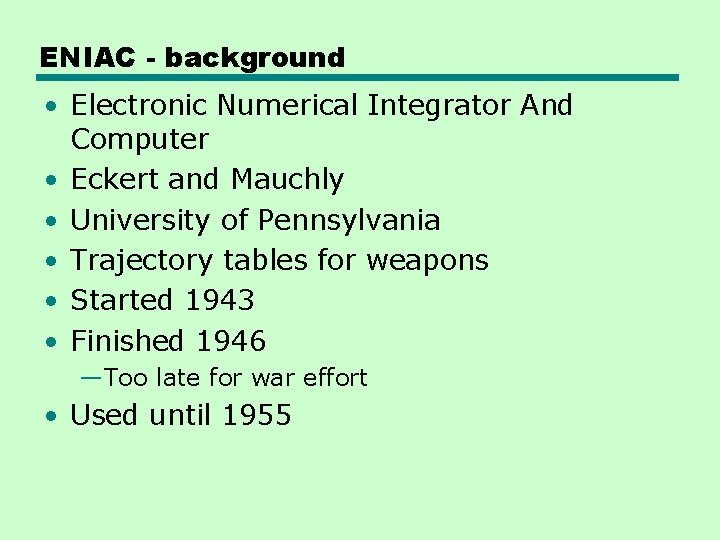
ENIAC - background • Electronic Numerical Integrator And Computer • Eckert and Mauchly • University of Pennsylvania • Trajectory tables for weapons • Started 1943 • Finished 1946 —Too late for war effort • Used until 1955
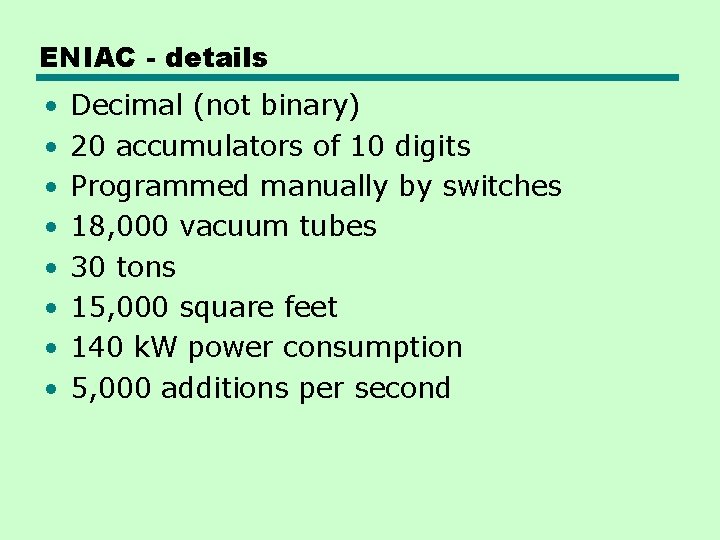
ENIAC - details • • Decimal (not binary) 20 accumulators of 10 digits Programmed manually by switches 18, 000 vacuum tubes 30 tons 15, 000 square feet 140 k. W power consumption 5, 000 additions per second
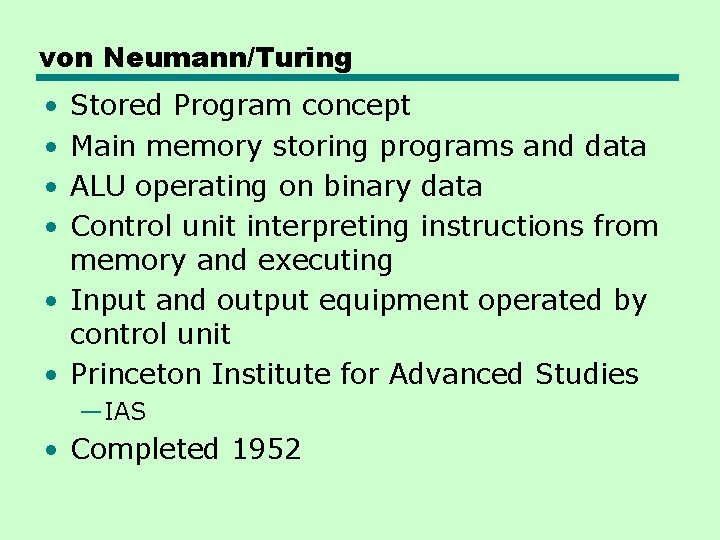
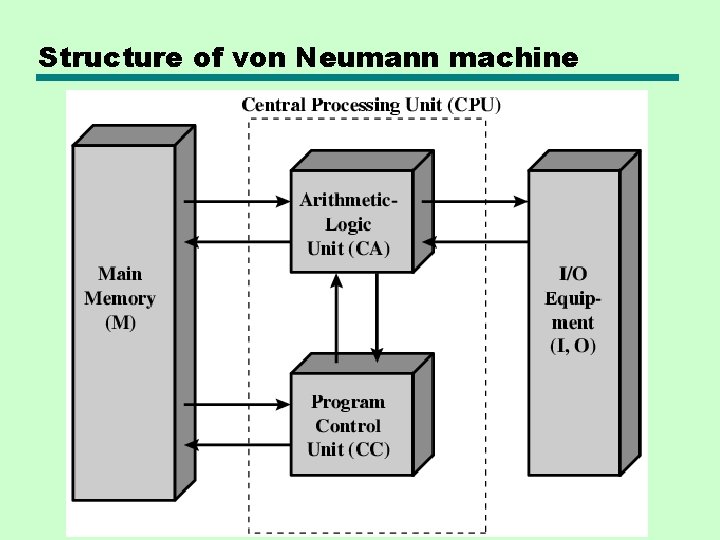
von Neumann/Turing • • Stored Program concept Main memory storing programs and data ALU operating on binary data Control unit interpreting instructions from memory and executing • Input and output equipment operated by control unit • Princeton Institute for Advanced Studies —IAS • Completed 1952
Structure of von Neumann machine
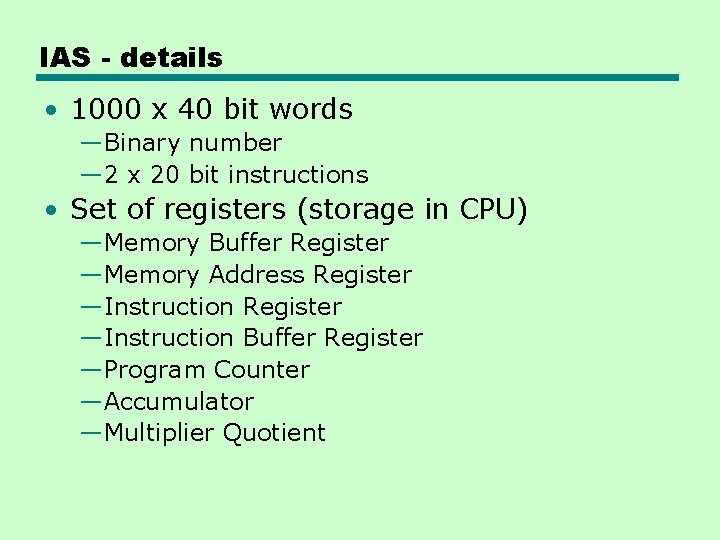
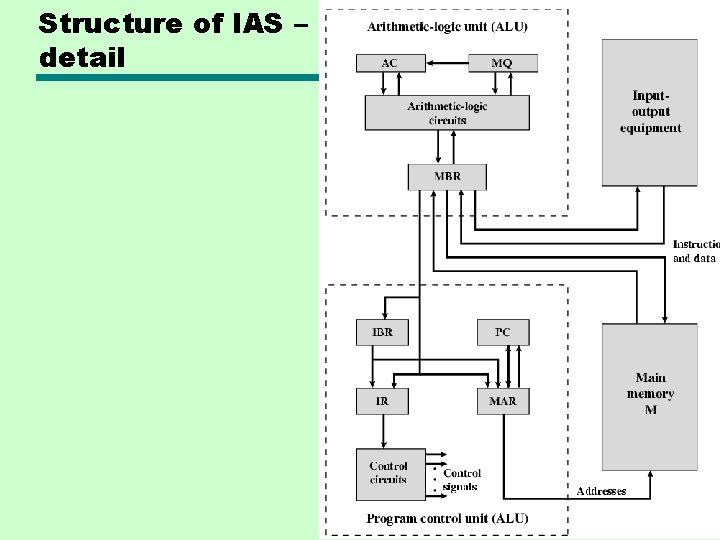
IAS - details • 1000 x 40 bit words —Binary number — 2 x 20 bit instructions • Set of registers (storage in CPU) —Memory Buffer Register —Memory Address Register —Instruction Buffer Register —Program Counter —Accumulator —Multiplier Quotient
Structure of IAS – detail
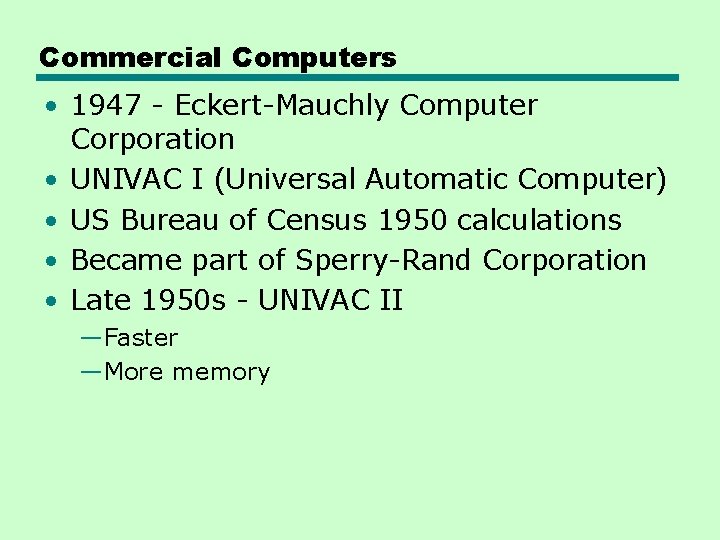
Commercial Computers • 1947 - Eckert-Mauchly Computer Corporation • UNIVAC I (Universal Automatic Computer) • US Bureau of Census 1950 calculations • Became part of Sperry-Rand Corporation • Late 1950 s - UNIVAC II —Faster —More memory
IBM • Punched-card processing equipment • 1953 - the 701 —IBM’s first stored program computer —Scientific calculations • 1955 - the 702 —Business applications • Lead to 700/7000 series
Transistors • • Replaced vacuum tubes Smaller Cheaper Less heat dissipation Solid State device Made from Silicon (Sand) Invented 1947 at Bell Labs William Shockley et al.
Transistor Based Computers • Second generation machines • NCR & RCA produced small transistor machines • IBM 7000 • DEC - 1957 —Produced PDP-1
Microelectronics • Literally - “small electronics” • A computer is made up of gates, memory cells and interconnections • These can be manufactured on a semiconductor • e. g. silicon wafer
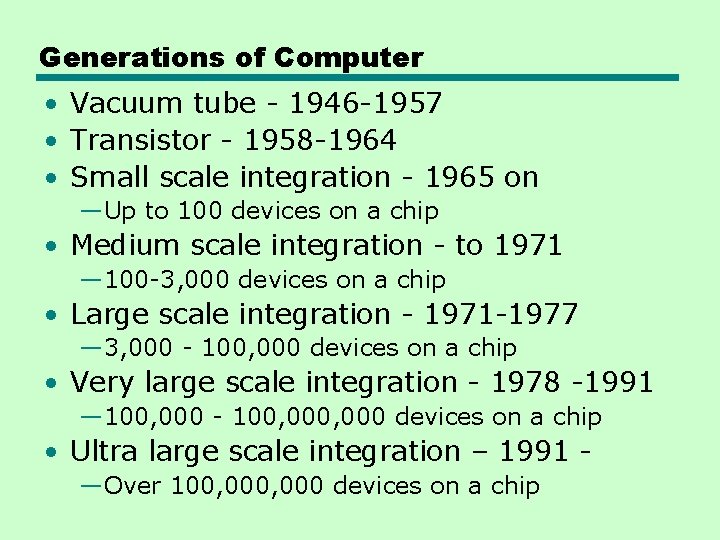
Generations of Computer • Vacuum tube - 1946 -1957 • Transistor - 1958 -1964 • Small scale integration - 1965 on —Up to 100 devices on a chip • Medium scale integration - to 1971 — 100 -3, 000 devices on a chip • Large scale integration - 1971 -1977 — 3, 000 - 100, 000 devices on a chip • Very large scale integration - 1978 -1991 — 100, 000 - 100, 000 devices on a chip • Ultra large scale integration – 1991 —Over 100, 000 devices on a chip
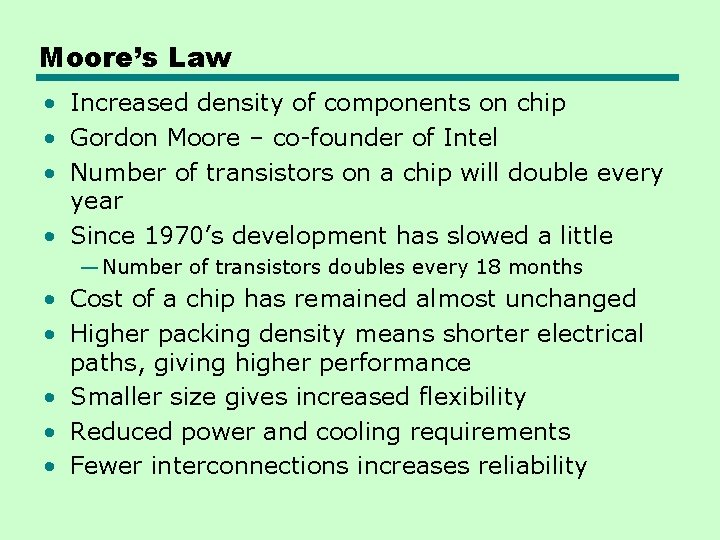
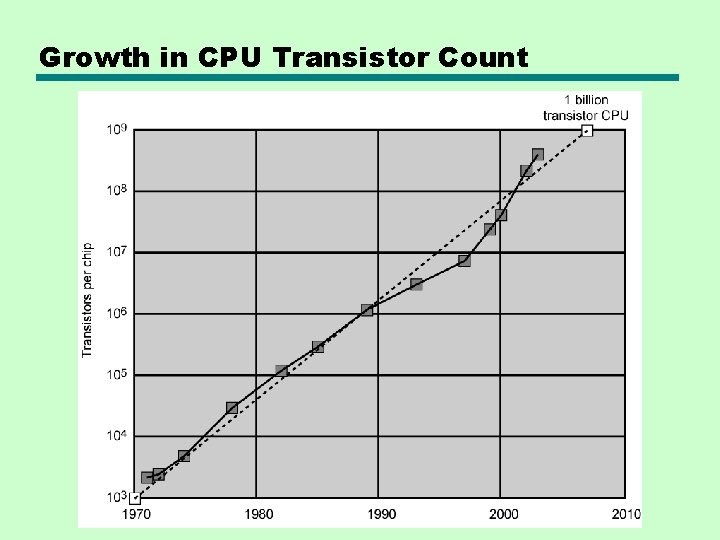
Moore’s Law • Increased density of components on chip • Gordon Moore – co-founder of Intel • Number of transistors on a chip will double every year • Since 1970’s development has slowed a little — Number of transistors doubles every 18 months • Cost of a chip has remained almost unchanged • Higher packing density means shorter electrical paths, giving higher performance • Smaller size gives increased flexibility • Reduced power and cooling requirements • Fewer interconnections increases reliability
Growth in CPU Transistor Count
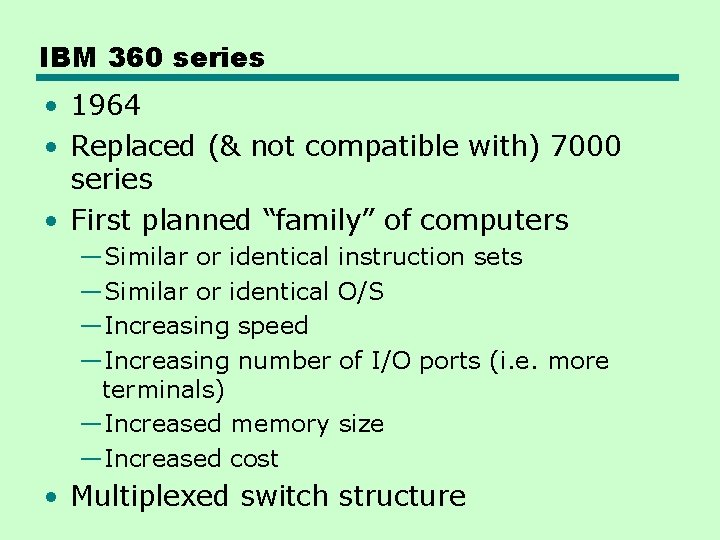
IBM 360 series • 1964 • Replaced (& not compatible with) 7000 series • First planned “family” of computers —Similar or identical instruction sets —Similar or identical O/S —Increasing speed —Increasing number of I/O ports (i. e. more terminals) —Increased memory size —Increased cost • Multiplexed switch structure
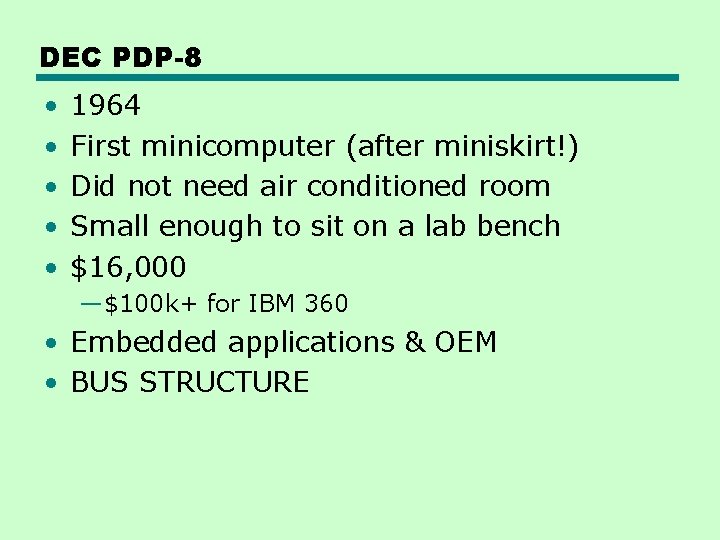
DEC PDP-8 • • • 1964 First minicomputer (after miniskirt!) Did not need air conditioned room Small enough to sit on a lab bench $16, 000 —$100 k+ for IBM 360 • Embedded applications & OEM • BUS STRUCTURE
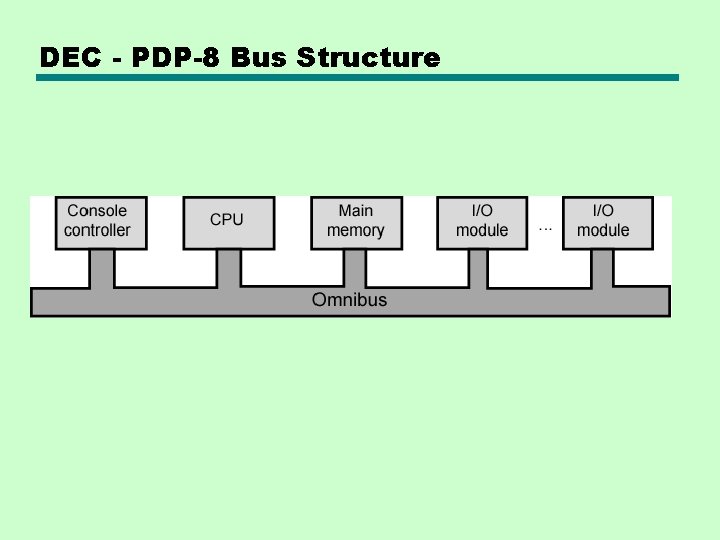
DEC - PDP-8 Bus Structure
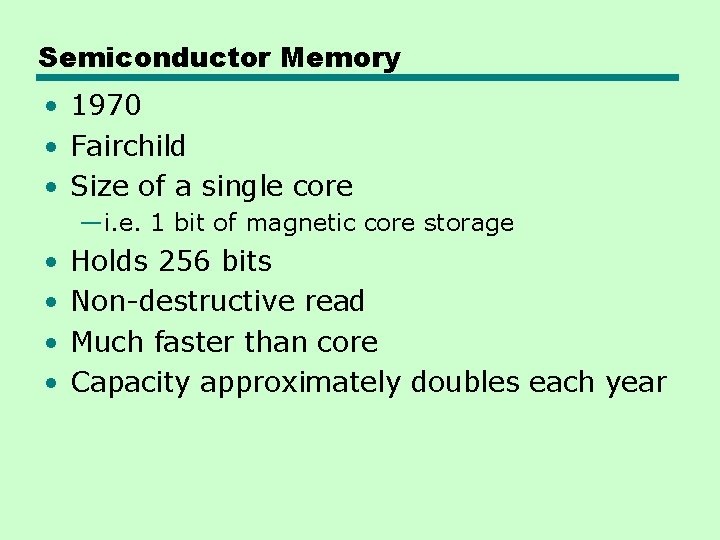
Semiconductor Memory • 1970 • Fairchild • Size of a single core —i. e. 1 bit of magnetic core storage • • Holds 256 bits Non-destructive read Much faster than core Capacity approximately doubles each year
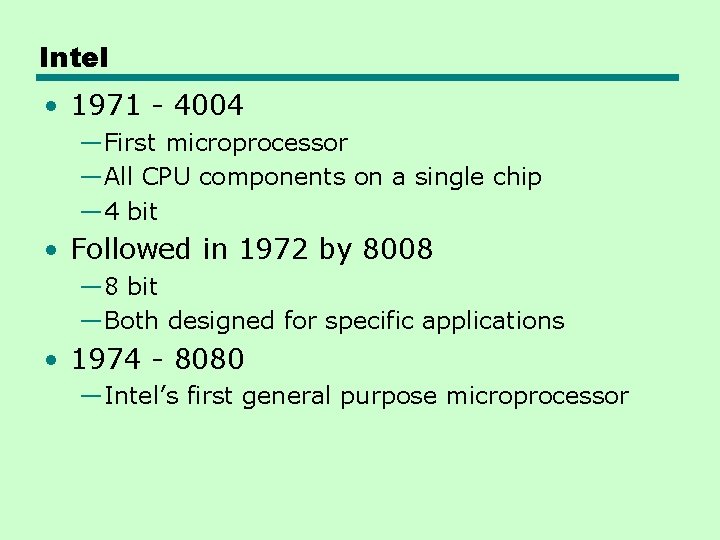
Intel • 1971 - 4004 —First microprocessor —All CPU components on a single chip — 4 bit • Followed in 1972 by 8008 — 8 bit —Both designed for specific applications • 1974 - 8080 —Intel’s first general purpose microprocessor
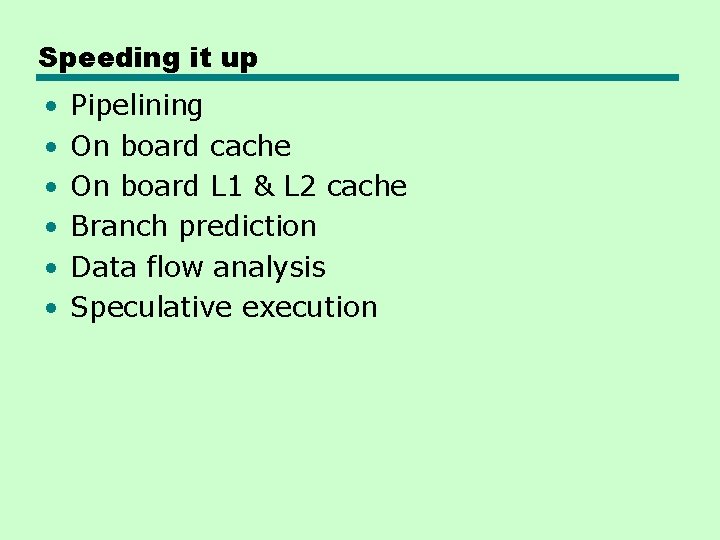
Speeding it up • • • Pipelining On board cache On board L 1 & L 2 cache Branch prediction Data flow analysis Speculative execution
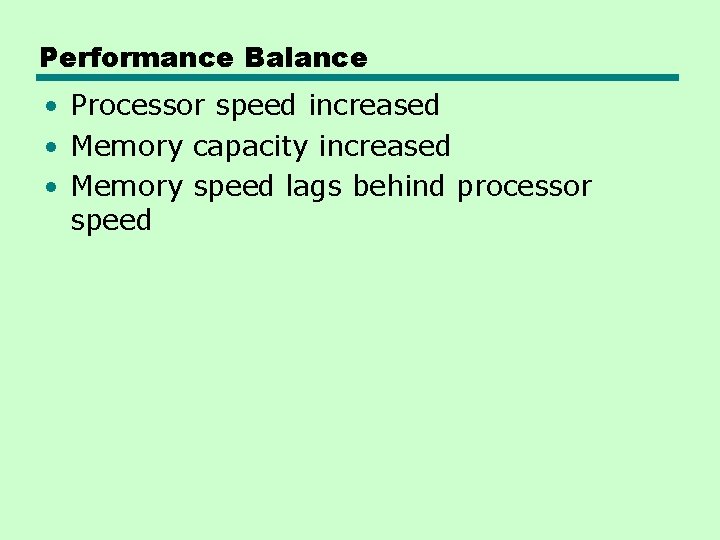
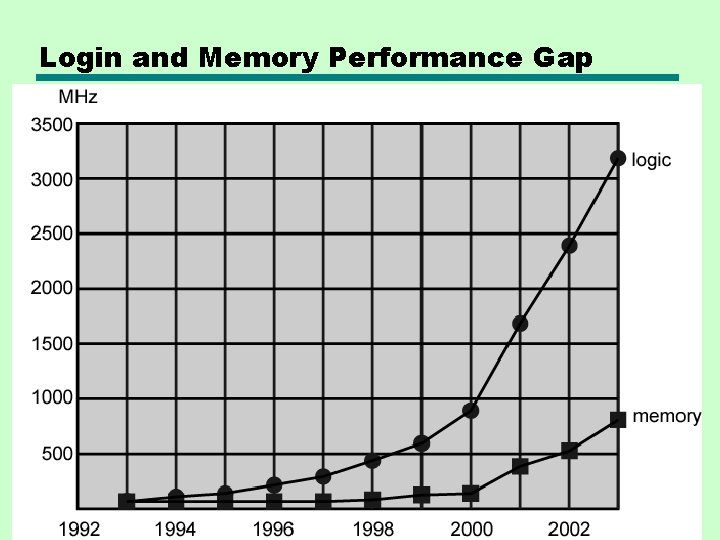
Performance Balance • Processor speed increased • Memory capacity increased • Memory speed lags behind processor speed
Login and Memory Performance Gap
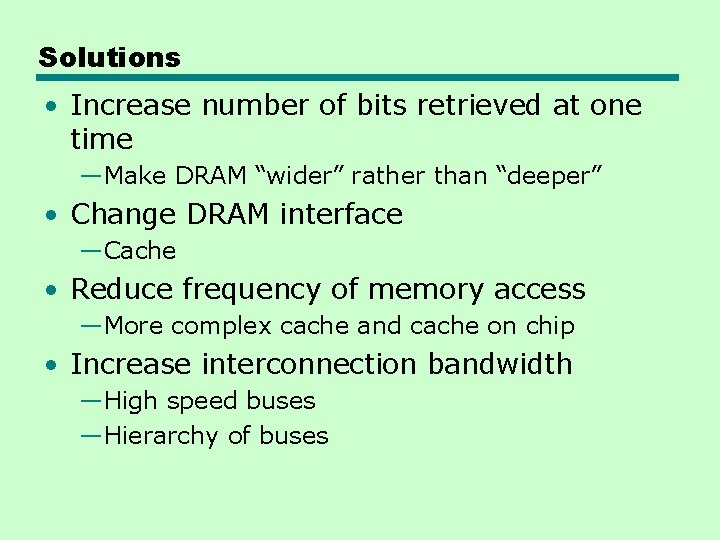
Solutions • Increase number of bits retrieved at one time —Make DRAM “wider” rather than “deeper” • Change DRAM interface —Cache • Reduce frequency of memory access —More complex cache and cache on chip • Increase interconnection bandwidth —High speed buses —Hierarchy of buses
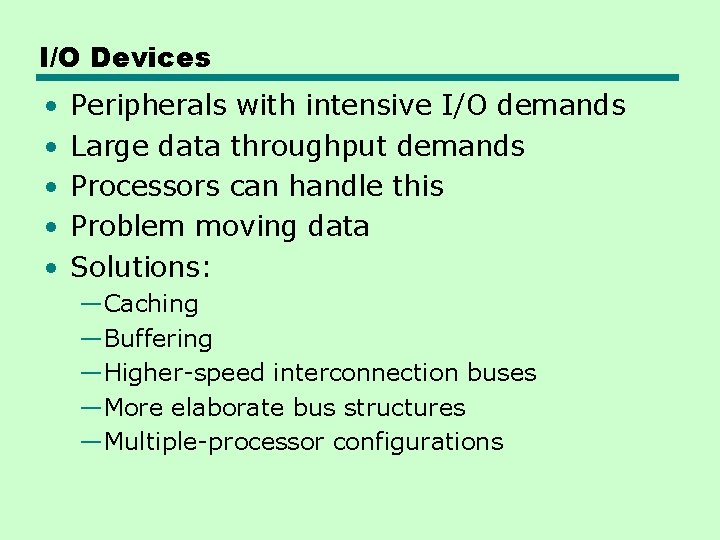
I/O Devices • • • Peripherals with intensive I/O demands Large data throughput demands Processors can handle this Problem moving data Solutions: —Caching —Buffering —Higher-speed interconnection buses —More elaborate bus structures —Multiple-processor configurations
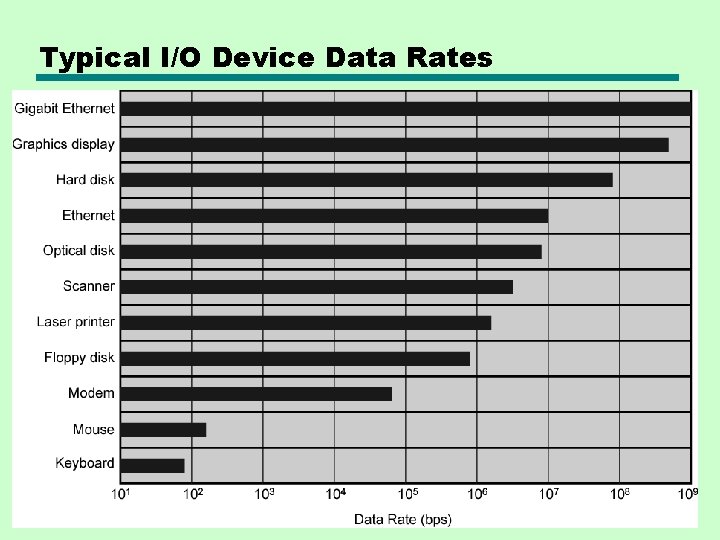
Typical I/O Device Data Rates
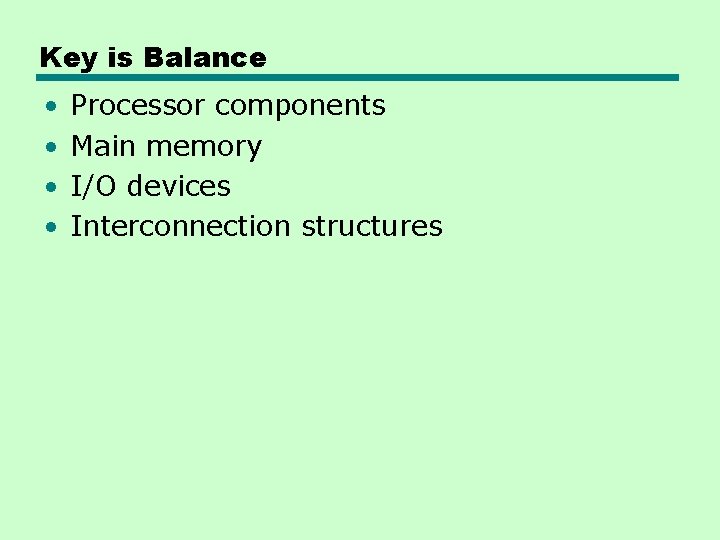
Key is Balance • • Processor components Main memory I/O devices Interconnection structures
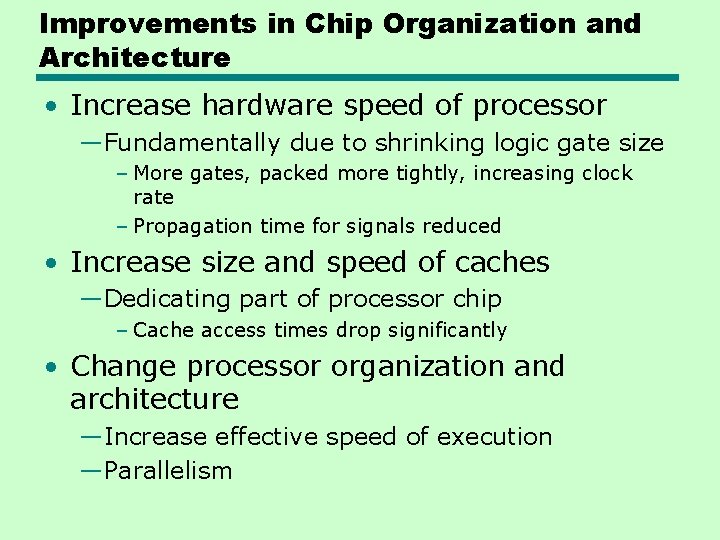
Improvements in Chip Organization and Architecture • Increase hardware speed of processor —Fundamentally due to shrinking logic gate size – More gates, packed more tightly, increasing clock rate – Propagation time for signals reduced • Increase size and speed of caches —Dedicating part of processor chip – Cache access times drop significantly • Change processor organization and architecture —Increase effective speed of execution —Parallelism
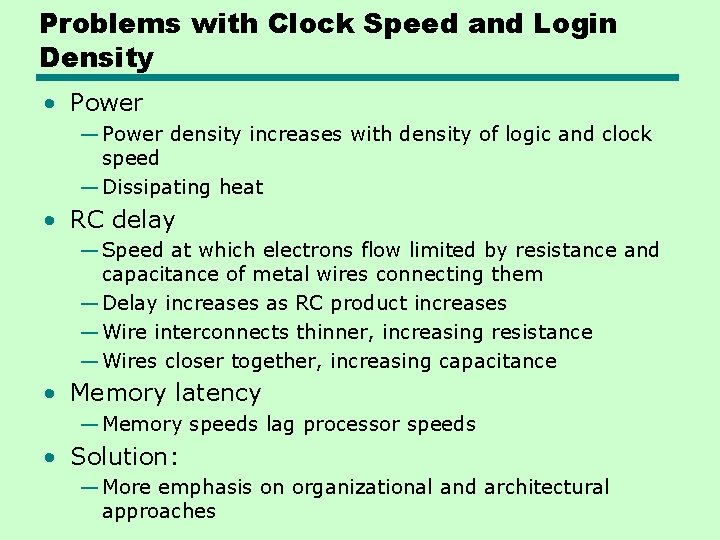
Problems with Clock Speed and Login Density • Power — Power density increases with density of logic and clock speed — Dissipating heat • RC delay — Speed at which electrons flow limited by resistance and capacitance of metal wires connecting them — Delay increases as RC product increases — Wire interconnects thinner, increasing resistance — Wires closer together, increasing capacitance • Memory latency — Memory speeds lag processor speeds • Solution: — More emphasis on organizational and architectural approaches
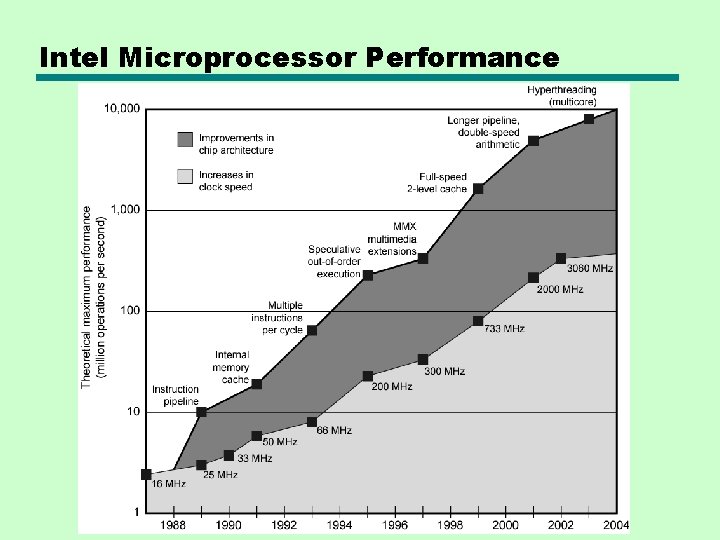
Intel Microprocessor Performance
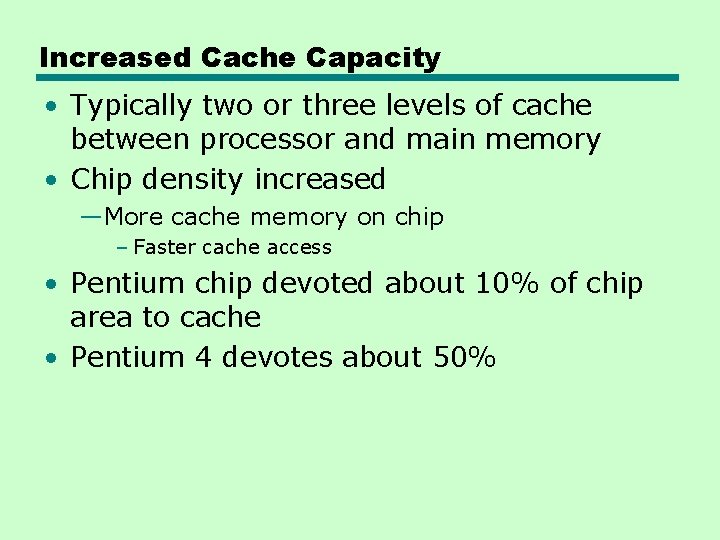
Increased Cache Capacity • Typically two or three levels of cache between processor and main memory • Chip density increased —More cache memory on chip – Faster cache access • Pentium chip devoted about 10% of chip area to cache • Pentium 4 devotes about 50%
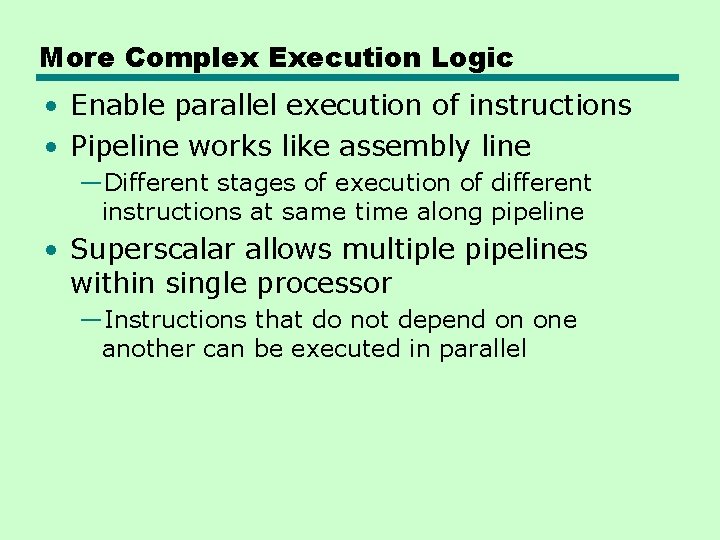
More Complex Execution Logic • Enable parallel execution of instructions • Pipeline works like assembly line —Different stages of execution of different instructions at same time along pipeline • Superscalar allows multiple pipelines within single processor —Instructions that do not depend on one another can be executed in parallel
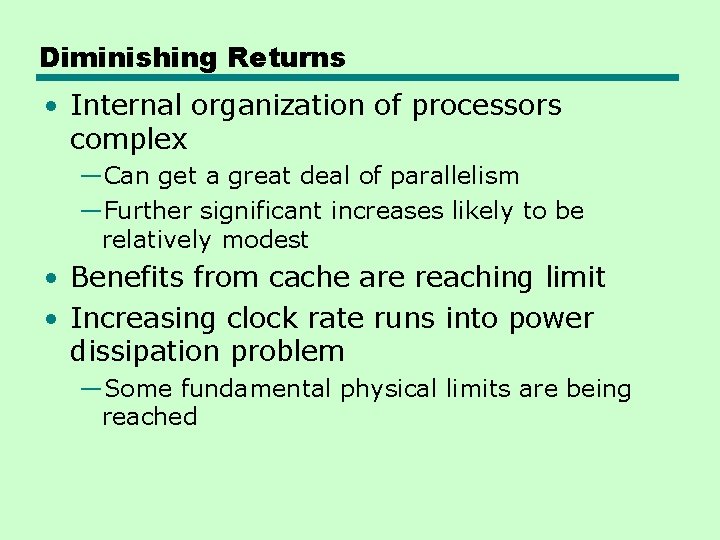
Diminishing Returns • Internal organization of processors complex —Can get a great deal of parallelism —Further significant increases likely to be relatively modest • Benefits from cache are reaching limit • Increasing clock rate runs into power dissipation problem —Some fundamental physical limits are being reached
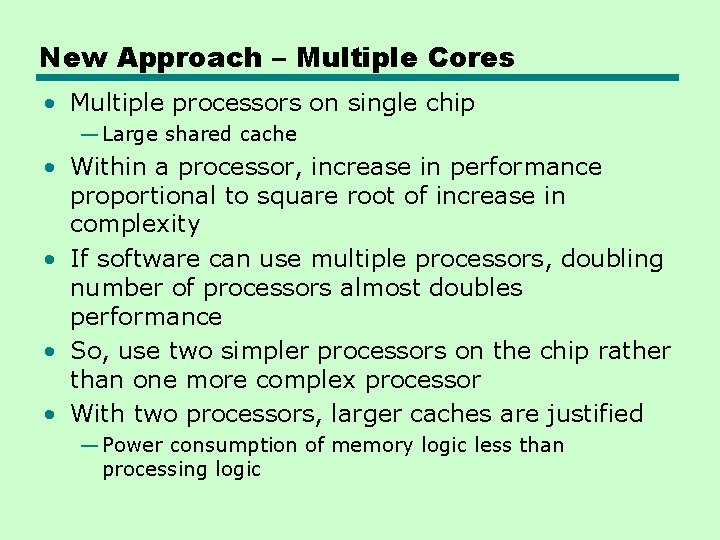
New Approach – Multiple Cores • Multiple processors on single chip — Large shared cache • Within a processor, increase in performance proportional to square root of increase in complexity • If software can use multiple processors, doubling number of processors almost doubles performance • So, use two simpler processors on the chip rather than one more complex processor • With two processors, larger caches are justified — Power consumption of memory logic less than processing logic
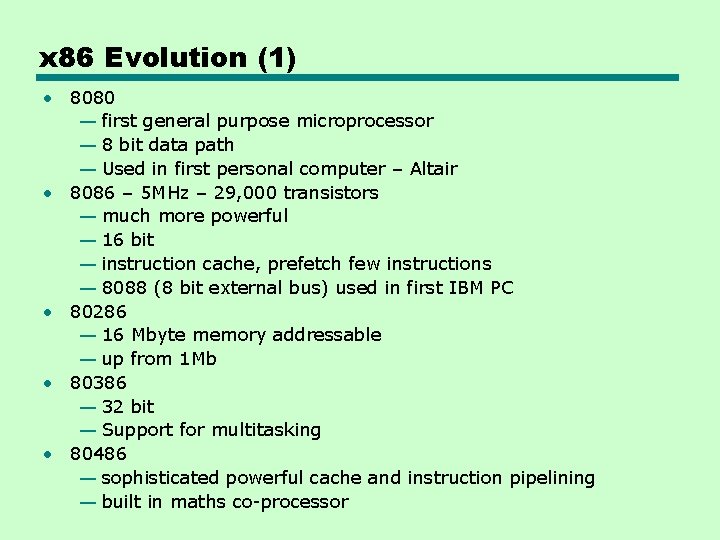
x 86 Evolution (1) • 8080 — first general purpose microprocessor — 8 bit data path — Used in first personal computer – Altair • 8086 – 5 MHz – 29, 000 transistors — much more powerful — 16 bit — instruction cache, prefetch few instructions — 8088 (8 bit external bus) used in first IBM PC • 80286 — 16 Mbyte memory addressable — up from 1 Mb • 80386 — 32 bit — Support for multitasking • 80486 — sophisticated powerful cache and instruction pipelining — built in maths co-processor
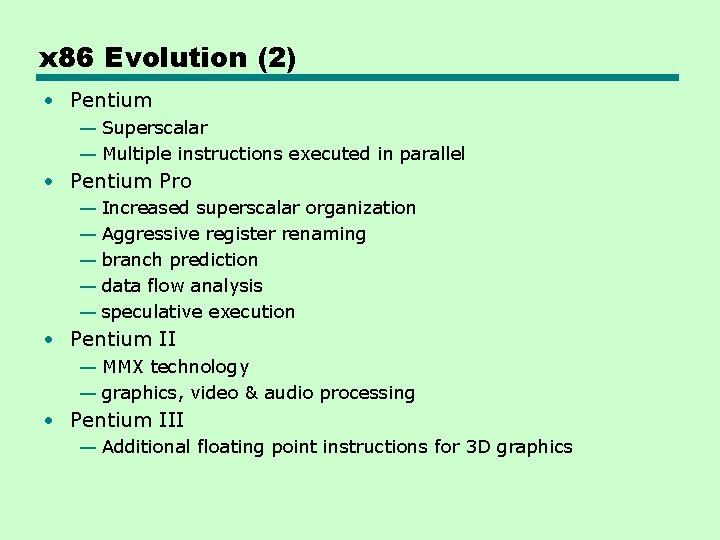
x 86 Evolution (2) • Pentium — Superscalar — Multiple instructions executed in parallel • Pentium Pro — Increased superscalar organization — Aggressive register renaming — branch prediction — data flow analysis — speculative execution • Pentium II — MMX technology — graphics, video & audio processing • Pentium III — Additional floating point instructions for 3 D graphics
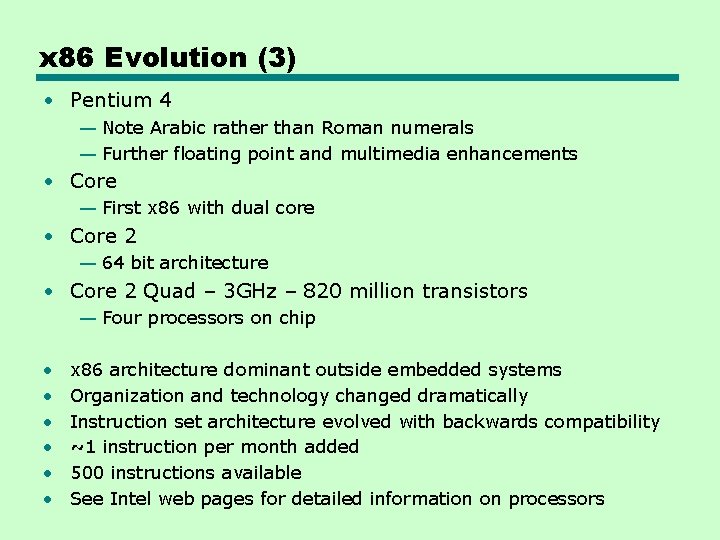
x 86 Evolution (3) • Pentium 4 — Note Arabic rather than Roman numerals — Further floating point and multimedia enhancements • Core — First x 86 with dual core • Core 2 — 64 bit architecture • Core 2 Quad – 3 GHz – 820 million transistors — Four processors on chip • • • x 86 architecture dominant outside embedded systems Organization and technology changed dramatically Instruction set architecture evolved with backwards compatibility ~1 instruction per month added 500 instructions available See Intel web pages for detailed information on processors
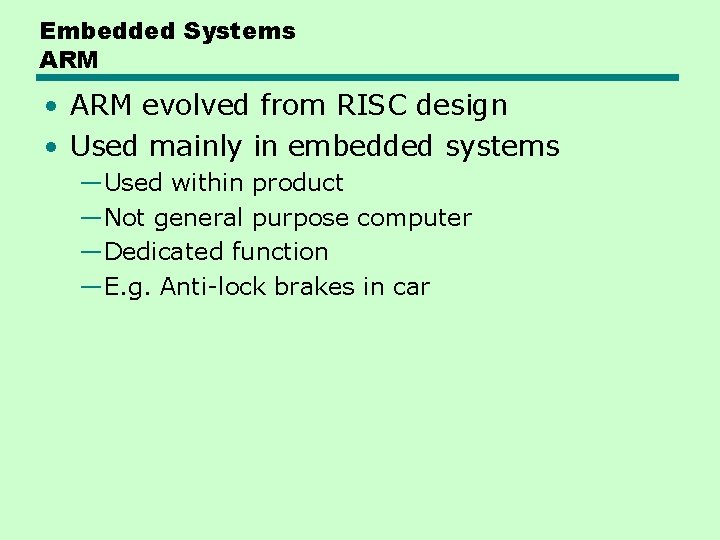
Embedded Systems ARM • ARM evolved from RISC design • Used mainly in embedded systems —Used within product —Not general purpose computer —Dedicated function —E. g. Anti-lock brakes in car
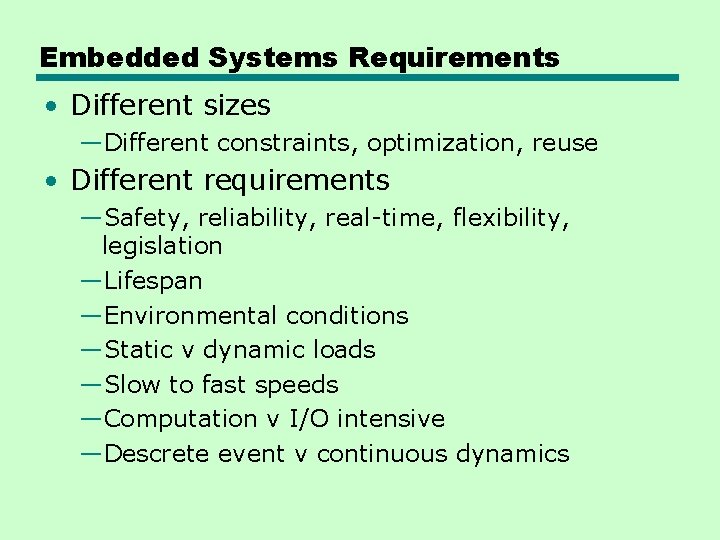
Embedded Systems Requirements • Different sizes —Different constraints, optimization, reuse • Different requirements —Safety, reliability, real-time, flexibility, legislation —Lifespan —Environmental conditions —Static v dynamic loads —Slow to fast speeds —Computation v I/O intensive —Descrete event v continuous dynamics
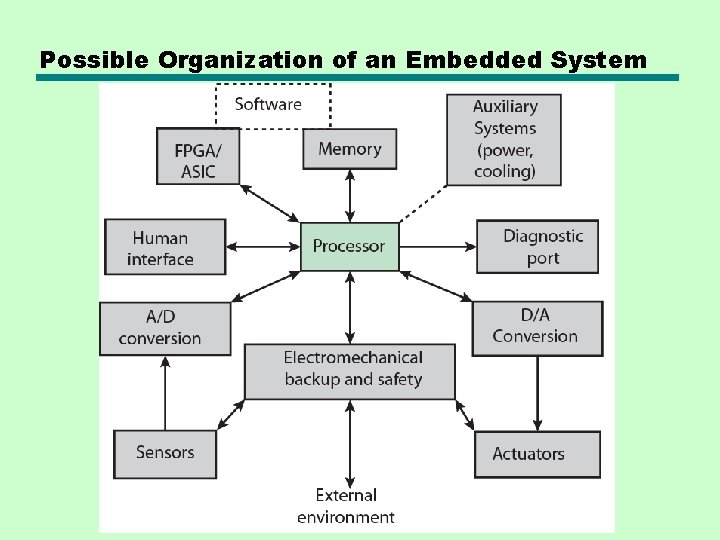
Possible Organization of an Embedded System
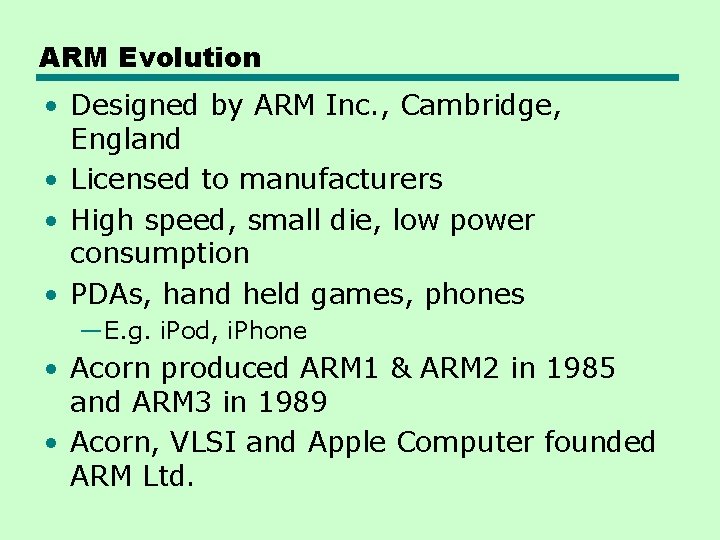
ARM Evolution • Designed by ARM Inc. , Cambridge, England • Licensed to manufacturers • High speed, small die, low power consumption • PDAs, hand held games, phones —E. g. i. Pod, i. Phone • Acorn produced ARM 1 & ARM 2 in 1985 and ARM 3 in 1989 • Acorn, VLSI and Apple Computer founded ARM Ltd.
ARM Systems Categories • Embedded real time • Application platform —Linux, Palm OS, Symbian OS, Windows mobile • Secure applications
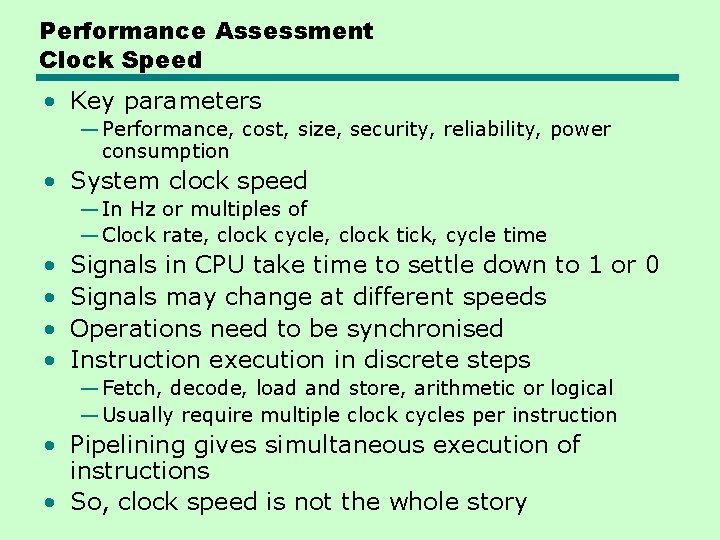
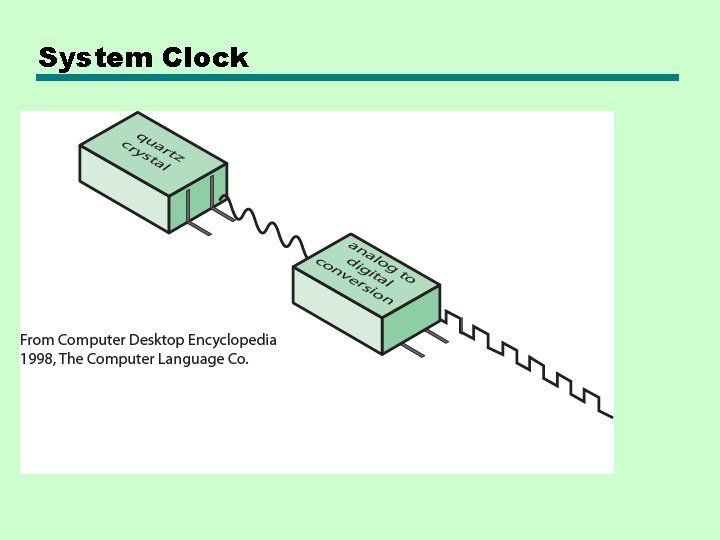
Performance Assessment Clock Speed • Key parameters — Performance, cost, size, security, reliability, power consumption • System clock speed — In Hz or multiples of — Clock rate, clock cycle, clock tick, cycle time • • Signals in CPU take time to settle down to 1 or 0 Signals may change at different speeds Operations need to be synchronised Instruction execution in discrete steps — Fetch, decode, load and store, arithmetic or logical — Usually require multiple clock cycles per instruction • Pipelining gives simultaneous execution of instructions • So, clock speed is not the whole story
System Clock
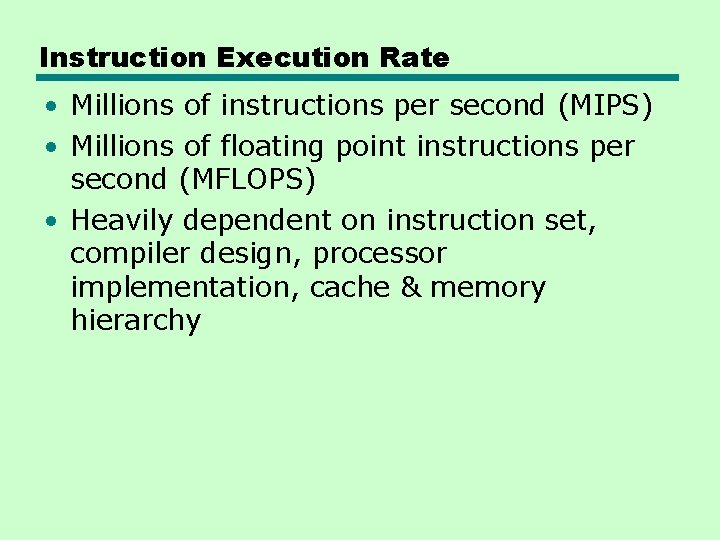
Instruction Execution Rate • Millions of instructions per second (MIPS) • Millions of floating point instructions per second (MFLOPS) • Heavily dependent on instruction set, compiler design, processor implementation, cache & memory hierarchy
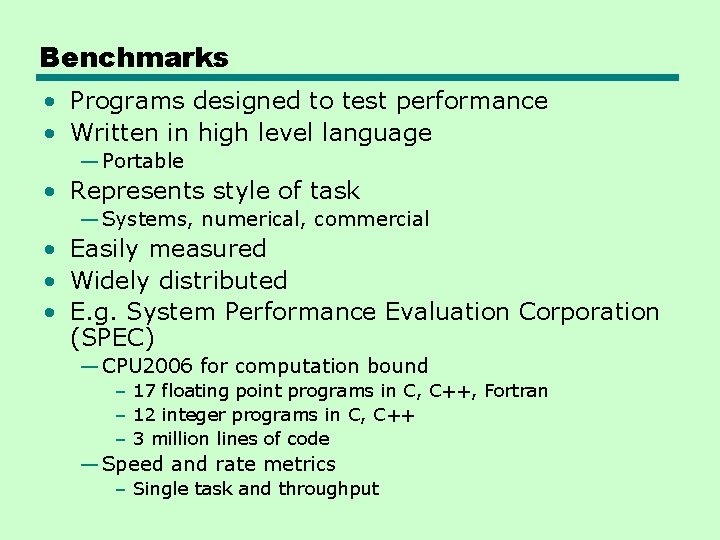
Benchmarks • Programs designed to test performance • Written in high level language — Portable • Represents style of task — Systems, numerical, commercial • Easily measured • Widely distributed • E. g. System Performance Evaluation Corporation (SPEC) — CPU 2006 for computation bound – 17 floating point programs in C, C++, Fortran – 12 integer programs in C, C++ – 3 million lines of code — Speed and rate metrics – Single task and throughput
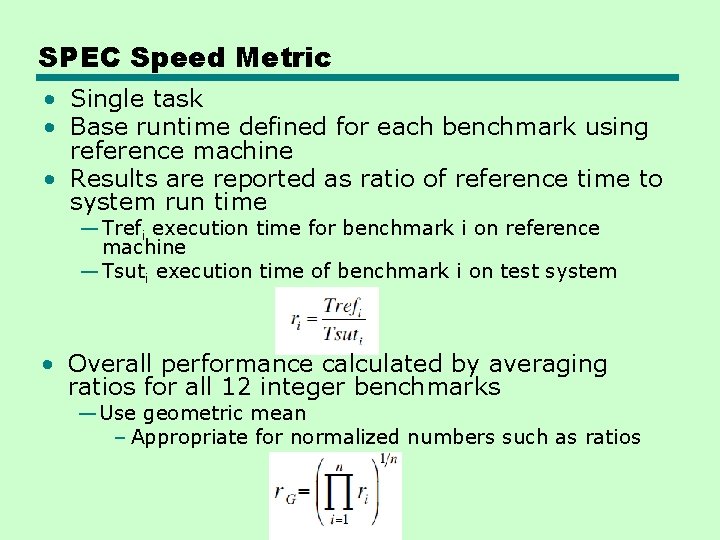
SPEC Speed Metric • Single task • Base runtime defined for each benchmark using reference machine • Results are reported as ratio of reference time to system run time — Trefi execution time for benchmark i on reference machine — Tsuti execution time of benchmark i on test system • Overall performance calculated by averaging ratios for all 12 integer benchmarks — Use geometric mean – Appropriate for normalized numbers such as ratios
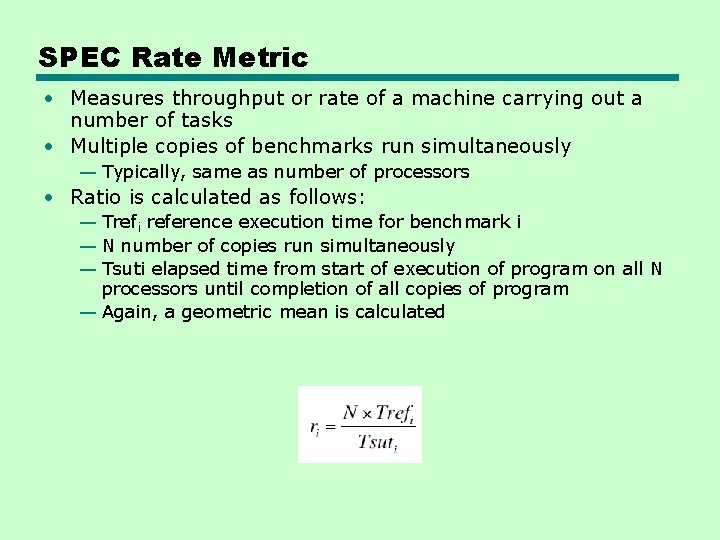
SPEC Rate Metric • Measures throughput or rate of a machine carrying out a number of tasks • Multiple copies of benchmarks run simultaneously — Typically, same as number of processors • Ratio is calculated as follows: — Trefi reference execution time for benchmark i — N number of copies run simultaneously — Tsuti elapsed time from start of execution of program on all N processors until completion of all copies of program — Again, a geometric mean is calculated
Amdahl’s Law • Gene Amdahl [AMDA 67] • Potential speed up of program using multiple processors • Concluded that: —Code needs to be parallelizable —Speed up is bound, giving diminishing returns for more processors • Task dependent —Servers gain by maintaining multiple connections on multiple processors —Databases can be split into parallel tasks
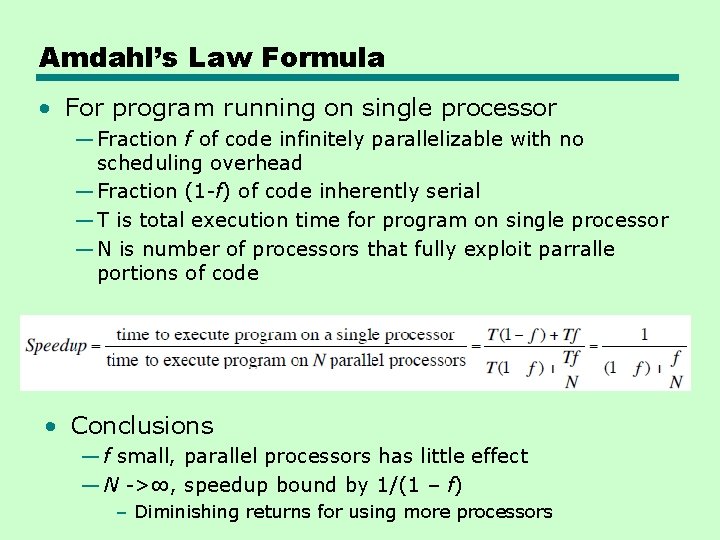
Amdahl’s Law Formula • For program running on single processor — Fraction f of code infinitely parallelizable with no scheduling overhead — Fraction (1 -f) of code inherently serial — T is total execution time for program on single processor — N is number of processors that fully exploit parralle portions of code • Conclusions — f small, parallel processors has little effect — N ->∞, speedup bound by 1/(1 – f) – Diminishing returns for using more processors
Internet Resources • http: //www. intel. com/ —Search for the Intel Museum • • • http: //www. ibm. com http: //www. dec. com Charles Babbage Institute Power. PC Intel Developer Home
References • AMDA 67 Amdahl, G. “Validity of the Single -Processor Approach to Achieving Large. Scale Computing Capability”, Proceedings of the AFIPS Conference, 1967.