
William Stallings Computer Organization and Architecture 6 th
- Slides: 29
William Stallings Computer Organization and Architecture 6 th Edition Chapter 5 Internal Memory (revised 9/24/02)
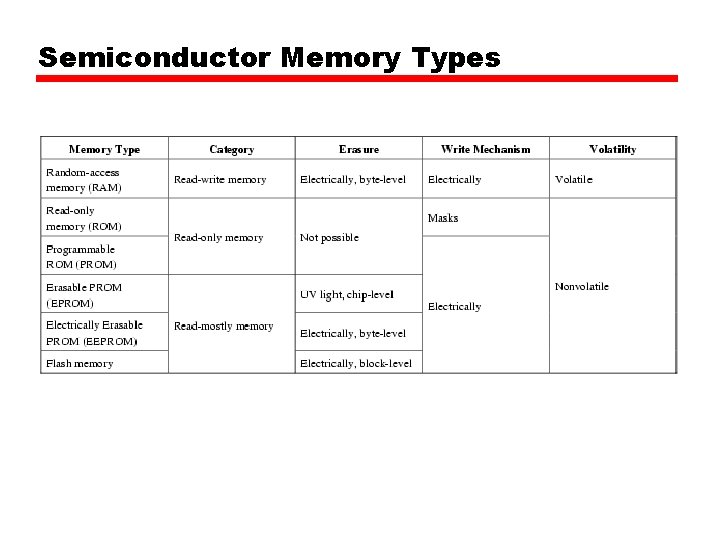
Semiconductor Memory Types
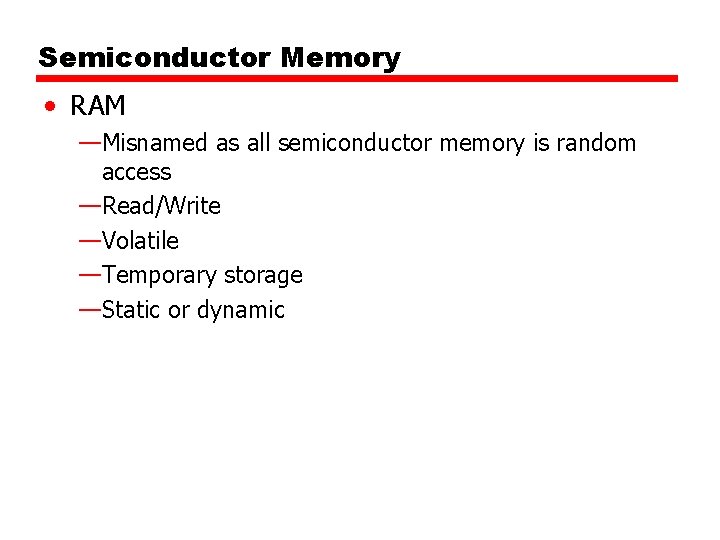
Semiconductor Memory • RAM —Misnamed as all semiconductor memory is random access —Read/Write —Volatile —Temporary storage —Static or dynamic
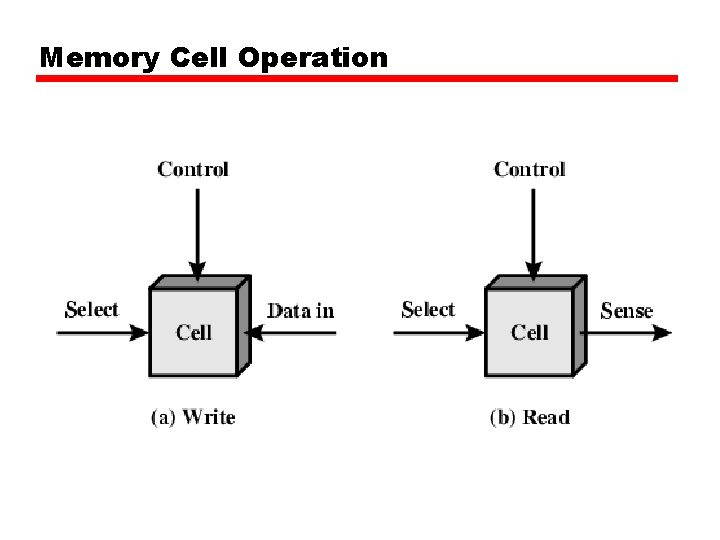
Memory Cell Operation
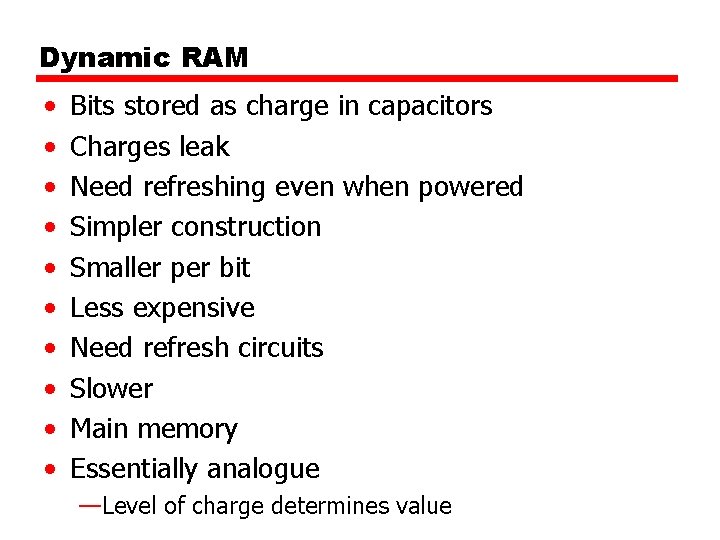
Dynamic RAM • • • Bits stored as charge in capacitors Charges leak Need refreshing even when powered Simpler construction Smaller per bit Less expensive Need refresh circuits Slower Main memory Essentially analogue —Level of charge determines value
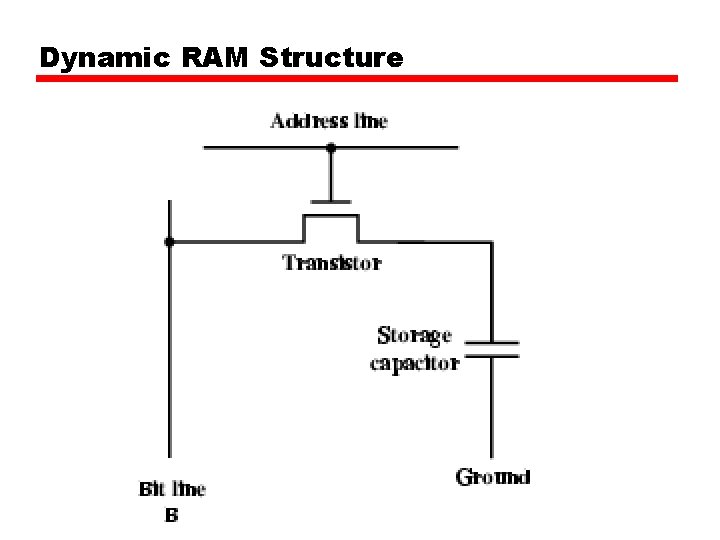
Dynamic RAM Structure
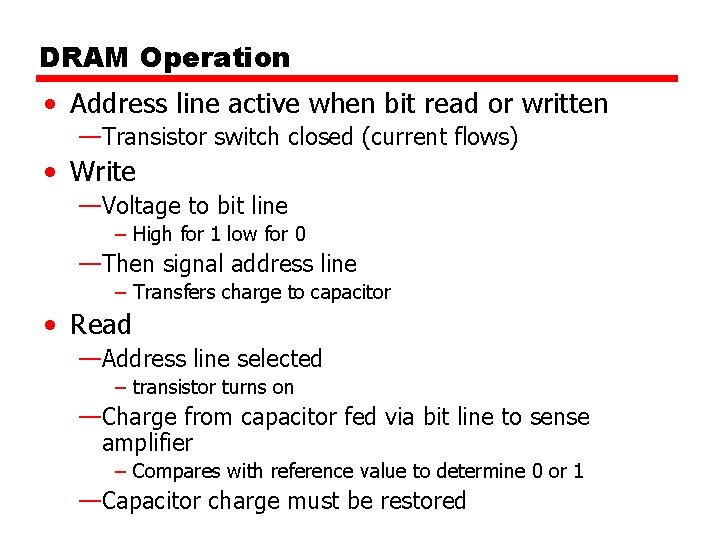
DRAM Operation • Address line active when bit read or written —Transistor switch closed (current flows) • Write —Voltage to bit line – High for 1 low for 0 —Then signal address line – Transfers charge to capacitor • Read —Address line selected – transistor turns on —Charge from capacitor fed via bit line to sense amplifier – Compares with reference value to determine 0 or 1 —Capacitor charge must be restored
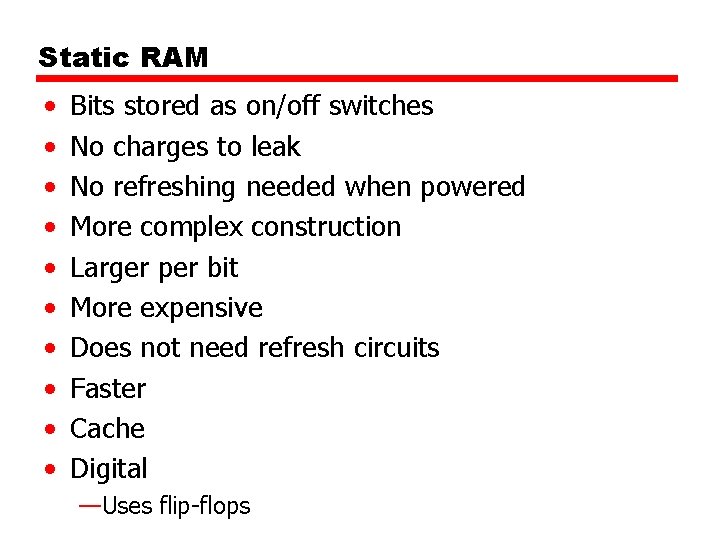
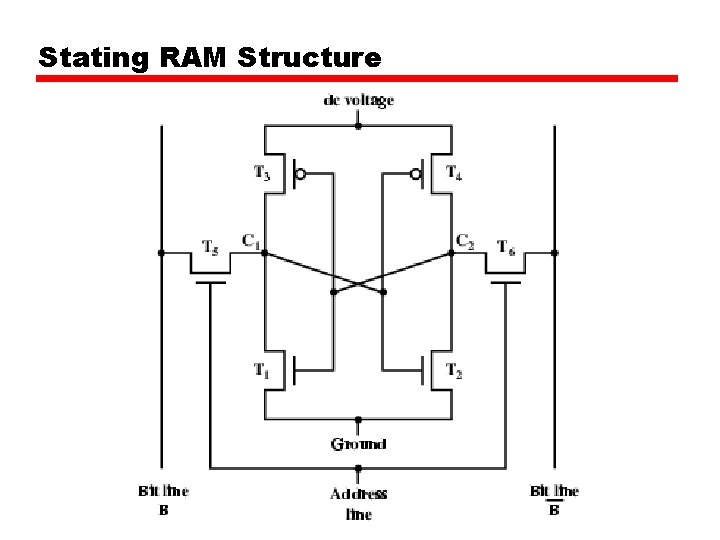
Static RAM • • • Bits stored as on/off switches No charges to leak No refreshing needed when powered More complex construction Larger per bit More expensive Does not need refresh circuits Faster Cache Digital —Uses flip-flops
Stating RAM Structure
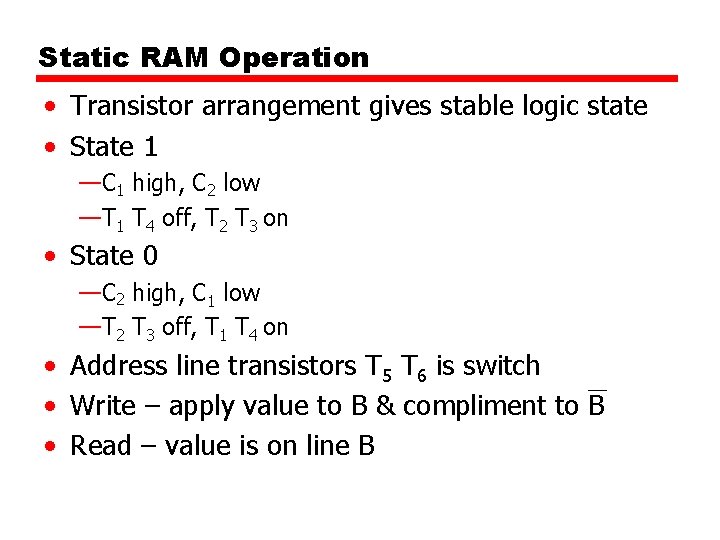
Static RAM Operation • Transistor arrangement gives stable logic state • State 1 —C 1 high, C 2 low —T 1 T 4 off, T 2 T 3 on • State 0 —C 2 high, C 1 low —T 2 T 3 off, T 1 T 4 on • Address line transistors T 5 T 6 is switch • Write – apply value to B & compliment to B • Read – value is on line B
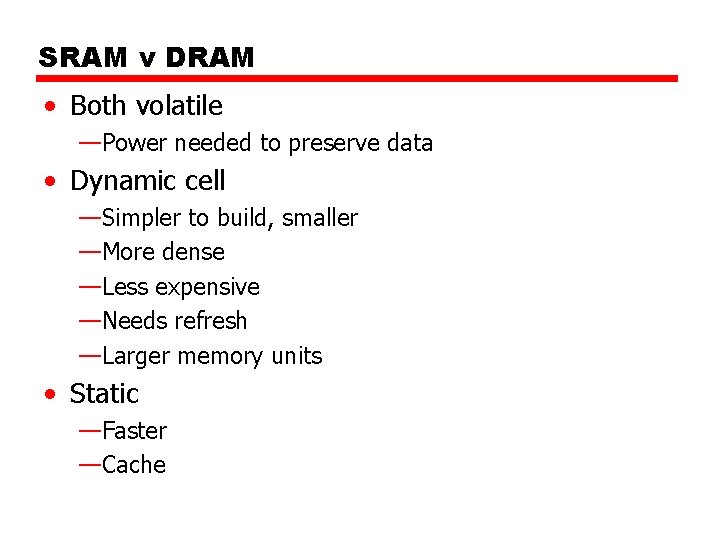
SRAM v DRAM • Both volatile —Power needed to preserve data • Dynamic cell —Simpler to build, smaller —More dense —Less expensive —Needs refresh —Larger memory units • Static —Faster —Cache
Read Only Memory (ROM) • Permanent storage —Nonvolatile • • Microprogramming (see later) Library subroutines Systems programs (BIOS) Function tables
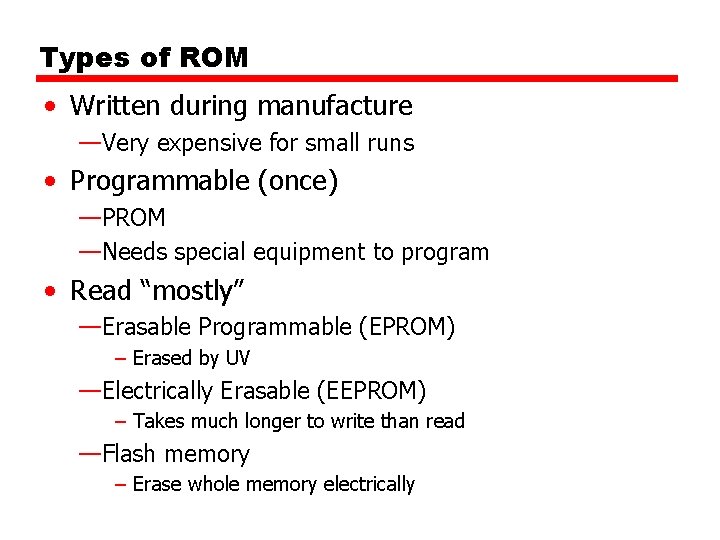
Types of ROM • Written during manufacture —Very expensive for small runs • Programmable (once) —PROM —Needs special equipment to program • Read “mostly” —Erasable Programmable (EPROM) – Erased by UV —Electrically Erasable (EEPROM) – Takes much longer to write than read —Flash memory – Erase whole memory electrically
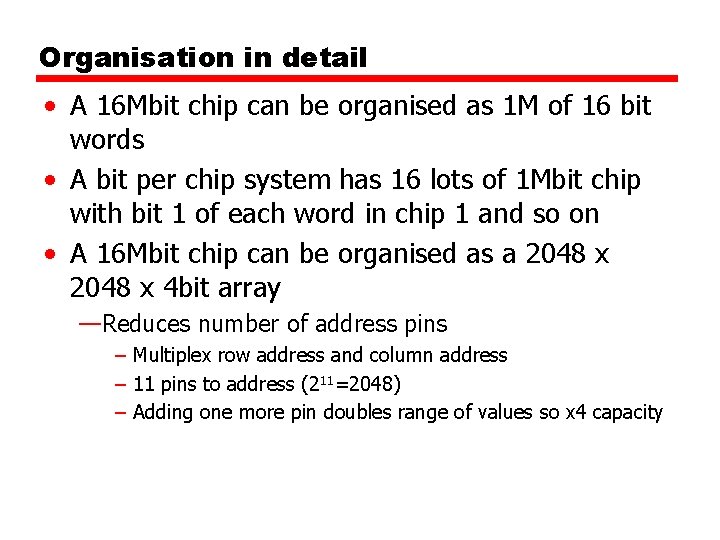
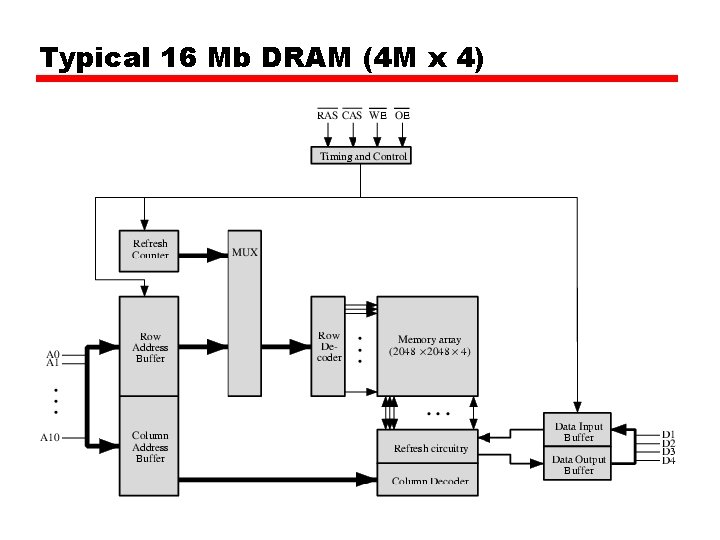
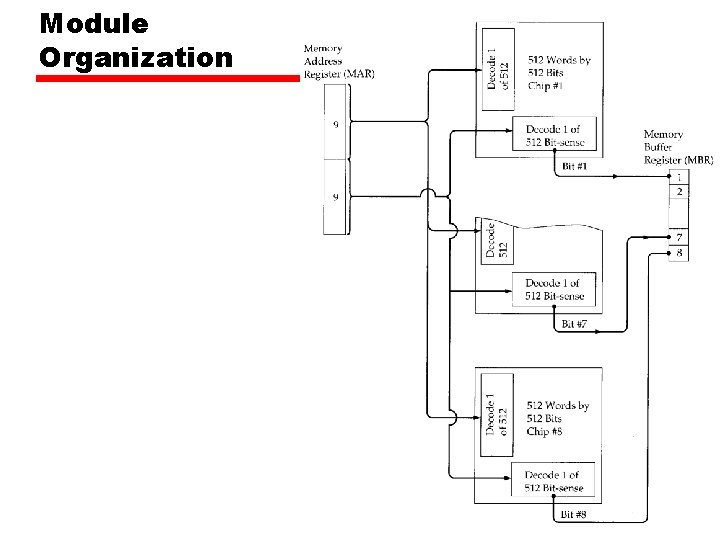
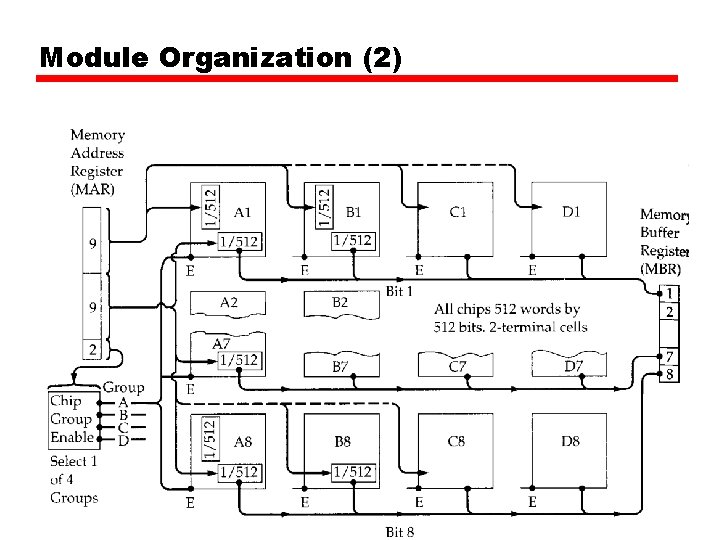
Organisation in detail • A 16 Mbit chip can be organised as 1 M of 16 bit words • A bit per chip system has 16 lots of 1 Mbit chip with bit 1 of each word in chip 1 and so on • A 16 Mbit chip can be organised as a 2048 x 4 bit array —Reduces number of address pins – Multiplex row address and column address – 11 pins to address (211=2048) – Adding one more pin doubles range of values so x 4 capacity
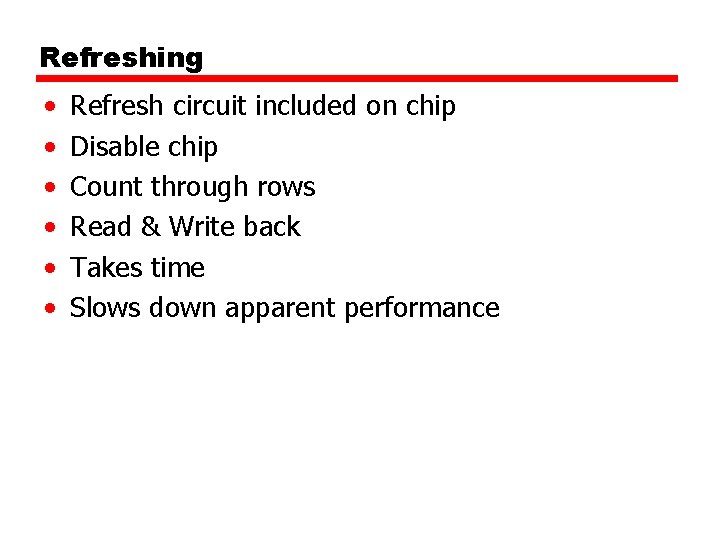
Refreshing • • • Refresh circuit included on chip Disable chip Count through rows Read & Write back Takes time Slows down apparent performance
Typical 16 Mb DRAM (4 M x 4)
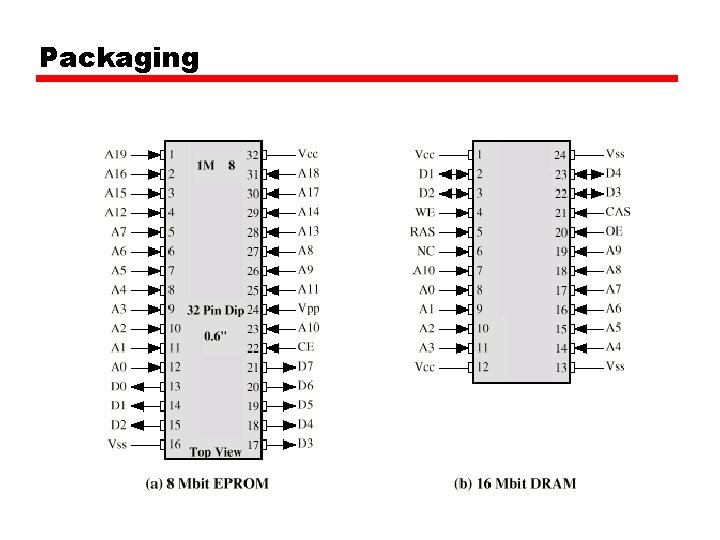
Packaging
Module Organization
Module Organization (2)
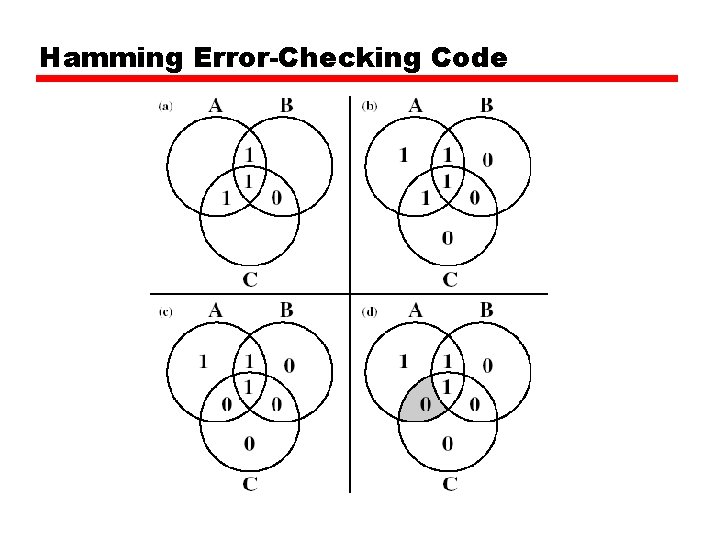
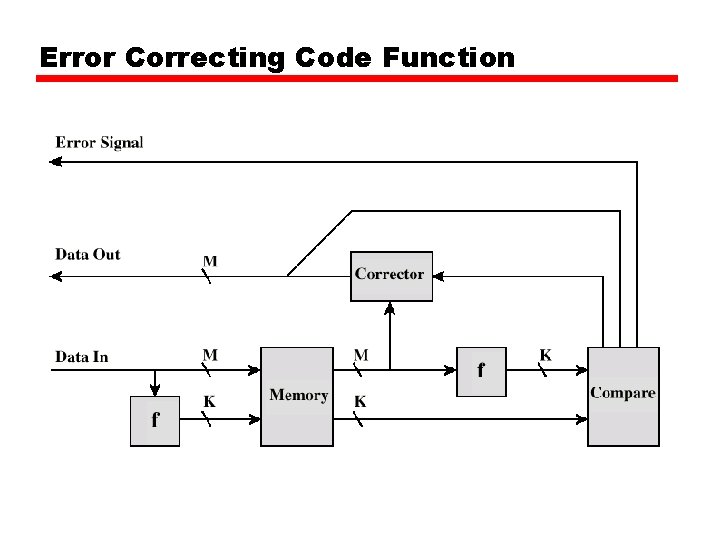
Error Correction • Hard Failure —Permanent defect • Soft Error —Random, non-destructive —No permanent damage to memory • Detected using Hamming error correcting code
Hamming Error-Checking Code
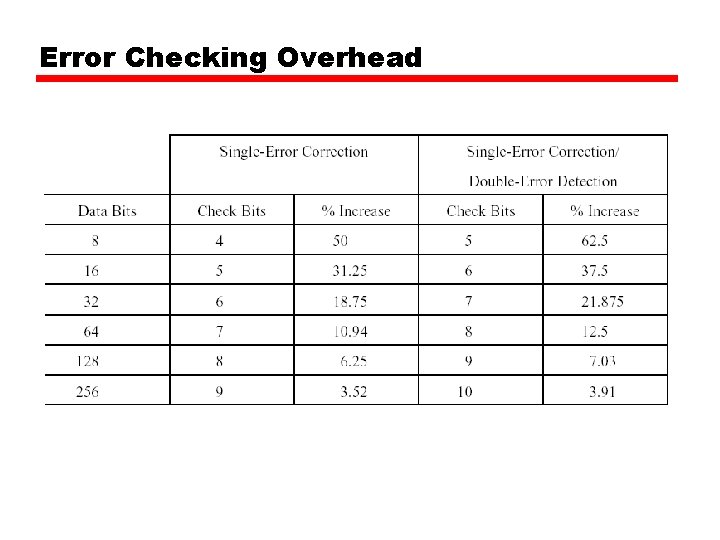
Error Checking Overhead
Error Correcting Code Function
Advanced DRAM Organization • Basic DRAM same since first RAM chips • Enhanced DRAM —Contains small SRAM as well —SRAM holds last line read (c. f. Cache!) • Cache DRAM —Larger SRAM component —Use as cache or serial buffer
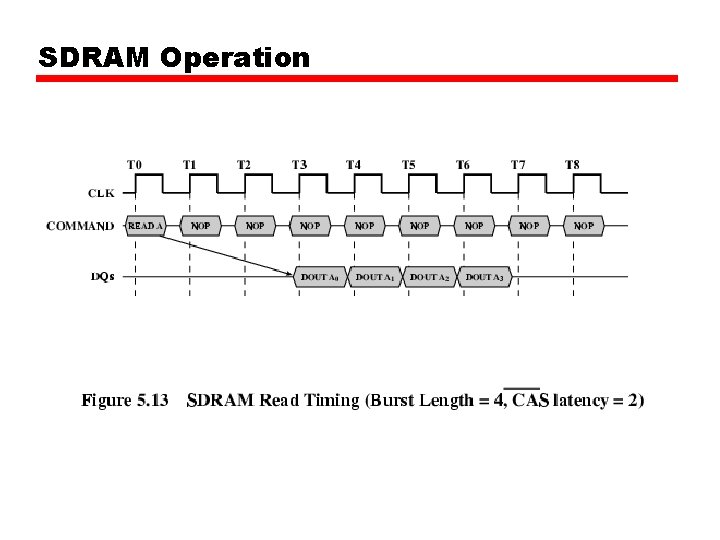
Synchronous DRAM (SDRAM) • Access is synchronized with an external clock • Address is presented to RAM • RAM finds data (CPU waits in conventional DRAM) • Since SDRAM moves data in time with system clock, CPU knows when data will be ready • CPU does not have to wait, it can do something else • Burst mode allows SDRAM to set up stream of data and fire it out in block • DDR-SDRAM sends data twice per clock cycle (leading & trailing edge)
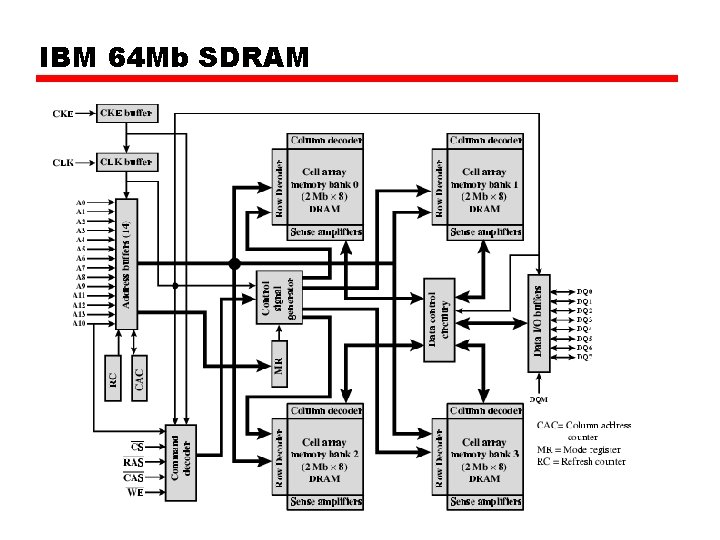
IBM 64 Mb SDRAM
SDRAM Operation
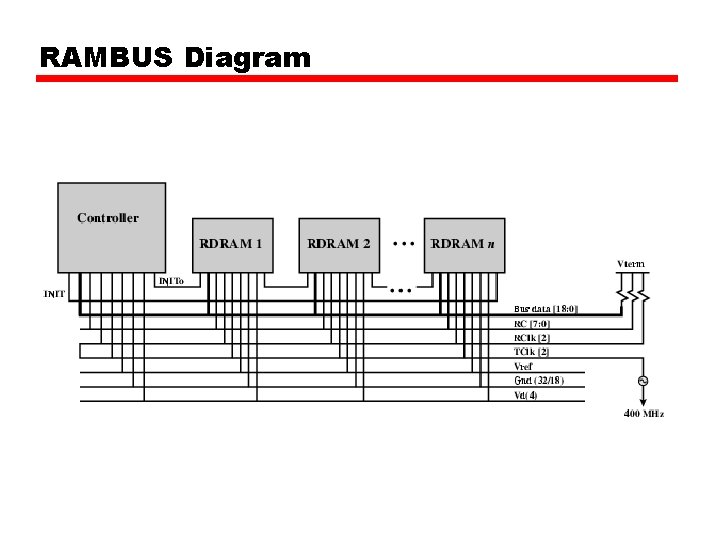
RAMBUS • • • Adopted by Intel for Pentium & Itanium Main competitor to SDRAM Vertical package – all pins on one side Data exchange over 28 wires < cm long Bus addresses up to 320 RDRAM chips at 1. 6 Gbps • Asynchronous block protocol — 480 ns access time —Then 1. 6 Gbps
RAMBUS Diagram