
William Stallings Computer Organization and Architecture 6 th
- Slides: 54
William Stallings Computer Organization and Architecture 6 th Edition Chapter 6 External Memory
Types of External Memory • Magnetic Disk —RAID —Removable • Optical —CD-ROM —CD-Recordable (CD-R) —CD-R/W —DVD • Magnetic Tape
Magnetic Disk • Disk substrate(底質) coated with magnetizable material • Substrate used to be aluminium (鋁) • Now glass —Improved surface uniformity – Increases reliability —Reduction in surface defects(缺陷) – Reduced read/write errors —Lower flight heights (See later) —Better stiffness (硬) —Better shock/damage resistance
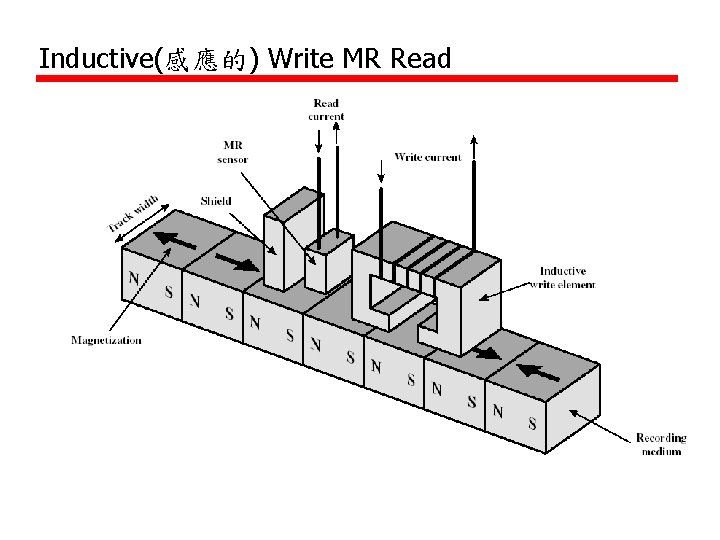
Read and Write Mechanisms • • Recording and retrieval via conductive coil(線圈) called a head May be single read/write head or separate ones During read/write, head is stationary(固定), platter(盤) rotates Write — Current through coil produces magnetic field — Pulses(脈衝) sent to head — Magnetic pattern recorded on surface below • Read (traditional) — Magnetic field moving relative to coil produces current — Coil is the same for read and write • Read (contemporary) — — Separate read head, close to write head Partially shielded magneto resistive (MR, 磁阻) sensor Electrical resistance depends on direction of magnetic field High frequency operation – Higher storage density and speed
Inductive(感應的) Write MR Read
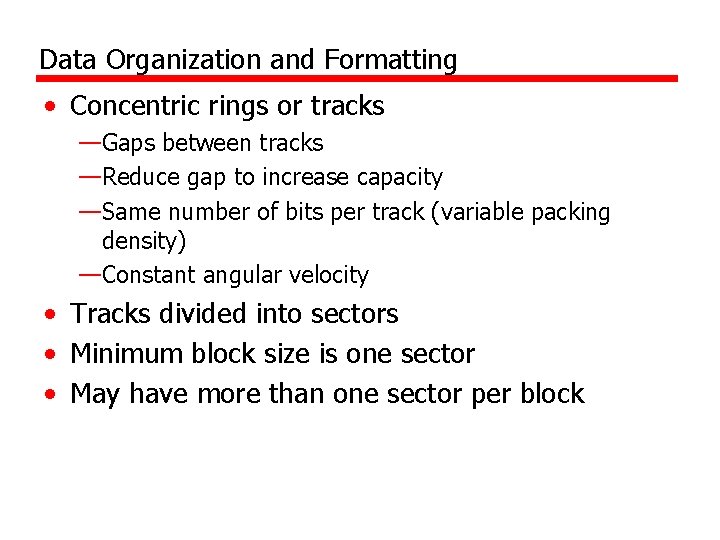
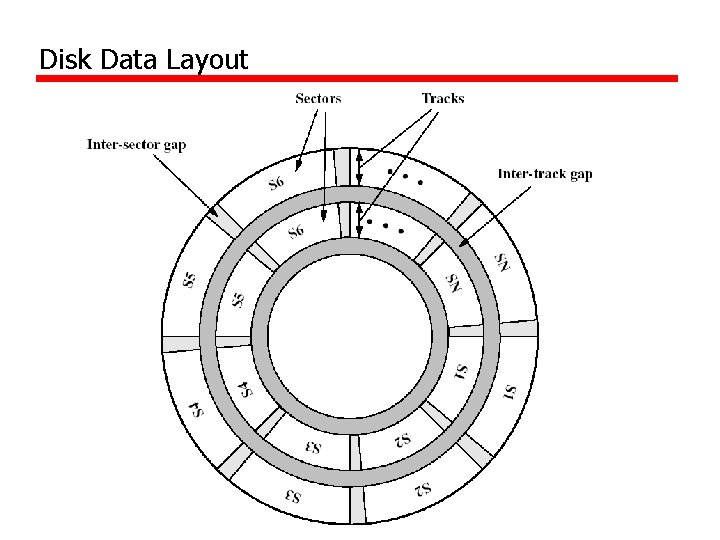
Data Organization and Formatting • Concentric rings or tracks —Gaps between tracks —Reduce gap to increase capacity —Same number of bits per track (variable packing density) —Constant angular velocity • Tracks divided into sectors • Minimum block size is one sector • May have more than one sector per block
Disk Data Layout
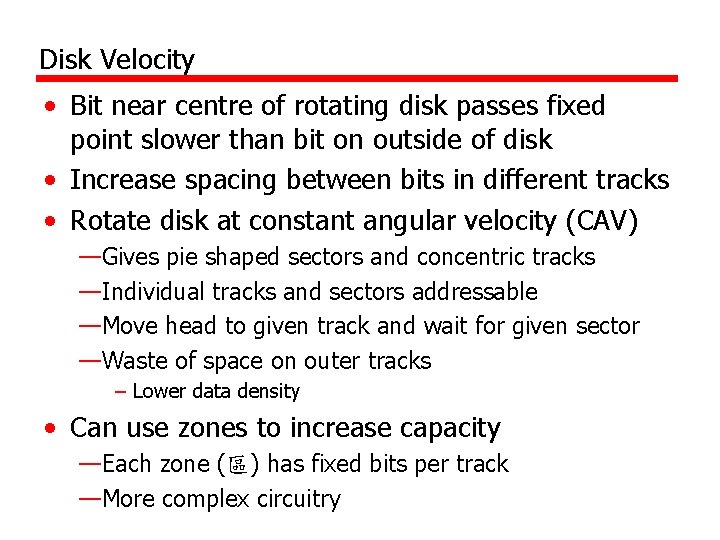
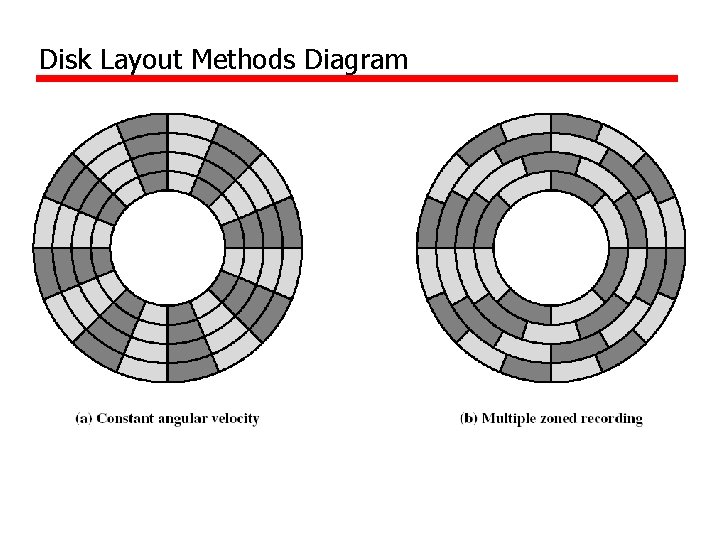
Disk Velocity • Bit near centre of rotating disk passes fixed point slower than bit on outside of disk • Increase spacing between bits in different tracks • Rotate disk at constant angular velocity (CAV) —Gives pie shaped sectors and concentric tracks —Individual tracks and sectors addressable —Move head to given track and wait for given sector —Waste of space on outer tracks – Lower data density • Can use zones to increase capacity —Each zone (區) has fixed bits per track —More complex circuitry
Disk Layout Methods Diagram
Finding Sectors • Must be able to identify start of track and sector • Format disk —Additional information not available to user —Marks tracks and sectors
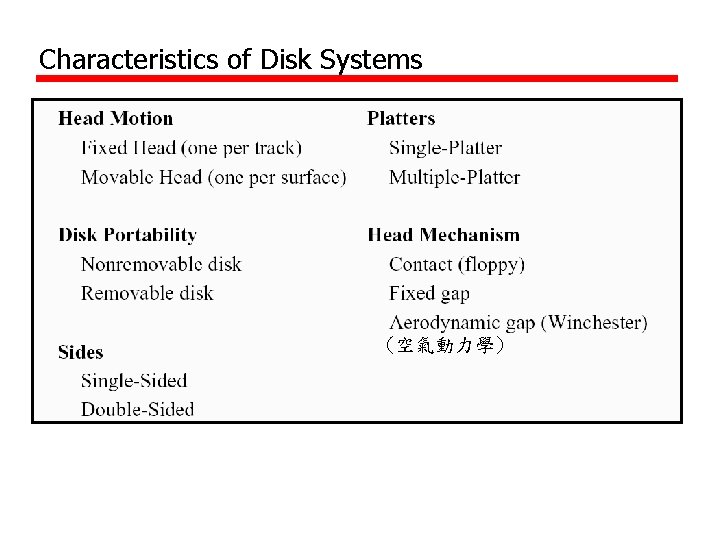
Characteristics of Disk Systems (空氣動力學)
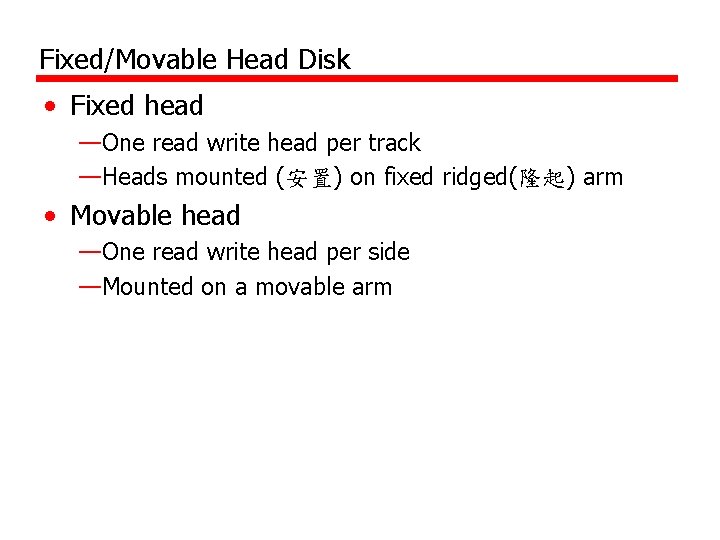
Fixed/Movable Head Disk • Fixed head —One read write head per track —Heads mounted (安置) on fixed ridged(隆起) arm • Movable head —One read write head per side —Mounted on a movable arm
Removable or Not • Removable disk —Can be removed from drive and replaced with another disk —Provides unlimited storage capacity —Easy data transfer between systems • Nonremovable disk —Permanently mounted in the drive
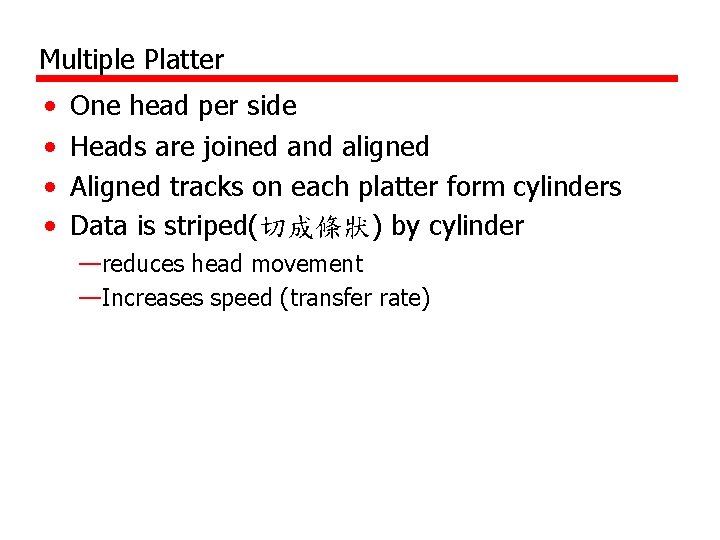
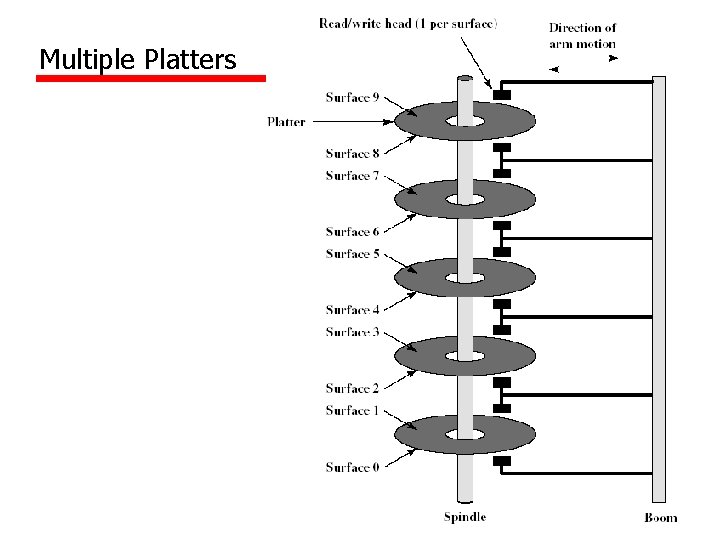
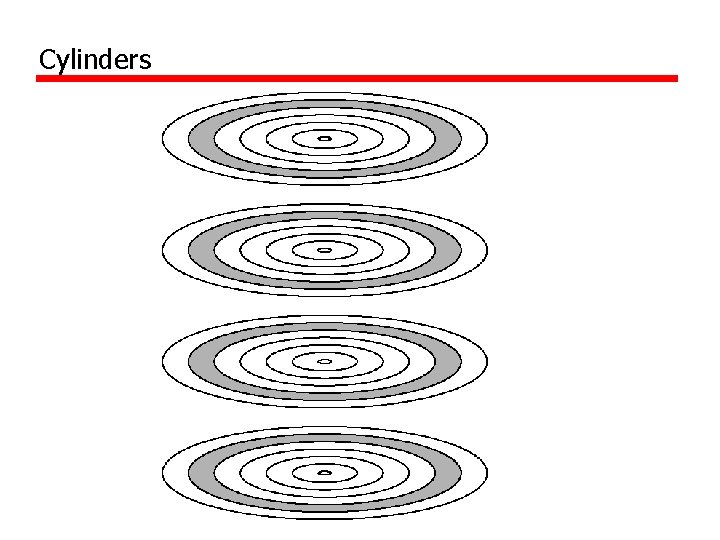
Multiple Platter • • One head per side Heads are joined and aligned Aligned tracks on each platter form cylinders Data is striped(切成條狀) by cylinder —reduces head movement —Increases speed (transfer rate)
Multiple Platters
Cylinders
Floppy Disk • 8”, 5. 25”, 3. 5” • Small capacity —Up to 1. 44 Mbyte (2. 88 M never popular) • • Slow Universal Cheap Obsolete? (廢棄)
Winchester Hard Disk (1) • • • Developed by IBM in Winchester (USA) Sealed unit One or more platters (disks) Heads fly on boundary layer of air as disk spins Very small head to disk gap Getting more robust
Winchester Hard Disk (2) • • Universal Cheap Fastest external storage Getting larger all the time —Multiple Gigabyte now usual
Removable Hard Disk • ZIP —Cheap —Very common —Only 100 M • JAZ —Not cheap — 1 G • L-120 (a: drive) —Also reads 3. 5” floppy —Becoming more popular? • All obsoleted by CD-R and CD-R/W?
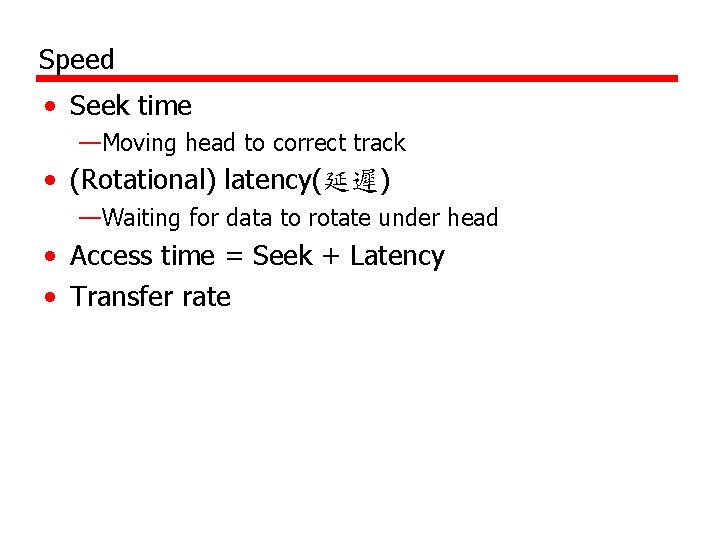
Speed • Seek time —Moving head to correct track • (Rotational) latency(延遲) —Waiting for data to rotate under head • Access time = Seek + Latency • Transfer rate
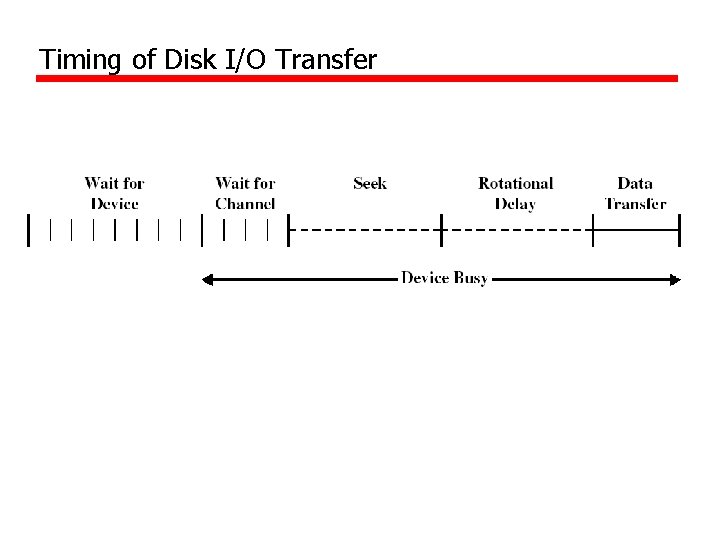
Timing of Disk I/O Transfer
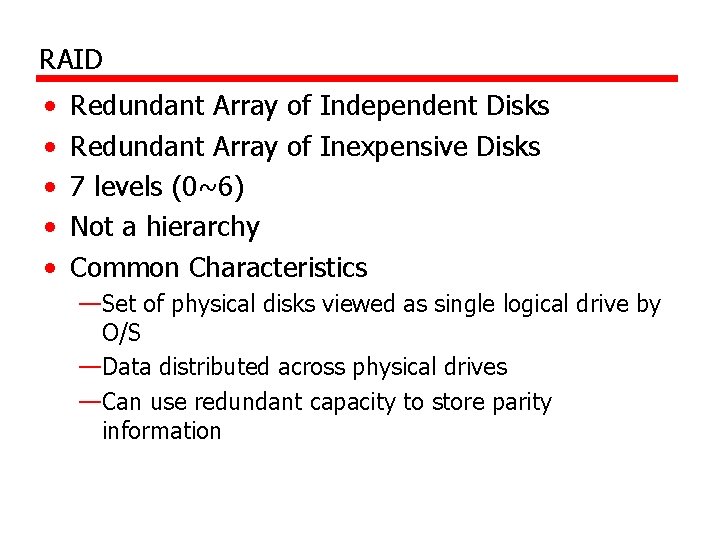
RAID • • • Redundant Array of Independent Disks Redundant Array of Inexpensive Disks 7 levels (0~6) Not a hierarchy Common Characteristics —Set of physical disks viewed as single logical drive by O/S —Data distributed across physical drives —Can use redundant capacity to store parity information
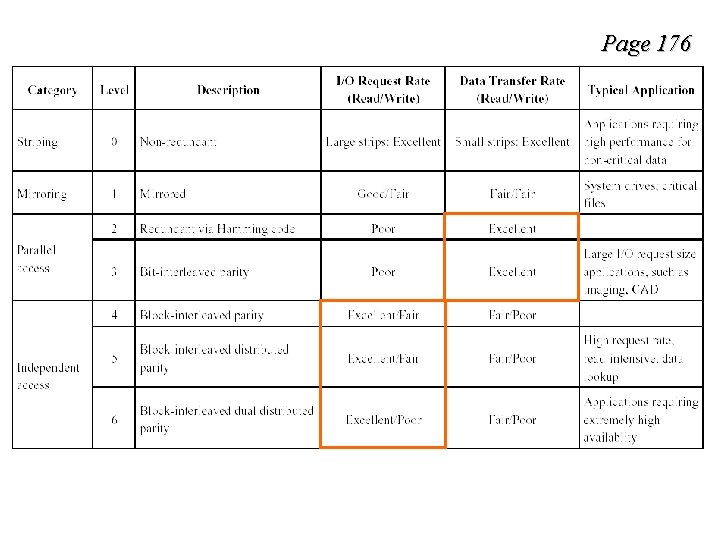
Page 176
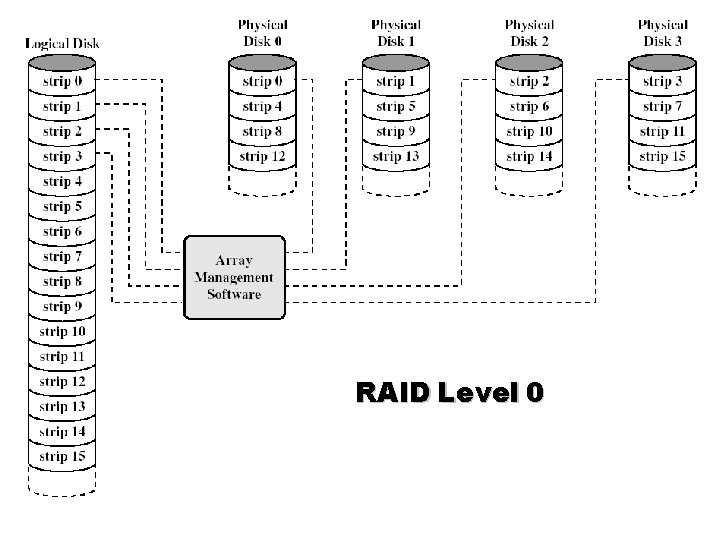
RAID Level 0 • • No redundancy Data striped across all disks Round Robin striping Increase speed (Performance) —Multiple data requests probably not on same disk —Disks seek in parallel —A set of data is likely to be striped across multiple disks Strip Size: Block or Sector
RAID Level 0
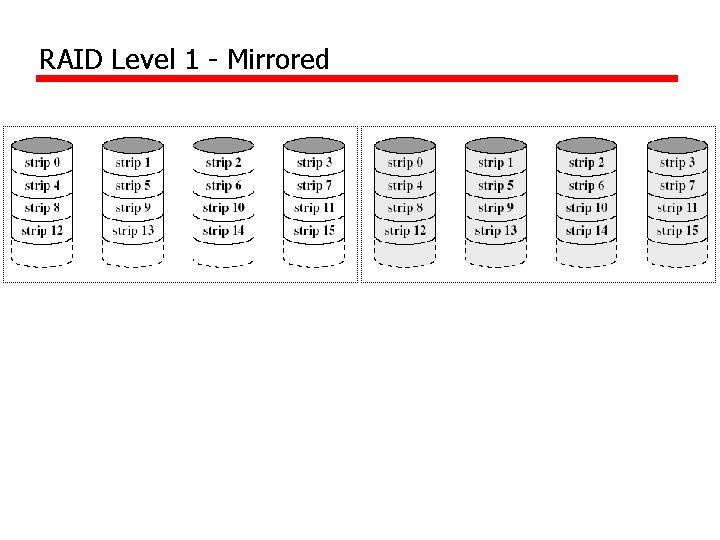
RAID Level 1 • • • Mirrored Disks Data is striped across disks 2 copies of each stripe on separate disks Read from either Write to both Recovery is simple —Swap faulty disk & re-mirror —No down time • Expensive
RAID Level 1 - Mirrored
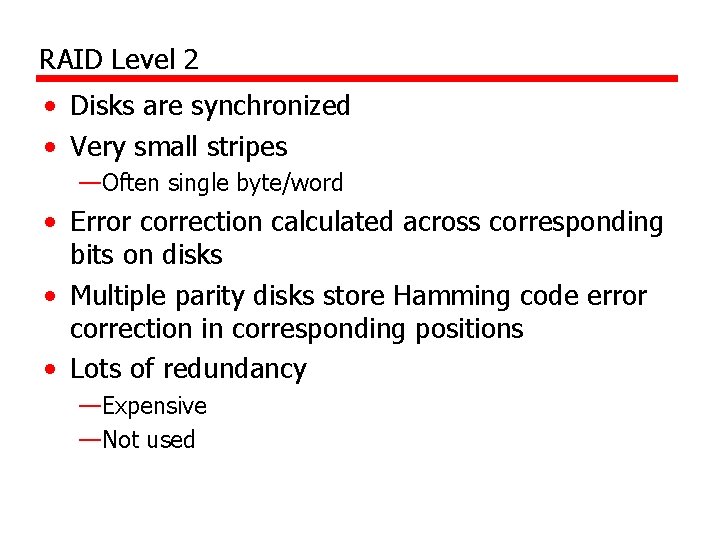
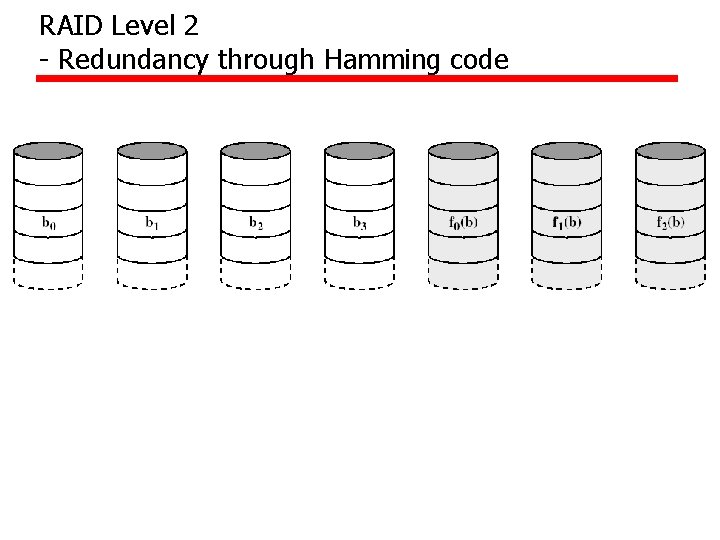
RAID Level 2 • Disks are synchronized • Very small stripes —Often single byte/word • Error correction calculated across corresponding bits on disks • Multiple parity disks store Hamming code error correction in corresponding positions • Lots of redundancy —Expensive —Not used
RAID Level 2 - Redundancy through Hamming code
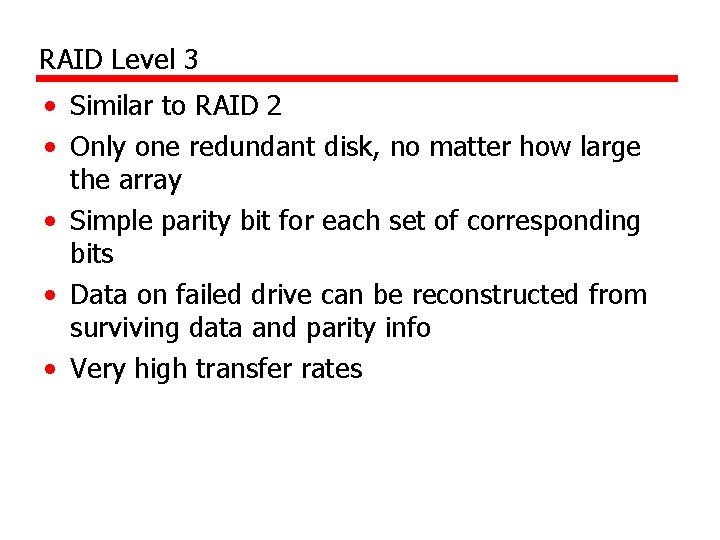
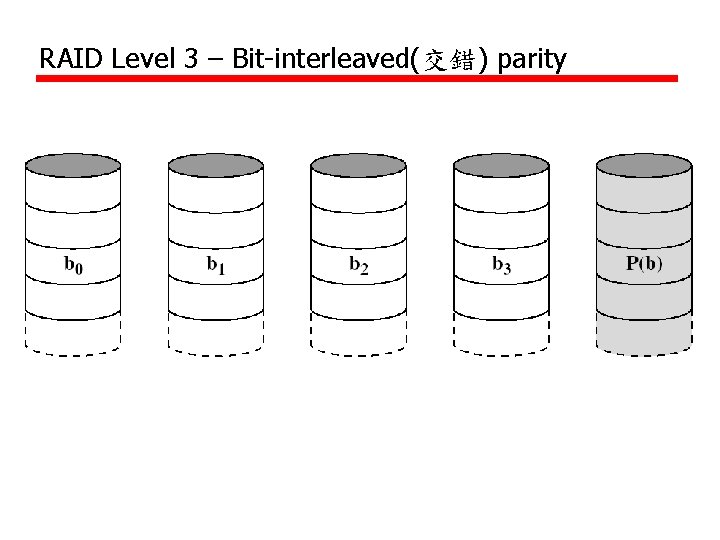
RAID Level 3 • Similar to RAID 2 • Only one redundant disk, no matter how large the array • Simple parity bit for each set of corresponding bits • Data on failed drive can be reconstructed from surviving data and parity info • Very high transfer rates
RAID Level 3 – Bit-interleaved(交錯) parity
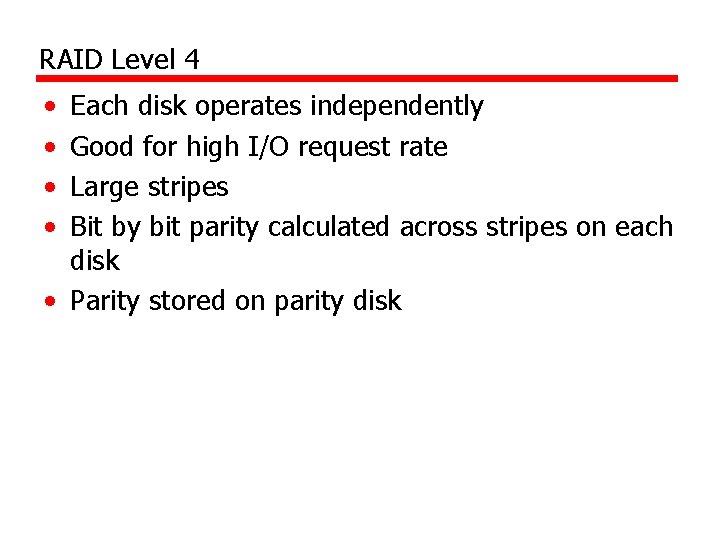
RAID Level 4 • • Each disk operates independently Good for high I/O request rate Large stripes Bit by bit parity calculated across stripes on each disk • Parity stored on parity disk
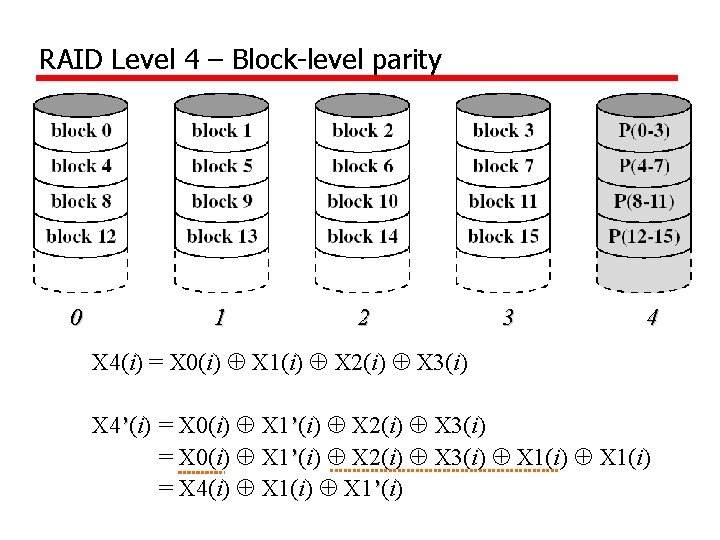
RAID Level 4 – Block-level parity 0 1 2 3 4 X 4(i) = X 0(i) X 1(i) X 2(i) X 3(i) X 4’(i) = X 0(i) X 1’(i) X 2(i) X 3(i) X 1(i) = X 4(i) X 1’(i)
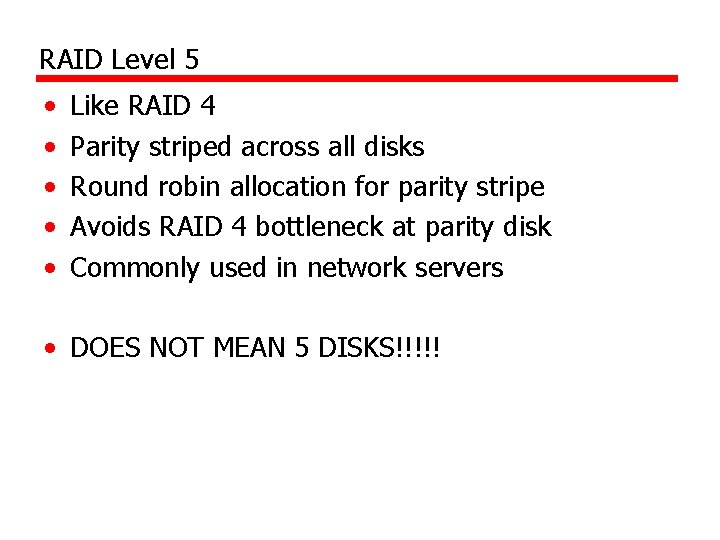
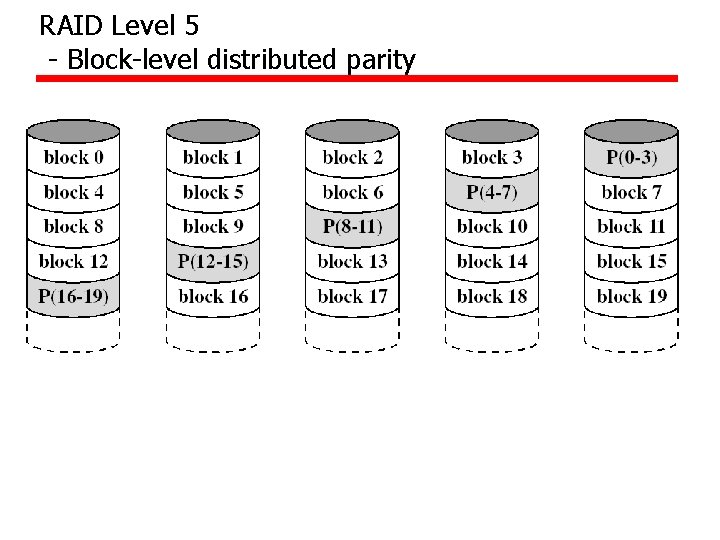
RAID Level 5 • • • Like RAID 4 Parity striped across all disks Round robin allocation for parity stripe Avoids RAID 4 bottleneck at parity disk Commonly used in network servers • DOES NOT MEAN 5 DISKS!!!!!
RAID Level 5 - Block-level distributed parity
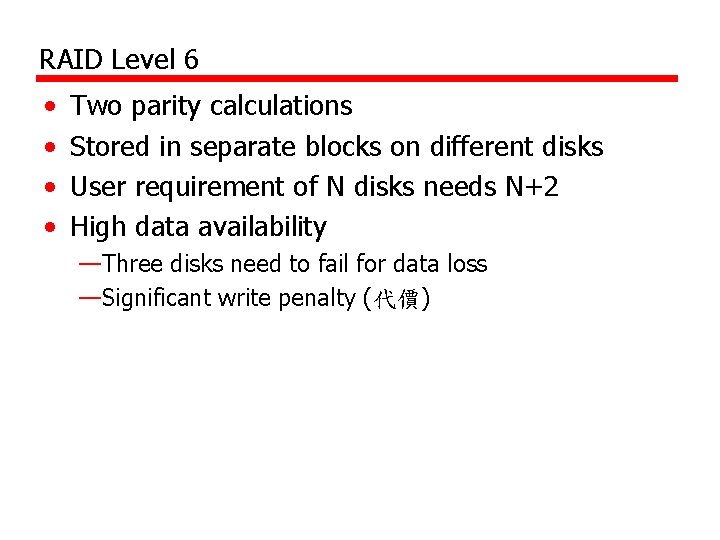
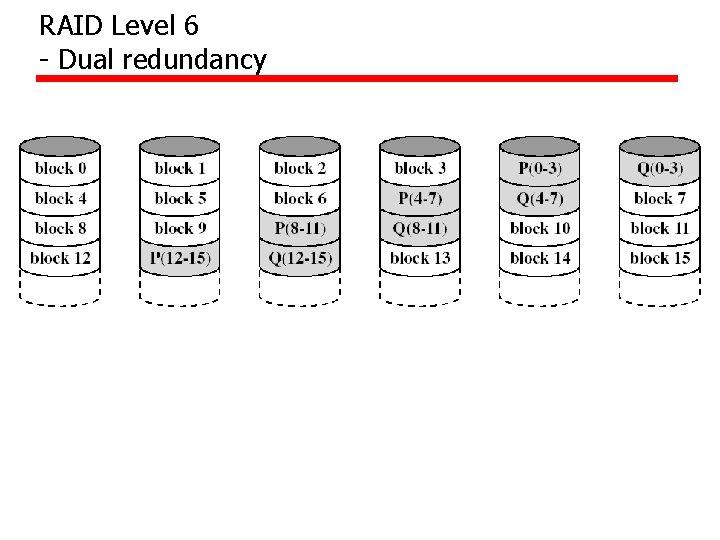
RAID Level 6 • • Two parity calculations Stored in separate blocks on different disks User requirement of N disks needs N+2 High data availability —Three disks need to fail for data loss —Significant write penalty (代價)
RAID Level 6 - Dual redundancy
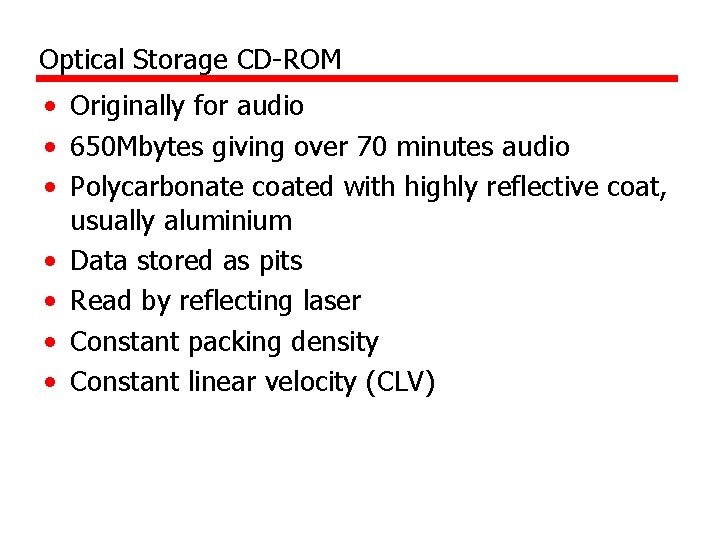
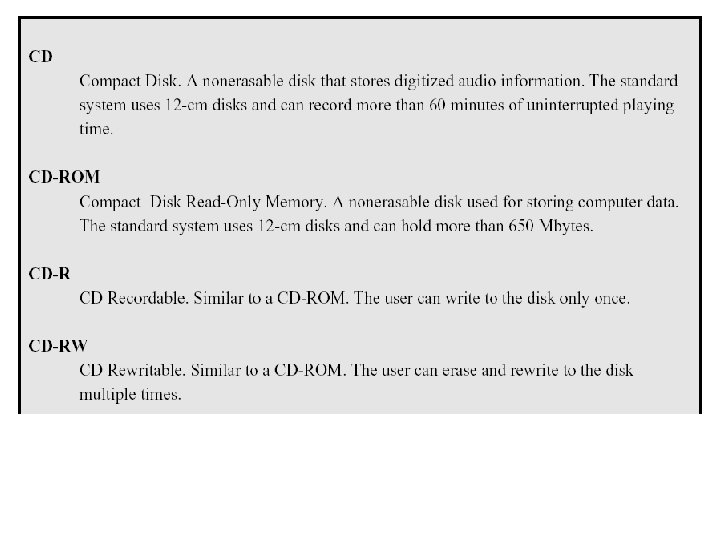
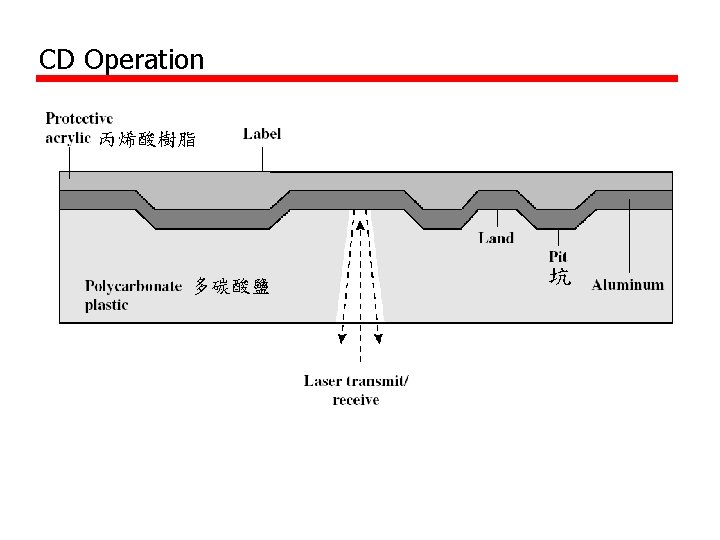
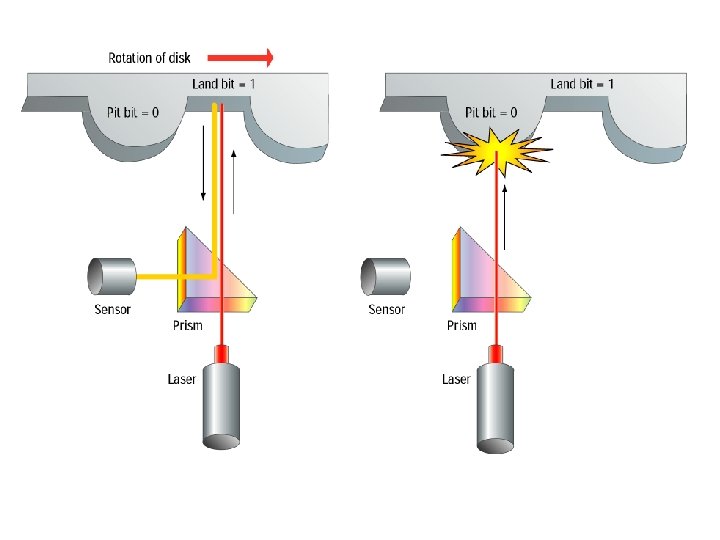
Optical Storage CD-ROM • Originally for audio • 650 Mbytes giving over 70 minutes audio • Polycarbonate coated with highly reflective coat, usually aluminium • Data stored as pits • Read by reflecting laser • Constant packing density • Constant linear velocity (CLV)
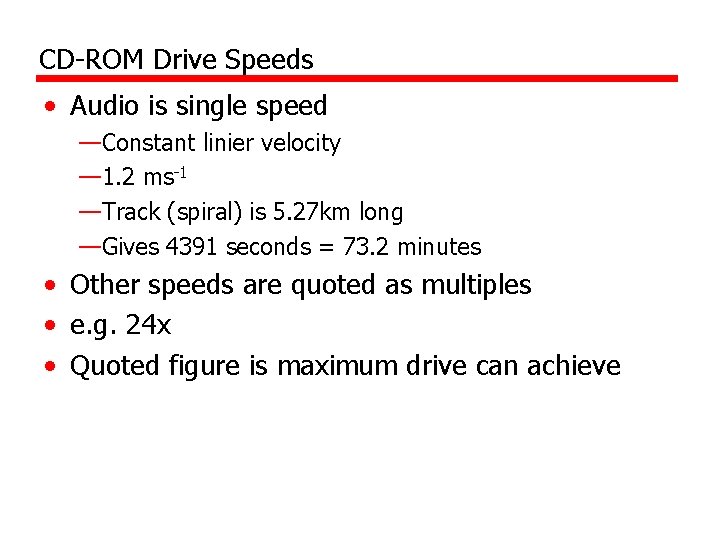
CD-ROM Drive Speeds • Audio is single speed —Constant linier velocity — 1. 2 ms-1 —Track (spiral) is 5. 27 km long —Gives 4391 seconds = 73. 2 minutes • Other speeds are quoted as multiples • e. g. 24 x • Quoted figure is maximum drive can achieve
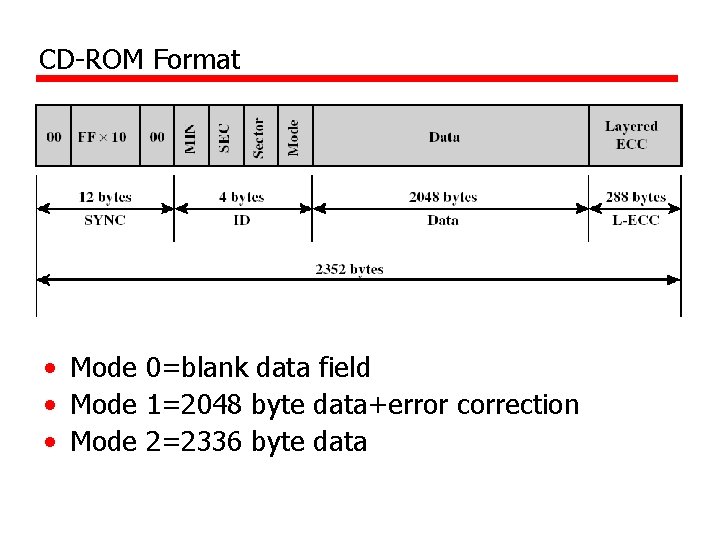
CD-ROM Format • Mode 0=blank data field • Mode 1=2048 byte data+error correction • Mode 2=2336 byte data
Random Access on CD-ROM • • • Difficult Move head to rough(粗略) position Set correct speed Read address Adjust to required location
CD-ROM for & against • • Large capacity (? ) Easy to mass produce Removable Robust(強韌) • Expensive for small runs • Slow • Read only
Other Optical Storage • CD-Recordable (CD-R) —WORM (Write-Once Read-Many) —Now affordable —Compatible with CD-ROM drives • CD-RW —Erasable —Getting cheaper —Mostly CD-ROM drive compatible —Phase change – Material has two different reflectivities (反射性) in different phase states
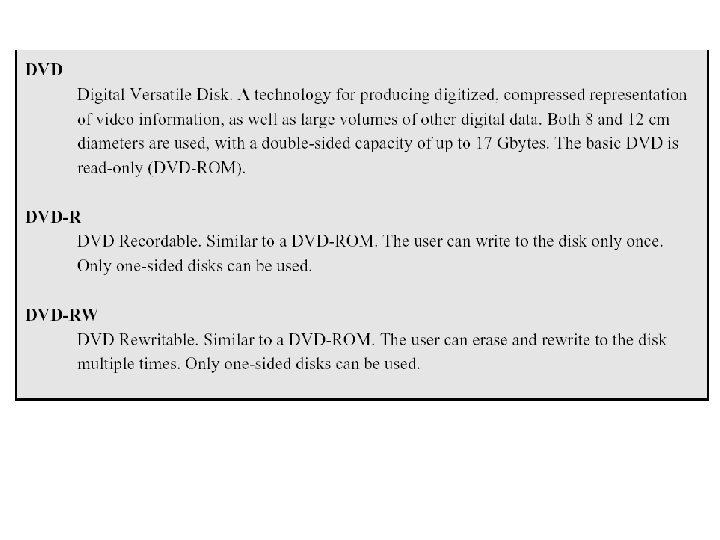
DVD - what’s in a name? • Digital Video Disk —Used to indicate a player for movies – Only plays video disks • Digital Versatile(多用途的) Disk —Used to indicate a computer drive – Will read computer disks and play video disks
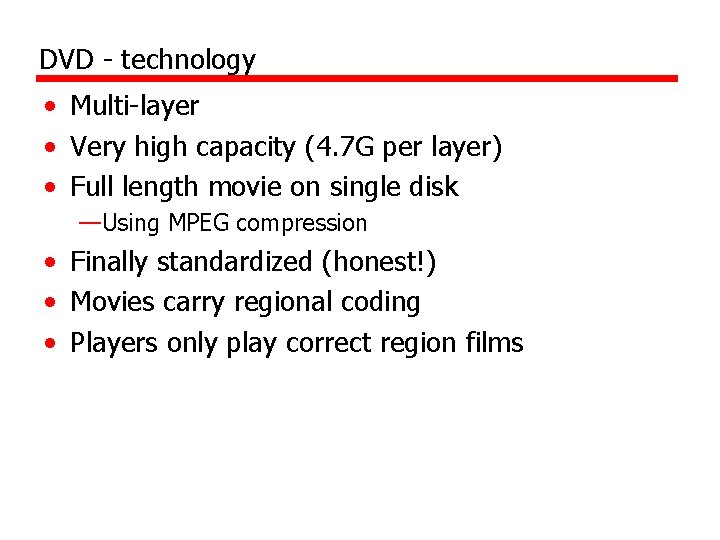
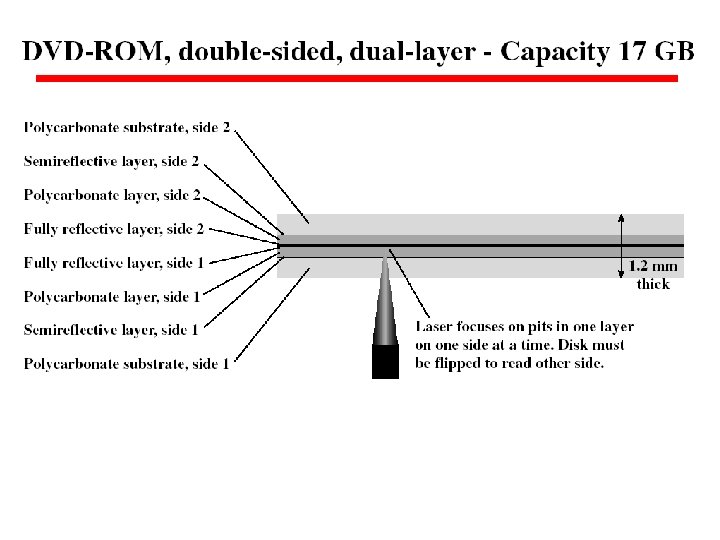
DVD - technology • Multi-layer • Very high capacity (4. 7 G per layer) • Full length movie on single disk —Using MPEG compression • Finally standardized (honest!) • Movies carry regional coding • Players only play correct region films
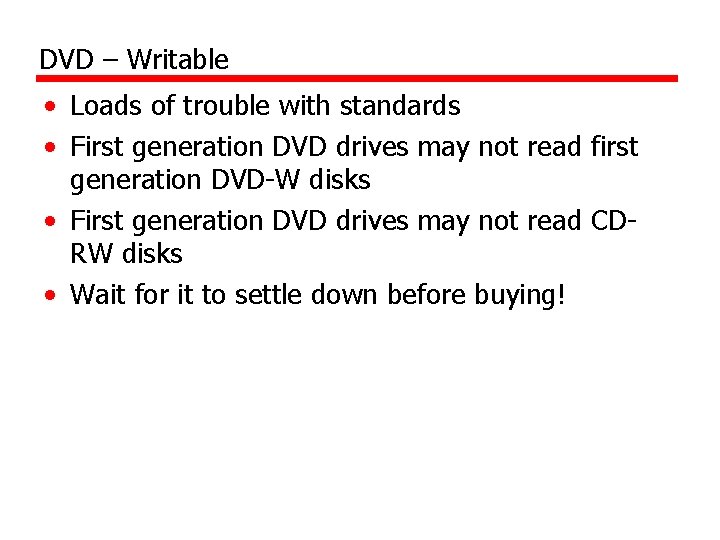
DVD – Writable • Loads of trouble with standards • First generation DVD drives may not read first generation DVD-W disks • First generation DVD drives may not read CDRW disks • Wait for it to settle down before buying!
Magnetic Tape • • Serial access Slow Very cheap Backup and archive
Digital Audio Tape (DAT) • Uses rotating head (like video) • High capacity on small tape — 4 Gbyte uncompressed — 8 Gbyte compressed • Backup of PC/network servers