
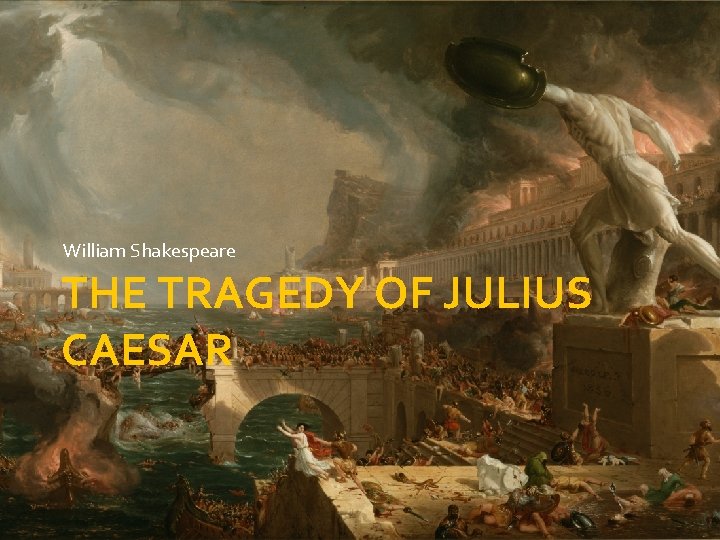
William Shakespeare THE TRAGEDY OF JULIUS CAESAR The
- Slides: 10
William Shakespeare THE TRAGEDY OF JULIUS CAESAR
The Roman Republic (509 BC-27 C) �Began by overthrowing the Roman Monarchy �Government headed by two consuls, elected by the citizens and advised by the senate � Three separate branches (Legislative, Senate, and Consuls) �Public offices were only held for one year so that no individual wielded absolute power.
The Course of an Empire: Destruction �Gracchus brothers introduced reform measures to help the poor and limit senators’ power. �Angry senators and sympathizers rioted and killed both the Gracchi. �Violence became the primary tool of Roman politics. �Because violence was important, Gaius Marius worked to strengthen the Roman army.
The Course of an Empire: Destruction � Leaders began recruiting their own armies, loyal to themselves rather than to Roman government � Lucius Sulla raised an army to gain power and control Rome. � Sulla marched his loyal legions on Rome, starting a civil war between his army and that of the senate. � Upon victory, Sulla was named dictator, thus, technically, ending the Roman Republic.
Julius Caesar (100 BC-March 15, 44 BC) �The Roman Republic was never restored, but never fully abolished. �In 60 BC, Caesar helped form a dominant alliance Also known as the first Triumvirate Caesar, Crassus, and Pompey �The Republic favored Pompey but his army was weaker and Caesar stormed the city unopposed. �Once all political rivals were defeated, Caesar was named the Dictator of Rome. He hand picked members of the senate He decided, personally, which laws would be passed
Caesar’s Popularity �Caesar was well liked and respected by many �Within the Triumvirate, Caesar created legislation to redistribute land specifically for the poor. �Caesar was a great military leader His military conquests expanded Rome a great deal.
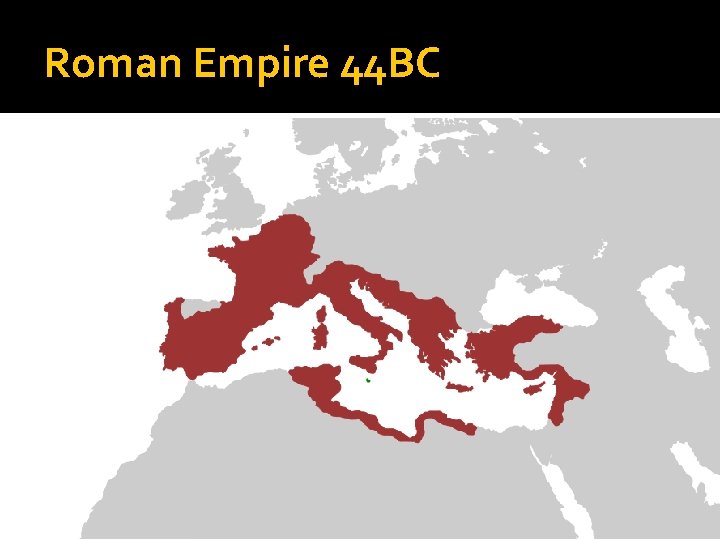
Roman Empire 44 BC
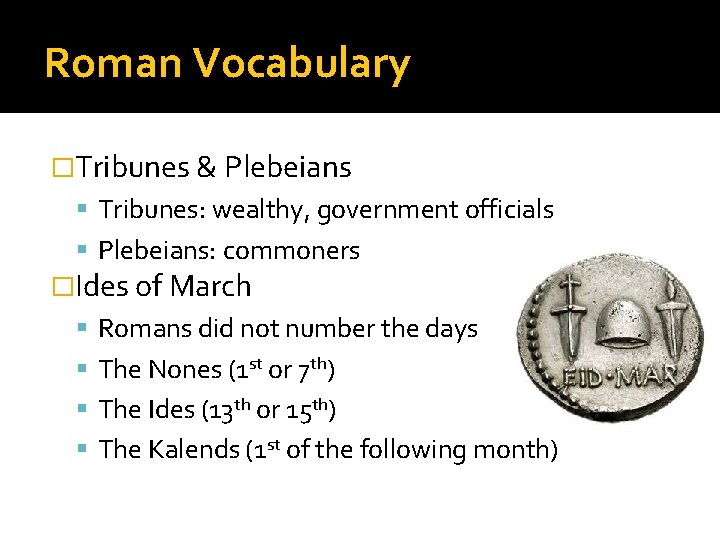
Roman Vocabulary �Tribunes & Plebeians Tribunes: wealthy, government officials Plebeians: commoners �Ides of March Romans did not number the days The Nones (1 st or 7 th) The Ides (13 th or 15 th) The Kalends (1 st of the following month)
William Shakespeare (Julius Caesar) �Written in 1599 �It’s not about the character, Julius Caesar, but about his assassination and the conspirators. �Contains a handful of deviations from Plutarch. �Emphasis on Rhetoric Ethos- A form or argument using credibility of the speaker. Pathos- A form or argument using emotional appeal such as fear, desire or anger. Logos- A form or argument based on logic or facts
Terms to Know �Monologue -Long speech spoken while other characters are on stage (long – not necessarily true thoughts) �Soliloquy- Long speech spoken alone on stage – perhaps to/toward audience (long – true thoughts) �Aside- short speech spoken to audience, other characters can’t hear it. (short – true thoughts)