
William Shakespeare PLEASE NOTE THESE NOTES ARE FOR
- Slides: 27
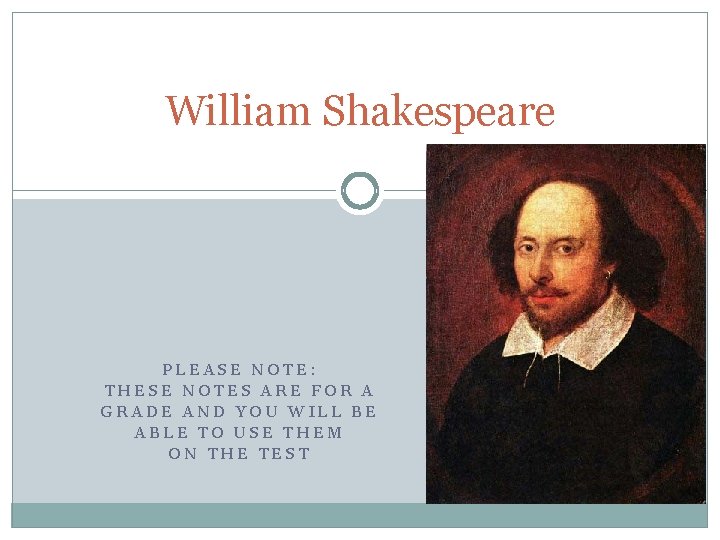
William Shakespeare PLEASE NOTE: THESE NOTES ARE FOR A GRADE AND YOU WILL BE ABLE TO USE THEM ON THE TEST
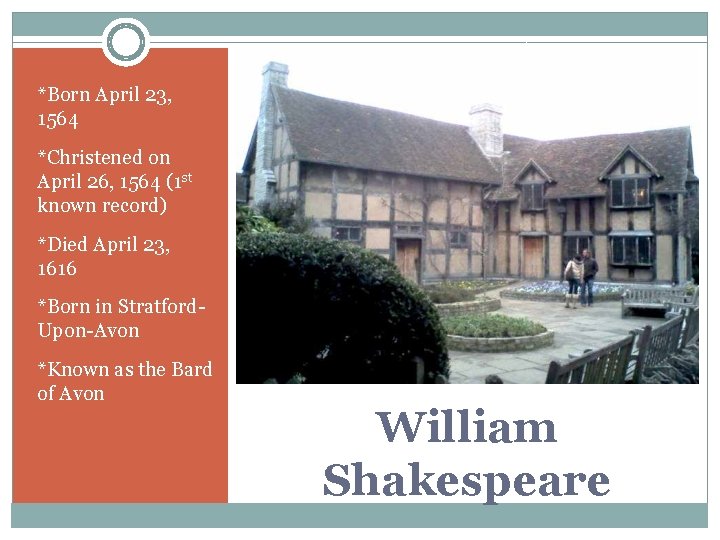
*Born April 23, 1564 *Christened on April 26, 1564 (1 st known record) *Died April 23, 1616 *Born in Stratford. Upon-Avon *Known as the Bard of Avon William Shakespeare
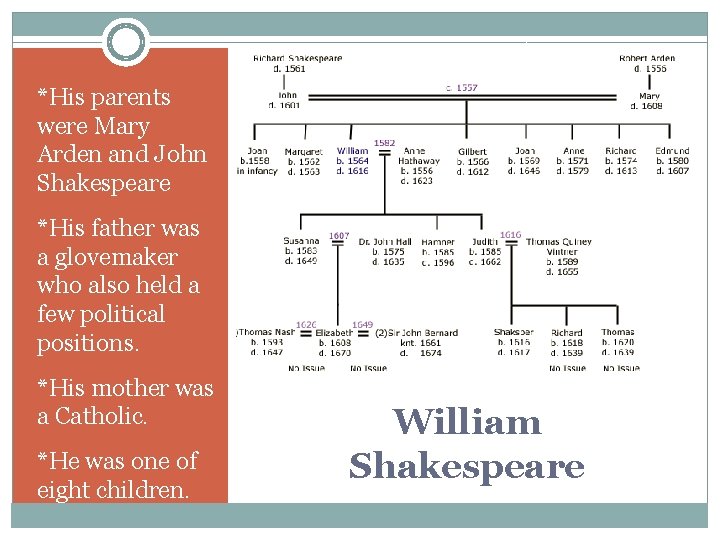
*His parents were Mary Arden and John Shakespeare *His father was a glovemaker who also held a few political positions. *His mother was a Catholic. *He was one of eight children. William Shakespeare
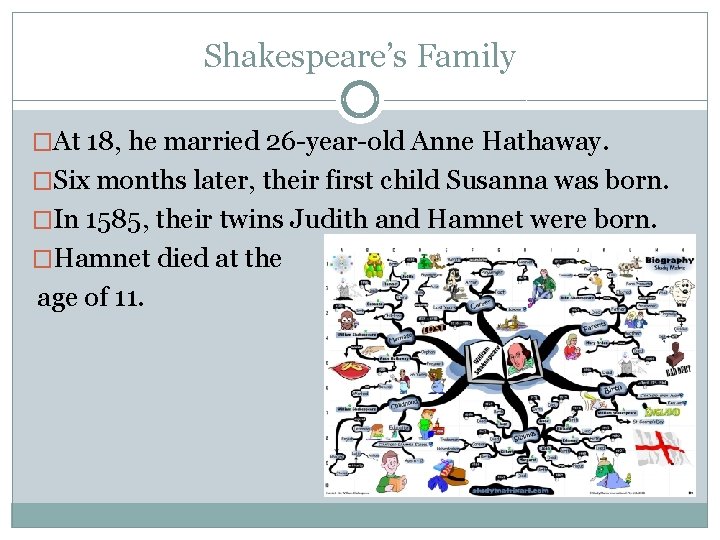
Shakespeare’s Family �At 18, he married 26 -year-old Anne Hathaway. �Six months later, their first child Susanna was born. �In 1585, their twins Judith and Hamnet were born. �Hamnet died at the age of 11.
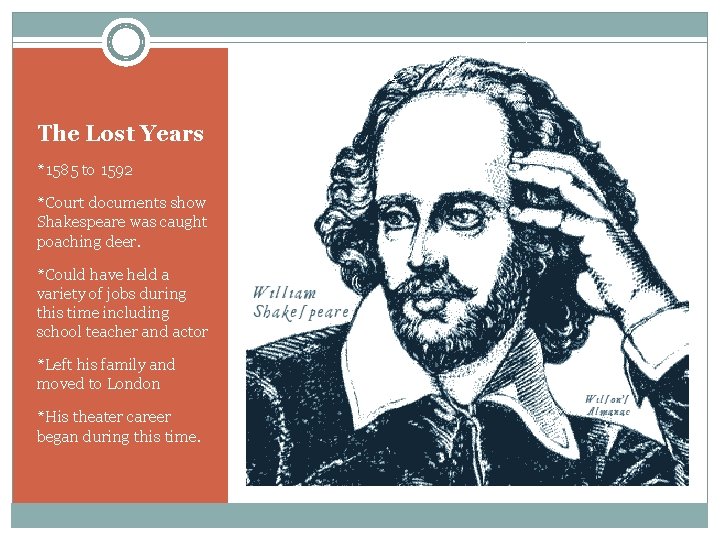
The Lost Years *1585 to 1592 *Court documents show Shakespeare was caught poaching deer. *Could have held a variety of jobs during this time including school teacher and actor *Left his family and moved to London *His theater career began during this time.
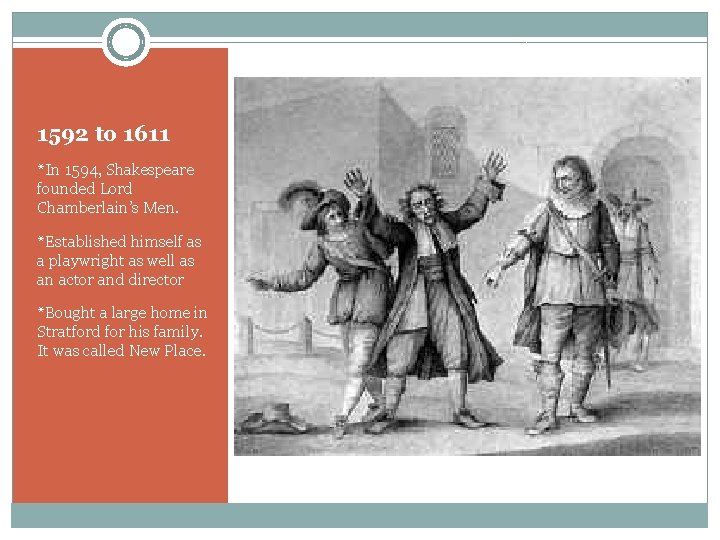
1592 to 1611 *In 1594, Shakespeare founded Lord Chamberlain’s Men. *Established himself as a playwright as well as an actor and director *Bought a large home in Stratford for his family. It was called New Place.
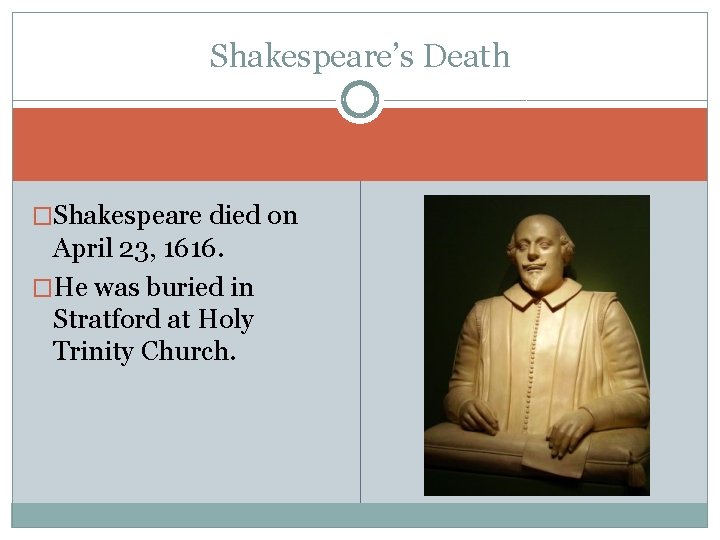
Shakespeare’s Death �Shakespeare died on April 23, 1616. �He was buried in Stratford at Holy Trinity Church.
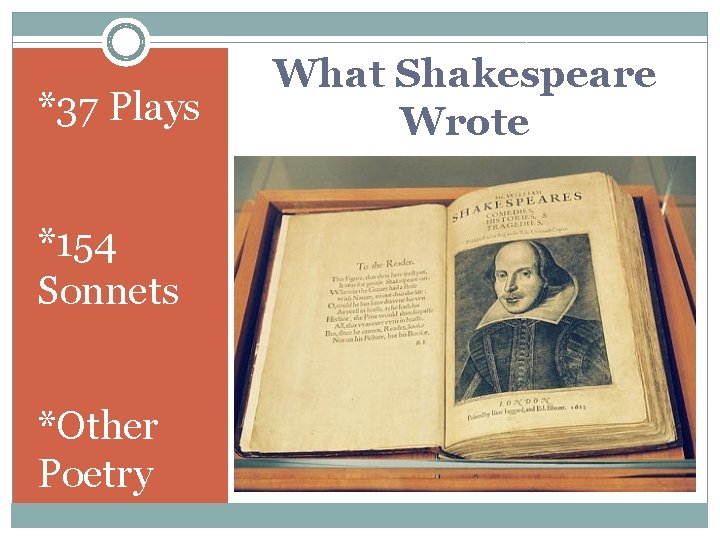
*37 Plays *154 Sonnets *Other Poetry What Shakespeare Wrote
Where Shakespeare’s Ideas Came From: �Came from other sources (such as existing books and plays) �Borrowed plots, characters, and entire speeches �Mixed ideas from two different stories �Always modified and improved the original story �Only 3 of his plays were entirely original �Ideas for the histories came from Holinshed’s The Chronicles of England, Ireland, and Scotland
Categories of Plays Tragedy Comedy History
TRAGEDIES �These are Shakespeare’s �There is humor in a most famous plays. �They include Hamlet, King Lear, Othello, Julius Caesar, and Macbeth. �Main character always dies. tragedy. �It is called comic relief. �It allows the audience to “catch their breath, ” either after a dramatic event or before other dramatic events.
The Structure of a Tragedy �Act I: Introduces the characters and sets up the story �Act II: Expands the story and tells more about the characters. By the end of this act, we know who the heroes and villains are. �Act III: The pivotal act—decisions are made and plans become clear. The main character makes choices from which he cannot return. �Act IV: The action unfolds. The hero’s plans collide with the villain’s plans. �Act V: Brings the pieces together; lessons are learned. Main character dies.
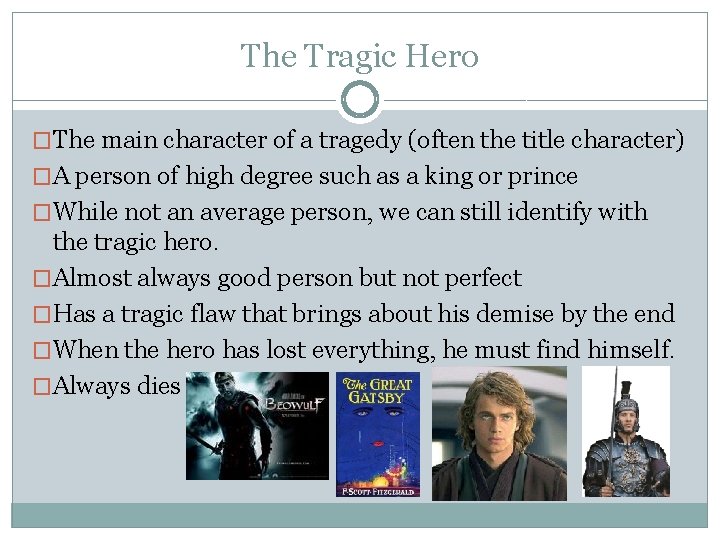
The Tragic Hero �The main character of a tragedy (often the title character) �A person of high degree such as a king or prince �While not an average person, we can still identify with the tragic hero. �Almost always good person but not perfect �Has a tragic flaw that brings about his demise by the end �When the hero has lost everything, he must find himself. �Always dies
Comedies �The main character does not die. �Villains are caught and face justice but not death. �Mainly love stories where main characters get married �Lessons are learned, but they are more light-hearted than those in a tragedy. �Some type of mix-up occurs in the story. It might be caused by the villain, the result of an honest mistake, or caused accidently by the hero. �Rules of logic are often suspended.
Histories �Focuses on a significant event—a king’s reign or an important war �Mainly about the Kings of England �Better understood as a series
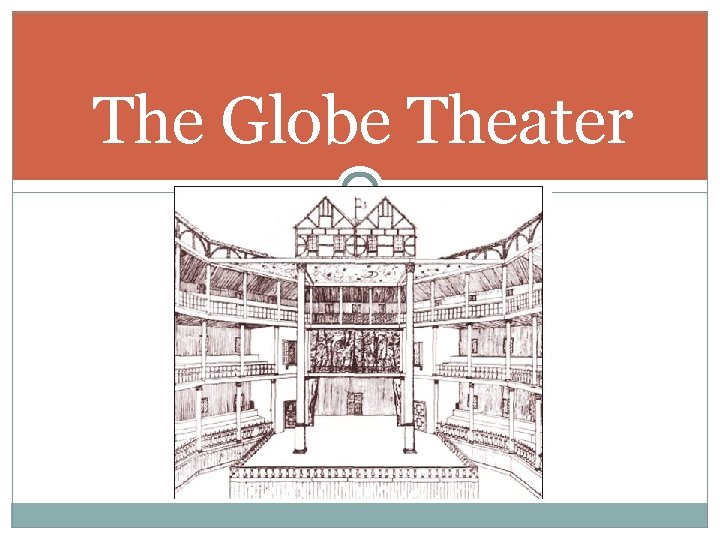
The Globe Theater
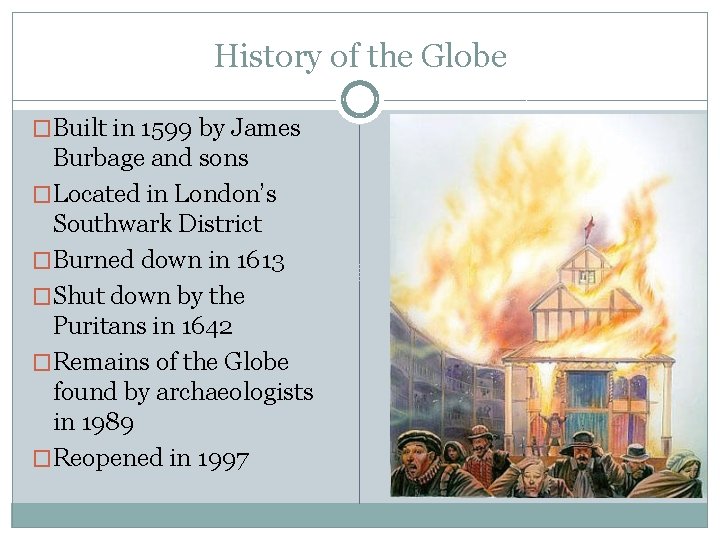
History of the Globe �Built in 1599 by James Burbage and sons �Located in London’s Southwark District �Burned down in 1613 �Shut down by the Puritans in 1642 �Remains of the Globe found by archaeologists in 1989 �Reopened in 1997
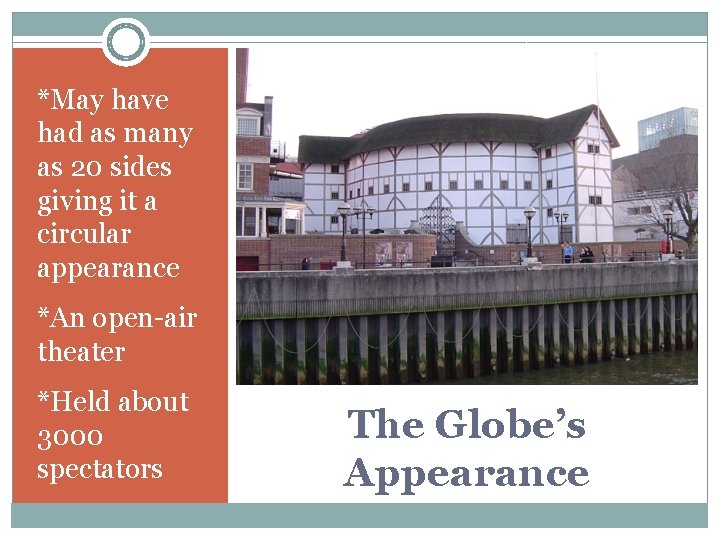
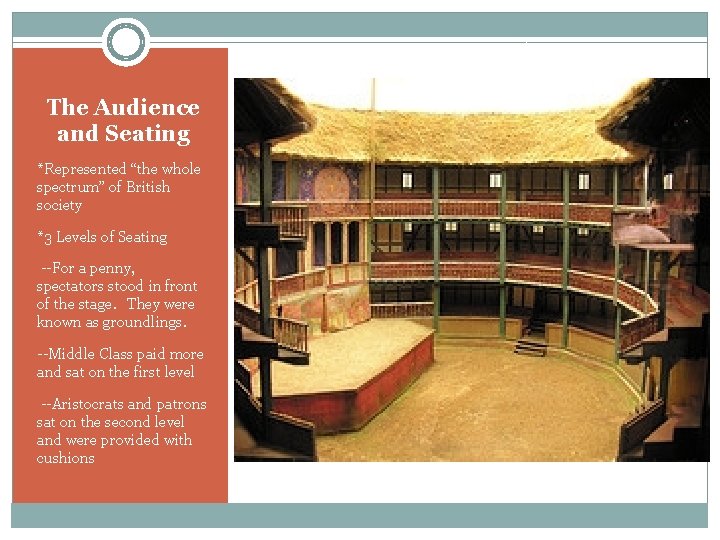
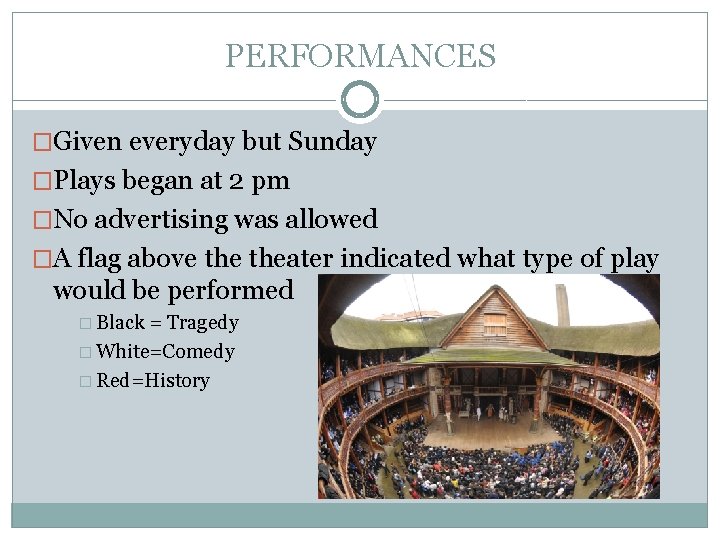
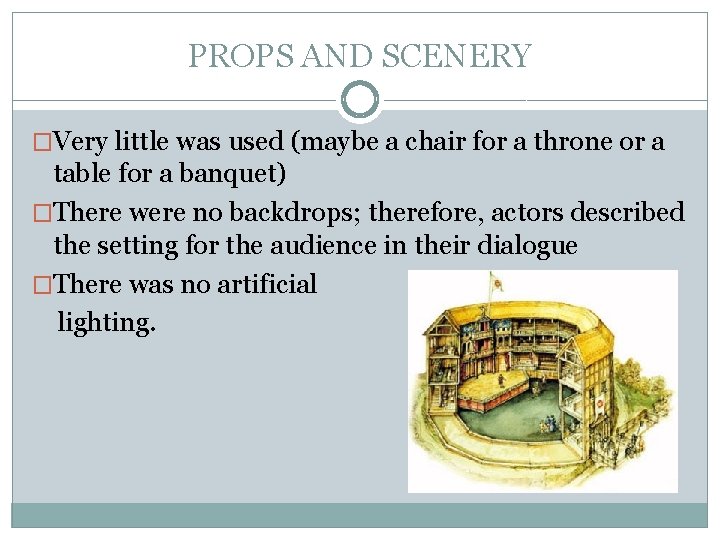
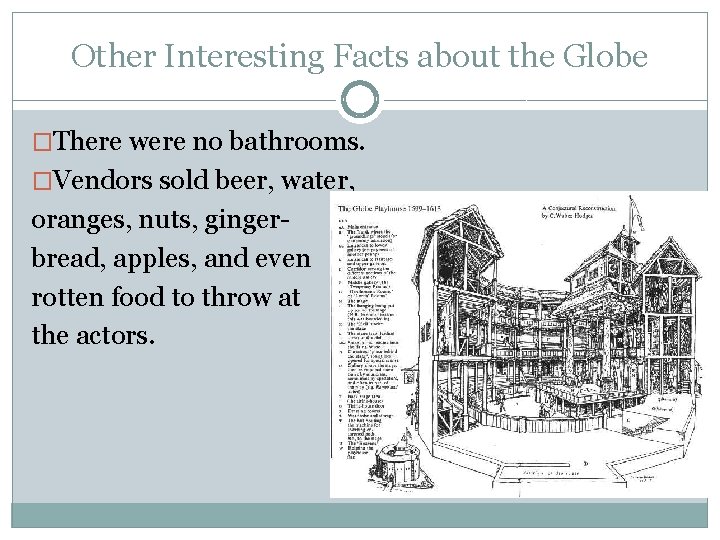
*May have had as many as 20 sides giving it a circular appearance *An open-air theater *Held about 3000 spectators The Globe’s Appearance
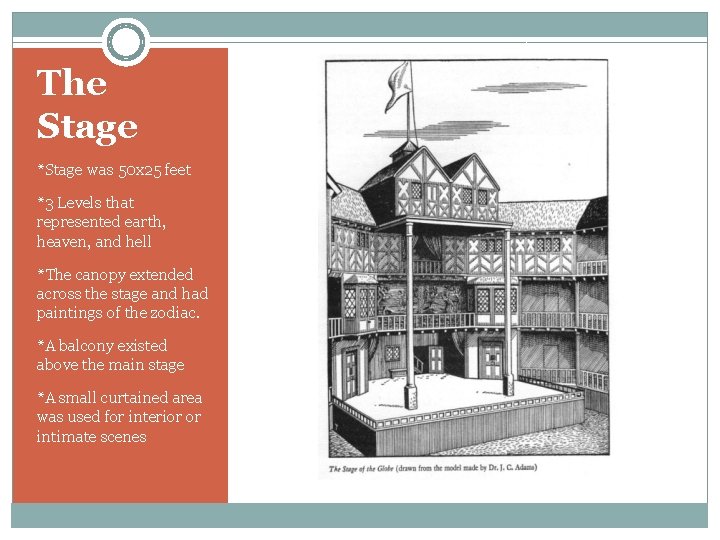
The Stage *Stage was 50 x 25 feet *3 Levels that represented earth, heaven, and hell *The canopy extended across the stage and had paintings of the zodiac. *A balcony existed above the main stage *A small curtained area was used for interior or intimate scenes
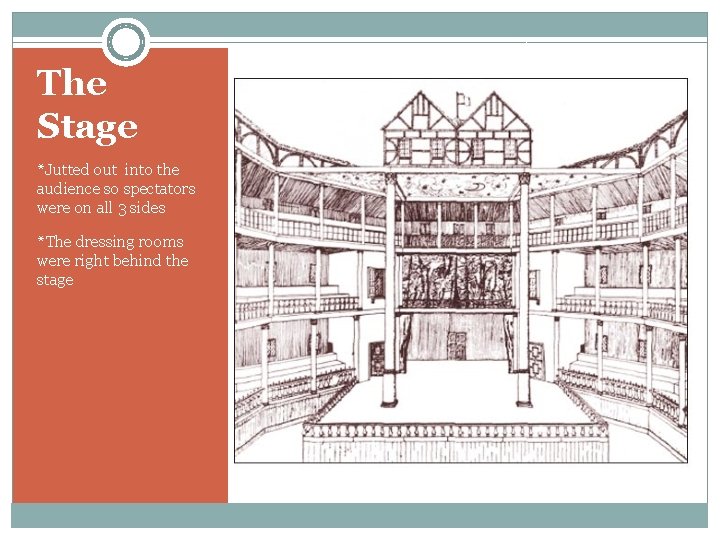
The Stage *Jutted out into the audience so spectators were on all 3 sides *The dressing rooms were right behind the stage
The Audience and Seating *Represented “the whole spectrum” of British society *3 Levels of Seating --For a penny, spectators stood in front of the stage. They were known as groundlings. --Middle Class paid more and sat on the first level --Aristocrats and patrons sat on the second level and were provided with cushions
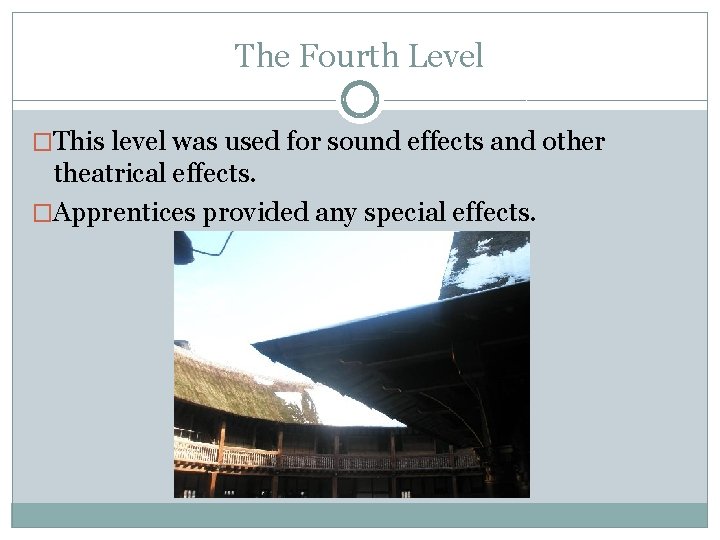
The Fourth Level �This level was used for sound effects and other theatrical effects. �Apprentices provided any special effects.
PERFORMANCES �Given everyday but Sunday �Plays began at 2 pm �No advertising was allowed �A flag above theater indicated what type of play would be performed � Black = Tragedy � White=Comedy � Red=History
ACTORS �Since there was little rehearsal, most actors learned their parts in a week and often knew about 70 different roles. �They were the ones in complete control of the production. �Women were forbidden to act. �Female roles were usually played by young boys.
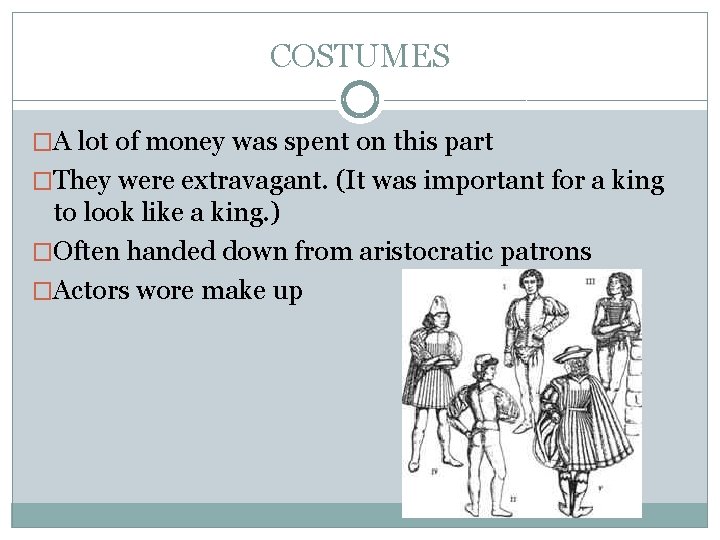
COSTUMES �A lot of money was spent on this part �They were extravagant. (It was important for a king to look like a king. ) �Often handed down from aristocratic patrons �Actors wore make up
PROPS AND SCENERY �Very little was used (maybe a chair for a throne or a table for a banquet) �There were no backdrops; therefore, actors described the setting for the audience in their dialogue �There was no artificial lighting.
Other Interesting Facts about the Globe �There were no bathrooms. �Vendors sold beer, water, oranges, nuts, gingerbread, apples, and even rotten food to throw at the actors.