
WILLIAM OF OCKHAM BACKGROUND ON OCKHAM Lived Born
WILLIAM OF OCKHAM
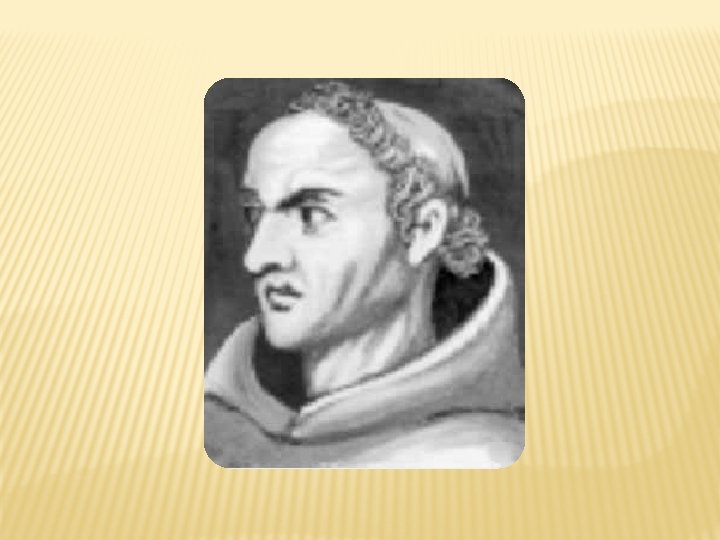
BACKGROUND ON OCKHAM � Lived � Born from 1280 to 1349 in the town of Ockham in Surrey, England � Member � Studied of Franciscan order theology at Oxford � Awesome with logic
A FEW DEFINITIONS… � Universals: a common name for objects or things, like “redness” or “wealth” � Metaphysical: beyond the physical realm � Nominalism: theory of mind and language; universals are just names for convenient categorizations of the world for realistic interaction with them � Empiricism: true knowledge only comes through the senses
“The concept of the living thing subsumed under intuition is the animal. For since this subsumption itself is one-sided, not intuition subsumed under the concept in the like way over again, life here is an empirically real, infinitely dispersed life, displaying itself in the most manifold forms. For the form or the absolute concept is not itself unity or universality again. Thus here there is an individuality without intelligence, not, as in the case of the plant, where each unit of the individual is itself a mass of such units; on the contrary, here there is indifference in more extended difference and distinction. ” -Georg Wilhelm Friedrich Hegel
Ockham was all about Simplicity
OCKHAM’S RAZOR � Way of thinking that would guide empiricists in the future and influence the scientific method � “Plurality is not to be assumed without necessity”, “Do not multiply entities beyond necessity”
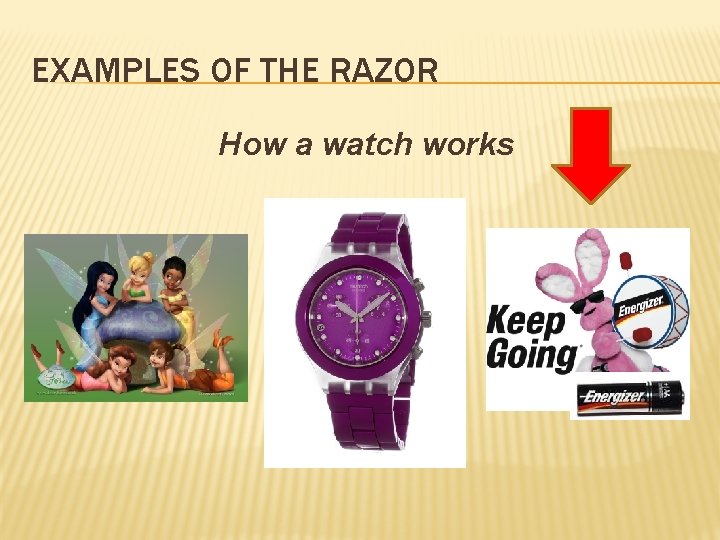
EXAMPLES OF THE RAZOR How a watch works
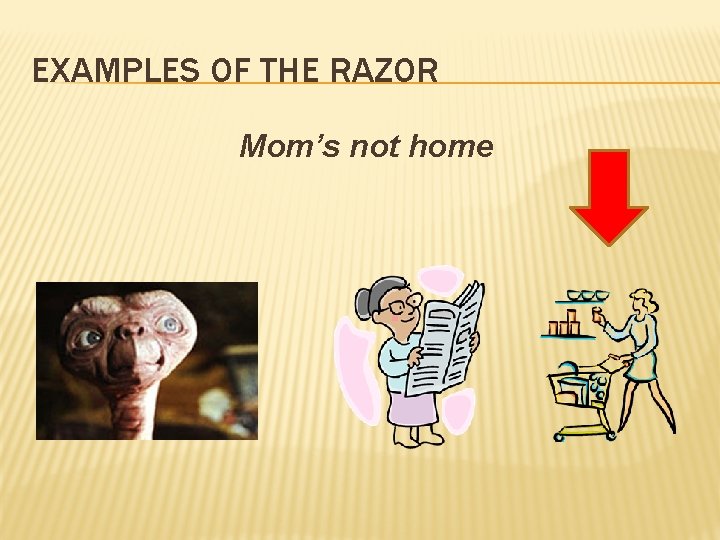
EXAMPLES OF THE RAZOR Mom’s not home
RAZOR CONT’D � Many thought he was trying to do away with the Trinity � ACTUALLY, he was trying to eliminate metaphysics and prevent any limits to be set on God’s true power � His thoughts strengthened theology: prevented metaphysical ideas
HIS EMPIRICISM � The only trustworthy knowledge available to man was revealed knowledge or knowledge acquired through the senses � Therefore, there’s no such thing as the metaphysical
MORE OF HIS PHILOSOPHY � His logic went against Aristotle and his “formal and final causes” � He wanted a mechanistic view of causality: parts affecting parts, like a machine � Disallowed existence traditional proofs of God’s
- Slides: 12