
Will I be okay Predicting and preventing longitudinal

Will I be okay? Predicting and preventing longitudinal co-morbidities of HIV among pediatric and adolescent populations Dr. Irene Njuguna @Global. WACh Share your thoughts on this presentation with #IAS 2019
• No conflicts of interest
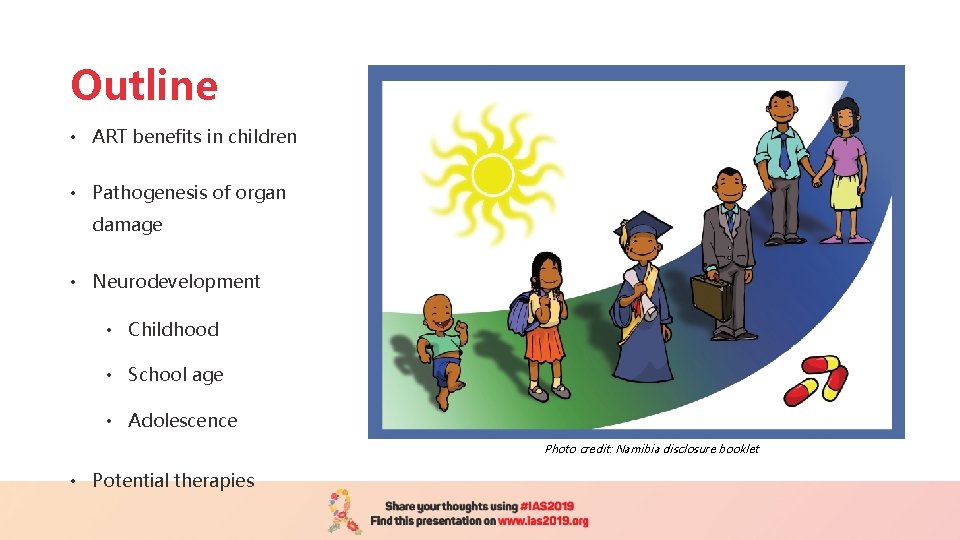
Outline • ART benefits in children • Pathogenesis of organ damage • Neurodevelopment • Childhood • School age • Adolescence Photo credit: Namibia disclosure booklet • Potential therapies
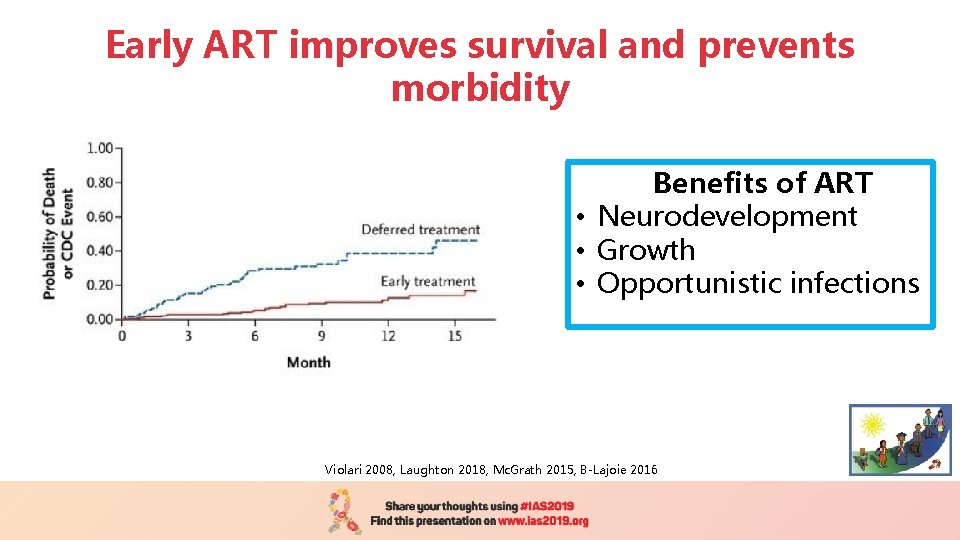
Early ART improves survival and prevents morbidity Benefits of ART • Neurodevelopment • Growth • Opportunistic infections Violari 2008, Laughton 2018, Mc. Grath 2015, B-Lajoie 2016
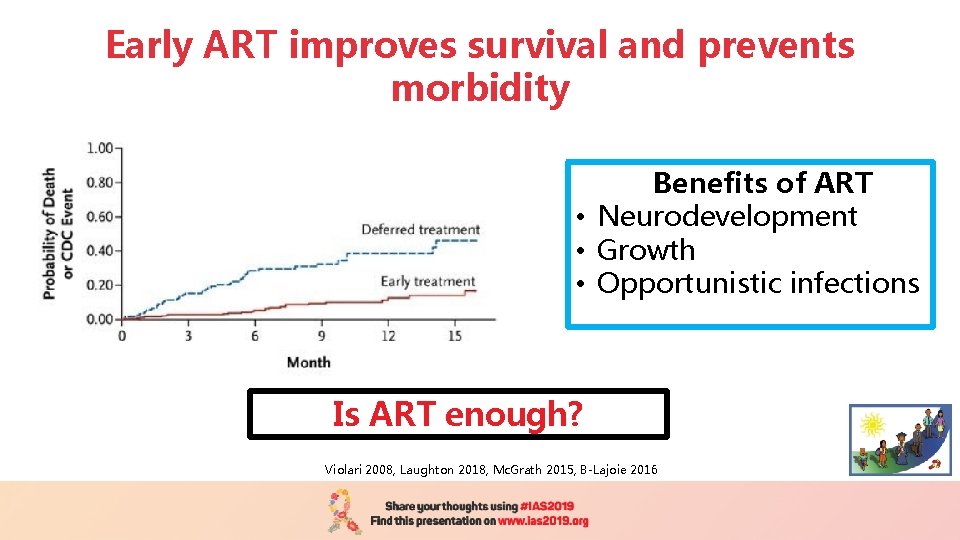
Early ART improves survival and prevents morbidity Benefits of ART • Neurodevelopment • Growth • Opportunistic infections Is ART enough? Violari 2008, Laughton 2018, Mc. Grath 2015, B-Lajoie 2016
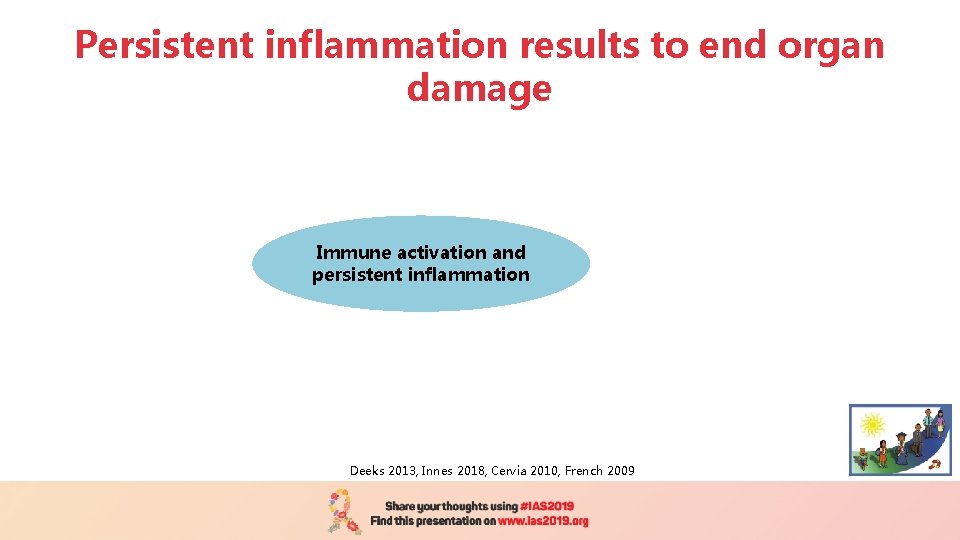
Persistent inflammation results to end organ damage Immune activation and persistent inflammation Deeks 2013, Innes 2018, Cervia 2010, French 2009
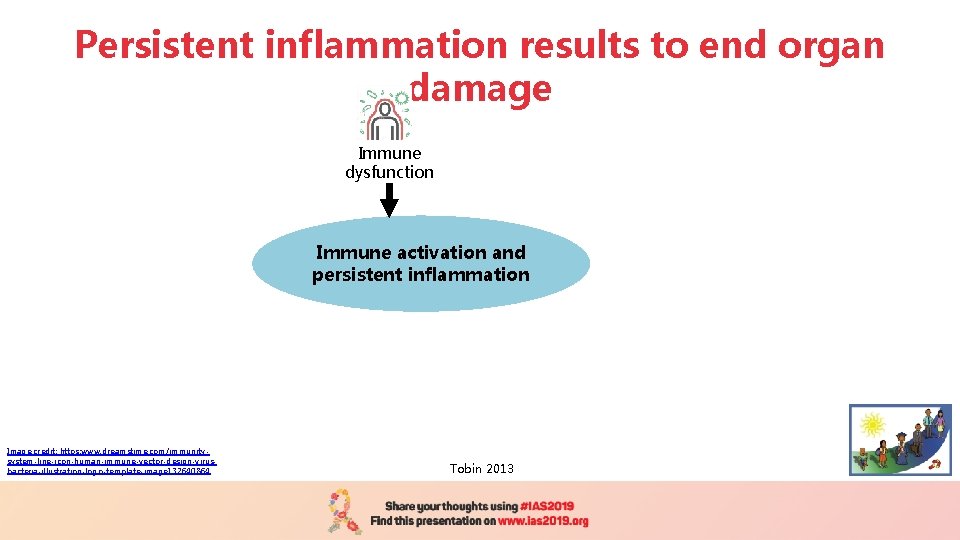
Persistent inflammation results to end organ damage Immune dysfunction Immune activation and persistent inflammation Image credit: https: www. dreamstime. com/immunitysystem-line-icon-human-immune-vector-design-virusbacteria-illustration-logo-template-image 132640864 Tobin 2013
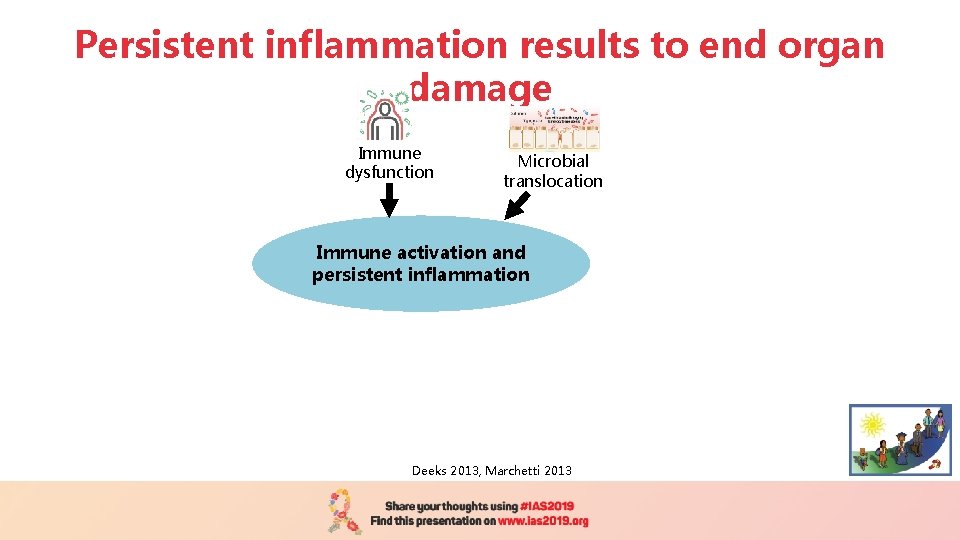
Persistent inflammation results to end organ damage Immune dysfunction Microbial translocation Immune activation and persistent inflammation Deeks 2013, Marchetti 2013
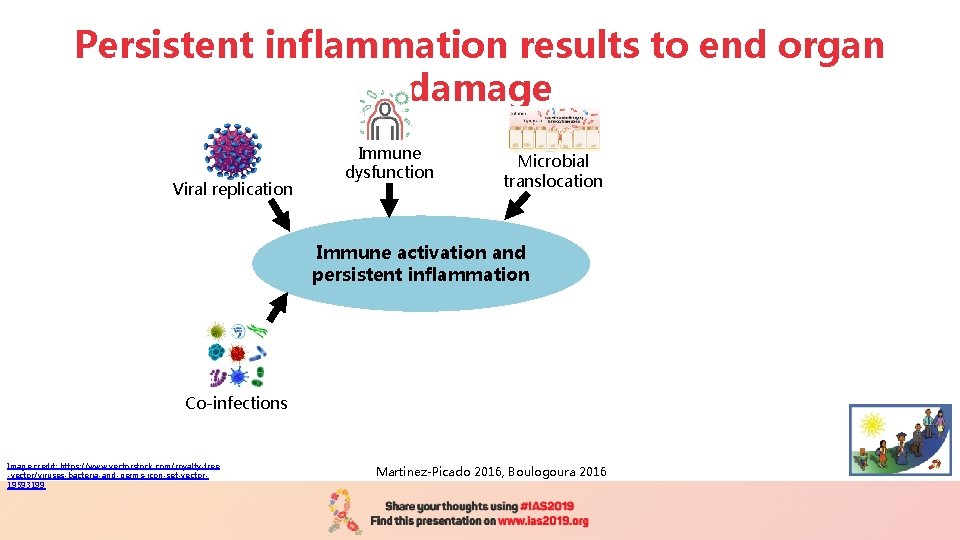
Persistent inflammation results to end organ damage Viral replication Immune dysfunction Microbial translocation Immune activation and persistent inflammation Co-infections Image credit: https: //www. vectorstock. com/royalty-free -vector/viruses-bacteria-and-germs-icon-set-vector 19593199 Martinez-Picado 2016, Boulogoura 2016
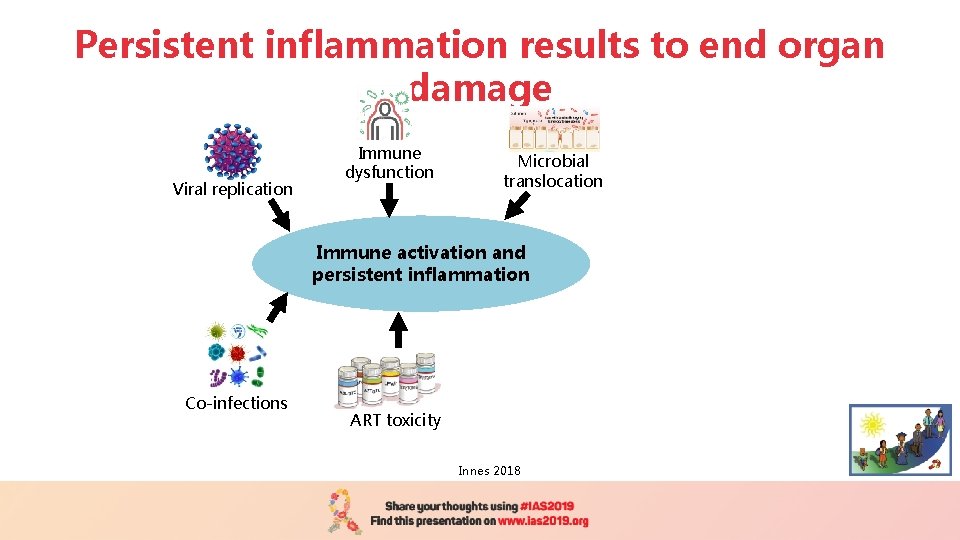
Persistent inflammation results to end organ damage Viral replication Immune dysfunction Microbial translocation Immune activation and persistent inflammation Co-infections ART toxicity Innes 2018
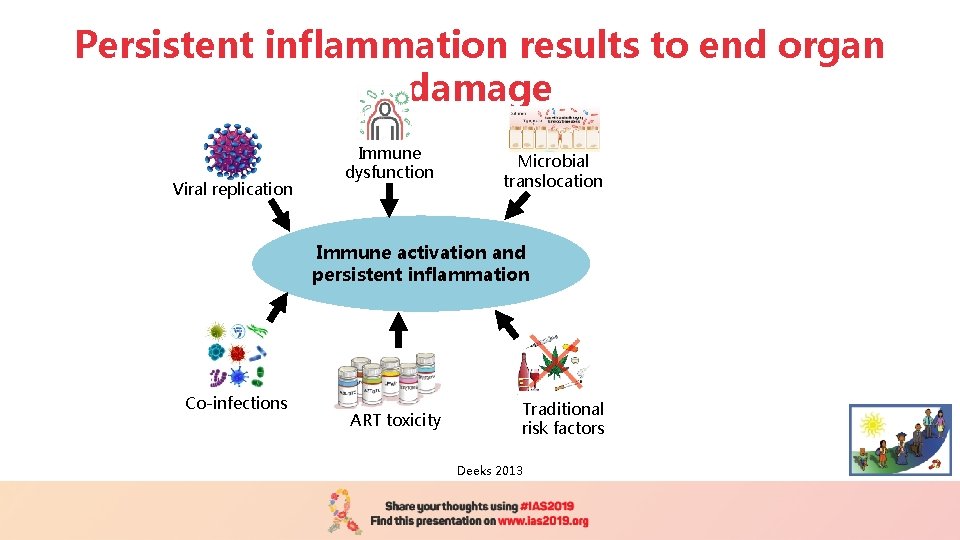
Persistent inflammation results to end organ damage Viral replication Immune dysfunction Microbial translocation Immune activation and persistent inflammation Co-infections ART toxicity Traditional risk factors Deeks 2013
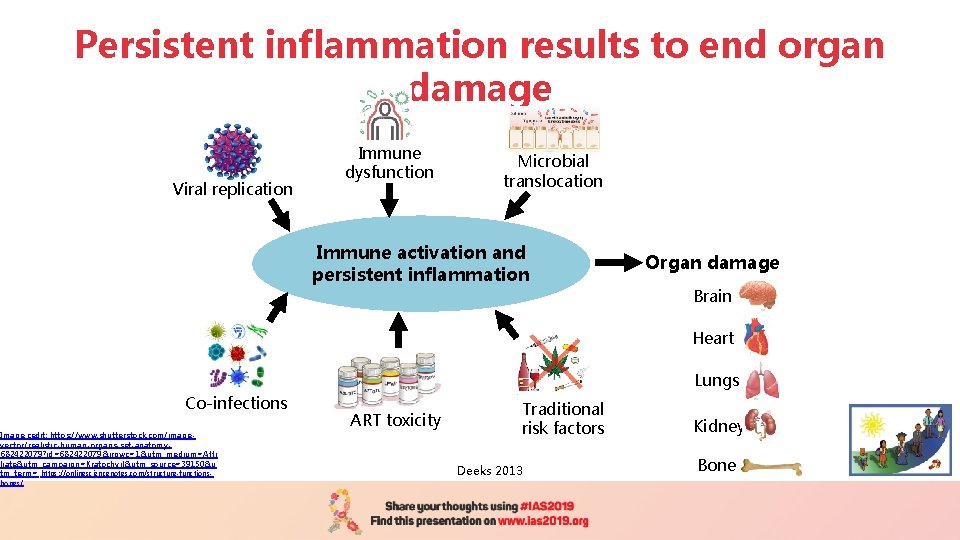
Persistent inflammation results to end organ damage Viral replication Immune dysfunction Microbial translocation Immune activation and persistent inflammation Organ damage Brain Heart Lungs Co-infections Image cedit: https: //www. shutterstock. com/imagevector/realistic-human-organs-set-anatomy 682422079? id=682422079&irgwc=1&utm_medium=Affi liate&utm_campaign=Kratochvil&utm_source=39150&u tm_term= https: //onlinesciencenotes. com/structure-functionsbones/ ART toxicity Traditional risk factors Deeks 2013 Kidney Bone
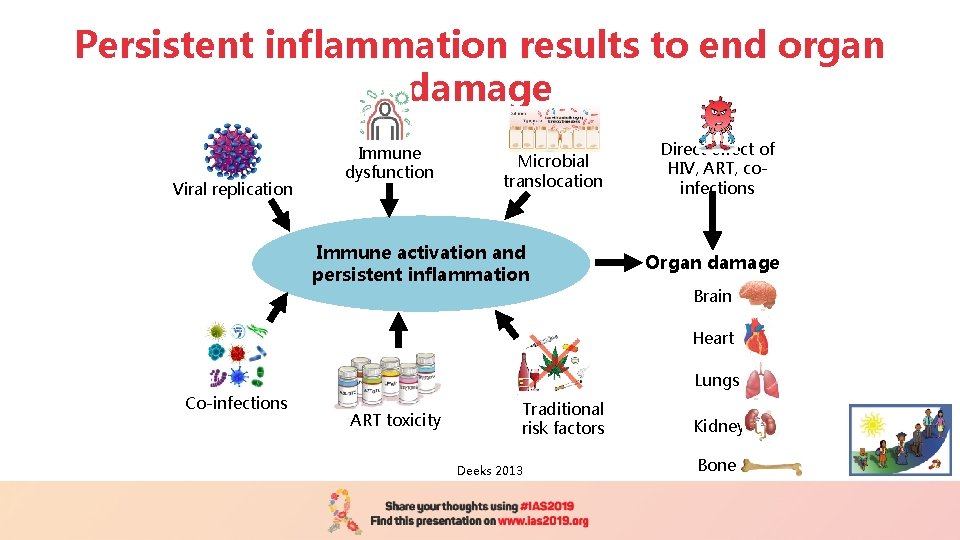
Persistent inflammation results to end organ damage Viral replication Immune dysfunction Microbial translocation Immune activation and persistent inflammation Direct effect of HIV, ART, coinfections Organ damage Brain Heart Lungs Co-infections ART toxicity Traditional risk factors Deeks 2013 Kidney Bone
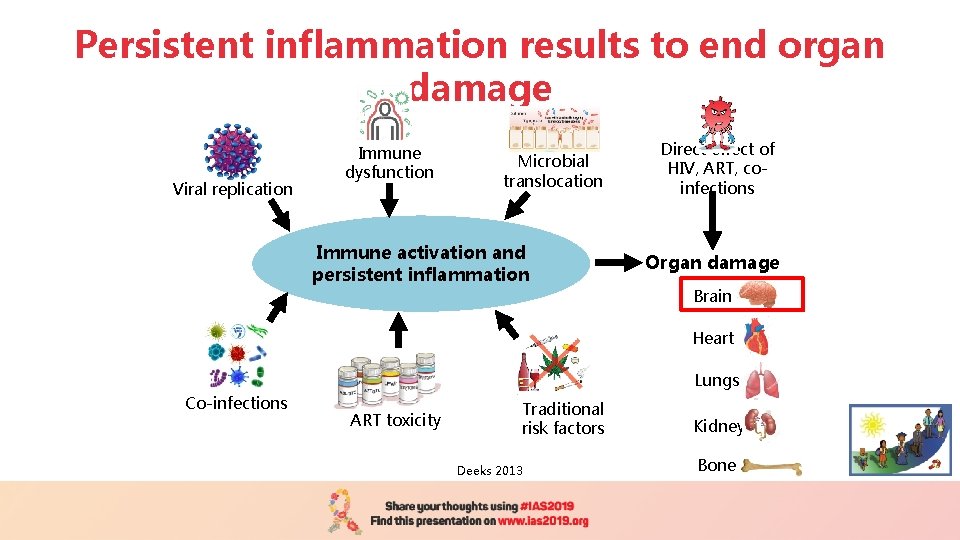
Persistent inflammation results to end organ damage Viral replication Immune dysfunction Microbial translocation Immune activation and persistent inflammation Direct effect of HIV, ART, coinfections Organ damage Brain Heart Lungs Co-infections ART toxicity Traditional risk factors Deeks 2013 Kidney Bone
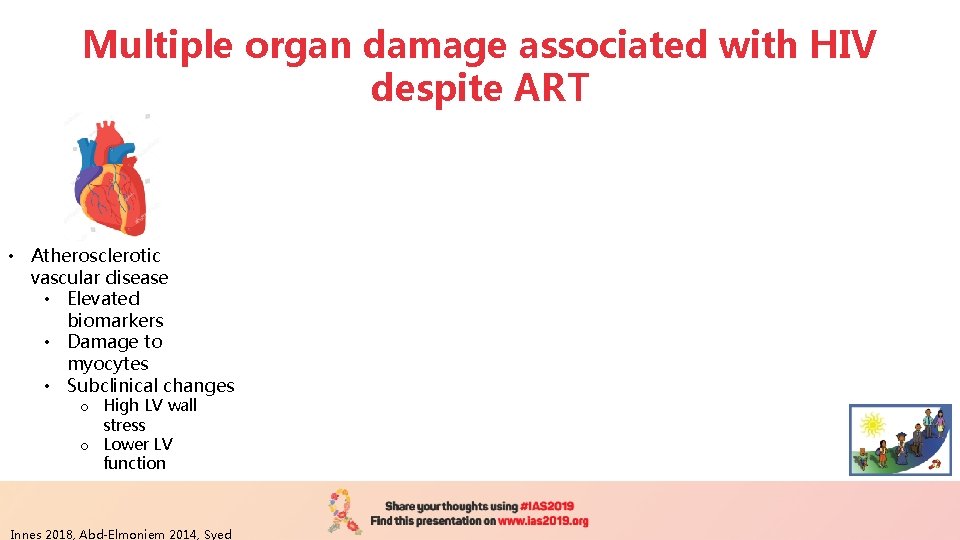
Multiple organ damage associated with HIV despite ART • Atherosclerotic vascular disease • Elevated biomarkers • Damage to myocytes • Subclinical changes o High LV wall stress o Lower LV function Innes 2018, Abd-Elmoniem 2014, Syed
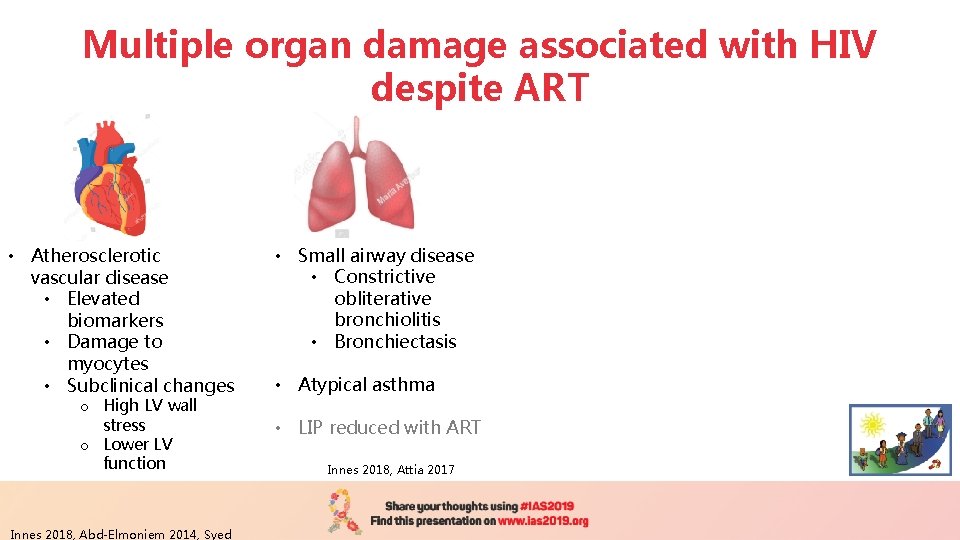
Multiple organ damage associated with HIV despite ART • Atherosclerotic vascular disease • Elevated biomarkers • Damage to myocytes • Subclinical changes o High LV wall stress o Lower LV function Innes 2018, Abd-Elmoniem 2014, Syed • Small airway disease • Constrictive obliterative bronchiolitis • Bronchiectasis • Atypical asthma • LIP reduced with ART Innes 2018, Attia 2017
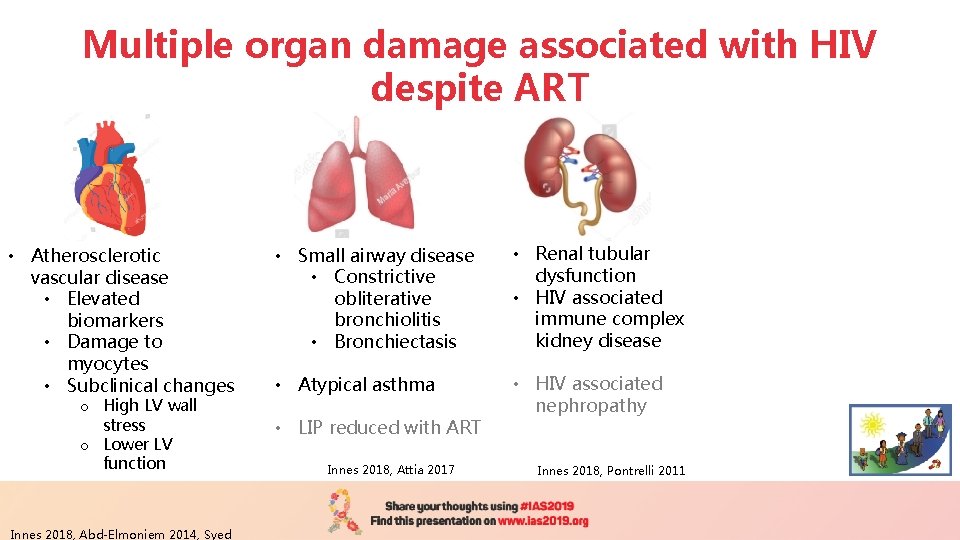
Multiple organ damage associated with HIV despite ART • Atherosclerotic vascular disease • Elevated biomarkers • Damage to myocytes • Subclinical changes o High LV wall stress o Lower LV function Innes 2018, Abd-Elmoniem 2014, Syed • Small airway disease • Constrictive obliterative bronchiolitis • Bronchiectasis • Renal tubular dysfunction • HIV associated immune complex kidney disease • Atypical asthma • HIV associated nephropathy • LIP reduced with ART Innes 2018, Attia 2017 Innes 2018, Pontrelli 2011
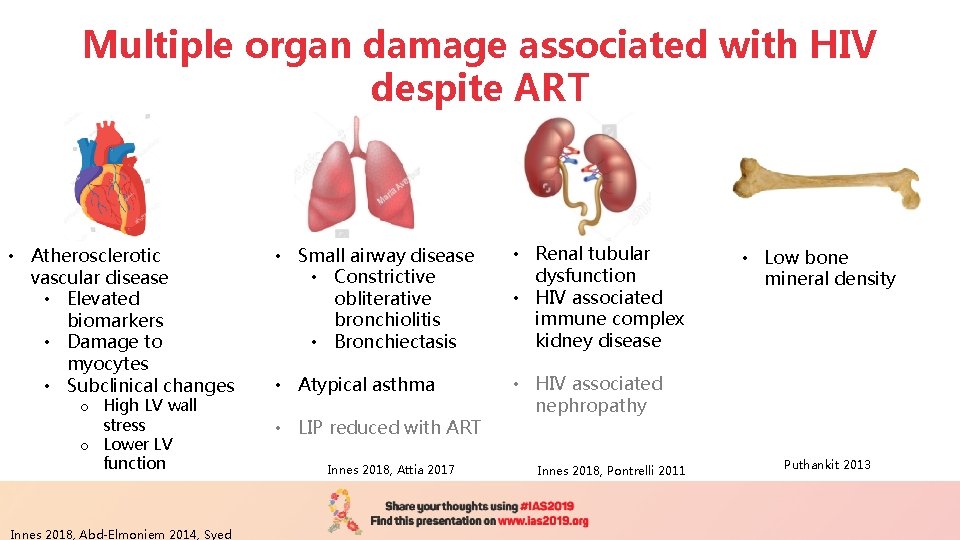
Multiple organ damage associated with HIV despite ART • Atherosclerotic vascular disease • Elevated biomarkers • Damage to myocytes • Subclinical changes o High LV wall stress o Lower LV function Innes 2018, Abd-Elmoniem 2014, Syed • Small airway disease • Constrictive obliterative bronchiolitis • Bronchiectasis • Renal tubular dysfunction • HIV associated immune complex kidney disease • Atypical asthma • HIV associated nephropathy • LIP reduced with ART Innes 2018, Attia 2017 Innes 2018, Pontrelli 2011 • Low bone mineral density Puthankit 2013
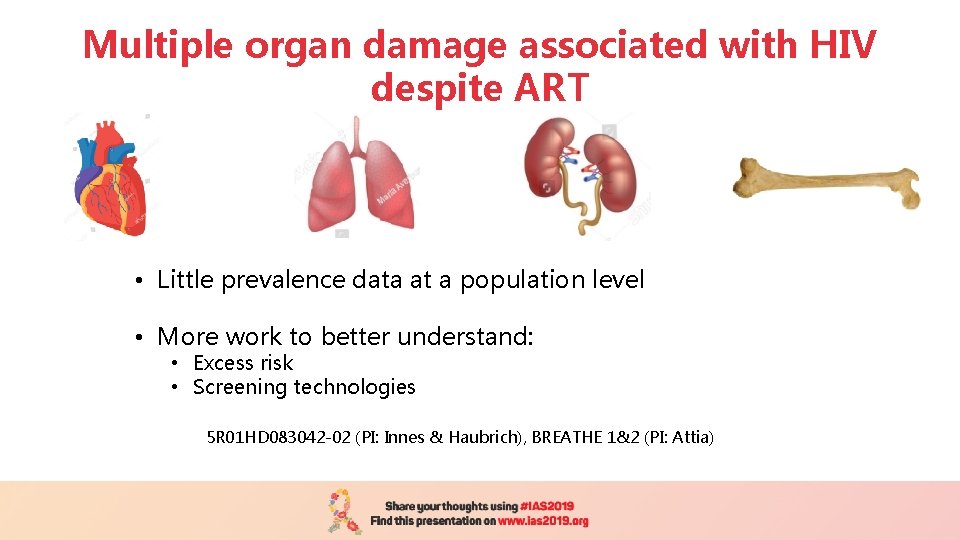
Multiple organ damage associated with HIV despite ART • Little prevalence data at a population level • More work to better understand: • Excess risk • Screening technologies 5 R 01 HD 083042 -02 (PI: Innes & Haubrich), BREATHE 1&2 (PI: Attia)
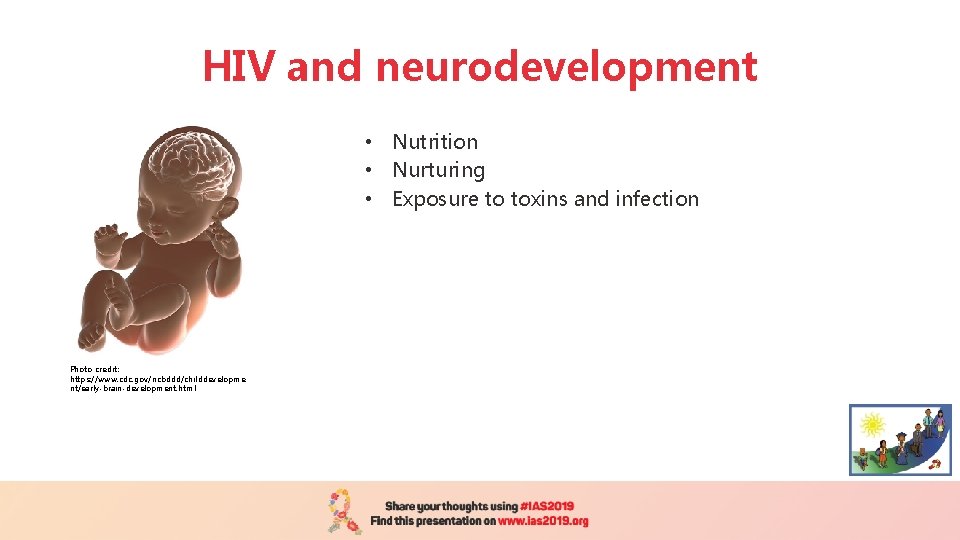
HIV and neurodevelopment • Nutrition • Nurturing • Exposure to toxins and infection Photo credit: https: //www. cdc. gov/ncbddd/childdevelopme nt/early-brain-development. html
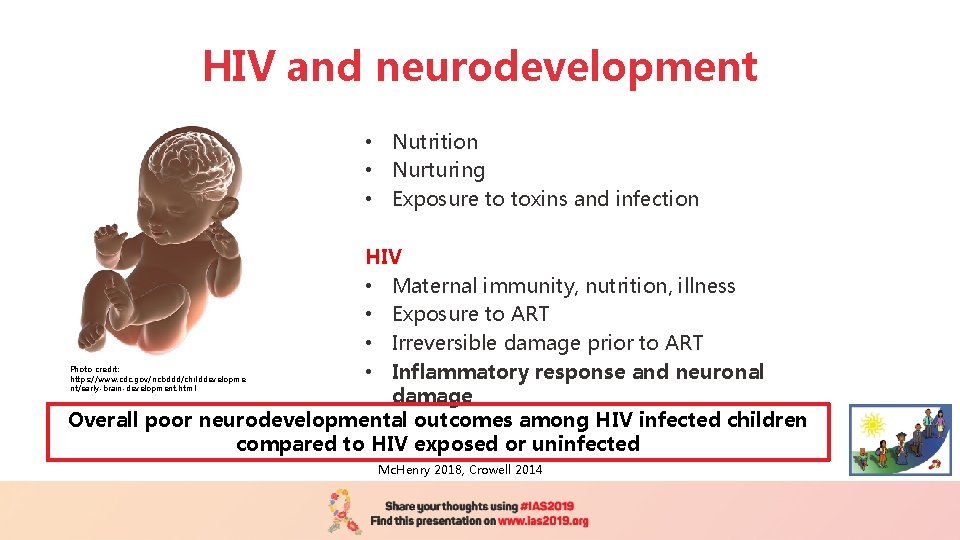
HIV and neurodevelopment • Nutrition • Nurturing • Exposure to toxins and infection HIV • Maternal immunity, nutrition, illness • Exposure to ART • Irreversible damage prior to ART • Inflammatory response and neuronal damage Overall poor neurodevelopmental outcomes among HIV infected children compared to HIV exposed or uninfected Photo credit: https: //www. cdc. gov/ncbddd/childdevelopme nt/early-brain-development. html Mc. Henry 2018, Crowell 2014
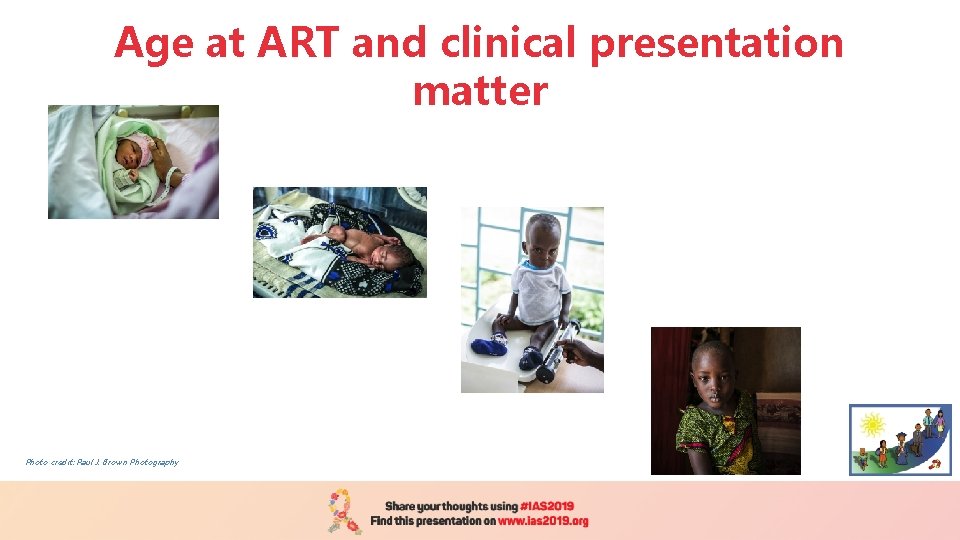
Age at ART and clinical presentation matter Photo credit: Paul J. Brown Photography
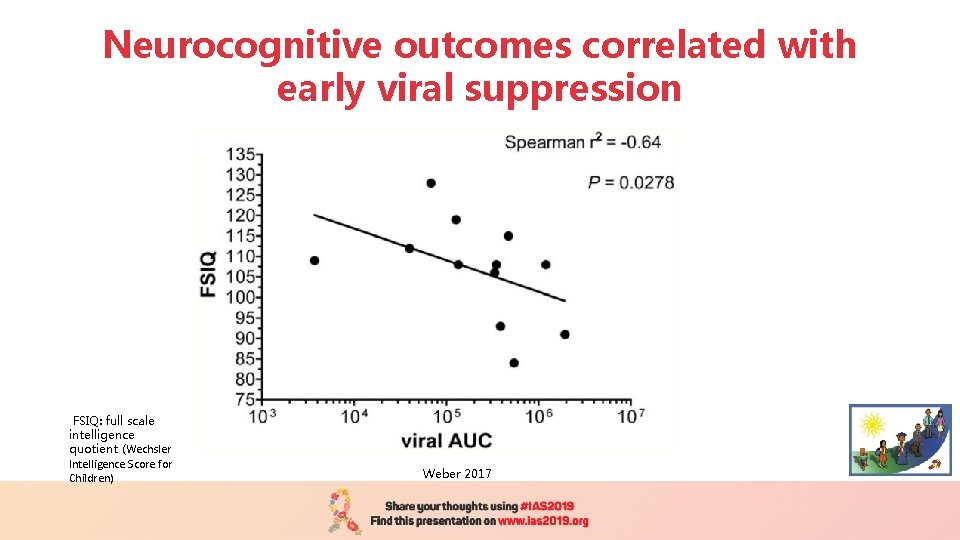
Neurocognitive outcomes correlated with early viral suppression FSIQ: full scale intelligence quotient (Wechsler Intelligence Score for Children) Weber 2017
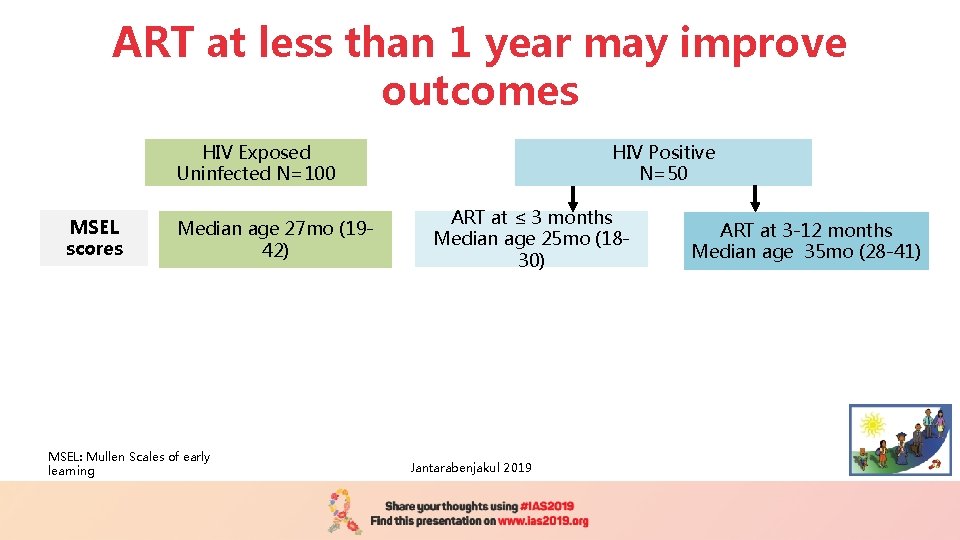
ART at less than 1 year may improve outcomes HIV Exposed Uninfected N=100 MSEL scores Median age 27 mo (1942) MSEL: Mullen Scales of early learning HIV Positive N=50 ART at ≤ 3 months Median age 25 mo (1830) Jantarabenjakul 2019 ART at 3 -12 months Median age 35 mo (28 -41)
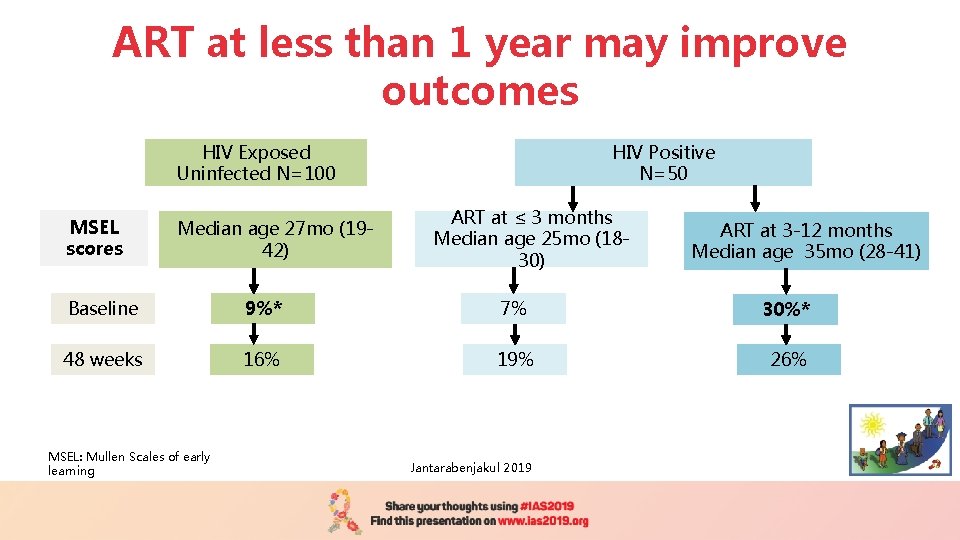
ART at less than 1 year may improve outcomes HIV Exposed Uninfected N=100 MSEL scores Median age 27 mo (1942) HIV Positive N=50 ART at ≤ 3 months Median age 25 mo (1830) ART at 3 -12 months Median age 35 mo (28 -41) Baseline 9%* 7% 30%* 48 weeks 16% 19% 26% MSEL: Mullen Scales of early learning Jantarabenjakul 2019
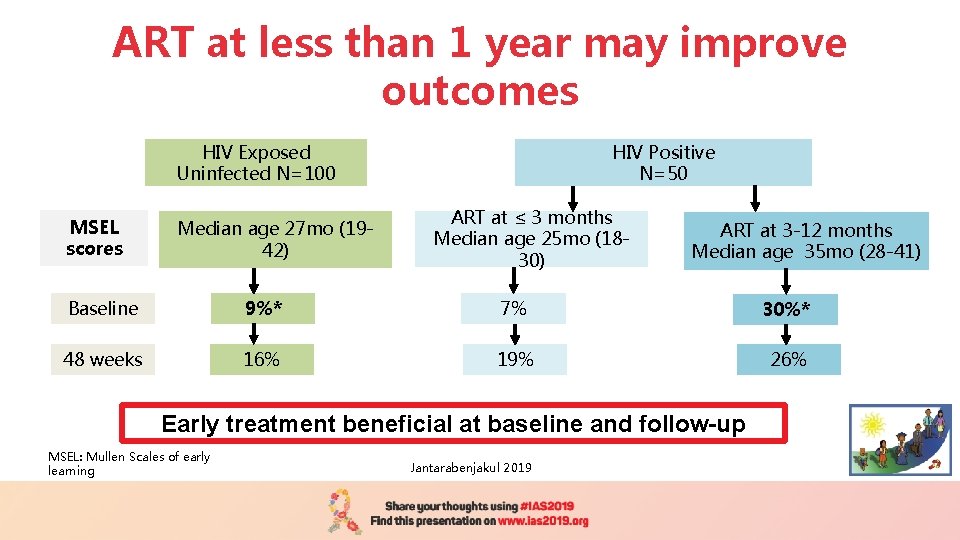
ART at less than 1 year may improve outcomes HIV Exposed Uninfected N=100 MSEL scores Median age 27 mo (1942) HIV Positive N=50 ART at ≤ 3 months Median age 25 mo (1830) ART at 3 -12 months Median age 35 mo (28 -41) Baseline 9%* 7% 30%* 48 weeks 16% 19% 26% Early treatment beneficial at baseline and follow-up MSEL: Mullen Scales of early learning Jantarabenjakul 2019
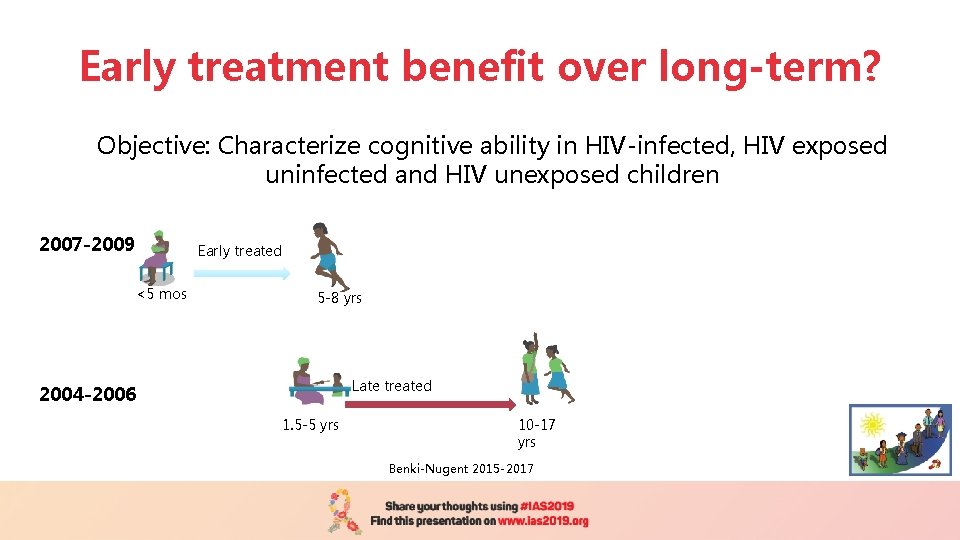
Early treatment benefit over long-term? Objective: Characterize cognitive ability in HIV-infected, HIV exposed uninfected and HIV unexposed children 2007 -2009 Early treated <5 mos 5 -8 yrs Late treated 2004 -2006 1. 5 -5 yrs 10 -17 yrs Benki-Nugent 2015 -2017
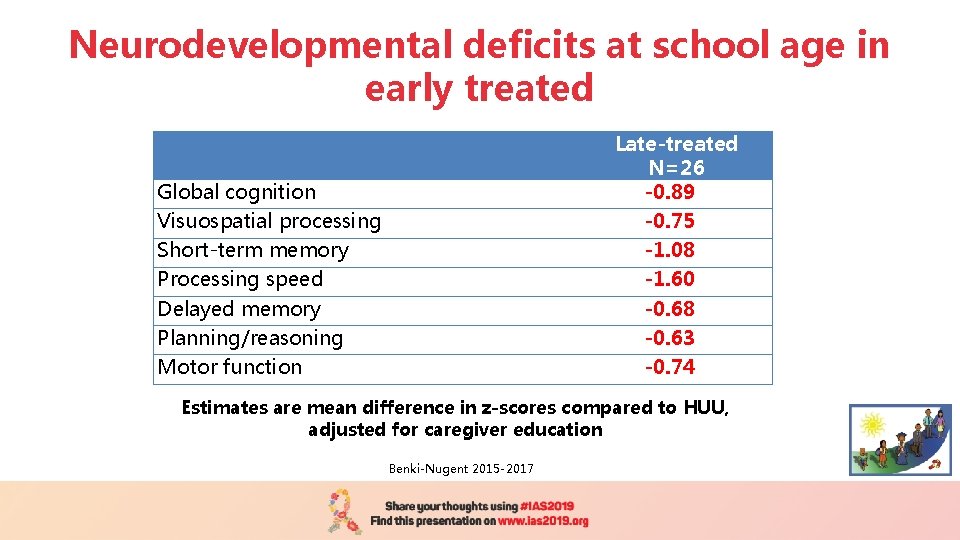
Neurodevelopmental deficits at school age in early treated Global cognition Visuospatial processing Short-term memory Processing speed Delayed memory Planning/reasoning Motor function -0. 31 -0. 20 -0. 42 -0. 90 -0. 38 -0. 33 -0. 17 Late-treated N=26 -0. 89 -0. 75 -1. 08 -1. 60 -0. 68 -0. 63 -0. 74 Estimates are mean difference in z-scores compared to HUU, adjusted for caregiver education Benki-Nugent 2015 -2017
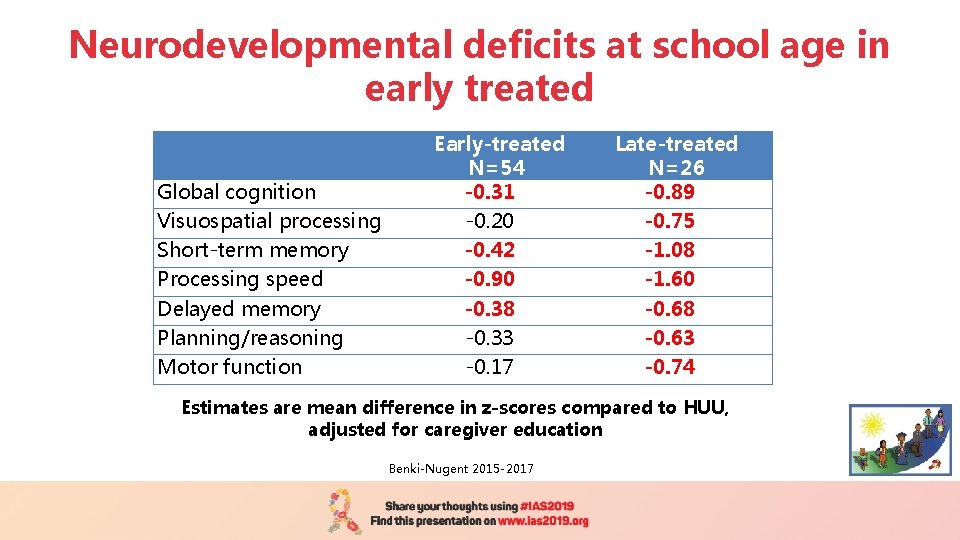
Neurodevelopmental deficits at school age in early treated Global cognition Visuospatial processing Short-term memory Processing speed Delayed memory Planning/reasoning Motor function Early-treated N=54 -0. 31 -0. 20 -0. 42 -0. 90 -0. 38 -0. 33 -0. 17 Late-treated N=26 -0. 89 -0. 75 -1. 08 -1. 60 -0. 68 -0. 63 -0. 74 Estimates are mean difference in z-scores compared to HUU, adjusted for caregiver education Benki-Nugent 2015 -2017
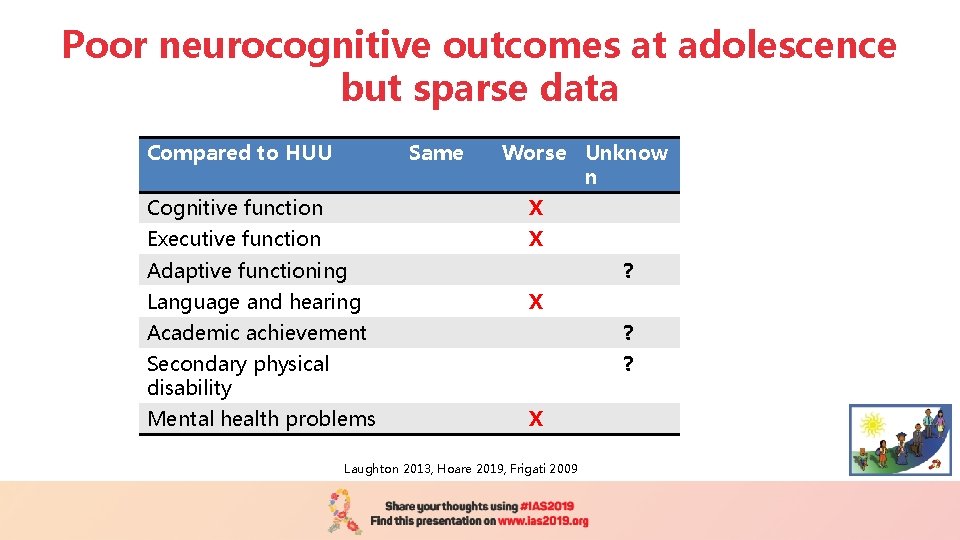
Poor neurocognitive outcomes at adolescence but sparse data Compared to HUU Same Worse Unknow n Cognitive function X Executive function X Adaptive functioning Language and hearing ? X Academic achievement ? Secondary physical disability ? Mental health problems X Laughton 2013, Hoare 2019, Frigati 2009
ART not enough to prevent poor neurocognitive outcomes • Persistent neurocognitive deficits unless very early treatment
ART not enough to prevent poor neurocognitive outcomes • Persistent neurocognitive deficits unless very early treatment • Disruptions in white matter despite early ART and viral suppression Jankiewicz 2017
ART not enough to prevent poor neurocognitive outcomes • Persistent neurocognitive deficits unless very early treatment • Disruptions in white matter despite early ART and viral suppression • Need for screening – Which test?
ART not enough to prevent poor neurocognitive outcomes • Persistent neurocognitive deficits unless very early treatment • Disruptions in white matter despite early ART and viral suppression • Need for screening – Which test? • Promising interventions – Computerized cognitive rehabilitation therapy – Caregiver training on nurturing Boivin 2010, 1 R 01 HD 098027 -01 (PI: Boivin)
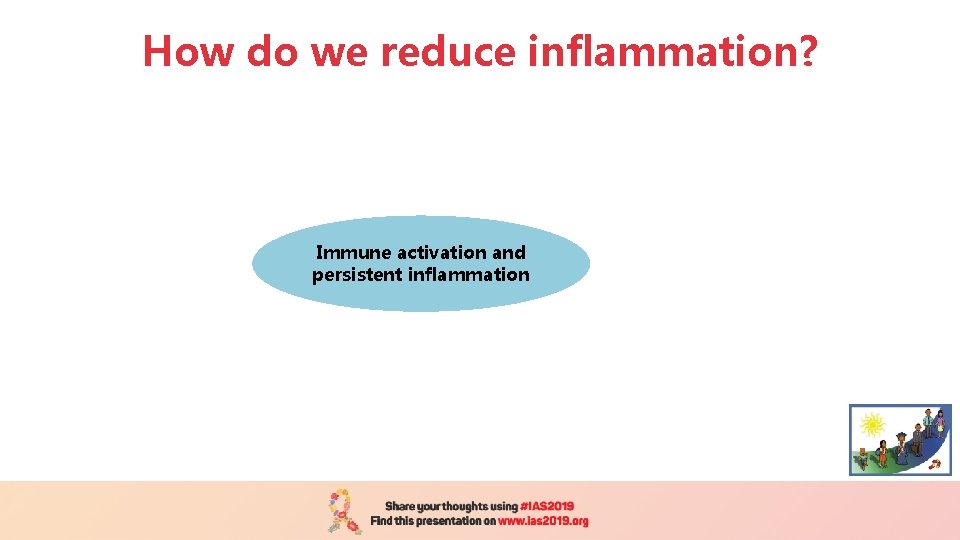
How do we reduce inflammation? Immune activation and persistent inflammation
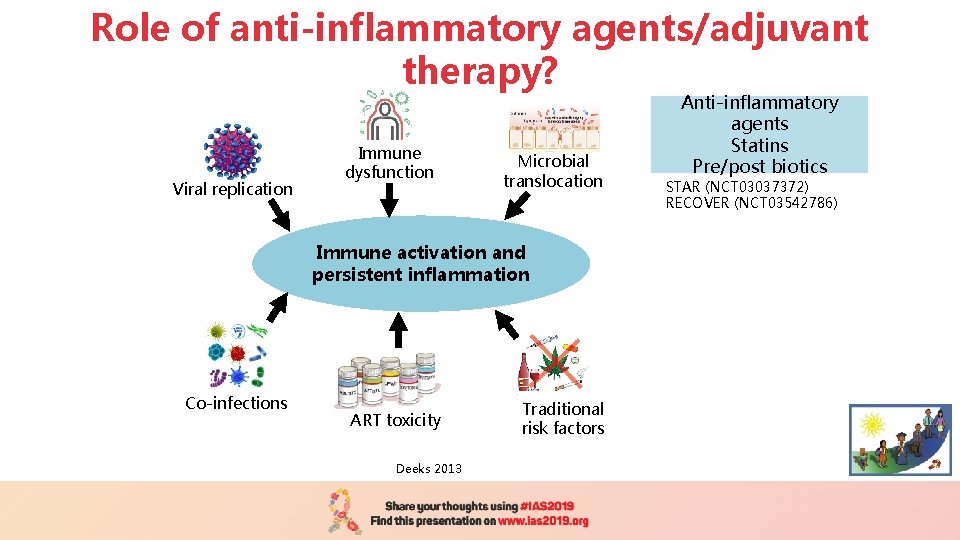
Role of anti-inflammatory agents/adjuvant therapy? Viral replication Immune dysfunction Microbial translocation Immune activation and persistent inflammation Co-infections ART toxicity Deeks 2013 Traditional risk factors Anti-inflammatory agents Statins Pre/post biotics STAR (NCT 03037372) RECOVER (NCT 03542786)
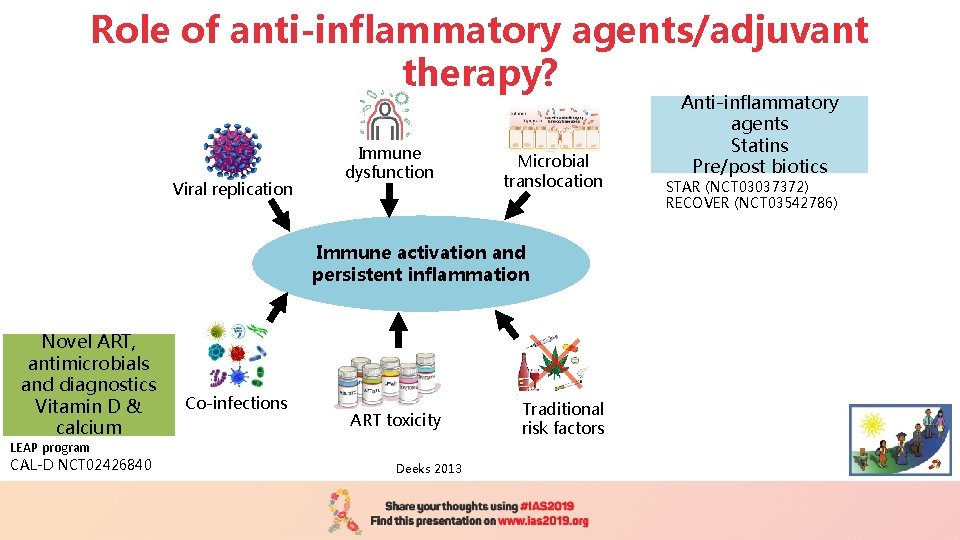
Role of anti-inflammatory agents/adjuvant therapy? Viral replication Immune dysfunction Microbial translocation Immune activation and persistent inflammation Novel ART, antimicrobials and diagnostics Vitamin D & calcium LEAP program CAL-D NCT 02426840 Co-infections ART toxicity Deeks 2013 Traditional risk factors Anti-inflammatory agents Statins Pre/post biotics STAR (NCT 03037372) RECOVER (NCT 03542786)
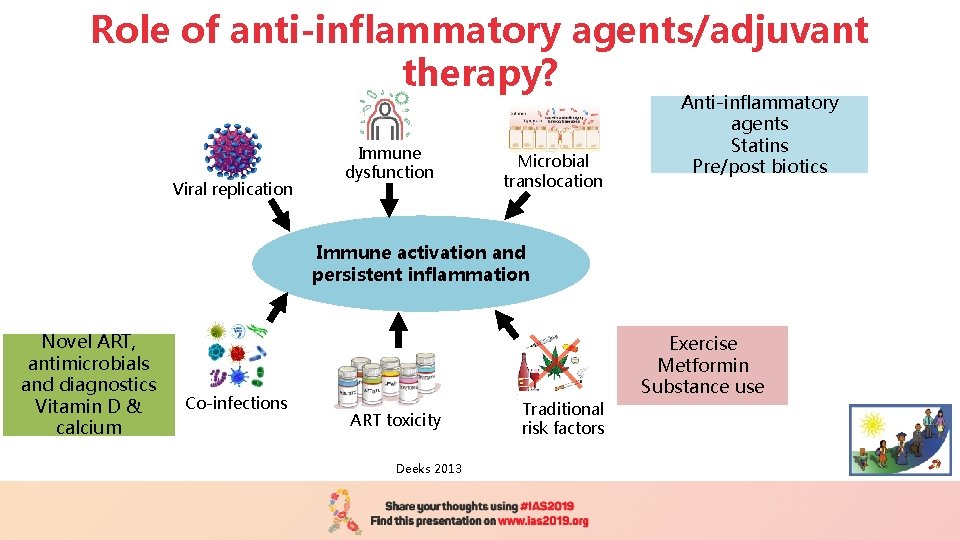
Role of anti-inflammatory agents/adjuvant therapy? Viral replication Immune dysfunction Microbial translocation Anti-inflammatory agents Statins Pre/post biotics Immune activation and persistent inflammation Novel ART, antimicrobials and diagnostics Vitamin D & calcium Co-infections ART toxicity Deeks 2013 Traditional risk factors Exercise Metformin Substance use
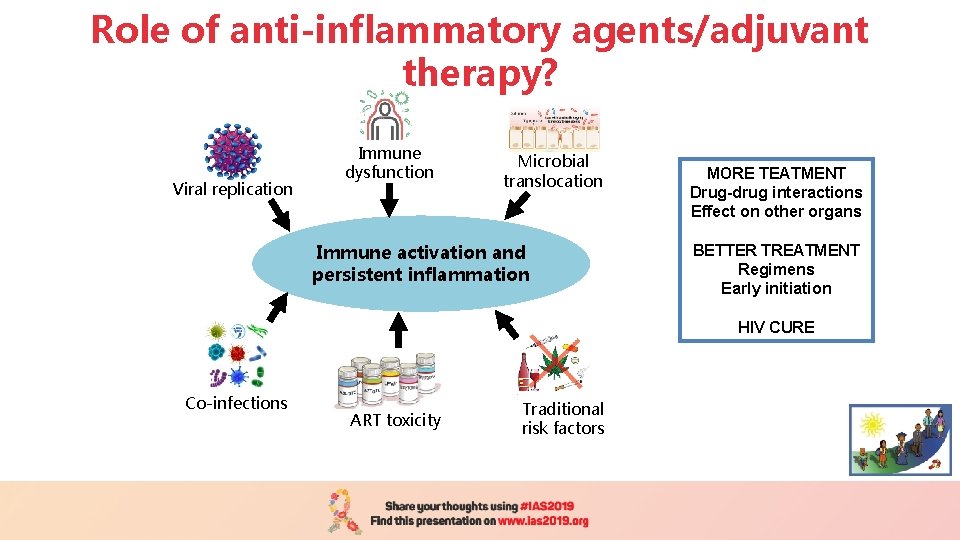
Role of anti-inflammatory agents/adjuvant therapy? Viral replication Immune dysfunction Microbial translocation Immune activation and persistent inflammation MORE TEATMENT Drug-drug interactions Effect on other organs BETTER TREATMENT Regimens Early initiation HIV CURE Co-infections ART toxicity Traditional risk factors
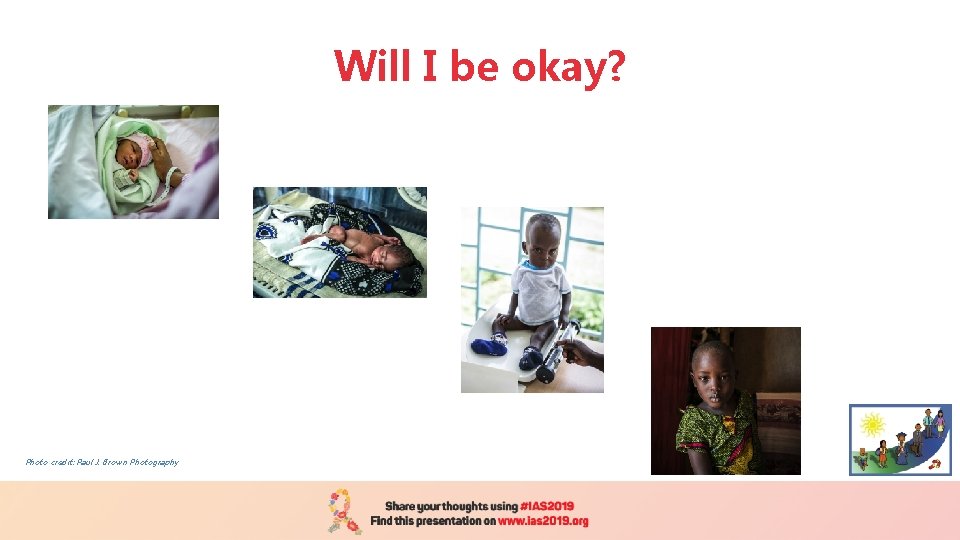
Will I be okay? Photo credit: Paul J. Brown Photography
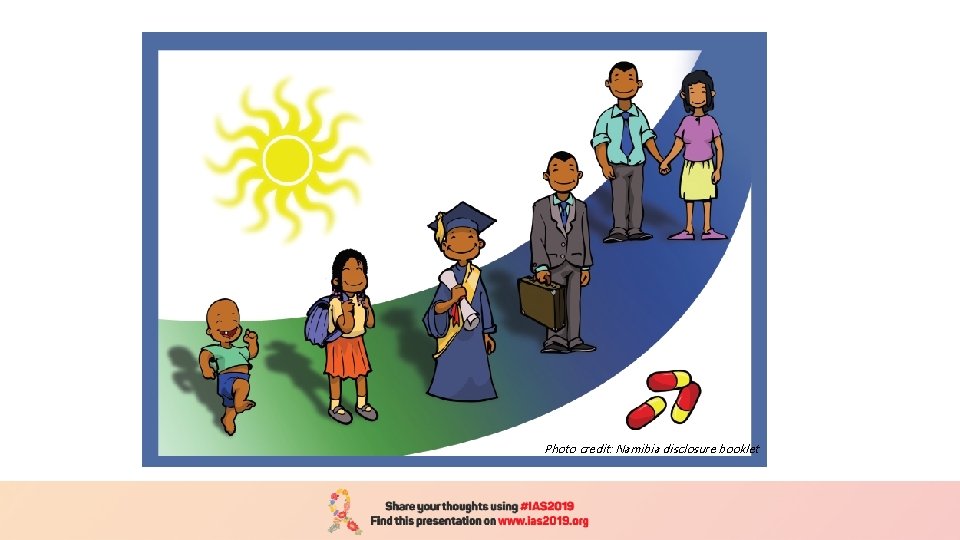
Photo credit: Namibia disclosure booklet
Acknowledgements • Dr. Grace John-Stewart • Drs. Kristin Beima-Sofie, Anjuli Wagner, Sarah Benki -Nugent, Engi Attia, Tecla Temu • Children and families living with HIV
- Slides: 43