
Wilfred Owen 1893 1918 Wilfred Owens Futility Move
- Slides: 8
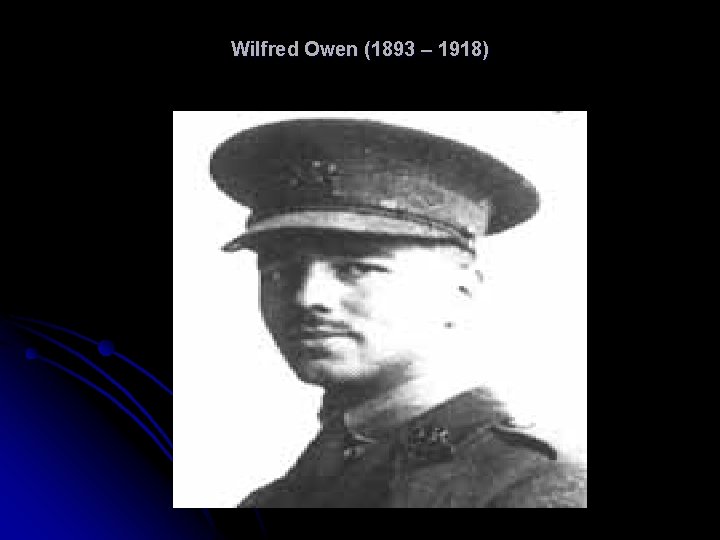
Wilfred Owen (1893 – 1918)
Wilfred Owen’s Futility Move him into the sun Gently its touch awoke him once, At home, whispering of fields unsown. Always it woke him, even in France, Until this morning and this snow. If anything might rouse him now The kind old sun will know. Think how it wakes the seeds, Woke, once, the clays of a cold star. Are limbs, so dear-achieved, are sides, Full-nerved, - still warm, - too hard to stir? Was it for this the clay grew tall? - O what made fatuous sunbeams toil To break earth's sleep at all?
Meanings Rouse: wake Fields unsown: unharvested fields Clay: mud Limbs: parts of the human body Dear-achieved: preciously developed Full-nerved: full of nerves Stir: move Fatuous: worthless Sunbeam: sun light
Themes War Pointlessness of all human Endeavour
Form This poem is written in the form of a sonnet. Rhyme scheme: abcaded efgijkj
Summary A recently deceased soldier is moved out into the sun in a desperate vain hope that the warmth of the sun will revive him. The futility of this act depicts the desperation of his comrades turning from grief to despairing rage. The poem’s two PARTS represent the different stages of grief: Part I shows denial of the death Part II shows realization, despair and anger
Technical Devices Symbols: Sun & War Personification: The Sun Metaphor: Clay
Technical Devices Rhetorical Questions: 1. Are limbs, so dear-achieved, are sides, Full-nerved, - still warm, - too hard to stir? 2. Was it for this the clay grew tall? 3. O what made fatuous sunbeams toil To break earth's sleep at all?