
Wildlife Tree Retention 1 Wildlife tree retention One

- Slides: 23
Wildlife Tree Retention 1
Wildlife tree retention • One of most valuable components of stand-level biodiversity • Over 80 species of wildlife are critically dependent on wildlife trees • WTR is an important part of forest stewardship and ecosystem integrity 2
Wildlife tree retention Legal Definitions Wildlife tree - a tree or a group of trees that are identified in an operational plan to provide present or future wildlife habitat (OPR sec. 1) Dangerous tree - any tree that is hazardous to workers because of location lean, physical damage, overhead hazards etc. (WCBR sec 26) 3
Ecological Guiding Principles Choose wildlife trees considering: • areas with valuable wildlife tree attributes • uncommon species (with wildlife value) • leaving a range of patch sizes and individual retention • interpatch distance (500 m) 4
Ecological Considerations • Retention is for a minimum of one rotation • Design patches to minimise windthrow • If no valuable trees then choose for long term retention • leave downed trees for CWD 5
Salvage • THPR Sec. 28 - no salvage in WTP unless approved in SP or in writing from DM • Salvaged WTP’s should be replaced 6
Rocks, swamps & marginal areas • Max of. 25 ha of non-treed area within a patch • marginally treed areas count as a % of full stocking 7
Seed and Shelterwood trees • Can count to retention target if left for full rotation 8
Stubbing • Encouraged as compliment for wildlife tree retention • Not recommended as contributing towards retention target 9
Wildlife tree retention • Forest Practices Code Timber Supply Analysis document (Feb 96) estimated that wildlife tree retention would have a – 1. 8% Provincial impact on timber supply, or – 2. 8% Provincial impact in the absence of LU objectives for OGMAs 10
Wildlife tree retention • Why is WTR being addressed through landscape unit planning – LU objectives will ensure a sound legal basis for WTR management – FDP is guided by and must be consistent with the HLP objectives 11
Wildlife tree retention What needs to be done? – Calculation of WTR – Determine total WTR % – Set THLB cap (default is 50% or 25%) – Setting WTR objectives 12
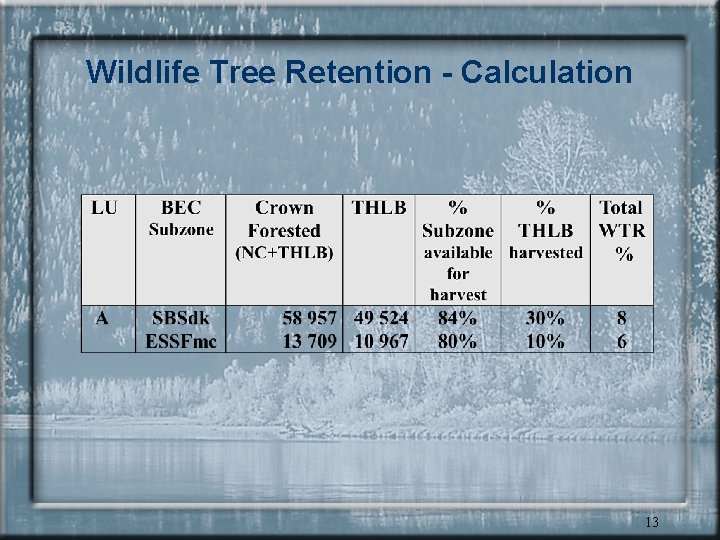
Wildlife Tree Retention - Calculation 13
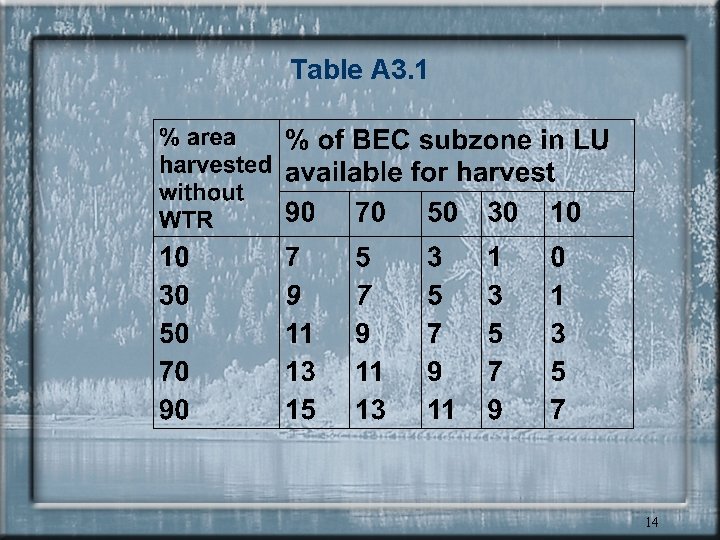
Table A 3. 1 14
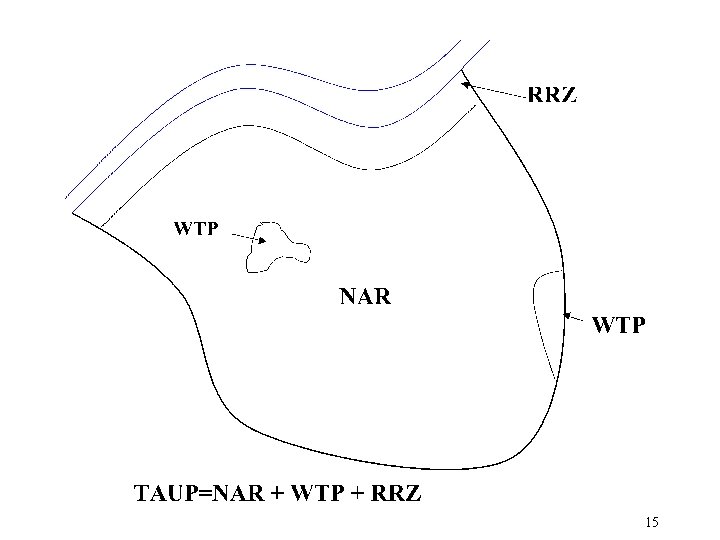
15
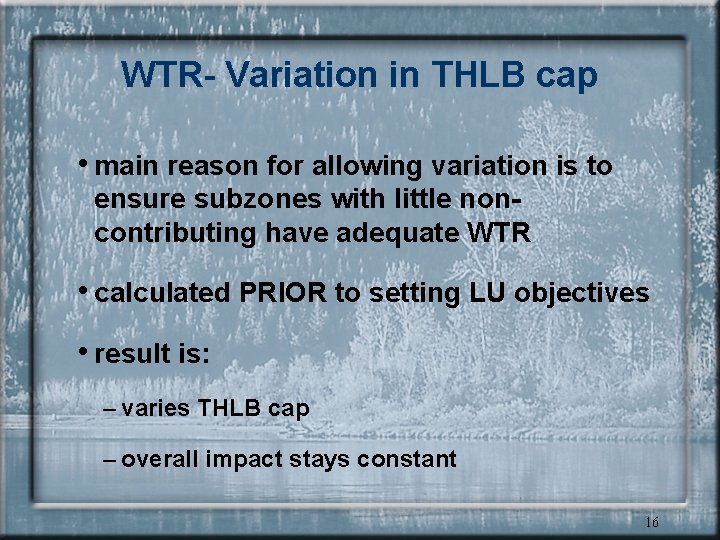
WTR- Variation in THLB cap • main reason for allowing variation is to ensure subzones with little noncontributing have adequate WTR • calculated PRIOR to setting LU objectives • result is: – varies THLB cap – overall impact stays constant 16
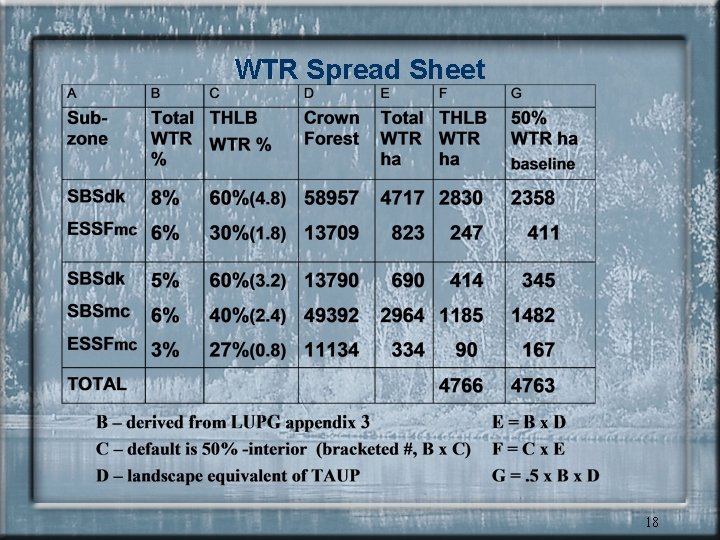
Wildlife tree retention - calculation • Determine the THLB WTR target – interior example - maximum 50% of total WTR target will be retained from the THLB. – Calculate the THLB WTR target hectares by multiplying the total WTR percentage by 50% and by the crown forested area. – 8% x 50% x 58, 957 = 2, 358 hectares 17
WTR Spread Sheet 18
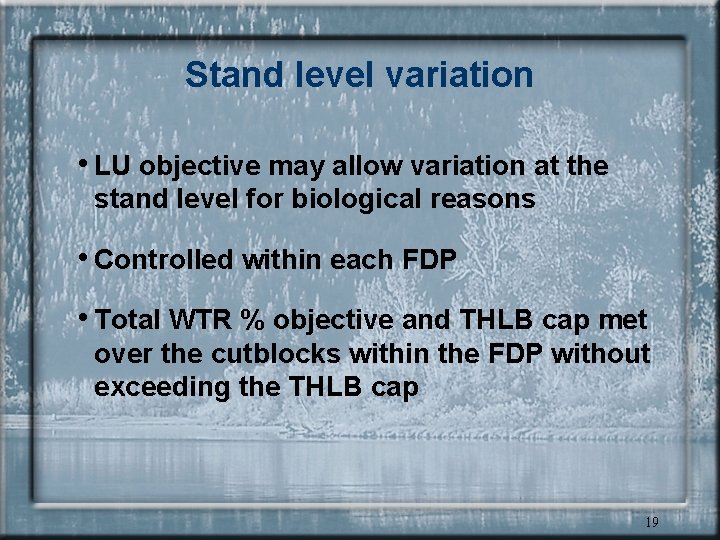
Stand level variation • LU objective may allow variation at the stand level for biological reasons • Controlled within each FDP • Total WTR % objective and THLB cap met over the cutblocks within the FDP without exceeding the THLB cap 19
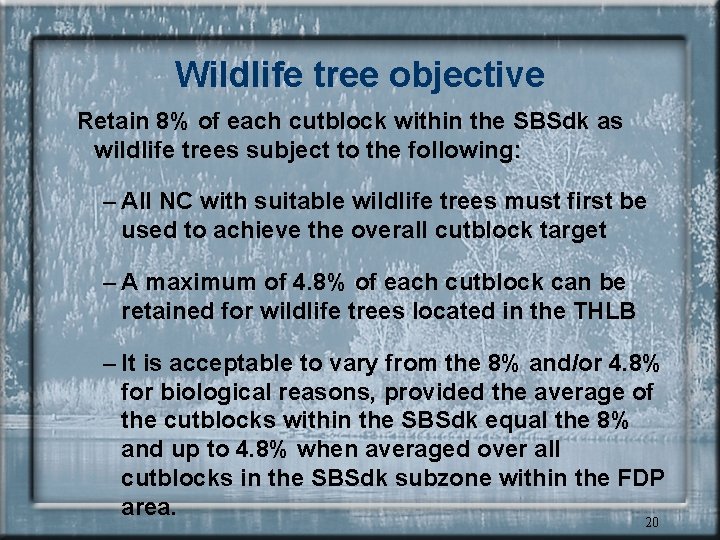
Wildlife tree objective Retain 8% of each cutblock within the SBSdk as wildlife trees subject to the following: – All NC with suitable wildlife trees must first be used to achieve the overall cutblock target – A maximum of 4. 8% of each cutblock can be retained for wildlife trees located in the THLB – It is acceptable to vary from the 8% and/or 4. 8% for biological reasons, provided the average of the cutblocks within the SBSdk equal the 8% and up to 4. 8% when averaged over all cutblocks in the SBSdk subzone within the FDP area. 20
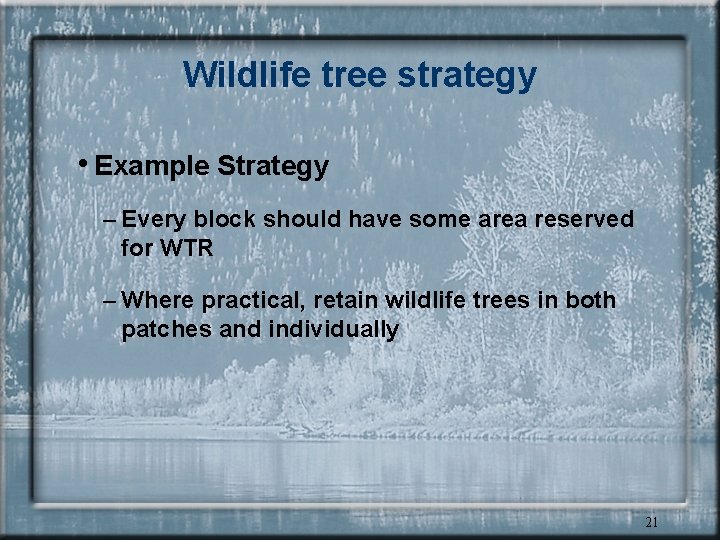
Wildlife tree strategy • Example Strategy – Every block should have some area reserved for WTR – Where practical, retain wildlife trees in both patches and individually 21
Wildlife Tree Retention • Tracking – SP mapping to. 25 ha – Forest Cover mapping 2 ha and greater • Auditing/Monitoring – to be based on aggregate of many SPs – developed over next several years 22
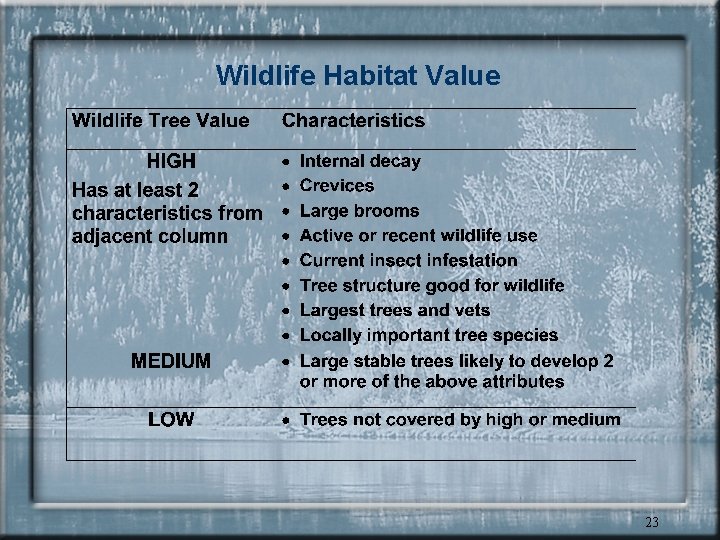
Wildlife Habitat Value 23