
Wildlife Population Analysis Matrix Models for Population Biology
Wildlife Population Analysis Matrix Models for Population Biology Lecture 12
Resources: n n n Caswell, H. 2001. Matrix population models. 2 nd ed. Sinauer Associates, Inc. Sunderland, Mass. Tuljapurkar, S. , and H. Caswell (eds. ) 1997. Structured-population models in marine, terrestrial, and freshwater systems. Chapman & Hall, New York. Manley, B. F. J. 1990. Stage-structured population: sampling, analysis, and simulation. Chapman & Hall, New York.
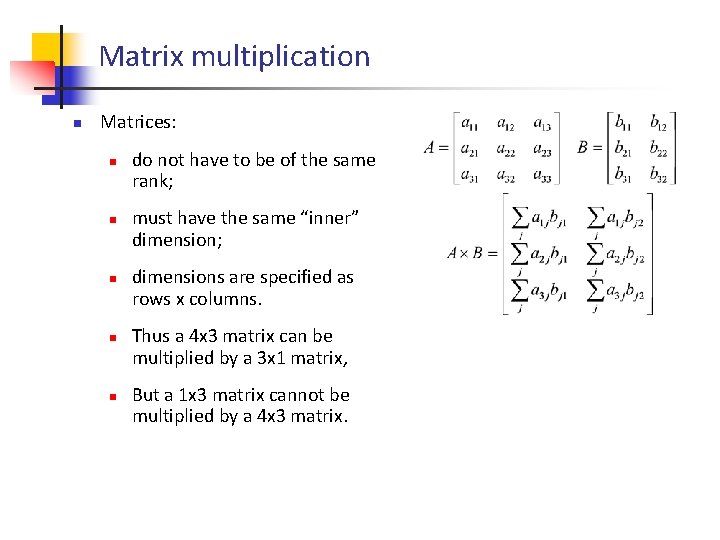
Matrix multiplication n Matrices: n n n do not have to be of the same rank; must have the same “inner” dimension; dimensions are specified as rows x columns. Thus a 4 x 3 matrix can be multiplied by a 3 x 1 matrix, But a 1 x 3 matrix cannot be multiplied by a 4 x 3 matrix.
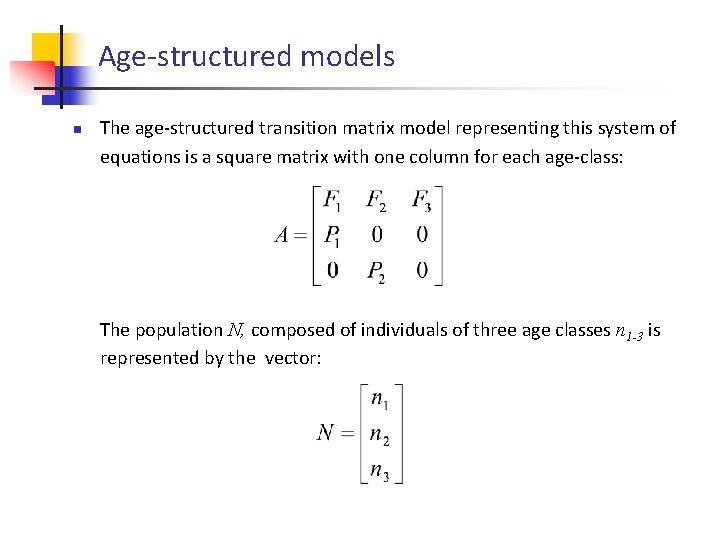
Age-structured models n The age-structured transition matrix model representing this system of equations is a square matrix with one column for each age-class: The population N, composed of individuals of three age classes n 1 -3 is represented by the vector:

Life-cycle graph n Life-cycle diagram, where each node represents an age class, the straight lines connecting the nodes represent the survival (transition) probabilities (P) and the curved lines extending back to the first node represent the fertilities (F). F 1 F 3 F 2 1 2 P 1 3 P 2
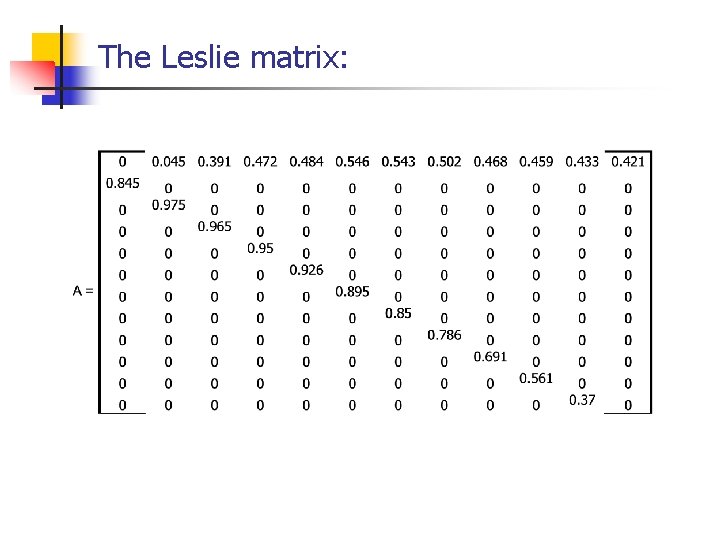
The Leslie matrix:
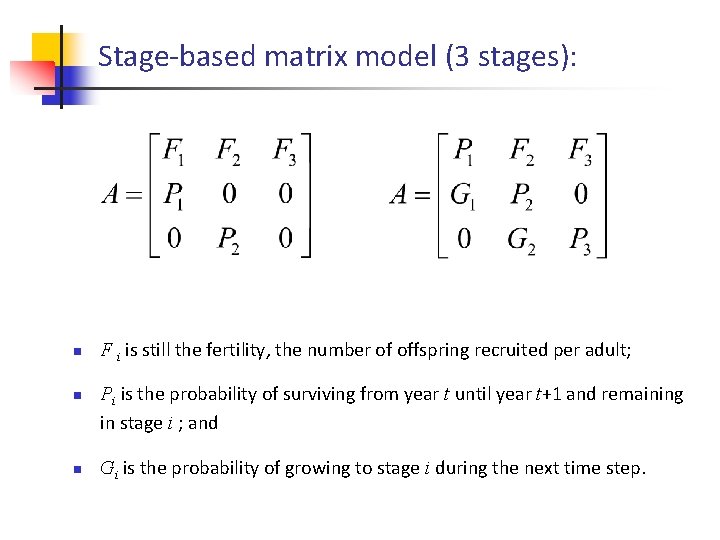
Stage-based matrix model (3 stages): n n n F i is still the fertility, the number of offspring recruited per adult; Pi is the probability of surviving from year t until year t+1 and remaining in stage i ; and Gi is the probability of growing to stage i during the next time step.
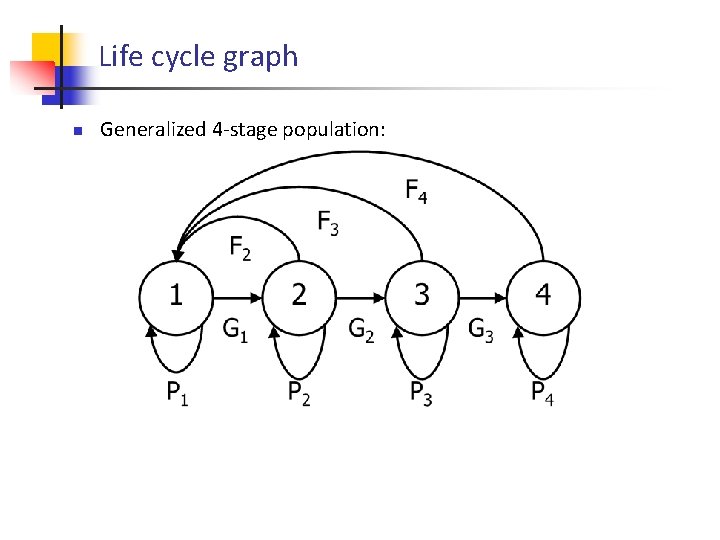
Life cycle graph n Generalized 4 -stage population:
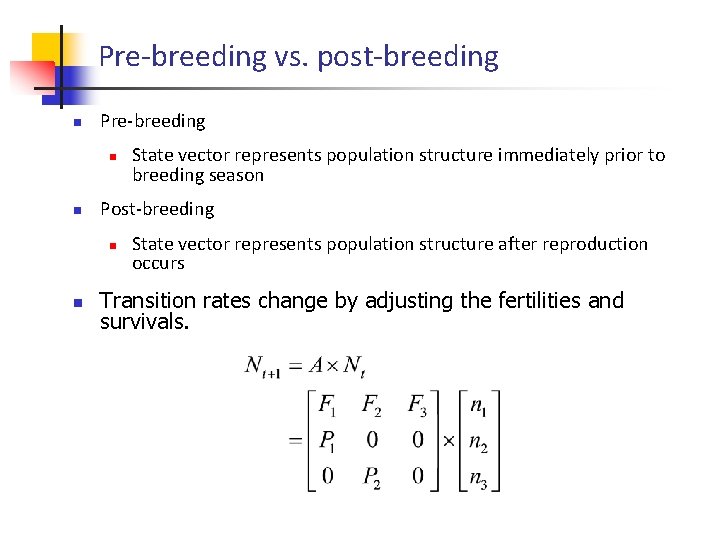
Pre-breeding vs. post-breeding n Pre-breeding n n Post-breeding n n State vector represents population structure immediately prior to breeding season State vector represents population structure after reproduction occurs Transition rates change by adjusting the fertilities and survivals.
Four questions from Caswell (2001) n Asymptotic behavior — long-term behavior n Ergodicity — behavior dependent upon the initial state n Transient behavior — short term dynamics n Perturbation analysis — response to changes in the vital rates (i. e. , relative sensitivities)?
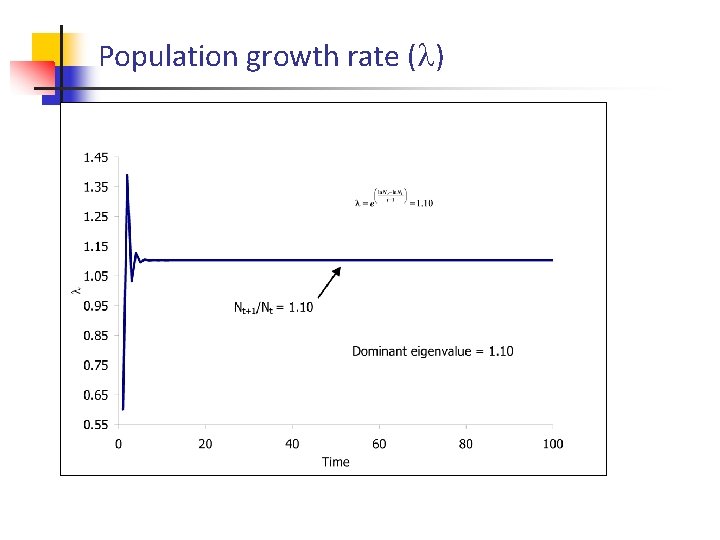
Population growth rate ( ) n Calculate dominant eigenvalue n n No. of eigenvalues = no. of stages Fortunately, most single population matrices have only one real, positive (dominant) eigenvalue.
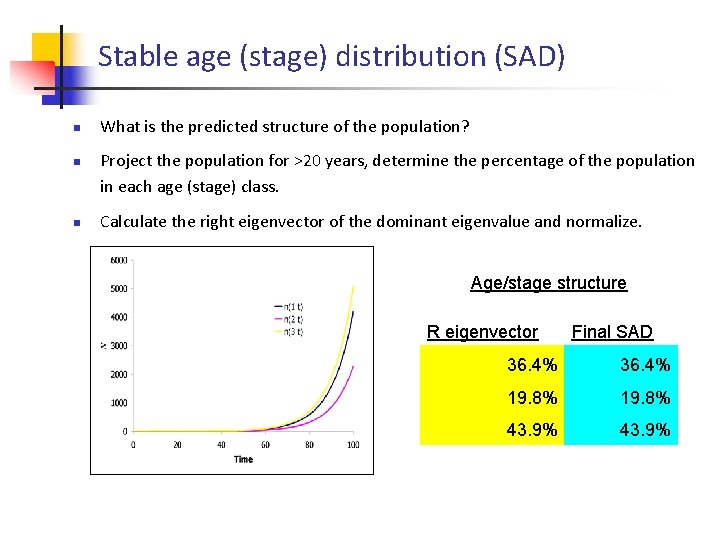
Stable age (stage) distribution (SAD) n n n What is the predicted structure of the population? Project the population for >20 years, determine the percentage of the population in each age (stage) class. Calculate the right eigenvector of the dominant eigenvalue and normalize. Age/stage structure R eigenvector Final SAD 36. 4% 19. 8% 43. 9%
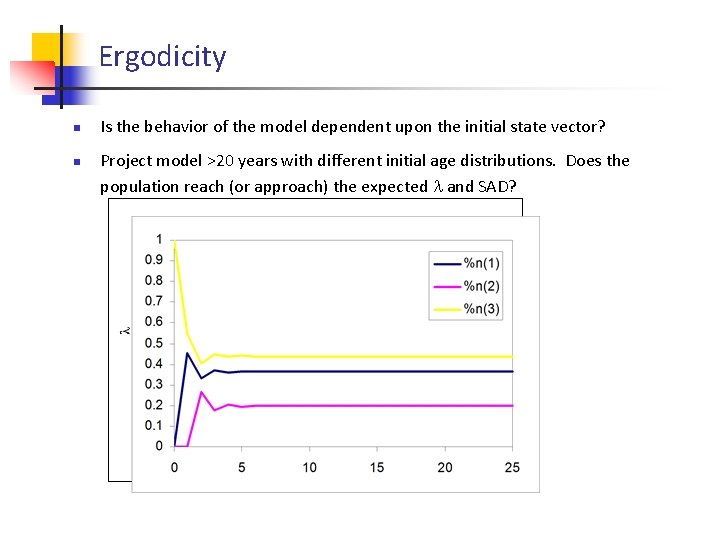
Ergodicity n n Is the behavior of the model dependent upon the initial state vector? Project model >20 years with different initial age distributions. Does the population reach (or approach) the expected and SAD?
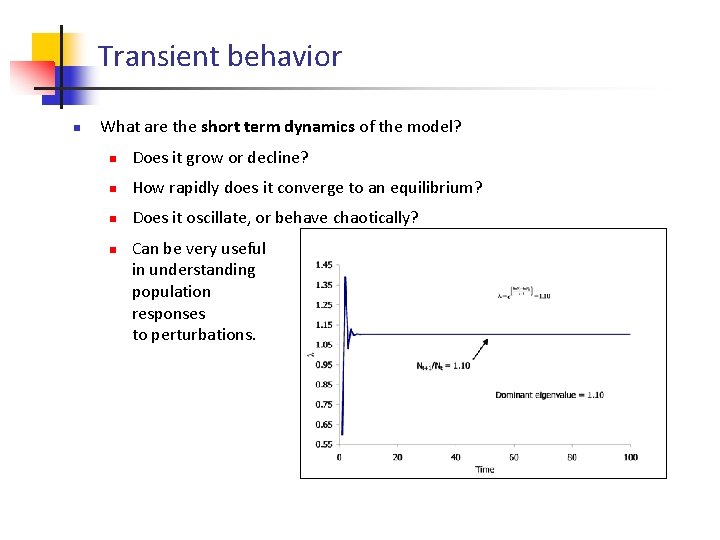
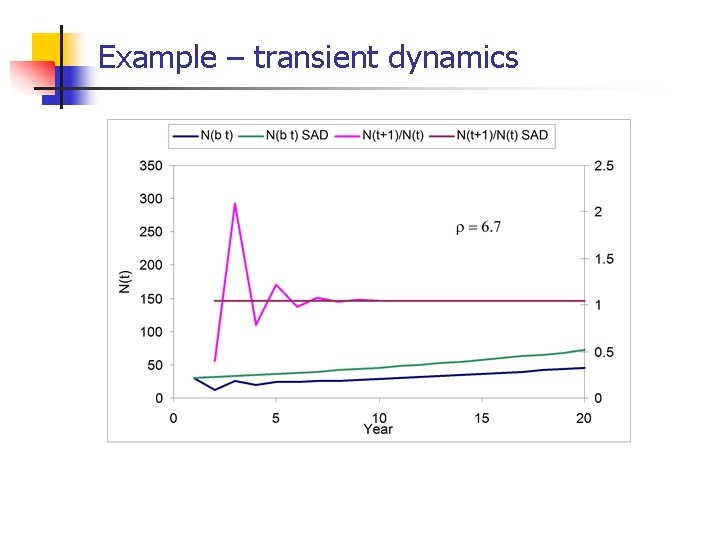
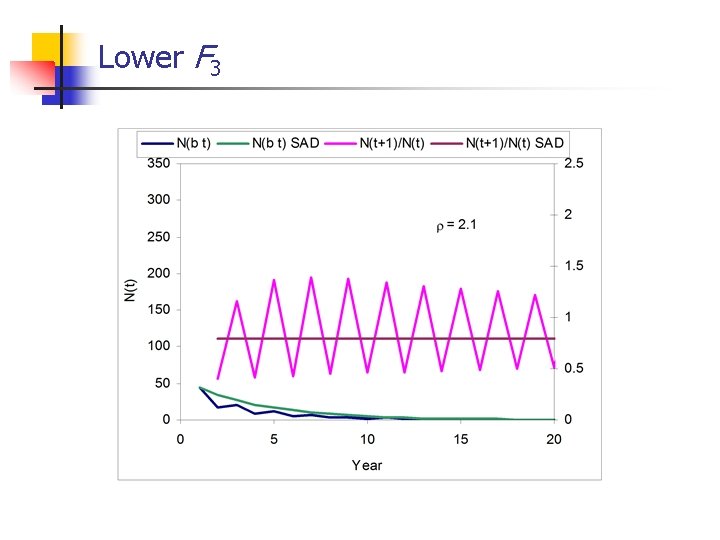
Transient behavior n What are the short term dynamics of the model? n Does it grow or decline? n How rapidly does it converge to an equilibrium? n Does it oscillate, or behave chaotically? n Can be very useful in understanding population responses to perturbations.
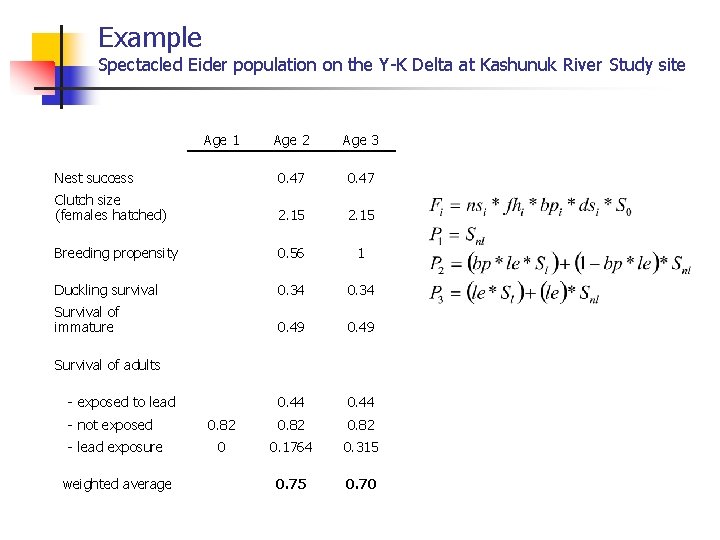
Example Spectacled Eider population on the Y-K Delta at Kashunuk River Study site Age 1 Age 2 Age 3 Nest success 0. 47 Clutch size (females hatched) 2. 15 Breeding propensity 0. 56 1 Duckling survival 0. 34 Survival of immature 0. 49 0. 44 0. 82 0 0. 1764 0. 315 0. 70 Survival of adults - exposed to lead - not exposed - lead exposure weighted average
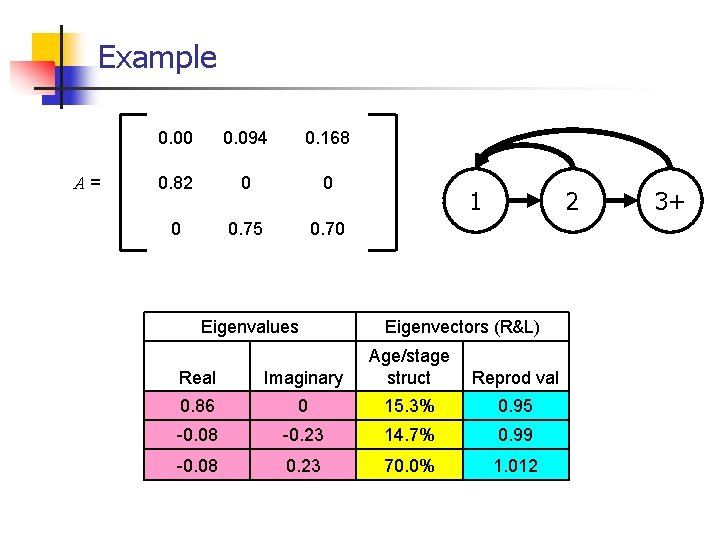
Example A= 0. 00 0. 094 0. 168 0. 82 0 0. 75 0. 70 Eigenvalues 1 2 Eigenvectors (R&L) Real Imaginary Age/stage struct 0. 86 0 15. 3% 0. 95 -0. 08 -0. 23 14. 7% 0. 99 -0. 08 0. 23 70. 0% 1. 012 Reprod val 3+
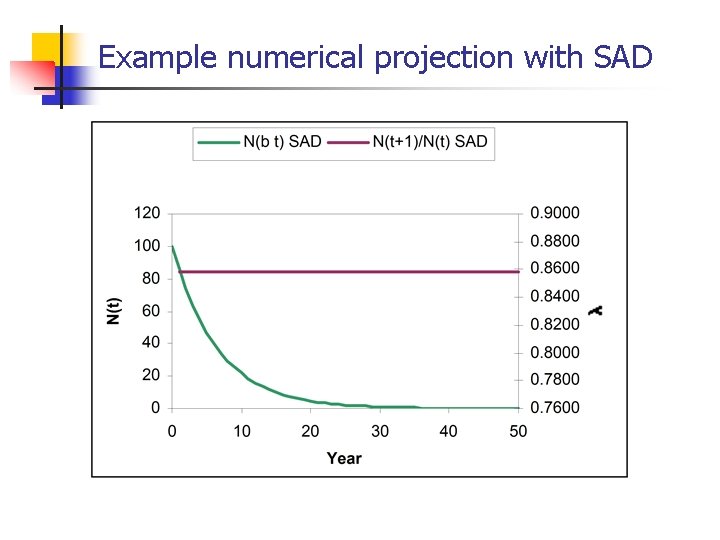
Example numerical projection with SAD
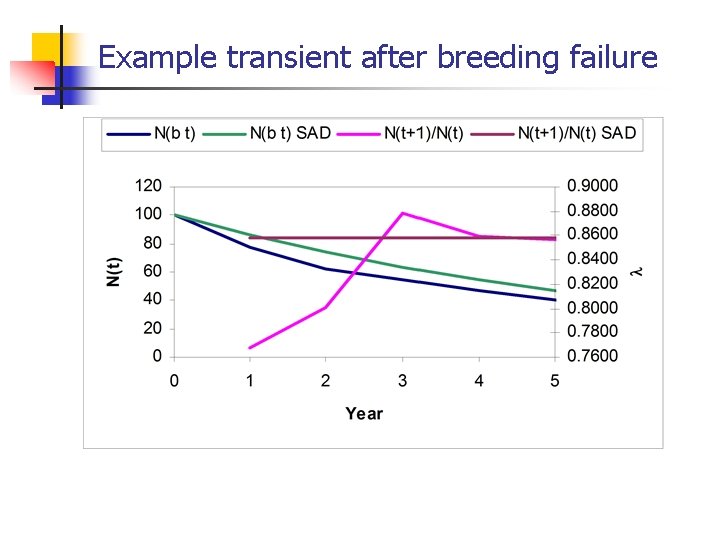
Example transient after breeding failure
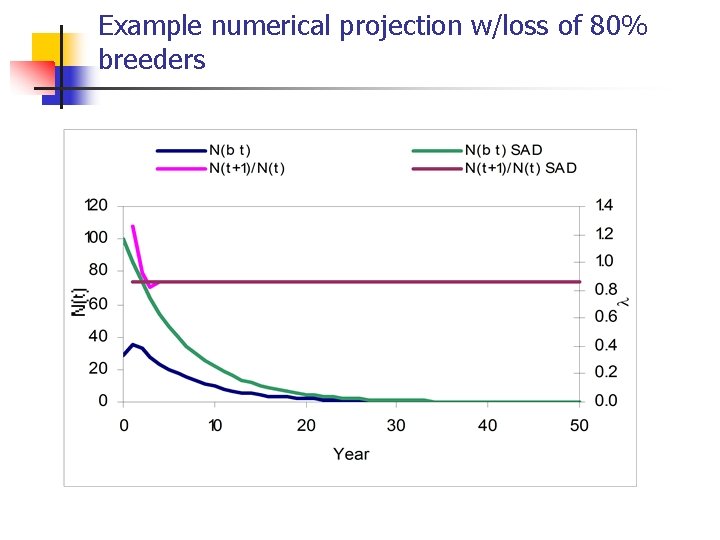
Example numerical projection w/loss of 80% breeders
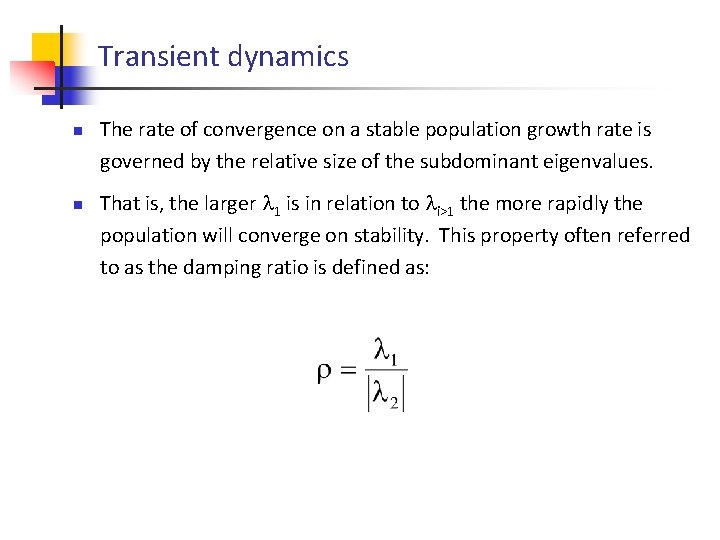
Transient dynamics n n The rate of convergence on a stable population growth rate is governed by the relative size of the subdominant eigenvalues. That is, the larger 1 is in relation to i>1 the more rapidly the population will converge on stability. This property often referred to as the damping ratio is defined as:
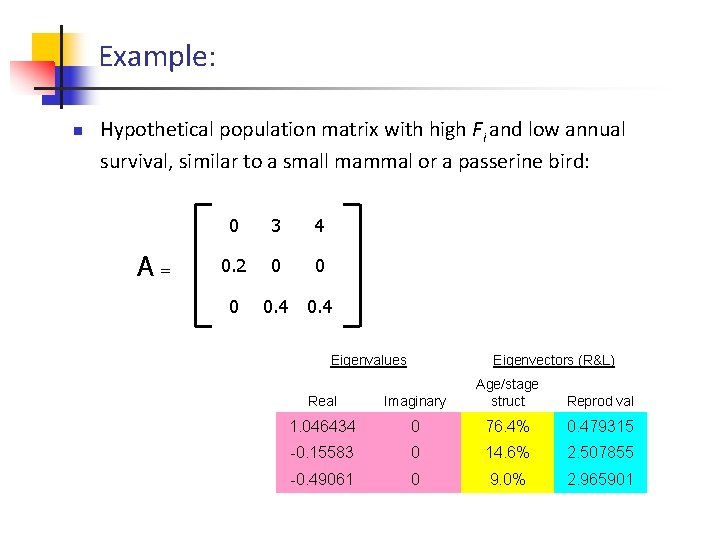
Example: n Hypothetical population matrix with high Fi and low annual survival, similar to a small mammal or a passerine bird: A= 0 3 4 0. 2 0 0. 4 Eigenvalues Eigenvectors (R&L) Real Imaginary Age/stage struct 1. 046434 0 76. 4% 0. 479315 -0. 15583 0 14. 6% 2. 507855 -0. 49061 0 9. 0% 2. 965901 Reprod val
Example – transient dynamics
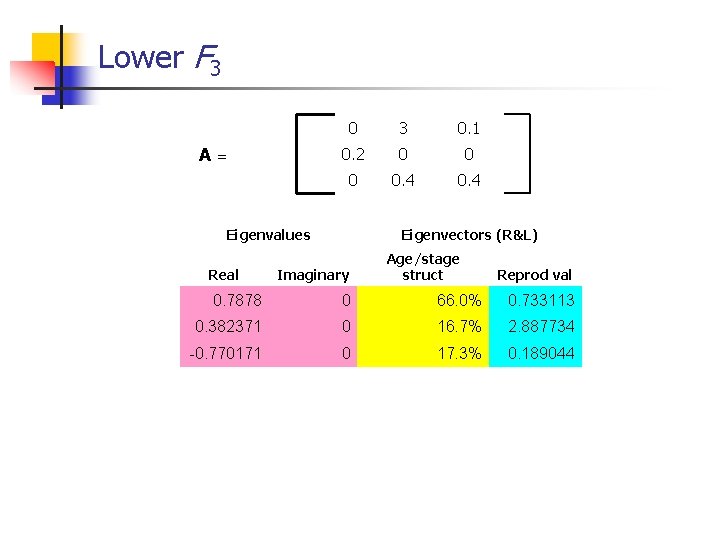
Lower F 3 A= 0 3 0. 1 0. 2 0 0. 4 Eigenvalues Real Eigenvectors (R&L) Imaginary Age/stage struct Reprod val 0. 7878 0 66. 0% 0. 733113 0. 382371 0 16. 7% 2. 887734 -0. 770171 0 17. 3% 0. 189044
Lower F 3
Perturbation analysis n How does the model respond to changes in the vital rates? n What are the relative sensitivities? n Estimates of vital rates always are subject to uncertainty. n Conclusions dependent upon exact values are always suspect.
Perturbation analysis - sensitivity of matrix models n Prospective analysis – forward looking. n n What could happen to the population if changes occur in vital rates? Retrospective analyses – examining the past. n How has variation in vital rates affected population growth?
Motivation n Determining which rate(s) have the greatest affect on population growth n Predicting results of future changes in vital rates n Quantifying the effects of past changes in vital rates n n Predicting the actions of natural selection (if changes in phenotypes result in changes to vital rates) Designing sampling schemes. (i. e. choosing which vital rates are the most important to measure accurately)
Prospective Analysis n Two Metrics: n Sensitivities - the effect on population growth rate, 1, of unit changes in the vital rates. n n e. g. , 1 egg increase in mean clutch size Elasticities – the relative effect of vital rates on population growth rate, 1. n e. g. , 1% increase in mean clutch size.
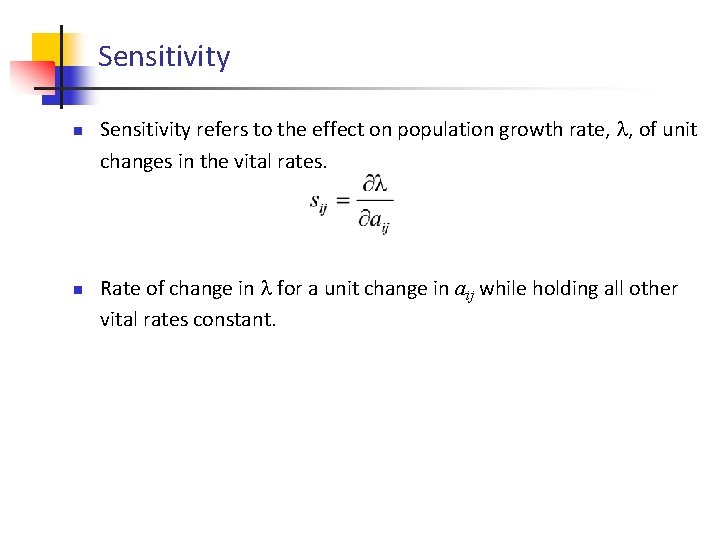
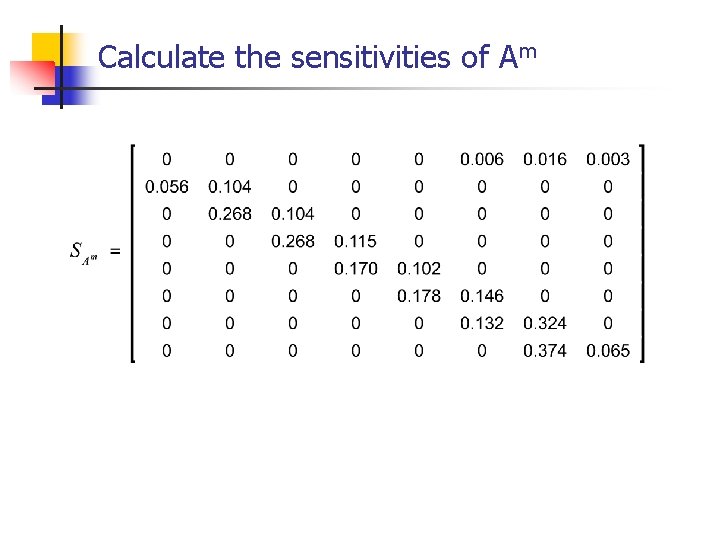
Sensitivity n n Sensitivity refers to the effect on population growth rate, , of unit changes in the vital rates. Rate of change in for a unit change in aij while holding all other vital rates constant.
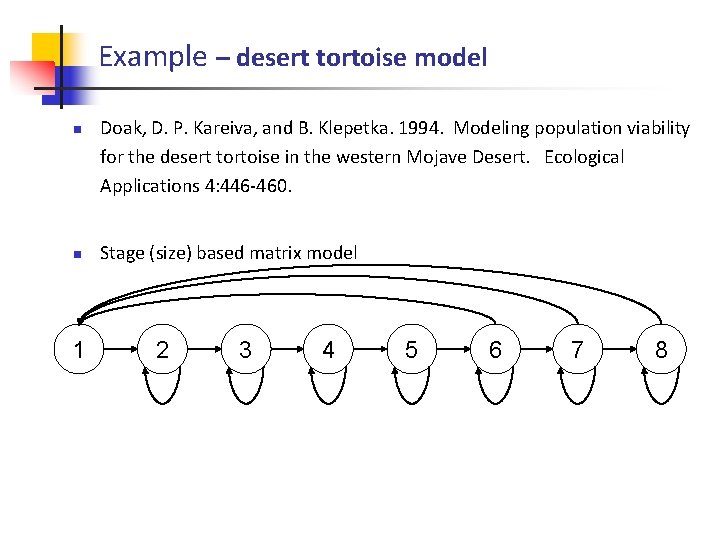
Example – desert tortoise model n n 1 Doak, D. P. Kareiva, and B. Klepetka. 1994. Modeling population viability for the desert tortoise in the western Mojave Desert. Ecological Applications 4: 446 -460. Stage (size) based matrix model 2 3 4 5 6 7 8
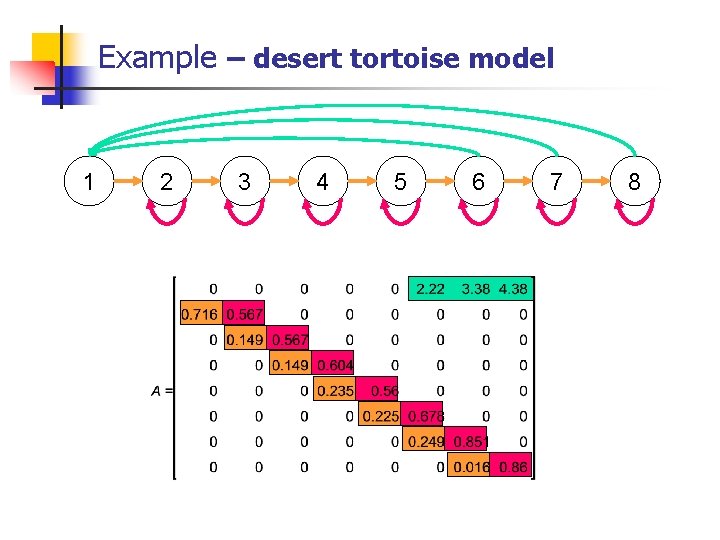
Example – desert tortoise model 1 2 3 4 5 6 7 8
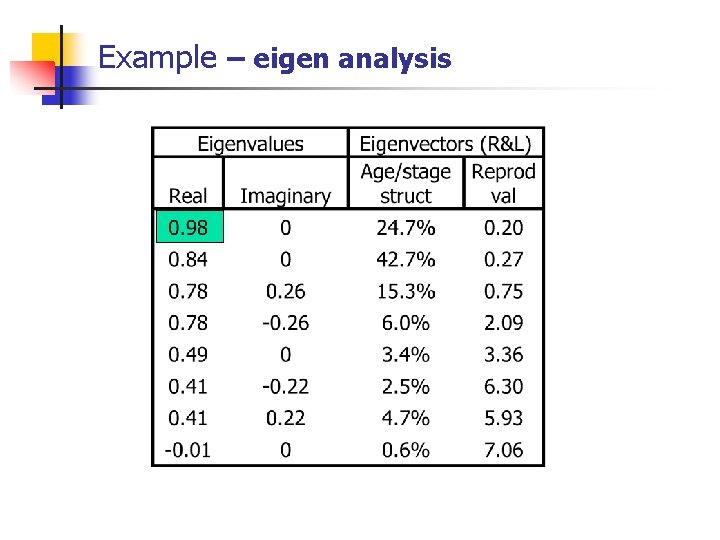
Example – eigen analysis
Sensitivity n n Sensitivity refers to the effect on population growth rate, , of unit changes in the vital rates. Rate of change in for a unit change in aij while holding all other vital rates constant.
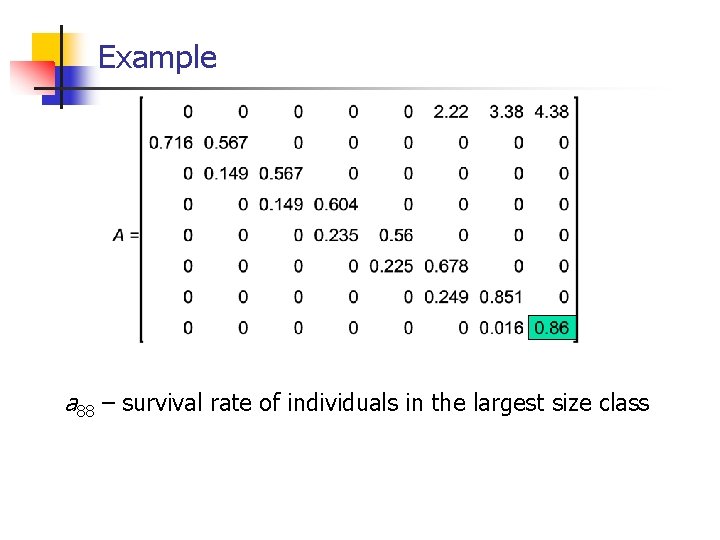
Example a 88 – survival rate of individuals in the largest size class
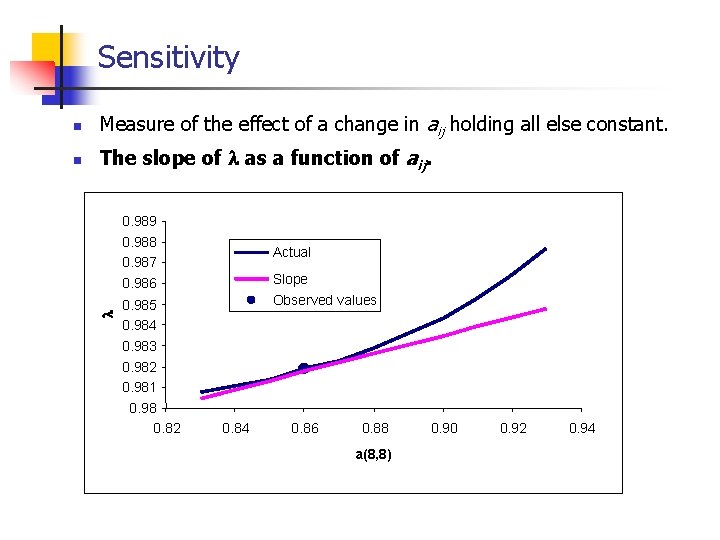
Sensitivity n Measure of the effect of a change in aij holding all else constant. n The slope of as a function of aij. 0. 989 0. 988 0. 987 Actual 0. 986 Slope Observed values 0. 985 0. 984 0. 983 0. 982 0. 981 0. 98 0. 82 0. 84 0. 86 0. 88 a(8, 8) 0. 90 0. 92 0. 94
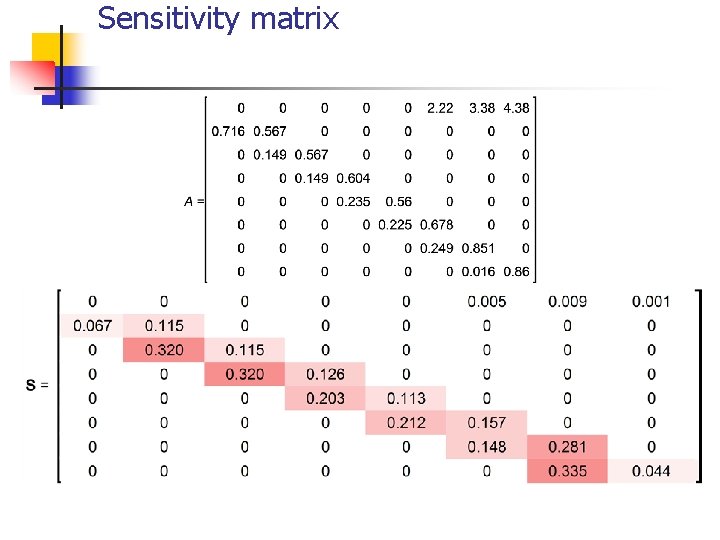
Sensitivity matrix
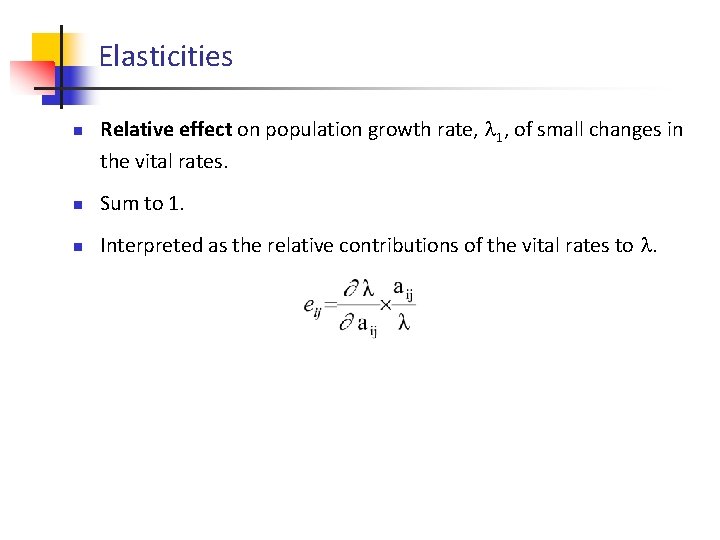
Elasticities n Relative effect on population growth rate, 1, of small changes in the vital rates. n Sum to 1. n Interpreted as the relative contributions of the vital rates to .
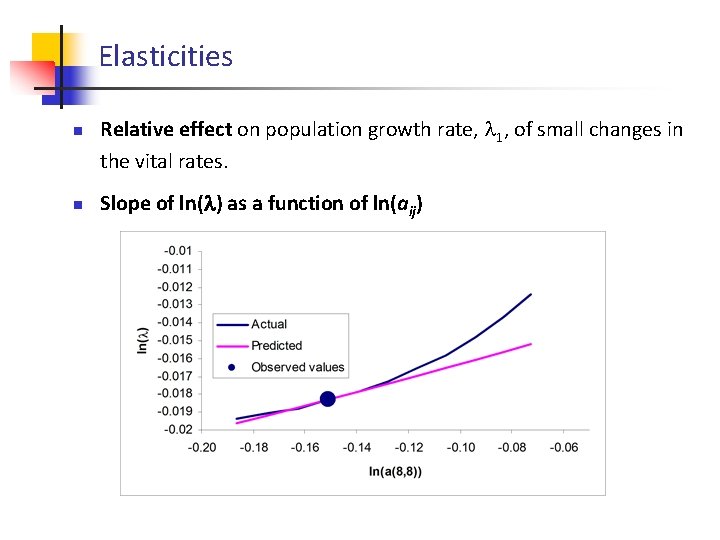
Elasticities n n Relative effect on population growth rate, 1, of small changes in the vital rates. Slope of ln( ) as a function of ln(aij)
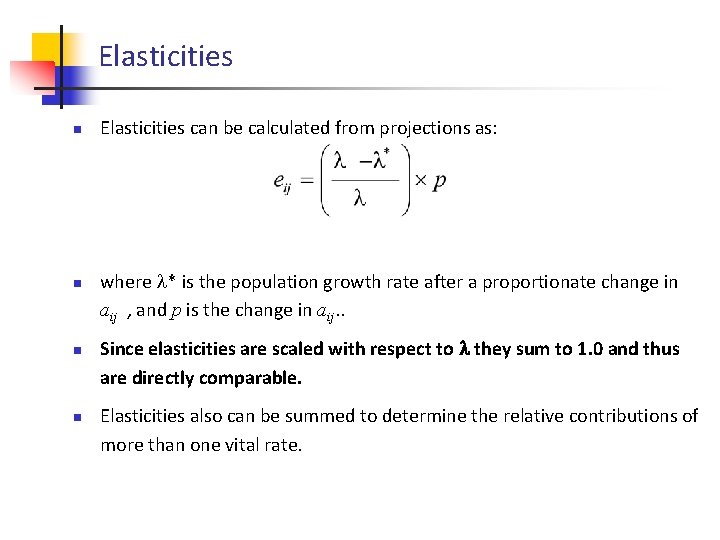
Elasticities n n Elasticities can be calculated from projections as: where * is the population growth rate after a proportionate change in aij , and p is the change in aij. . Since elasticities are scaled with respect to they sum to 1. 0 and thus are directly comparable. Elasticities also can be summed to determine the relative contributions of more than one vital rate.
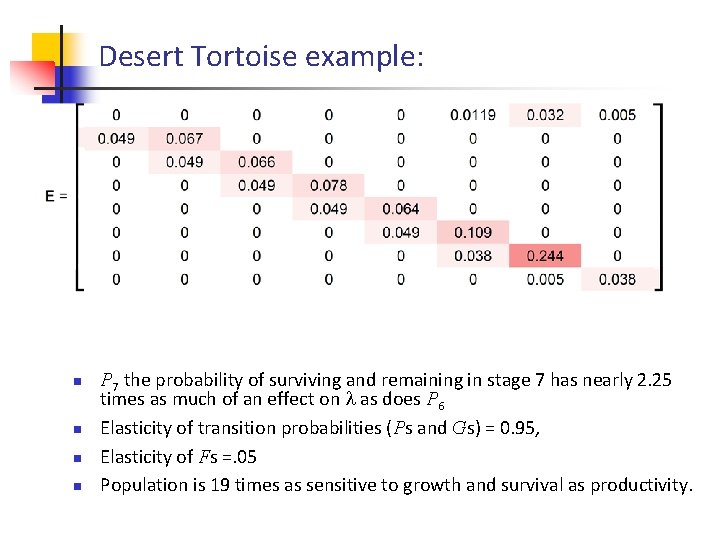
Desert Tortoise example: n n P 7 the probability of surviving and remaining in stage 7 has nearly 2. 25 times as much of an effect on as does P 6 Elasticity of transition probabilities (Ps and Gs) = 0. 95, Elasticity of Fs =. 05 Population is 19 times as sensitive to growth and survival as productivity.
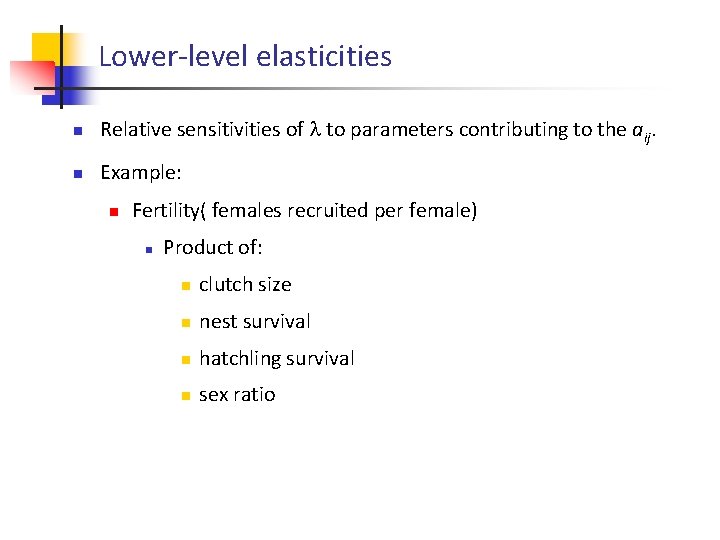
Lower-level elasticities n Relative sensitivities of to parameters contributing to the aij. n Example: n Fertility( females recruited per female) n Product of: n clutch size n nest survival n hatchling survival n sex ratio
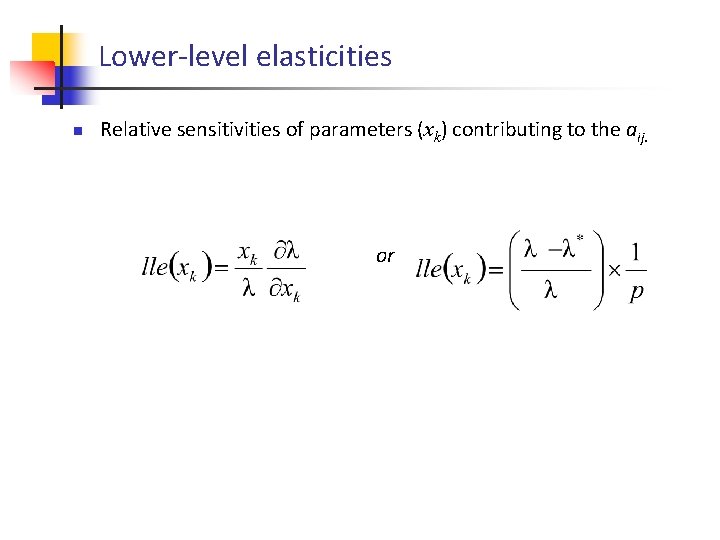
Lower-level elasticities n Relative sensitivities of parameters (xk) contributing to the aij. or
Lower-level elasticities n n Do not sum to 1, so they can not be interpreted as contributions to . Values are relative n If lle(x 1) = 0. 4 and lle(x 2) = 0. 8, then n lle(x 2) has twice the influence on
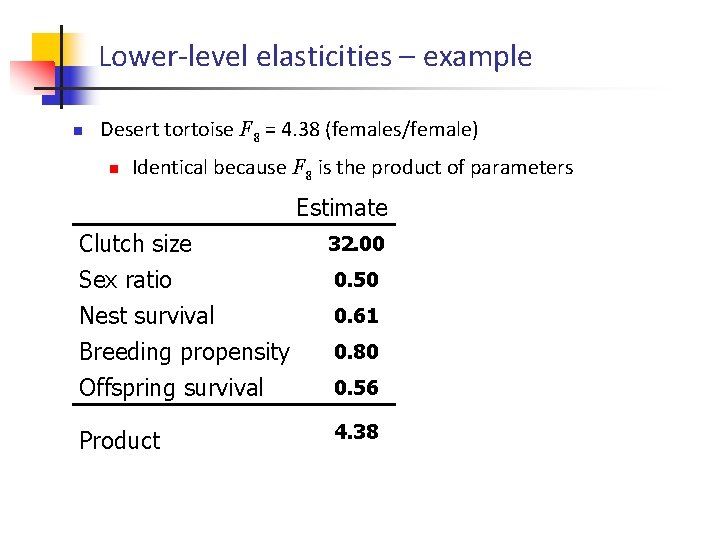
Lower-level elasticities – example n Desert tortoise F 8 = 4. 38 (females/female) n Identical because F 8 is the product of parameters Estimate Clutch size Sex ratio Sensitivity Elasticity 32. 00 0. 0002 0. 005 0. 50 0. 0107 0. 005 Nest survival Breeding propensity Offspring survival 0. 61 0. 0087 0. 005 0. 80 0. 0067 0. 005 0. 56 0. 0096 0. 005 Product 4. 38
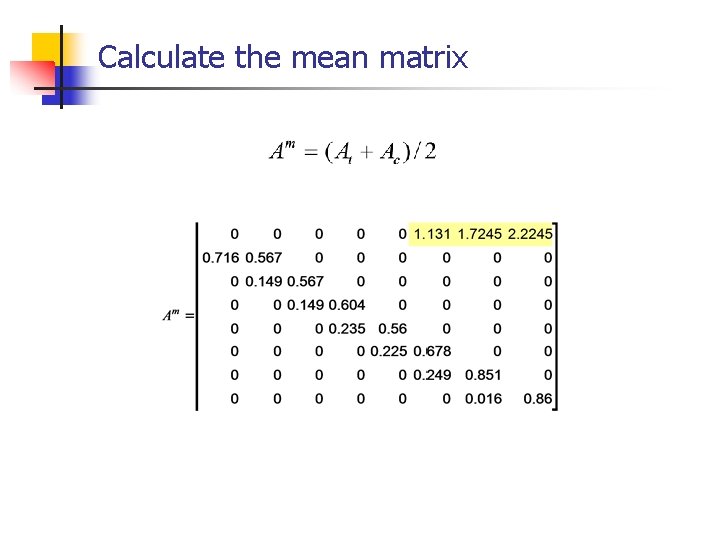
Retrospective analysis n n n Life Table Response Experiments (LTRE) Set of vital rates (matrix) is the response variable in an experimental design. Treatments affect the various vital rates most frequently used statistic to evaluate the effect of the treatments. Often used to examine the effect of past variation in vital rates on population growth rates.
LTRE designs n Analogous to analysis of variance n one-way, two-way, or factorial n Random effects n Regression analysis.
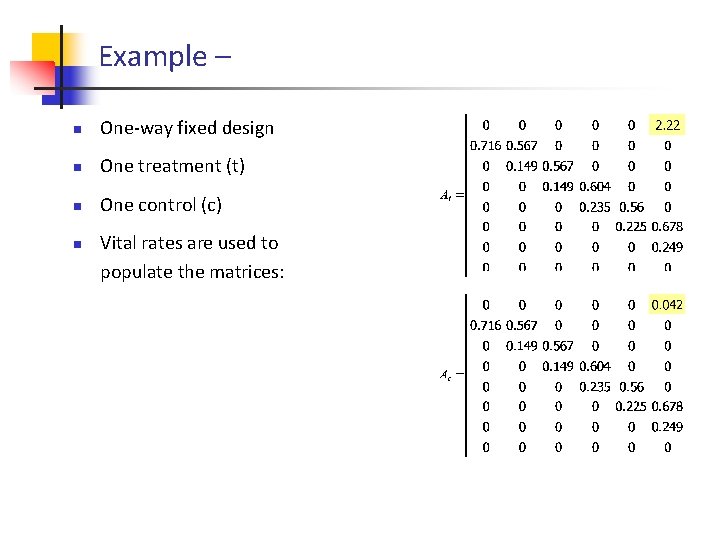
Example – n One-way fixed design n One treatment (t) n One control (c) n Vital rates are used to populate the matrices:
Calculate the mean matrix
Calculate the sensitivities of Am
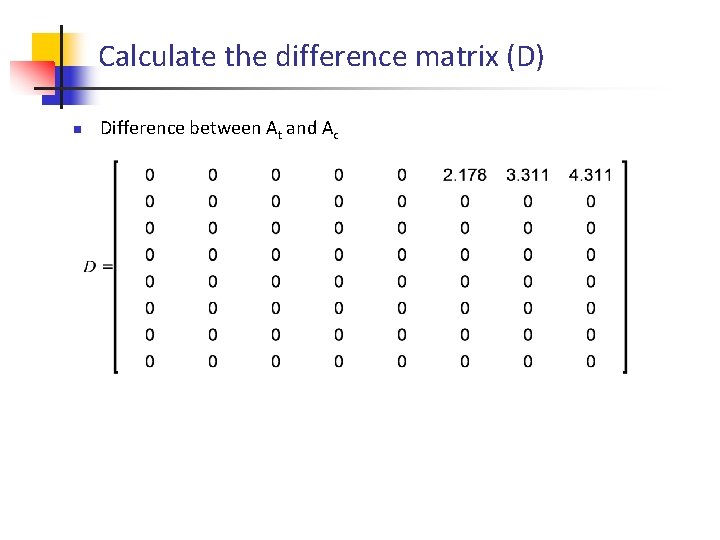
Calculate the difference matrix (D) n Difference between At and Ac
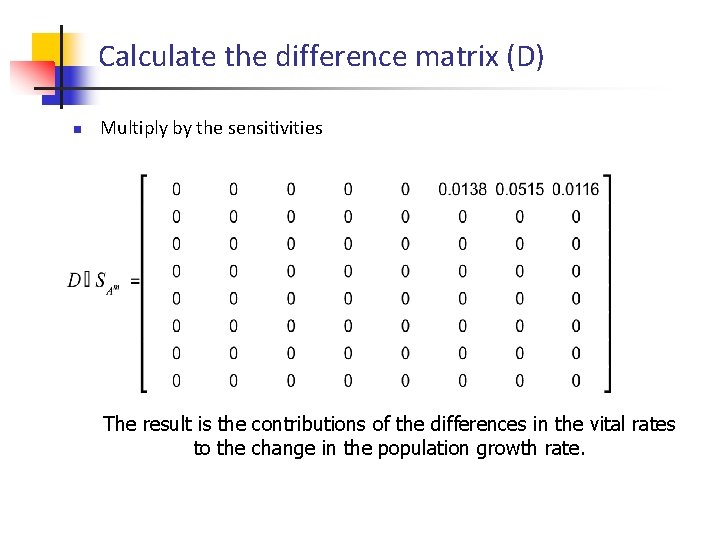
Calculate the difference matrix (D) n Multiply by the sensitivities The result is the contributions of the differences in the vital rates to the change in the population growth rate.
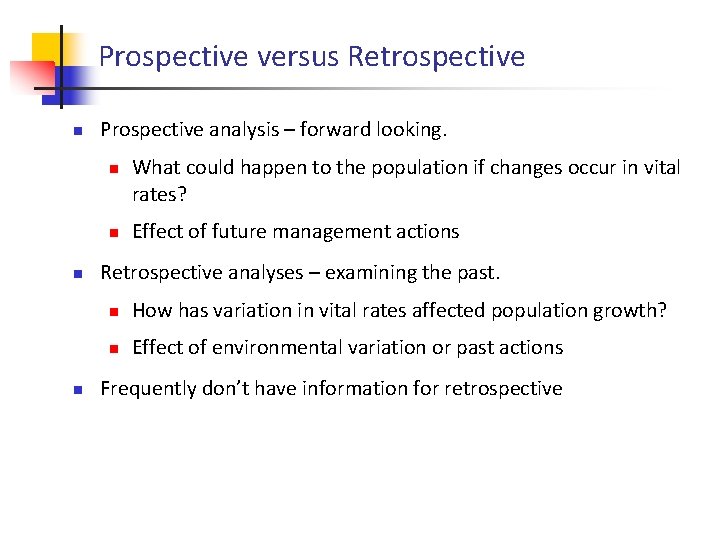
Prospective versus Retrospective n Prospective analysis – forward looking. n n What could happen to the population if changes occur in vital rates? Effect of future management actions Retrospective analyses – examining the past. n How has variation in vital rates affected population growth? n Effect of environmental variation or past actions Frequently don’t have information for retrospective
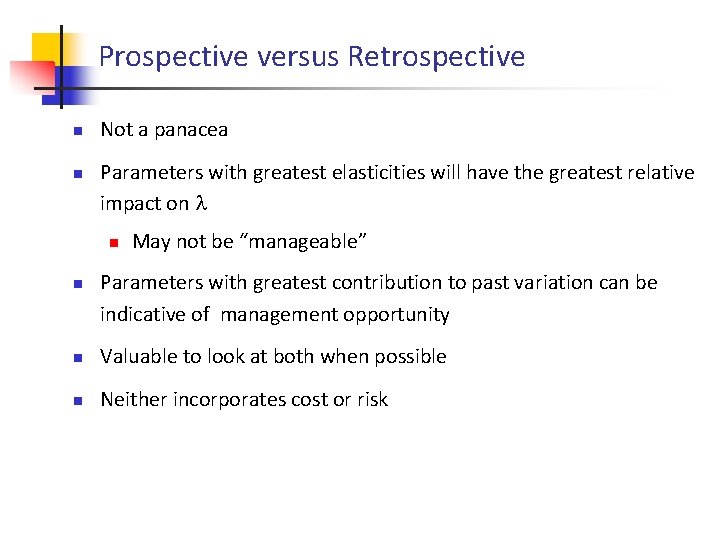
Prospective versus Retrospective n n Not a panacea Parameters with greatest elasticities will have the greatest relative impact on n n May not be “manageable” Parameters with greatest contribution to past variation can be indicative of management opportunity n Valuable to look at both when possible n Neither incorporates cost or risk
Variations n All examples were females only (state vector = number of females) n n n Assume that males aren’t limiting F Can be extended to “multi-state” n Males and females n Community – predator-prey n Meta-populations Can be extended to state-dependent transitions n Density dependence n Stochastic models – random variation in vital rates n Auto-regressive models – trends in vital rates
- Slides: 54