
WIGOS Metadata Standard Supporting adequate use of observations
WIGOS Metadata Standard … Supporting adequate use of observations Luisa Ickes, WIGOS Project Office Jörg Klausen, Meteo. Swiss ICG-WIGOS TT-WMD
Learning Objectives • Understand the importance of observational metadata • Understand the concepts of the WIGOS metadata vs the WIS metadata • Know where to find information
What are metadata? • Metadata = documentation describing data
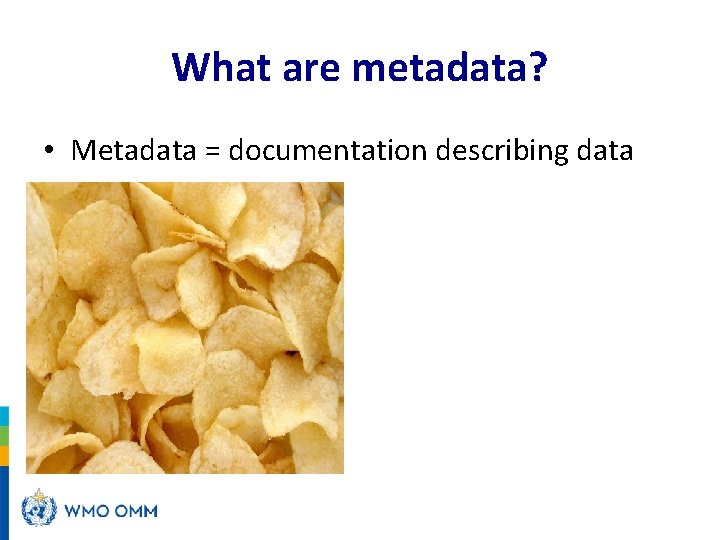
What are metadata? • Metadata = documentation describing data
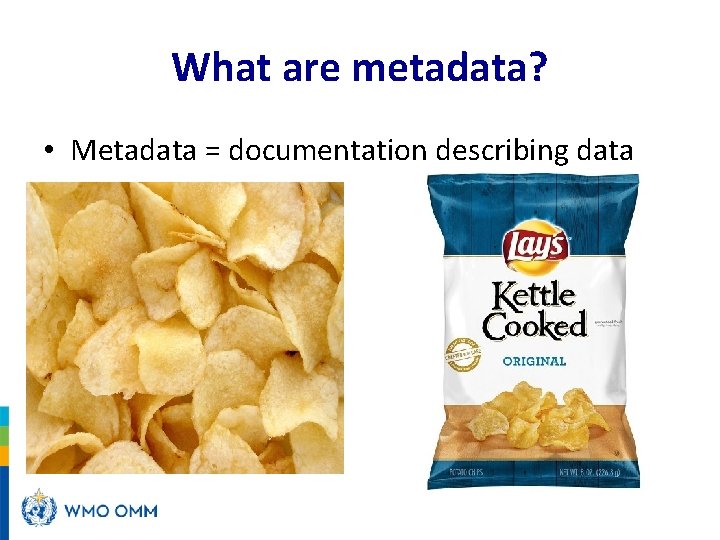
What are metadata? • Metadata = documentation describing data
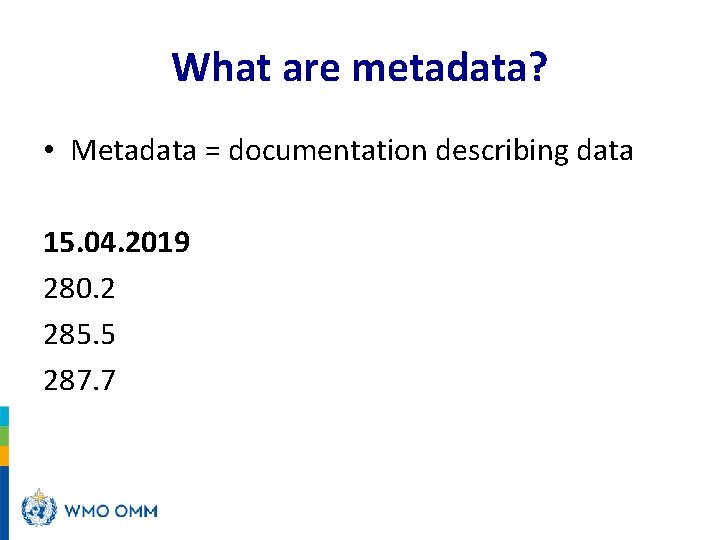
What are metadata? • Metadata = documentation describing data 15. 04. 2019 280. 2 285. 5 287. 7
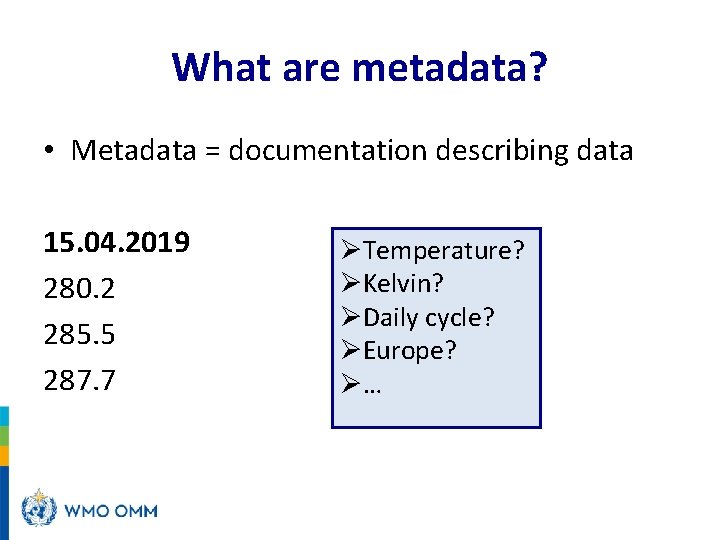
What are metadata? • Metadata = documentation describing data 15. 04. 2019 280. 2 285. 5 287. 7 ØTemperature? ØKelvin? ØDaily cycle? ØEurope? Ø…
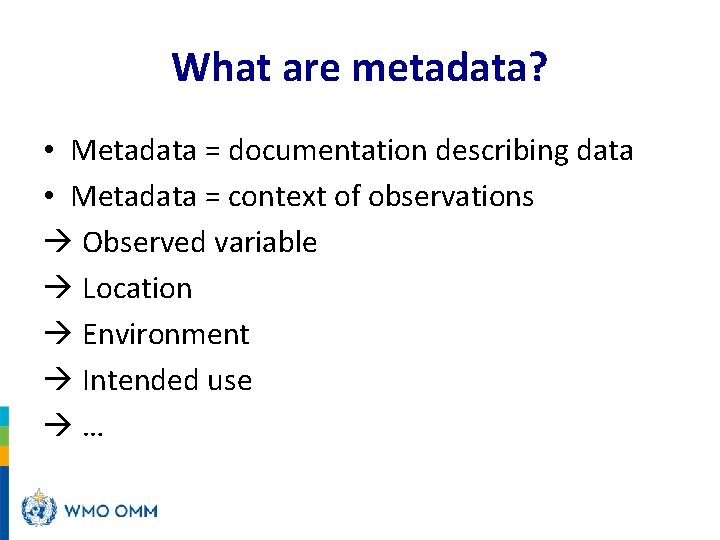
What are metadata? • Metadata = documentation describing data • Metadata = context of observations Observed variable Location Environment Intended use …
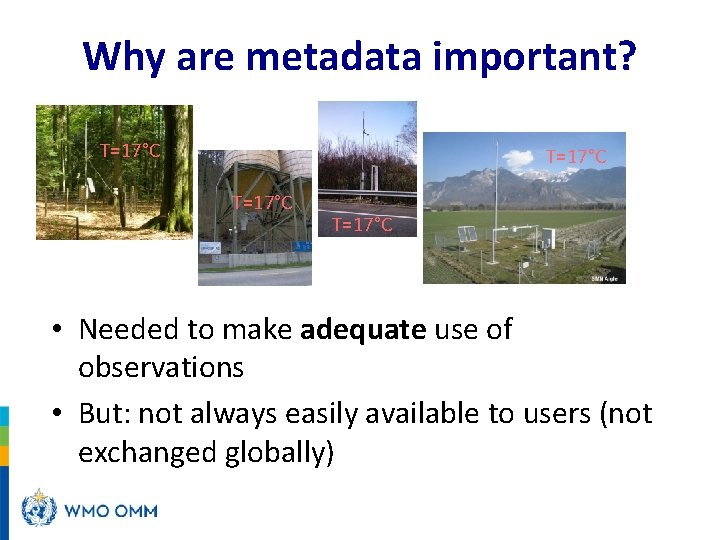
Why are metadata important? T=17°C • Needed to make adequate use of observations • But: not always easily available to users (not exchanged globally)
Metadata for climate applications “The details and history of local conditions, instruments, operating procedures, data processing algorithms and other factors pertinent to interpreting data (i. e. metadata) should be documented and treated with the same care as the data themselves. ” GCOS Climate Monitoring Principle #3
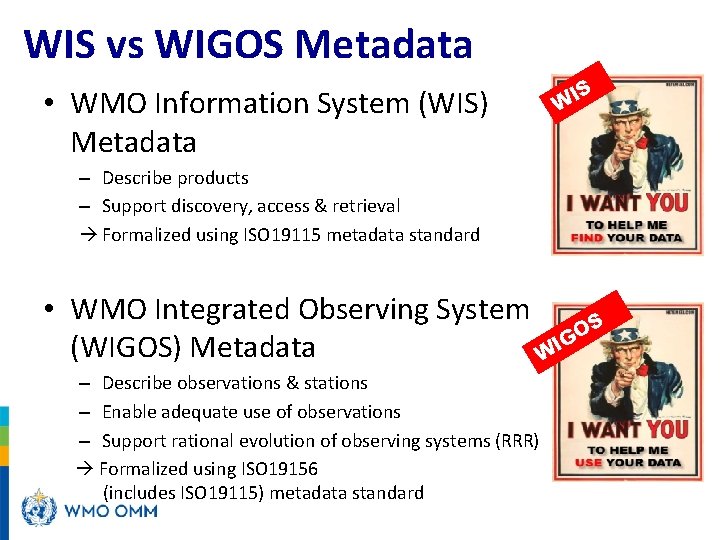
WIS vs WIGOS Metadata IS • WMO Information System (WIS) Metadata W – Describe products – Support discovery, access & retrieval Formalized using ISO 19115 metadata standard • WMO Integrated Observing System (WIGOS) Metadata – Describe observations & stations – Enable adequate use of observations – Support rational evolution of observing systems (RRR) Formalized using ISO 19156 (includes ISO 19115) metadata standard W I S O G
WIGOS METADATA STANDARD The framework of metadata (WMDS)
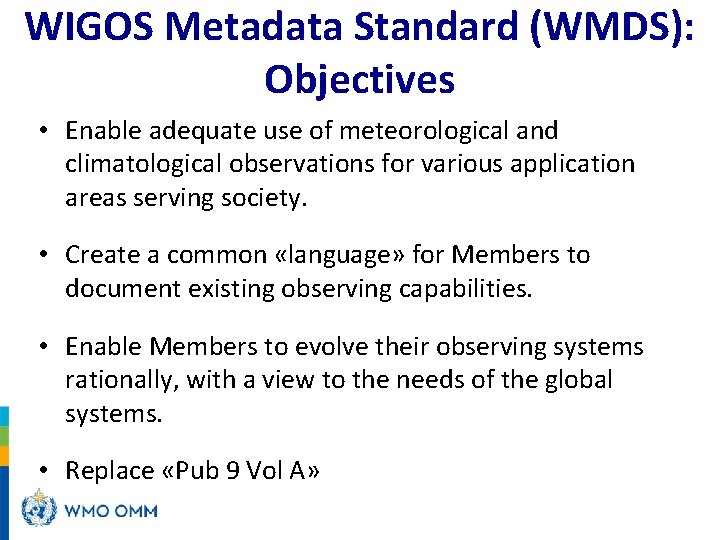
WIGOS Metadata Standard (WMDS): Objectives • Enable adequate use of meteorological and climatological observations for various application areas serving society. • Create a common «language» for Members to document existing observing capabilities. • Enable Members to evolve their observing systems rationally, with a view to the needs of the global systems. • Replace «Pub 9 Vol A»
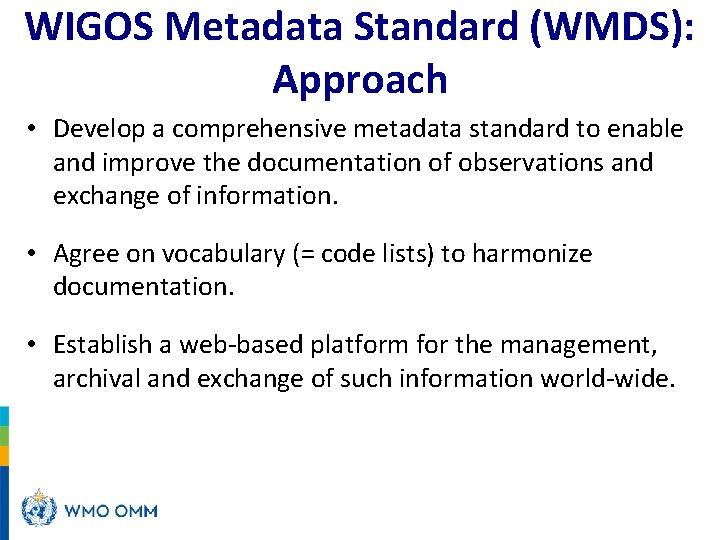
WIGOS Metadata Standard (WMDS): Approach • Develop a comprehensive metadata standard to enable and improve the documentation of observations and exchange of information. • Agree on vocabulary (= code lists) to harmonize documentation. • Establish a web-based platform for the management, archival and exchange of such information world-wide.
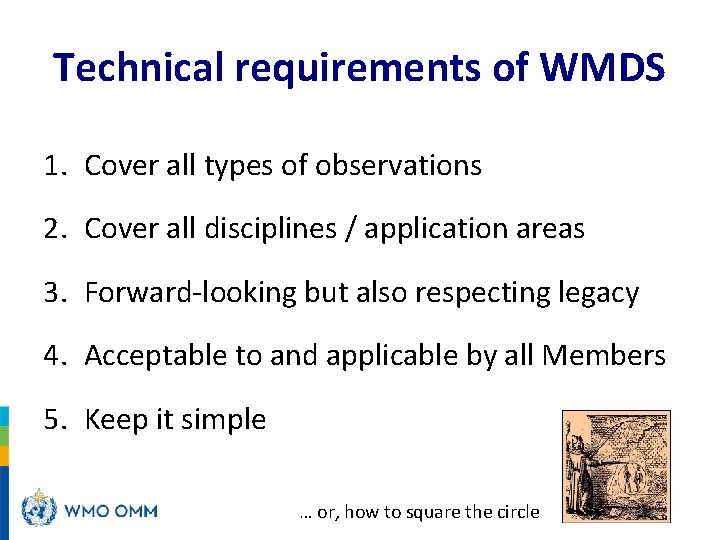
Technical requirements of WMDS 1. Cover all types of observations 2. Cover all disciplines / application areas 3. Forward-looking but also respecting legacy 4. Acceptable to and applicable by all Members 5. Keep it simple … or, how to square the circle
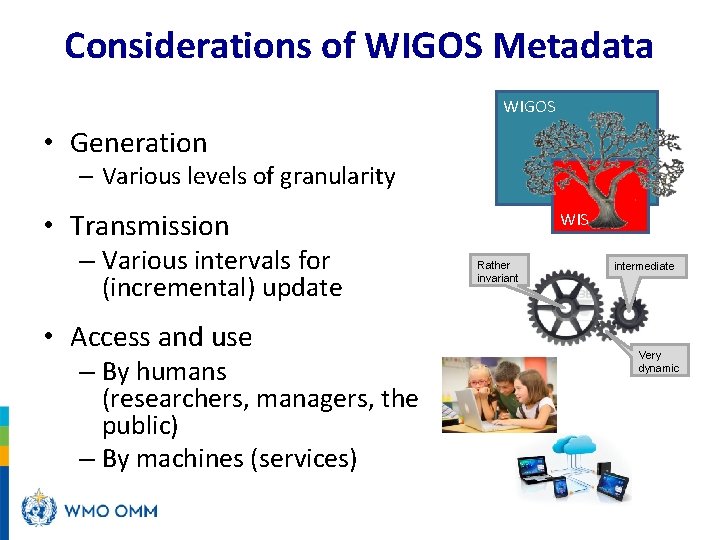
Considerations of WIGOS Metadata WIGOS • Generation – Various levels of granularity • Transmission – Various intervals for (incremental) update • Access and use – By humans (researchers, managers, the public) – By machines (services) WIS Rather invariant intermediate Very dynamic
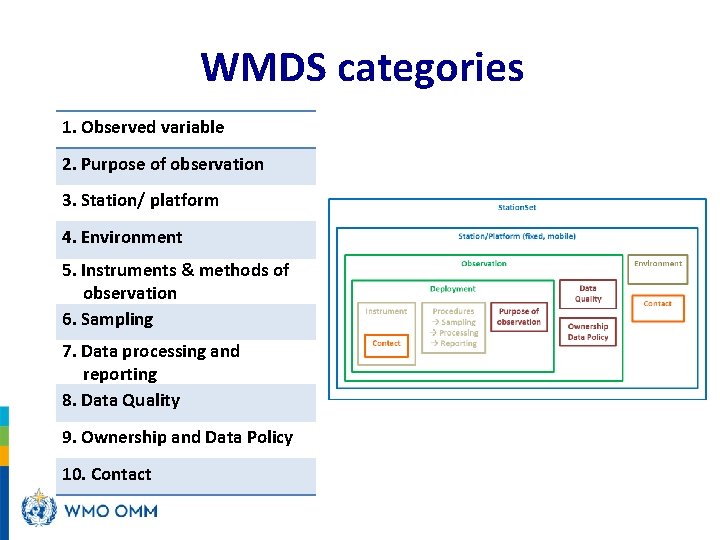
WMDS categories 1. Observed variable 2. Purpose of observation 3. Station/ platform 4. Environment 5. Instruments & methods of observation 6. Sampling 7. Data processing and reporting 8. Data Quality 9. Ownership and Data Policy 10. Contact
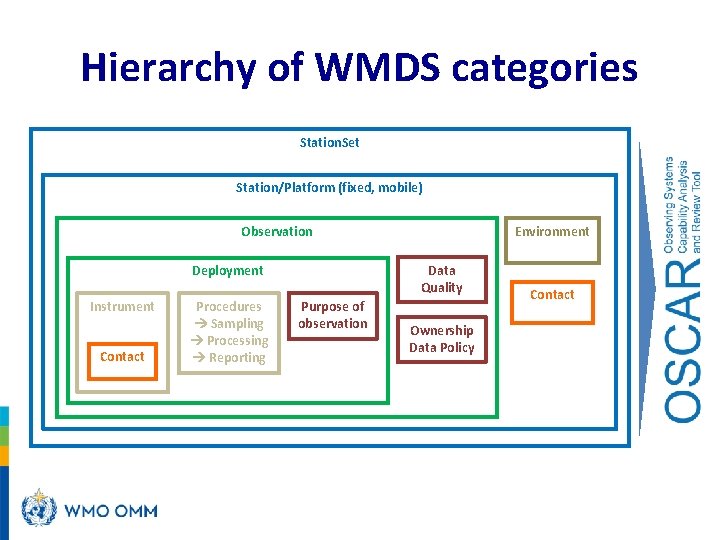
Hierarchy of WMDS categories Station. Set Station/Platform (fixed, mobile) Environment Observation Data Quality Deployment Instrument Contact Procedures Sampling Processing Reporting Purpose of observation Ownership Data Policy Contact
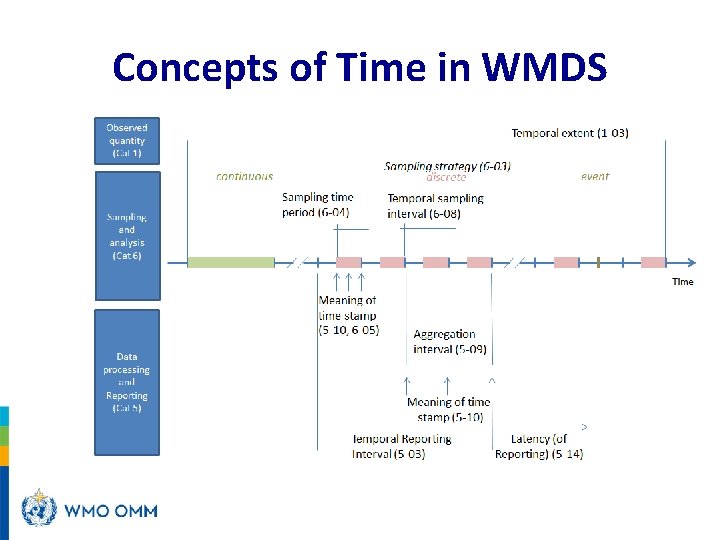
Concepts of Time in WMDS
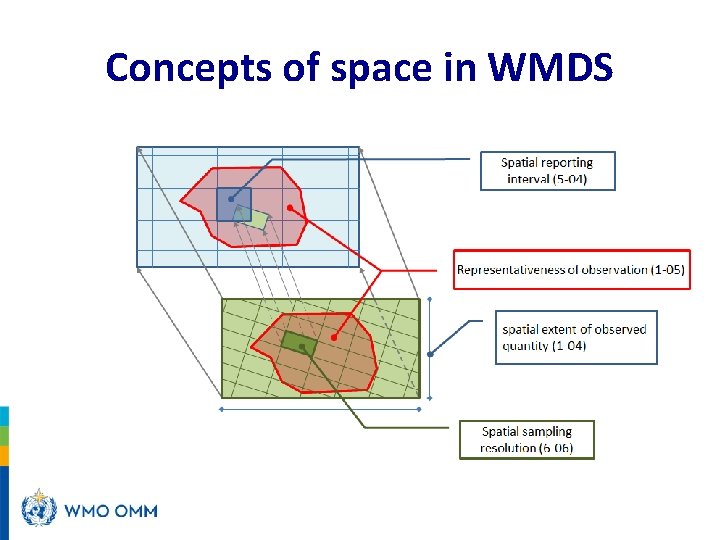
Concepts of space in WMDS
Conclusions • Exchanging WIGOS metadata of internationally exchanged data is important and mandatory (WMO Tech Reg) • The WMDS is the framework for documentation of metadata • The WMDS has been implemented in OSCAR/Surface for YOU! Use it!
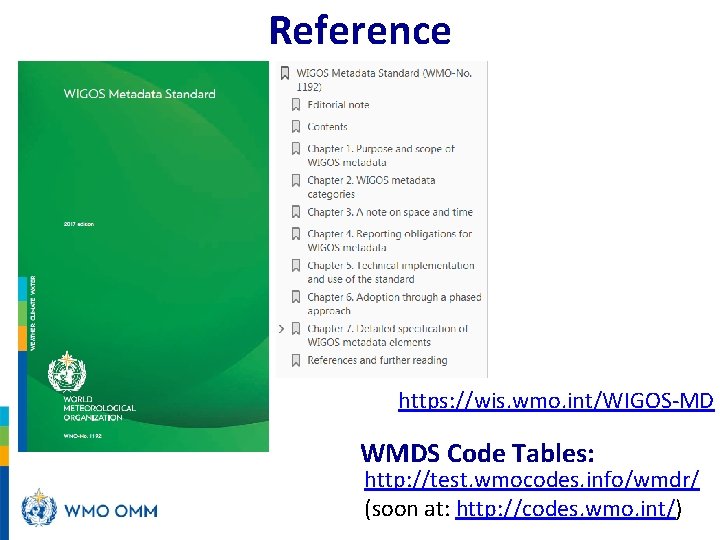
Reference https: //wis. wmo. int/WIGOS-MD WMDS Code Tables: http: //test. wmocodes. info/wmdr/ (soon at: http: //codes. wmo. int/)
Summary • Understand the importance of observational metadata • Understand the concepts of the WIS vs WIGOS metadata • Know where and how to find information l for a i c u r c re , s a n a o t i a t a d v a ser Met b o f o e us e t a u q e te ad a m i l c r fo y l l a i c e p es ns. o i t a c i l p ap IS W S O G I W WMD S and its cod descri e table be the s: most impor tant a spects observ of ations harmo nized.
Thank you Merci ﺷﻜﺮﺍ ! i on i t za o Yo y & u ur an g r o • Financial support. Swiss Federal Office of Foreign Affairs, Meteo. Swiss, WMO • Project Team at Meteo. Swiss. (current) J Klausen, L Cappelletti, B Calpini, M Musa, M Brändli, L Koppa, C Walder, E Grüter, S Sandmeier, M Schäfer, Attila Loos • Project Team at WMO (current). F Belda, LP Riishojgaard, T Pröscholdt, L Nunes • Project Team at European Dynamics (current). T Galousis, M Ulmann, L Christou, N Pappa, S Sklavos, … • • • ICG-WIGOS. S Barrell, B Calpini, … TT-WMD. (current) K Monnik, J Klausen, J Swaykos, T Boston, E Büyükbas, T Oakley, D Lockett, L Nunes, E Fucile IPET-MDRD. (past) D Lowe, J Tandy, … • JCOMMOPS, GAW WDCs, ET-WDC, …
- Slides: 24