
WI Healthcare Emergency Preparedness Program Coalitions LE Tourniquet
- Slides: 39
WI Healthcare Emergency Preparedness Program Coalitions LE Tourniquet Initiative
Tourniquets for LEOs
Who is WHEPP? • Wisconsin Healthcare Emergency Preparedness Program Coalitions – Members from EMS, Trauma, Hospital Preparedness, Emergency Management, and Public Health Preparedness – In coordination with WI DOJ, Law Enforcement Standards Board, and State Trauma System • Goal: provide a tourniquet for every Wisconsin law enforcement patrol officer – Provide free tourniquet, training materials, and supportive resources • 10, 000 tourniquets purchased & distributed!
What This Class Covers • Part of “Tactical Emergency Casualty Care” – This is not the 8 -hour TECC for LEO class – This is when & how to apply a tourniquet • When to deliver medical care – The tactical situation determines what care you can provide – “Good medicine” can be bad tactics – Bad tactics = more casualties
What This Class Covers • How to deliver medical care – Management of severe extremity bleeding with a tourniquet • Tourniquets address part of “circulation” – Do not address critical bleeds other than extremity – Do not address airway or breathing issues
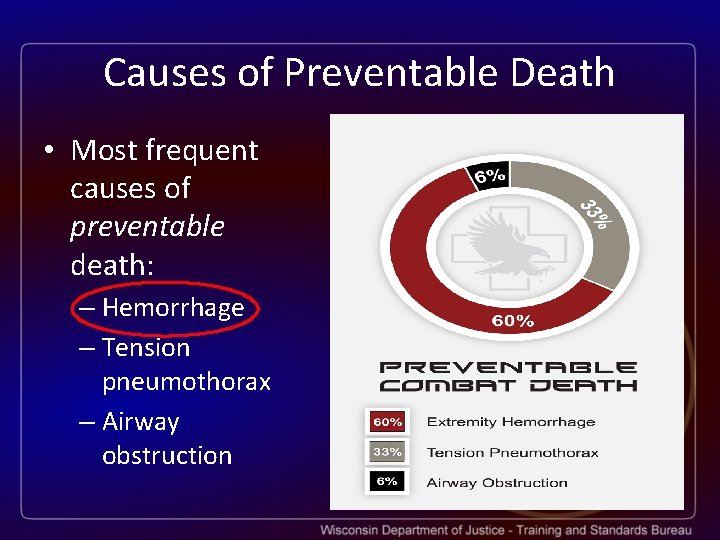
Causes of Preventable Death • Most frequent causes of preventable death: – Hemorrhage – Tension pneumothorax – Airway obstruction
Tourniquet Importance • Ambulance Response Time – Commonly averages 5 minutes or more • How quickly can you bleed to death from a femoral bleed? – Three to five minutes! • EMS may be unable to even access scene
Treatment of Critical Trauma • As soon as possible, evacuate patient to advanced medical care • Re-evaluate / re-assess patient every few minutes, and right after every move – Tourniquet may have slipped or loosened – Patient condition may have changed
Tourniquet Indications • Primary method of stopping a severe extremity bleed • Indications: – Amputation – Spurting blood – Large pool of blood • Could be caused by – GSW, stabbing, and other penetrations – Lacerations, amputations, or mangled extremities
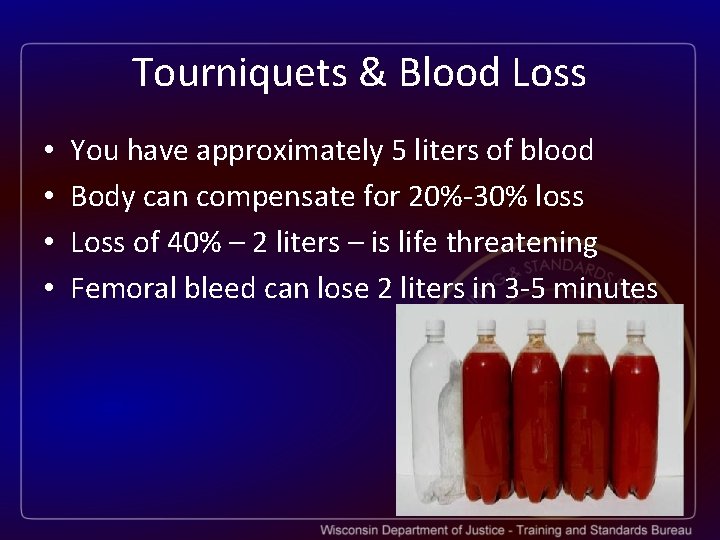
Tourniquets & Blood Loss • • You have approximately 5 liters of blood Body can compensate for 20%-30% loss Loss of 40% – 2 liters – is life threatening Femoral bleed can lose 2 liters in 3 -5 minutes
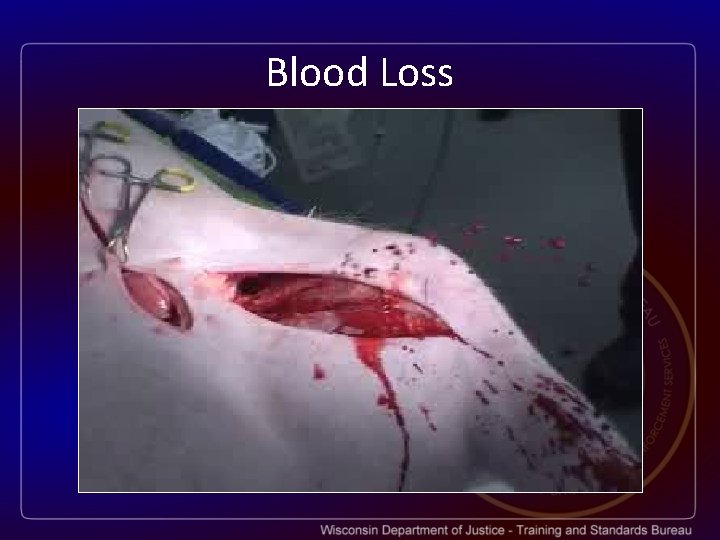
Blood Loss
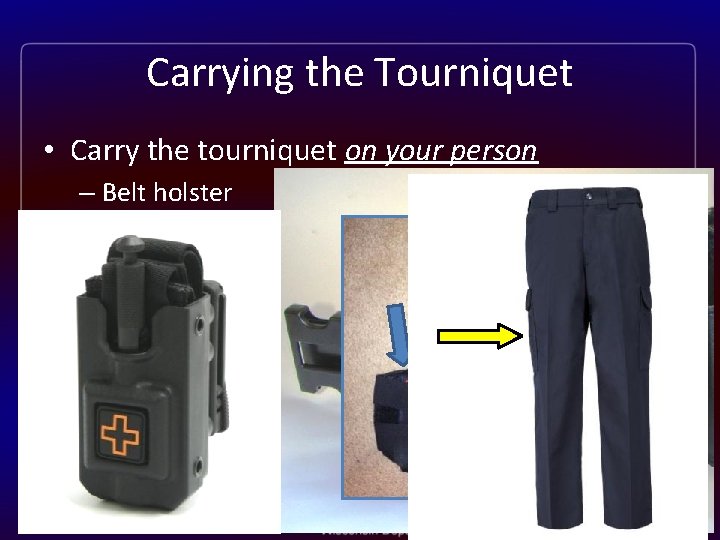
Carrying the Tourniquet • Carry the tourniquet on your person – Belt holster – Vest pocket – Cargo pants pocket • Location you can access with either hand
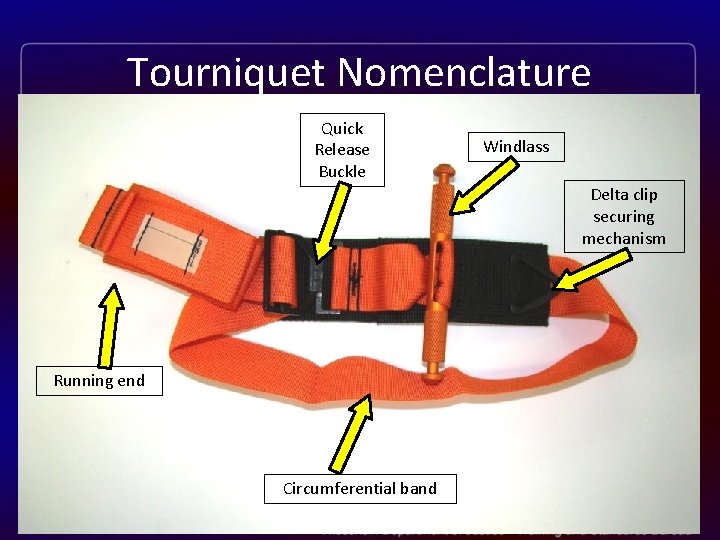
Tourniquet Nomenclature Quick Release Buckle Windlass Delta clip securing mechanism Running end Circumferential band
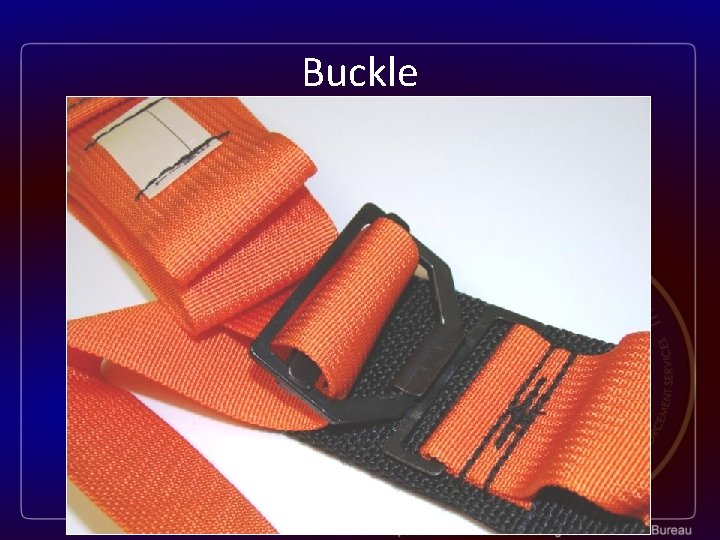
Buckle
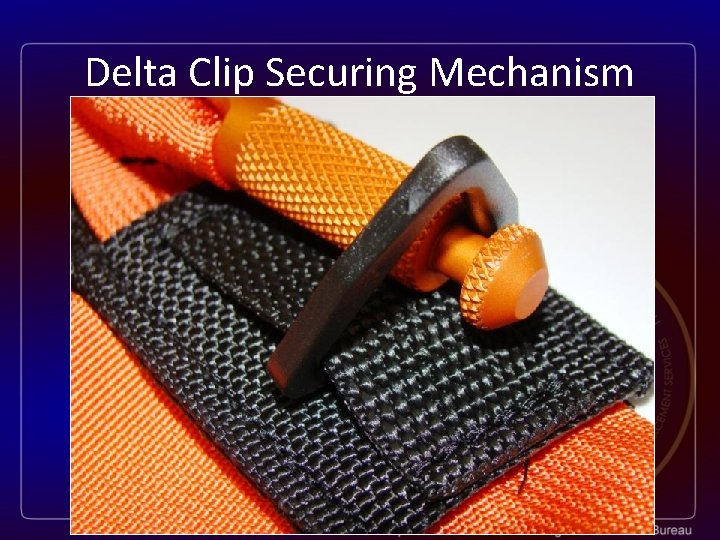
Delta Clip Securing Mechanism
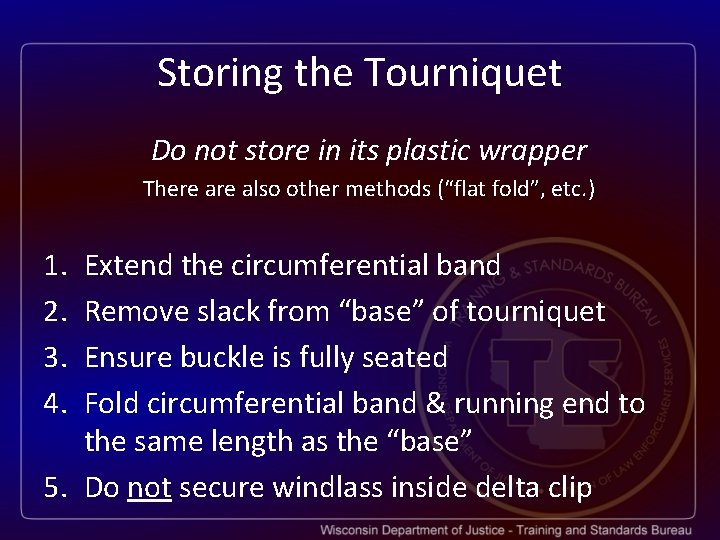
Storing the Tourniquet Do not store in its plastic wrapper There also other methods (“flat fold”, etc. ) 1. 2. 3. 4. Extend the circumferential band Remove slack from “base” of tourniquet Ensure buckle is fully seated Fold circumferential band & running end to the same length as the “base” 5. Do not secure windlass inside delta clip
Tactics Determine Medicine 1. Stop the threat! – You cannot provide medical care unless you can first protect the patient and yourself 2. Seek cover! – If possible, direct the casualty to move to a safe location and/or treat himself/herself – Do not provide care “on the X” 3. Perform life-saving TECC interventions – You may be unable to render any medical care
Tourniquet Application Overview • Remove any obstacles to constriction (wallet, cell phone, thigh holster, etc. ) • Apply over clothing • Apply as high on limb as possible – “high or die” • Apply as tightly as possible before tightening windlass; then use windlass to tighten until bleeding stops • Do not loosen tourniquet after initial application
Demonstration Video • https: //vimeo. com/162365658/dc 844 ba 948
Apply Over Clothing • Remove anything that prevents constriction – Thigh holster, etc. • Leg: – Release the quick-release buckle – Slide thin end under leg & slide to groin – Refasten buckle • Arm: – Leave buckle fastened – Slide the tourniquet up arm
Position as High as Possible • “High or Die” • Position as high on extremity as possible, at 90 degrees to limb – Not at an angle or over shoulder – At least 2” to 3” above wound
Remove the Slack MAKE TOURNIQUET AS TIGHT AS POSSIBLE BEFORE TURNING WINDLASS
Tighten the Tourniquet • Turn the windlass until bleeding stops – Tourniquet will be painful • • Secure the windlass to prevent loosening Mark the time Monitor bleeding If bleeding continues – Tighten the windlass further – Apply an additional tourniquet below the first – Do not loosen or remove the first tourniquet
Train Realistically • Apply so you pull the running end towards the center of your body (for better leverage) • Arm – “Splint” your wounded arm against your body don’t hold it out like an airplane • Leg – Release the buckle, slide the strap under your thigh, and securely re-fasten buckle – Don’t bend your leg to slide on the tourniquet—you may have a femur fracture
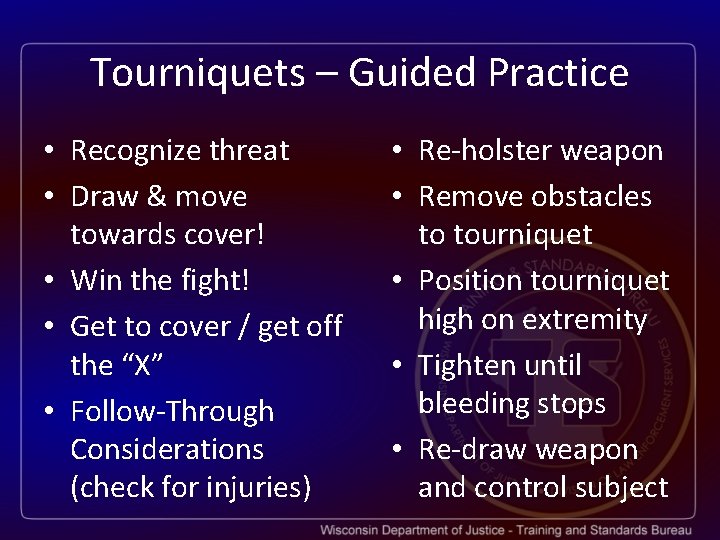
Tourniquets – Guided Practice • Recognize threat • Draw & move towards cover! • Win the fight! • Get to cover / get off the “X” • Follow-Through Considerations (check for injuries) • Re-holster weapon • Remove obstacles to tourniquet • Position tourniquet high on extremity • Tighten until bleeding stops • Re-draw weapon and control subject
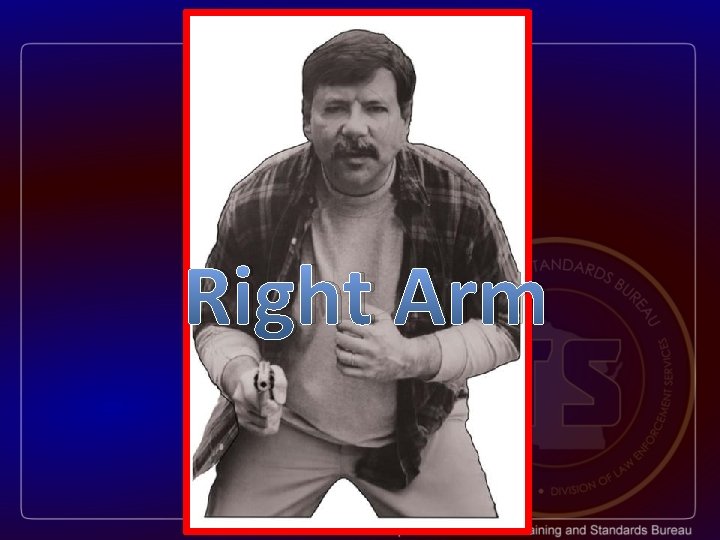
Right Arm
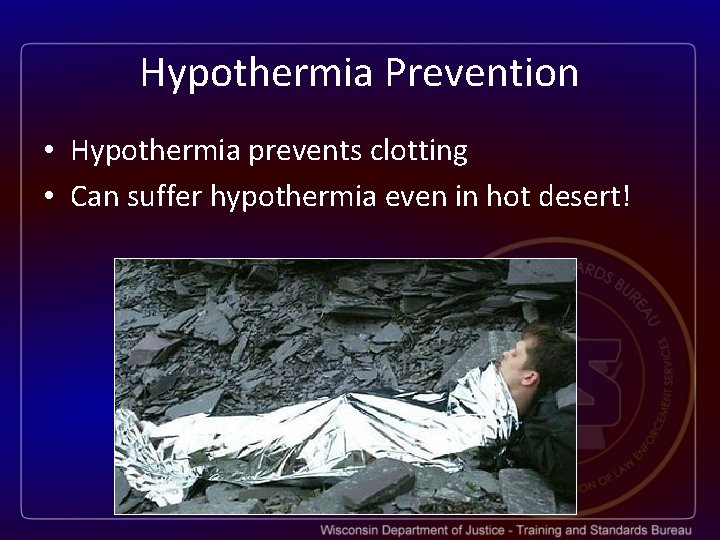
Hypothermia Prevention • Hypothermia prevents clotting • Can suffer hypothermia even in hot desert!
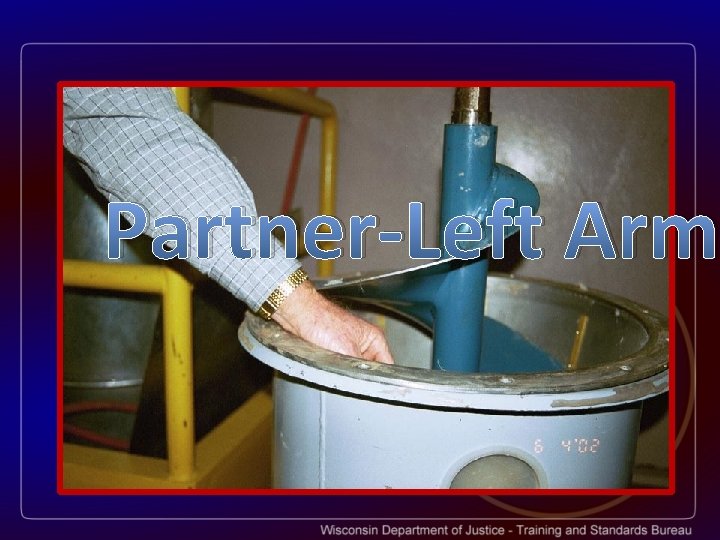
Partner-Left Arm
Other TECC Skills • Remember, tourniquets only treat extremity bleeds • Get more training in other TECC skills: – Patient assessment – Wound packing – Pressure dressing – Nasopharyngeal airway – Chest seals – Hypothermia prevention
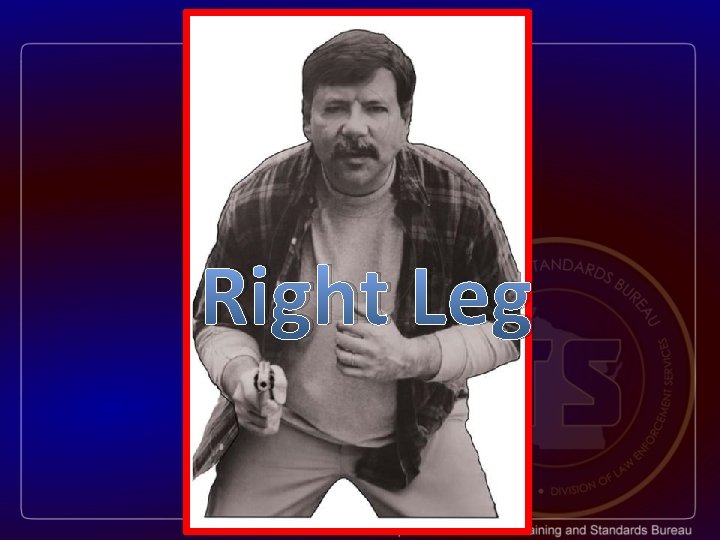
Right Leg
Partner-Left Leg
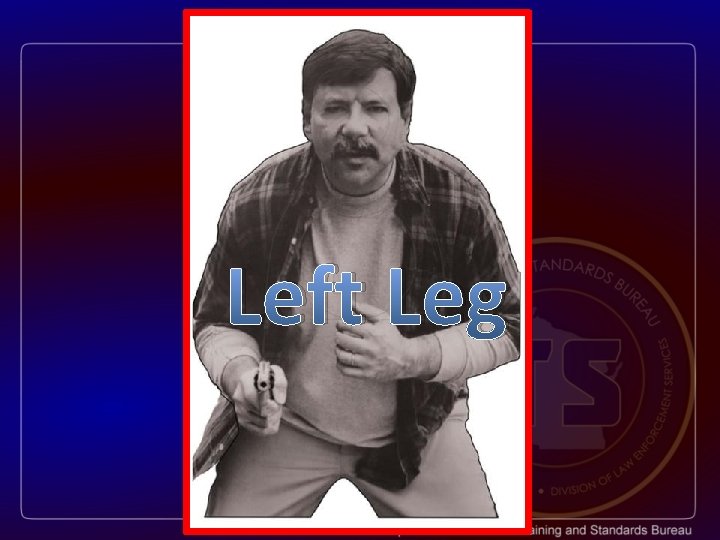
Left Leg
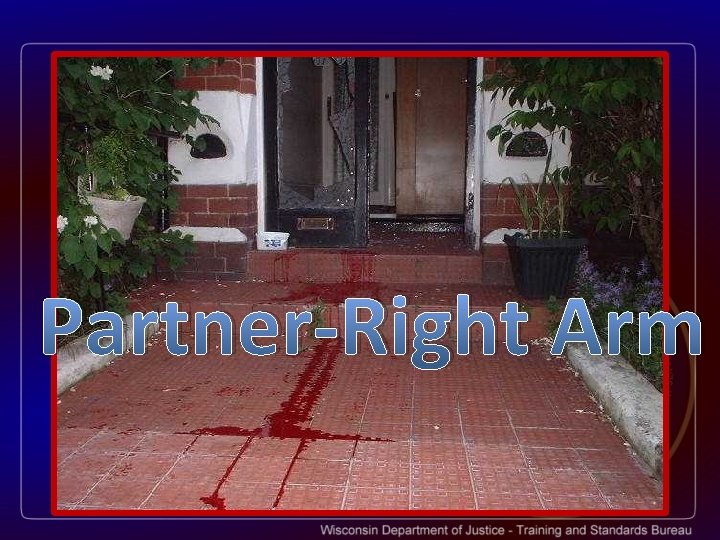
Partner-Right Arm
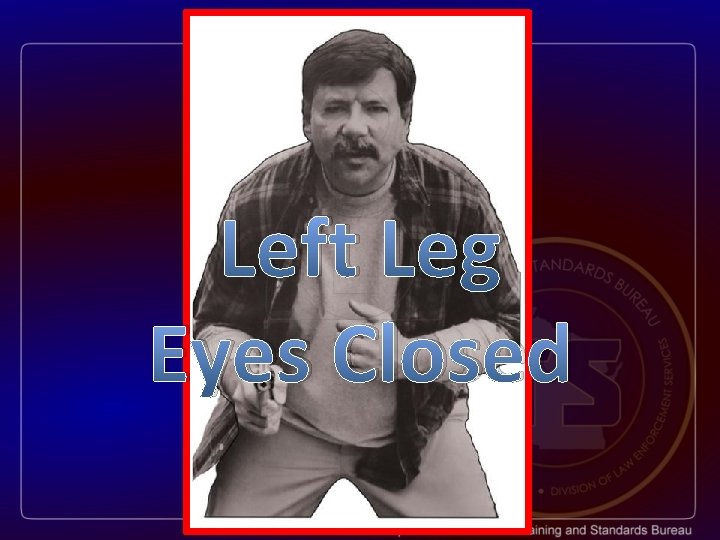
Left Leg Eyes Closed
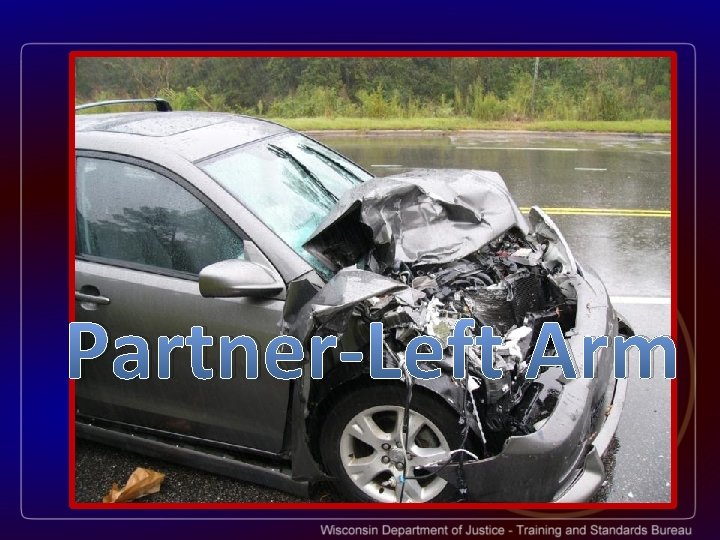
Partner-Left Arm
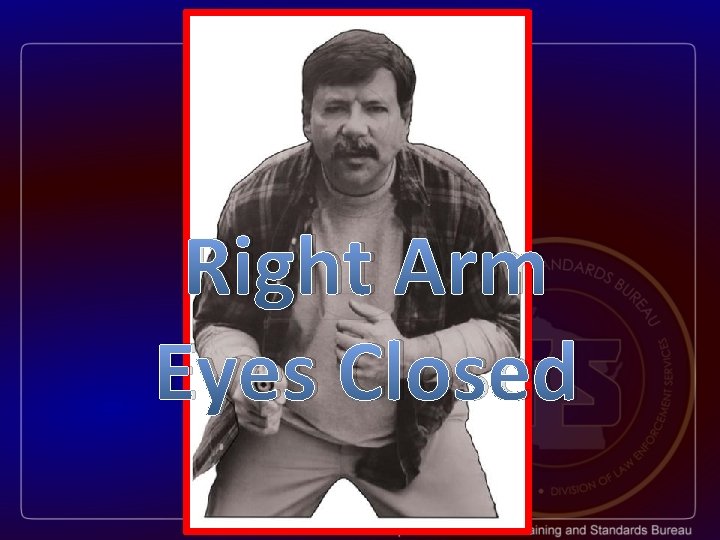
Right Arm Eyes Closed
Questions? • Please continue your TECC education – Continue your critical medical training • Please thank the Wisconsin Healthcare Emergency Preparedness Program Coalitions – Participate in WHEPP initiatives – Save the lives of officers and community members
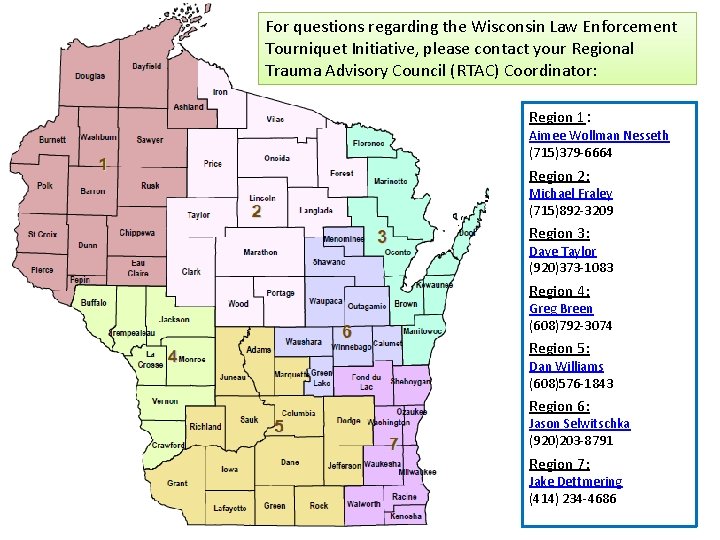
For questions regarding the Wisconsin Law Enforcement Tourniquet Initiative, please contact your Regional Trauma Advisory Council (RTAC) Coordinator: Region 1: Aimee Wollman Nesseth (715)379 -6664 Region 2: Michael Fraley (715)892 -3209 Region 3: Dave Taylor (920)373 -1083 Region 4: Greg Breen (608)792 -3074 Region 5: Dan Williams (608)576 -1843 Region 6: Jason Selwitschka (920)203 -8791 Region 7: Jake Dettmering (414) 234 -4686
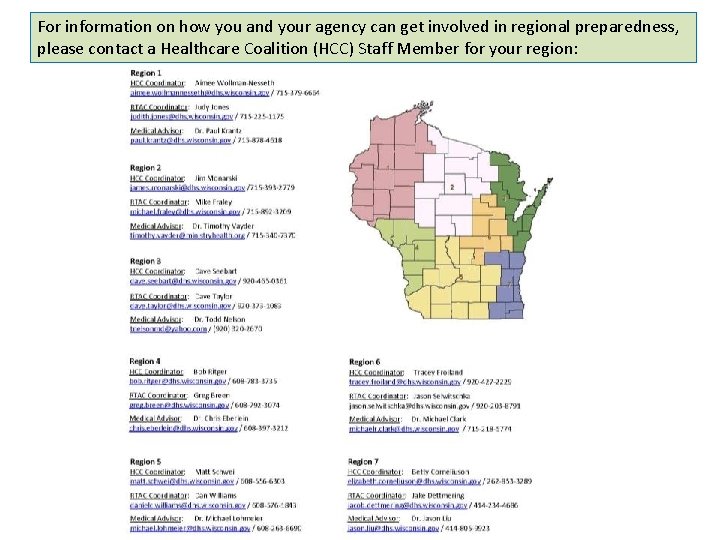
For information on how you and your agency can get involved in regional preparedness, please contact a Healthcare Coalition (HCC) Staff Member for your region: