
Why We Use What We Do Periodic Table
Why We Use What We Do Periodic Table, Atomic Number & Isotopes
The Periodic Table n Mid 1800’s – 60 Different Elements were identified § 5 were gases at room temperature (all non-metals) – H, O, N, F, Cl § 2 were liquids – Hg (metal) – Br (non-metal) § The rest were solids

The Periodic Table n Construction of The Periodic Table – Elements with similar properties were placed near one another. n Dimitri Mendeleev – In 1869 he published a periodic table
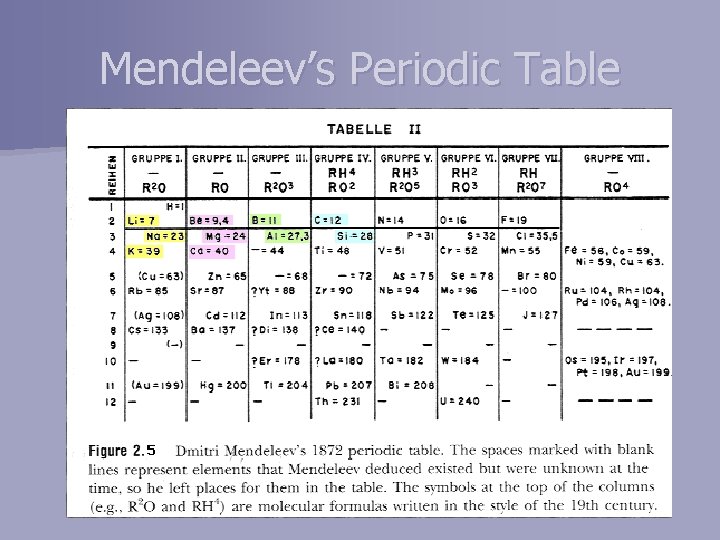
Mendeleev’s Periodic Table
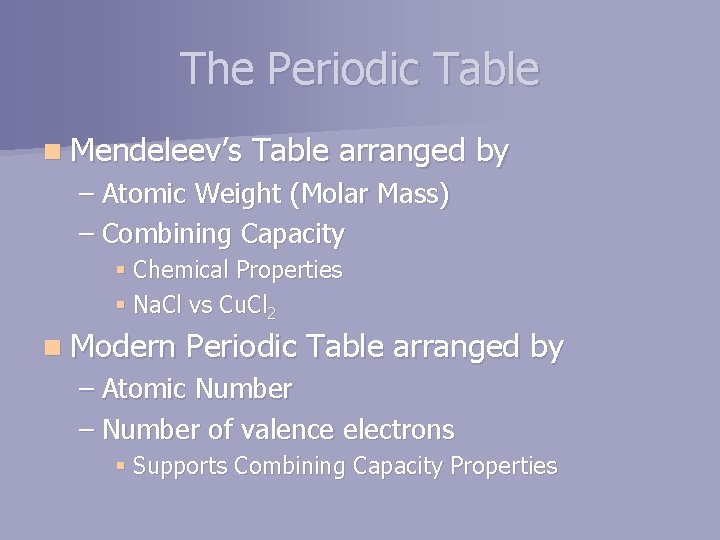
The Periodic Table n Mendeleev’s Table arranged by – Atomic Weight (Molar Mass) – Combining Capacity § Chemical Properties § Na. Cl vs Cu. Cl 2 n Modern Periodic Table arranged by – Atomic Number – Number of valence electrons § Supports Combining Capacity Properties
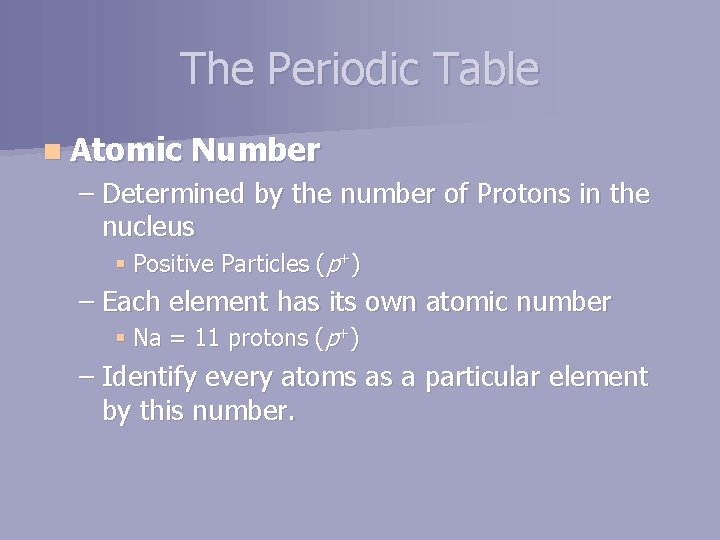
The Periodic Table n Atomic Number – Determined by the number of Protons in the nucleus § Positive Particles (p+) – Each element has its own atomic number § Na = 11 protons (p+) – Identify every atoms as a particular element by this number.

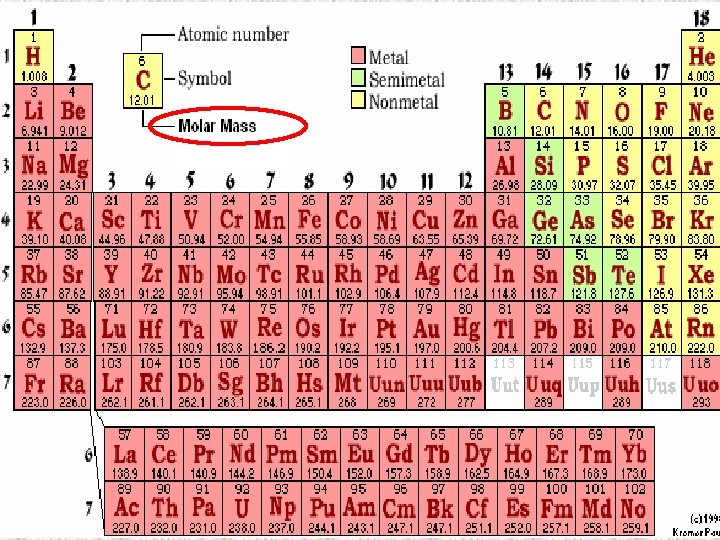
Molar Mass
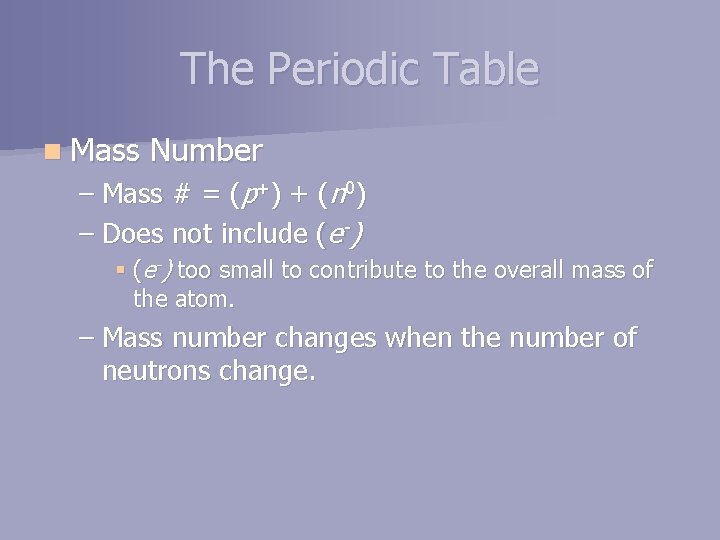
The Periodic Table n Mass Number – Mass # = (p+) + (n 0) – Does not include (e-) § (e-) too small to contribute to the overall mass of the atom. – Mass number changes when the number of neutrons change.
The Periodic Table n Isotopes: – Atoms with the same number of (p+) but a different number of (n 0). – Atoms of the same element with different mass #’s § 14 C = Radioactive § 12 C = Non-radioactive § For Example Hydrogen (H with one (p+) but no (n 0) ) and Deuterium (H with one (p+) and one (n 0) ). – ttp: //web. visionlearning. com/custom/chemistry /animations/CHE 1. 3 -an-isotopes. shtml
The Periodic Table n Why use Atomic Number rather than Molar Mass (atomic weight)? – Organization by Molar Mass (atomic weight) works well for small atomic weights but not large ones. – Due to many varieties of isotopes
The Periodic Table n Vertical arrangement – Elements with similar properties were placed in vertical Groups (columns) or Families.
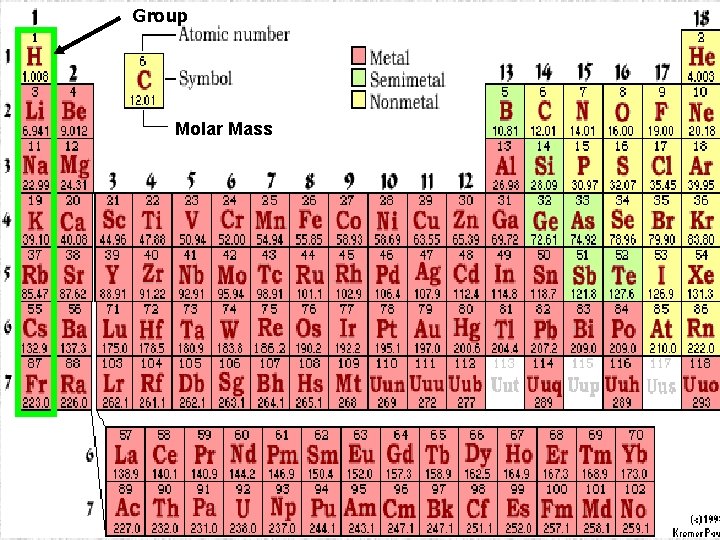
Group Molar Mass
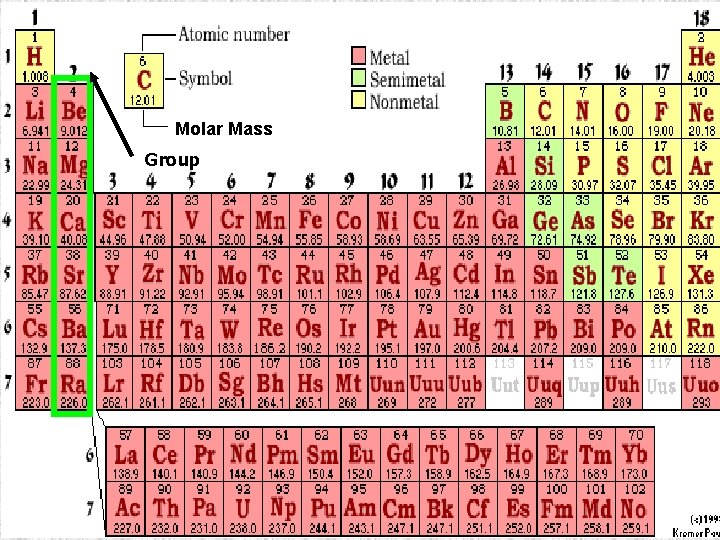
Molar Mass Group
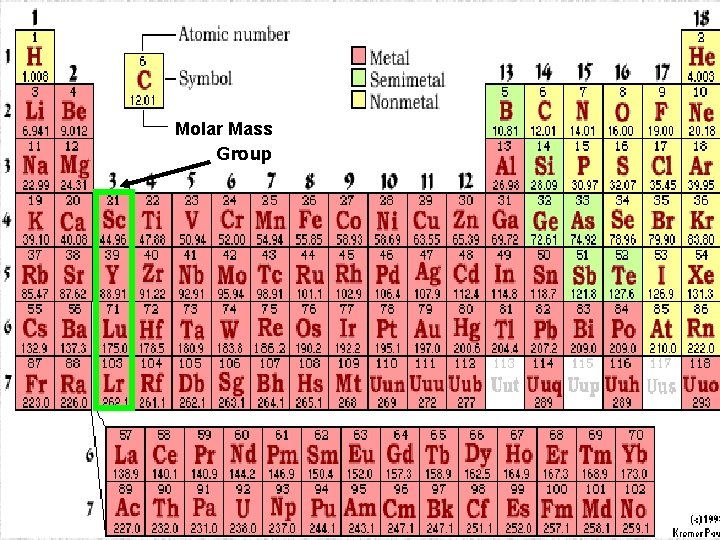
Molar Mass Group
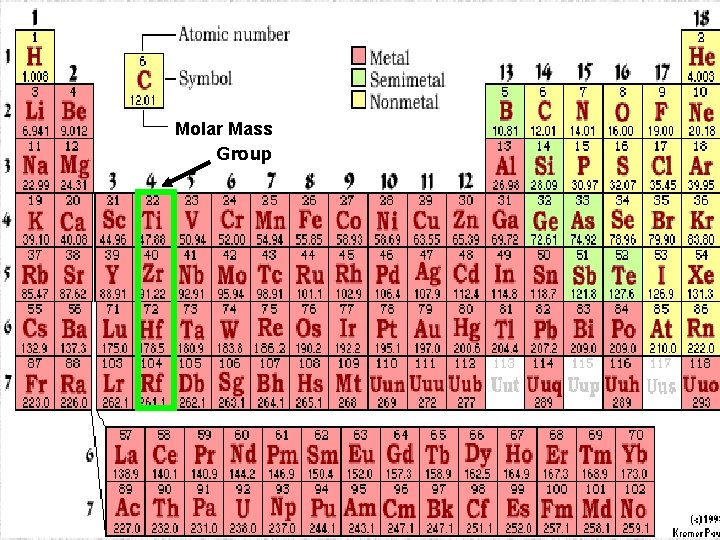
Molar Mass Group
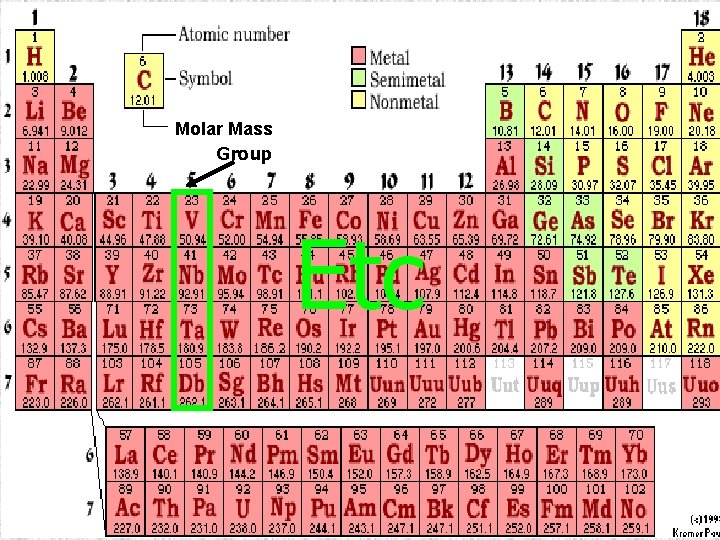
Molar Mass Group Etc.
The Periodic Table n Horizontal arrangement – Placed by increasing atomic weights in rows called Periods.
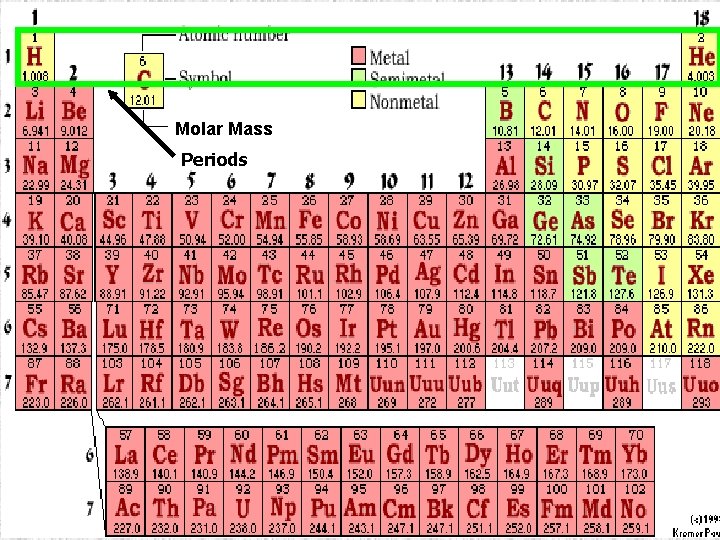
Molar Mass Periods
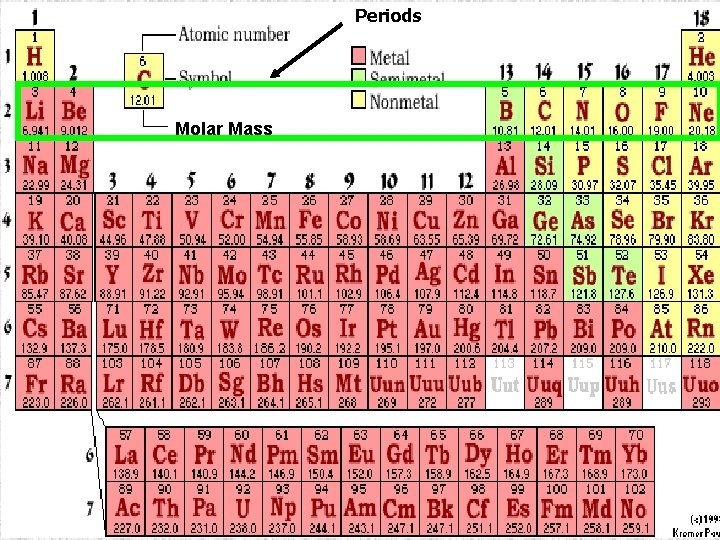
Periods Molar Mass
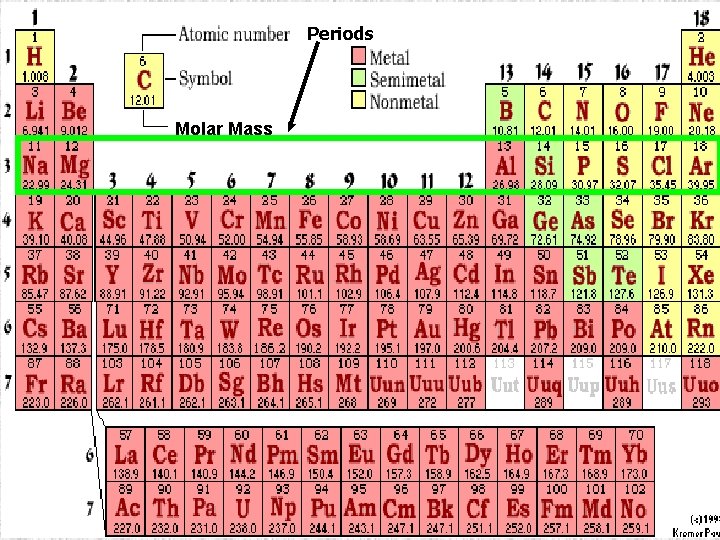
Periods Molar Mass
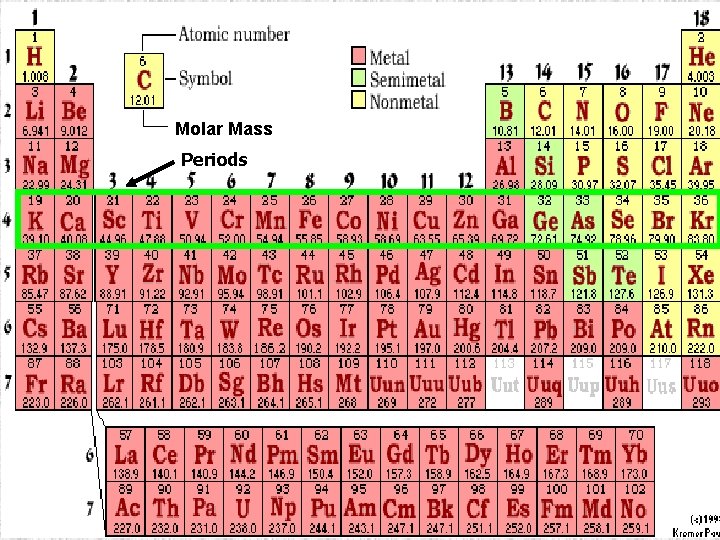
Molar Mass Periods
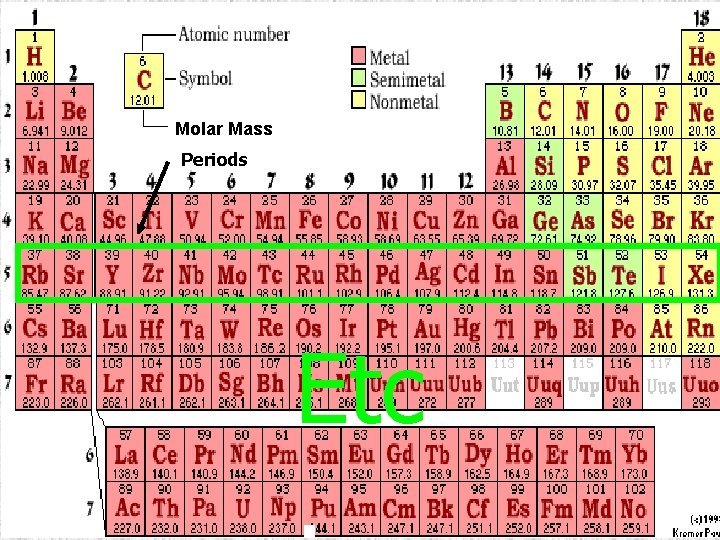
Molar Mass Periods Etc.
Families/Groups n Alkali Metals – Group 1 – Lithium, Sodium, Potassium, Rubidium, Cesium, Francium – 1 electron in valence (outer) shell – Very, VERY reactive – not found free in nature Alkali Metal Clip
Family/Group n Alkaline Earth Metals – Group 2 – Beryllium, Magnesium, Calcium, Strontium, Barium, Radium – 2 electron in valence shell – Very reactive – not usually found pure in nature
Families/Groups n Nobel Gases – Group 18 – Helium, Neon, Argon, Krypton, Xenon, Radon – Full valence electron shell – Very stable (not reactive) § Under normal conditions do not form compounds with other elements § Xe. F 4 (xenon tetrafluoride) is the first reported stable compound of a noble gas - 1962
Families/Groups n Halogens – Group 17 – Fluorine, Chlorine, Bromine, Iodine, Astatine – 7 electrons in valence shell – Halogen means “salt former” § Compounds they form are called salts
Families/Groups n Transition Metals – Groups 3 to 12, periods 4 to 7 – 1, 2, or 3 electrons in valence electron shell – Hard and have a high melting point § Often used to form alloys (mixtures of metals)
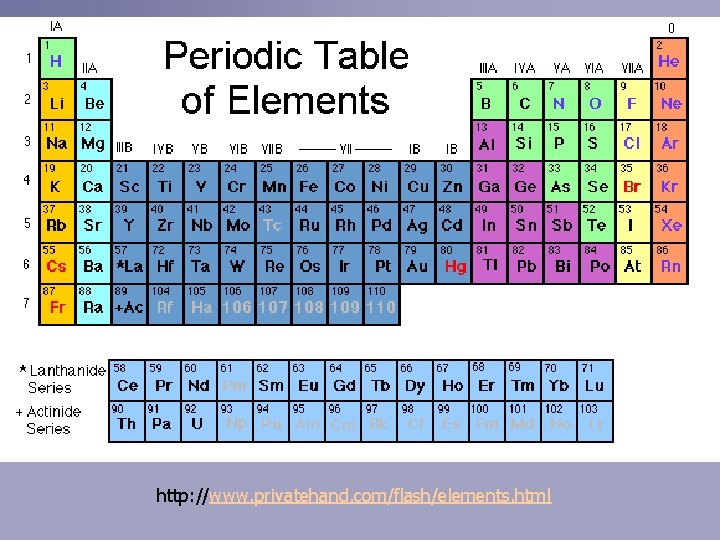
http: //www. privatehand. com/flash/elements. html
- Slides: 30