
Why the Census Matters Census figures define political
- Slides: 17
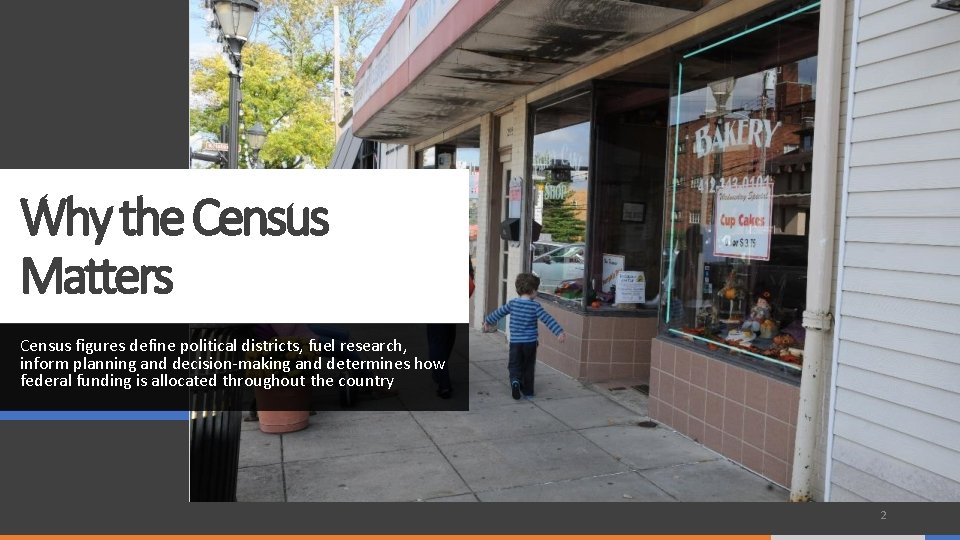
Why the Census Matters Census figures define political districts, fuel research, inform planning and decision-making and determines how federal funding is allocated throughout the country 2
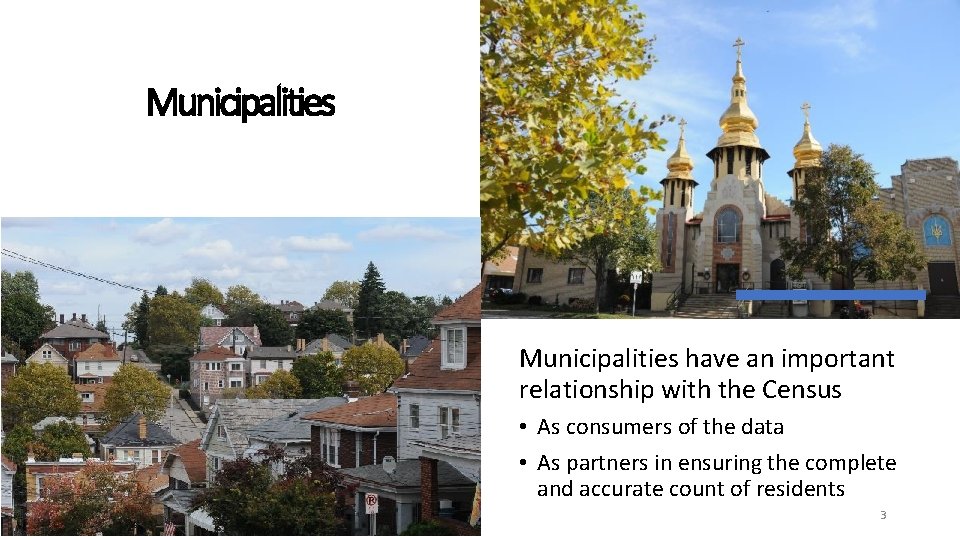
Municipalities have an important relationship with the Census • As consumers of the data • As partners in ensuring the complete and accurate count of residents 3
The Challenges 4
The Digital Divide More Options to Complete the Census – Online Portal The 2020 Census will allow households to respond through an online portal, as well as by phone. There will be a greater reliance on technology to prepare for and execute the 2020 count. 5
Citizenship Question Is this person a citizen of the United States? This potential question made its way to the U. S. Supreme Court. Multiple lawsuits have been filed because of the chilling effect, discouraging households with noncitizens from participating in the Census. 6
Misinformation Heightened Fear, Ongoing Misinformation, Hacking Attempts There already campaigns underway to suppress response rates, increase undercounts of certain populations and disrupt the process of the Census. 7
What You Should Know 8
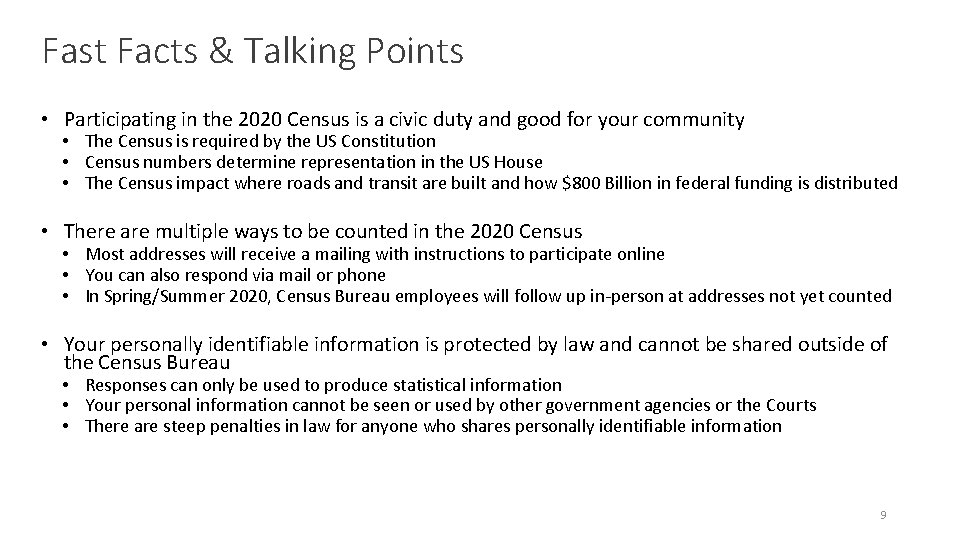
Fast Facts & Talking Points • Participating in the 2020 Census is a civic duty and good for your community • The Census is required by the US Constitution • Census numbers determine representation in the US House • The Census impact where roads and transit are built and how $800 Billion in federal funding is distributed • There are multiple ways to be counted in the 2020 Census • Most addresses will receive a mailing with instructions to participate online • You can also respond via mail or phone • In Spring/Summer 2020, Census Bureau employees will follow up in-person at addresses not yet counted • Your personally identifiable information is protected by law and cannot be shared outside of the Census Bureau • Responses can only be used to produce statistical information • Your personal information cannot be seen or used by other government agencies or the Courts • There are steep penalties in law for anyone who shares personally identifiable information 9
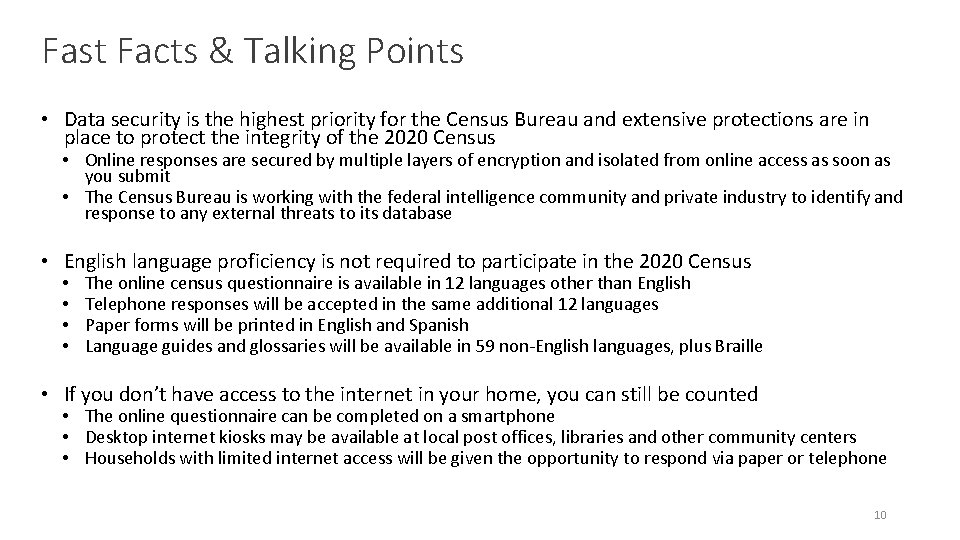
Fast Facts & Talking Points • Data security is the highest priority for the Census Bureau and extensive protections are in place to protect the integrity of the 2020 Census • Online responses are secured by multiple layers of encryption and isolated from online access as soon as you submit • The Census Bureau is working with the federal intelligence community and private industry to identify and response to any external threats to its database • English language proficiency is not required to participate in the 2020 Census • • The online census questionnaire is available in 12 languages other than English Telephone responses will be accepted in the same additional 12 languages Paper forms will be printed in English and Spanish Language guides and glossaries will be available in 59 non-English languages, plus Braille • If you don’t have access to the internet in your home, you can still be counted • The online questionnaire can be completed on a smartphone • Desktop internet kiosks may be available at local post offices, libraries and other community centers • Households with limited internet access will be given the opportunity to respond via paper or telephone 10
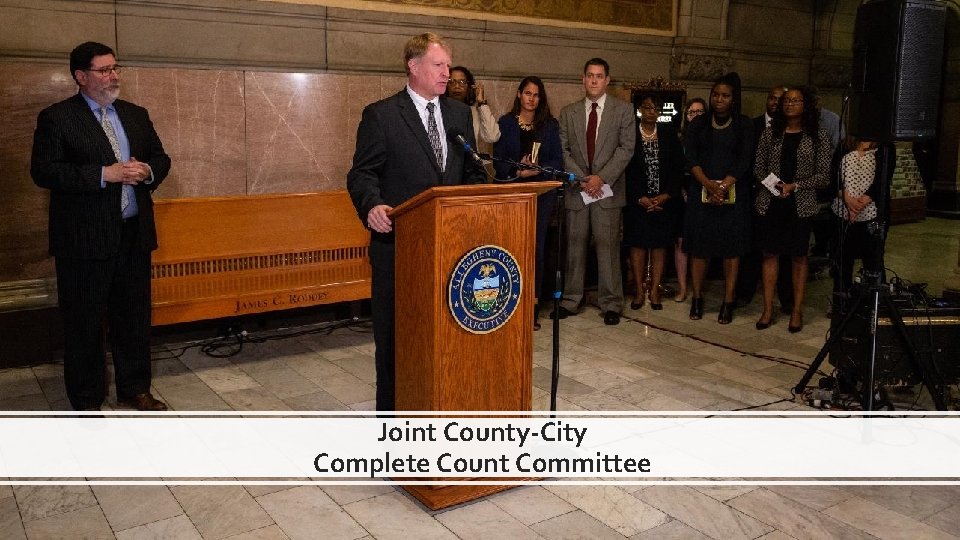
Joint County-City Complete Count Committee
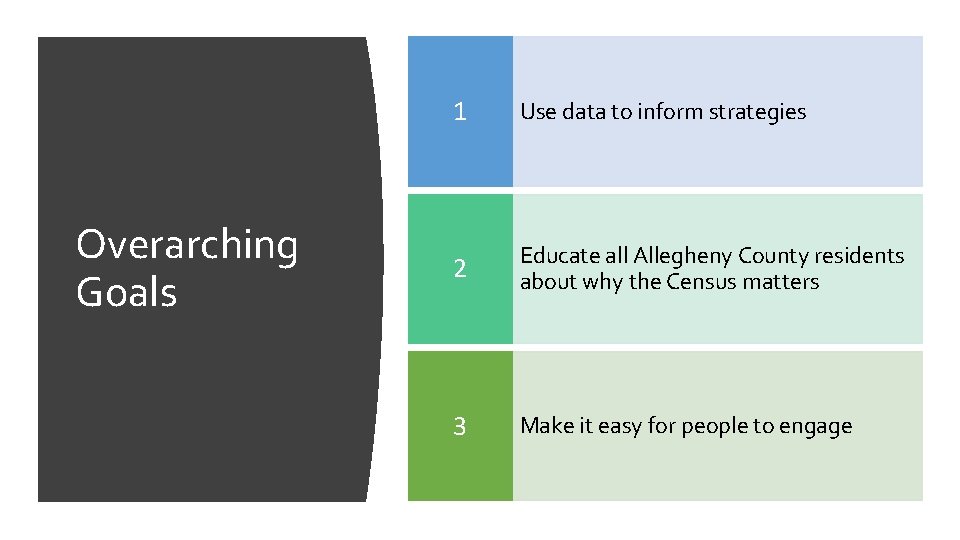
Overarching Goals 1 Use data to inform strategies 2 Educate all Allegheny County residents about why the Census matters 3 Make it easy for people to engage
Why is the Census Important to Libraries? • Impacts community at large – follow on effects for libraries • Funding – Allocation of billions of federal funds to states and localities • Grants to states under Library Services and Technology Act • Information – Census Data used by researchers, governments, businesses, organizations • Used to plan library services Libraries Lead the Count • Reducing the digital divide • First online decennial - additional demands on library staff and technology • Community Connectors • Trusted spaces and faces - libraries can educate and encourage community participation • Public Spaces • Community spaces/rooms for Census Bureau hiring and training, census events
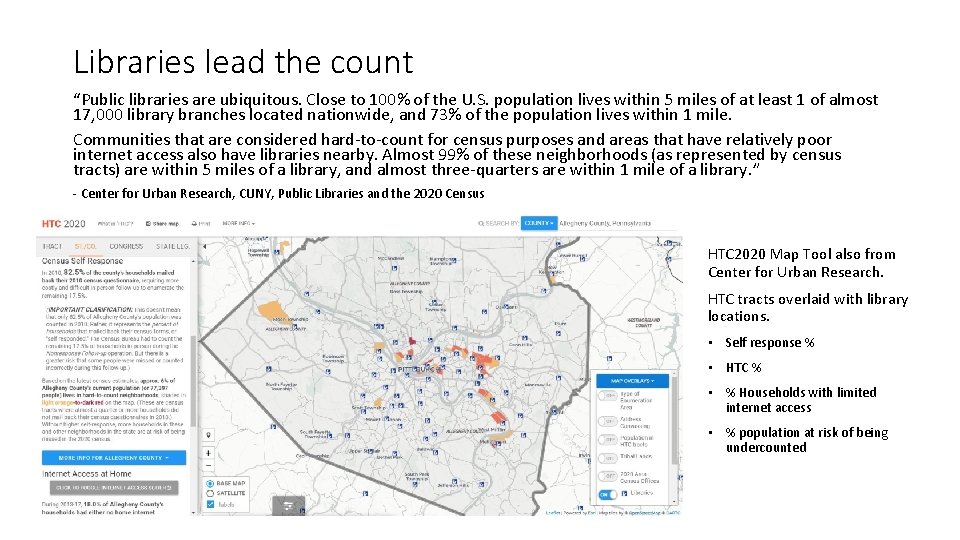
Libraries lead the count “Public libraries are ubiquitous. Close to 100% of the U. S. population lives within 5 miles of at least 1 of almost 17, 000 library branches located nationwide, and 73% of the population lives within 1 mile. Communities that are considered hard-to-count for census purposes and areas that have relatively poor internet access also have libraries nearby. Almost 99% of these neighborhoods (as represented by census tracts) are within 5 miles of a library, and almost three-quarters are within 1 mile of a library. ” - Center for Urban Research, CUNY, Public Libraries and the 2020 Census HTC 2020 Map Tool also from Center for Urban Research. HTC tracts overlaid with library locations. • Self response % • HTC % • % Households with limited internet access • % population at risk of being undercounted
Strategies for a coordinated Census effort • Ensure your library/system is connected to local CCC, or the like • Keystone Counts is statewide coalition • Multiple touchpoints – libraries can help generate momentum • Census Hubs or Kiosks • Census recruitment materials, general census information, marketing, dedicated technology for completion, technical assistance offered • • • Loan technology for census outreach and partner events Programming Signage Partner with local volunteers/organizations that serve ESL communities Staff training – internally coordinated or reach out to local CCC, Keystone Counts
IT Best Practices for Census Safety and Security • Mitigate barriers • Workaround library card needed for computer access • Increase session times (should be 1 hr and up) • Dedicated tablet or Chromebook • Large format interface • Secure, up-to-date browser • Set up in guest mode or restricted to official Census bureau address Digital Equity Laboratory - Preparing for the Digital Decennial Census: Building consent, equity, and safety into digital transition Stay in the Know • ALA Toolkit: Libraries’ Guide to the 2020 Census + ALA census emails • California Library Association – reading lists, programming, marketing ideas • Census Bureau emails – educator resources, data visualizations, programming ideas, updates
• Andréa Stanford – Assistant County Manager Andrea. Stanford@Allegheny. County. us Thank You & Contact Info • Feyisola Alabi – Special Initiatives Manager Feyisola. Alabi@Pittsburgh. PA. gov • Kelci Degnian - Communications and Connections Coordinator, Allegheny County Library Association degniank@einetwork. net