
Why Study OB Studying organizational behavior can clarify
Why Study OB? • Studying organizational behavior can clarify factors that affect how managers manage by: – Describing the complex human context of organizations – Defining the associated opportunities, problems, challenges, and issues – Isolating important aspects of the manager’s job – Offering specific perspectives on the human side of management
Why Study OB? (cont’d) • Studying OB helps managers understand: – The behaviors of others in the organization • Personal needs, motives, behaviors, feelings and career dynamics • Attitudinal processes, individual differences, group dynamics, inter group dynamics, organization culture, power, and political behavior – Interactions with people outside of the organization and other organizations – The environment, technology, and global issues 1
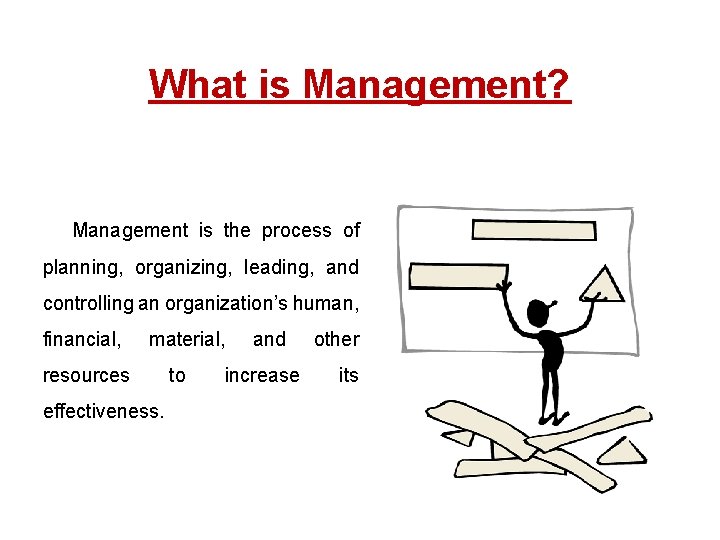
What is Management? Management is the process of planning, organizing, leading, and controlling an organization’s human, financial, material, resources effectiveness. to and increase other its
The Functions Of Management process of working with people and resources to accomplish organizational goals effective - achieve organizational goals efficient - achieve goals with minimum waste of resources 1 -4
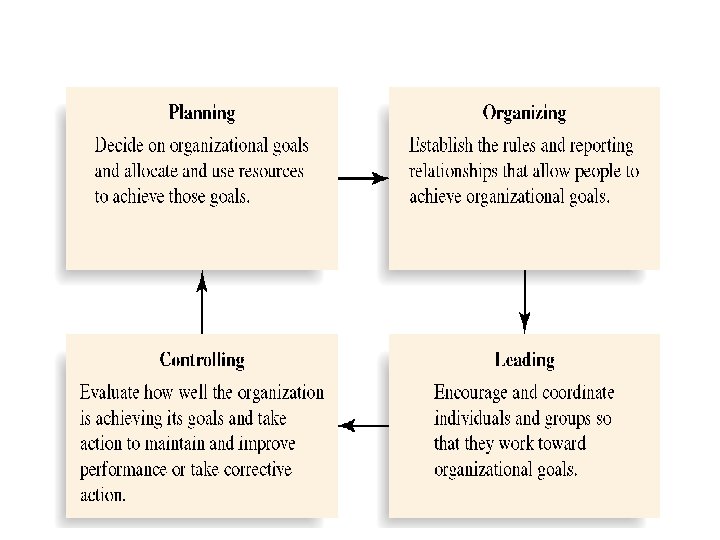
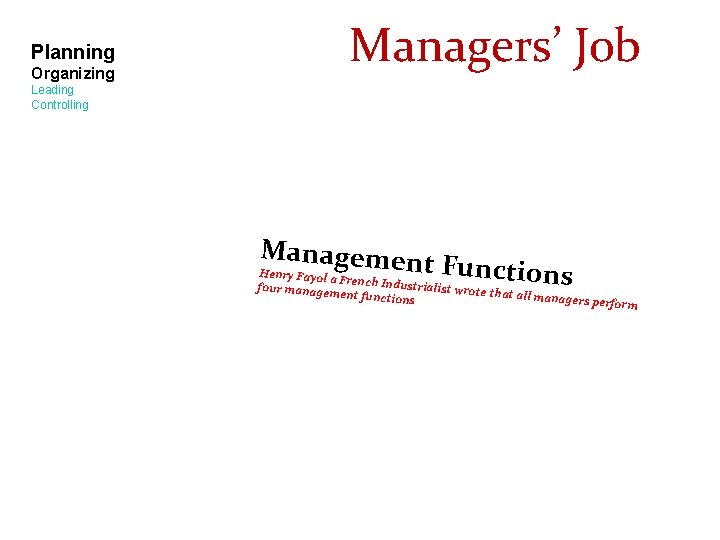
Planning Organizing Managers’ Job Leading Controlling Managemen t Functions Henry Fayol a French Ind ustrialist wro four manage te that all m ment functio anagers perf ns orm
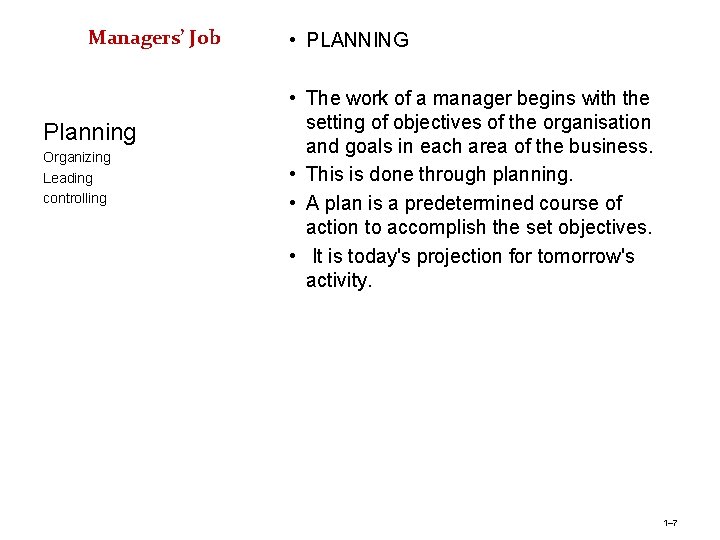
Managers’ Job Planning Organizing Leading controlling • PLANNING • The work of a manager begins with the setting of objectives of the organisation and goals in each area of the business. • This is done through planning. • A plan is a predetermined course of action to accomplish the set objectives. • It is today's projection for tomorrow's activity. 1– 7
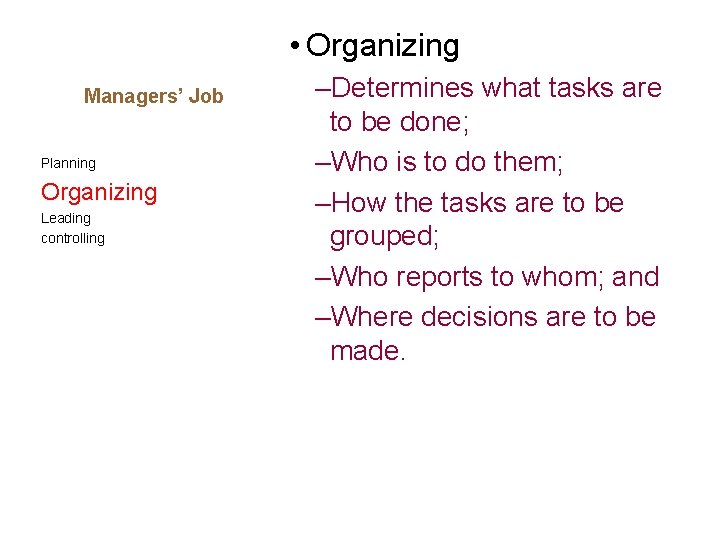
• Organizing Managers’ Job Planning Organizing Leading controlling –Determines what tasks are to be done; –Who is to do them; –How the tasks are to be grouped; –Who reports to whom; and –Where decisions are to be made.
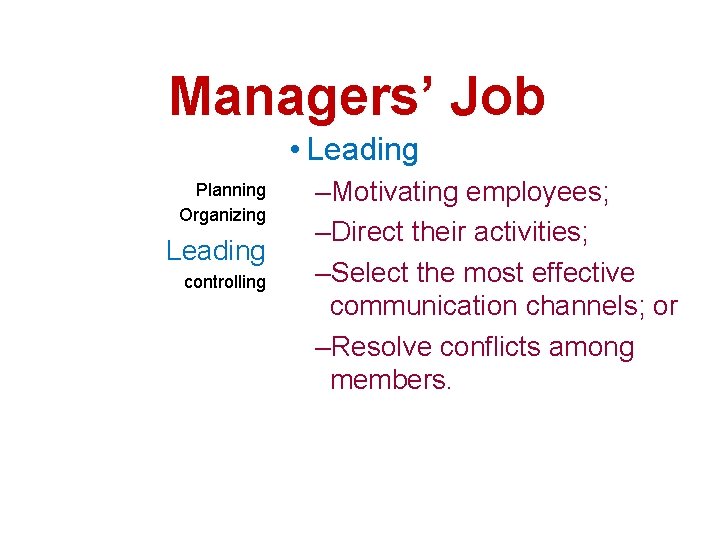
Managers’ Job • Leading Planning Organizing Leading controlling –Motivating employees; –Direct their activities; –Select the most effective communication channels; or –Resolve conflicts among members.
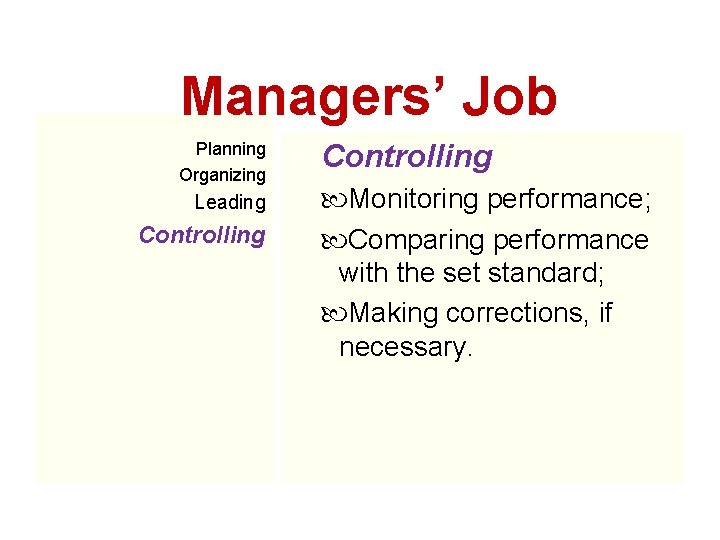
Managers’ Job Planning Organizing Leading Controlling Monitoring performance; Comparing performance with the set standard; Making corrections, if necessary.
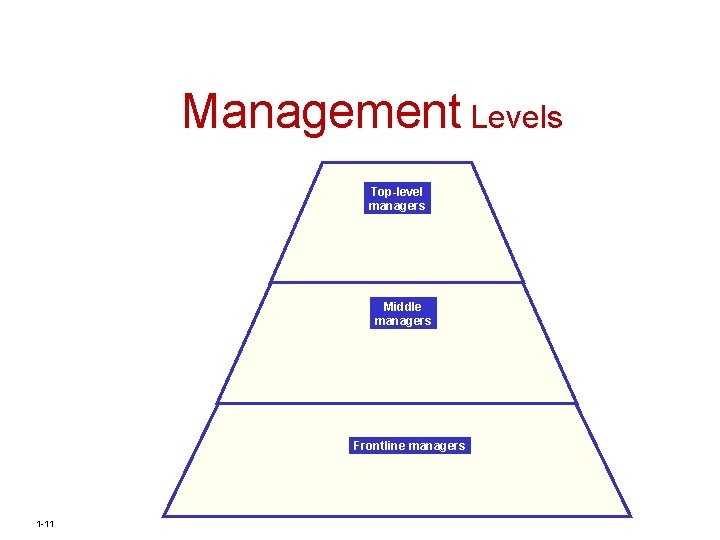
Management Levels Top-level managers Middle managers Frontline managers 1 -11
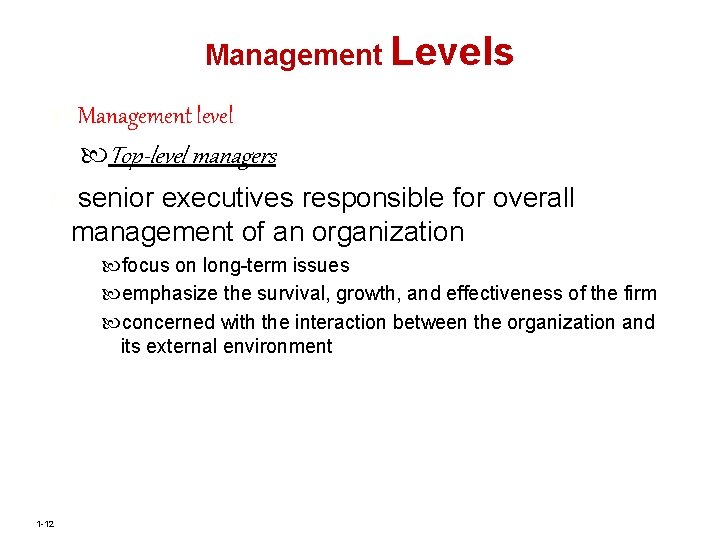
Management Levels Management level Top-level managers senior executives responsible for overall management of an organization focus on long-term issues emphasize the survival, growth, and effectiveness of the firm concerned with the interaction between the organization and its external environment 1 -12
Management Levels Middle-level managers (tactical managers) located between top-level and frontline managers in the organizational hierarchy responsible for translating strategic goals and plans into more specific objectives and activities traditional role was that of an administrative controller who bridged the gap between higher and lower levels growing role is that of a developmental coach to the people who report to them 1 -13
Management Levels Management level (cont. ) Frontline managers (operational managers) lower-level managers who supervise the operational activities of the organization directly involved with non management employees increasingly being called on to be innovative and entrepreneurial Working leaders with broad responsibilities in leading small companies, managers have strategic, tactical, and operational responsibilities have a knowledge of all business functions, are accountable for results, and focus on internal and external customers 1 -14
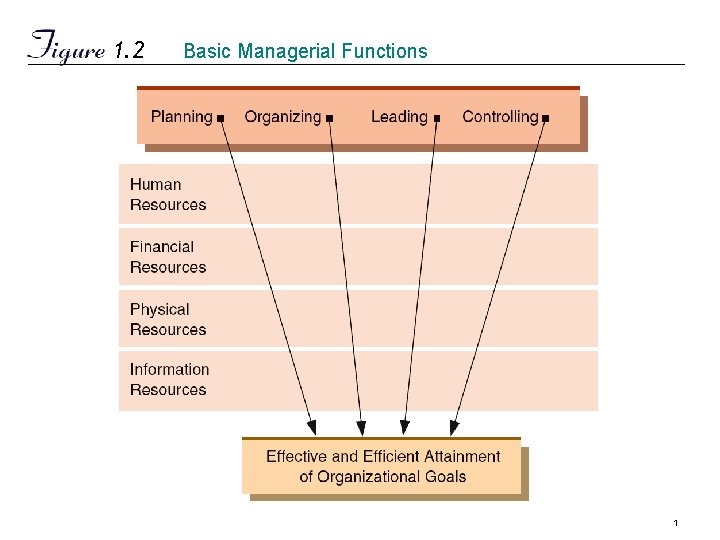
1. 2 Basic Managerial Functions 1
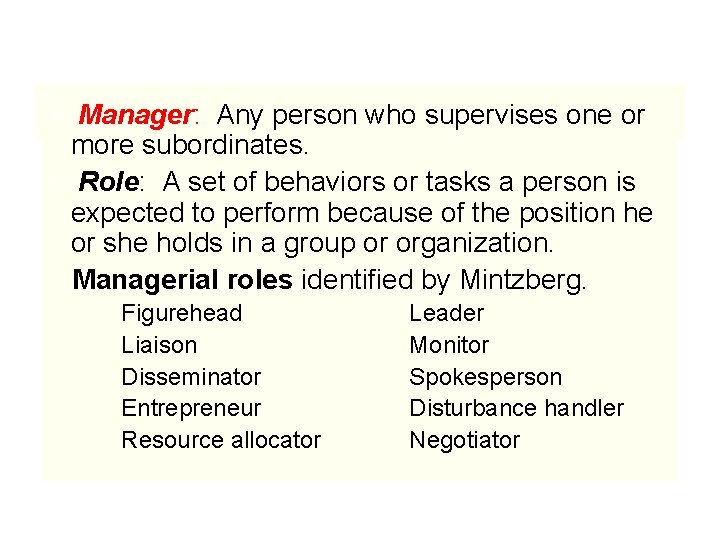
Manager: Managerial Any person who. Roles supervises one or more subordinates. Role: A set of behaviors or tasks a person is expected to perform because of the position he or she holds in a group or organization. Managerial roles identified by Mintzberg. Figurehead Liaison Disseminator Entrepreneur Resource allocator Leader Monitor Spokesperson Disturbance handler Negotiator
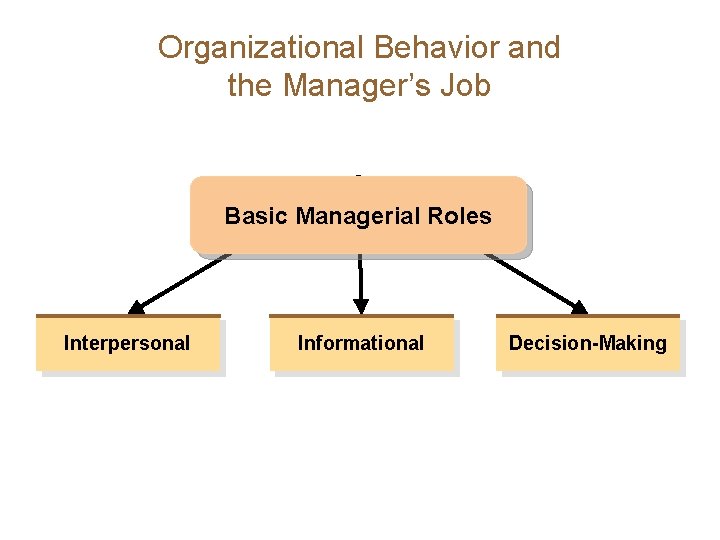
Organizational Behavior and the Manager’s Job Basic Managerial Roles Interpersonal Informational Decision-Making
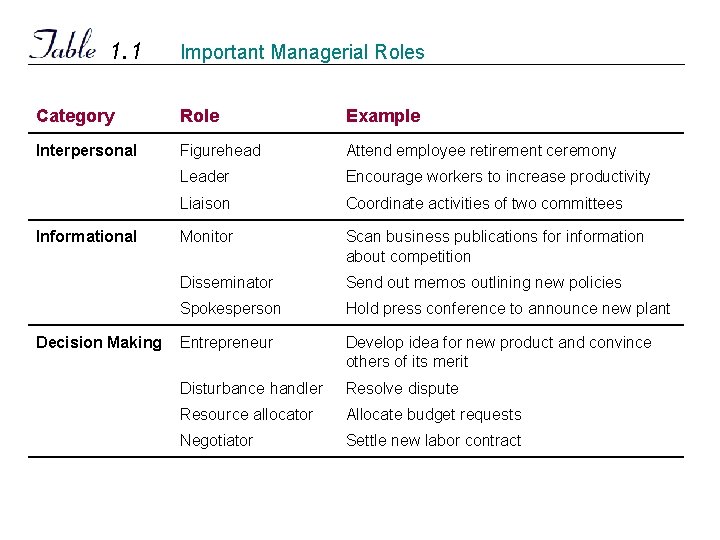
1. 1 Important Managerial Roles Category Role Example Interpersonal Figurehead Attend employee retirement ceremony Leader Encourage workers to increase productivity Liaison Coordinate activities of two committees Monitor Scan business publications for information about competition Disseminator Send out memos outlining new policies Spokesperson Hold press conference to announce new plant Entrepreneur Develop idea for new product and convince others of its merit Disturbance handler Resolve dispute Resource allocator Allocate budget requests Negotiator Settle new labor contract Informational Decision Making
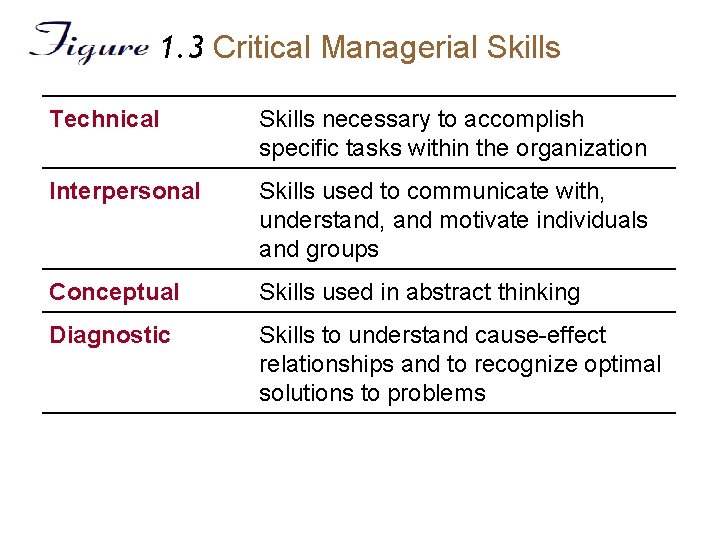
1. 3 Critical Managerial Skills Technical Skills necessary to accomplish specific tasks within the organization Interpersonal Skills used to communicate with, understand, and motivate individuals and groups Conceptual Skills used in abstract thinking Diagnostic Skills to understand cause-effect relationships and to recognize optimal solutions to problems
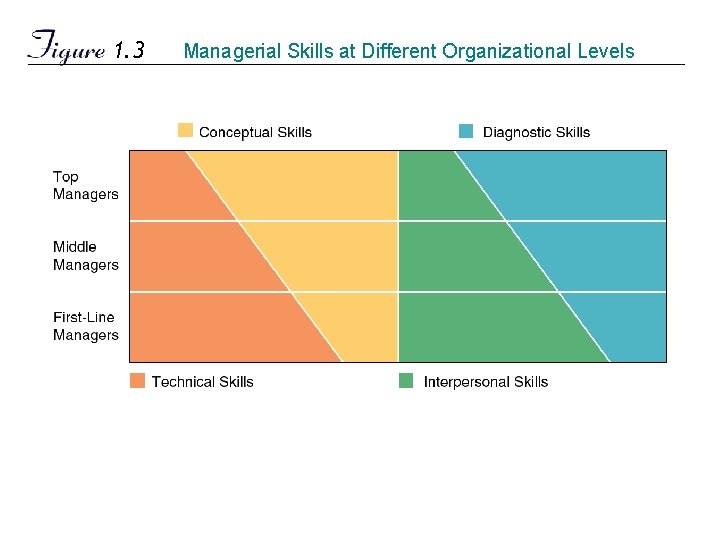
1. 3 Managerial Skills at Different Organizational Levels
- Slides: 20