
Why Study History From Multiple Perspectives Thats what
- Slides: 25
Why Study History From Multiple Perspectives? • That’s what history is! Not a single story, but competing interpretations • Provides dissenting voices that challenge nat’l mythologies and dominant narratives • Enhances democratic culture (everybody’s history is significant) • Stimulates historical curiosity
Goal: Develop a Persuasive Interpretation • Goal of studying multiple perspectives— NOT to conclude that all opinions are equally valid or convincing (they aren’t!) • Point is to use broader knowledge to develop your own views more persuasively • However, the effort to consider other perspectives can alter your responses even to most basic questions
What Do You Call the War? • Vietnam War? Or just “Vietnam”—in U. S. the name of a country is shorthand for long and divisive war • American War? In Vietnam, the “American” War linked to ancient patriotic struggles against foreign domination • American War in Vietnam
When Did the War Start? • Communist leaders: When the U. S. supported the French reconquest of Indochina in 1946 • U. S. leaders: When Communist-led insurgents began attacking the U. S. backed government of Ngo Dinh Diem in the late 1950 s • American public: no clear beginning
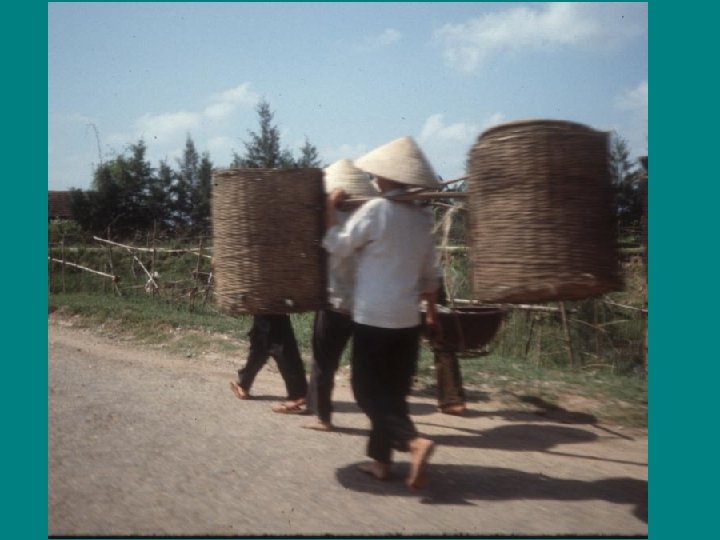
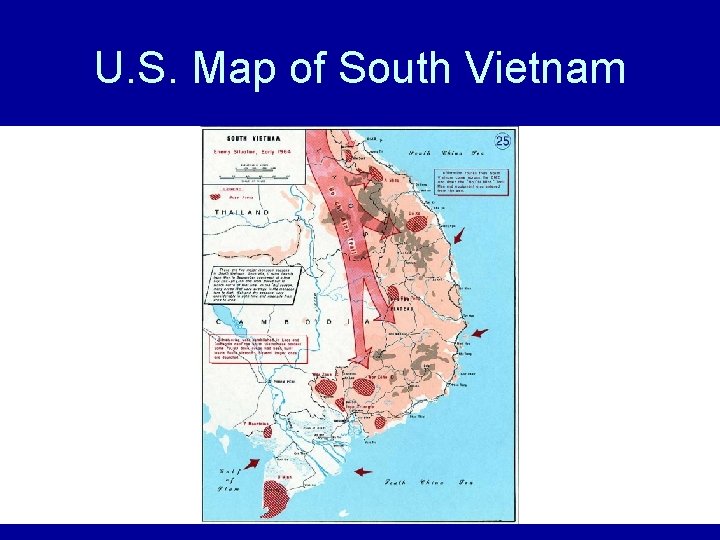
How Do You “Map” Vietnam? Vietnamese Maps: One country, undivided • Image of carrying pole linking two rice baskets • Organic simile of nation U. S. Maps of Vietnam: Divided Nation, often just show South Vietnam invaded by “Red Arrows”—Communist “outside aggressors”
U. S. Map of South Vietnam
What Do You Call the Various Sides in the War? • “Republic of Vietnam” or “Puppet Government” • “Viet Cong” or “People’s Liberation Armed Forces” (of the “National Liberation Front”) • “North Vietnamese Army” or “People’s Army of Vietnam” • “Democracy” vs. “Communism” or “Counter-revolutionary capitalism” vs. “revolutionary nationalism”
What Were the Strategies of Each Side? • “If we have the people, we have the weapons. ” Ho Chi Minh • “The solution in Vietnam is more bombs, more shells, more napalm. . . until the other side cracks and gives up. ” Gen. William Depuy • “We agreed to fight a war that we could either lose or tie, but not win. The best we could ever do is keep half the country. ” South Vietnamese army (ARVN) soldier Truong Tran
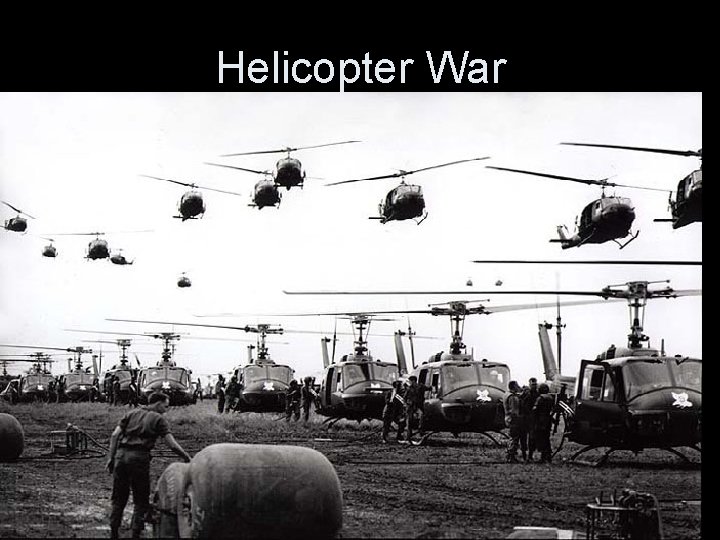
Helicopter War
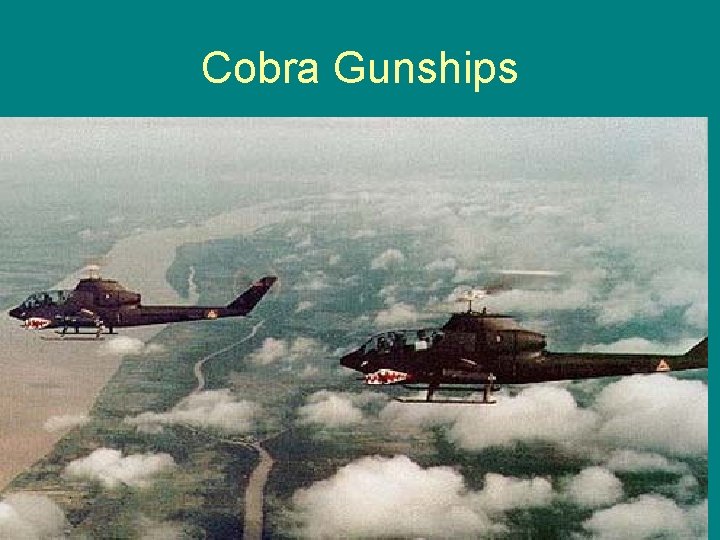
Cobra Gunships
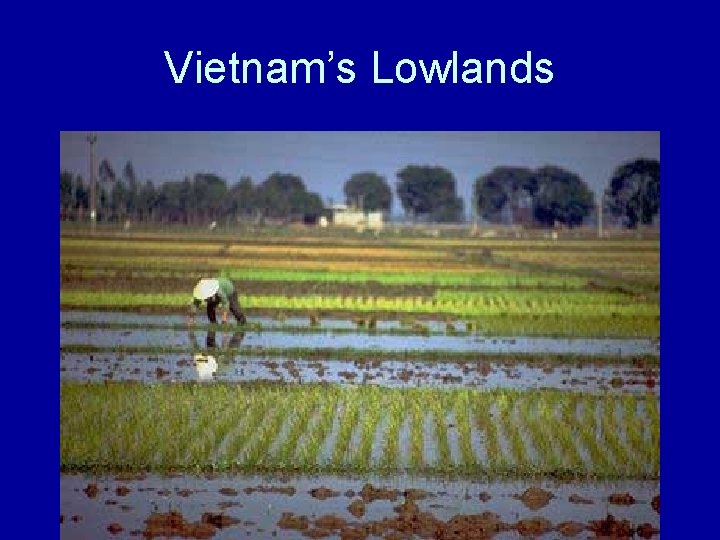
Vietnam’s Lowlands
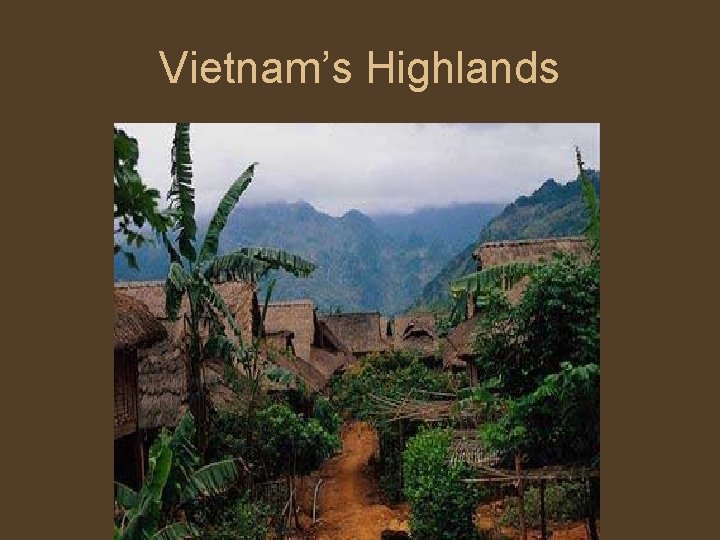
Vietnam’s Highlands
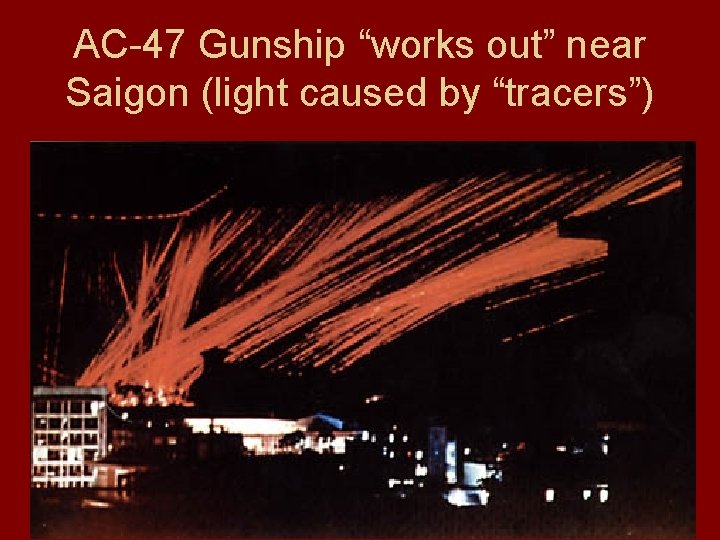
AC-47 Gunship “works out” near Saigon (light caused by “tracers”)
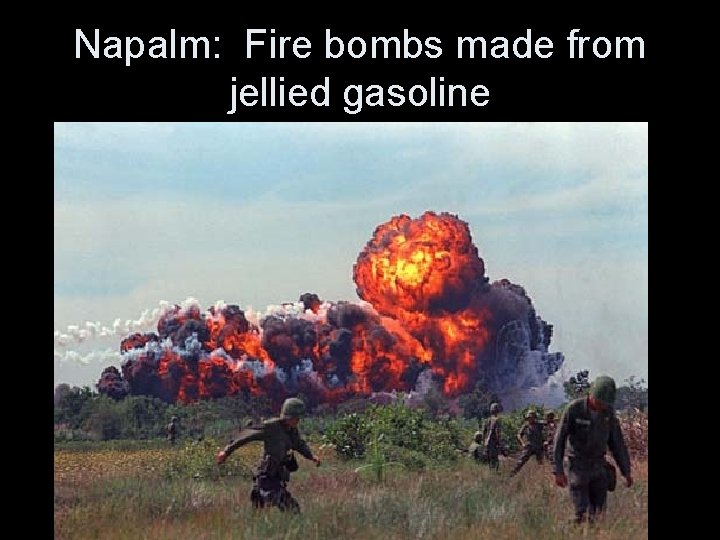
Napalm: Fire bombs made from jellied gasoline
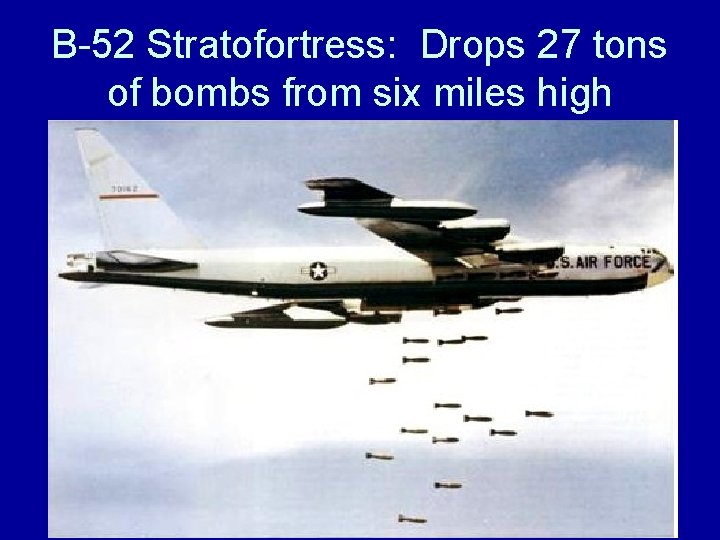
B-52 Stratofortress: Drops 27 tons of bombs from six miles high
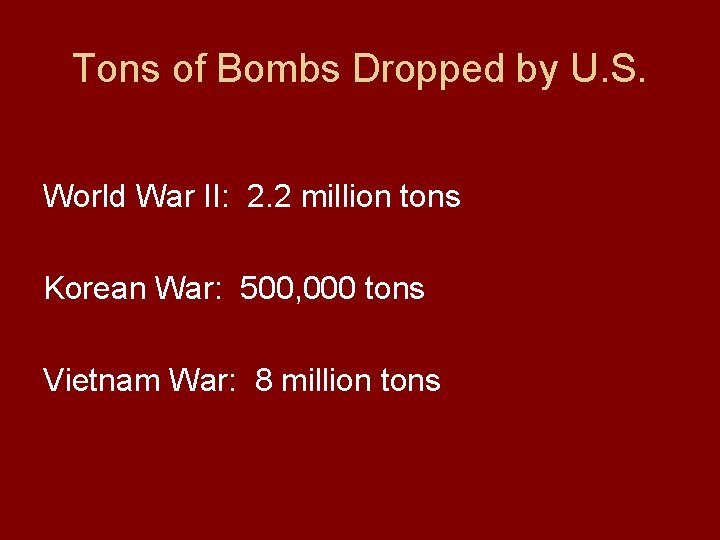
Tons of Bombs Dropped by U. S. World War II: 2. 2 million tons Korean War: 500, 000 tons Vietnam War: 8 million tons
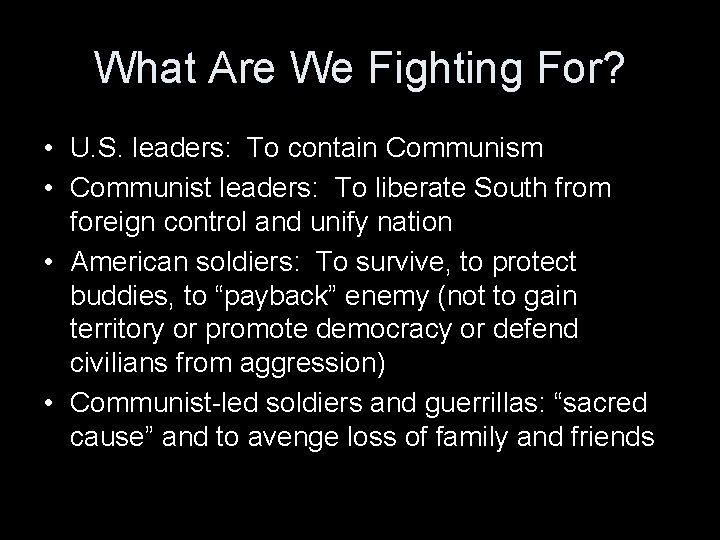
What Are We Fighting For? • U. S. leaders: To contain Communism • Communist leaders: To liberate South from foreign control and unify nation • American soldiers: To survive, to protect buddies, to “payback” enemy (not to gain territory or promote democracy or defend civilians from aggression) • Communist-led soldiers and guerrillas: “sacred cause” and to avenge loss of family and friends
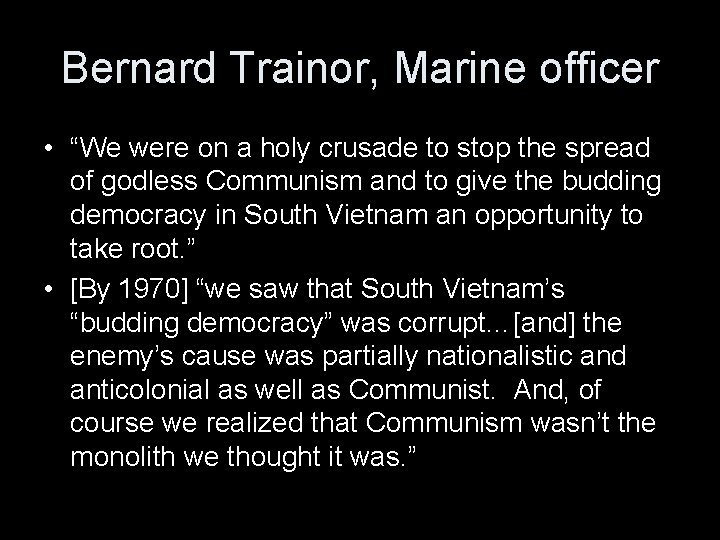
Bernard Trainor, Marine officer • “We were on a holy crusade to stop the spread of godless Communism and to give the budding democracy in South Vietnam an opportunity to take root. ” • [By 1970] “we saw that South Vietnam’s “budding democracy” was corrupt…[and] the enemy’s cause was partially nationalistic and anticolonial as well as Communist. And, of course we realized that Communism wasn’t the monolith we thought it was. ”
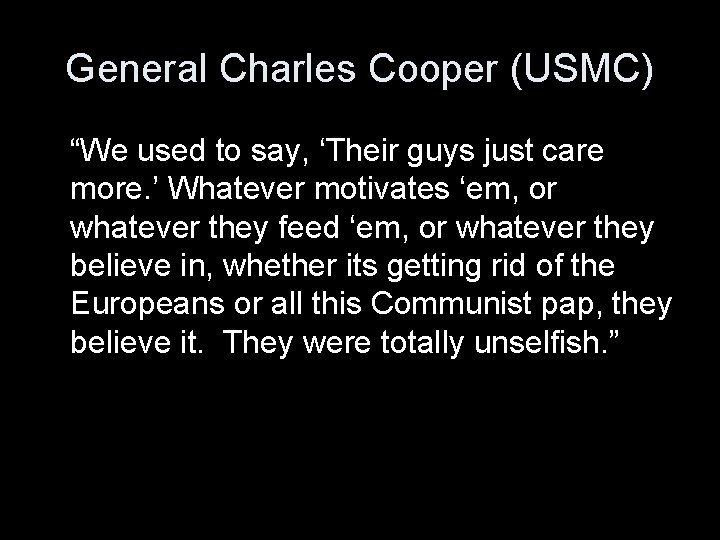
General Charles Cooper (USMC) “We used to say, ‘Their guys just care more. ’ Whatever motivates ‘em, or whatever they feed ‘em, or whatever they believe in, whether its getting rid of the Europeans or all this Communist pap, they believe it. They were totally unselfish. ”
Tran Thi Gung, woman guerrilla • “When the revolution broke out I was just a kid. In 1962, the puppet soldier came to my house and said, ‘Your father was a Viet Cong so we killed him. Go fetch his body. ’. . . From then on, I decided to take revenge for my father’s death. ” • “Also, the people. . . suffered from poverty. . . and were always brutalized. . . I wanted to do something to liberate my country and help people get enough food and clothing. ”
Phan Xuan Sinh, South Vietnamese officer (ARVN) Finds letters to Communist troops: “I was amazed by the intensity of feelings they expressed. They had such a deep commitment to the war and so much hatred for us, the enemy. They said things like, ‘Don’t worry about us. We’ll survive. Just do your best to destroy the enemy’. . . We never had such strong feelings about the war. I think that’s why they were able to prevail. ” p. 27 in Patriots
Jim Soular • “I was a patriot. I believed in the flag. ” • “And I loved war. . . I hate it now, but at the time, as a kid, I loved it. ” • “Everything I’d been raised to believe in was contrary to what I saw in Vietnam…A day doesn’t go by that I don’t think about Vietnam—not just what happened to Americans, but what we did to Vietnam. ”
How Did The North Vietnamese and the Viet Cong Win? • Political support proved greater than U. S. firepower • The American backed gov’t in Saigon lacked political support of its people • The Communist side had far more support • A great military power can occupy a foreign country, BUT • Military control is not the same thing as political support or legitimacy
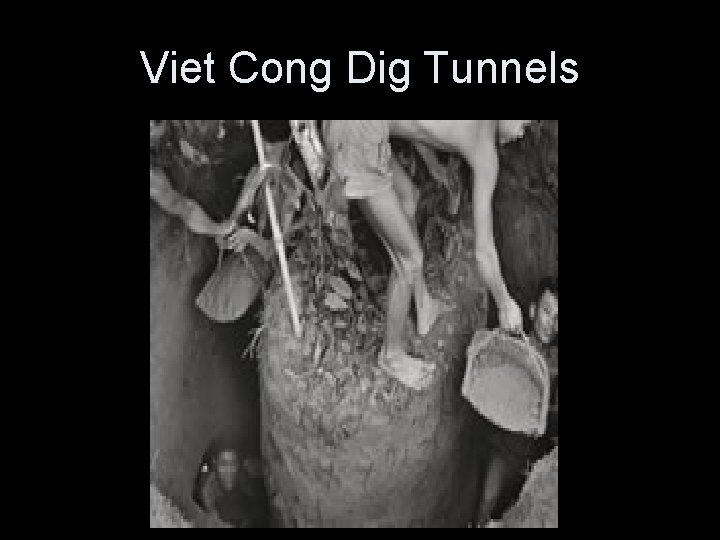
Viet Cong Dig Tunnels