
Why Study Beowulf 1 Beowulf is the oldest
Why Study Beowulf? 1. Beowulf is the oldest poem in the English language, so everything written since Beowulf stems from it in some way. 2. The story of Beowulf encompasses common themes that we still see in English literature today
Beowulf’s Provenance What we don’t know: Øwho wrote it Øwhen exactly it was written Øhow much, exactly, is based on historical truth
Beowulf’s Provenance What we do know: (Write this down) ØBeowulf is the oldest surviving English poem. Ø It’s written in Old English (or Anglo-Saxon), which is the basis for the language we speak today. ØSome of the characters in the poem actually existed. (Hyglac and Hrothgar amongst others. )
(keep writing) ØThe actual poem was probably created during the 7 th or 8 th century (600’s or 700’s) Ø There are Christian references in the poem, but the characters and setting are Pagan…this means a monk probably translated it. ØWhat are Christians and Pagans? Look it up!
Setting: Beowulf’s time and place Although Beowulf was written in English, it is set in what is now Denmark and Sweden, where a tribe called the Geats lived. The story may take place as early as 400 or 500 A. D.
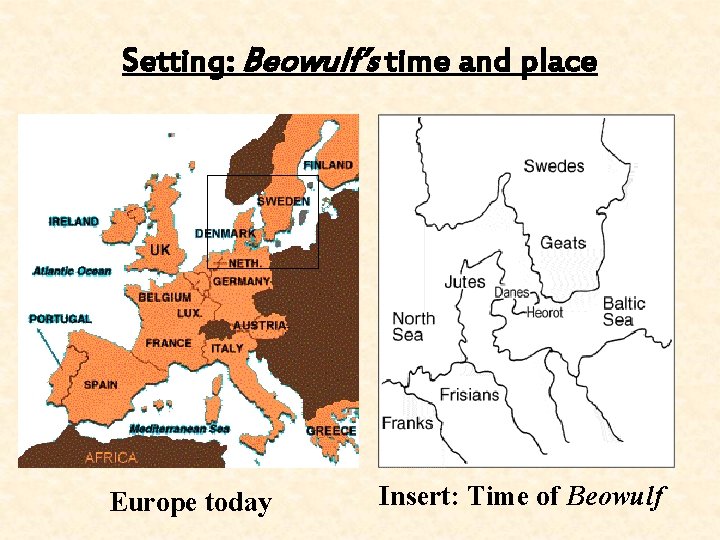
Setting: Beowulf’s time and place Europe today Insert: Time of Beowulf
Who are the Anglo-Saxons? Look it up! The Anglo-Saxons were Germanic tribes who invaded and inhabited Great Britain during the 5 th century. The Anglo-Saxon period denotes the period of British history after their initial settlement, until the Norman conquest, between about 450 and 1066.
The Poetry in Beowulf (Write this down) 1. In medias res In the middle of the narrative 2. Alliterative verse Repetition of initial sounds of words
The Poetry in Beowulf 3. Caesura pause, between beats two and four 4. Form No rhyme
The Poetry in Beowulf An example of Alliteration: There was Shield Sheafson, scourge of many tribes, A wrecker of mead-benches, rampaging among foes. The terror of the hall-troops had come far.
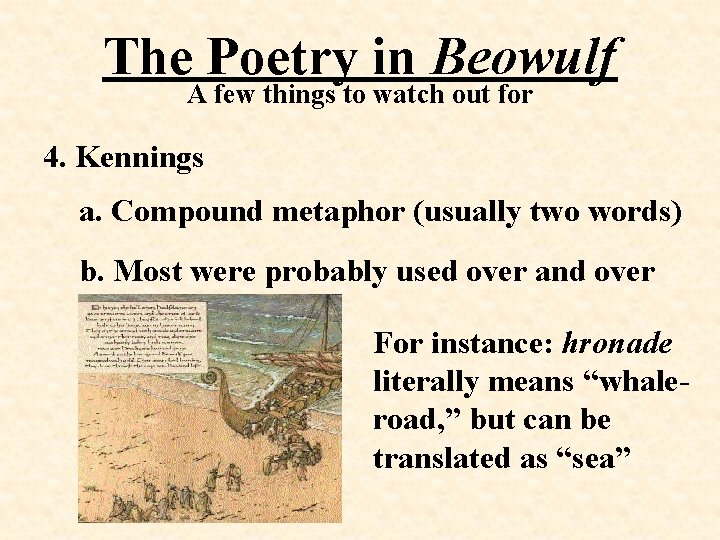
The Poetry in Beowulf A few things to watch out for 4. Kennings a. Compound metaphor (usually two words) b. Most were probably used over and over For instance: hronade literally means “whaleroad, ” but can be translated as “sea”
The Poetry in Beowulf A few things to watch out for Other kennings from Beowulf: banhus = “bone-house” = body goldwine gumena = “gold-friend of men” = generous prince beaga brytta = “ring-giver” = lord beadoleoma = “flashing light” = sword
The Poetry in Beowulf 5. Enjambment Continuation of sentence over a line break
The Poetry in Beowulf Enjambment Example: The Almighty drove Those demons out, and their exile was bitter, Shut away from men; they split Into a thousand forms of evil—spirits And fiends, goblins, monsters, giants, A brood forever opposing the Lord’s Will, and again defeated.
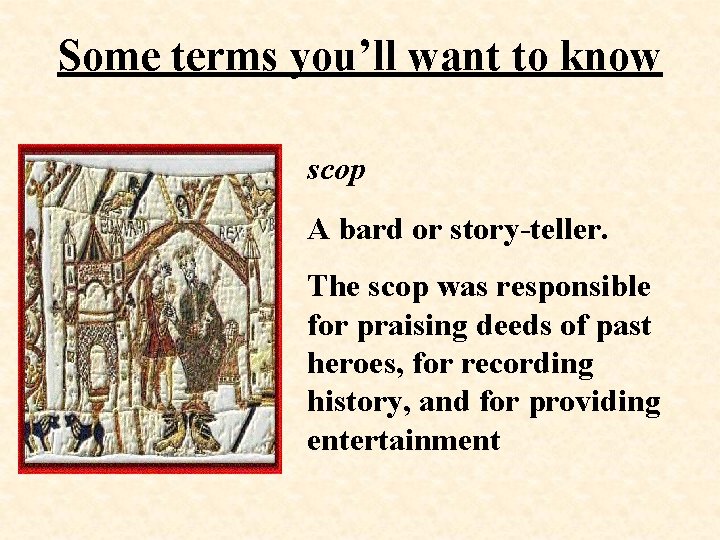
Some terms you’ll want to know scop A bard or story-teller. The scop was responsible for praising deeds of past heroes, for recording history, and for providing entertainment
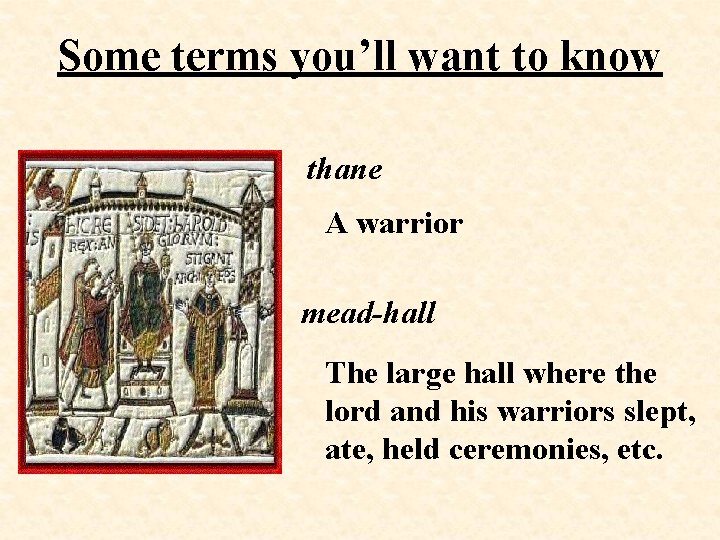
Some terms you’ll want to know thane A warrior mead-hall The large hall where the lord and his warriors slept, ate, held ceremonies, etc.
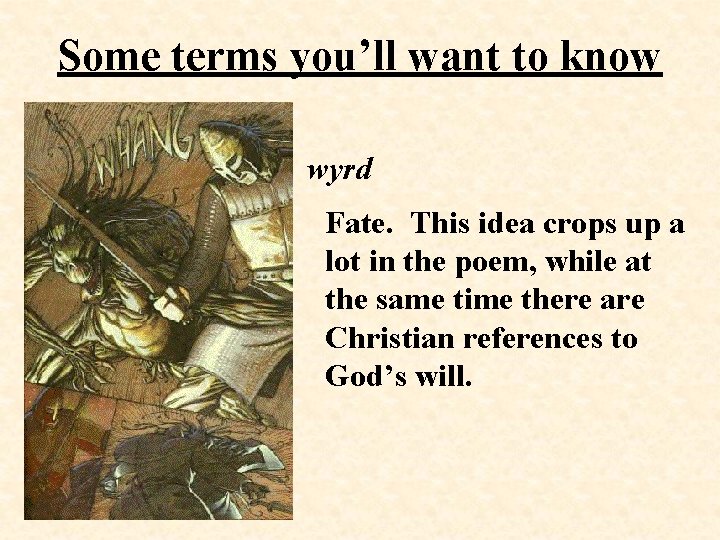
Some terms you’ll want to know wyrd Fate. This idea crops up a lot in the poem, while at the same time there are Christian references to God’s will.
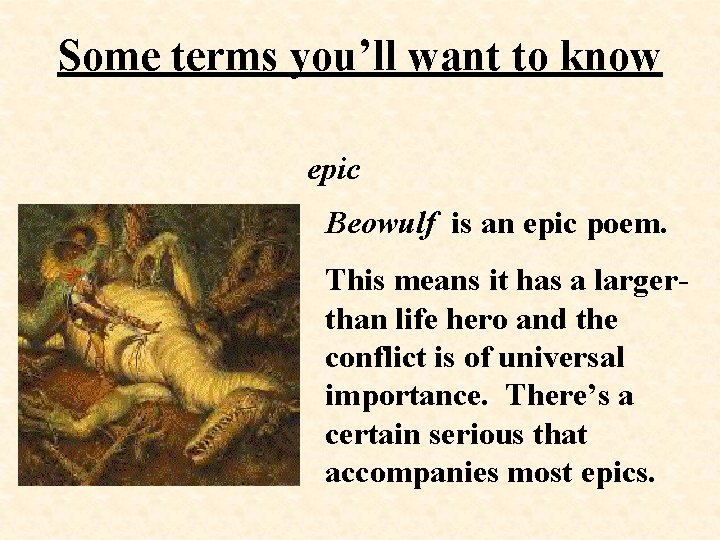
Some terms you’ll want to know epic Beowulf is an epic poem. This means it has a largerthan life hero and the conflict is of universal importance. There’s a certain serious that accompanies most epics.
Themes and Important Aspects Good vs. Evil Christian and Pagan influences order vs. chaos greed vs. selflessness Youth vs. Age Savior vs. Recognition Society vs. Outcasts
- Slides: 19