
Why It Matters Role of Business WHY LEARN
Why It Matters: Role of Business WHY LEARN ABOUT THE ROLE OF BUSINESS IN SOCIETY?
Why it Matters Take a minute to look around you. What do you see? Now, look around again but this time consider everything within your view and ask yourself what all of these things have in common? If you said that they are all the product of business, then you’re right! How can that be, you ask? Business is everywhere, in everything we touch, we eat, we see, we smell, and we feel. The next part of the challenge is this: try to think of something, anything, that you can say with certainty has no relationship to business.

Today’s Business Environment The world of business today can be summed up in a single word: change In order to remain profitable and competitive, businesses today are finding that they need to be more responsive than ever to customer demands This is not only true of big companies like Apple, Nike, etc. The rapidly changing business environment affects them all
Today’s Business Environment What is the business environment? In some ways it resembles the natural environment in which we live: It’s all around us but not always noticeable. It includes things like technology, competitors, advertising, regulations, consumer demands, and money When these elements of the business environment change—in the same way that seasons and weather change—companies need to be able to predict, react, and adapt accordingly Those who fail to do so may find themselves out in the rain or cold and struggling to survive

Enterprise CHAPTER 1
Chapter Overview In this chapter we examine: the nature of business activity; what businesses do; the purpose of business the role of the entrepreneur; why are they important to the economy? social enterprises (businesses not set up to make a profit but to benefit society)

The Nature of Business Activity 1. 1
The Purpose of Business Activity What is business? The activity of making, buying, or selling goods or providing services in exchange for money Business objectives: measurable targets set by the business such as sales or profits that have to be achieved within a given time period
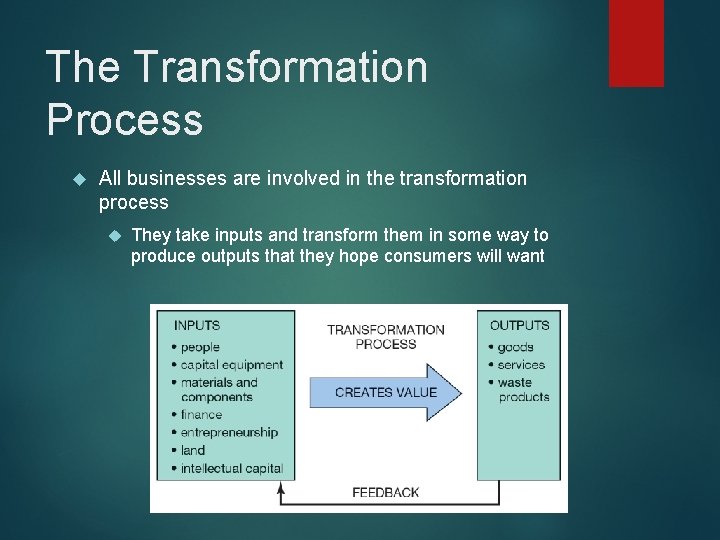
The Transformation Process All businesses are involved in the transformation process They take inputs and transform them in some way to produce outputs that they hope consumers will want
Inputs The inputs into a business include: land labor capital intellectual capital
Land Choosing a location for the business Extremely important for businesses such as shops and cafes! Primary Sector: the first stage of production and includes extracting or growing resources Farming, mining and fishing are all part of the primary sector Premises: the amount of space available to a business Premises can affect the working environment and people’s motivation
Labor Organizations need staff Quality of employees will have an influence on the success What are some qualities employers look for?
Capital Equipment used by businesses What are some examples? The amount and quality can affect the service provided. But how?
Intellectual Capital The intelligence of the workforce Ability to develop new ideas, find solutions and spot opportunities
Outputs Goods: tangible items Service: intangible Combination Can you give me an example of a business that offers a combination of goods and services?
Outputs A motel provides both services and goods. Which of the following is an example of a good provided by a motel? Offering a bathrobe that you can purchase to take home with you Offering rooms for rent Offering free sample size shampoo and soap Which is an example of a service provided?
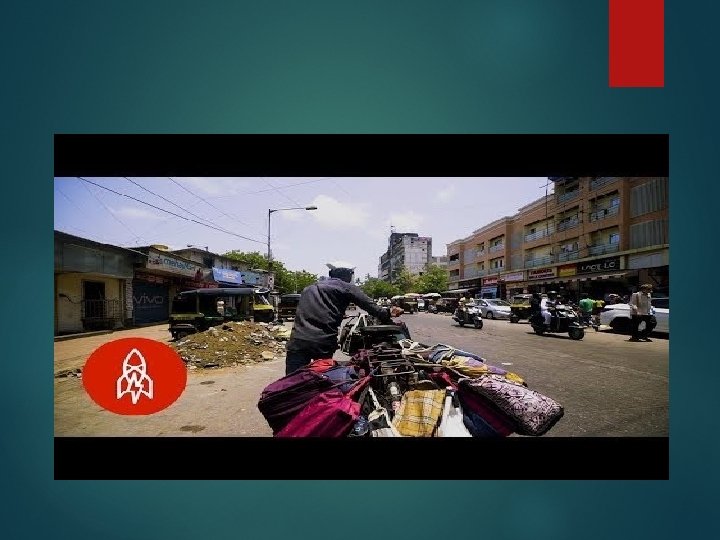
Case Study: Dabbawalla 1. Explain the transformation process of the dabbawallas in terms of inputs and outputs. They take the lunch boxes and move them from one location to another They use people and trains to link people to their lunch 2. Discuss how you would measure the success of this process. Speed of delivery Proportion of deliveries that get to the right person without damages or breakages
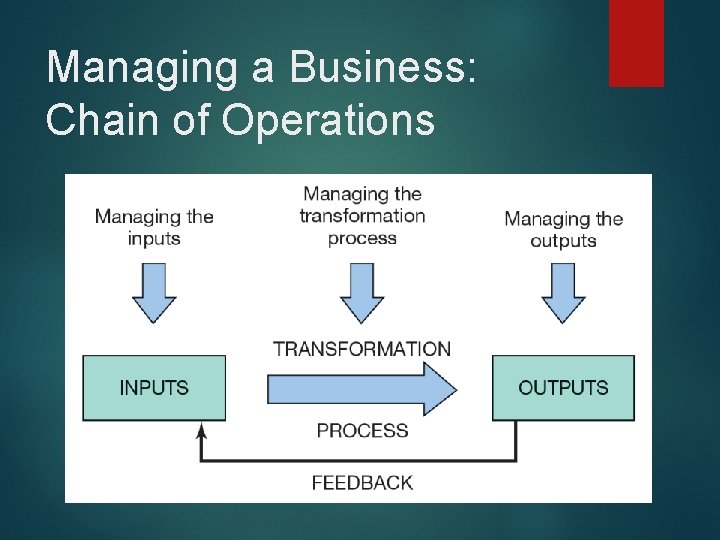
Managing a Business: Chain of Operations
Case Study: Transformation Processes 1. Explain the nature of the Federal Express transformation process. Uses trucks, planes, vans and trains to move items from one place to another Moves products around the globe 2. Discuss the possible reasons why a business might review and change its transformation process. New technology make different delivery methods possible (drones, etc. ) Consumer trends may affect what is being bought and delivered (more online shopping may lead to more package deliveries)
Designing the Transformation Process When designing its transformation process a business person must consider: What level of output will be provided? How many customers do you want to be able to have? What How quality of service will be provided? will you provide the service? What aspects of the process will the business undertake for itself?
Creating Value is created when outputs are produced that are worth more than the inputs brought in to provide them
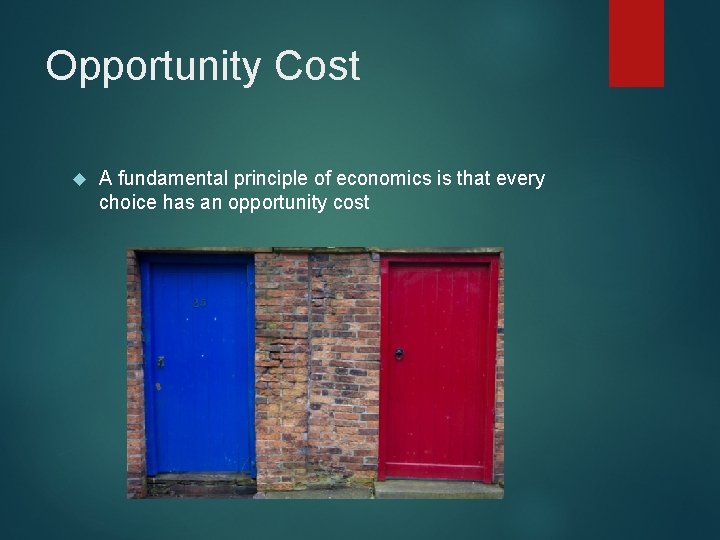
Opportunity Cost A fundamental principle of economics is that every choice has an opportunity cost
Opportunity Cost What is opportunity cost? Measures the sacrifice you make if you choose one course of action in terms of the next best alternative For example: If a business decides to use its labor force to increase output of soft drinks The opportunity cost is what could have been produced had it been used to produce something different
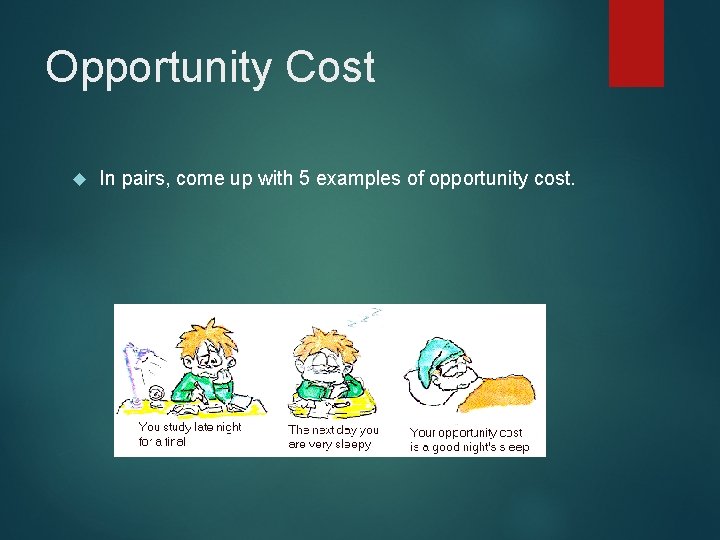
Opportunity Cost In pairs, come up with 5 examples of opportunity cost.
The Business Environment (PEST) Political and legal issues New laws by a government can: prevent the way some products are promoted (such as cigarettes) affect the way employees must be treated Affect the way a business produces (perhaps to reduce its environmental impact) Economic issues The amount of income in an economy can change over a period of time, affecting demand The value of one currency in terms of another can alter, affecting the cost of importing supplies The cost of borrowing can go up, increasing costs
The Business Environment (PEST) Social issues An increase in the size of the population or a change in the life expectancy of the population in a country can affect the level of demand the types of products people buy Technological issues Changes in the availability and speed of the internet can make it easier to find suppliers and sell across the world
Case Study: Brazil 1. Explain two possible reasons why the Brazilian economy might be growing so fast. Benefiting from revenue from selling food and oil at high prices Substantial oil and gas reserves have been discovered 2. Discuss the possible effects for Brazilian businesses of operating in such a fast growing economy. Creates opportunities for sales and expansion which may lead to investment Demand may outstrip supply creating competition for scarce resources, driving up the price
What Does a Business Need to do to Succeed? To succeed a business needs to be more competitive than its rivals Need to provide better value for money Its ability to achieve this depends on: The benefits it offers What does its product do relative to its competitors’ products? Is it faster? Easier to use? Smaller? Bigger? Longer lasting? What price is being charged relative to the competition?
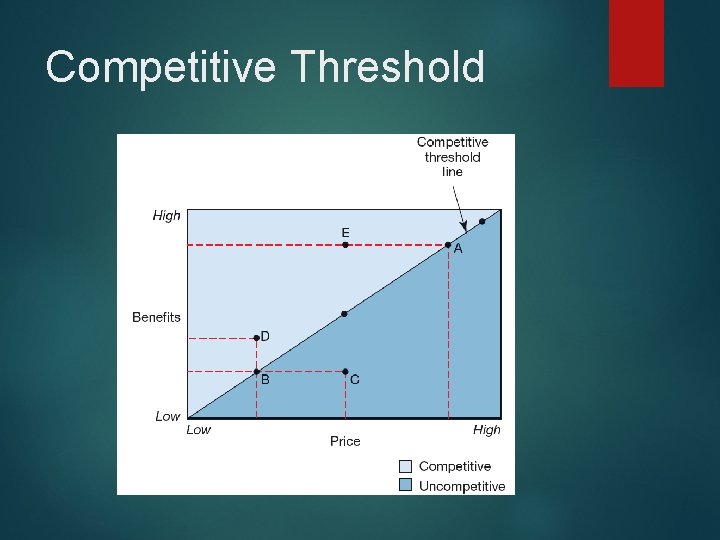
Competitive Threshold
Why do Businesses Fail? Businesses fail when they stop being competitive Stop providing good value for money relative to their competitors This can be due to: External reasons High level of borrowing and so their costs are hit badly when the cost of borrowing rises Internal reasons Poor training of staff leading to poor customer service. Providing relatively low benefits given the price they charge.
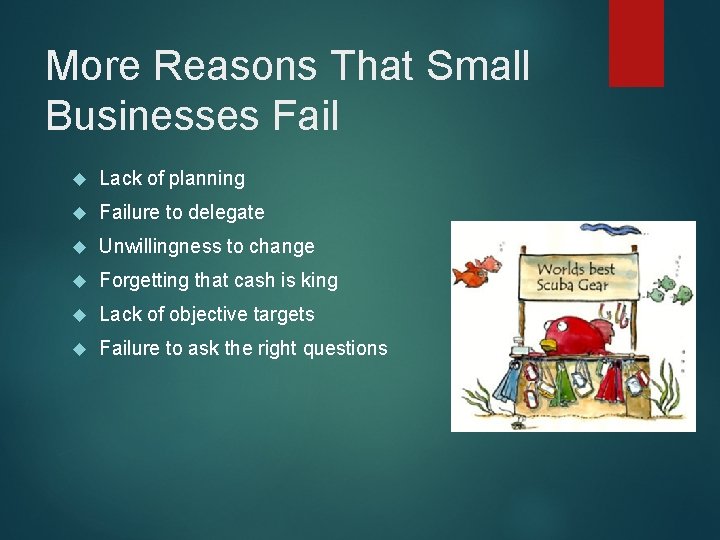
More Reasons That Small Businesses Fail Lack of planning Failure to delegate Unwillingness to change Forgetting that cash is king Lack of objective targets Failure to ask the right questions
Assignment: What Is Killing Our Business? Quickly think of a brand you used to buy or a store where you used to shop that no longer exists. Do any of these names ring a bell? : Blockbuster, Radio Shack, Wachovia Bank, Circuit City? Businesses like these fade from memory soon after they close as the business environment replaces them with bigger, better, or newer products, goods, or services. What is it that causes formerly “top” businesses to fail? While every business and its circumstances are unique, the cause of failure can usually be traced to big changes in the external or internal environment.
Assignment: What Is Killing Our Business? Research a business that financial analysts predict will be GONE in the very near future. You may choose one of the following companies or research another company that business analysts think is on its way out. Note: If you select a company that is not on this list, you must provide the source for your research. J. C. Penny Elizabeth Arden (Cosmetics) Sprint/Nextel Sears The Container Store Aerospostale New York & Company Rosetta Stone Jamba Juice Pac. Sun
Assignment: What Is Killing Our Business? Based on what you find, determine whether the business is declining on account of: an external factor (i. e. , shift in demographics, competition, consumer demand) or an internal factor (i. e. , poor management, poor quality, lack of cost control). It may be a combination of both, in which case you should include this insight in your paper. If you discover an external factor, was there anything the company could have done to adapt? If you discover an internal factor, why do you think the company didn’t address it before it got so serious?
Two Reasons Companies Fail -- and How to Avoid Them: Knut Haanaes 1. What are two reasons why companies fail? 2. Give two examples. 3. Explain the difference between exploration and exploitation. 4. What percentage can do both? 5. Give some examples. 6. What traps are there? 7. How can businesses avoid these traps?

Case Study: Small Businesses in South Africa 1. Explain two reasons why businesses in South Africa fail. Lack of access to finance; lack of financial know how; lack of government support; rapid growth 2. Discuss whether failure is inevitable for a business starting up in South Africa. Not inevitable as some obviously succeed. It depends on the entrepreneur, the quality of the idea, the extent of planning, whether it can get access to finance and government support, etc.
Math Moment Imagine 60% of new businesses in a country fail in the first two years. Of those that survive another 40% fail in the next three years. If 400, 000 businesses start up in one year, how many would be left after five years? 96, 000 businesses left Step 1: 400, 000 x. 6 = 240, 000 Step 2: 400, 000 – 240, 000 = 160, 000 Step 3: 160, 000 x. 4 = 64, 000 Step 4: 160, 000 – 64, 000 = 96, 000
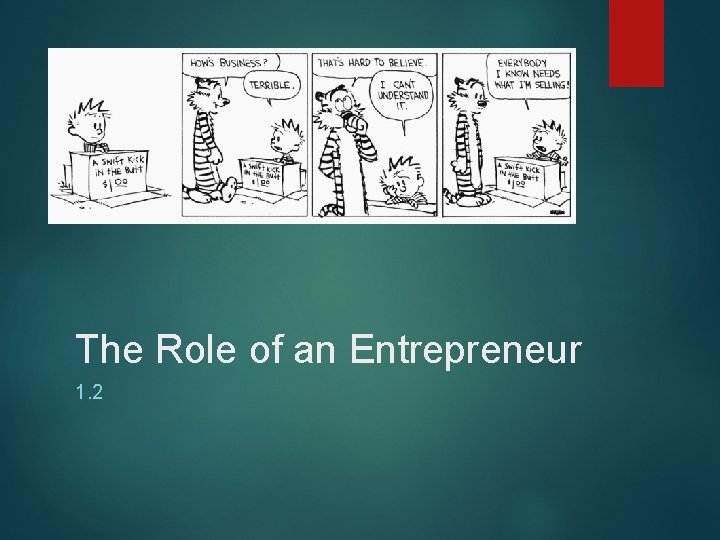
The Role of an Entrepreneur 1. 2
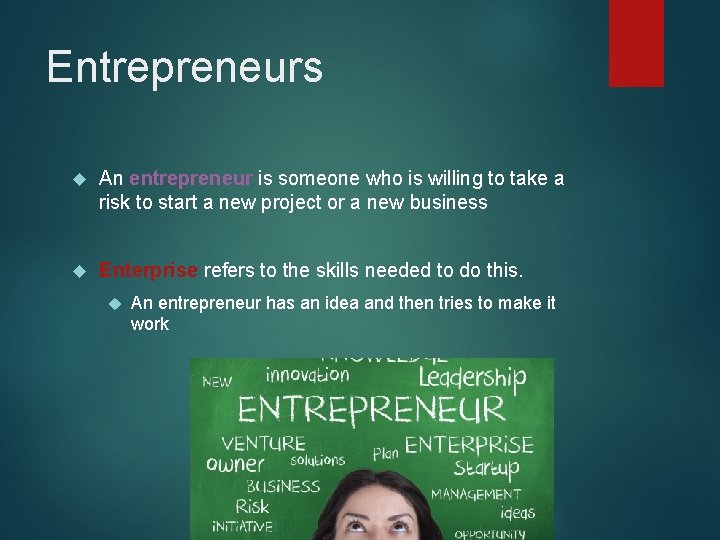
Entrepreneurs An entrepreneur is someone who is willing to take a risk to start a new project or a new business Enterprise refers to the skills needed to do this. An entrepreneur has an idea and then tries to make it work
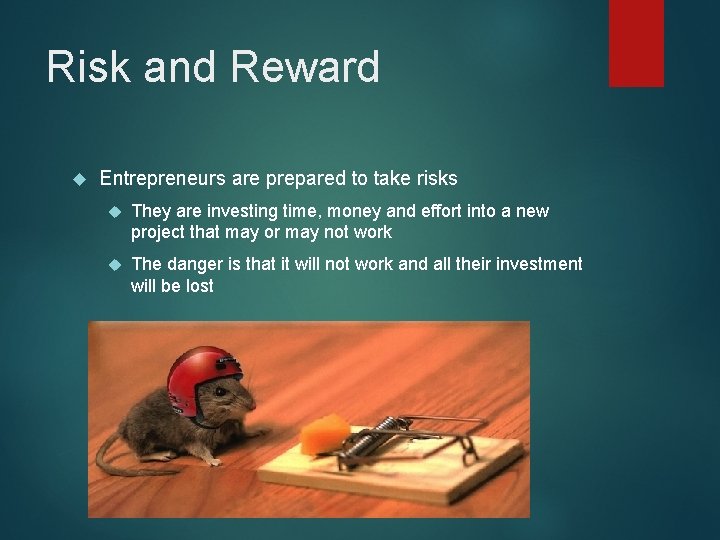
Risk and Reward Entrepreneurs are prepared to take risks They are investing time, money and effort into a new project that may or may not work The danger is that it will not work and all their investment will be lost
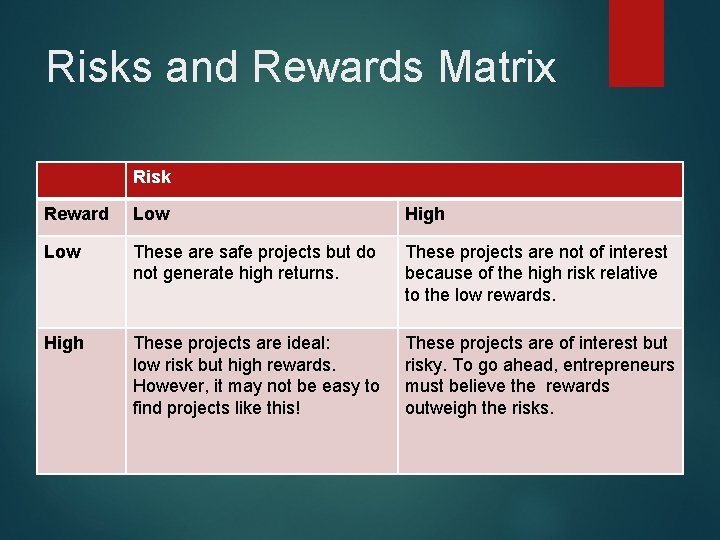
Risks and Rewards Matrix Risk Reward Low High Low These are safe projects but do not generate high returns. These projects are not of interest because of the high risk relative to the low rewards. High These projects are ideal: low risk but high rewards. However, it may not be easy to find projects like this! These projects are of interest but risky. To go ahead, entrepreneurs must believe the rewards outweigh the risks.
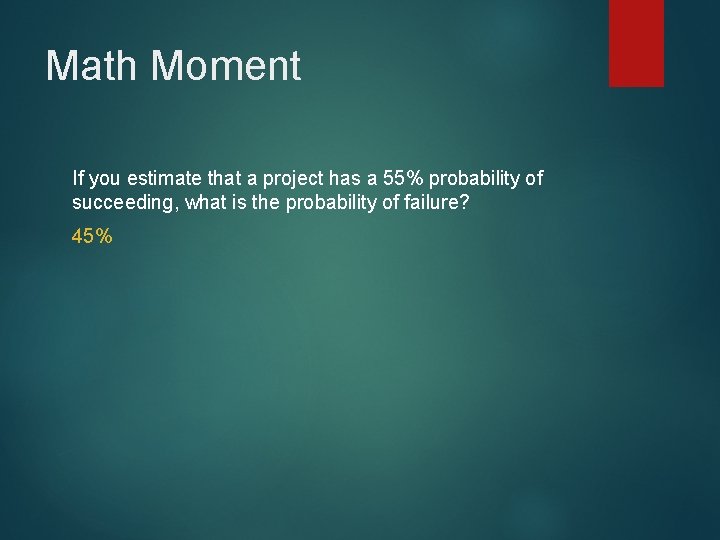
Math Moment If you estimate that a project has a 55% probability of succeeding, what is the probability of failure? 45%
Case Study: Banyan Tree 1. Explain two factors that might have helped the success of Banyan Tree. Clear brand proposition: Asian luxury accommodation reinforced by attention to detail (such as not wearing shoes). All aspects convey exclusivity Local economy; Festivals; Consumer behavior 2. Discuss the features you think make a successful entrepreneur. Entrepreneurs may need to be creative, inventive, look for opportunities They may need a range of skills as they undertake many duties themselves They may need to be determined, focused, and resilient
Why Become an Entrepreneur? You will experience a great feeling of satisfaction if your idea is successful Setting up on your own means it is your business, to do with as you wish Some people prefer this to working for others: they like their independence You keep the rewards You have more control of what you do and when you do it
Advantages and Disadvantages of Starting a Business Advantages Disadvantages Independence Time commitment Financial Gain Risk Control Uncertainty Prestige Financial commitment Equity Opportunity
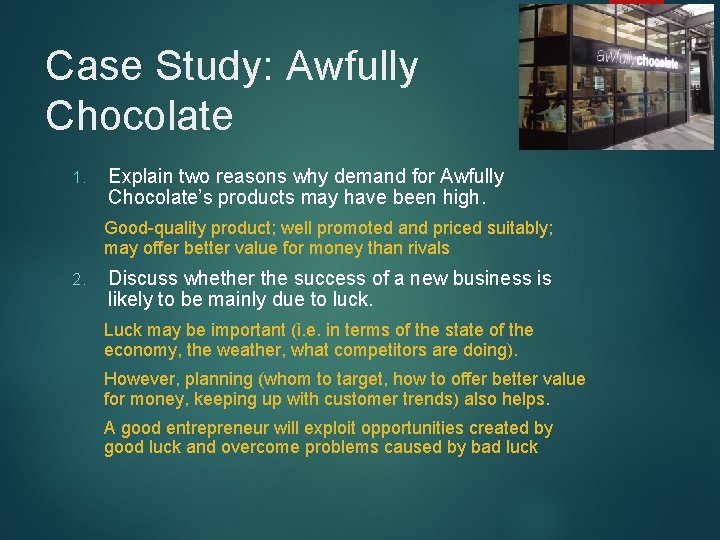
Case Study: Awfully Chocolate 1. Explain two reasons why demand for Awfully Chocolate’s products may have been high. Good-quality product; well promoted and priced suitably; may offer better value for money than rivals 2. Discuss whether the success of a new business is likely to be mainly due to luck. Luck may be important (i. e. in terms of the state of the economy, the weather, what competitors are doing). However, planning (whom to target, how to offer better value for money, keeping up with customer trends) also helps. A good entrepreneur will exploit opportunities created by good luck and overcome problems caused by bad luck
The Qualities of an Entrepreneur There is no single set of qualities that will definitely make someone an entrepreneur What qualities do you think makes a successful entrepreneur? It is likely a successful entrepreneur is someone who: Is prepared to work hard and is determined Is able to deal with stress and setbacks Has a vision and is faithful to it Is willing to take a risk (i. e. giving up a salary; long periods with low rewards, etc. )
The Qualities of an Entrepreneur According to the Royal Bank of Scotland (RBS) a successful entrepreneur is usually: well-rounded innovative results-orientated
Why Do Governments Like Entrepreneurs? Entrepreneurs: create jobs and help keep unemployment low in the economy earn money and pay taxes create competition for the existing providers in markets provide new products and services
How can governments help? They can provide: Access to advice and useful information to help them get started Funding, such as grants, to help with the initial start-up costs Legal protection for new ideas
Case Study: Government Help in Singapore 1. Explain how culture may act as a barrier to entrepreneurship. Culture can encourage people to take risks and set up on their own. It can affect the way entrepreneurs are viewed (Are they respected? Is this a role people aspire to? If they fail are they looked down on? ). 2. Discuss the ways in which the government of Singapore might encourage entrepreneurship. By promoting a stable business environment, reducing taxes, providing advice and guidance, ensuring finance is available, and by investing in infrastructure.
Case Study: N. Y. – The Most Competitive City in the World 1. Explain two reasons why New York may be a good place to do business. It may be cheap to start up, not involve lots of regulation and legislation, have plenty of advice on hand, entrepreneurs are respected, and access to resources and talent. 2. Discuss whether Bangkok is a good place to do business.
Case Study: Brazil’s Labyrinth of Bureaucracy 1. Explain two reasons why starting a business in Brazil might be difficult Complicated legislation and regulation; could be time consuming and difficult to get permission to operate 2. Discuss the possible consequences of making it difficult for businesses to open in a country. Could be corruption; may need to know someone or pay someone to get the permissions needed
Entrepreneur Assignment Pick an entrepreneur and investigate his/her background to determine the factors that lead to business success. Include: The history and growth of the business they founded Skills, abilities, and interests that helped to make him/her successful Personal traits that made him/her so successful (i. e. generous, smart with money) Dates and locations for the history and growth of the company To present: Your Power. Point should include 10 or more slides Bulleted lists only (not full paragraphs). You are telling us the story through presentation, and using flash cards or a sheet of paper.
Social Enterprises 1. 3
Social enterprises Do not have profit as the main objective They are set up for some other social purpose Examples include: Local sports clubs Government organizations Charities
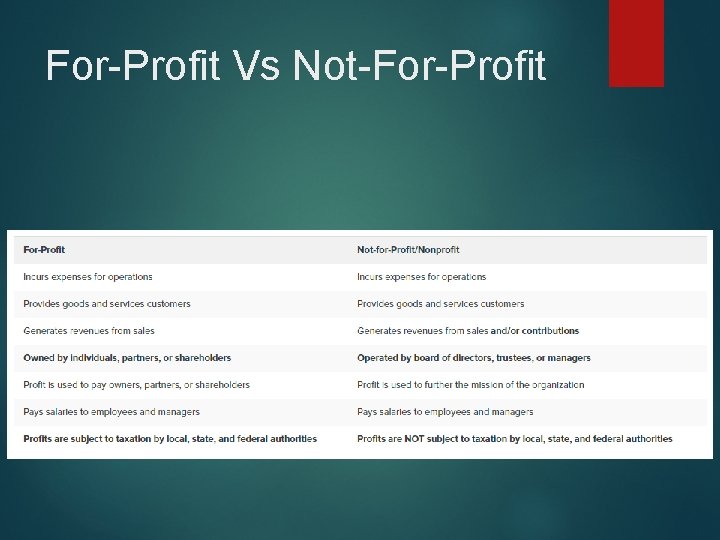
For-Profit Vs Not-For-Profit
For-Profit Vs Not-For-Profit 1. 2. 3. For a for-profit business, the primary goal is to___. 1. Maximize profits for the owners 2. Fulfill its mission 3. Contribute to society Both kinds or organizations, nonprofit and for-profit can ___. 1. Have charitable tax status 2. Have shareholders 3. Earn revenues Which of the following is an example of a for-profit business? 1. Walmart 2. Make-a-Wish Foundation 3. Internal Revenue Service
Case Study: Wikipedia 1. Explain the transformation process that Wikipedia provides. Takes words and ideas and turns them into useful information for people Assembles ideas and text and “curates” it to turn it into a more accessible format 2. Discuss the ways in which the success of Wikipedia might be measured. Number of users; number of times accessed; the accuracy of its information; the number of topics covered
Case Study: En. Natura 1. Explain why the government might have been willing to invest in En. Natura. Environmentally friendly; helps entrepreneurs; helps innovation and job creation 2. Discuss whether businesses are good for society. As shown by this business, they can create products that improve society and are environmentally friendly Plus they create jobs, lead to new products and meet our needs Some businesses may exploit, overcharge, mislead and be dangerous
Case Study: The Big Issue 1. Explain how The Big Issue helps homeless people. It helps them with their dignity (they have a job selling the paper); helps them integrate with society by having a job; raises revenue giving them an income. 2. Discuss the ways in which The Big Issue would measure its success. Number of people helped with a job; revenue raised; papers sold; number of people who go on to stop being homeless.
The Triple Bottom Line Elkington suggested business performance should be measured by examining 3 Ps: Profits Treatment of People Impact on the Planet This is known as the Triple Bottom Line (Profit, Planet, People).
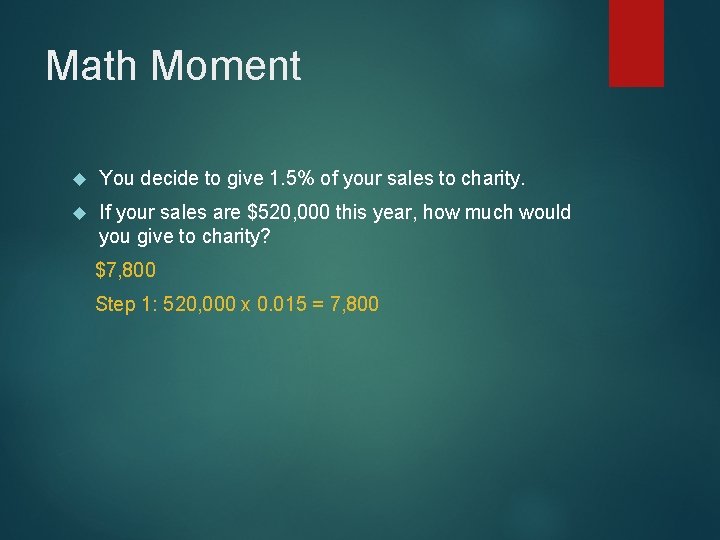
Math Moment You decide to give 1. 5% of your sales to charity. If your sales are $520, 000 this year, how much would you give to charity? $7, 800 Step 1: 520, 000 x 0. 015 = 7, 800
Test Your Learning Do the practice test on page 13
- Slides: 66