
Why is Writing so Hard Yet so Important


- Slides: 26
Why is Writing so Hard (Yet so Important)? How Might I Get Better at It? Judy M. Parr Ph. D Professor of Education School of Curriculum and Pedagogy Te Kura o te Marautanga me te Ako Presentation at Taiyuan University of Technology November- December 2016.
Overview • Writing performance: An international issue • Why be concerned? • Why is writing difficult? • Planning to succeed in, and sustain improvements in, writing performance
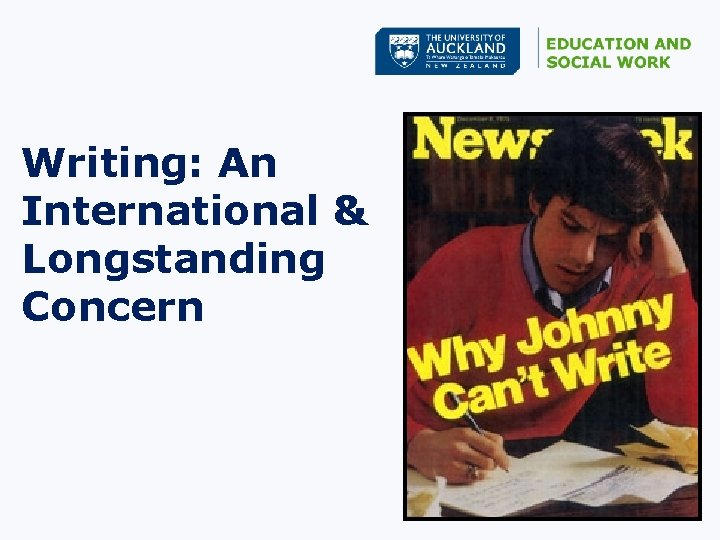
Writing: An International & Longstanding Concern
Why Be Concerned? • Economic cost from literacy-related “errors”; cost to remediate literacy skills. • Personal cost- limit employment opportunities as writing required in almost all jobs. • Social cost- one means of communication • Progress: Writing is critical to the enhancement of knowledge
Why Be Concerned? • Writing is a means to demonstrate learning in almost all areas of education. • Writing is a tool for improving learning – Promotes explicitness (writer has to make decisions about which content most important) – Is integrative (writing leads learners to make explicit connections between ideas as they organise) – Supports reflection – Fosters personal involvement – Think about what ideas mean as put them into own words
Writing is Hard! Wri ting hard is #* !
Why is Writing So Hard? • Cognitively complex – it is a “meta” (meta-cognitive, meta-linguistic) process of “authorial choice” – involves thinking about your thinking (what you intend to write or what you have written) – Involves multiple processing demands, including numerous self-regulatory processes
Why is Writing So Hard? • Complexity of socio-cultural functions (negotiating different purposes, communities, voices and roles) – Different purposes for which we write – Different social or cultural communities within which we write – Discourse communities within which we write
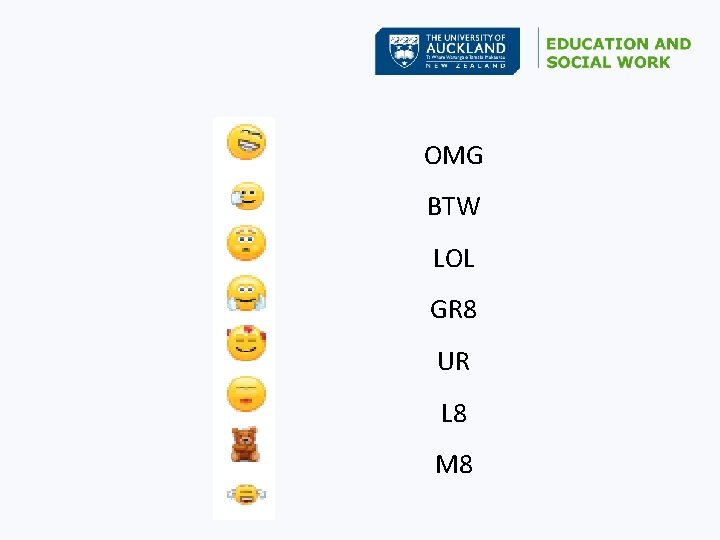
Why is Writing So Hard? Increasing complexity with different “mediums” for writing – Scribing versus typing – Visual emphasis – New “codes”
OMG BTW LOL GR 8 UR L 8 M 8
Why is Writing So Hard? • Linguistically complex – Critical mass in terms of vocabulary needed (L 1 or L 2) – Academic vocabulary of schooling/ disciplines – Knowledge of “form” of text commonly associated with writing for a particular communicative purpose. Includes schema for structure, language resources etc – Rhetorical knowledge: Cultural and discourse community, knowledge of audience
A Broader View of Why Students Struggle with Writing • There is a relatively small research base to guide us as to how to teach and support students in writing (L 1 and L 2). • Teachers receive relatively little input during initial training and in later PD about teaching writing. • In general, students in L 1 receive little direct instruction in writing beyond Year 4 at school!
A Broader View of Why Students Struggle with Writing • Teachers commonly use worksheets, short answers, fill in blank, re-arrange words in sentences or sentences in paragraph type. • So, students spend little time actually composing, particularly extended text (beyond the sentence). • Students do not receive instruction in strategies and processes.
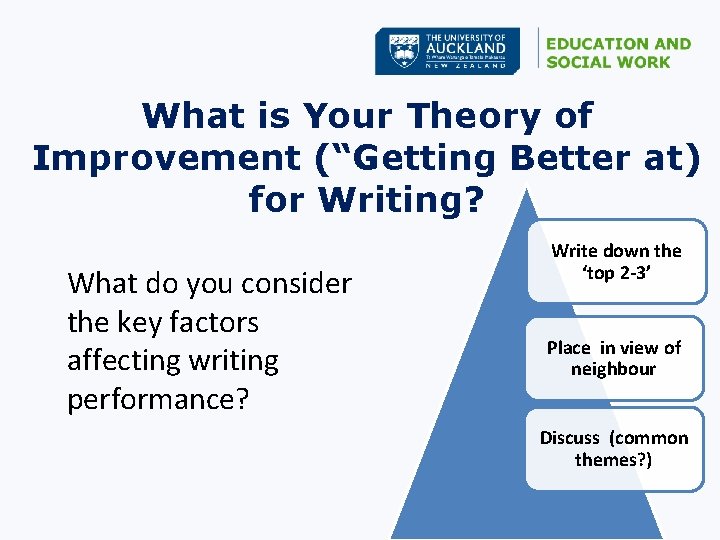
What is Your Theory of Improvement (“Getting Better at) for Writing? What do you consider the key factors affecting writing performance? Write down the ‘top 2 -3’ Place in view of neighbour Discuss (common themes? )
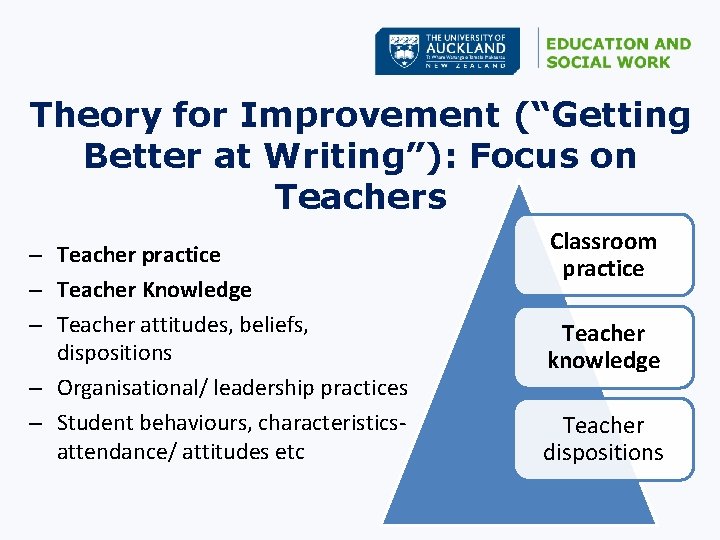
Theory for Improvement (“Getting Better at Writing”): Focus on Teachers – Teacher practice – Teacher Knowledge – Teacher attitudes, beliefs, dispositions – Organisational/ leadership practices – Student behaviours, characteristicsattendance/ attitudes etc Classroom practice Teacher knowledge Teacher dispositions
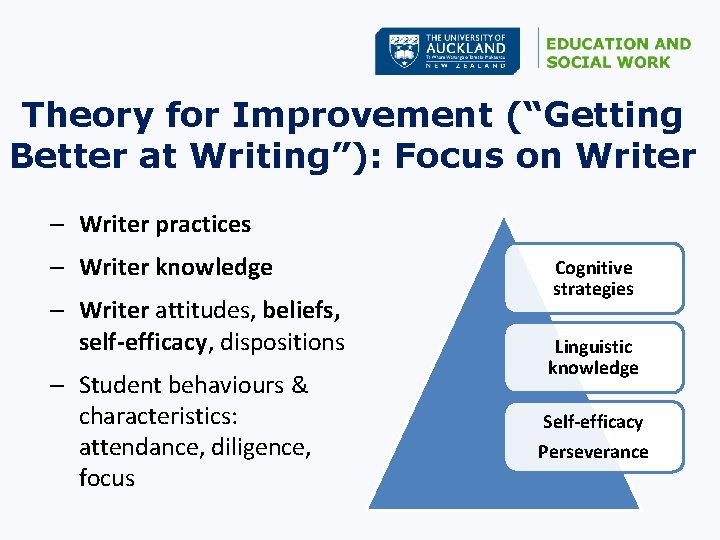
Theory for Improvement (“Getting Better at Writing”): Focus on Writer – Writer practices – Writer knowledge – Writer attitudes, beliefs, self-efficacy, dispositions – Student behaviours & characteristics: attendance, diligence, focus Cognitive strategies Linguistic knowledge Self-efficacy Perseverance
Writing Practices: Cognitive Strategies • Teaching students to use cognitive strategies enhances writing quality. • Use of general and/or genre specific cognitive strategies to guide composing process. Includes: – Self-regulation strategy development model (SRSD) – Prewriting strategies (e. g. planning) – Cognitive strategy instruction with and without SR
Self-regulation in Writing Becoming more expert at self-regulation (SR) (for teachers, this means supporting students to do this) has been shown, in research studies, to increase writing performance
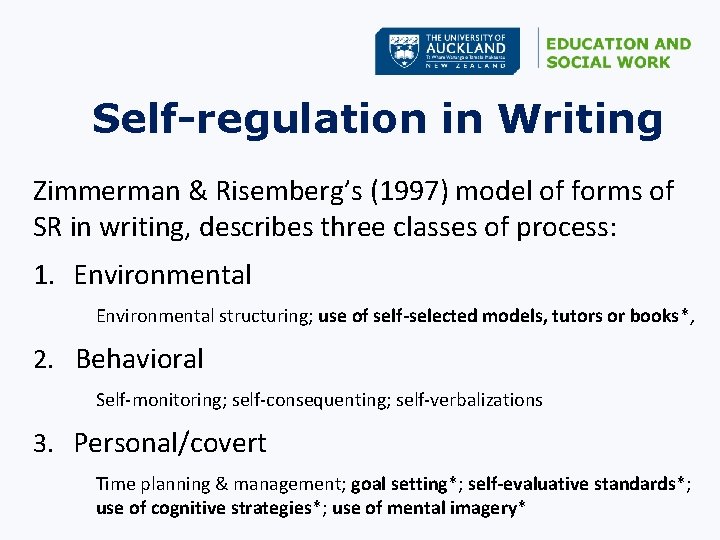
Self-regulation in Writing Zimmerman & Risemberg’s (1997) model of forms of SR in writing, describes three classes of process: 1. Environmental structuring; use of self-selected models, tutors or books*, 2. Behavioral Self-monitoring; self-consequenting; self-verbalizations 3. Personal/covert Time planning & management; goal setting*; self-evaluative standards*; use of cognitive strategies*; use of mental imagery*
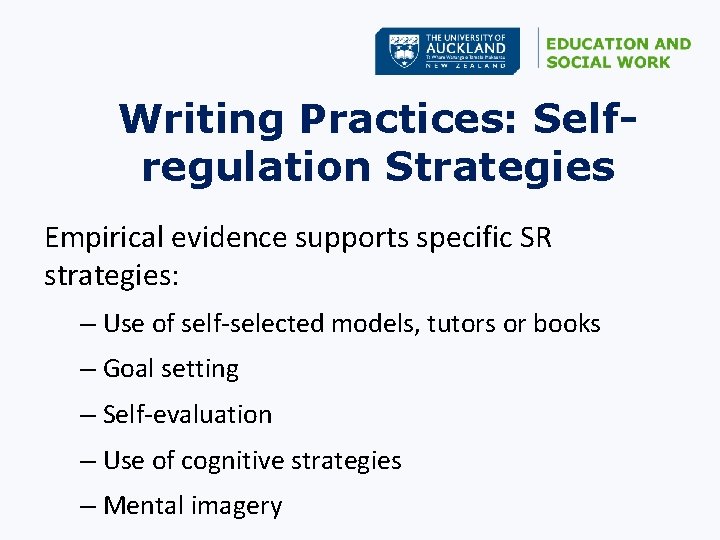
Writing Practices: Selfregulation Strategies Empirical evidence supports specific SR strategies: – Use of self-selected models, tutors or books – Goal setting – Self-evaluation – Use of cognitive strategies – Mental imagery
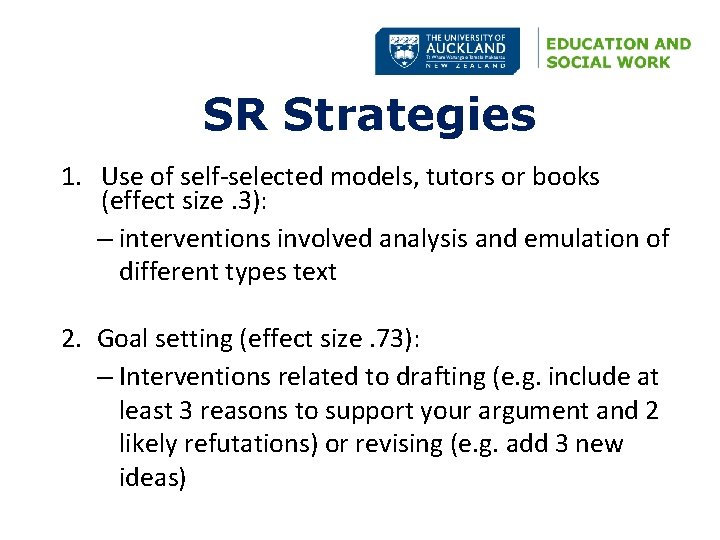
SR Strategies 1. Use of self-selected models, tutors or books (effect size. 3): – interventions involved analysis and emulation of different types text 2. Goal setting (effect size. 73): – Interventions related to drafting (e. g. include at least 3 reasons to support your argument and 2 likely refutations) or revising (e. g. add 3 new ideas)
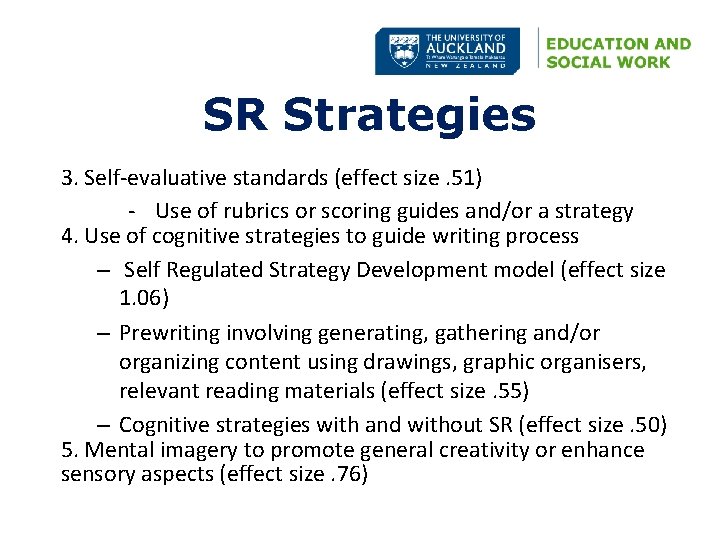
SR Strategies 3. Self-evaluative standards (effect size. 51) - Use of rubrics or scoring guides and/or a strategy 4. Use of cognitive strategies to guide writing process – Self Regulated Strategy Development model (effect size 1. 06) – Prewriting involving generating, gathering and/or organizing content using drawings, graphic organisers, relevant reading materials (effect size. 55) – Cognitive strategies with and without SR (effect size. 50) 5. Mental imagery to promote general creativity or enhance sensory aspects (effect size. 76)
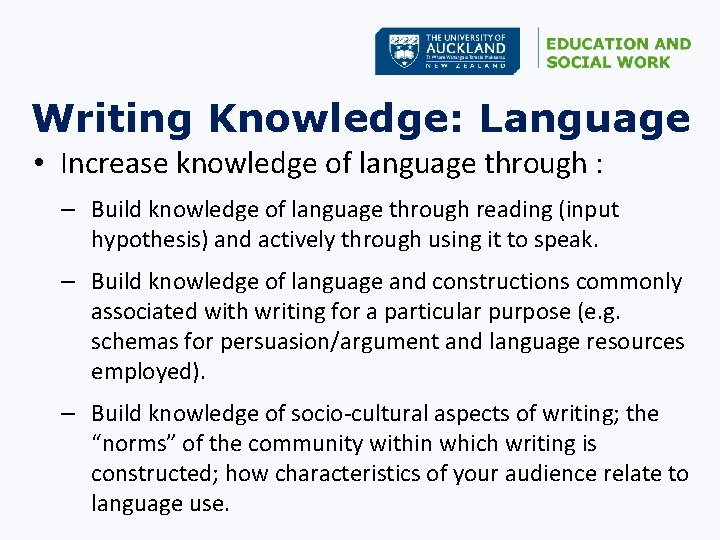
Writing Knowledge: Language • Increase knowledge of language through : – Build knowledge of language through reading (input hypothesis) and actively through using it to speak. – Build knowledge of language and constructions commonly associated with writing for a particular purpose (e. g. schemas for persuasion/argument and language resources employed). – Build knowledge of socio-cultural aspects of writing; the “norms” of the community within which writing is constructed; how characteristics of your audience relate to language use.
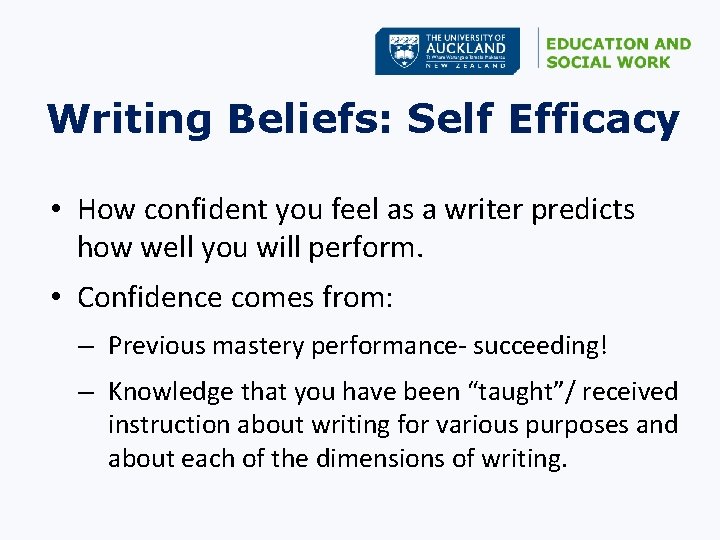
Writing Beliefs: Self Efficacy • How confident you feel as a writer predicts how well you will perform. • Confidence comes from: – Previous mastery performance- succeeding! – Knowledge that you have been “taught”/ received instruction about writing for various purposes and about each of the dimensions of writing.
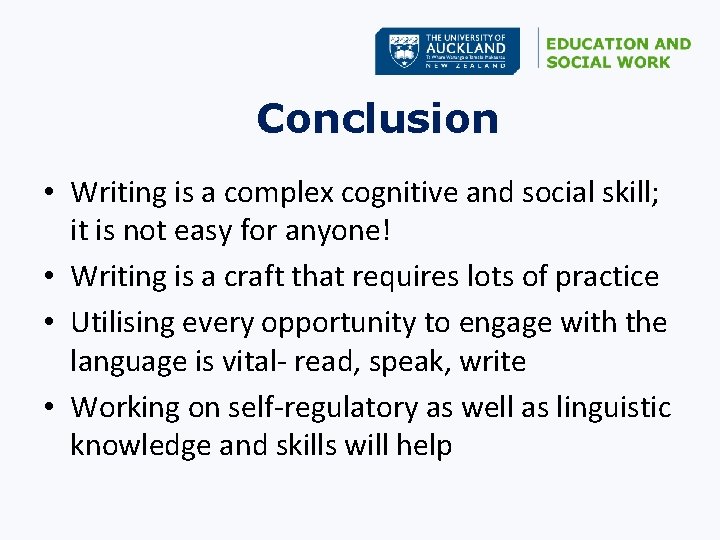
Conclusion • Writing is a complex cognitive and social skill; it is not easy for anyone! • Writing is a craft that requires lots of practice • Utilising every opportunity to engage with the language is vital- read, speak, write • Working on self-regulatory as well as linguistic knowledge and skills will help
Over to You! Questions? Comments? jm. parr@auckland. ac. nz